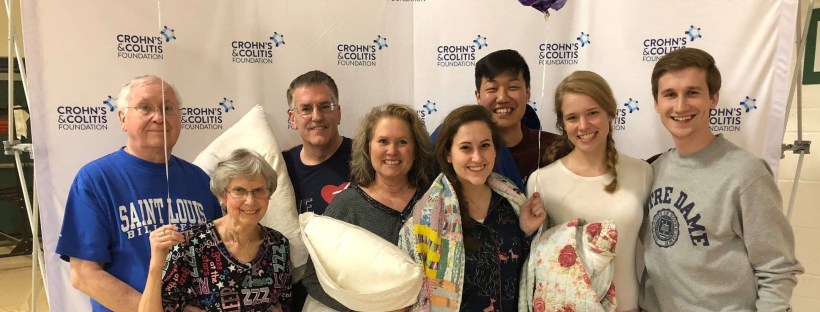
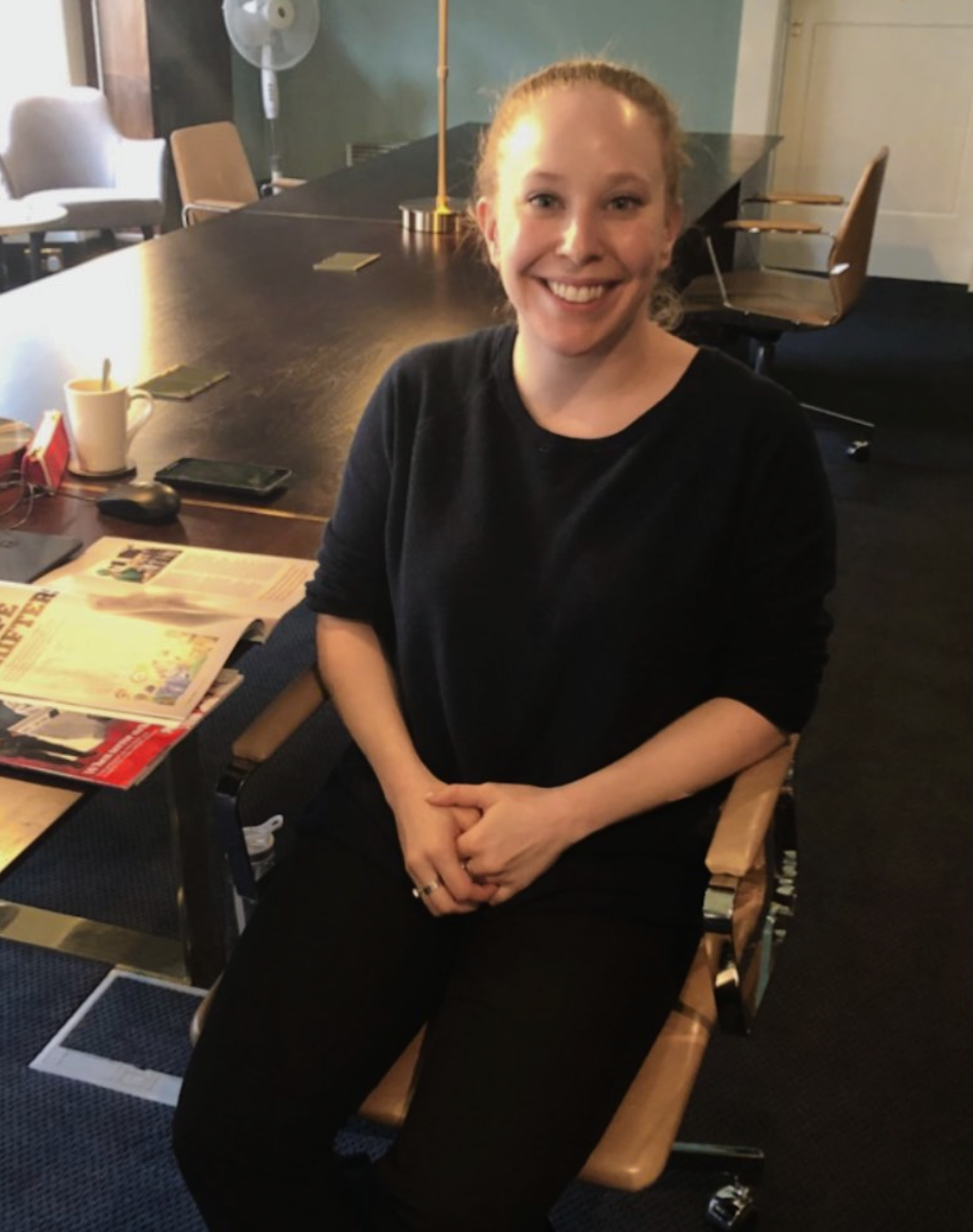
Social media often gets a bad rap. But, oftentimes in the advocacy and chronic illness space, it’s an incredible connector. A few years back over Facebook, I came to know Linde Parcels.  Linde graduated from my high school and later moved to St. Louis. She currently resides in Atlanta, where she works for the CDC and does Policy work for the division of lab sciences.
We’re 11 years apart by age, but share many of the same experiences as women who battle Crohn’s disease. We’re both passionate about using our voice to show others they are not alone in their IBD journey. This week—Linde talks about the importance of standing tall, owning your illness and getting involved in your community to make a difference.
I was diagnosed with Crohn’s Disease at the age of six. Eighteen years ago, diagnosis was difficult for pediatric patients. After more than a year of tests and declining health, my family was given an answer and a lifelong commitment to caring for my Crohn’s Disease.
I’m 24 now. I just moved to a new city for my first full-time job. One of the first things I did when I moved was plug into the regional chapter of The Crohn’s and Colitis Foundation and see how I could get involved. 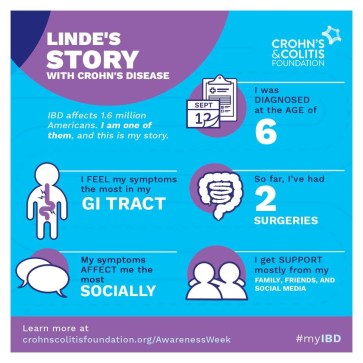
I wasn’t always an advocate for Crohn’s and Colitis though. In fact, I never attended Camp Oasis because I wanted to go to “normal” camp where I wouldn’t be surrounded by reminders of my disease. I regret not experiencing Camp Oasis and making friends who “got me” when I was that age.
It took years to realize that sharing my story and spending time with people with inflammatory bowel disease (and their caregivers) could bring me so much peace, confidence, and ownership of every part of who I am, including how I was made.
Some people receive their diagnosis and jump into headfirst. They advocate fiercely for a cure any way they can. I’ve seen others resolve to live “normally” and spend many years outside of the IBD community, attempting to absorb the struggle and live their life without leaving a trace of disease.
With over 1.6 million people in the United States with IBD, and as one of the estimated 1 in 200 who have IBD, I would argue that with this diagnosis comes with a responsibility to advocate. For everyone with IBD, and selfishly for myself, I want better research. Better treatments. Better services. Better health.
And it’s not a lost cause.
Here are 6 things I’ve done to get involved that you can do too!
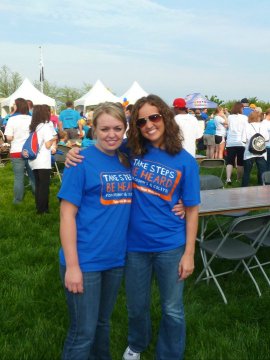
These uplifting Crohn’s and Colitis Foundation charity walks happen throughout the year, all over the country. It’s a great way to rally your friends and family to take steps by your side to raise awareness and drive research.
2. Volunteer for fundraiser events through your regional Crohn’s and Colitis Foundation
I helped gather raffle baskets, advertise, and organize volunteers for the themed Trivia Night in St. Louis three years in a row with a great planning committee. I attended with my family and friends for the past three years!
3. Follow influencers on social media and leverage your own profiles to raise awareness!
Here are some of my favorite Instagram accounts to follow:
@CrohnsColitisFoundation (stay in the know)
@rockswithsass (crystals/mental wellness and proceeds go to The Foundation!)
@Natalieannhayden (of course!)–Thanks, Linde! 😉
@CrohnsCooking (recipes for IBD)
@ileostomy_crohn_princess (model and mom with an ileostomy)
4. You can be a listening ear or a venting pal –make your availability known if you’re comfortable with someone sharing your name with others who might want to talk.
Some parents have referred me to their high school aged children with IBD or a friend of a friend. You can sit with someone during their Remicade treatment or Humira injection. A lot of college students and young professionals may not have family in town and it’s more tolerable with company. Try to be vulnerable. I openly talk about the realities of office life, dating, and farting, (yes, I just said all three of those things in one sentence).
 I’m training for a half marathon and taking on the biggest fitness and fundraising goal of my life! I run every Saturday with Team Challenge ATL, they are the best!
You don’t have to raise thousands of dollars for research or share your most traumatic digestive adventure on social media…but for the sake of this community and for yourself, please own it. Own your patient journey in a way that furthers science and connects people. Because as much as I want to be your Crohn’s friend, I’d rather just be your friend 10 years from now.
You can connect with Linde on Instagram here: @thelindecity.
Linde is running the 2018 Savannah Rock N’ Roll Half Marathon November 3, for the Crohn’s and Colitis Foundation. She’s looking to raise $2,800. Click here to help her reach her goal!
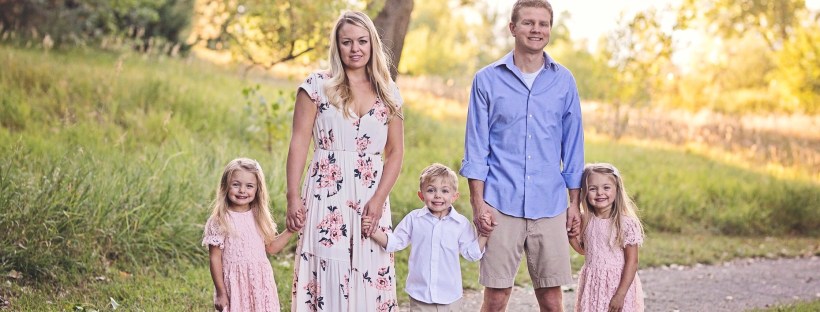
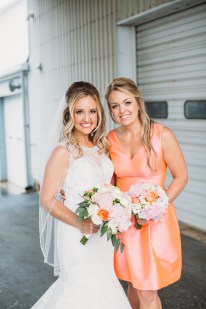 We ended up living together throughout our entire college experience, stood up in each other’s weddings and have managed to stay very close, despite thousands of miles between us since graduation.
 I teared up. I was so fearful of the unknown, as far as what this is going to mean for me for the rest of my life. There is such a variation in the way patients with IBD can experience the disease… my mind immediately went to worst case scenario for myself.”
 She used to ride out the symptoms much longer before admitting there was a change that needed to be addressed, mostly because she was fearful of having to go back on steroids. I can attest to being the same way. Prior to becoming a mom, I waited until going to the emergency room was the only option. Now, I am more mindful of listening to my body and nipping flares in the bud, because my family needs me.
 it makes you feel just a little bit stronger and gives you the confidence that you can handle the curveballs life is bound to throw at you over and over!”
 When I was diagnosed with Crohn’s disease at age 21, a month before my 22nd birthday—life had so many unknowns. I bottled up a lot of fears about how my life story would unfold and if I would be able to accomplish the hopes and dreams I had thought were a given.
 It’s a path that will bring you heartache. Significant others will let you down—you’ll be disheartened when they fail to show up when you need them most…but, then it will happen. You will meet the person who was meant to fight this fight beside you. You’ll know. You’ll see how that person loves you unconditionally and even more so, because of your illness. They will see you as so much more—see yourself the way they see you. Not some sick person. A person who has a sickness that is part of them, but far from all of them.
 Don’t allow this illness to make you think you aren’t capable—because you are. You will surprise yourself, if you continue to be positive and find alternative ways to make your dreams become your reality. I know you’re sitting there with your huge spreadsheet of 200 U.S. cities, wondering which TV station you’ll be able to work at…and if your journalism career will ever happen. Looking back—I’m so proud of you for continuing that job search amidst your very first flare. Looking for jobs across the country, as you swallowed 22 pills a day, grappled with a chronic illness diagnosis and dealt with all the side effects and pain that is Crohn’s. Work ethic and attitude will take you far with this disease.
 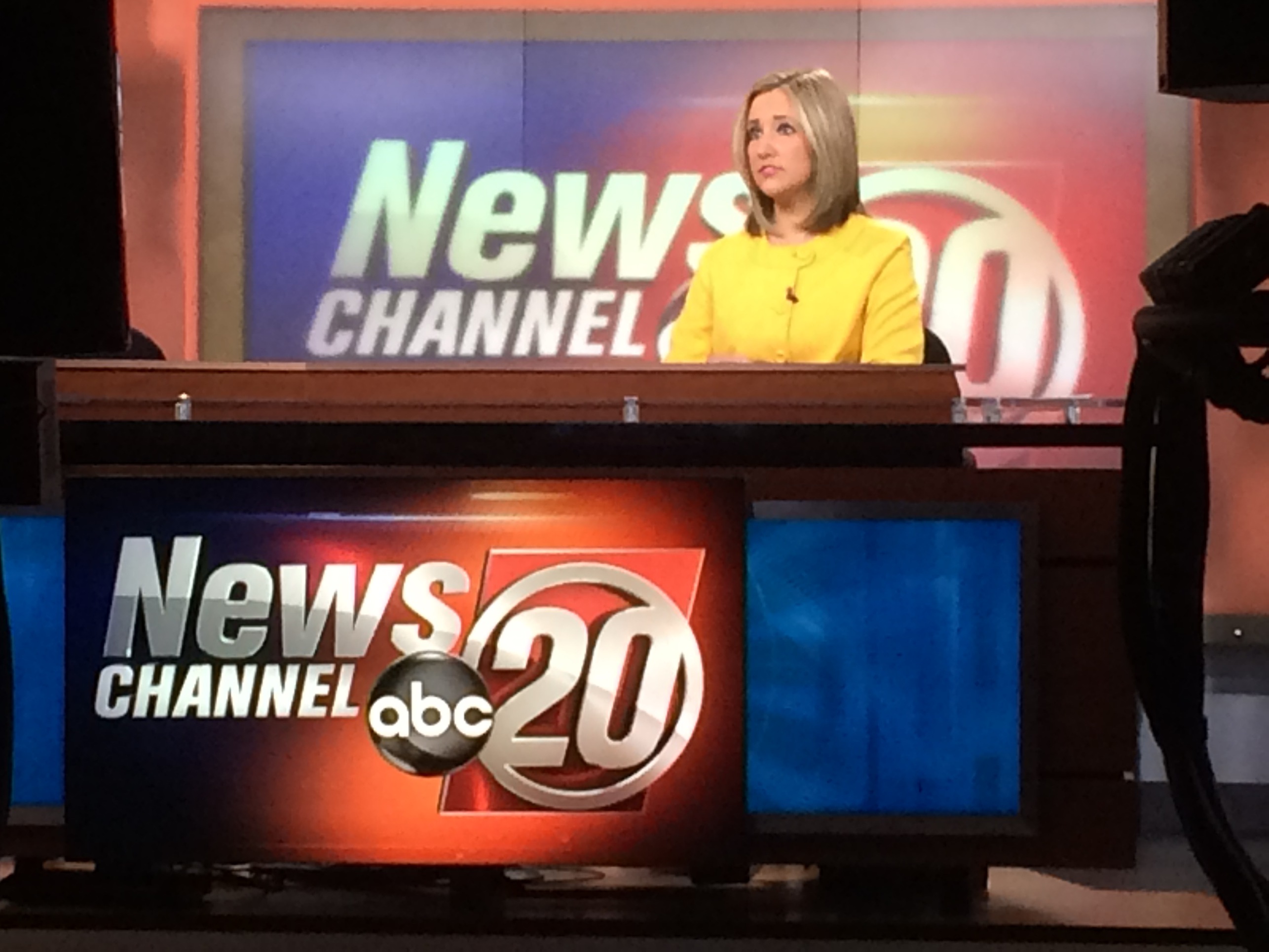 You will shine under those bright studio lights.
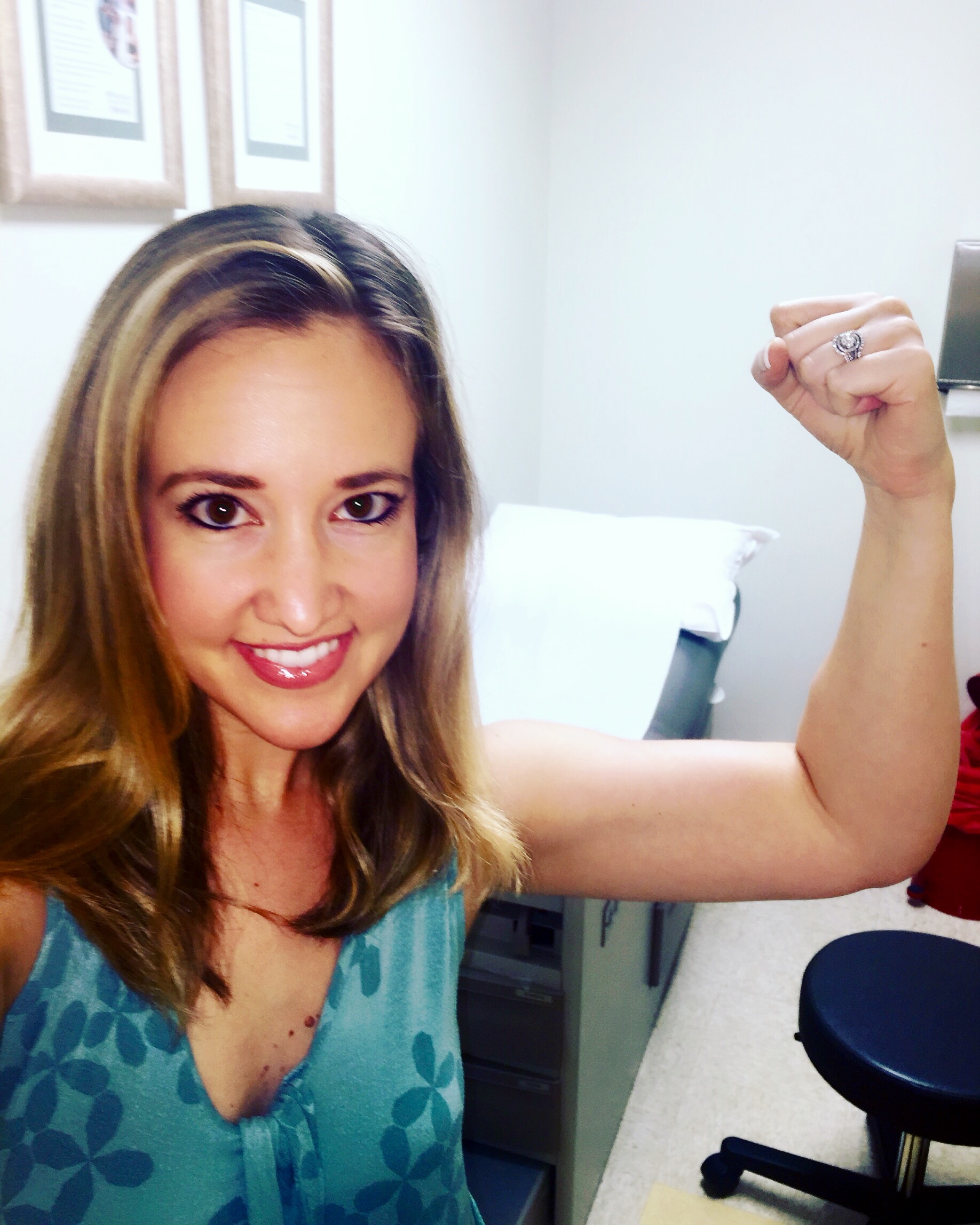 That first CT scan, that first colonoscopy, that first surgery, that first injection…it’s a lot to deal with. You’ll shake like a leaf and then as time goes on—you won’t bat an eye. You will find a strength within yourself that you never knew was there. You’ll be a seasoned warrior in no time.
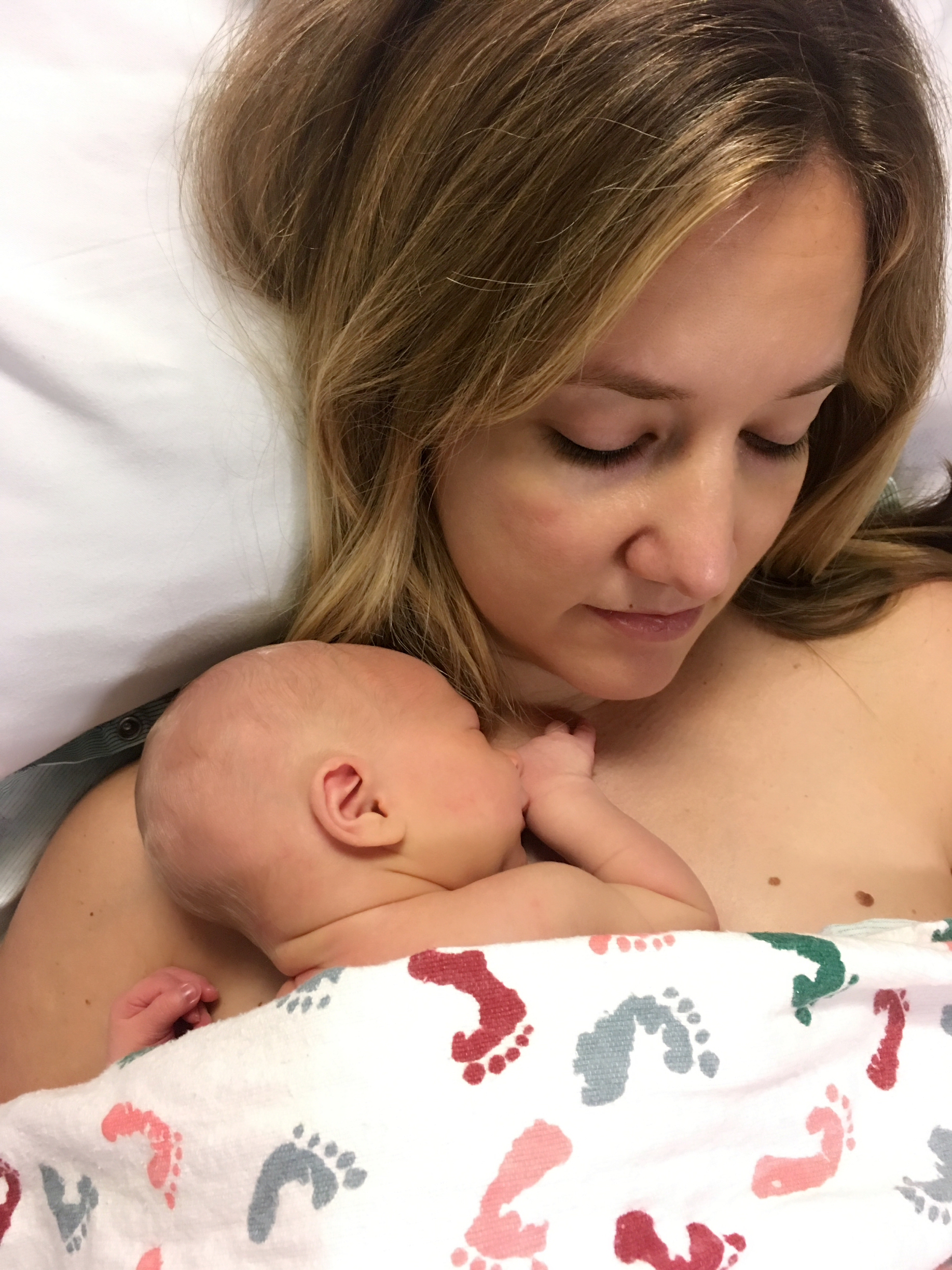 You’ll do all these things. All with your sidekick—your enemy, but also your ally, Crohn’s. The one thing that really sets you apart. In the future you won’t keep your disease a secret, rather it will come up in conversations almost immediately, with a sense of confidence. A badge of honor. Yes, I have Crohn’s. Yes, it’s not ideal. But, yes…it’s made me sort of a bad ass. I’ve been through a lot. I haven’t backed down. And there’s so much life left to live.

 I like to take 2-3 extra days of daily medications and vitamins. Along with the daily dose, pack pain and allergy medications so you have it on hand and readily available, should you need it. As someone who battles Crohn’s disease, I’ve had to fly out of the country with my biologic injection. Be mindful of how your medication needs to be stored. If it needs to stay cool, keep it within a zipped-up bag with an ice pack and remember to throw in a few alcohol swabs for good measure. Also, keep your medication on you at all times, never in a checked bag!
 Whether it’s a business card or information that’s stored in your phone—make sure you have your doctor’s phone number readily available, should an emergency or flare up arise. It’s also helpful to keep a list of medications in your purse or wallet, so that you don’t have to worry about remembering the dosage you take or what you are on, should an emergency arise.
 it will help you feel your best and enjoy your trip. Pack a thermos or water bottle, and it’s as easy as using a water fountain or grabbing some bottled water and mixing up DripDrop on the go. This way—you can enjoy the sun and warm temperatures and keep your body on track for feeling its best.
 There aren’t a whole lot of “safe spaces” for those of us to feel understood and connected with.
 As someone who’s battled Crohn’s disease for over 13 years, I constantly find myself needing to take a step back and remember that the only person who’s lived my journey is me. It’s up for me to tell my story. It’s up for me to share it. It’s up to me to communicate to those when my feelings are hurt or I’m disappointed. But before I jump to conclusions, I need to assume the other person is trying to help me or learn more about my experience—rather than ruin my day or hurt my feelings. API all day, baby. Try it. Trust it. Live it.
 This week, a look into her life and how she took on the disease as a preteen, went to college out of state and landed her dream job in California with Walt Disney, after growing up in Wisconsin. My hope is that Emily’s story of perseverance, brings comfort to parents and fellow children and teens experiencing IBD as their life story unfolds.
 While I know that my parents were scared, confused and upset that I was going through this, they never let that show to me. They were and always have been the ones that lift me up when I am down, and never fail to stay by my side through all I have endured.
 And there were times when I wished I would have decided to go to school closer to home, because that would have been easier. The biggest roadblock was the physical distance, because it meant a lot of back and forth travel. Especially, during flare ups. I found myself needing to make the 4-hour drive home more often than I wanted to, which resulted in the need to miss more classes. Additionally, learning to manage my symptoms completely on my own and having to adequately communicate with my medical team from so far away, was challenging at first.
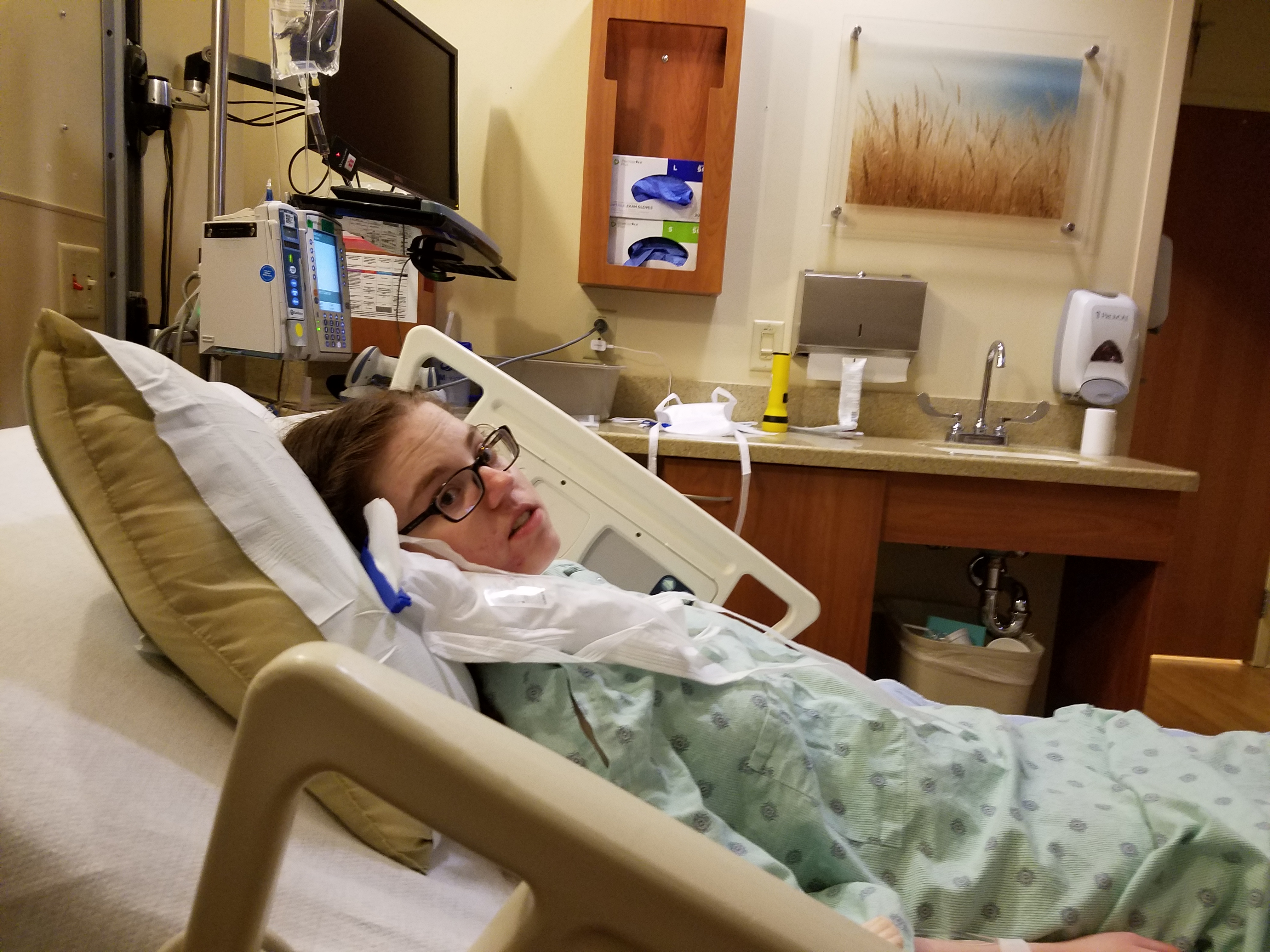 My health took a drastic turn and it became clear that I would need an ostomy sooner rather than later. I initially was very scared and upset that this was happening. I didn’t know what an ostomy was or anyone that had one, so I had little idea of what to expect going into it. By the time I was a couple weeks away from surgery, I was honestly ready to have it done. I had been experiencing more symptoms and was ready to have the surgery behind me and be feeling better. I was doing my best to go into things with a positive outlook and think about it as a fresh start, but this was no easy task for me. It was an overwhelming and emotional couple of weeks following the surgery getting used to having and caring for an ostomy. I am not afraid to admit that I was scared to look at it and care for it myself after my surgery. But then I realized, this isn’t going to go away anytime soon, so I had to start doing things myself. The more familiar I became with everything, the more comfortable I was and began to realize that I was actually feeling better than before the surgery. This was hard for me to admit to myself, because I didn’t want to be put in the situation of having an ostomy or needing one for the rest of my life. While I am now on the road to needing a permanent ostomy, it still has not sunk in that it will actually happen yet. And I don’t think it is going to fully sink in until that surgery happens.
 This is something that I never thought I would get to experience, and I think having Crohn’s has made me appreciate this opportunity more than I could ever imagine. The last year has been a wild roller coaster ride. I am just thankful to be here, because there were many times where I didn’t think I would even be able to graduate last year. My family and friends have been very supportive because they know how much this opportunity means for me personally and professionally. It is hard to be this far away from my main support system, but they are always just a text or phone call away. Additionally, my providers were very encouraging to me, pushing me to continue to live my life to the fullest and not let my disease slow me down. Hearing them say that to me, was really the last push that I needed to make this a reality. Knowing that my medical team wanted what was best for me, and was willing to work with me to get me where I am today, helped give me the confidence that I could do this.
 It is important to trust their advice and recommendations, as scary as they can be sometimes. Additionally, try your best to not dwell on the negative things that are currently happening and think about what your future can hold. Always do your best to roll with the punches and keep moving forward, your best is all you can do.
 You have your husband and children, but other than that…all your family and friends are thousands of miles overseas. That was the case for my college friend, Brittany Cable. Brittany was diagnosed with Crohn’s in 2007, about a year after she had her oldest son.
 Despite the hardships and heartbreak through her life, she’s never allowed the difficult moments to dull her spirit. She tells it like it is and isn’t ever shy when it comes to sharing her story. I’ve always admired that about her.

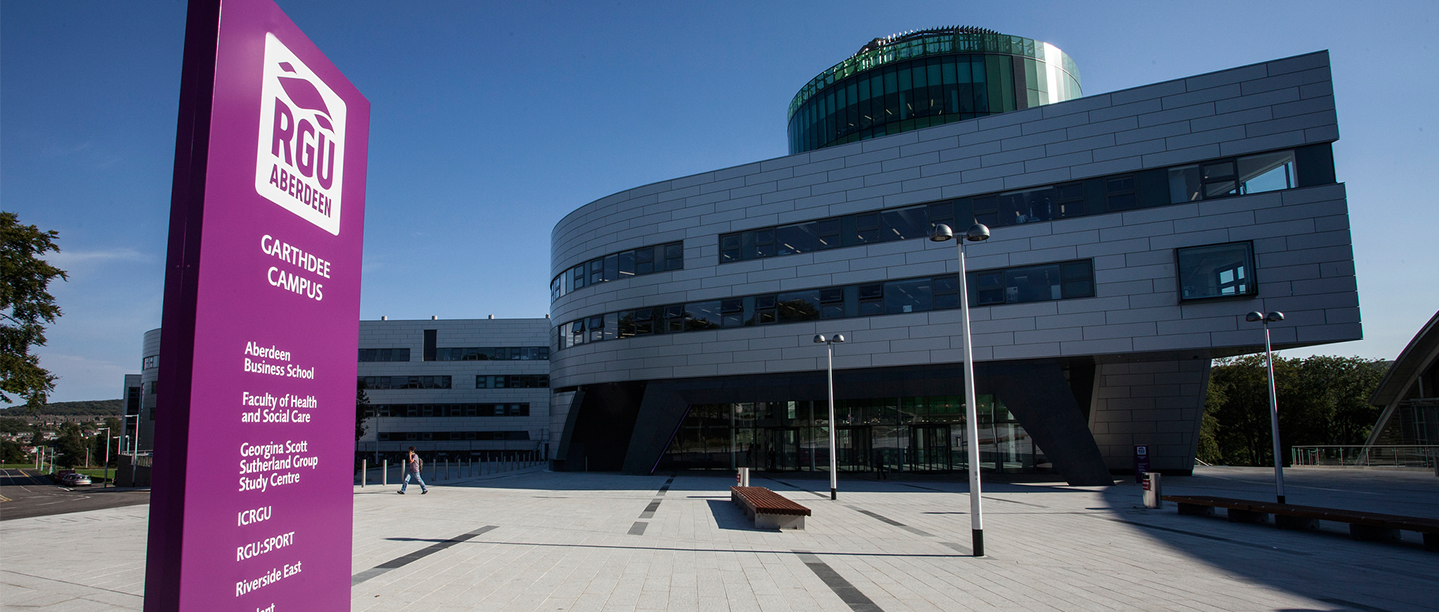 Robert Gordon University in Aberdeen, Scotland, named Katie LaSalle, reached out to me about a research study she is conducting surrounding IBD. Katie has family members and a friend who battle Crohn’s, and has witnessed firsthand how debilitating and difficult the disease can be.
 more to provide patient education and information support, and I’m curious on the patients’ perception and how they feel the information is lacking/could be improved.”
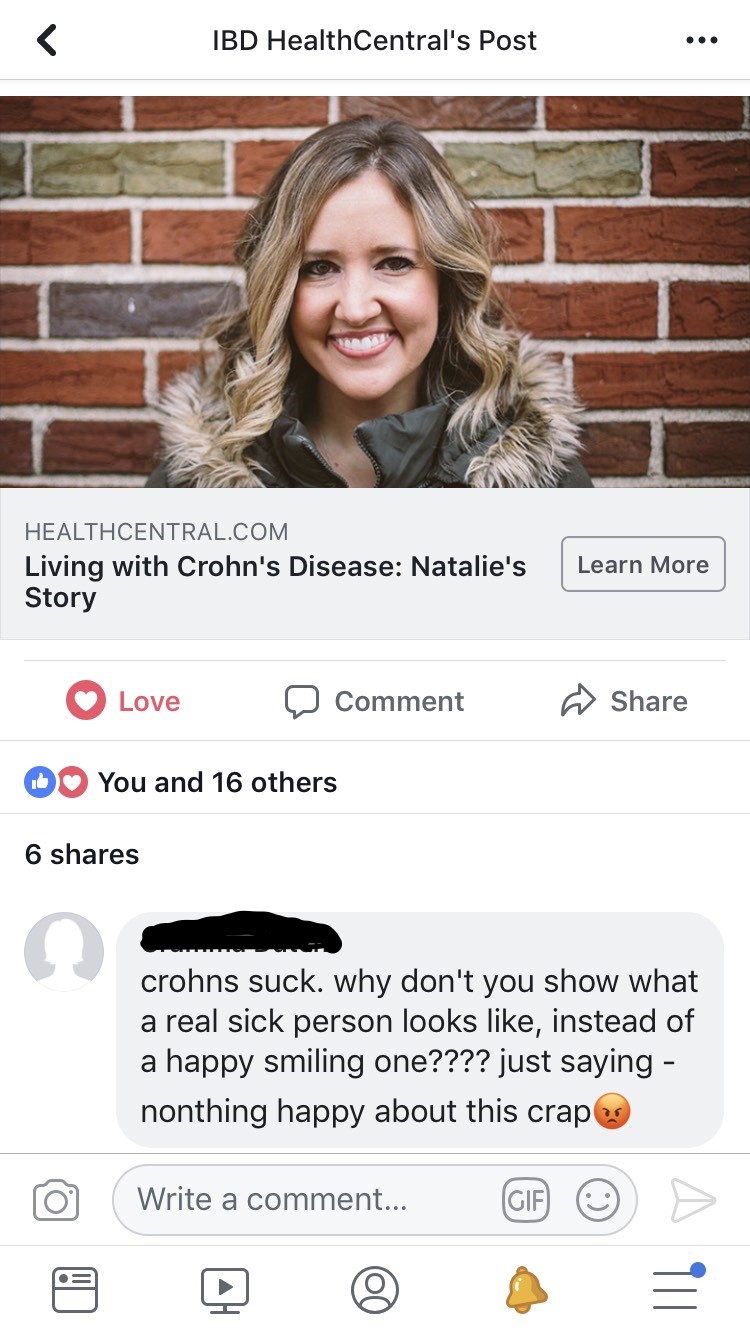 The featured image from the story is one of me smiling outside my home. The comment on the article: “Crohn’s sucks. Why don’t you show what a real sick person looks like, instead of a happy smiling one???? Just saying—nothing happy about this crap.”
 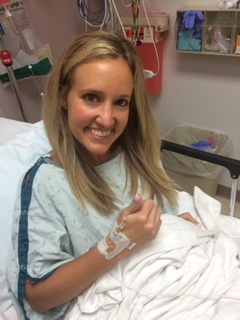 If you choose to smile and show Crohn’s who’s boss, than no matter what obstacles and setbacks come your way you’ll tackle them and fight through flares with a knowingness that better days are ahead.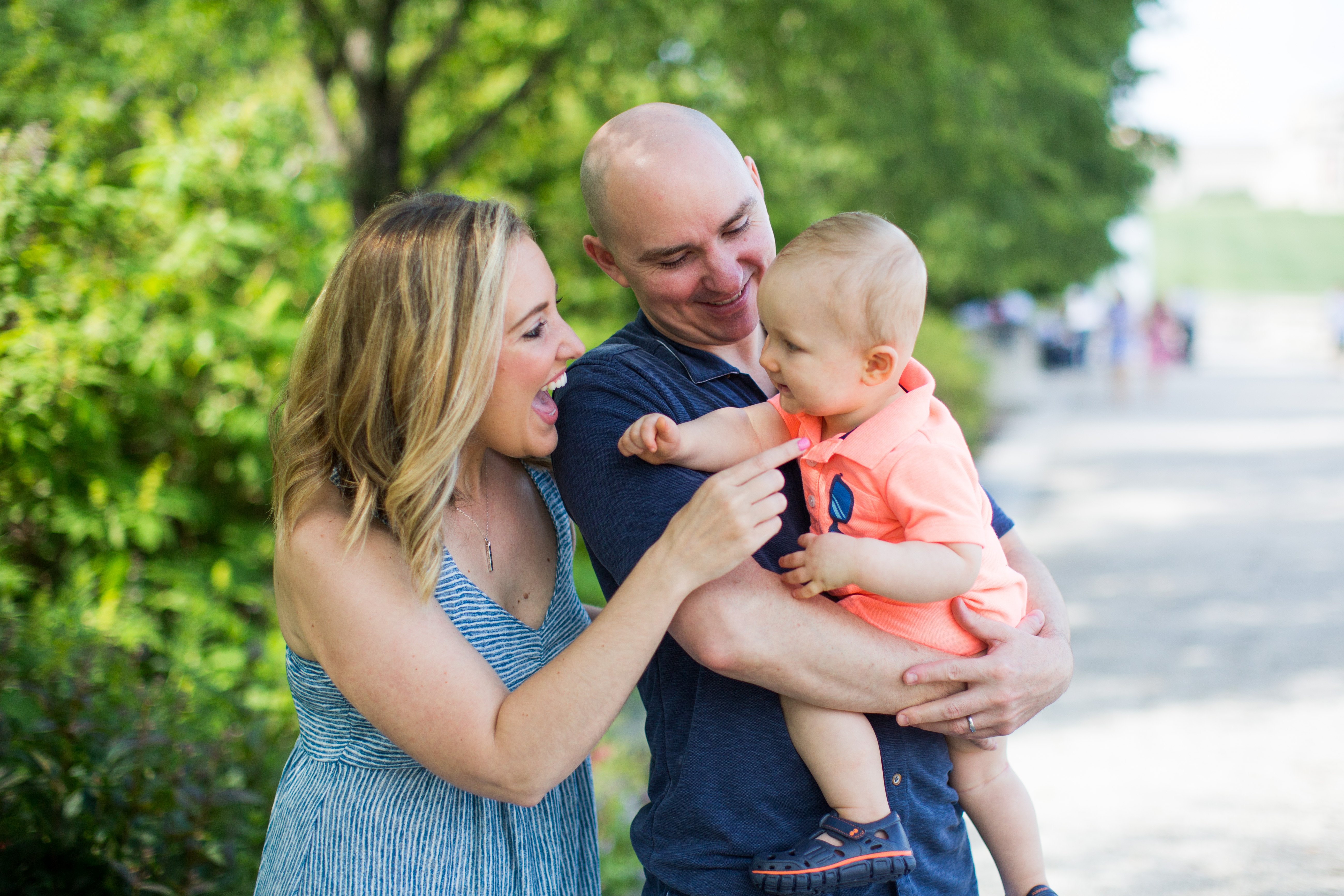

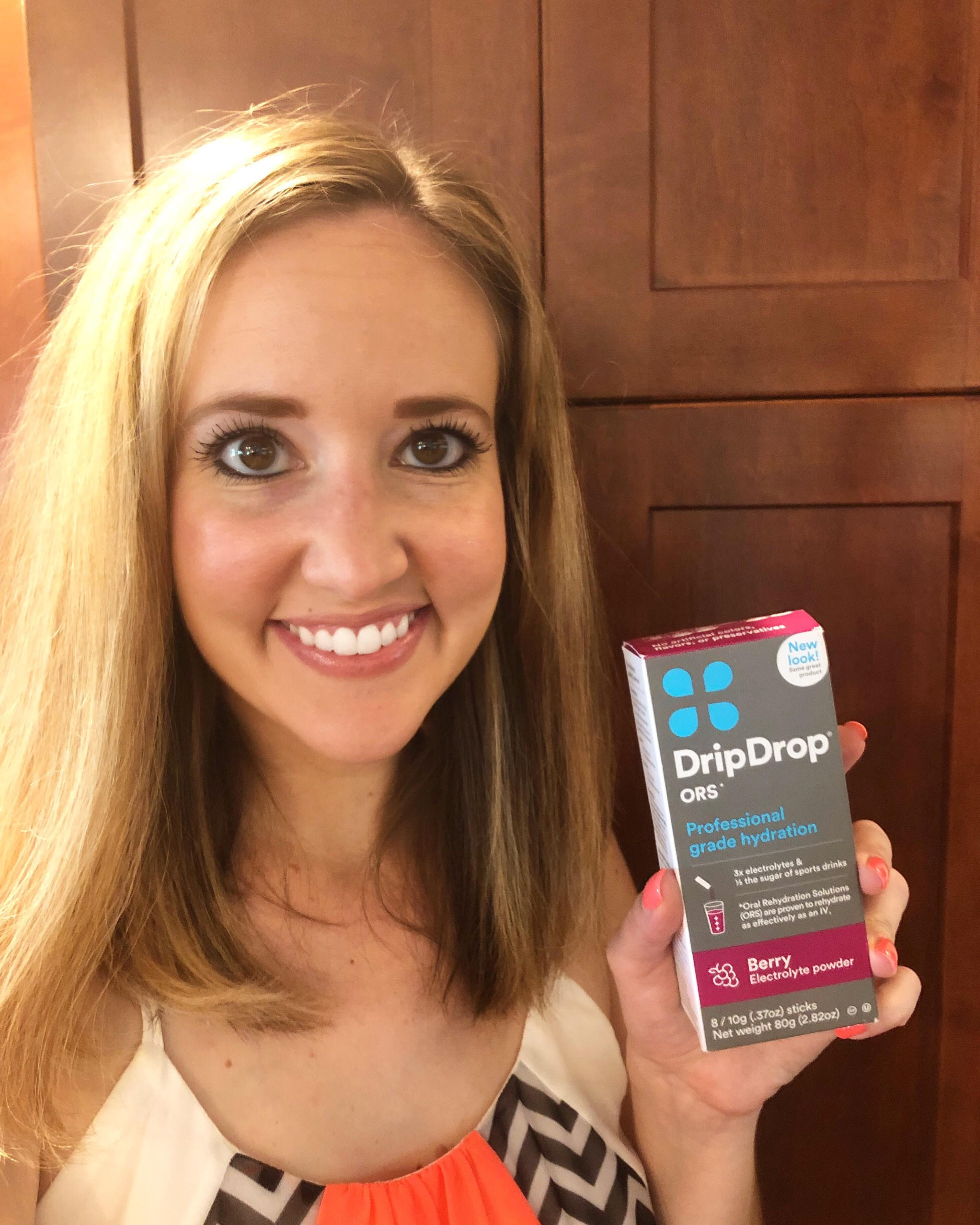 Every stick of DripDrop is formulated for fast absorption, making dehydration recovery as effective as an IV—without having to take in the excess sugar found in sports drinks. It contains a precise ratio of sodium, sugars, and other electrolytes that absorb quickly and hydrate more effectively. For me, this was huge. There were times I called my OB after throwing up multiple times, wondering if IV fluids were necessary…but thanks to DripDrop, I was able to stay in the comfort of my home and boost my hydration in a matter of minutes.
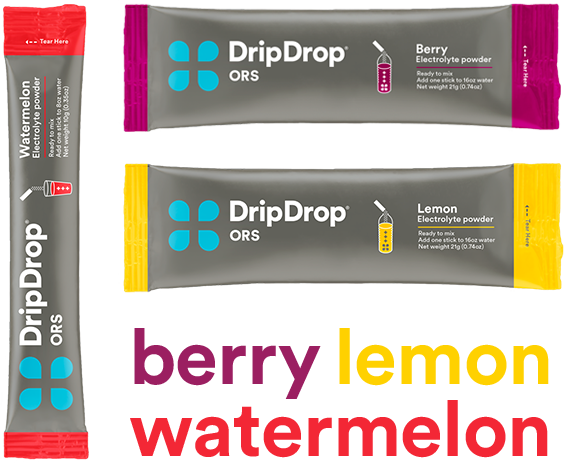 helped me get through the dehydration that comes along with pregnancy symptoms. It’s super easy—you just need water and then pick your favorite flavor to mix in. My favorite flavor is Berry. Along with helping me feel better through my pregnancy, I find it helps when I take my son out for walks on 90 degree hot and humid summer days in St. Louis and when I physically feel the need to boost my reserves.
 lights camera crohn's