Every hour of every day we live with inflammatory bowel disease. Once you hear the diagnosis, it’s a part of you… every. single. moment. of. your. life. That alone—feels isolating and scary. When you decide to share your personal patient story publicly, you open yourself up to a world of support.  As a patient advocate, you also become somewhat of a confidante and voice of reason for your peers in the community.
While it’s incredible to be able to connect with those who live your reality, there are times it can feel overwhelming. Personally, as a patient advocate, who’s battled Crohn’s disease for nearly 13 years, I consider myself well-versed on the topic—but, all I know, are my own experiences. IBD presents differently in every person. Part of being a patient advocate is showing support for others living your same reality. The girl in the UK who was recently diagnosed and nervous about heading off to college. The young man in Nebraska going through a bowel resection surgery. The kindergartner receiving her Remicade treatment.
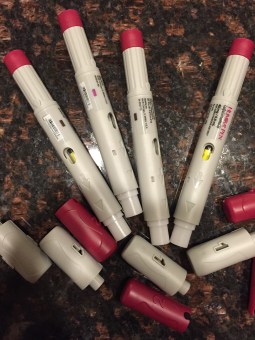
Since my bowel resection surgery in August 2015, I’ve been able to manage my disease with daily medication and a biologic injection. Luckily, I’ve felt well most of the time since then, and haven’t been hospitalized since my surgery. That being said—when friends (many who I’ve never met) and strangers reach out—through email, Instagram, Twitter, Facebook, texting…you name it…round the clock…desperately asking for advice and support…my heart sometimes starts to ache with stress.
I want to be sensitive with how I word this article, because the LAST thing I want is for people to stop reaching out when they need advice or support.  What I do want—is for people to recognize what compassion fatigue is…and how as chronic illness advocates and caretakers we need to be mindful of how we’re feeling and internalizing the struggles of those around us.
The overwhelming nature of compassion fatigue
When people ask me about my diagnosis, my bowel obstructions, my surgery… it draws a great deal of emotional energy, and at times, can open up proverbial wounds. I’m happy to share my patient journey with transparency and honesty. But, day after day, year after year, these conversations can be a burden. A burden because I truly worry and care about each person I talk with. Even if I’m feeling well and in remission—the disease stays top of mind and I start to question my own well-being and health.
Like everything in life, finding balance and making time for self-care is paramount. The IBD family is a fantastic community of support. I am just one piece of the advocacy puzzle. It’s all about maintaining that balance in a healthy way, recognizing when the fatigue is taking over—and knowing when to take a breath and step away. I’m much better able to connect with people when I’m recharged and energized. If I’m at the end of the rope all the time, I simply don’t have anything to give, and everyone loses.
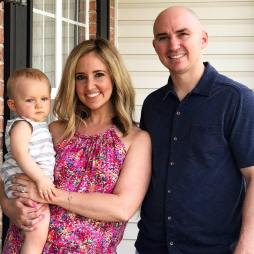 I offer support from the bottom of my heart, but as a mom and a wife, I do need to recognize when it’s time to unplug and take time for myself. When my baby naps each morning—I spend that “break” on my computer writing articles about IBD, participating in Twitter Chats, and talking on the phone with those who want to hear about my patient experience.
Recently, my husband said we should start a new rule in our household, no phones after 8 p.m. I was thrilled with the idea. So often when we put our son to bed we resort to hanging out on the couch, with the TV on and phones in our hands. Much of that “free” time I used to spend responding to messages from those seeking IBD support. Sometimes you just need to put down the phone and recognize how important those right in front of you are. The people who are by your side every single day. Your family. Your caretakers. Show them the love and the attention they deserve. Nurture the relationships that matter most to you. Be present in the moment.
Compassion fatigue ebbs and flows. Like anyone who battles fatigue from IBD, some days I feel like I can take on the world and spend all my free moments on the phone or responding to emails. Other days it takes A LOT of effort for me to email back someone who I’ve never met and discuss why I chose Humira, how my pregnancy was with Crohn’s, etc. Time is precious. I absolutely hate not responding almost immediately to everyone who reaches out, but please be patient with me.
 As part of my self-care and disease management I need to de-stress, so I don’t put my own health at risk. This article is painful for me to write—I can’t stand admitting that I am struggling to do it all. But, compassion fatigue has been something I’ve been feeling for a few months. I want to be the best advocate for others and do all I can to make a difference and show there’s so much life to be lived outside of your disease. I want you to see how much you can thrive with this disease and all that you can accomplish. I want to be the person I needed the day my world turned upside down when I was diagnosed. I want to be all the things. But it’s not possible. It’s not fair to me, it’s not fair to you.
My call of action to you
When you reach out, if it takes a few days for me to respond—don’t think it’s because I don’t care or won’t reply. I will. If you have questions about why your prednisone is making you feel a certain way or how to do a colonoscopy prep—check with your GI first. Oftentimes many questions and concerns are covered extensively on blogs and in articles—a simple Google search may give you all the information you need. Lastly, know my concern and wish to help is genuine, but there’s only so much of me to go around.
I’ve been in the hospital bed. I’ve been too weak to walk up a few stairs. I’ve been on 22 pills a day. I’ve sat on a news desk and anchored countless shows while dealing with my disease in silence. I’ve woke up on my wedding day unsure of what my disease would do. I’ve been pregnant and dealt with the fear of flaring while creating a life. I’ve done a lot as a patient and a person. So, when I’m feeling well and trying to enjoy the feel-good days that I have…that can be taken away in the blink of an eye, please understand that I’m here for you, but need to also take time for me.
I’m going to leave you with this quote from Daniel Garza, an AIDS, Cancer and Ostomy advocate. Daniel shared this eloquent description of patient advocacy during the HealtheVoices conference I recently attended in Chicago.
“We all have this fire. We’ve been in quick sand and high tides and made it to the end. Despite the doubts, after everything, we don’t want other people to go through it. We’re the coat we put on the puddle, so people don’t get their feet wet. We don’t care if we get dirty again.”
In closing, allow me to continue to be that coat on the puddle for you, but please have a little patience with me.


 Everyone works together to watch me, the baby and the pregnancy every step of the way. We get an ultrasound once a month! I see that as a perk!
 I don’t know what it is about July, but that’s always been my danger zone. I always breathe a sigh of relief when August begins. Call me superstitious, but prior to getting married, I knew I could never have my wedding this month nor would I want to welcome a baby into the world. I have July’s number.
 nip it in the bud. Don’t try and be a superhero and take on a flare yourself or fail to communicate to those around you. You and I both know exactly how it feels when a trip to the hospital is a must. Delaying the inevitable will only add insult to injury. Stay on top of maintenance medication, vitamins, exercise and sleep.


 She’s a resilient person with a positive attitude. Her energy is contagious. This week, a guest post about her involvement with
  I saw a post on Facebook about


 I’ve also been blessed with a beautiful wife and life partner, as well as four amazing children (10, 7, 3, and 9 months). This takes an already difficult situation, and adds more “life” responsibility as well.
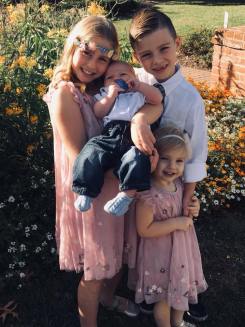 Take the time to get to know a father with IBD, and you will meet one of the most courageous strong willed people in the community. As a man, we can sometimes let ourselves down because as an individual, it just impacts me. But as a father, that is not an option. We must persist, have faith, and fight the fights every single day, so that we can continue to mold and shape our children, and provide support and guidance for our families that mean absolutely everything to us.
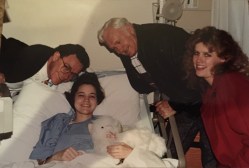 The excitement of knowing “I’m not a hypochondriac” was overshadowed by the fear of having a “poop disease”. You see, my first year of college, I became best friends with my Suite mate. Ironically, she too battles Crohn’s. I was 20 years old, diagnosed with a disease that had no cause and therefore no cure…how can that be? Why me? What am I going to do? I didn’t even know how to swallow a pill. I was never the sick kid! Now, I had to take 24 pills a day, which sometimes would take me an entire hour to swallow one dose, throw up, re-swallow again. Three times a day. It was as if I had entered “hell”.
 Which made my journey with the disease a little different than today. I was raised to think “only the weak complain!” “Someone always has it worse!” “Suck it up butter cup”. “If you want the job done right, do it yourself”. This made me look at the situation as this was “my” disease, “my” problem and I don’t want to make anyone worry about me or feel sorry for me! I became a master at hiding the disease and a master at hiding the byproducts of the disease.
 I’m a proud mother to two amazing children. I carried and gave birth to both of them with zero complications. I’m a business owner of a successful insurance agency, which I established 4 years after diagnosis. I didn’t allow my disease to derail my professional aspirations. I’m an active mother and manage to find time to be a room mother and Girl Scout cookie manager.


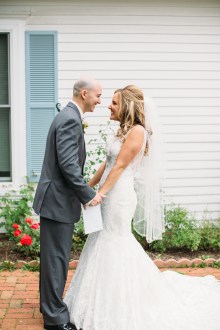 “You’re an incredible partner—you’re my rock when I’m sick and you know how to lift my spirits when I’m down. You have a way of easing my worries and bringing me clarity when I’m uncertain. Each day spent with you—is an extraordinary blessing. I feel so incredibly lucky that God brought us together and chose you to be the one person among millions who lights up my soul.”
 At times, living with a chronic illness and being the one who doesn’t feel well, can bring about guilt. It also brings out the best in us. When I’m vulnerable and need a boost, I see my husband rise up to the challenge, time and time again. I’m constantly reminded I chose to live my life alongside someone who has more compassion in their heart than I knew imaginable.


 The app features tracking, curated learning, and expert Q&A.
  Oshi has the potential to significantly improve lives with smart tools to manage and control Crohn’s disease and ulcerative colitis,” said Daniel Weinstein, CEO, Oshi Health, Inc. “Oshi’s easy-to-use, best-in-class tracking and insights tool will allow patients to work with their physicians to uncover hidden patterns to figure out what triggers flares for their unique bodies.”
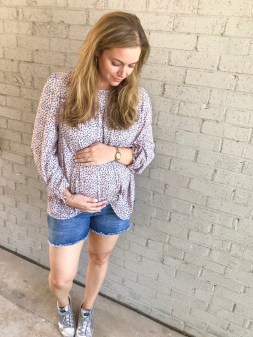 I specifically was interested in featuring Hope because she’s pregnant with baby #2!
 complications, the doctors I saw were pretty sure I would have difficulty conceiving; however, I am so thankful that God has given me grace in that aspect of my life. I will say that my first pregnancy was a bit of an “oops”, BUT my body was in 100% remission and I believe that greatly contributed to my success. This time around—knowing that I wanted to get pregnant, I made appointments with my GI and had blood-work, a colonoscopy, and wound up having to have an MRI to rule out any potential flare up. Thankfully, I was flare free and my doctor gave us the “ok” to try and conceive. I attribute much of our success to my remission. A healthy mom has a much greater chance of conceiving successfully in terms of Crohn’s Disease.”
 It definitely does, BUT I try to live my life with as much positivity as I can and a lot of laughter. I’ve found that Crohn’s has matured me far beyond my age in years and that has helped me navigate the endless responsibilities that come with being a young wife and a young mother. I never take health for granted and I am thankful every day for the opportunity to raise my child(ren) free of feeling sick. I get fatigued faster than the average person due to Crohn’s, but I am so used to it, it’s my normal. Also, have you ever met a mom who is full of endless energy?! Nope.”
 We must surrender to Christ and let him lead us through the highs and the lows. If you aren’t a person of faith, my prayer for you is that you find peace in either the waiting of becoming a mom or peace in the journey of motherhood. It is not easy at all, but it is so worth it, and I pray for every woman who might be struggling to carry a baby because of this disease. It truly breaks my heart to think about that suffering. When I was pregnant with Evie, I joined a study called the PIANO study which stands for Pregnancy and Neonatal Outcomes in Women with Inflammatory Bowel Disease. I answered questions during pregnancy and at birth I brought in a lab kit where we sent off blood from me, from Evie, and from my umbilical cord, to study if any of my medications got to my baby. There was no trace of Cimzia in Evie’s blood or the umbilical cord which was wonderful and a big part of why I take Cimzia, as it does not pass the placenta. But, I mention this study to share my passion to help all women with IBD reach their dream of motherhood. I crave more information about this disease specifically for those moms struggling. Know that you’re not alone and you have many people rooting for you and your future babies!”
 Evie was born, my blog kind of fizzled and after awhile I was missing that creative outlet. My sister was pregnant with her second at the time and we decided to join forces and it was so much fun for us! Recently, my sister has taken a step back from blogging and is pursuing different passion and focusing solely on her family, so the blog has evolved again into an outlet for me. I am an extrovert and love talking with new people/sharing recipes/getting advice/looking at the newest trends/home decor/etc. so blogging just seems like a good fit for my personality. I am a stay at home mommy first and foremost, but the blog has allowed me to have something else that’s just mine and just for me.”
 lights camera crohn's