
Yoga and Crohn’s relief. For many, the two go hand-in-hand when it comes to stress management and feeling calm. This week, I hand over the reins for Part Two of Hilary Zalla’s guest post. As you may remember, Hilary is a vocal advocate for inflammatory bowel disease and a news anchor at the CBS affiliate in Tampa Bay, Florida. She was diagnosed with Crohn’s disease 13 years ago. Since becoming a “Crohnie,” she’s come to realize how strong our IBD community is. I’ll let her take it away…
Since my diagnosis, I have always been most interested in learning how people treat their disease beyond prescribed pharmaceuticals. I’ve heard people swear by alternative therapies like acupuncture and chiropractic and diets like veganism, Paleo, and gluten-free. Whatever helps you, keep doing it! I am here to share with you how I use yoga to treat my disease.
First of all, I want to start by telling you that exercise was pretty much non-existent in my life until I found yoga. I just never felt up to working out. I gave myself tons of excuses, but really I just didn’t care about my body. I had given up on it because it let me down so many times. I started practicing yoga two years ago when I realized I wouldn’t be able to continue working in television news if I didn’t start taking care of my body beyond medicine. I am so glad I did because I have been in clinical remission ever since!
Yoga has taught me how to take care of my body. I have battled so many negative emotions since my diagnosis like denial, self-doubt, fear and embarrassment. I didn’t take care of my body for many years because I didn’t think it was worth it. I was already sick, so what good would anything do? Well, I was so wrong.
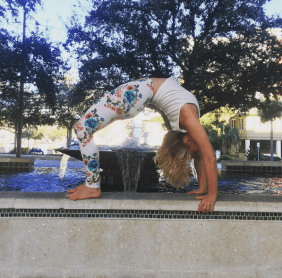 Yoga has taught me how to accept my disease and treat my body with compassion. As I started to progress through the physical poses, I realized how strong my body really was. I formed muscle and gained energy I never knew I had. All of these changes made me want to take care of myself. I started eating gluten-free, dairy-free, and seeing a therapist every week for my anxiety. I also started doing more exercises like running and lifting weights.
Yoga also increases my immune system. I am on Remicade infusions every eight weeks, which lowers my immune system. Yoga helps lower the stress hormones that compromise the immune system. By linking breath and movement, we’re able to condition our lungs and respiratory tract and get blood to the organs so they function at their best. I haven’t had a cold in two years!
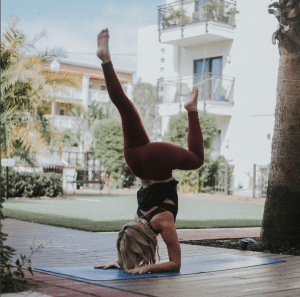 Goodbye anxiety and stress! For most of us living with IBD, we hold our emotions in our gut. This is why we can feel abdominal pain when we are nervous or stressed. Yoga is an easy and natural way to make sure the mind and body are in-sync. The practice allows us to relieve physical tension and relax the nervous system. This takes the strain off our intestines and can really help relieve pain.
As you can see, yoga has so many benefits for people living with IBD. I have fallen in love with the practice and can’t get enough of it! I am now in the process of becoming a yoga teacher so that I can help others living with chronic disease find relief. I would encourage you to visit a local yoga studio and try it out! Namaste.
Way to go, Hilary! To continue to follow Hilary’s patient journey, check out her blog: Life Outside the Lights.

 I was diagnosed with Crohn’s disease 13 years ago and went public about four years ago.
  I had severe pain, bleeding, anemia, and exhaustion. One day I was standing by on camera crouching down in pain. The producer was in my ear saying “Stand by, Hilary…5, 4, 3, 2…”. I stood up fast and started talking, trying to mask the pain on my face. My bubbly and outgoing personality was hanging on by a thread. I had lost 10 pounds and viewers started to notice. My hair started falling out because I was so low on iron and nutrients. I had to cut my hair short, but tried to keep smiling.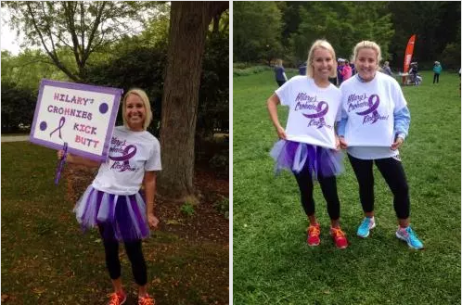

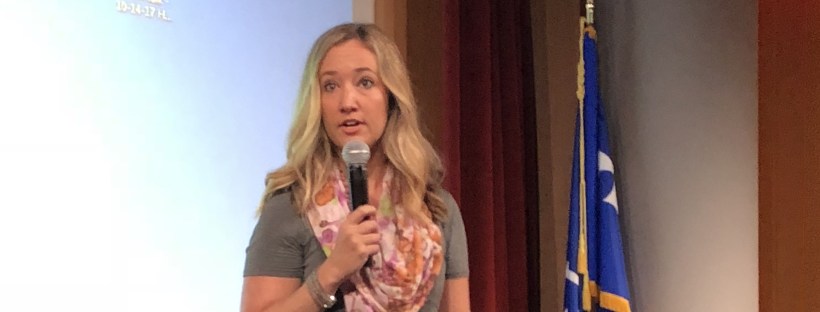

 So, when all of that seemed to crash around us in May I felt lost. I felt alone. I didn’t know which way was up. This wasn’t in my plan nor did I wish for Natalie to journey it.




 I wish I could bottle up those fleeting feelings of invincibility and use them when I need them most. Because just like when you’re diagnosed with Crohn’s… it’s a part of you for the rest of your life, and so is motherhood.
 I’ve had two professional massages at the spa since Reid was born and they have done wonders to relieve the stress. Massage and meditation is also beneficial when it comes to keeping stress levels low. For me, stress is my main disease trigger. I know massages can break the bank, so ask for gift cards around the holidays, for Mother’s Day or your birthday. It’s the best treat.
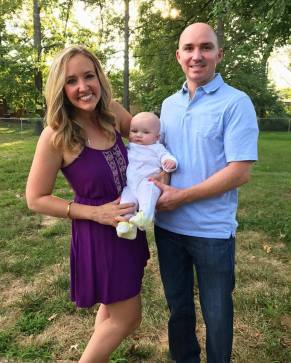
 As far as postpartum flares I am thrilled that I’ve made it Reid’s entire life without needing to make an emergency trip to the hospital. (knock on wood!) I was also told by my pediatrician that Reid would no longer have the remnants of Humira in his system once he hit this milestone. We kept a bit of a low-profile these past six months since Humira is an immune suppressant. Reid couldn’t be healthier. Still hasn’t had a cold yet, so I chalk that up to success! It’s amazing how great it feels to just get outside and take a walk, soak in the fresh air and that time with your baby.
 So, take that time for yourself. Give yourself time to get into a groove and a routine that works best for you. Then one day, whether you’re holding your baby or just changing a diaper you’ll feel this empowering epiphany come over you and you’ll think… “I got this”… and guess what, you do.
 He battles a chronic, degenerative disease: Ankylosing Spondylitis (AS). This autoimmune condition is a form of arthritis that primarily affects the spine. Ricky is a writer and a registered nurse—he has the unique viewpoint of the what it’s like to serve in the medical profession and what it’s like to be in the patient’s shoes. This perspective inspired him to write a book entitled, “Taking Charge: Making Your Healthcare Appointments Work for You.” Ricky reached out to see if I would be interested in reading his book and writing a review. I gladly accepted the offer and was instantly intrigued by the subject matter. What I didn’t realize is that I would read the book cover-to-cover, in a matter of hours. The same day Ricky reached out to me about his book, I started and finished it. It was that good…all 152 pages. And let me tell you folks, seeing that I have a baby who turns six months next week…that speaks volumes!
 In the book, Ricky also talks about the importance of making long-term goals and not just focusing on the present. He writes, “We’ve talked about long-term goals. Make sure they aren’t neglected for the “now.” So, if need be, interrupt the flow of the appointment and change its focus to what you both do to help long-term. Even if your long-term goal is very long-term (for instance, years). It still should be mentioned briefly at each follow-up appointment to make sure you’re still on track and it is still a relevant and appropriate goal. Your health will change over time, it’s important that your goals change with them.” This is so important for so many reasons. When I was engaged and had my bowel resection surgery, I made it clear to my doctors that I wanted to start trying for a family right after my wedding. My drug and vitamin regimen was altered with that in mind, so was the timing of colonoscopy. Having clear communication and being open about what your hopes and dreams are for the future is critical. While doctors may be able to perform miracles with their hands in the operating rooms, master magician and psychic aren’t usually on their resume.
 This book will give you the confidence so many of us lack when we’re in a doctor’s appointment. By being prepared—having questions written down—and looking at our doctors as allies and teammates rather than our enemies, we have the ability to be our own greatest advocates. None of us should feel the need to prove how sick we really are. We should be able to have honest, open and mature dialogue with a person who understands our diseases on a whole different level. I’m going to leave you with a powerful quote from the book—and something we all need to keep in mind:
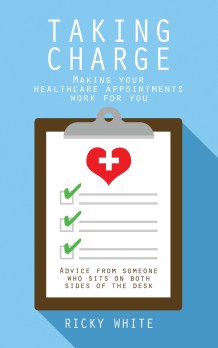 “Your disease, regardless of how common its prevalence, is unique. Remember this often. Healthcare shouldn’t take a one-size-fits-all approach. Don’t assume that your problems are the same as someone else’s and can be “fixed” in the same manner. Neither is true. Your problems are yours and yours alone. That’s something to respect. Celebrate your individuality. One of you is all this world can handle, because you’re awesome. Remember that often, too.”
 , he didn’t let his daunting diagnosis derail his dreams of hitting the mound as a professional athlete.
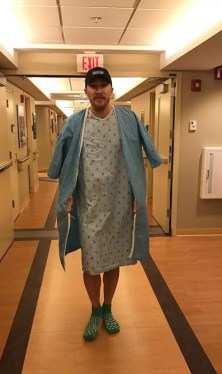 This essentially replaces the functionality of the colon. Jake had hopes of waiting for the surgeries until the offseason, but his disease had a different game plan in mind.
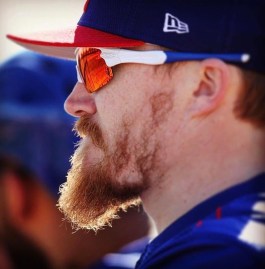 I do become more fatigued than my teammates and have to stay on top of my hydration on very hot days, but other than that, I try to not let it dictate my baseball career.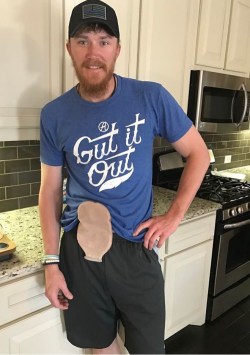

 He received a standing ovation from the crowd at Globe Life Park after retiring all three hitters and earning a big win. It’s amazing to think the same person who was hunched over in a hospital gown walking gingerly through the hallways months ago, is now sporting a Rangers uniform standing before thousands…pitching at the highest level.
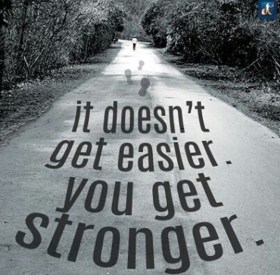 While I believe the diagnosis and the initial flare-up that hospitalizes you is probably the most earth-shattering to your world, maybe as time goes on we just become a bit desensitized to the worry and all the pain.

 We are strong. We are resilient. The suffering and pain is fleeting, it will pass. Just as those amazing and happy days will. Live in the now—don’t stress about tomorrow and only look back to recognize how far you’ve come along the way. When I think of myself “BC” (before Crohn’s) it’s almost like a different person.
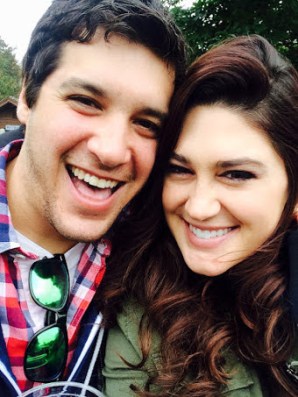 In my head, I rehearsed what I should say. I wanted the conversation to go perfectly, but I was worried about how the words would come out, and how he would take the news. The last time I attempted to have this talk, I got dumped. My ex-boyfriend of seven years broke up with me two days before having ostomy surgery because he couldn’t handle “me being sick all the time,” and I was terrified the same thing would happen again. After all, my current boyfriend and I had only been dating for a few weeks when I decided it was time to let him in on my little secret. I knew it was only fair to tell him.
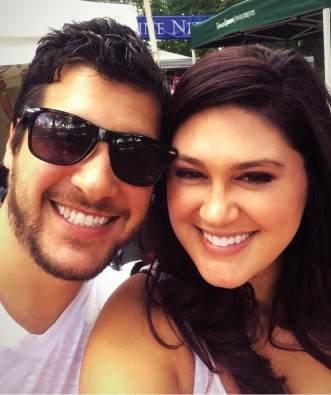 After a moment, I sat up, wiped my tears, and explained that I had something important to tell him, and that I was nervous to hear his reaction. Chris gave me another hug and reassured me that everything would be okay.
 Instead, I was met with love, kindness, and acceptance. And a fair share of curiosity. Leaning in to wipe the tears from my face, he comforted me by saying how brave I was for sharing my story with him. He knew it took guts. He took my hands in his, and reassured me that having a bag didn’t matter to him, I was still me.
  Looking me in the eyes, he told me that I’m beautiful and that having a bag doesn’t change who I am.
 Let that sink in for a moment. That means each year 69,350 people join our IBD family. Take a moment to think back to how you felt when you heard those words come out of the doctor’s mouth for the first time.
 The majority of people I know never ask me how I’m feeling or inquire about how the battle is going. I have to bring it up 90 percent of the time. In some ways I welcome that, other times it’s a bit disconcerting.
 Celebrate those moments and know the next time you’re facing surgery or unable to eat without pain that those incredible feel-good days will visit you again.
 lights camera crohn's