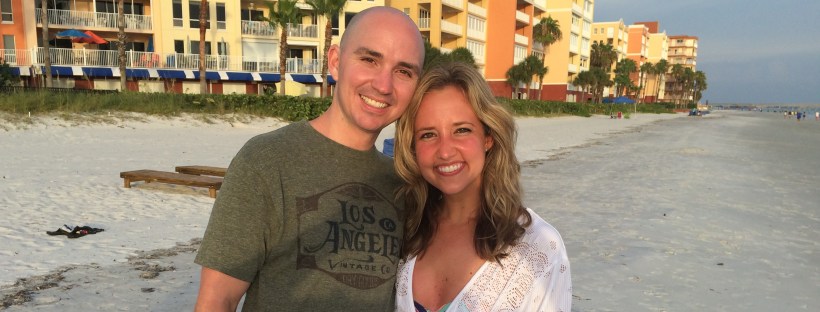
I woke up from my colonoscopy five years ago and was told “You’re in remission”. Tears of happiness streamed down my cheeks. I was in disbelief. Was I dreaming?! It took a decade for me to hear those words, and one week to be robbed of the title.
One week later, I was hospitalized with a small bowel obstruction. The first of three that would happen that next year. So many of us in the chronic illness and IBD community specifically, are constantly chasing after “remission”. But what does remission really mean?
Remission is different for every person, much like IBD manifests differently in everybody. When I heard the word remission five years ago, it felt magical and exciting.

Celebratory post-colonoscopy cheesecake after finding out I was in remission Feb. 2015.
Hell, my mom and boyfriend (now husband) and I went out and celebrated with a big meal at The Cheesecake Factory. When I flared days later, I started feeling skeptical of the term and came to realize how fleeting and elusive remission can be. I laid in the hospital bed, devastated and dumbfounded by what had just transpired.
It took three bowel obstruction and 18 inches of my small intestine to ultimately be removed in August 2015, for me to reach surgical remission. While surgery is not a cure, my bowel resection provided me with a new beginning. As I approach my five year “remission” anniversary this August,

Hospitalized a week later with a bowel obstruction.
I remain on edge. I’ve been blessed to be on cruise control with my illness these past few years. My GI has me well-managed on my biologic and vitamins, I know how to read my body when it speaks to me through symptoms, and when I suspect something is going awry, my care team and I nip the disease activity in the bud.
To me, remission is waking up each morning with the expectation that I’m going to feel well and be able to take on the day as planned. Remission is having more ‘feel good’ days than painful ones. Remission is being confident to attend social outings, travel, and do all the things I set my heart out to do, without feeling suffocated by the fear of the ‘what ifs” of a flare. Remission is being able to focus on the part of me that is so much more than my disease. 
Remission tends to the be the “goal” when it comes to IBD, but it’s not always feasible. It’s easy to see posts on social media and feel like you’re failing because your body is failing you, repeatedly. It took me a decade of living with Crohn’s and surgery to be in remission.
While I’m a compliant patient, I don’t take much credit for my remission. I know how at the drop of a hat I could be rushing to the ER, unable to breathe from my abdominal pain. I remember all the flares that blindsided me and I know my body can decide to flip the switch at any given moment. I feel lucky most the time—while my Crohn’s could be worse, it could be better, too. Remission doesn’t mean that symptoms are non-existent, moreso that the majority of the time I feel well with some not so great days sprinkled in the mix. While in this state of remission, I remind myself not to take this time for granted, not to become complacent, and to stay vigilant on managing my symptoms and overall well-being.
Rather than focusing on the big “R” word that’s loaded beyond belief and placing so much emphasis on it, let’s focus on feeling the best we can each day, communicating openly with our physicians, friends, and family, and taking this uphill battle one step and one day at a time.

 Additionally, users can enable the sharing of “Progress Reports” which include adherence information and all other modalities to optimize your health. Sometimes a caregiver may not be aware of what you need to take and when, this too can be shared via the “Share Care Plans” functionality.


 of Maryland, never knew how much her strong faith would help her through the ups and downs of chronic illness. As a wife, mom of three, and an educator, Kolby shares a heartfelt, eye-opening piece that beautifully captures how faith correlates to the daily battles we face as people with IBD.
 I was as sick as I’d ever been in my life, and couldn’t figure out why I wasn’t getting better. In December 2019, I received confirmation that I had Crohn’s Disease. I was afraid. But through the wind and the waves, I heard Him say “Take heart; it is I. Do not be afraid.”
 Soon, though, Peter took his eyes off of Jesus and focused instead on the wind and the waves and began to sink. He cried out “Lord, save me!” (Matthew 14:30) and Jesus instantly reached out His hand to catch Peter. When He pulled Peter from the water Jesus simply asked “Why did you doubt?” They returned to the boat and the wind and waves cease.
 I found myself focusing on all the tests and doctor’s appointments I had to go to, and the infusions I’ll have to take for the rest of my life to maintain any sense of health I used to know. I focused on the unpredictability that is Crohn’s, and not on the predictable, steadfast love that can only be found in our Savior.
 I feel like we blinked and her first year passed by. That being said, having a baby and a two-year-old, while being a stay-at-home mom and freelancer, who happens to have Crohn’s disease, has its challenges.
 Through motherhood I’ve learned to soak everything in, because you blink, and another year or milestone goes by.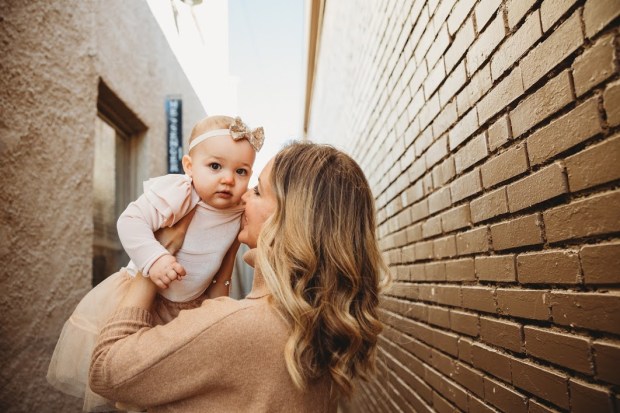


 Fatigue from motherhood when you have a chronic illness can be mind-numbing and debilitating, but seeing your body create a life and then bring a baby into this world makes you feel a renewed sense of love for a body that you’ve been at odds with for years. IBD and motherhood has it’s worries and challenges, but at the end of the day, your children will be the greatest light in your life, and the most magical motivators of strength. There’s almost too much going on to worry about your own well-being, which is both a blessing and a curse!
 Gone are the days of going out at 11 pm, now I rarely go out and when I do, I’m usually home before 10. There’s no pressure to stay out until bar close or take a shot. My friends are all grown women, many of them are moms, our priorities have shifted. Adult conversation over brunch or a glass of wine and some sushi or tapas is refreshing and rejuvenating. I openly communicate about my disease when asked and don’t shy away from the conversation like I once did.
 If you’re reading this and you’re newly diagnosed, a teenager, a 20-something, trust me when I say that balancing life—all your obligations, your network of support, your job and what you’re meant to do with your life will find it’s way. Don’t beat yourself up by creating a timeline or a vision board that sets you up for failure. Don’t try and keep up with the Jones’. Don’t compare where you are in life to your peers. Because there is no comparison. When you have IBD you are being unfair to yourself if you try and be just like everyone else, because you’re not. And that’s ok. Use your experience as a patient to give you patience within yourself. Everyone faces struggles, everyone faces setbacks, but someday I promise you’ll look back and those very same struggles will be the reason you are strong, focused, driven, empathetic, and living the life you were meant to live.


 Yes, there have been times when everything felt heavy and bleak. Yes, there are still times I feel sorry for myself. But those days are far outnumbered by the joy-filled, happy days I choose to focus on.

 We know our bodies, we know our triggers, and we are the ones who are ultimately going to have to pay if symptoms arise. Comments like “Oh, I didn’t think you could eat that?” or “Isn’t that going to land you in the bathroom?” are completely unnecessary. Focus on passing that side dish of mashed potatoes rather than giving us the side eye at the dinner table.
 Bringing “safe” foods or eating ahead of time at home provides comfort and allows us to enjoy more of the party. Please don’t take offense if we eat very little, or nothing at all.
 Please trust we know the side effects of the medications we are on; we know the risks of the surgery we may have to get; we know it all. Please don’t tell us to start taking a supplement you found online. Yes, we’ve heard of: CBD oil, turmeric, probiotics, the list goes on. Please don’t question the safety of our biologic. Our disease is our reality. Unless you live it, it’s not yours.
 Just as with food, everyone with IBD responds differently to alcohol. We understand a glass of wine here or a beer there at a celebration may not seem like a big deal, but one drink can be enough to cause us extreme abdominal pain. Feel free to ask us, but if we decline the offer please don’t pester us, ask us if we’re pregnant, or try and make us succumb to peer pressure. We’d much rather be sober and present at the party without pain.
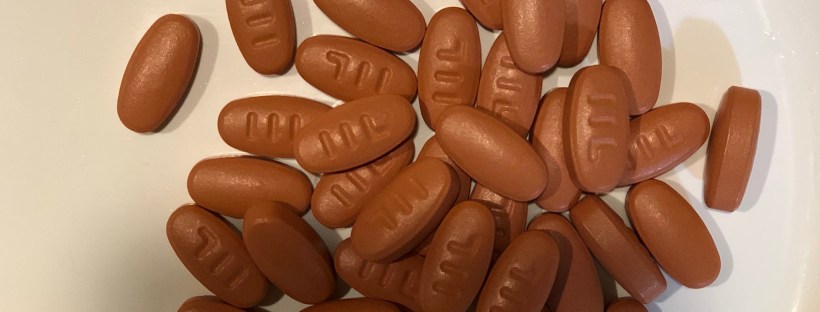
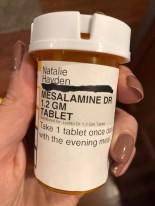 Chances are, if you have IBD, you’ve either been on or are currently taking this as part of your daily treatment regimen. Out of the approximately 1.6 million Americans who have IBD, more than 250,000 are currently on this type of medication. That may seem all fine and dandy, but did you know 5-ASA’s are not FDA approved for Crohn’s patients?
 NH: Given that there’s no evidence that 5-ASA medications are beneficial to Crohn’s patients (and not FDA approved), why are they being prescribed to more than 250,000 patients?
 She was nervous about the potential of being matched up with a roommate who wasn’t a good match.
 was diagnosed with ulcerative colitis less than one week before leaving to study abroad for three months. She says the fact the trip still happened and was so successful was a highlight of her college career. While back on campus in the States, she recalls how stressful it was prepping for colonoscopies.
 when she became sick with IBD, so she barely had time to form a body image that didn’t include this disease. She says she was never somebody who was confident in her appearance, but having IBD didn’t help. From the prednisone “moon face” to issues with gas and continence, there have been lots of times where she felt too gross to be taken seriously.
 caused her to get sick all the time and the community bathrooms weren’t of much help.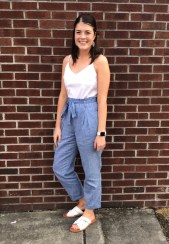

 Constantly stressing about academics, friendships, relationships, and managing a chronic illness for which there is no cure. This is life with IBD on the college campus.
 Dr. Yezaz Ghouri, MD from the University of Missouri School of Medicine, along with IBD Patient, Ryleigh Murray, will be hosting the discussion. Ryleigh is currently a graduate student studying public affairs at the University of Missouri.
 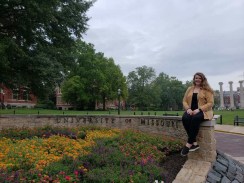 Registering with the Disability Center on your campus and receiving accommodations allows yourself to increase your success rate within higher education. Early registration, extended test time and closer parking to your classes are just a couple simple requests that can impact your education for the better,” said Ryleigh.
 lights camera crohn's