When Crohn’s Tries to Stop you from Being Super Dad: How One IBD Dad Finds Balance

The IBD community is flooded with countless female advocates. I’ve recently been vocal about the need for more men to stand up, share their stories, and be a voice for the community. If you attend a conference or an IBD patient advocate event, 90 percent of the room is female, the same can be said for social media.

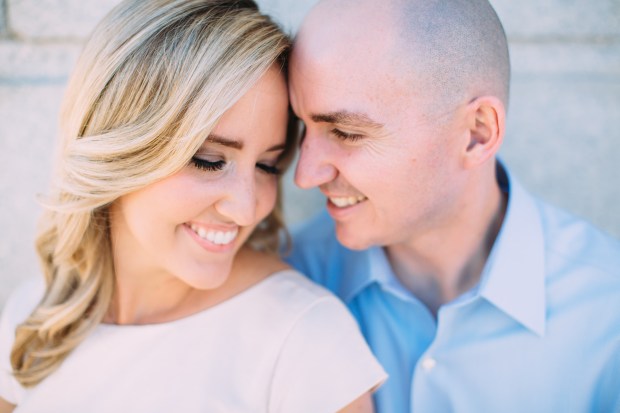
This is surprising since according to the Crohn’s and Colitis Foundation, IBD affects men and women equally. That being said, in my experience speaking with men young and old with Crohn’s and ulcerative colitis—many tend to suffer in silence, downplay their pain, or prefer to keep to themselves about their struggles. While the disease may physically manifest itself and impact men in different ways, it’s the way many feel embarrassed to share their experience, that I wish could change. Colby and Hallie 1

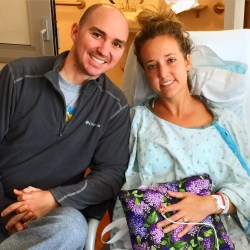
This week—a guest post from Colby Reade. Colby is a husband and a dad who also has Crohn’s disease. He shares insight about his struggles to find a balance between IBD and family life, while offering helpful advice for how to be a “Super Dad” despite your illness. I’ll let him take it away…

I grew up believing my dad was a superhero. There was nothing he didn’t know or couldn’t fix. He would spend hours with my brother and me teaching us how to hit a curve ball or box out a defender on the basketball court. He worked insanely hard to help provide us with a comfortable life. He showed us what it meant to be a partner in a marriage. In my eyes, he was “Super Dad.”

For as long as I can recall, I wanted to live up to that image and a little over four years ago, I got my opportunity when my wife gave birth to our daughter. Nothing is more important to me than being a solid dad and husband. Fatherhood is undoubtedly the most rewarding experience of my life, but also the hardest thing I’ve ever chosen to tackle largely because it is so important to me to be good at it. Ethels Birthday

Unfortunately, life through us a curveball in 2017. What I thought was a case of nervous stomach from a stressful stretch at work turned out to be a Crohn’s flare that lasted 10 months. Not only was I terrified about all the symptoms (digestion issues, pain, fatigue, weight loss), but I felt myself struggling to take on the most important “job” I had.

I was too tired to play or engage when I came home from work…flopping on the ottoman in our living room, trying to pry my eyes open.

I was in pain all the time and struggled to find joy in daddy-daughter games.

I was terrified to be more than five feet from a bathroom so outings to the mall, the zoo or the beach were on hold.

OrchidIt took time and some trial and error, but as I navigate my somewhat new diagnosis, my wife and I have learned how to best monitor my symptoms to try and avoid future flares and take Crohn’s on as a family. In addition to my medical care, this includes some key strategies to how we approach parenting.

Here’s 5 ways we tackle parenting with Crohn’s:

  • Explain to your kiddo what’s going on. This has to be done age-appropriately of course, but it’s important that you don’t hide from your children that you are sick. It is not a failure to admit that you have an illness. Communicate to them that you are under the weather and need their help to adjust your usual routine until you feel better. My kiddo LOVES playing nurse and taking care of her mom or me when we are sick so we can make it into a game.
  • Create activities that don’t involve a lot of energy. While the digestive problems were hard, the fatigue was the worst for me. We started a list of low-energy activities I can do if I find myself mid-flare, such as board games, playing with my daughter’s doll house, and working on crafts.
  • Communicate with your significant other and boss. ThanksgivingMy wife is amazing and understands the physical impacts of a flare, but it’s my job to share with her if I’m feeling Crohn’s-y. Similarly, I have started a dialogue with my boss, so if I flare, I don’t have to pour every ounce of limited energy I have into work and come home completely empty.
  • Find an online community. It can be tempting when you are sick to start Googling your symptoms. This can be a big mistake with IBD because everyone’s case is different and the treatment plan for one person will be greatly different from another’s. However, engaging with an online community either on Twitter, through a Facebook group or an online forum, can be a great resource to gather measured feedback and share your experience.
  • Be kind to yourself. As modern, involved dads we put ourselves under tremendous pressure to be both provider and nurturer. When our bodies are compromised, it can feel like we are failing, weak, and less than. Whether you talk with a counselor, join a support group, or meditate… or all of the above, it’s important to find ways to remind yourself that just because your body is taking on IBD, you are still Super Dad.

You can connect with Colby on Twitter and Instagram (@colbyreade).


IBD Travel Tips You Won’t Want to Leave Home Without

It’s a scary feeling when you’re traveling or away from home and your IBD symptoms flare. As we all know, chronic illness never takes a vacation. Oftentimes the change of scenery and schedule is the perfect storm for disease activity to peak. 

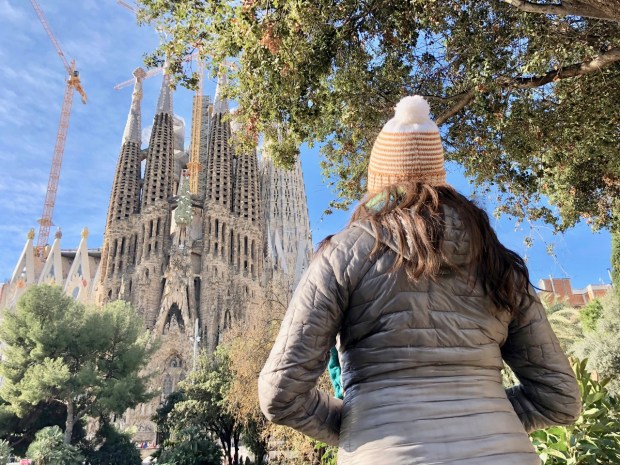
mT3tVteyRCOz2s4mbzraGAThis week–Megan Murray from Balanced Life and Travel shares her top tips for staying in your comfort zone so you can make the most out of your time away. Megan is 37-years-old and was diagnosed with Crohn’s disease in 2013. She’s originally from Oklahoma City, but now she lives in Spain with her husband. She’s passionate about travel and not allowing her disease to hold her back from exploring the world.

Drink water all day, every day

I used to experience painful gas and constipation when I traveled. I don’t like taking laxatives or stool softeners if I can avoid it, so I’ve learned that drinking plenty of water is the best way to avoid/fix constipation on the road. I always carry my stainless-steel water bottle. Single-use plastic bottles of water are convenient, but their cost adds up financially and environmentally. 

Know how to find a restroom quickly

This can be pretty easy when you are traveling in America, because you can usually duck into any store, restaurant, supermarket, museum, hotel, etc. and use the bathroom that is available. Always make sure you have your I Can’t Wait card from the Crohn’s and Colitis Foundation. I’ve only had to use mine once, but boy did it save me from an awful situation.

Outside of North America, it can get trickier depending on where you are and how high the language barrier is. If you don’t speak the language and English isn’t widely spoken in your destination, make “May I use your restroom?” the first thing you learn. Research if there is a Crohn’s and Colitis Foundation in that country and see if they have an I Can’t Wait card in the language of the country. fullsizeoutput_1690

Traveling through Asia and Europe, I’ve never had trouble stopping in at hotels. If it’s a big hotel, especially if it’s an international brand, I just confidently waltz in like I’m staying there and use the lobby bathrooms. If it’s a smaller place, front desk staff will most likely speak English, so you can politely ask to use the bathroom. I’ve never been denied.

Museum lobbies are also a good choice. The one drawback being the security line you have to go through to get to some lobbies. Also look for banks and other businesses that have lobbies. Check out my post on spending a weekend in London with a chronic illness to read about how some very friendly bank employees saved the day for me.

Research food options before you go

My favorite tool on Google Maps is marking restaurants “Want to go” before I visit a city. This helps me avoid finding myself in the middle of fast food restaurants with nowhere to get a meal that won’t trigger my symptoms. IMG_1226

I eat a vegan diet, so I find all of the places that are vegan, vegetarian, and have vegan options before I go and tag them all. In places where I don’t find as many options (usually more rural locations), I pack food that works for me. I love Oh She Glow’s Glo Bars, so I always make a batch or two, wrap them up and throw one in my bag each day. Then I know I always have a snack that will keep the hangry away and won’t make my Crohn’s hurt! Glo bars won’t work for everyone (hello, low-fiber diet I was on for two years), so brainstorm a hearty snack that is portable to take with you. 

Pace yourself

When planning your itinerary, it’s tempting to cram every last activity into your days. Resist this urge! SPq9iyQkSv2CpXItQzKRWgMake a list of everything you’re interested in and then prioritize, cutting out what you don’t have your heart set on. Trying to do it all sets you up for exhaustion, frustration, and disappointment. 

  • Consider how much energy each activity/sight will take and then begin to plan your days
    • Museums are sneakily draining because you are on your feet the whole time.
    • Balance a demanding activity with a laid-back activity on a given day
  • Think about transportation
    • There’s nothing like a 20-minute uphill walk to zap your energy. Budget for taxis. You save time and conserve energy, so they’re worth the cost.
  • Hop-on, Hop-off buses
    • They are super touristy, but they allow you to see and get around a city without the stress of navigating and/or walking to them all.
  • Take breaks
    • I always need a midday break. I either go back to my hotel to decompress and rest or, at the very least, find a cute cafe and have a cup of tea as I read. I love the Kindle app on my phone. Afterward, I’m refreshed and ready to see or do more. fullsizeoutput_f9

I firmly believe that while a diagnosis of Crohn’s or ulcerative colitis is life changing, it’s not a life sentence. I have always loved traveling, so I haven’t stopped. My travels just looks a little differently than they did before. 

“My mom has Crohn’s and I do, too”: Why Sam doesn’t allow IBD to take over her life

Motherhood provides perspective. Motherhood shapes us in a way we didn’t know possible. When you’re a mom with IBD, your past and current struggles make you look onward to the future in a different way. Meet Sam Zachrich. _ADP6012She’s a 30-year-old mom and wife from Utah, who works full-time outside the home. She’s battled Crohn’s disease since December 2011.  

Even though she was officially diagnosed a week before her wedding (imagine that!), Crohn’s is something that was a part of her life long before that. Her mom, also has the disease. This week–Sam shares her experience taking on motherhood and marriage, while juggling everything that comes along with a life of chronic illness.

Like someone with a bad knee before a rainstorm. I knew I was not feeling well and the results of my colonoscopy would reflect that. More medication and more doctors is all I heard from my GI. My husband Nate will tell you a different story. He is always my biggest supporter and remembers way more than I do after waking up from a scope. He heard “Sam things look better… your colon is healing… but there are some issues.” All I heard was “issues”. As a Crohnie, it’s easy to focus on the negative of our disease. It’s easy to forget to celebrate how far we’ve come and the milestones we’ve accomplished throughout our journey.

Growing up with a parent who has IBD

I knew my mom had Crohn’s from an early age, but I didn’t fully understand how much pain and hardship it caused her, until I was in college. I had a wonderful childhood, filled with amazing memories. I don’t remember my mom being sick very often. There were hospital visits here and there, I just always had faith that she would get better.

48397243_10213280363469781_8737081387036704768_oMy mom did an amazing job making sure our lives did not revolve around her disease. She did her best to stay healthy and support us. I want my daughter to have the same experience as I had growing up. I don’t want her to ever feel the burden of my disease. I want her to know that no matter how difficult life gets, there is always hope. My mom is the one person I can call who fully understands my struggles. To have another family member that has and is dealing with the same chronic health issues is a huge support. I am very grateful for her.

A mother’s love

My mom was with me for every scope and doctors appointment leading up to my diagnosis of Crohn’s. She was a shoulder to cry on and a listening ear because she completely understood. Feeling guilty is not something we do easily in our family. We try to stay the course and figure out next steps. I think to some degree she had guilt, but she wanted me to stay strong and knew I would be alright. She has always told me to focus on what I can change in the moment.

To this day, she reminds me: Crohn’s will always be apart of your life, it’s what you do with it that matters. 405889_2533476622399_548286302_n

I try not to focus on passing this disease to a third generation. I know that one day I might be in the doctor’s office with my daughter listening to the same talk I received December 2011. Hopefully we will never have to go there, but if we do, I know that the support and perspective that I’ll be able to provide my daughter can make or break a diagnosis.

In sickness and in health, literally

My husband, Nate, was there from the start of my Crohn’s journey. samI remember explaining to him at one point that this disease would be something I will deal with my whole life and it was okay for him to leave me. It’s really hard to put my relationship with my husband into words. When it comes to Crohn’s, the thought of all he does to support me, makes me tear up. He knew that after our wedding day he would take my mom’s place at all my appointments and be my sole caregiver. Nate never shied away from the challenge and it makes me love him more and more everyday. He is my number one and having support from him means the world to me.

Despite receiving the IBD diagnosis a week before getting married, our wedding day was amazing! I look back and don’t remember being sick (thanks to the steroids!). Throughout our lives there will be days we get to be “normal” and we try to embrace those times as a couple and as a family. Don’t allow for this disease to control all aspects of your life. Have that amazing wedding and find a spouse who loves you regardless of your illness. You deserve that and so much more!

Finding peace through support and letting go

Fast forward to this month. Following my scope, I had surgery to remove an abscess. My husband and I had planned a date night for that evening and already had a sitter. We traded our dinner and play tickets in for a night out at the hospital. This was my second surgery to remove an abscess. It doesn’t get any easier, but I have a different mindset now that I am a mom.  _ADP6466

It’s always hard to leave our daughter Kamryn. We are very blessed to have an amazing support system that we can rely on. It’s so helpful to know that when you are going through a medical procedure, the person taking care of your child loves them as much as you do.  We do not have any biological family in Utah. However, we have an amazing church family that really loves and takes care of us just as well.

My advice to fellow IBD parents is to find peace in knowing that your child will understand one day how much sacrifice you have made to fight this disease. There will come a day when they will ask you questions and you can share your experiences with them.  

I am healing well and my doctors are monitoring things to make sure my Crohn’s stays under control. I have had routine blood work since the surgery and it looks like I will be going in for an MRI this week to check on my liver. While these unexpected twists and turns in my patient journey don’t get easier, I’ve learned not to focus on what I can’t control.

The bright spot of my journey

I was blessed to be able to have a baby girl in January. After so many years of hating my body and being sick, my body finally showed me what it’s capable of. I know that my journey with Crohn’s has made me the best mom possible for my sweet Kamryn. Even though my body may be riddled with illness, it was still able to create a perfect miracle. sAM

I have learned to deal with life in a completely unorthodox way, because of my disease. I am a better mom, wife, daughter, sister, coworker, employee, and friend. Don’t get me wrong, there are days I wonder ‘God, why me, why this disease?’ But I know deep down I am stronger for it and He will see me through the tough times and setbacks. As someone who grew up with an IBD mom, it’s my hope Kamryn will someday look at me the same way I look at my mom.


Why I refuse to mourn who I was prior to Crohn’s: A birthday reflection

This week, I turn 36-years-old. Birthdays are a time of reflection, celebration, and excitement. Last month marked 14 years since I was diagnosed with Crohn’s disease. A chronic illness that has shaped my adult years and my identity.

I recently saw a post on Instagram about imagining life prior to illness. IMG-8194Prior to the challenges and the hurt that coincide with having a disease that you expect to have until your dying day. It’s heavy and can be overwhelming. There’s no cure for IBD and once you are told you have it, your world and your life is forever altered.

When I see childhood photos of myself and think back on my wonderful memories with family and friends through my college years, that girl often feels foreign to me. There are a few things I wish I could whisper in her ear:

“Stop taking your health for granted.”

“Soak in this feeling of invincibility.”

“Make the most of every single day.” IMG-8201

“Enjoy how carefree it feels to never have to worry about what the next day will bring.”

“Soak in the comfort of never needing medication or going through painful pokes and prods.”

“Have more empathy for those around you who aren’t as lucky.”

the list goes on. Hindsight is 20/20. I can’t fault myself for floating through life the first 21 years. I’m glad I had no idea of what was to come. At the same time, I wouldn’t trade what the last 14 years have given me:

They’ve brought me debilitating pain that built my strength.

They’ve brought me sorrow that’s made the sunshine feel extra bright on my shoulders.

They’ve brought me fear that’s been replaced with resolve. 

They’ve brought me lonely moments that are now filled with the laughter of my little ones.

They’ve brought me years of feeling unlovable, but then finding magic with a man who never once shied away from my illness. image (66)

They’ve brought me extreme vulnerability that’s now coupled with gratitude. 

They’ve brought me scars internally and externally that I now see as battle wounds.

They’ve brought me years of embarrassment, that’s transformed to a scarlet letter that I wear with pride.

They’ve brought me feelings of worry that have been washed away by clarity and perspective.

On this birthday and moving forward, rather than mourn the loss of who I was up until age 21, I choose to celebrate who I’ve become the last 14 years. While this illness has tried time and time again to rob me of my joy, it’s provided me with evidence of my resilience. Since my diagnosis, I’ve worked full-time as a TV news anchor, reporter, and producer, I’ve gotten married, I’ve had two children in 21 months, and I’ve become a steadfast patient advocate. balls-1786430_1280Crohn’s has shown me that just because I get knocked down with a flare, doesn’t mean I can’t bounce back and be better. With Crohn’s, life often feels like you’re in the passenger seat and your fate is out of your hands. Rather than sit back passively, I choose to grab the wheel. Cheers to 36!

Three years of Lights, Camera, Crohn’s: 10 Tips for Becoming an IBD Blogger

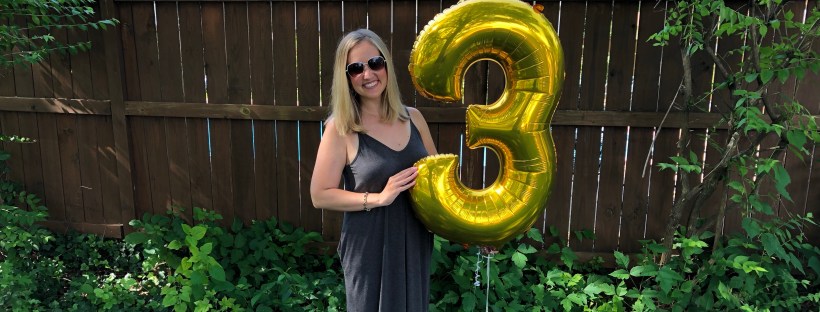
Tomorrow (July 23, 2019) marks three years since Lights, Camera, Crohn’s became a reality. Three years since I closed my eyes and took a major plunge, wondering if my words and effort would make a difference. Three years since I decided it was time to stop living my IBD life in the shadows, and instead bring my personal struggles and triumphs to the forefront. A31AD785-CDF7-43D5-BA1D-BFDDC69B493EI chose to blog and become a patient advocate for several reasons. I was tired of feeling isolated. I wanted to be a voice for the newly diagnosed, as well as the veteran patient. And, as a journalist, I’ve always had a love for the written word. For me—expressing myself through writing comes a lot easier than saying the words out loud.

July 23rd is a big day on the calendar each year for me—it’s the anniversary of my Crohn’s diagnosis (14 this year!), my dog Hamilton’s birthday (He’s turning 11) and it’s the day I met my husband online (6 years ago!). If that’s not a sign that things happen in threes, I don’t know what is! Knowing this, I had to launch my blog on this day. Rather than focus on how many years I’ve been riddled with a chronic illness, it’s a way to celebrate how far I’ve come on my patient journey.

I’m going to do a little humble brag right now. Since launching my blog in 2016, I have never missed a week of posting fresh content. Through two pregnancies and being a stay at home, IBD mama with a now 2-year-old and six-month-old, I found a way to stay true to my own personal deadlines, because this blog, and this community and IBD family are so important to me. 41113C90-2C99-4252-B69B-212DB2295A33In that time, I’ve shared 171 new articles (because some weeks I post on Mondays AND Wednesdays). Over the last three years, more than 105,000 people from around the world have checked out Lights, Camera, Crohn’s. Could the articles be organized better? Yes. Could the design be snazzier? Yes. But, my focus as an IBD blogger and advocate is to give you the nitty gritty. I’d rather spend my time and energy on content vs. design.


One of the most common questions I receive is, “How do you become a patient advocate?” or “How do you become a blogger?” It obviously takes time, passion, and commitment.

Here are my top 10 pieces of advice for you, that I wish I would have known before blogging.

  1. Write for the reader and for yourself. As patient advocates and bloggers, it’s generally our own personal experiences that shape the content we share. That experience and viewpoint is invaluable, but remember—the reader isn’t here to check out your diary. They are here to learn ways to improve their patient journey, to educate themselves. When you write, write to the people reading. Don’t bore them with every.single.detail. of your doctor appointment. Use that experience as the foundation and springboard into a larger discussion that is easy for others to relate to. Think “news people can use”…otherwise, why read your stuff?
  1. Be bold. Be vulnerable. It can be very stressful and overwhelming to put your whole health story out there to the public. If you’re like me, I kept my disease to myself and close family and friends for a decade. Going from that—to sharing my story with thousands, is polar opposite. But, I can tell you, once you open up, you won’t regret it. The moment you break down your own barriers and show your true stripes, you open yourself up to endless support and quickly come to realize how many others understand your reality.
  1. It’s not a competition of the sick. Just because you haven’t started a biologic, just because you haven’t had surgery, just because you don’t have a bag, doesn’t mean your patient journey is any less significant or important. IBD impacts each and every one of us differently, but there are so many parallels along the way. Trust that what you are going through physically, mentally, and emotionally is something many people can relate to. I haven’t been hospitalized for my Crohn’s since August 2015 (before my blog went live!), but in my 14 years living with the disease I’ve experienced so many highs and so many lows, so many flare ups and so many feel good days. It all matters. And it’s all a part of it. People don’t just want to see you in the hospital or struggling, they want to see other aspects of your life, too.
  1. Be patient with yourself through the process. Writing about life with IBD can be emotional. It can be draining to bring up old memories that were the most difficult days of your life. It can also be cathartic. Write stream of consciousness-style. Rather than thinking about each word and constantly hitting the delete button, just let it flow. Edit yourself later, not in the moment.
  1. Have a thick skin. Being a patient advocate and a blogger isn’t always sunshine and rainbows. You are going to receive both public and private messages from naysayers. People may question why you aren’t “healing yourself with food” or “why you need a biologic”. The only person you need to answer to is the person looking back in the mirror, along with your physicians. No matter how much you share online, no one has the FULL story of your own personal experience. Let the judgers, judge…and keep on trucking. Keyboard warriors have a way with words, don’t allow others to bring you down or stress you out. That’s the last thing we need living with IBD. I’ve come across a few instances on Twitter, where banter got pretty heated. When my heart started racing and my stomach started hurting, I knew it was time to block them and move on. Don’t be afraid to block when needed.
  1. Remember you are a patient, not a medical professional (unless you are both!) It gets dangerous when patient advocates spout off medical advice to those desperately looking for answers. When people come to you for support or with questions about how to handle their care—always advise them to talk with their care team, and remind them you are not a doctor, but this is what has worked for you. Yada Yada Yada.
  1. Lean on others in the IBD family for guest posts/sharing your content on social media. Advocacy is not a competition. There is room at the IBD family dinner table for ALL of us. Interact with other people’s blog articles and social posts. Show them the love, chances are, that love will be reciprocated. Oftentimes, it can feel like everything you are doing is falling on deaf ears (thanks so much, Facebook algorithm)…that being said, don’t focus on the “likes” and the “comments”…if your article or your words help one person or one family, you’ve made a huge difference.
  1. Always be on the lookout for content. The former TV news anchor and reporter in me always has my eyes and ears open for the next story. Look at social media and see what’s trending in the IBD community. Ask your followers what topics they’d like to see more on. Set up Google Alerts in your email to see the latest about IBD research and news. Pay attention to people’s stories. When someone reaches out to me with a question, I often dig a little deeper and see if this is something that would make for a good article. Every single person has a story to share, it’s just a matter of discovering what that story is.
  1. Be authentic and true to who you are. Oftentimes businesses and companies will reach out to patient advocates looking for promotion or support. Don’t be a “yes-(wo)man”. Only promote causes and products that you genuinely believe in. Don’t sacrifice your hard-earned credibility for a few bucks, because your credibility is priceless.
  1. Stop selling yourself short. Your IBD life and story is valuable. Gone are the days when big pharma and businesses can tap into us as resources for free. We’ve all gotten smarter about this. Your painful journey hasn’t been easy. But, with that journey, you’ve gained a perspective that businesses are thirsty for. They NEED our insight. They NEED our input and perspective. Unless you live with IBD personally, you can’t fully grasp what it’s like. Sure, volunteer work for the Crohn’s and Colitis Foundation is one thing, but as soon as someone wants you to be an “influencer” or speak at an event, etc. know your worth and don’t ever be afraid to ask what the compensation is.

D6DF8E56-4DAE-4531-A7A6-77BBAAA1E545

I’m hopeful that three years from now on July 23, 2022, I’ll still be blogging and will still be a vocal voice for the IBD community. Thank you for sharing in my journey and for pushing me to be better. Thank you for reading and for caring. Thank you for being a listening ear and a watchful eye. Thank you for walking alongside me through pregnancies and motherhood as a woman with IBD. I promise to deliver more content that helps guide you through your journey and show you just how capable you are of being everything you ever hoped for. God bless.

XO,

Natalie

Why you shouldn’t put ‘self-heal’ and Crohn’s in the same sentence

This article was written earlier this month, while getting my hair done. 

I hear her cry. I glance at the clock that reads 4:55 a.m. I clutch my abdomen. The pain I went to bed with hours earlier is amplified. IMG_4409It feels like a fiery pain inside my rib cage that travels all the way down my stomach. The gnawing makes me feel raw internally and externally. I put my glasses on and as I’m standing up and rocking my daughter in her nursery, I try to think of her warm little body as a heating pad.
I wrestle with my thoughts about how to handle my pain. Last time I took pain medication I couldn’t breastfeed my daughter for 20 hours. I decide to take one 600 mg ibuprofen left over from my C-section recovery, with the understanding that as someone with IBD I shouldn’t be taking that. But I’m desperate. Desperate to get a reprieve from the pain and the inner monologue racing in my head as I lay back down. While at the same time, trying to keep my painful moans quiet so I don’t wake my husband.

I wake up and the pain is still there, but I have no choice but to take on the day. Thanks to my mom being in town, I’m able to head to the hair salon for a much needed hair cut and color. The stylist asks me questions and my Crohn’s comes up fairly quickly in the conversation. Her response—“one of my best friends has Crohn’s and she’s completely self-healed herself by eating very strictly”. She goes on to say her godmother has Crohn’s, too—and constantly posts pics on social media eating and drinking, so it’s no wonder she struggles, acting almost disgusted by her godmother’s lifestyle and patient journey.

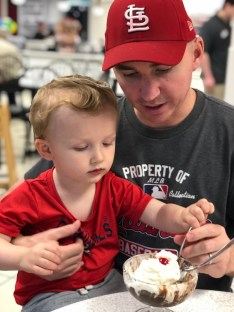
I bite my tongue. The pain from the night before and the worries weighing heavily on my mind and heart are still fresh. Self-healing and Crohn’s, if only it were that easy, that simplistic. But I don’t have the energy to get into that discussion. IMG-3099The fact that so many people without IBD are under the assumption that our pain and symptoms are self- imposed upsets me. We already beat ourselves up mentally as it is. My husband and I took our son for ice cream last night, so immediately I wonder if all of my pain is a result of the choice to have ice cream with my 2-year-old.

As a mom who’s battled Crohn’s for nearly 14 years, the background noise and ignorant comments about IBD tend to bounce off me. I have thick skin, now. But, it’s worrisome at the same time. What if the girl getting her hair done wasn’t me? What if she was newly diagnosed and struggling? What if she chose to go off all medications and “self-heal” because someone cutting her hair told her it was possible? This is what we’re up against as patients. Everyone tries to relate and thinks they are offering “words of wisdom” or assurance, when really they’re just contributing to the hurt and feelings of being less than. IMG-4410

Luckily, I’m not that girl. But—if you’re reading this, know that your patient journey is unique to you. What works for one person, will not necessarily work for you. Needing medication to manage symptoms and keep your disease from progressing is not a sign of laziness or weakness. You need to take the steps necessary to improve your quality of life and overall health. Living with IBD is not black and white. There is so much gray area. Trust in your physician. Trust in the support available both online and in your community from fellow patients. Be patient in discovering what works for you, be flexible, and do what you need to do to self-heal.

10 Tips for Ensuring Your Significant Other Can Handle Your IBD For the Long Haul

This article is sponsored by Healthline. Thoughts and opinions are my own.

Dating is complicated. Dating can be stressful. Dating can force you to get out of your comfort zone.

IMG_1127

One of my first photos with my husband, Bobby.

When you live with a chronic illness, dating can be downright daunting. When should you bring up your IBD with a significant other? How can you navigate the ups and downs that come along with your illness? How can you reach a sense of comfort when you need to run to the bathroom or cancel plans?

There’s not only one correct answer to any of those questions. But, as a woman who was diagnosed at age 21, who is now 35 and married with kids, I’m happy to share what worked for me. I recently led a Live Chat on Healthline’s IBD app about this topic. The main areas of concern revolved around significant others failing to grasp the severity of the disease. It’s difficult to fault what can sound like shortcomings, but being a caretaker isn’t easy. Not everyone is cut out for it.

FullSizeRender (37)

Celebratory post- colonoscopy cheesecake!

And that is ok.

Here are my top 10 tips for educating significant others—whether it’s dating or marriage about what your experience as a patient is like.

  1. Bring your loved one along to doctor appointments.

Oftentimes, people have no clue how severe and debilitating IBD is. Let your partner hear it from the horse’s mouth (i.e. the doctor). By sitting in on appointments, not only is it a source of support for you, but a chance for them to ask questions, listen to the discussion, and hear about all that goes into managing your chronic illness.

  1. Have a social worker or counselor speak with you both so that you’re on the same page.

Oftentimes a loved one isn’t acting maliciously; they just don’t know how to cope with what life with IBD entails. Talking with a professional gives you a safe space and an even playing field to ‘air your dirty laundry’ and gather advice about actionable ways you can improve your relationship.

  1. Communicate when you’re in pain—don’t sugarcoat or downplay your symptoms.
    If you’re hurting, say it. IMG_7446If you’re struggling, tell them. The more you keep your mask on and your wall up, the more your partner will think you have everything under control and that your IBD isn’t much of a “big deal” in your life.
  2. If your feelings are hurt—articulate why. Resentment leads to stress and can activate symptoms. Be brutally honest and open. You can’t expect your lover to be a mind reader. By bottling up your frustration you may take out your anger in a big way, when an issue could be solved and nipped in the bud before it becomes bigger than it needs to be.
  1. Connect with fellow IBD patients on Healthline’s IBD app.

Whether it’s a live chat, reading articles, or matching up with fellow patients, Healthline’s new IBD app is a space where we all get you. We’ve all been there. We’re all standing ready. Ready to lift you up. Ready to answer your questions. Ready to listen to you vent and share advice. Advice that can make a major impact in your most personal and important relationships. Because at the end of the day, you want someone who loves you for all of you, and that includes your IBD.

  1. Share blog articles and social media posts from fellow IBD advocates that may be able to articulate what you’re going through.

Sometimes as patients, we’re going through so much but it can be difficult to put into words. While each person’s disease presents uniquely, chances are we’ve gone through similar experiences. If you read an article that resonates or see a post on social media that hits close to home for you—share it. This is an easy way to casually show the person you love that this is what you’re going through. A simple email with a link to an article—works wonders.

  1. If you want your person by your side at procedures and during hospitalizations, say it.

During the live chat, there was some discussion about fiancés and husbands not going to procedures or being by the bedside during the hospitalization. That a put a lot in perspective for me, as my husband has never left my side when I’ve been hospitalized (not even for an hour) and has gone to every colonoscopy.

Photo by J Elizabeth Photography www.jelizabethphotos.com

Photo cred: J. Elizabeth Photography

I’ve never had to ask. Bobby just does that because he wants to. If you want your significant other there, tell them. The disease is isolating enough, the last thing you need is to be lying alone in the middle of the night with your racing thoughts and the beeping machines.

  1. Be with someone who you can be vulnerable with.

IBD isn’t pretty. There are days where we’re cooped up in the bathroom. There are times we’re in the fetal position for hours. If you feel at ease at your worst with your person, that’s a good sign. Recognize how you feel when you’re at your lowest point and at your best. Pay attention to how they respond when the going gets tough.

  1. When the red flags are waving feverishly in front of your face, don’t be afraid to walk away.

Listen to your gut. You know deep down if you constantly feel like a second thought or if your partner repeatedly lets you down. If they make you feel guilty, less than, or put off by your patient experience, time to say buh-bye. Trust me, you will count your blessings in the future.

  1. Take them along to local Crohn’s and Colitis Foundation events. IMG_8059

By attending local events you’ll be able to connect face-to-face with fellow couples and families living your same reality. You’ll discover how much you have in common right away. This also enables your partner to have someone who “gets” what it’s like to be a caretaker. Set up a double date or a time to hang out outside of public events.

My Tribute to the IBD Family: You are visible

The theme of World IBD Day (which was yesterday, May 19) was to make the invisible, visible. Here’s my tribute to my fellow IBD warriors and their caregivers.

To the newly diagnosed…

To the person going through their first procedure whether it’s a CT scan or a colonoscopy…colonoscopy

To the parent of a child battling this disease…

To the person being wheeled in for their first surgery…

To the person taking their first steps out of the hospital bed while on the road to recovery…

To the person glancing at their incision for the first time…

To the person looking in the mirror and not recognizing the reflection looking back…

To the person on a liquid diet because it’s too painful to eat actual food…

To the person on a steroid feeling unattractive, irritable and high strung…

To the woman wondering if her body is strong enough to carry a baby…IMG_3723

To the man who’s concerned about being able to be a source of strength for his family…

To the pregnant woman worried about flaring and how it will impact her unborn child…

To the person beginning a biologic or a new medication, who’s petrified of the laundry list of side effects…

To the person crying themselves to sleep because they feel alone in their struggles…

To the mom who feels like she’s waging a never-ending war against her fatigue…

To the teen wondering if they’ll be able to go to college…

To the college student embarrassed of going to the bathroom in the dorms…

_F6B4724To the person nervous to open up in a relationship and disclose they have this disease…

To the person who had to get out of a relationship or was left because the support was lacking…

To the bride or the groom worried about having disease symptoms on their wedding day…

To the person shaking with fear in the parking lot of their doctor’s office, nervous to walk in and face the music…

To the person boarding an airplane nervous about symptoms and being around germs…remedy-nsmith-stlouis-1284

To the person who’s just been told another medication has failed them…

To the person lacking a genuine support system…

To the person who feels misunderstood, frustrated, and judged…

To the person sitting on the toilet contemplating whether a flare is starting to strike…

To the person in the passenger seat being rushed to the emergency room, yet again…

To the person getting their blood drawn staring at a focal point on the wall…

To the person who is constantly approached with the latest and greatest “fix”, “cure”, or way to “heal” …

natalie mothers dayTo the person worried about passing this dreadful disease onto their children…
To the person with the bad veins dealing with their eighth IV poke…

To the person who feels lost and misses who they were prior to being diagnosed…

To the person lying in the fetal position trying to get through this moment…

To the community who feels like home to me.

I see you. I hear you. I believe in you. I’m here for you. I love you.

We’ve all been these people. We all know this is the reality of life with IBD. It’s not easy. It’s scary. It can be overwhelming. The emotional pain can oftentimes be worse than the physical pain. Living with a chronic illness, no matter what your age or circumstance is tough. There’s no sugar coating it.

At the same time, I want you to whole-heartedly believe that while this disease can rob you of joy, it can also provide you with perspective, strength, empathy, understanding, gratitude, patience, and clarity. You my friends, are far from invisible.IMG_3434

I see you. I hear you. I believe in you. I’m here for you. I love you.

Thank you for helping me to see the light on the dark days, inspiring me when I need it most, and showing me that there’s much more to life than being a patient. I hope I do the same for you, always. Use your journey. Use your story. Use your setbacks. Use all that you are, to inform, educate, and implore others to want to better understand your reality. I promise, you won’t be disappointed.

XOXO-Natalie

From one IBD mom to another: An interview with Tekhni Wovens Founder, Alisa DeMarco

When a family member is diagnosed with IBD the same week as you, it can be sort of a saving grace.

Alisa

One month post diagnosis–dealing with the side effects of prednisone.

My cousin’s wife, Alisa DeMarco, was told she had Crohn’s disease a matter of days before I was in July 2005. At the time, she was one of the only people I knew who had the condition—one of the only people I could confide in who could genuinely understand my reality. At the time of diagnosis and throughout your patient journey—these bonds and relationships are the glue that keeps you together.

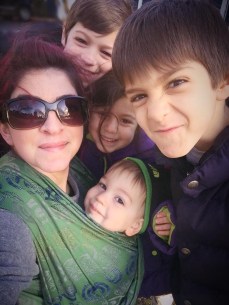
alisa3Now, nearly 14 years later—her and I have come a LONG way. She’s on Remicade. I’m on Humira. We are both mothers. We are both wives. Alisa didn’t allow her disease to stop her from following her personal or professional dreams. In 2013, she left corporate America and founded Tekhni Wovens. As an IBD mom and successful business owner, her perspective and ability to overcome the odds is something we can all admire and look up to. This week—an interview with a woman I’m lucky to call family.
NH: What inspired you to create Tekhni Wovens?

AD: As a full-time working mother who enjoyed caring for my children with the help of wraps and slings, I quickly found myself as part of the babywearing community.  Over time I shifted from consumer to manufacturer, designing textiles when I didn’t find what I was looking for— a fashion-forward aesthetic in easy-to-wear blends at accessible prices.

NH: As a woman with IBD, a mom of four, and a wife–how do you balance leading a successful business and keeping your disease symptoms under control?

AD: Balance is a hard ideal to maintain– and I am not always successful! Image-58 I multi-task everything, stay on top of my biologic infusions, rest when possible and, plan my diet loosely around a mix of SCD and low gluten eating. Getting help is difficult, but I feel lucky to have a supportive husband and local family network. My travel schedule wears me down– but thankfully most of my disease symptoms are well controlled.

NH: What advice do you have for fellow IBD’ers who have big dreams but are hesitant to go after them because of their disease?

AD: Your dreams don’t have to be an all or nothing pursuit!  Tekhni started as an idea to make a better product and help support my family… and evolved into multifaceted business with accounts worldwide.  However, it took years, and many winding paths to get there. Know that there’s no deadline or requirement for any passion you want to pursue.  Start with an idea, and break it down into bite-sized pieces. Your disease is only one small part of your identity, and cannot prevent you from planning and dreaming and accomplishing daily tasks on your own timeline. Image-56

NH: Why are you passionate about babywearing?

AD: Babywearing and attachment parenting are very close to my heart– they are natural extensions of our mothering instincts. They help me care for my young, closely-spaced children while working full-time and managing a household with a husband who is often away for work. Image-55Babywearing helps me effectively multi-task and meet my all children’s needs at the same time. It also helps address postpartum depression, by syncing mother and baby, and raising oxytocin levels.  I believe babywearing is a necessity that should be taught to every single expecting parent and caregiver!

NH: Why is babywearing so beneficial for those with IBD in particular?

AD: Babywearing is a perfect fit for people with autoimmune diseases– it helps you hold, carry, and comfort your baby while taking weight and strain off of your back and hips. For difficult days, it can literally be another set of hands.  And keeping baby in proximity leads to less crying, less stress, and more rest for both baby and mother. Image-60As a bonus, a variety of baby carriers can be adjusted to accommodate an ostomy or j-pouch.

Stay tuned to my Instagram account (@nataliannhayden) for a giveaway on Friday, May 17. We’ll be giving away a Studio Tekhni Ring Sling! The winner will be announced on World IBD Day (May 19). Good luck!


The days are long, but the years are short with chronic illness

The days are long, but the years are short. Oftentimes this ‘saying’ is commonly shared when talking about parenting. This past weekend my first born turned two. A rush of emotions came over me as we celebrated my son Reid’s special day. I got to thinking—the same is true for life with chronic illness. Reids second bday

The days are long, but the years are short. When you hear that life-sentence uttered from a doctor, your world comes to a standstill. Everything from your past and everything in your future seems to come to an abrupt halt. You feel like you’re suffocating and there’s no way you can go on. But you do.

The days are long, but the years are short. As I come up on 14 years this summer since my diagnosis of Crohn’s disease, I can hardly recall who I was before my IBD. That person, that identity—seems somewhat foreign to me. When you think “14 years”, it sounds like a long time—but, it feels like a blink of an eye. It’s a blur of experiences—some painful, some amazing. I choose to focus on the amazing.

The days are long, but the years are short. When you’re dealing with abdominal pain, when everything just hurts, when you experience nausea and vomiting moments after you try and eat, the days feel endless. IMG_8476When you’re in the thick of a flare and when feel good days feel far from ever being a possibility, try and remember how fleeting these moments are.

The days are long, but the years are short. When you’re being rolled in for another CT scan in the emergency room, when the nurse can’t seem to get an IV started on the fifth try, when you’re dreading your injection, when the colonoscopy prep is making you gag on your knees in the middle of the night in the bathroom, when you’re up counting the hours before surgery, feeling like the world is on your shoulders—remind yourself, this too shall pass.

The days are long, but the years are short. With children as they grow up, we can visually see the physical change going on. Two years ago, my son was a newborn, IMG_6459today he’s a rumbustious, adorable, little ball of energy. Sure, we age, too—but we also mature mentally when it comes to our illness. What felt like the biggest obstacle and scare of our life, evolves into something that is a part of who we are, an identity that while not ideal, helps to define us.

The days are long, but the years are short. Every year without needing to be hospitalized, every year where you feel like you have your disease under control, every year where your health doesn’t take you away from the life you are yearning for, hold on to those years.

The days are long, but the years are short. Rather than wish time away, I try and remind myself how each and every comeback is stronger than the setback. That every time I’ve been knocked to my knees by my disease in the past, I’ve come out of the storm stronger and with greater perspective about this life I’ve been given.

The days are long, but the years are short. You don’t always have to love your life. You can certainly mourn the loss of who you were prior to diagnosis, lord knows I did. remedy-nsmith-stlouis-1283But I can promise you, that as life goes on and as the years since that moment of diagnosis get further and further in the rear view mirror, you will find a comfort in this identity.

The days are long, but the years are short. You will garner a confidence in your strength that wasn’t there years before. And someday, you too will pause and think about where you’ve been and how far you’ve come to reach this moment. I hope you give yourself a proverbial pat on the back to honor your resilience and determination to live your life despite all the what if’s, despite all the pain, despite all the worry. Because you my friend, are a warrior—day in and day out—and you are so much more than your disease.