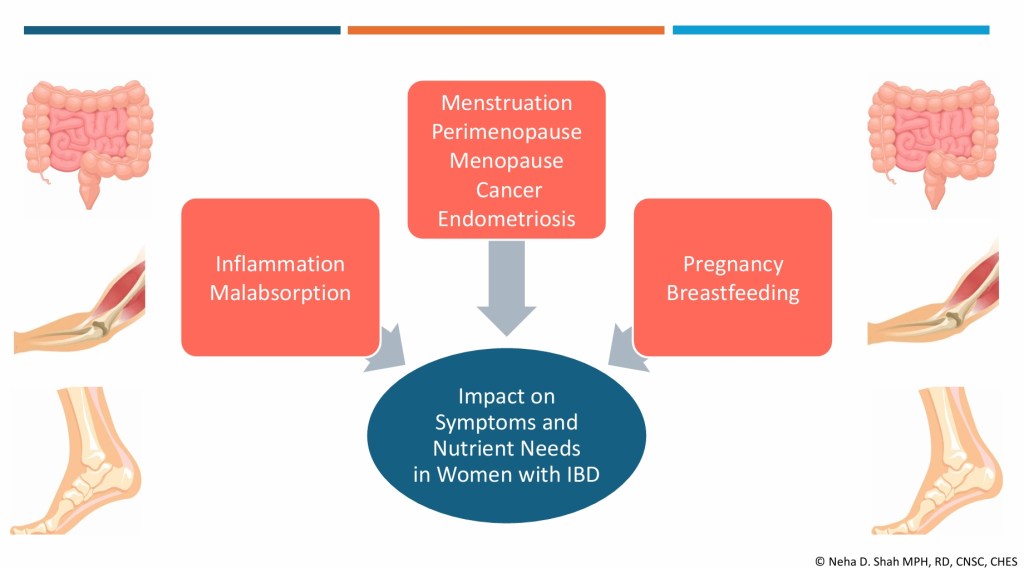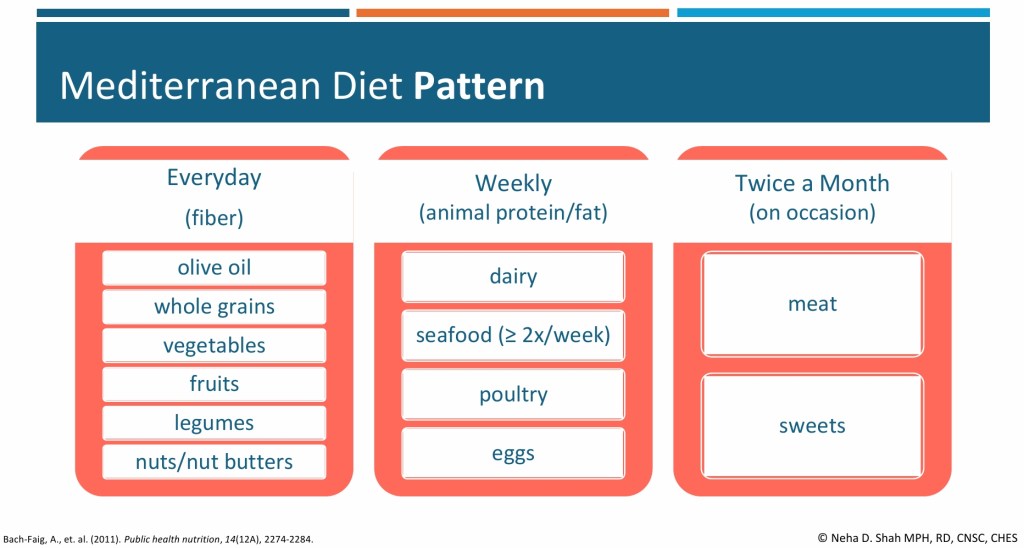
As the years go by living with IBD, our health needs change and our IBD care should evolve with us. Women’s health in IBD is about so much more than pregnancy. Symptoms around menstruation, questions about contraception, puberty, sexual health, fertility, menopause, bone health, and cardiovascular health are all legitimate parts of your IBD care. Cedars-Sinai Hospital in Los Angeles, California recently held their second annual Women’s Health in IBD Conference.
Dr. Puja Khanna, MD, spearheads the conference and wanted to share more about the key takeaways and where she sees personalized medicine moving in regard to women’s health now and into the future. This week on Lights, Camera, Crohn’s, Dr. Khanna shares incredible guidance that will leave you feeling empowered as you navigate all the joys of being a female living with IBD.

Personalized IBD care for women
We have become very sophisticated at phenotyping IBD—Crohn’s versus ulcerative colitis, disease location, behavior, biomarkers, and prior medication exposure. But we have been much less sophisticated about incorporating a woman’s life stage into that same personalized approach.
“A 14-year-old navigating puberty, a 28-year-old choosing contraception, a 35-year-old planning pregnancy and a 52-year-old entering menopause may have exactly the same Crohn’s phenotype on paper, but they do not necessarily have the same health priorities or the same risks.”
Dr. Khanna thinks the future of precision medicine in IBD needs to include not only what kind of IBD a patient has, but also where a woman is in her life, and what she needs at that specific life stage.
Navigating hormonal shifts
Hormones can intersect with IBD throughout a woman’s entire life—from puberty and menstruation, through contraception and pregnancy, and into perimenopause and menopause.
“I want women to understand that changes in symptoms do not always mean their IBD is becoming more active. Hormonal shifts can affect bowel habits, fatigue, pain, sleep, and mood, and sometimes those symptoms can look like an IBD flare,” Dr. Khanna explains. “The good news is that we increasingly have tools such as fecal calprotectin, blood markers and intestinal ultrasound that can help us distinguish symptoms from true intestinal inflammation rather than simply guessing.”
Recognizing that your GI team is a safe space
As a woman who has lived with Crohn’s disease for over 21 years, I know from my own personal experience how important it is to feel comfortable bringing these issues up to your GI team. Women’s health and IBD are all part of the comprehensive care you should be receiving. Questions about periods, contraception, sexual health, fertility, menopause, bone health, and even cardiovascular health are all part of comprehensive IBD care.
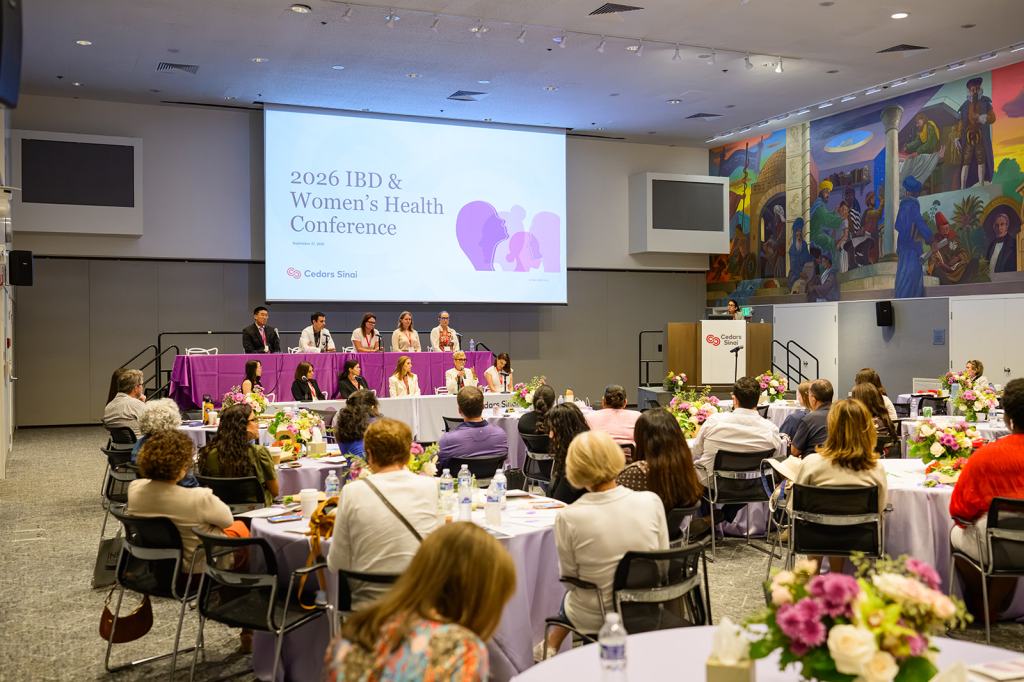
“I want women to feel empowered. Their health needs are going to change throughout their lives, and their IBD care should change with them. The goal is not simply to control inflammation—it is to help women with IBD stay healthy and thrive through every stage of life,” says Dr. Khanna.
The intersection of each chapter in a woman’s life with IBD
While pregnancy remains incredibly important, it’s important to remember that the child-bearing years are just one chapter in a woman’s life with IBD. It’s becoming increasingly understood that each touchpoint in a woman’s development and aging intersects with IBD in different ways.
Dr. Khanna says, “Research is beginning to reflect that broader view. Recent reviews are specifically looking at IBD from puberty through menopause rather than treating women’s health as synonymous with pregnancy. The next step is translating that into routine clinical care, where we proactively ask women about these issues rather than waiting for them to bring them up.”
Gaining a better understanding of hormones and their impact on IBD
Hormones used to be thought of as almost an on-off switch—more estrogen or less estrogen and perhaps more or less inflammation. We now appreciate that it is far more complicated.
“Estrogen and progesterone interact with receptors on intestinal epithelial and immune cells and may influence intestinal permeability, immune signaling, gastrointestinal motility and even the gut microbiome,” says Dr. Khanna. “At the same time, the microbiome can influence estrogen metabolism through what is sometimes called the “estrobolome.” Genetics, medications, diet, and underlying inflammation are interacting with all these pathways.”
The important caveat is that much of the mechanistic science is ahead of the clinical evidence.

“We understand the biologic plausibility much better than we did a decade ago, but we cannot yet predict an individual woman’s IBD course based on hormone levels.”
Puberty and IBD
Dr. Khanna recommends parents watch out for the overall trajectory rather than any single symptom. Ask yourself:
Is she growing appropriately?
Is she gaining weight?
Is puberty progressing normally?
Are menstrual periods developing normally?
Is she unusually fatigued or becoming iron deficient?
Has her appetite changed?
“Growth failure or delayed puberty can be a manifestation of inadequately controlled IBD, particularly Crohn’s disease. Chronic inflammation, inadequate nutrition, and corticosteroid exposure can all interfere with growth, pubertal development, and the accumulation of bone mass during a period when young women should be building the foundation for their future bone health,” says. Dr. Khanna.
We should not automatically dismiss significant weight loss, delayed puberty, persistent fatigue, or major menstrual abnormalities as simply being part of adolescence.
Dr. Khanna says, “We do not have compelling evidence that puberty itself simply “switches on” IBD activity. In fact, one of the clearest relationships goes in the other direction: uncontrolled inflammation and poor nutrition can delay growth and puberty.”
It’s important to note—sex hormones interact with the immune system, intestinal barrier, and microbiome, so puberty is occurring during a period of tremendous biologic change. What ultimately happens to an individual patient is probably determined by the interaction of hormones with genetics, immune regulation, nutrition, microbiome composition, medications, and the underlying behavior of her IBD.
Symptoms peaking during your period?
This is such an important distinction because more symptoms do not necessarily mean more inflammation. Read that again.
“More than half of women in a large IBD cohort reported worsening symptoms during menstruation, and other studies have shown increases in diarrhea, abdominal discomfort and bowel frequency around the menstrual cycle,” says Dr. Khanna. “Hormonal fluctuations and prostaglandins can change intestinal motility and visceral sensitivity even when the IBD itself remains controlled.”

Dr. Khanna asks her patients about the pattern. If the symptoms predictably occur around every menstrual cycle, resolve as the period ends, and the patient otherwise feels well, that makes a hormonal contribution more likely. If symptoms are progressively worsening, persisting beyond the menstrual window or accompanied by features such as rectal bleeding, nocturnal diarrhea, weight loss, or persistent systemic symptoms, she becomes more concerned about inflammatory activity.
“A predictable, short-lived pattern that happens at approximately the same point in every cycle and then returns to baseline is reassuring, particularly in someone whose IBD has otherwise been objectively well controlled,” she explains.
Dr. Khanna says she would want a patient to contact her when something is different from the usual pattern:
- Symptoms are becoming progressively more severe
- Symptoms continue well beyond the menstrual period
- Development of new rectal bleeding
- Persistent nighttime symptoms,
- Fever
- Weight loss
- Dehydration
- Significant anemia or fatigue
- Not returning to baseline
“One of the messages I want women to hear is: you do not have to decide on your own whether this is hormones or IBD. That is exactly where objective monitoring can help,” says Dr. Khanna.
Diagnostic tools that help make the distinction between hormonal symptoms and inflammation
Fecal calprotectin is particularly useful because it gives a relatively noninvasive measure of intestinal inflammation. Your GI can also look at blood markers such as CRP, although CRP is not equally sensitive in every patient.
“Intestinal ultrasound is another exciting tool because it allows us to look directly for features of bowel inflammation—such as increased bowel-wall thickness and vascularity—without radiation and often right in the clinic. Depending on the situation, cross-sectional imaging or endoscopy may also be appropriate,” says. Dr. Khanna.
The larger point is that modern IBD care increasingly allows doctors to separate symptom burden from inflammatory burden. That distinction is extremely important for women whose symptoms fluctuate with hormonal transitions.
Hormonal contraception and IBD activity
Overall, Dr. Khanna says there is not convincing evidence that hormonal contraception consistently causes established IBD to flare. Older cohort data and European guidelines have generally been reassuring, although a 2025 systematic review emphasized that the available studies are heterogeneous and the certainty of the evidence remains low.
“For me, the bigger issue with estrogen-containing contraception is often not disease activity but blood-clot risk. IBD itself increases the risk of venous thromboembolism, particularly during active disease, hospitalization, surgery, or corticosteroid exposure. The CDC therefore recommends individualized assessment before using combined estrogen-containing contraception in women with IBD who have additional thrombotic risk factors,” explains Dr. Khanna.

Long-acting options such as an IUD or implant can be excellent choices for many women.
“We also must think about bone health when considering depot medroxyprogesterone and about absorption of oral contraception in women with significant small-bowel disease or extensive resections. The contraceptive conversation should really be individualized.”
Emerging data on perimenopause and IBD
During perimenopause, estrogen and progesterone do not simply decline in a straight line—they can fluctuate considerably.
Dr Khanna says, “Those hormonal changes may affect intestinal motility, visceral sensitivity, immune regulation, intestinal barrier function, and the microbiome. That creates the potential for changes in GI symptoms even when inflammatory disease activity has not changed.”
But we need to be very clear about the limitations of the evidence. A recent systematic review found only 15 studies addressing menopause and IBD, and most women did not report a major change in their IBD after menopause, although a subset did worsen. We need much more prospective research during the actual perimenopausal transition.
The overlap between perimenopause and IBD symptoms
There is tremendous overlap, which is exactly why this can be challenging.
“Fatigue can come from active inflammation, anemia, poor sleep, or menopause. Joint pain can be an extraintestinal manifestation of IBD, but musculoskeletal symptoms also become common during the menopausal transition. Bowel habits can change because of IBD, but hormones can also influence motility and visceral sensitivity.”
Dr. Khanna says instead of attributing everything to either IBD or menopause, she prefers to ask two questions simultaneously: Could her IBD be active, and could menopause be contributing to how she feels?
“We can then use her clinical pattern together with CBC, iron studies when appropriate, CRP, fecal calprotectin and sometimes intestinal ultrasound or endoscopy to determine whether inflammation is actually present.”

Just like disease journey, menopause is experienced uniquely, too
Biologically, two women are not experiencing the same transition. They may have different IBD phenotypes, different levels of baseline inflammation, different prior surgeries, different medications, different microbiomes, different genetic susceptibility and different responses to estrogen and progesterone signaling. One woman may also have overlapping IBS, pelvic-floor dysfunction, or musculoskeletal symptoms that another woman does not.
Even the hormonal transition itself varies enormously between women.
“That heterogeneity is one of the reasons I do not think we will ever have a simple statement that “menopause makes IBD better” or “menopause makes IBD worse.” The 2025 systematic review reflects that variability: most women had no major change, while subsets reported worsening or improvement,” Dr. Khanna says.
Hormone Replacement Therapy and IBD—Yay or nay?
The available evidence is reassuring, but it remains limited.
“An older study suggested less IBD activity among postmenopausal women using hormone therapy, and a more recent multicenter retrospective study also found improvement in physician-assessed disease activity after HRT. The newest systematic review concluded that hormone therapy may reduce flare severity but emphasized how limited the evidence remains.”
Dr. Khanna says she would not prescribe hormone therapy as a treatment for IBD, because we do not have evidence to support that. But having IBD by itself should not automatically exclude a woman from receiving appropriate treatment for bothersome menopausal symptoms.

This is a shared decision involving the patient, her women’s health provider and, when appropriate, her gastroenterologist. Remember it’s a team approach—keep your providers in the loop and don’t silo your “women’s health issues” to one provider, make sure your gastroenterologist knows what you’re experiencing, too.
Considerations for Estrogen-containing therapy, progesterone, or menopausal treatments
Women with IBD already have an elevated risk of venous thromboembolism (blood clots), particularly when their disease is active. Oral estrogen can also increase thrombotic risk. For women with increased VTE risk, data from the broader menopause literature suggest that transdermal estradiol has a more favorable thrombotic profile than oral estrogen.
“We also consider whether the woman has a uterus, because systemic estrogen generally requires an appropriate progestogen to protect the endometrium, as well as her age, time since menopause, cardiovascular history, smoking, prior thrombosis, breast-cancer risk, migraine history, bone health and current IBD activity,” explains Dr. Khanna.
So, it should not be “IBD equals no hormones.” It should be a thoughtful, individualized risk-benefit assessment.
Being Proactive with Bone Health
IBD can affect bone health through chronic inflammation, malnutrition, low body weight, and corticosteroid exposure, and then menopause adds the accelerated bone loss associated with declining estrogen.
Current AGA guidance recommends considering bone-density testing in people with IBD who have risk factors including low BMI, more than three cumulative months of corticosteroid exposure, smoking, hypogonadism, or postmenopausal status. Even in the absence of additional risk factors, bone densitometry should be considered in postmenopausal women with IBD.
I personally have had a “bone health doctor” for the past four years. It blows my mind how many people with IBD I speak to who never had a baseline bone scan. My first bone scan was at age 26. Bring this up to your GI, it’s important to be proactive rather than reactive. Now, at 43, given my history of Crohn’s, anemia, past steroid exposure, and my age, I get a bone scan every two years.
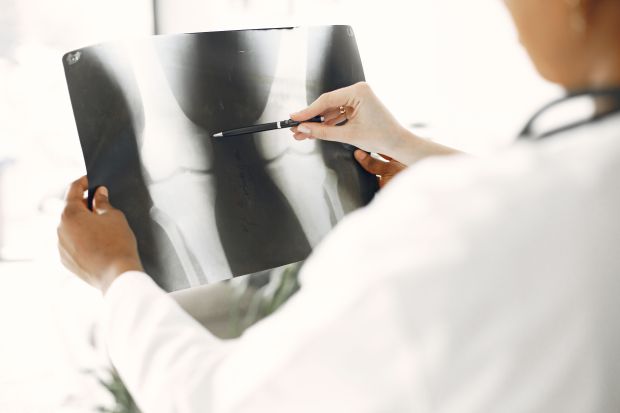
“I also think about vitamin D status, adequate calcium intake—preferably through diet when possible—regular weight-bearing and resistance exercise, adequate protein, minimizing unnecessary steroid exposure, avoiding smoking, fall prevention and treating osteopenia or osteoporosis when indicated,” says Dr. Khanna.
For women with IBD, bone health should become part of the menopause conversation before the first fracture occurs.
Working together across specialties
One of the biggest gaps in medicine has been that women with IBD have often had to navigate their gastroenterological health and their women’s health in parallel rather than together.
That is beginning to change.
“We are learning that hormonal transitions can influence symptoms, immunity, the intestinal barrier, the microbiome, bone health, cardiovascular risk and quality of life—but we also have to be careful not to attribute every change a woman experiences to hormones.”
Dr. Khanna says the opportunity now is to build a model of care where gastroenterology and women’s health truly intersect across the lifespan.
“That means asking better questions, using objective measures of inflammation when symptoms are ambiguous, collaborating across specialties and making sure women have the information they need to advocate for themselves. For me, that is really the future of women’s health in IBD.”
One final piece of advice
I asked Dr. Khanna if she could give women with IBD one piece of advice about navigating their disease through puberty, menstruation, pregnancy, perimenopause, and menopause, what she would want them to know.
“I would tell them: Do not assume that every symptom is your IBD but also do not assume that everything is “just hormones.” Ask the question and let us help you figure it out.”
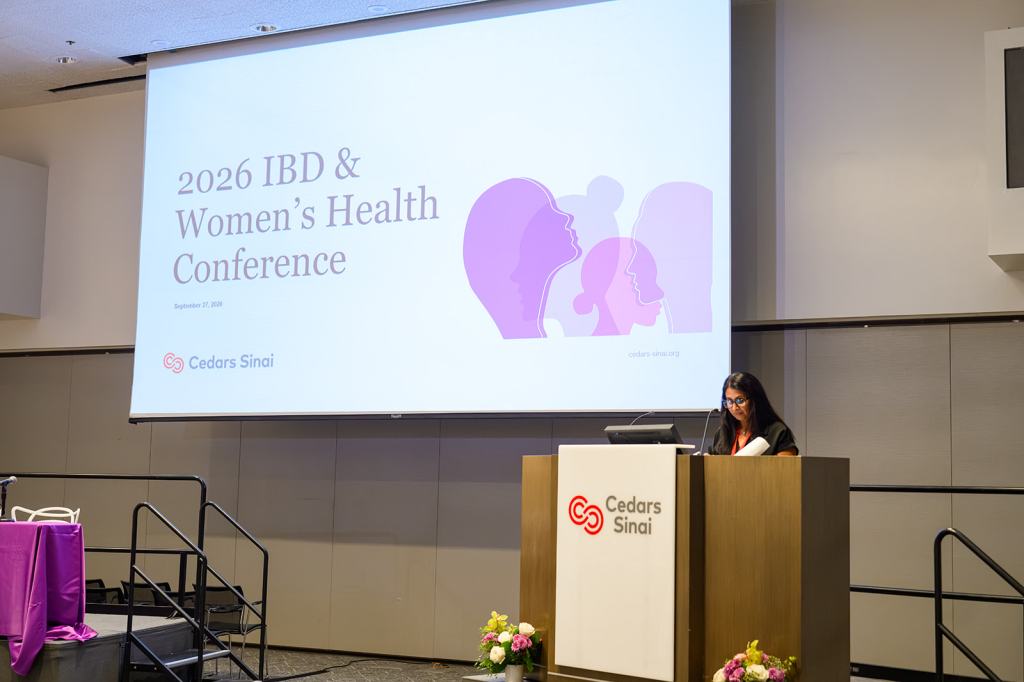
When it comes to future IBD and Women’s Health Conferences through Cedars-Sinai, Dr. Khanna would love to expand the reach of the program well beyond the women who can physically attend a conference in Los Angeles.
“We are exploring virtual collaborations and opportunities to connect with colleagues and patients in other communities so that education around women’s health and IBD can become more accessible. I would like to see women’s health become an integrated part of excellent IBD care everywhere—not a niche topic or something we discuss only when a woman becomes pregnant.”