
This article is sponsored by Healthline. Thoughts and opinions are my own.
Dating is complicated. Dating can be stressful. Dating can force you to get out of your comfort zone.

One of my first photos with my husband, Bobby.
When you live with a chronic illness, dating can be downright daunting. When should you bring up your IBD with a significant other? How can you navigate the ups and downs that come along with your illness? How can you reach a sense of comfort when you need to run to the bathroom or cancel plans?
There’s not only one correct answer to any of those questions. But, as a woman who was diagnosed at age 21, who is now 35 and married with kids, I’m happy to share what worked for me. I recently led a Live Chat on Healthline’s IBD app about this topic. The main areas of concern revolved around significant others failing to grasp the severity of the disease. It’s difficult to fault what can sound like shortcomings, but being a caretaker isn’t easy. Not everyone is cut out for it.

Celebratory post- colonoscopy cheesecake!
And that is ok.
Here are my top 10 tips for educating significant others—whether it’s dating or marriage about what your experience as a patient is like.
- Bring your loved one along to doctor appointments.
Oftentimes, people have no clue how severe and debilitating IBD is. Let your partner hear it from the horse’s mouth (i.e. the doctor). By sitting in on appointments, not only is it a source of support for you, but a chance for them to ask questions, listen to the discussion, and hear about all that goes into managing your chronic illness.
- Have a social worker or counselor speak with you both so that you’re on the same page.
Oftentimes a loved one isn’t acting maliciously; they just don’t know how to cope with what life with IBD entails. Talking with a professional gives you a safe space and an even playing field to ‘air your dirty laundry’ and gather advice about actionable ways you can improve your relationship.
- Communicate when you’re in pain—don’t sugarcoat or downplay your symptoms.
If you’re hurting, say it. If you’re struggling, tell them. The more you keep your mask on and your wall up, the more your partner will think you have everything under control and that your IBD isn’t much of a “big deal” in your life.
 - If your feelings are hurt—articulate why. Resentment leads to stress and can activate symptoms. Be brutally honest and open. You can’t expect your lover to be a mind reader. By bottling up your frustration you may take out your anger in a big way, when an issue could be solved and nipped in the bud before it becomes bigger than it needs to be.
- Connect with fellow IBD patients on Healthline’s IBD app.
Whether it’s a live chat, reading articles, or matching up with fellow patients, Healthline’s new IBD app is a space where we all get you. We’ve all been there. We’re all standing ready. Ready to lift you up. Ready to answer your questions. Ready to listen to you vent and share advice. Advice that can make a major impact in your most personal and important relationships. Because at the end of the day, you want someone who loves you for all of you, and that includes your IBD.
- Share blog articles and social media posts from fellow IBD advocates that may be able to articulate what you’re going through.
Sometimes as patients, we’re going through so much but it can be difficult to put into words. While each person’s disease presents uniquely, chances are we’ve gone through similar experiences. If you read an article that resonates or see a post on social media that hits close to home for you—share it. This is an easy way to casually show the person you love that this is what you’re going through. A simple email with a link to an article—works wonders.
- If you want your person by your side at procedures and during hospitalizations, say it.
During the live chat, there was some discussion about fiancés and husbands not going to procedures or being by the bedside during the hospitalization. That a put a lot in perspective for me, as my husband has never left my side when I’ve been hospitalized (not even for an hour) and has gone to every colonoscopy.
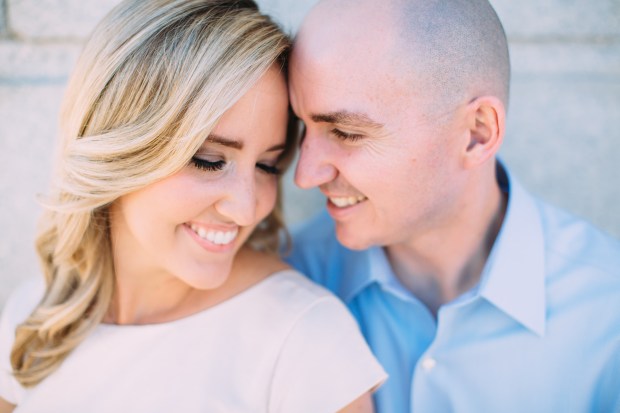
Photo cred: J. Elizabeth Photography
I’ve never had to ask. Bobby just does that because he wants to. If you want your significant other there, tell them. The disease is isolating enough, the last thing you need is to be lying alone in the middle of the night with your racing thoughts and the beeping machines.
- Be with someone who you can be vulnerable with.
IBD isn’t pretty. There are days where we’re cooped up in the bathroom. There are times we’re in the fetal position for hours. If you feel at ease at your worst with your person, that’s a good sign. Recognize how you feel when you’re at your lowest point and at your best. Pay attention to how they respond when the going gets tough.
- When the red flags are waving feverishly in front of your face, don’t be afraid to walk away.
Listen to your gut. You know deep down if you constantly feel like a second thought or if your partner repeatedly lets you down. If they make you feel guilty, less than, or put off by your patient experience, time to say buh-bye. Trust me, you will count your blessings in the future.
- Take them along to local Crohn’s and Colitis Foundation events.

By attending local events you’ll be able to connect face-to-face with fellow couples and families living your same reality. You’ll discover how much you have in common right away. This also enables your partner to have someone who “gets” what it’s like to be a caretaker. Set up a double date or a time to hang out outside of public events.

 “You’re an incredible partner—you’re my rock when I’m sick and you know how to lift my spirits when I’m down. You have a way of easing my worries and bringing me clarity when I’m uncertain. Each day spent with you—is an extraordinary blessing. I feel so incredibly lucky that God brought us together and chose you to be the one person among millions who lights up my soul.”
 At times, living with a chronic illness and being the one who doesn’t feel well, can bring about guilt. It also brings out the best in us. When I’m vulnerable and need a boost, I see my husband rise up to the challenge, time and time again. I’m constantly reminded I chose to live my life alongside someone who has more compassion in their heart than I knew imaginable.


 As a patient advocate, you also become somewhat of a confidante and voice of reason for your peers in the community.
 What I do want—is for people to recognize what compassion fatigue is…and how as chronic illness advocates and caretakers we need to be mindful of how we’re feeling and internalizing the struggles of those around us.
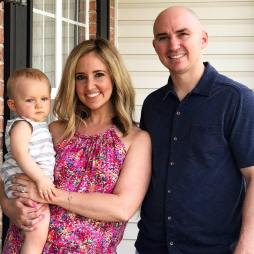 I offer support from the bottom of my heart, but as a mom and a wife, I do need to recognize when it’s time to unplug and take time for myself. When my baby naps each morning—I spend that “break” on my computer writing articles about IBD, participating in Twitter Chats, and talking on the phone with those who want to hear about my patient experience.
 As part of my self-care and disease management I need to de-stress, so I don’t put my own health at risk. This article is painful for me to write—I can’t stand admitting that I am struggling to do it all. But, compassion fatigue has been something I’ve been feeling for a few months. I want to be the best advocate for others and do all I can to make a difference and show there’s so much life to be lived outside of your disease. I want you to see how much you can thrive with this disease and all that you can accomplish. I want to be the person I needed the day my world turned upside down when I was diagnosed. I want to be all the things. But it’s not possible. It’s not fair to me, it’s not fair to you.
 Since the moment we met in 2013, and through all the ups and downs my Crohn’s disease has caused in our lives, he’s been my safe place and my protector. During my speech, I talked about how everybody needs “a Bobby.” A person who sees you for more than your disease. A person who doesn’t shudder at the thought of seeing you at your lowest for days on end in a hospital bed. A person who gets the day to day management and emotional toll chronic illness takes on not only the patient, but the couple and the family.
 Then I turned to her boyfriend and said, “and you are her rock and her caretaker.” They laughed and told me I guessed right. Isn’t it amazing how easy it is to spot this type of support? I was a complete stranger, once in her shoes. Young. Dating. Wondering about my future. Their names are Emily and Kellen.
 Only 22 years old, so much of her life ahead of her. And she’s found the person who looks at her, despite her illness, and loves her for it. The Bobbys and the Kellens of the world are the real deal. If you haven’t found yours yet, trust me…they exist and they are out there.
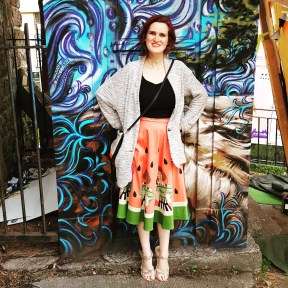 She’s not your typical patient advocate. She’s an author who uses her sense of humor to not only inspire, but also make you laugh. She says things many of us think, but won’t say. Her most recent piece of work, “
 That gives you an idea of what an incredible resource this book is for women in the chronic illness community. Kathleen’s ability to share her experiences and speak to others to make a difference, inspires me to be strong in my patient journey. Though we’ve never met in person, we’ve been “friends” on Twitter, Facebook and Instagram for years. I had the chance to interview her about her latest book. Here’s what she had to say:
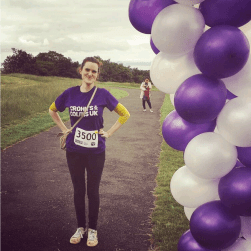 People seem to enjoy the humour spattered throughout and find it to be informative and inclusive which is what I’d hoped for! This time round has been nerve wracking again so i try to only dip in and out of reading reviews for the sake of my own sanity/ego!”
 Kathleen is dedicated to helping others feel less alone and afraid in their fight with chronic illness. As someone who’s battled Crohn’s more than 12 years, I can tell you firsthand her words empower me to be strong. I constantly find myself nodding along while I’m reading and even laughing out loud. You can follow Kathleen on Twitter and Instagram @kathfantastic.

 Yes, we know that Pumpkin Spice lattes or those peanut M&M’s may not be the best decisions—but every now and then we want to live a little and take a risk. Just because coffee, nuts or popcorn caused pain one time—doesn’t mean that’s always going to be the case. In the end, if what we eat and drink causes us pain, we’ll be the one paying the price, not you. Please refrain from staring at us and questioning every time we put food in our mouths. We get it. No need to question or reprimand us. There’s already an ongoing inner dialogue 24/7 about every little decision we make and how it’s going to make us feel, trust me.
 Understand that when you make plans with someone who battles IBD, the way we feel can change up to the minute we’re supposed to meet. While I know that can be aggravating, you must be patient and think about what you would do if you had stabbing pains in your abdomen and couldn’t stand straight up as you rush to the bathroom. More often than not, rather then canceling we put a smile on and pretend to feel well. So, the times we cancel—I can guarantee you, it’s a legit excuse and doesn’t make us happy either. I’ve had moments where I was all excited to go out with my husband and meet friends and he would see me walking around putting my make up on with my pants unbuttoned, because I was in so much pain and he had to tell me—we’re not going.
 The primary goals of surgery for Crohn’s disease are to conserve as much bowel as possible, alleviate complications, and to help the patient achieve the best possible quality of life. Sure, you may go into surgical remission or be given a “fresh start,” but that disease will always be a part of you. When I had my bowel resection surgery in August 2015, they removed 18 inches of my small intestine—a decade of disease was taken from body. Of course, as I healed, I felt better and still feel a lot better nowadays, then I did prior to the surgery. Regardless, I live with Crohn’s every day and those symptoms are still present quite often. About 23-45 percent of people with ulcerative colitis and up to 75 percent of people with Crohn’s disease will require surgery. As I type this, I have stabbing pains in my stomach. I felt completely fine when I started writing this.
 Normally when we hear those commercials, if they don’t pertain to us, we may kind of laugh and wonder who in their right mind would take a medication with all those risks. For those of us with IBD, we oftentimes don’t have a choice. It’s a high risk with a high reward. Quality of life has to come first. I know before I got pregnant with my son, there were multiple occasions where friends would question my decision to be on Humira. Once you are on a biologic and your disease is this severe, you don’t have a whole lot of options. Don’t you think the risk of new and worsening heart failure and being immune suppressed is already a worry we deal with as it is?
 Sadly, the people who you think you are closest to often seem to disappear when you’re in the hospital. Rather than focusing on getting better, your mind may race and you may feel hurt that so and so hasn’t even called, texted or visited—even though you know they saw your post on social media about your most recent hospital stay. If you’re questioning whether you are going to bother the person or if you think it’s not your place to reach out—please change your mindset. It’s the people who reach out when you’re at your lowest point that you realize are worth your time and energy. IBD is isolating enough as it is, please be a good friend and show us some love when we’re going through a flare. If you were hospitalized, would you want radio silence from every person who matters to you?
 I apologize if you feel that way, but I hope it has the opposite impact. I hope it brings you clarity and that it made a light bulb go off so that you know how to navigate your friendships and relationships with those who battle IBD. This week is a time to bring awareness about Crohn’s and ulcerative colitis, it’s a time for these diseases to be in the spotlight. This week, and all that follows, please be gentle with your words and be the type of support you’d want in return.
 lights camera crohn's