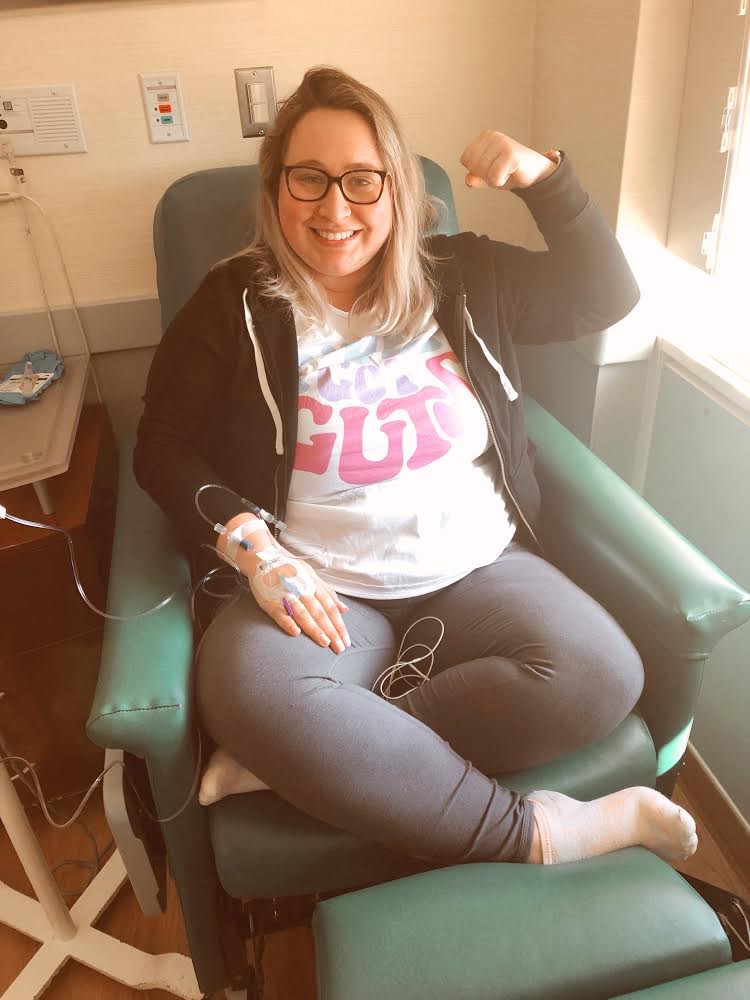
All it takes is one experience to alter how you respond and react to the way you receive medical care. For me, it was July 2008. I was getting admitted for an abscess the size of a tennis ball in my small intestine. No one could start my IV. I was in excruciating pain. It took eight tries to get an IV going. EIGHT tries. It was so emotional…and aggravating. It took two nurses, a rapid response nurse, and finally an anesthesiologist to get the job done. For many in the IBD community, we have medical PTSD. A term not to be taken lightly. It’s moments like the one I mentioned before that have scarred me in a way that impacts every single IV I receive. I get anxious, my mind reverts to the past trauma, and I don’t trust that the person taking care of me will be able to get me in one stick.
While this may not be fair to the medical professional, in my 15-plus years with Crohn’s, I can attest to the fact that no matter how many times you say, “you have bad veins” or that you’re a “tough stick”, you’re typically told “it will be fine” and that they “hear that all the time.”
This week—I offer up some tips for communicating your needs when getting blood draws and IVs. Sometimes it can be overwhelming when you feel as though your fears or worries are being downplayed. You may not want to be “that patient”—the one who speaks up and demands the care they deserve but are scared to ask for. This also goes for parents who are watching as their child may be stuck over and over and over again, and not knowing when the right time is to speak up and say something.
Ask for a butterfly needle for blood draws. As soon as you sit down to get your blood drawn, casually say you have tiny veins, and a butterfly works best. If the phlebotomist says you don’t need one (yes this happens)—say you have IBD and get blood draws all the time and know what works best for you, especially considering the number of vials that are generally taken in one sitting.
Give each person two tries. Once I experienced eight tries for an IV, I instituted this rule for my care from that point forward. I usually tell the nurse/phlebotomist nicely at the start that I give each person two tries, and after that someone else must try me. If they successfully give me an IV in one try, I make sure to give them kudos and thank them.
Know your spots. If you have bad veins like me, you know where your “good vein” is. If the antecubital is not working, go for one in your hand. If it’s an IV, try and do your non-dominant hand, as the placement can be challenging if it’s in for multiple days.
Ask the medical professional to break out the vein finder. This can save everyone (not just the patient) some time and energy. This has worked wonders on me in the past to help healthcare professionals locate and access which vein is best to go for. It’s completely painless. It’s like x-ray vision that shines light under your skin and shows the veins below.
Take advantage of numbing cream for pediatric patients (adults can also ask!) While the cream can be great for taking away the sting of the needle, it’s important to keep in mind it can take 30 minutes to activate (which feels like an eternity while mid-flare) and can also make the patient more anxious as they wait. The medicine is also known to shrink the vein underneath as well, which can make getting the IV started a little more challenging. You may consider putting a lidocaine cream on at home before you head to the hospital if you have some available.
Be hydrated and warm. If you anticipate the need for an IV, try and drink as much water as you can ahead of time. Have a heating pad or warm pack placed on your veins. Even putting the warmed-up hospital blankets around your arm prior to the stick can help get you prepped.
Breathe deeply. Try not to watch the needle going in. Focus on a focal point on the wall or go to your happy place to distract yourself from the initial prick of the needle.
The most important thing of all is to be your own best advocate. Don’t worry about hurting feelings or coming off as high maintenance. Offer up as much intel you can in a constructive and calm way as possible. Once you’re diagnosed with IBD and experience the hospitalizations, scopes, surgeries, scans, and lab work, you become a “professional” at being a patient and knowing your body. Unless you use your voice and communicate your needs, they may not be met. Rather than thinking of those caring for you as instilling pain or as the adversary, it’s in our best interest to work together as a team with our physicians and nurses so they can provide the best possible care and so we can build a long-lasting relationship based on trust, rather than fear.
For parents, try and stay as calm as possible and allow the medical professionals to work their magic in distracting your child and making them feel safe and at ease. Your stress level and energy (both positive and negative) will reflect onto your child. If you feel your child is being given the best possible care, try and go with the flow as much as possible. You’ll know when and if you need to speak up. Know that your child is watching. Be tactful, confident, kind, and direct if you believe something different needs to be done or tried. You are your child’s voice piece.
Through the years, whether it’s in the ER or getting a blood draw, the moment I say “I have Crohn’s disease” it’s like I just dropped major street cred. Medical professionals know when you have IBD you have to be tough as nails, you don’t have any other choice. So, when you say that—be confident that when you offer up advice pertaining to IVs and blood draws you have that going for you.
For many of us, when we’re initially diagnosed with IBD or when we flare, we experience weight fluctuations. The number on the scale may plummet during times when eating anything hurts or seems to make symptoms worse. The number on the scale may skyrocket when we’re on prednisone and not only retaining fluid, but also wanting to eat everything in sight.
Andrew Jagim, PhD, CSCS*D, CISSN was diagnosed with ulcerative colitis in 2014 after being infected with an intestinal parasite (Giardia). He managed to remain in remission for a few years until things went downhill quickly at the end of 2016. He dropped 50 pounds over the course of 3-4 months, was going to the bathroom 15-plus times a day, was running constant fevers, severely fatigued, anemic, and had little appetite. In the spring of 2017, after two weeks on TPN and several days in the hospital, he decided that a sub-total colectomy was his best option at the time. Since then, Andrew’s battle has been a rollercoaster of ups and downs, resulting in 12 colorectal surgeries.
Sports and fitness have always been a huge part of Andrew’s life—so much so, that he made a career out of it. He has a doctorate in exercise physiology, is a certified strength & conditioning specialist and a certified sports nutritionist, so he has an extensive background when it comes to understanding the important roles of exercise and nutrition for health and performance.
“Throughout my life, a large part of my identity has always been tied to my physical appearance. I’ve always been known as someone who is athletic, big, and strong with a high state of fitness. I struggled immensely during my flares and surgery recoveries when I couldn’t work out, when I looked sick or couldn’t stop losing weight. It was like I was losing a sense of who I was and who I identified with. When I looked it the mirror, it pained me to see my hard-earned muscle just “falling off” when I was too sick or weak to workout. However, I have always been determined to rebuild my body and regain what I lost.”
This week on Lights, Camera, Crohn’s—a look at the impact disease flares and surgeries can have on body composition, and how you can try and counteract the changes through diet and exercise.
A cornerstone of the disease itself is a high state of inflammation – most of which is centralized to the gut; however, this can also have systemic effects thereby resulting in widespread joint pain, fatigue and even a state of anabolic resistance within muscle tissue. Essentially, this makes it challenging to maintain or increase muscle mass during a period of high disease activity. This can be coupled with a reduction in appetite which can exacerbate body weight loss and muscle loss.
Surgeries can range from minimally invasive procedures to treat a fistula to much larger and complex operations such as removal of sections of the bowel and placement of a stoma for an ostomy. Depending on the magnitude of the surgery, patients often must modify diet and physical activity based on the recommendations of the surgeon.
These modifications will likely lead to decrements in body weight, muscle, strength, and endurance in the short-term; especially individuals who may have been highly active prior to the surgery. However, in patients who may be extremely ill at the time of surgery, the procedure may help them regain lost weight and strength as their body may finally be able to heal and recover from the inflammatory cascade brought on by IBD.
The Case Study Andrew Conducted
A year and a half after Andrew’s colectomy, he decided to schedule the second step for the J-pouch procedure. However, prior to, he decided to take advantage of this unique opportunity and conduct a case study on himself to document the changes in body composition and performance throughout the recovery process. He was curious how a surgery like that would impact someone with his fitness state as most of the literature focused on smaller or more sedentary individuals. Leading up to surgery, he had been able to resume his regular fitness routine and got his weight close to where it had been for most of his adult life.
“As seen in the figure below from my published case study, there were significant declines in body weight (-10.5%), lean body mass (-9.9%) and endurance (-40.3%) 4-weeks post-surgery. At 16 weeks postoperatively, most parameters were near their baseline levels (within 1–7%), with the exception of my peak endurance, which was still 20.4% below baseline. Thankfully, I was able to leverage my educational background and expertise in exercise physiology and nutrition to use targeted exercise and nutritional strategies to retrain my body and build my physique back up,” explained Andrew.
The balancing act of trial and error
As many IBD patients know, there are a lot of nuances, misconceptions, and unknowns regarding how diet impacts disease. For Andrew, it has been a lot trial and error to find foods that worked for him and helped him achieve his goals.
“Early in the recovery stage, just getting my appetite back and trying to eat more while not interfering with any post-operative dietary recommendations was always my goal. For me, this meant trying to eat about 2,500 – 2,750 calories and 150-170 grams of protein per day. In my opinion, these are the two most important dietary goals when it comes to regaining any weight (especially muscle mass) following surgery or during a flare. It will also help support the tissue and incision recovery following surgery”
Regarding exercise, strength training, is the most effective form of exercise to regain lean body mass following surgery. However, most colorectal surgeons (for good reasons) impose a lifting restriction of no more than ~10-15 lbs. for about 6 weeks following surgery to allow the incisions to heal and avoid the risk of hernia.
“For my larger surgeries, this was easy to abide by as I was in so much pain and was so fatigued that it was a struggle to just get dressed and ready for the day, so there was no temptation to get back in the weight room any time soon. But for the smaller surgeries, as I got closer to the 6-week mark, I was anxious to get back to my old routine. I took a very conservative approach and used a lot of alternative training techniques (i.e. blood flow restriction training, isometrics, resistance bands, etc.) to elicit an adequate training stimulus while not having to lift heavy weights and to avoid injury,” said Andrew.
Andrew’s main piece of advice about life with IBD? “Be prepared for a rollercoaster of changes to both your body composition and physical abilities throughout battles with IBD – especially during a flare or following surgery. Unfortunately this also will likely take a toll on your mental health as well, or at least it certainly did for me. However, just know that you can always get it back in time and more often than not, come back even stronger. Be patient and give your body rest when needed but otherwise keep grinding.”
Everyone has their own battles they are fighting
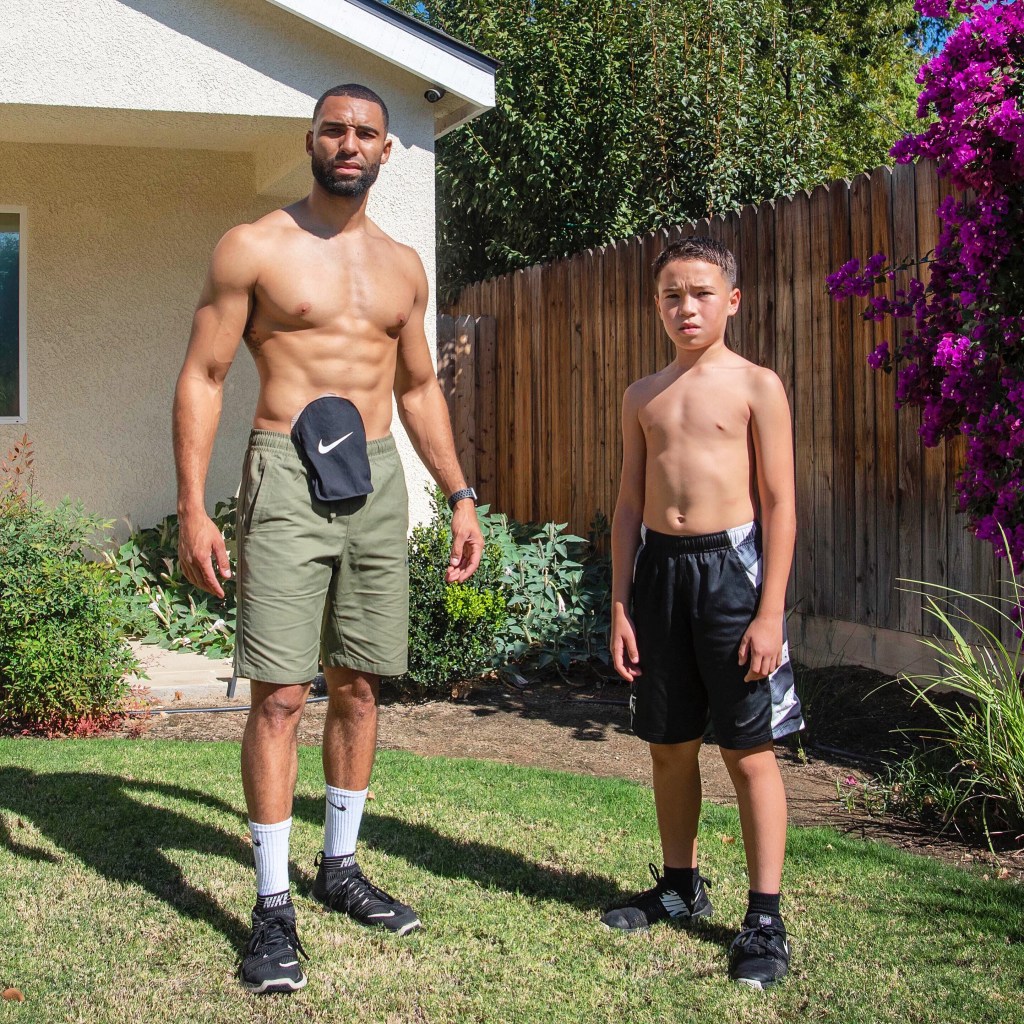
“I think my experience with IBD has taught me that everyone has their own battles they are fighting – even if they don’t show it. Additionally, it is also a reminder that not all disabilities are visible as a lot of people are probably unaware that I live with a permanent ostomy. I have chosen to keep a lot of my health struggles private and I think a lot of people will be surprised when they hear what I’ve endured over the past five years as I have still managed to have a successful career and not miss much work – despite all the surgeries and time spent feeling very ill.”
Andrew’s IBD journey also shifted his research focus a bit and challenged him to apply my knowledge of how to increase performance, strength and muscle mass in athletes towards a more clinical application.
“A lot of the strategies that work well with athletes can be modified and used in clinical settings as several of the benefits (i.e. increased muscle, strength, endurance, energy, etc.) may also help improve quality of life in patients will a chronic illness, those who are critically ill, or those recovering from surgery. It’s just a matter of making the appropriate modifications and fitting them to the current need,” said Andrew.
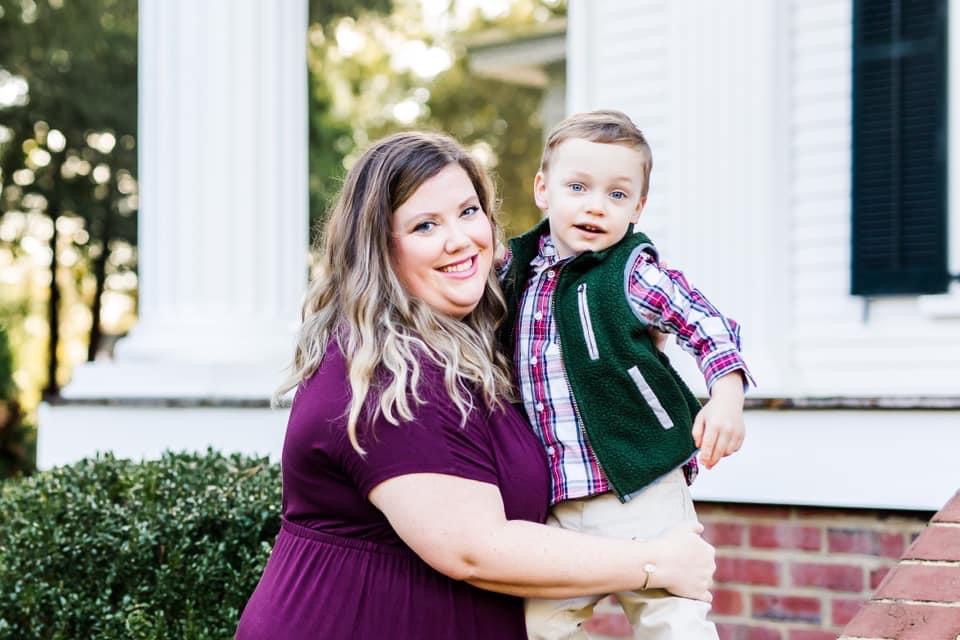
When you have IBD, the path to motherhood can look different for many. There is added stress about whether your body can create and sustain a new life successfully. There’s worries about flare ups and medications and how to stay well-managed while keeping the health of your unborn child in mind…just to name a few. For 30-year-old, Audrey Bolton, of North Carolina, adoption had been a calling in her life since high school when she stood at the airport and watched a family friend bring home their daughter from Guatemala.
She knew from that day forward, she would adopt one day. What she didn’t know is that she would be diagnosed with Crohn’s disease 10 months after getting married and struggle to conceive. This week on Lights, Camera, Crohn’s, Audrey shares her journey of becoming an IBD mom through adoption and what she wants others to know about the process.
NH: Many women with IBD fear their bodies are incapable of carrying a child/or are told they aren’t well enough. What would you like to say to them?
AB: “I would tell them that every journey to parenthood looks different, but at the end of the day, we are all moms. I think it depends on everyone’s situation and it’s a conversation they need to have with their doctor(s) and their spouse. For me, I was sick at the time my husband Crawford and I wanted to have a baby. I was not sick enough to where I wouldn’t be able to parent, but I do not think my body at that time could have been healthy enough to carry a child without problems. With that said, I’m nearing remission so I do still hope that one day we can have a biological child. If a person wants to be a mom, I fully believe that there are many different avenues a person can take to be a mother.”
NH: What are some of the struggles/challenges about adoptions that you wish other families knew?
AB: “Adoption comes from a place of brokenness, so while it is so beautiful that our son Camden made me a mother, it is not lost on me that his birth mother made a huge sacrifice that left a piece of her heart missing. It can be beautiful and heartbreaking at the same time.”
NH: Was the fact you had IBD ever an issue with adoption agencies?
AB: “Not at all! I love this question because I wasn’t sure what to expect when we started the process back in 2017. For all adoptions, you must complete a home study which includes health questionnaires, a physical, and several meetings with a social worker. In those meetings, we talked about my Crohn’s disease and how I was working with my doctor to treat it. If a person is well enough to parent and take care of a child, there are not any issues with having IBD and being eligible for adoption.”
NH: What are your tips for navigating the adoption journey with a partner/spouse?
AB: I could write a book on this one, but the truth is, Crawford has been my rock. He had no idea when he married me that I would be facing a chronic disease that would land me in the hospital multiple times a year for days on end. He has truly stuck by his vows “in sickness and in health.” I think the best tip I have for navigating Crohn’s with a partner/spouse is to communicate. Crawford knows when I’m not feeling well, the best thing for me is to rest and he makes it happen. He also is my voice of reason and tells me if I’m doing too much or if I need to say no to some obligations so that I can properly rest. Communication is key!
NH: What was it like when you first met your son Camden?
AB: “I always envisioned the moment we laid eyes on our son to be beautiful and the best moment of my life. When we arrived at the hospital, we had not slept in 24 hours and had driven straight through the night. We thought we would be meeting our son, but we were told he was being transferred to a Children’s hospital for further testing on his heart. He was hooked up to all kinds of wires and it was one of the scariest moments of my life. We only got to see him for about an hour before the ambulance came and took him to the Children’s hospital. It was whirlwind of a day, but God saw us through it and the next day, he passed all of his tests with flying colors and I was able to bond with my baby for the first time and have my “beautiful moment.”
NH: What’s been the most magical aspect of being an adoptive parent?
AB: “Most days, I forget that Camden is adopted. He looks just like Crawford and he’s been with us from his second day of life, so he belongs with us. Every now and then, I will have a moment and remember that he has another mom somewhere out in the world. I always say that she is my hero because she chose life for her baby boy and I would say that has been the most magical part for me. Knowing that I owe everything to a woman that I have never met. I pray that she has peace in knowing how loved he is on a daily basis.”
NH: If someone is on the fence about adoption–what would you tell them?
AB: “Pray, pray, and pray some more. If it is God’s will, he will give you that peace. I receive messages every day asking how the process works and people are scared about the cost. If it’s meant to be, don’t let the cost stop you! There are so many ways that it CAN be done.”
NH: You recently announced you’ll be adopting baby number two in 2021, you must be so excited! Did that process differ at all from Camden’s?
AB: “We are extremely excited. So far, it is the exact same because we are going through the same agency. I’m sure there will be some bumps along the way, but we are so excited to bring home baby #2.”
NH: How has already being an adoptive parent helped you through the experience this time around?
AB: “I know what to expect this time, so I am better prepared for the timeline and the traveling that is involved. With that said, our adoption with Camden was extremely quick. I was at work one minute, waiting for the phone call to meet a birth mom and the next I’m told that there is a baby waiting for us to come get him. There was no time to think or for anything to really go wrong. That makes me a little more nervous this time, as I know that it doesn’t normally happen that fast. I’m just praying that everything happens the way it should in the Lord’s timing.”
NH: How has faith played a role in how you navigate your IBD and motherhood?
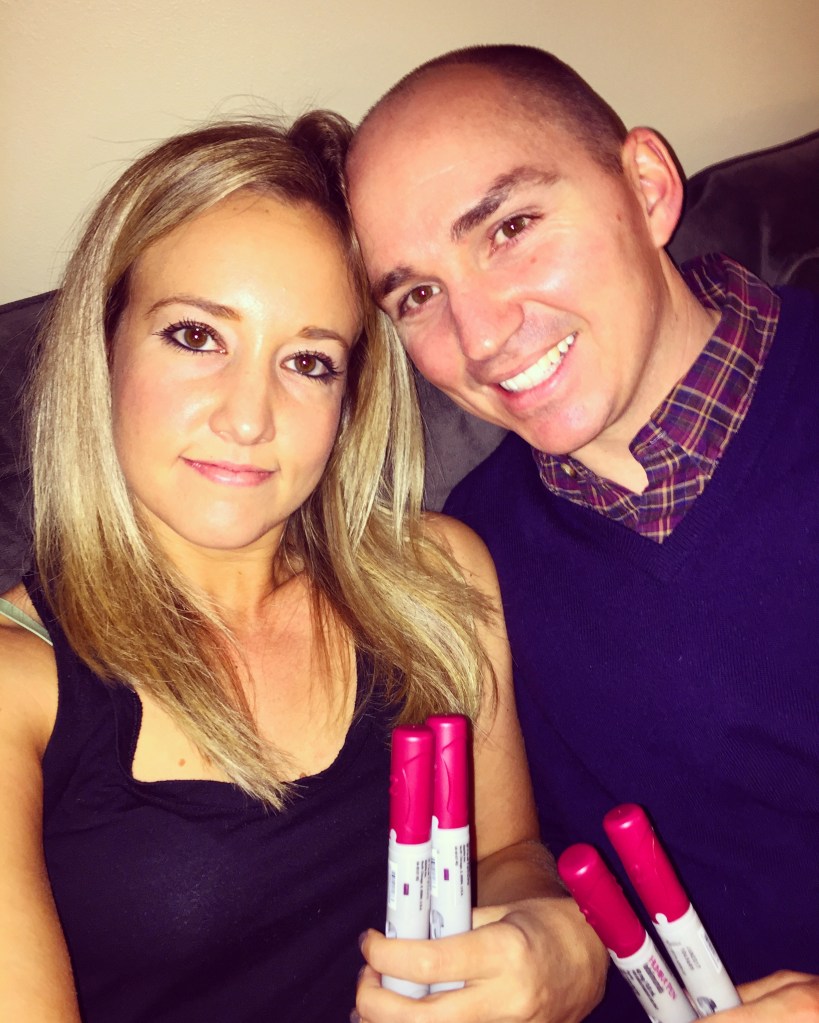
AB: “I would be lying if I said I never questioned why God would allow a 25-year-old newlywed to be diagnosed with a chronic disease with no cure. It has been a tough journey, but I think God has shown me a glimpse of how strong I can be in tough situations and it ultimately prepared me to be a mother. Not long after we brought Camden home, I had a full circle moment one night while rocking him to sleep. I realized that Camden would not be in my life if it had not been for all the trials I faced with my health and months and years of seeing only one line on a pregnancy stick. While the journey was really difficult in the moment, it is the privilege of a lifetime to know God handpicked me to be Camden’s mother and that He was with me through all of the really low times.”
This article was sponsored by SmartTab. All opinions and thoughts are my own.
The future of IBD care and treatment is constantly evolving and there’s a lot of hope on the horizon for the patient community. Think back to the moment your physician discussed starting a biologic for the first time and how daunting it was to imagine giving yourself an injection or getting an infusion for the rest of your life. It’s a heavy burden to bear for many reasons.
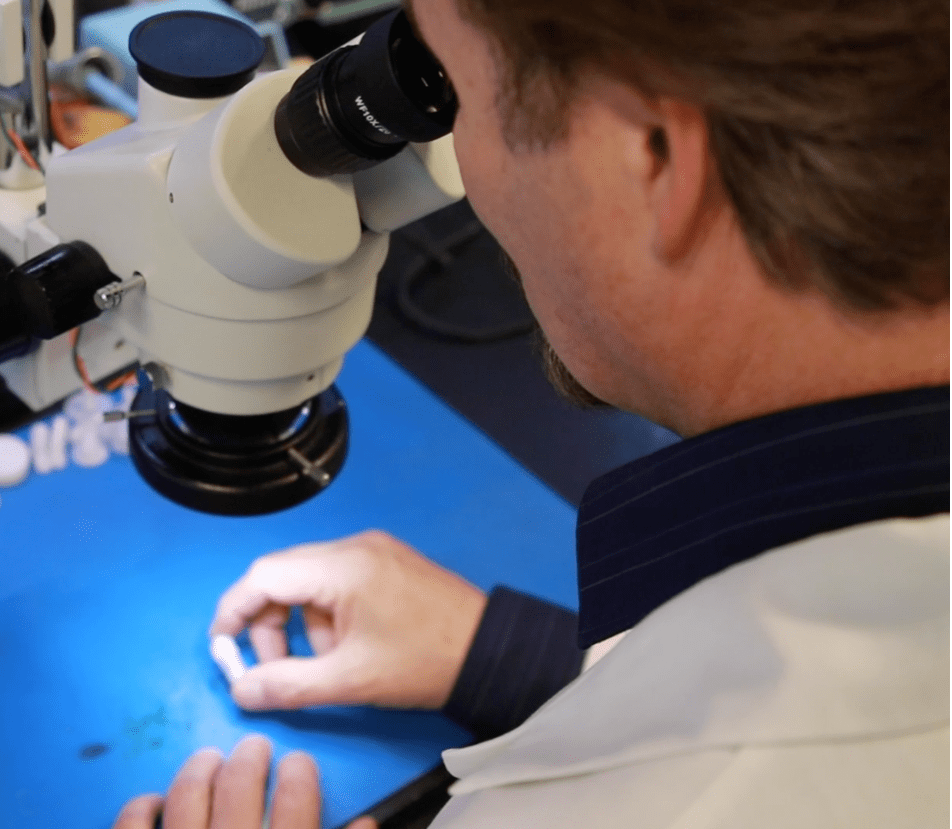
This is where SmartTab comes in. SmartTab is a digital medicine company focused on drug delivery and improving patient care, comfort, and compliance. Their main application, the InjectTab, would give people the option of using the current syringe or autoinjector used to give biologic medication or instead have a person swallow a capsule that would deliver the active ingredients to either the stomach or the small intestine. This initiative is making waves in a big way in both the patient, pharmaceutical, and technology industries. SmartTab was recently named a Tech Crunch Disrupt 2020 Top Pick.
As someone who has been giving myself injections for over 12 years, this is music to my ears. My next question was what this means for those on infusions.
Robert Niichel, Founder and CEO of SmartTab, says, “We will start with the biologics deployed through a syringe and needle and then move to biologic infusions. Imagine if you take that infusion dose and instead take a smaller dose of the same medication as an ingestible capsule once a day. You now have reduced the amount of drug to a daily amount, side effects would go down because you’re not having to process this entire bolus and keep in mind that some of these drugs, no matter what it is, when you have an infusion, whether it’s to treat Crohn’s or receive chemotherapy, your body has to process that out through the liver or the kidneys. It’s stressful on the metabolism and the organs. Our goal, is that one day, regardless of whether it’s an infusion or an injectable, that you’ll take those drugs via an InjectTab capsule.”
Keeping patients in mind every step of the way
SmartTab is determined to limit the anxiety associated with managing diseases like Crohn’s and ulcerative colitis. The diagnosis and living with a chronic illness can be challenging to cope with, no matter how many years you’ve had it. It’s exciting to think what the future will hold for the IBD family.
“If physicians could go to people and say, we are going to start you on a biologic, you will take one capsule, every week, that’s a lot less of a burden than finding out you need to give yourself injections or spend hours with an IV getting an infusion. Your compliance goes up, patient outcomes, go up. At the end of the day, we’re trying to figure things out so people can lead better and more comfortable lives,” said Robert.
Getting InjectTab FDA-approved
SmartTab has the technology of the capsule finalized and they are starting a pre-clinical animal study next month. The InjectTab will inject an active ingredient into the side of the stomach.
“We will then do blood draws to collect the different levels of the active ingredients. Once that is complete, we will move on to human clinical trials and then onto FDA clearance, meaning approval of a device. Once we have that clearance, then we can combine our InjectTab with other active ingredients. Then we would seek out strategic partners to combine a prescription drug with our InjectTab. We would then do human studies.”
A lot of the heavy lifting for the actual technology has been completed, now it’s all about the clinical studies. Robert says the good news is that they’re not working on getting a new drug approved, since existing biologics will be used with the InjectTab technology.
“We believe that five years from now, if you take a biologic, you will no longer need to be doing a self-injection, there will be more options than syringes or needles to get your medication. You could just take a capsule. Whether it’s once a day or once a week, it will be as easy as taking your vitamins and moving on with your day.”
The cost benefits of a capsule vs. an injector
Right now, autoinjectors are typically hundreds of dollars. The InjectTab will range from $10-$50 a capsule, so right away there’s a significant cost reduction per use.
Robert says SmartTab is really counting on the insurance companies to look at this and say they’ll reimburse for the technology to deploy the drug because now patients are compliant and have reduced office visits and disease progression that can lead to hospital stays and surgeries.
SmartTab is currently in talks with several pharmaceutical companies, because that is the path to commercialization and making InjectTab a game changing reality for patients. Initially, the capsule technology will be available in the United States and then Europe. InjectTab will be geared towards the adult population first.
Life with IBD can be a tough pill to swallow, but the future possibilities surrounding InjectTab may prove otherwise. As someone who has given myself injections for more than a dozen years, this type of technology blows my mind in the best way. When my GI walked into my hospital room in July 2008 while I was battling an abscess the size of a tennis ball in my small intestine and he told me I had two options—Humira or Remicade, I was devastated. I didn’t want to give myself injections and I didn’t want to sit with an IV in my arm and feel sickly. It was a lot to process then and is still not always easy now. Hats off to companies like SmartTab innovating and changing the landscape for the future of IBD and beyond. As a patient, it means the world to me to see the tireless work going on behind the scenes that will change the future for those living with Crohn’s disease, ulcerative colitis, and other conditions.
Interested in learning more about IBD innovations? Check out the virtual IBD Innovate: Product Development for Crohn’s and Colitis conference November 17-18. Register here.
Click here to learn more about Tech Crunch’s Top Picks for 2020.
When you’re a parent keeping your kid(s) entertained and engaged throughout the day is a constant challenge, especially as most of us continue to hunker down at home. When you’re an IBD parent, throw extended bathroom breaks, overwhelming fatigue, and debilitating pain into the mix. Keeping up with your kids, while making sure they’re safe and not getting too much screen time can sometimes feel like an insurmountable task. Just as it’s imperative we are proactive at managing our IBD, it’s also extremely beneficial to be proactive as parents. This is where busy boxes come in.
I first heard of this concept when I was pregnant with my daughter Sophia. My son wasn’t even two when she was born. I had intentions of breastfeeding (and I did), but between nursing and pumping, that’s hard to do when you have a busy toddler running around the house, while managing the day-to-day of life with a chronic illness.
What’s so great about busy boxes is that you can be creative, tailor them to your child’s age and interests, and do so without breaking the bank. As a mom of a 3.5-year-old and a 22-month-old, with winter approaching in the Midwest in the middle of a pandemic, I’m starting to update my busy boxes for the long months ahead. I started this past weekend. I went to the Dollar Store and got this haul for a mere $14.
All this for only $14!
Whether you’re at Target, Hobby Lobby, or on Amazon, you can pick up little activities as you go to continue to keep the content within the busy boxes fresh.
Creating your busy boxes
Sensory busy box: Hide farm animals, dinosaurs, or cars in rice, pasta, or kinetic sand.
Themed activities. My daughter loves Frozen, so I included stickers, puzzles, books, and trinkets. My son loves dinosaurs and sea creatures so I will keep that focus in mind as I update his busy boxes.
Letters/Words and Numbers/Counting: Include items that help your child learn the alphabet, recognize numbers, spell, learn opposites, matching and rhyming.
Shapes: Puzzles, felt designs of food and people, and paint-by-sticker books, you get the picture.
Storing your busy boxes
It’s best to keep busy boxes out of reach from your children so it’s something that’s not always accessible. That way, it feels like a fresh new activity. We keep our busy boxes stowed away in the kid’s bedroom closets (where they can’t reach them). As an IBD mom, I recommend keeping a box nearby the bathroom so if needed, your child can sit at your feet and be entertained with little to no effort on your part. Busy boxes also come in handy when you’re trying to cook dinner or having to be on a Zoom call for work. I knew it was time for me to update Reid’s busy boxes this week when I looked over during a Zoom call and he was jumping up and down on a bag of opened pretzels. Fun times! 🙂
Helpful busy box resources
Still looking for some inspiration? Pinterest is a great resource to check out ideas and to come up with activities for your little ones.
Here are some Instagram handles that provide helpful activities and guidance about educating and entertaining your child at home (no affiliations, just giving them a shout out) in hopes of helping you:
@busytoddler
@countingwithkids
@schoolathomeandbeyond
@simplybessy
@playdough2plato
@bestideasforkids
@happytoddlerplaytime
@dayswithgrey
@modernpreschool
@growingupyang
As we gear up for the winter months and this pandemic drags on, I hope you find this useful as an additional tool in your chronic illness parenting arsenal. I know it does my heart good to know I have something fun and engaging to share with my kids, especially on the days when my Crohn’s interferes with my plans or expectations for the day.
If you live with chronic illness, you may often find you sugarcoat your struggles. For 26-year-old Marissa Spratley of Maryland, this is nothing new. She battles Crohn’s disease, psoriatic arthritis, ankylosing spondylitis, and interstitial cystitis. She manages her conditions with Stelara and sulfasalazine. This week she openly shares what she wishes healthy people knew about life with IBD. I’ll let her take it away.
In the chronic illness community we all know how incredibly difficult it is to have Inflammatory Bowel Disease (IBD), or any other chronic illness. We know what it feels like to get hit with a wave of fatigue so hard you have to lay down immediately. We know what it feels like when our gut is on fire from something we ate. We know what it feels like to have nausea so badly all we can do is curl up in a ball on the bathroom floor and cry. We know these things, yet when we communicate with a healthy able-bodied person, we downplay our struggles and pain.
Why are we afraid to be honest about how much pain we’re in on a daily basis? Is it because we don’t want to make others feel bad for us? Is it because we don’t want to show weakness? Or maybe it’s because we feel like by explaining how much we suffer on a regular basis, people might know the truth about us. That even though we are incredibly resilient, we live a hard life. We struggle and we cry and we ache and there are days where we wish IBD didn’t exist at all.
The truth is, hell yeah we are strong. But we are also weak, and we are tired. We are exhausted from always having to be strong in the face of pain. We are sick of having to downplay our symptoms and our suffering to make the healthy, able-bodied people around us feel less uncomfortable. We are tired of saying, “I’m good,” when someone asks how we’re doing and we really want to say “I feel like death.”
So, in the spirit of honesty and opening up to the very ableist world around us about what it’s like to live with IBD, here are four things people with IBD wish healthy people knew.
There are days when it hurts just to breathe.
No, I am not being overdramatic. Yes, IBD affects more than just your gut. There are days when we wake up and everything about us aches. The way I describe it, is that I feel like I just got hit by a bus. My whole body aches deep in my bones, and it can take me an hour just to get out of bed and stand up straight. Those days are some of the hardest because on the outside we look perfectly normal. Please remember that not all illnesses are visible to the eye.
Good intent doesn’t always mean good impact.
We know you’re just trying to help when you make suggestions about things we could do to try to feel better. But the truth is, we know our bodies better than anyone else, and trust us when we say — if there was something we could do to make us feel better, we’d do it. When you comment about things we should try (like juicing or yoga or going paleo), it makes us feel like you think we aren’t doing enough to feel better. Our healing and health are our business, and while we know you care, if we want your help or advice, we’ll ask for it. We appreciate you understanding this.
Having a chronic illness is really hard on our mental health.
IBD is hard, period. Folks with chronic illnesses not only have to struggle with our physical health, but IBD also has a huge impact on our mental health. Being chronically ill makes you question a lot about yourself — Am I a burden to those around me? Am I worthy if I can’t work? Does my chronic illness make me hard to love? It also makes you question a lot about your worth — Am I lesser than because I can’t work as long as healthy people? Will employers not want to hire me? Do I bring enough to a relationship? These are all real questions I’ve asked myself at one time or another, and I can guarantee they are things other chronically ill folks have thought about as well. The way that IBD can affect your mental health is one of the most challenging parts of being chronically ill, because it is not talked about. So, what can you do to help us with our mental health? You can remind us we are inherently worthy, no matter how “productive” we are. You can remind us that you love us for who we are in our hearts, and not what we can do with our bodies. That means more to us than we can even put into words.
Ableism affects the chronically ill, too.
Many people with IBD and chronic illnesses struggle to claim themselves as disabled, and this is something I could go on a tangent about. But here’s what you need to know: IBD affects our bodies in ways that make us less able, or disabled. The truth is, in the able-bodied centric society we live in, we believe it is offensive to call someone disabled because it means they can’t do something. However, to the actual disabled folks in our community, it is not offensive at all. We own the fact that we can’t use non-handicapped restroom stalls or walk up stairs. We are not afraid to say that there are tasks we cannot do as chronically ill, disabled individuals. It is our ableist society who thinks the term disabled is offensive. It is the ableist mindset that believes by saying someone can’t do something, we are being hurtful. Because to the chronically ill and disabled community, we know that our disabilities do not affect our worth. We know that our health does not affect our worth. But now we need you to know that, too.
To all my IBD and chronic illness folks: I see you, and I hear you. I hope that the next time you have a conversation with someone and you want to be real about how much it truly sucks sometimes, you can send them this article.
To the healthy, able-bodied folks reading this article, thank you for showing up and reading to the end. I hope you learned something new about how to better support your loved ones with IBD or chronic illness.
Connect with Marissa on Instagram: @mindbodycrohns
I was putting away the dishes after dinner when I paused, exhaled, and said to my husband, “Whew. I just got a major wave of fatigue.” He said, “Yeah, I feel tired right now, too.” This isn’t the first time a healthy, able-bodied person has responded this way—and I know everyone with a chronic illness can relate. I kind of laughed and tried to explain why chronic illness fatigue wasn’t the same as feeling tired, but I was coming up short for words and having difficulty explaining the difference. My husband, Bobby, genuinely wanted to know why I thought my fatigue was different than his and how I knew it was. I said I used to be healthy. I used to not have a chronic illness. I know what tired felt like then and what fatigue feels like now.
Articulating pain with IBD and fatigue can be so challenging—even though it’s something that is so much a part of our day-to-day experience. Unless you live it and it’s your reality, it’s difficult to put the experience into words.
I called upon the IBD family on Twitter and Instagram to see how they describe their own personal fatigue. Here are some of the responses:
“Imagine your car being on empty and you put $5 worth of gas in the tank until you’re running on fumes. Then you put $5 worth of gas again, and you continue this process for months at a time…while sometimes running out of gas completely multiple times along the way.”
“Having to run a consistent marathon without stopping while carrying a toddler in the front and a backpack with a week’s worth of supplies on your back…in flats.”
“Mentally feeling like you have the energy to do simple tasks, but your body physically won’t let you. Knowing I need to walk 100 feet to get in my work building and having to give myself a pep talk to do it because I’m not sure I’ll make it without having to sit down.”
“You’re tired from being tired. You are just over everything and the day drags on and on. A nap doesn’t help because you “waste” your day, but the truth is you can’t even take a shower because the thought is way too much energy.”
“Like you’re walking with ankle and wrist weights on 24/7. There are days I feel like I’m walking through a fog so dense in my head I can touch it.”
“When I think of chronic fatigue for me it means faking being well. When getting out of bed or getting a shower is an accomplishment or needing to rest after taking a shower. No matter how much sleep you get you still wake up tired. Chronic illness fatigue is physical, mental, and emotional exhaustion.”
“Trying to motivate yourself when you’re fatigued and having brain fog is how I imagine swimming in syrup or molasses would be.”
“It’s the feeling of exhaustion, hopelessness, and loss. You’re beaten down from managing your condition and the various negative side effects that come with it on top of trying to function in whatever role you’re trying to play on a daily basis (for me: wife, mother, employee, and friend). It’s trying to make the most out of life but knowing you’re limited. It’s mourning the person you once were and want to be at that time. It’s physically, mentally, and emotionally draining.”
“I explained the fatigue to my students that just thinking about lifting my legs to walk or the mechanics of moving my limbs is exhausting…let alone the act of doing it. Everything feels heavy.”
“Down to the bone, exhaustion in my core, something that is impossible to push through.”
“I like it’s like first trimester fatigue! But, with no end in sight and nothing hopeful to show for the symptoms like a baby!”
“Like your body is made of bricks. Your mind knows you need to get up and do something—change over the laundry, send an email, but your mind cannot make your body move.”
“Living in a constant state of exhaustion. No amount of sleep or rest seems to shake it.”
“For me…I would describe chronic illness fatigue as KNOWING your car has no more fuel and having to get out and push it home yourself.”
“Heaviness in my body. Just surviving, not thriving. Frustrating because I want to do more things but can’t always.”
“Being tired as soon as you wake up, until you go to bed. Never fully feeling rested. Planning naps throughout a day. Heavy eyes. Mood swing when beyond exhausted.”
“Like constantly living under 10x gravity.”
“Like someone pulled the plug out.”
“Like moving through the mud. It can also creep up on you when you least expect it, sort of like this year’s global pandemic—all encompassing and has no sympathy.”
“Like I’m wearing 100 pounds worth of sandbags that don’t go away even when I get lots of sleep.”
“Waking up and still being tired. No amount of coffee can fix this tired.”
Stop the comparison game
After reading these descriptions, my hope is that the next time you try and compare your fatigue or tiredness to someone with a chronic illness you pause and be selective of your words. Of course, everyone is entitled to be and feel tired, but it’s not an even playing field energy-wise when you’re a healthy, able-bodied person. Coffee, naps, and sleeping in help most of the population feel energized and re-charged, but fatigue with chronic illness is often untouchable. A full night’s rest can still leave you feeling exhausted. A coffee may have no impact. A nap may cause the fatigue to be even more pronounced. As an IBD mom, it can be frustrating to hear someone without a chronic illness try and diminish my personal struggles by equating them to theirs when there is truly no comparison.
I remember the first time I put glasses on in fourth grade and no longer saw the world unclearly. I can still recall the first time I wore contacts sophomore year of high school and experienced how crisp life is supposed to look. Prior to glasses and corrective lenses, I thought my vision was how everyone else saw. I recently came across a discussion on Twitter by Jessica Caron (ChronicallyJess) about how you would describe your IBD journey at the beginning—in one word. One woman, Emily Morgan (@EmMorgan27) replied with the word blurry.
That response got me thinking. It’s spot on for so many reasons. Take yourself back in time to the first week you were diagnosed with Crohn’s or ulcerative colitis and the clarity you’ve gained and continue to gain with each year that passes.
When I was diagnosed with Crohn’s in July 2005 at age 21, I remember sitting almost stoically in my hospital bed because I was so overwhelmed by not only what the next day or week would bring, but the next hour. All my plans, all my goals, all my dreams that were once crystal clear became incredibly hazy. The thought of thinking beyond that moment almost made me feel dizzy with dread.
What does this new world of chronic illness look like?
What would be possible with IBD? Who am I now? How has my identity shifted? Where do I go from here? What will my friends think? What will future employers think? What’s it like to be on medication for the rest of my life? Will anyone ever love me? The list goes on. The vision that I had the first 21 years of my life was forever tainted.
But as the years rolled by, I came to realize the rose-colored glasses I wore prior to diagnosis didn’t give me that clear of a reality about not only my own life, but those around me. Prior to Crohn’s I just expected everything to go my way. Prior to Crohn’s I felt invincible. Prior to Crohn’s I didn’t think twice about my health and what a gift it was.
Now life is anything but blurry
Looking back over the past 15 years, my vision of life with Crohn’s is anything but blurry. As I grew older and more mature, this disease of mine made me see the world clearer than I had ever before. The darkest days have led me to the brightest, shining moments. Nothing is taken for granted. Nothing is expected, but rather overly appreciated. This disease forced me to see the strength inside myself and the resilience that I never knew existed. This disease has demanded a lot out of me and still does, but it’s enabled me to discover a newfound gratitude for life’s simplicities and provided me with superhero strength vision of who is genuinely in my life, and who is not.
It’s gotten to the point where I don’t even know if I would have been the same adult if I never got Crohn’s. My IBD is not my identity, it’s only a part of who I am. Now I credit not only my contacts, but my Crohn’s, for improving my vision.
Dating with IBD can be daunting. Add an ostomy to the mix and that stress is amplified ten-fold. In Part 3 of “So, You Have An Ostomy” hear from several ostomates about navigating relationships, intimacy, discovering what clothing and undergarments work best, and why some choose to name their stoma and others don’t.
Brian Greenburg, 37, of New York was diagnosed with Crohn’s at age 11. He has a permanent ostomy and “Ken Butt”. As a married man, he reflects on what it was like to be part of the dating scene.
“The best piece of advice I was given about dating is that my ostomy won’t keep me from meeting the “right one”, it will keep me from trying to be with the “wrong one”.
Read that again. It’s powerful and so, so true for anyone with a chronic illness. Brian advises it’s best to talk confidently about your ostomy and not to shy away from communicating with your partner.
London Harrah, 29, of California, was diagnosed with ulcerative colitis two years ago. From the get-go, his gastroenterologist told him there was a possibility he was going to need an ostomy. At first, London was completely against the idea. His disease didn’t give him any other choice and he ended up with an ileostomy.
“I was having 20 bowel movements a day and throwing up at least one time a day and I was losing a lot of blood. I mentally and physically got to the point where I could not take it anymore and after countless visits to the doctor and attempts at different medicines, I told them that I wanted to proceed with the surgery. I had basically given up on any and all expectations on what I wanted my life to be and had accepted that I just needed to feel better.”
London recalls making his first post about his ileostomy on social media and expecting that no women would be interested in him because of it. He was single when he had the surgery and had accepted he was going to be alone the rest of his life.
“Over time I gained more and more confidence and ended up testing the waters with talking to women. I soon was able to figure out that, if anything, having this surgery just assisted me in weeding out the bad apples. There are a lot of people out there who see beyond the surface of someone and will accept you for the person you are.”
London is currently in a new relationship and just got past the peak of explaining everything about his ileostomy in detail with his girlfriend. He says he feels a lot better knowing she accepts him completely.
Jordan Ditty says she was worried going into surgery not how it would impact her marriage, but moreso that her ostomy not only affects her life, but her husband’s as well.
“Going through surgery, seeing my stoma, sharing the frustrations and wins, naming my stoma together…it all brought us closer. If you ask my husband, he will tell you it did not impact him at all, he was happy that I was no longer in pain and we were able to live.”
As far as intimacy goes, Jordan says she was nervous, but that her ostomy did not affect a single thing.
“I personally always empty right before we do anything then just fold it up, so it is not flapping around between us. There are also many options out today for ostomies, crotchless lingerie that keeps your bag in place if you don’t want your partner seeing it, high waisted options, belts, etc. Find what makes you comfortable, just remember you are still you, beautiful as ever because you are finally healthy!”
Andrew Battifarano is a 26-year-old in New York, as far at the dating scene in the Big Apple, he says he’s usually open about his ostomy and finds it’s beneficial for both sides. Andrew says most people are super accepting and appreciate his honesty.
“There are those who are grossed out and don’t want to deal with someone who has an ostomy. It’s good to know who wants to be in your life and will accept you no matter what early in the process rather than later. I think everyone has their own methods, but I stand by being forthright early on so you can tell a potential partner what it is and hopefully educate them a little bit.”
Payge Duerre met her boyfriend after she had an ostomy. She says he saw her bag in a photo on her Tinder profile and stalked her ostomy Instagram before they met in person.
“He had actually said that my ostomy was a small part of what drew him to me, he could only imagine how I was living, and he wanted to take care of me like no one else did. It did not impact being intimate at all. We both think scars are more beautiful than untouched skin. And it has helped my intimacy. Not having that pain and sickness wearing me down all the time, or not worrying about using the bathroom in the middle of being sexy has helped me.”
Richard Harris, 39, of the United Kingdom was diagnosed with ulcerative colitis when he was 23. He says his girlfriend at the time of diagnosis and his first surgery is now his wife and the mother of their two boys.
“We’ve really been through it all together. She visited me in hospital when I was sick and had lost more than 3 stone (40-plus pounds!), so I think she saw it as a life or death thing too. Post-surgical recovery, intimacy took a while, but we got there in the end. The Coloplast Senusra Mio has a handy fold up feature with some Velcro to tuck the bag away which I tend to do.”
Tim Albert’s girlfriend has been by his side through it all, too.
“Initially I was concerned she wouldn’t want to deal with the struggles an ostomy brings, but she has proven time and time again that she has my back with this. For me, it wasn’t easy to be intimate, simply because I didn’t have the core strength. I physically couldn’t perform like my old self, and that was a tough pill to swallow. With time, I got stronger and that aspect of our relationship became fun again.”
Lindsay Dickerson says her ostomy did not impact her husband at all.
“He assured me multiple times that I am just as attractive, and it does not take away his sexual drive for me (just being blunt). However, as confident as I was with showing my bag off for others everywhere else, the bedroom was a different story. Finding lingerie that is “accessible” to your significant other but covers up the bag has helped me with confidence. Switching brands helped also – Hollister was super loud, and you always heard it during sexy time. The Coloplast Mio makes no noise.”
Byrd Vihlen says her husband is very information oriented and learned the ostomy terms before she did from reading an informational packet provided by the hospital.
“He helped me empty my bag, with no hesitation, for several days after surgery when I was unable do it. It was truly a sign of unconditional love. If your significant other cannot accept that you need an ostomy bag, their love is conditional.”
To name a stoma or not to name a stoma
Of all the ostomates I spoke with—it was a mixed bag (no pun intended!) when it came to those who choose or chose to name their stoma and those who do not. Each person’s reasoning and explanation made a lot of sense.
Tina Aswani Omprakash said her husband named her stoma “Snuffleupagus” in the hospital after surgery since it resembled the snout of the Sesame Street character. She also calls him “Bebu” which is a loving term that means “baby” in Hindi.
Sahara Fleetwood-Beresford’s experience is unique in that she has gone back and forth through her journey.
“I did not name my first one. I named my second one because I read it could help with acceptance of it. It DID make it easier to talk about to people. I do still consider my current stoma to have the same name, but I don’t often refer to it by name anymore. I usually just say “my stoma” because I felt like referring to it by name almost made me think of it like a sperate entity, when it’s not. Porta didn’t shit in the shower – I shit in the shower! Porta is not farting – I am farting. You get the idea.”
Jordan Ditty and her husband named her stoma “Norman”.
“We call him Norman when he is being difficult and Norm when he is being good. I thought it was silly at first to name him, but after a few weeks of being home with it, we came up with a name. It normalized it, made it easy to throw into a conversation, my friends and family all refer to my stoma as Norman.”
For those who haven’t chosen to name their stoma, the consensus was that it’s “just a part of them and not separate.”
Clothing preferences
Ostomy Secrets Underwear for Men—supportive and comfortable
Ostomy Secrets Wraps for Women—helps keep everything secure
High waisted tights, leggings, skirts, dresses, and jeans
American Eagle jeans
KanCan pants—with their stretch to allow the bag to grow
Vanilla Blush Hernia Support Vest for strength exercises
LuLu Commission Pants (for Men)
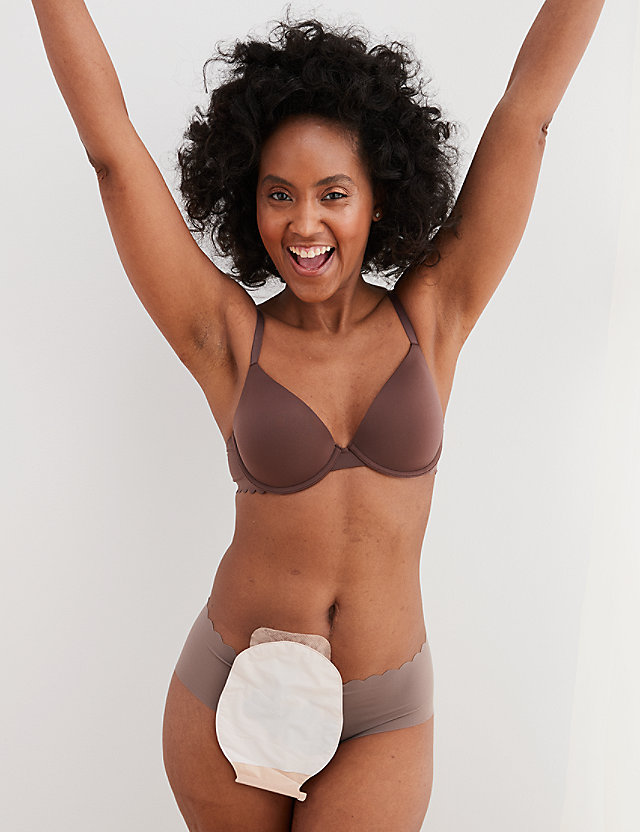
Aerie leggings and underwear for security and flexibility with an ostomy
Gaylyn Henderson modeling for Aerie as a proud ostomate.
Natasha Weinstein recommends discussing ostomy accessories with your care team.
“Would you do better with an ostomy belt? Are you active? Do you like to run, hike, bike, swim? You can still do these things! I am a runner and started running because of the Crohn’s and Colitis Foundation’s Team Challenge program and continued running despite my Crohn’s. Having an ostomy has made it easier for me to run since I am less worried about when I’ll need a bathroom next. Like more extreme sports? On my 27th birthday Ziggy stoma (yes I named mine and I recommend you do too – it helps with acceptance and I have all my friends referring to him as Ziggy), well Ziggy and I jumped out of an airplane! IT WAS A BLAST! What I promise is you can truly do anything you set your mind to, and your new ostomy will be along for the ride.”
Stay tuned Wednesday (September 30) for the final piece in the Lights, Camera, Crohn’s “So, You Have An Ostomy” series. A look at the perspective gained, advice for caretakers and family members, and incredible stories of ostomate perseverance that are sure to inspire.
Navigating life with an ostomy takes patience and persistence. The adjustment is not only emotionally and mentally taxing for many, but the physical day-to-day takes some getting used to as well. In Part 2 of “So, You Have An Ostomy,” I interviewed ostomates about everything from diet, to bag changes, and how best to pack when you’re away from home. It’s my hope that by hearing these words of wisdom, that you’ll feel better equipped and more at ease should you need to make these lifestyle changes for yourself.
Discovering Your “New” Diet with an Ostomy
After ostomy surgery, it’s recommended to stick to a low residue diet for about six-eight weeks. Once you reach that point in recovery, work with your surgeon and GI dietitian to reintroduce foods one by one to see how you tolerate them. Hydration is key every single day. When you are outdoors or more active, you will want to make sure you hydrate before, during, and after, not only with water, but having some sodium and sugar in your system for better absorption. This can either be a homemade mixture, powders (ex. DripDrop, Liquid I.V.), or premade drinks (ex. Pedialyte, Metamucil Water, or Gatorade). Ultimately, you want to keep a pudding consistency of output.
If you’re eating high fiber foods like nuts and raw veggies and fruits, ensure you are chewing well, eating a bit slower, and drinking water throughout the meal, as these foods are harder to breakdown.
Sahara Fleetwood-Beresford, 32, of the United Kingdom, was diagnosed with ulcerative colitis at age 19. Since then, she’s had three stomas. When it comes to diet with an ostomy, it’s very much trial and error, like it is with IBD. For many, marshmallows, unsweetened applesauce, and peanut butter are the ‘go-to’s’ to thicken output, but unfortunately those don’t do the trick for Sahara.
“My main piece of advice is not to be afraid of trying things. If you chew thoroughly, that minimizes the risk of blockages. Your stoma will be settling in for up to twelve months, so if something doesn’t agree with you in the beginning, try it again later. My diet is healthy now, thanks to my stoma. I can eat all of the fruits and vegetables that I couldn’t eat before due to pain caused by strictures.”
Karin Thum, 42, of Florida, battles not only Crohn’s disease, but Spina Bifida. She says an ostomy isn’t as bad as it seems and that in time, you’ll find it’s the best thing you could have done for your health and your quality of life. When it comes to her top dietary hack she says, “I’m a salad girl. I learned from my doctor to use scissors to cut up lettuce so that it’s easier to digest. This way I don’t have to give up eating salad completely and can enjoy one of my favorite foods in moderation.”
For Andrew Battifarano, 26, of New York, he noticed he has higher output after having a sugary drink, like soda. Steering clear of these has helped his bag from filling up so quickly.
“At the same time, I try and have as much water I can tolerate. You can easily get dehydrated without even realizing it (I have and it’s not fun), so staying on top of that is super important. And eating less at night, or having smaller meals spread out will make you have less output when you’re sleeping, which might help prevent any leaks and also let you sleep longer without having to get up during the night.”
Tim Albert, 32, of Wisconsin, received his ostomy this past November. If he ever feels dehydrated, he swears by DripDrop ORS. He says if he drinks 16 ounces of water with DripDrop he starts feeling better in 30 minutes.
“As far as output, I’ve learned to think of things the same way a diabetic might manage their blood sugar. If I eat something that will water down my output, I need to counter it with something that will thicken it. Foods are going to be different for each person, but for me, I am able to thicken things up with apple sauce. I like to buy the little pouches; they are great for on the go.”
Sarah Byrd Vihlen, 33, of Georgia was initially diagnosed with ulcerative colitis in January 2014, but has since been switched to Crohn’s. She underwent subtotal-colectomy surgery right after bringing her two-year-old daughter, Penelope, into the world via c-section. Talk about a rockstar IBD mom. When it comes to diet, she says it’s very much like what you’re told with IBD.
“I typically avoid anything with large seeds or nuts, and if I do eat them, I chew thoroughly, the same with fruits and vegetables that have skin. I still do not eat popcorn. Since getting an ostomy I have been able to eat a wider variety of foods than before, but I have heard mushrooms are dangerous and I miss eating them a lot. To thicken output I eat marshmallows, rice, potatoes, and bananas.”
Some foods are known to increase output and gas. Carbonation drinks, chewing gum, and even something as simple as using a straw, can increase your gas ingestion which will need to be expelled. The challenge is, what may increase one person’s output, may not for someone else or vice versa.
Oh, The Places You Will Go…With an Ostomy
Once it’s “safe” to travel post-pandemic (can you even imagine?!), there’s a lot to keep in mind when you’re packing your bags and you have a bag. The first rule of thumb—be overly prepared and always carry-on your supplies in case your suitcase gets lost. Ostomy supplies are needed to be temperature controlled; they are permitted to go through TSA as carry-on.
Be proactive and if you need to cut your wafer, try to cut some before you travel, and pack your favorite scissors in your checked baggage. The consensus among all ostomates I spoke with—pack extra of everything. You don’t know if you’ll have a defective appliance or have any issues arise while you’re away from home.
Natasha Weinstein always considers how long she is traveling and how she is getting to her destination. She says, “I always pack for up to 3 changes a day. If I am flying, I pack a bit more, as air travel seems to affect my adhesive. I seem to do better with car travel. If I am being exposed to extreme temperatures or my itinerary is more active, I take that into account. I do everything I can to alleviate any possible stress about supplies, so I can enjoy my vacation.”
Double and triple check to ensure you have all your supplies and bag changes packed before you head out the door. An ostomy isn’t like a regular prescription; it can be impossible to find when you’re in another city and you’re simply out of luck at that point. Many of the ostomates I talked with recommend organizing your supplies in a travel toiletries holder.
For additional travel—both domestic and international—with an ostomy, check out this helpful article by ostomate, Tina Aswani Omprakash.
Ch-Ch-Ch-Changesss…the ins and outs of changing your ostomy bag
How long a bag will last varies depending on a few different factors: activity level, weather, bathing, sleeping, etc.There isn’t a one size fits all for bags, it takes a while to figure out which appliance and ‘accessories’ work best for you, that can also change over time, even after you think you have found the right one. Skin allergies are common. It’s best to get free samples from several different companies and try them out. Deodorizing & lubricating drops are also helpful.
For any new ostomates, if insurance/payment allows, it’s recommended to have an ostomy home care nurse help you through any trouble shooting with changing your bag at home.
“I don’t know what I would have done without my ostomy nurse, she was an absolute angel. She would come weekly and was able to talk me through problems I was having and give me several new tips. If that’s not available, several people on social media have videos posted. Organizing your supplies is important too so you know your inventory levels and don’t run out. I have a small stocked caddy in my bathroom ready in case I need to do a middle of the night bag change,” says Byrd.
Byrd typically changes her bag every four days, but has gone longer on occasion. Morning bag changes seem to work best for her (before she eats anything) otherwise she says you can wind up with a mess.
Lindsay Dickerson, age 30, of Georgia, was diagnosed with colonic inertia, gastroparesis (digestive tract paralysis) at the age of 17. When it comes to changing her ostomy, she says it’s key to lay out all your supplies prior to making your first move.
“Know you have everything there, so you don’t have to run to your supply closet and risk a spill. I use a grocery bag and tuck it into my waistband to collect any output and trash. When I used the Hollister brand, I had a thousand supplies that went into a bag change. Now that I’ve switched to the Sensura Mio Convex 2-click appliance, I need the wafer, a bag, and skin-tac that helps the bag stay on longer. My Hollister (which I used for 3 ½ years) lasted two days; my Coloplast Sensura Mio lasts at least 5 days.”
Lindsay recommends always having a water bottle with you when you empty. Since output can be sludgy and hard to empty, it enables you to rinse your bag with some water after you’ve dumped it. She says this tip will change your life!
Michel Johnson, 56, of Tennessee, had a temporary ostomy for nine months. He recalls changing his bag every three to four days. At first, he said he would relive the trauma every time he had to change or empty it, but then his perspective shifted.
“I realized my ostomy saved my life. Rather than moping around, I brought a music speaker in the bathroom and created a dance playlist for my bag changes. I looked forward to it! I danced and sang while I changed my bag. Doing this completely reframed how I looked at this process.”
Several ostomates also mentioned showering bag free and what a wonderful feeling it is to not have anything attached to your body. Just remember to keep soaps and shampoos with perfume and moisturizers away from your stoma and peristomal skin, as they can cause irritation.
Jordan Ditty, 27, of California, was diagnosed with Crohn’s at age 11. When it comes to changing her bag in public, she recommends hitting up Starbucks, as they usually have single bathrooms. If you need to change your bag in public, she says it’s also helpful to use the stall with the changing table so you can lay out all your supplies. Jordan always keeps disinfectant wipes in her bag along with extra paper towels to make sure she’s able to clean the surface area and stoma well.
“You can also sample different companies supplies for free. Email them with what you are wanting to try, and they will send you 2-3 of them as well as others so you are able to find what works best for you. In the past year and a half, I have changed my pouching system at least five times if not more to find what works for my skin, activity level, daily life, and stoma.”
Overall, the recommendation—expect the unexpected. You can’t control what the stoma does, so when it’s not cooperating, try your best to go with the flow (literally and figuratively!). And don’t wait too long to change a bag. If your skin is burning underneath, it’s probably leaking, change it. If you think the adhesive is coming off your wafer and may not last sleeping through the night, change it. Overestimate the time you will need and please give yourself grace upon grace.
Stay tuned for Part 3 of “So, You Have An Ostomy…” Monday (September 28th) we’ll cover disclosing you have an ostomy on a date, intimacy, styles of clothing and underwear that work best and the unique names some IBD warriors have for their stomas.
In case you missed it, click here to read Part 1 of “So, You Have an Ostomy”—The Complexity of Coping, which focuses on what it’s like to find out you need an ostomy, the complexity of coping, and adjusting to your new normal.


























 lights camera crohn's