
This post is sponsored by the American Gastroenterological Association (AGA). I am a paid program Brand Influencer; this post is sponsored and includes my own personal experiences.
 Family planning is exciting, nerve-wracking, and daunting. Couple those emotions with battling inflammatory bowel disease (IBD) and the experience can be downright overwhelming. The tide is changing though when it comes to pregnancy and IBD, thanks to the IBD Parenthood Project. For current IBD moms, until now, there was never a one-stop-shop for factual information. The IBD Parenthood Project website is a resource dedicated to ensuring we have all the knowledge we need to feel comfortable and at ease, as we bring a life into this world.
As a mom of two under two, who’s lived with Crohn’s for nearly 14 years, I often felt as if it was a “learn as you go” and “trust what you’re told” type of experience during my pregnancies. As much as I worked hard to educate myself and advocate for my needs with my care team, there was always a part of me that wondered if my decisions were the best for both me and for my babies.
The same can be said for IBD Parenthood Project spokeswoman, Crohn’s warrior and mom of two, Jessica Caron. 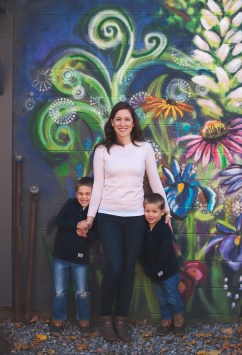 With two sons, ages six and three, she felt even more in the dark during her preconception discussions and pregnancies.
“If I had the IBD Parenthood Project as a resource when I was having my children, it would have provided me with answers to questions that kept me up at night. I felt so alone and didn’t have much support,” said Jessica. “I never felt like those around me understood the decisions I was making regarding staying on my biologic medication throughout the pregnancies and breastfeeding while on it. I truly believe the concerns came from a kind place, but if I had this resource to educate my support system, I would have felt more at ease going through that experience.”
Jessica attributes her passion for patient advocacy to living life in the trenches with IBD and realizing how difficult it was to make plans for her future – plans that impacted not only herself, but also her spouse and family.
“When I was diagnosed at age 21, there wasn’t much information available that was easily understandable and digestible. It would have been great prior to having my sons if I had the information right at my fingertips. The accessibility of the IBD Parenthood Project makes the information available to patients, their partners and their family members,” said Jessica.
Launched in January 2019, the IBD Parenthood Project was created with the patient in mind. Jessica, along with other IBD advocates, had a seat at the table alongside physicians and helped inform the Clinical Care Pathway.
 “The IBD Parenthood Project is a huge win for the IBD community. This resource is paving the way for how we work together with our clinical team. This is a proud moment for the IBD family. We’re showing the health community how to work collaboratively with patients,” explained Jessica. “I never want women to feel alone in the process. This initiative empowers IBD women and their support systems, and makes the experience of bringing a life into this world a whole lot more enjoyable and a lot less worrisome.”
Jessica had a flawless first pregnancy, but unfortunately, dealt with a difficult flare-up nine months after delivering her son. Before she got pregnant again, she made sure she was in remission. If she were to get pregnant today, she says she would start talking with her IBD specialist months ahead of time, while coordinating care with her ObGyn. Jessica would also add a Maternal-Fetal Medicine (MFM) specialist into the mix.
For those who don’t know, an MFM specialist is an ObGyn physician who has completed an additional two to three years of education in training. You can think of them as high-risk pregnancy experts. For pregnant women with chronic health conditions, such as IBD, an MFM specialist works to keep us as healthy as possible as our body changes and as the baby grows.
On a personal level, I went into both of my pregnancies in remission and my Crohn’s disease activity was silenced.  Upon delivering both of my babies, I felt symptoms start to creep back into my life less than a week after they were born. I too would include an MFM specialist in the future, if I were to have another child.
“I’m so glad to know the IBD women of today who get pregnant will have the IBD Parenthood Project resources and have better access to our community,” said Jessica. “As IBD women, it’s key to be proactive by discussing preconception planning and waiting to get pregnant until you’re in a remission state. Work closely with your care team, make a plan that is specifically for you, and stick with it.”

 My daughter is 4 weeks old today and has been exclusively breastfed. I’m by no means writing this as an expert or to point any fingers. I am completely of the mindset that ‘fed is best’. No judgement here, ladies.
 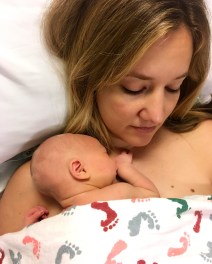 I was worried about the lack of long-term studies on my biologic drug (Humira) and I was concerned about the risk of having a postpartum flare that would land me in the hospital and interrupt my ability to feed him. Being a new mom, I was worried the stress that comes along with breastfeeding could cause me to flare. I ended up breastfeeding him the first three days in the hospital, so that he could receive the colostrum. After that—he was given formula until he turned one. It’s a decision I was confident in, but that tugs at my heartstrings at times, especially now as I breastfeed his sister.
 According to
 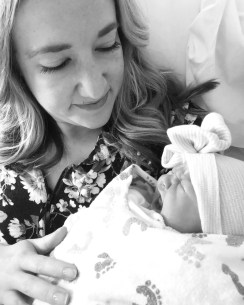 That way—the baby did not receive a burst of the immune-suppressant drug through the placenta, the day she was entering the world and I would be at lower risk of developing an infection as well. Timing your biologic medication is key and a conversation you’ll want to have with your care team so it can be tailored to your pregnancy and your personal journey.


 When it comes to breastfeeding as IBD moms, whether a child is going to latch or if our milk supply is going to be sufficient, tends to be the least of our worries. Our chronic health condition, plus the medications so many of us are dependent on to treat them—adds another layer of stress. In the end, you need to do what you feel comfortable with, what works for your body and for your family. Always know you are not alone in your struggles. Celebrate the parenting wins and accomplishments along the way—no matter how big or small. Lean on your support system—especially fellow breastfeeding mamas who can answer your questions and calm your fears. I can’t tell you how long I’ll continue my breastfeeding journey. For now—all I can do is take it one day at a time. What I can tell you—is how rewarding it is to see what my body is capable of, despite my disease and how amazing it feels to know I’m nourishing my little girl and providing her with a healthy start.


 It was a brisk January morning. Tears filled my eyes as I was overcome with emotion. Our rainbow baby is here, safe and sound. Another pregnancy behind me, a pregnancy that silenced my Crohn’s disease and provided sweet reprieve from my chronic illness. It was time to take Sophia home and start our life as a family of four.
 Each time I have a procedure or deal with painful symptoms, I see their faces, I say their names in my head, and it brings me a sense of calm. My goal when Reid was born, was to stay out of the hospital until he could walk, luckily that’s been the case. He’ll be two in March. Now, I have that same goal following the arrival of my daughter.
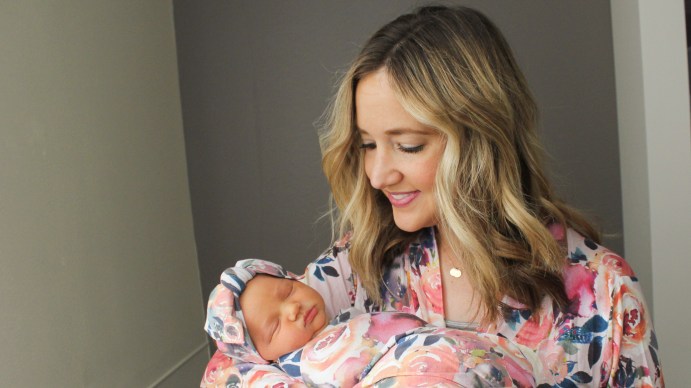 Motherhood and IBD can be a difficult and challenging balance. Some days the fatigue and symptoms are so debilitating you feel like you’re falling short. At the same time, the days where you’re feeling well, remind you that you are so much more than your disease. Just because you have a chronic illness, doesn’t mean you are robbed of experiencing the beauty of life and what it feels like to have your very own family.
 It all starts with recognizing where you are in your patient journey and then determining when your symptoms and body are in the best shape to get pregnant. While everyone’s disease experience is different—the worries, concerns and fears associated with parenting and chronic illness are often the same. Always know you are never alone. Communicating these feelings with those around you, makes all the difference. Lean on our patient community and all those who’ve lived your reality.
 When Sophia Shea entered the world January 14, 2019, our family received a wonderful gift. Between our son Reid and our baby girl, we could not be more blessed. My chronic illness has given me such an appreciation for health and for life in general. With the pregnancies behind me, I often reflect on where I started back at age 21 in 2005. At that time, in my eyes, I was Natalie and I had Crohn’s disease. There was no telling what my future would hold. Now, nearly 14 years later, at age 35, I’m so much more. I’m a mom to two under two. I’m a wife. I’m a daughter. I’m a sister. I’m an aunt. I’m a friend. And I also have Crohn’s.
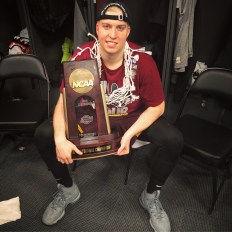 At the time, Nick DiNardi was a senior walk on and served as a scout to prepare players for each game. Aside from his skills on the hardwood, Nick has battled Crohn’s colitis since he was 11.
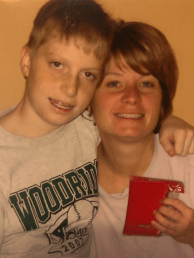 My grade school friends had no idea why I was crying in class, oftentimes teasing me while I was in pain,” said Nick. “My parents and siblings were always there to do everything they could to make me feel better, but I just never felt like anyone related to the pain I was in.”
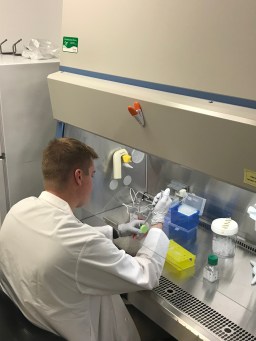

 For me—the past nine months I’ve been incredibly grateful to have another healthy pregnancy, that silenced my Crohn’s symptoms. I’m also celebrating 3.5 years of no IBD-related hospitalizations or ER visits! The cherry on top was the release of Citrate-free (pain-free) Humira this year! After more than a decade of giving myself the painful injection, the new formula has greatly improved my patient experience.
 Celebrate the feel-good days and soak up the moments where your IBD isn’t top of mind. You have an innate sense of when your body is giving you warning signs that rough waters are ahead. Be mindful of the inner conversation going on in your head and listen to your gut. Although it tends to be our nemesis, it has a way of alerting us when things are about to get out of our control.
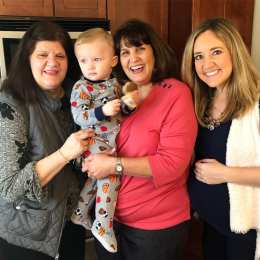 Trust that those close to you love you and appreciate you for everything that makes you, you—including your disease. Show appreciation for your caretakers—those who live with you and are in the trenches by your side, day in and day out. Find comfort in those who allow you to be vulnerable when you need to be. Stop putting effort into relationships and friendships that don’t add joy to your life—eliminate the negativity, cut the fat, there’s no need for people who bring you down or belittle what it’s like to live with Crohn’s or ulcerative colitis.
 I hope you take this week to enjoy time with loved ones, relax and find time to care for yourself!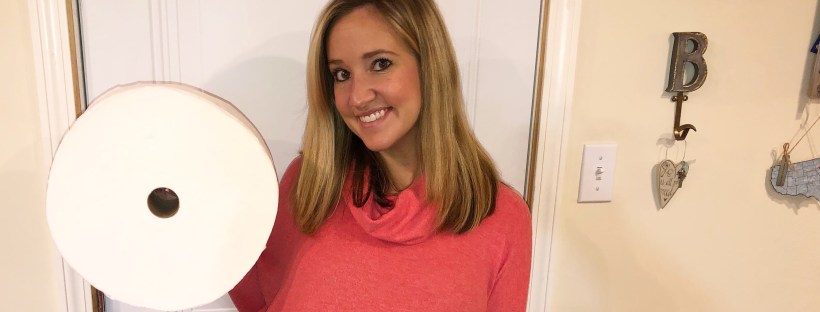

 and industrial to have in your personal bathroom. But reviews far and wide have been overwhelmingly positive!

 She is a news reporter for a community television station in the Minneapolis/St.Paul area. Sonya is also a Crohn’s patient, diagnosed with the digestive disease in 1985 while she was in college. I’ll let her take it from here:
 However, it took me a minute to adapt a positive inner attitude. You see, in public I put on a good, cheerful attitude. There were times when I wanted to crawl up into a big ball and shut out the world. The first few weeks of constantly wearing a backpack full of IV fluids were very hard. I did not like what I saw in the mirror. I was angry at my situation. It wasn’t until I visited a pediatric Crohn’s and Colitis Foundation support group that I changed my way of thinking. Seeing young people living with the digestive diseases, and going about their lives despite their circumstances, motivated me to do better.


 Chronic illness, while physically, mentally and emotionally taxing, also has the ability to show us the beauty of the world around us and all that we’re capable of. Instead of thinking how my Crohn’s holds me back—I think about how I’ve lived despite its restraints.
 My disease has helped me take on motherhood. It’s made me soak in the feel-good moments, take mental snapshots of the happy days and celebrate the beauty of life. My disease has forced me to press pause when I’m doing too much, it’s reminded me of the importance of self-care and taking time for me. It’s shown me which people are meant to be in my life and which are meant to be in the backstory.
 lights camera crohn's