
When you think of vitamin D, soaking up some sunlight may come to mind. But for 30-40% of people with IBD, there’s a deficiency. I’m one of those people. Despite taking a daily dose of vitamin D in pill form, I’m still well below the “normal” range. My GI recently had me go from taking 2,000 IU a day, to 50,000 IU two times month.
The role of vitamin D with disease activity and inflammation
According to Dr. David Rubin, Chief of Gastroenterology, Hepatology and Nutrition at the University of Chicago, “We know that the lower the vitamin D, the more inflammation people have. There is even a “sunlight gradient” in parts of the world where Crohn’s disease is more or less prevalent based on exposure to sunlight- suggesting that more sunlight (and more of that kind of vitamin D) may be preventive or conversely, that less sunlight may be a risk factor.” 
While it’s unclear why vitamin D deficiency is so common in the IBD population, Dr. Rubin says, “We definitely know it’s lower in IBD folks than others who live in the same geographic areas and who are the same age. We suspect there may be an activated inflammatory pathway that is a result of the IBD OR that the deficiency is due to a mutation in the Vitamin D receptor that prevents adequate uptake.”
He went on to say it’s not so much a malabsorption issue, as some assume. Therefore, it’s important those with IBD know what their vitamin D level is, even if they feel well and are in remission.
The importance of measuring vitamin D levels
Severe vitamin D deficiency over time can result in bone loss, delayed or impaired wound healing (and this includes the “wounds” in your bowel), depression, and fatigue. All symptoms and conditions that can occur in IBD! So, knowing your vitamin D and addressing deficiencies is very important. Vitamin D aids in calcium and phosphorus absorption, which is necessary for healthy bone turnover and growth.
“An interesting study at Digestive Disease Week a couple years ago looked at treating low vitamin D in active ulcerative colitis. Of the patients who had a response and normalized their vitamin D levels, they also had improvement in their ulcerative colitis. It was a well-done proof-of-principle study but very important and suggests that this may be a novel treatment in the future, or even be an adjuvant therapy. The key was that patients had to get their Vit D >40 ng/mL,” said Dr. Rubin. 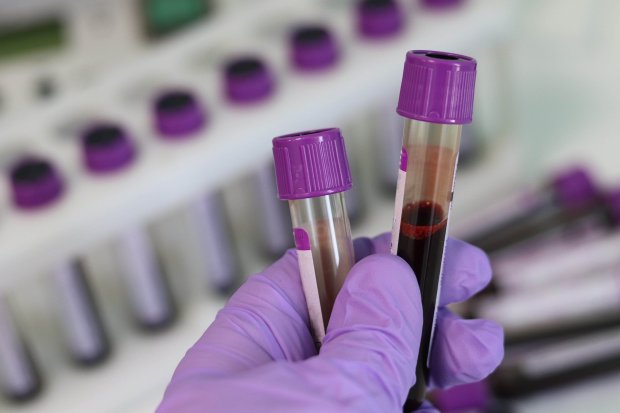
When I had my vitamin D measured this past month, I was at 22 ng/mL, despite taking daily vitamin D and being in clinical remission. As an IBD patient of nearly 15 years, I’m interested to see if shifting to the 50,000 IU capsule of Vitamin D twice a month will help put me in the “normal” range. Time will tell!
It’s recommended that IBD patients get vitamin D levels measured in their blood work at least once a year. If the number is low, then Dr. Rubin recommends repeating labs more often after supplementation has started. While sunlight can certainly increase Vitamin D, it doesn’t seem to be sufficient enough to address the deficiency in patients with IBD-related low levels.


 Additionally, users can enable the sharing of “Progress Reports” which include adherence information and all other modalities to optimize your health. Sometimes a caregiver may not be aware of what you need to take and when, this too can be shared via the “Share Care Plans” functionality.


 of Maryland, never knew how much her strong faith would help her through the ups and downs of chronic illness. As a wife, mom of three, and an educator, Kolby shares a heartfelt, eye-opening piece that beautifully captures how faith correlates to the daily battles we face as people with IBD.
 I was as sick as I’d ever been in my life, and couldn’t figure out why I wasn’t getting better. In December 2019, I received confirmation that I had Crohn’s Disease. I was afraid. But through the wind and the waves, I heard Him say “Take heart; it is I. Do not be afraid.”
 Soon, though, Peter took his eyes off of Jesus and focused instead on the wind and the waves and began to sink. He cried out “Lord, save me!” (Matthew 14:30) and Jesus instantly reached out His hand to catch Peter. When He pulled Peter from the water Jesus simply asked “Why did you doubt?” They returned to the boat and the wind and waves cease.
 I found myself focusing on all the tests and doctor’s appointments I had to go to, and the infusions I’ll have to take for the rest of my life to maintain any sense of health I used to know. I focused on the unpredictability that is Crohn’s, and not on the predictable, steadfast love that can only be found in our Savior.
 When you fall in love with IBD, there’s an extra layer of complexity, trust, dependency, and appreciation. There’s no telling what the next hour will bring. You need to be flexible. You need to be understanding that plans may not go as expected. You need to trust that when the next flare up strikes that you won’t be on your own and that your partner will be there every step of the way.
 You need to believe that when the going gets tough you won’t be deserted; you won’t be made to feel as a burden. You need to trust that your partner sees you as much more than your disease.


 In a world where we all want immediate gratification, think about how it feels when you share something and there are crickets on the other end. Use your social media channels as a platform to share what you care about and what matters most to you, rather than trying to think about what others want to see.


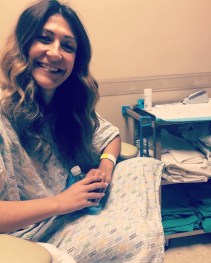
 I developed a new manifestation of the disease I never had before: Perianal Crohn’s. Not a pleasant situation and one that is very difficult to treat/manage while pregnant. Things got so bad at one point, I had to have surgery to drain an abscess and place a seton to help a fistula heal. No one wants to have surgery pregnant. It was one of the scariest moments of my life. The first trimester was spent hoping and praying the baby would make it with all the turmoil going on in my abdomen. The second trimester was spent hoping and praying we could keep her in there long enough to be viable outside of the womb. The third trimester was spent in an unbearable amount of pain fighting the urge to take the prescribed pain pills and being so scared about how the increased biologics, steroids and other new drugs being introduced into my system might affect her.”
 With the newly manifested, aggressive, perianal disease, a vaginal birth was out of the question. I held on until 36 weeks and on New Year’s Eve of 2018 we welcomed our baby girl. We were so incredibly relieved she was ok, and the focus quickly shifted to how not ok mom was.”
 After talking to many medical professionals, we decided it was not safe for me to carry another child. We still don’t know if it was the IVF drugs/hormones that caused the flare going into pregnancy, or if hormones in general and my Crohn’s disease just don’t mix, but we’re not willing to put myself, or another baby at risk like that again.”
 Her goal for you today is to walk away feeling better equipped when it comes to money saving know-how and a bit more empowered. I’ll let her take it away…
 There is no right or wrong. What is coming up for you? It doesn’t need to make perfect sense, it’s just to get your mind thinking about how you view money. Share these sentiments in a journal or planner.



 I feel like we blinked and her first year passed by. That being said, having a baby and a two-year-old, while being a stay-at-home mom and freelancer, who happens to have Crohn’s disease, has its challenges.
 Through motherhood I’ve learned to soak everything in, because you blink, and another year or milestone goes by.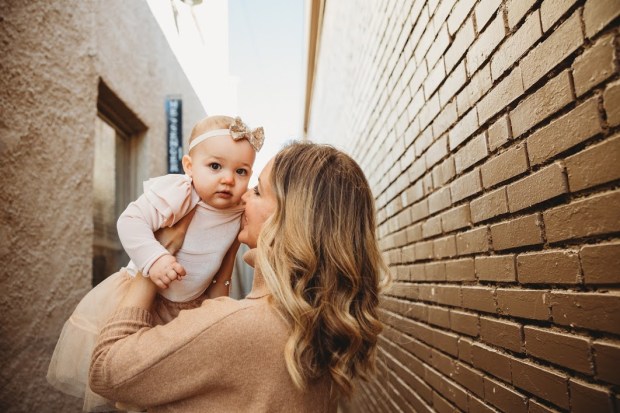


 Fatigue from motherhood when you have a chronic illness can be mind-numbing and debilitating, but seeing your body create a life and then bring a baby into this world makes you feel a renewed sense of love for a body that you’ve been at odds with for years. IBD and motherhood has it’s worries and challenges, but at the end of the day, your children will be the greatest light in your life, and the most magical motivators of strength. There’s almost too much going on to worry about your own well-being, which is both a blessing and a curse!
 Gone are the days of going out at 11 pm, now I rarely go out and when I do, I’m usually home before 10. There’s no pressure to stay out until bar close or take a shot. My friends are all grown women, many of them are moms, our priorities have shifted. Adult conversation over brunch or a glass of wine and some sushi or tapas is refreshing and rejuvenating. I openly communicate about my disease when asked and don’t shy away from the conversation like I once did.
 If you’re reading this and you’re newly diagnosed, a teenager, a 20-something, trust me when I say that balancing life—all your obligations, your network of support, your job and what you’re meant to do with your life will find it’s way. Don’t beat yourself up by creating a timeline or a vision board that sets you up for failure. Don’t try and keep up with the Jones’. Don’t compare where you are in life to your peers. Because there is no comparison. When you have IBD you are being unfair to yourself if you try and be just like everyone else, because you’re not. And that’s ok. Use your experience as a patient to give you patience within yourself. Everyone faces struggles, everyone faces setbacks, but someday I promise you’ll look back and those very same struggles will be the reason you are strong, focused, driven, empathetic, and living the life you were meant to live.
 lights camera crohn's