From remission to flaring in one week: What 2015 taught me about life with Crohn’s

I woke up from my colonoscopy five years ago and was told “You’re in remission”. Tears of happiness streamed down my cheeks. I was in disbelief. Was I dreaming?! It took a decade for me to hear those words, and one week to be robbed of the title.

One week later, I was hospitalized with a small bowel obstruction. The first of three that would happen that next year. So many of us in the chronic illness and IBD community specifically, are constantly chasing after “remission”. But what does remission really mean?

Remission is different for every person, much like IBD manifests differently in everybody. When I heard the word remission five years ago, it felt magical and exciting.

Remission2015

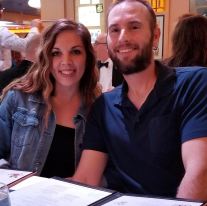
Celebratory post-colonoscopy cheesecake after finding out I was in remission Feb. 2015.

Hell, my mom and boyfriend (now husband) and I went out and celebrated with a big meal at The Cheesecake Factory. When I flared days later, I started feeling skeptical of the term and came to realize how fleeting and elusive remission can be. I laid in the hospital bed, devastated and dumbfounded by what had just transpired.

It took three bowel obstruction and 18 inches of my small intestine to ultimately be removed in August 2015, for me to reach surgical remission. While surgery is not a cure, my bowel resection provided me with a new beginning. As I approach my five year “remission” anniversary this August,

IMG_7445

Hospitalized a week later with a bowel obstruction.

I remain on edge. I’ve been blessed to be on cruise control with my illness these past few years. My GI has me well-managed on my biologic and vitamins, I know how to read my body when it speaks to me through symptoms, and when I suspect something is going awry, my care team and I nip the disease activity in the bud.

To me, remission is waking up each morning with the expectation that I’m going to feel well and be able to take on the day as planned. Remission is having more ‘feel good’ days than painful ones. Remission is being confident to attend social outings, travel, and do all the things I set my heart out to do, without feeling suffocated by the fear of the ‘what ifs” of a flare. Remission is being able to focus on the part of me that is so much more than my disease. remission blog

Remission tends to the be the “goal” when it comes to IBD, but it’s not always feasible. It’s easy to see posts on social media and feel like you’re failing because your body is failing you, repeatedly. It took me a decade of living with Crohn’s and surgery to be in remission.

While I’m a compliant patient, I don’t take much credit for my remission. I know how at the drop of a hat I could be rushing to the ER, unable to breathe from my abdominal pain. I remember all the flares that blindsided me and I know my body can decide to flip the switch at any given moment. I feel lucky most the time—while my Crohn’s could be worse, it could be better, too. Remission doesn’t mean that symptoms are non-existent, moreso that the majority of the time I feel well with some not so great days sprinkled in the mix. While in this state of remission, I remind myself not to take this time for granted, not to become complacent, and to stay vigilant on managing my symptoms and overall well-being.

Rather than focusing on the big “R” word that’s loaded beyond belief and placing so much emphasis on it, let’s focus on feeling the best we can each day, communicating openly with our physicians, friends, and family, and taking this uphill battle one step and one day at a time.

Tactics for Utilizing a Health Diary to take on your IBD

Many of us struggle to manage our chronic conditions, between ongoing appointments, day to day life, and coping with the unpredictable symptoms of our conditions. This is where our mobile phones come in handy. Thanks to ever-evolving technology, we can feel empowered and a bit more in control of our overall well-being by tracking, managing, and learning about our ongoing health treatment.

Going with the adage of what gets measured gets improved. There are a few things we can do to make managing our chronic disease(s) easier. The first step is keeping your care team in the loop, the second is following through on your care plan consistently, and the last is to focus on monitoring and potentially improving your treatment plan as needed.

Having a Care Team Can Help

We all utilize the help of others to maintain our health one way or another. The case may also be that you could be taking care of others.

As an example, in the CareClinic health diary app, you can add caregivers phone numbers to quickly save all information in one place for times of need. careteam_screenAdditionally, users can enable the sharing of “Progress Reports” which include adherence information and all other modalities to optimize your health. Sometimes a caregiver may not be aware of what you need to take and when, this too can be shared via the “Share Care Plans” functionality.

Sticking to Your Care Plan Can Be Easy

A care plan from your doctor may encompass taking certain medications at a certain time. However, a comprehensive care plan is much more than that. A care plan is your “self care to-do list” which will enable rapid health improvements.

It may include eating healthier, eating at a certain time, tracking and managing your calories or sugar levels. Some other things that can be added to a care plan may include tracking activities, therapies and even setting reminders to check certain measurements and symptoms throughout the day.

care_plan

A care plan is everything you need to do to maintain good health. Adding these values will reduce cognitive burden and help you remain on track. An app such as the CareClinic app can provide alerts, notifications and warnings based on your care plan, even better.

Monitoring Progress and Adjusting Your Health Accordingly

Patients often wonder if there is a point in maintaining a health diary. It may make sense to use a calendar or reminders to be notified when to take medications, but are there any inherent benefits to recording when medication was taken, or how we felt afterwards in a diary? reminders

The answer as you can imagine by now is an astounding “Yes, there is a point and a need.” By recording this pertinent information in a health diary, you no longer have to guess and see if a certain medication is causing adverse reactions or flare-ups. You’re taking the guesswork out the picture and providing yourself with more clarity.

Apps are now capable of leveraging AI to automatically help you figure out what’s working and what’s not. Even if the app is not able to make these correlations, your care team will appreciate the undertaking and potentially understand your health a bit better. When you provide data in a structured way to professionals, they can better learn and tweak their treatment for you, no matter what condition you are up against.

Tracking Health for a Better You

A health diary enables greater understanding about your own health and helps communicate the information in an objective way to healthcare professionals.

Web based and mobile diaries are a tool that can help you discover new information about yourself and provide for a more in dept history of how your treatment is progressing. In fact, it has been proven that maintaining a health diary can lead to a multitude of benefits (see this study). You can easily get into the habit by starting to track the essentials and then slowly adding more items to your care plan as you start to see patterns emerge.

This post is sponsored by CareClinic. Thoughts and opinions shared were my own.


Finding faith through the storm that is IBD

Prior to falling ill two years ago and finally receiving a Crohn’s disease diagnosis in December 2019, 33-year-old Kolby Noble, kolby5 of Maryland, never knew how much her strong faith would help her through the ups and downs of chronic illness. As a wife, mom of three, and an educator, Kolby shares a heartfelt, eye-opening piece that beautifully captures how faith correlates to the daily battles we face as people with IBD. 

Picture it. Jesus had left His disciples in their boat on the sea so that He could spend some time alone. It wasn’t long before a powerful storm developed. Jesus returns to the disciples, walking on the water through the wind and the waves, but they don’t recognize Him and are afraid. Jesus speaks to them, saying, “Take heart; it is I. Do not be afraid”. (Matthew 14:7) kolby

I’ve always been in awe of the ocean. As a child I used to play in the waves of the Atlantic or stare into its horizon and I always felt so small in comparison. I would often wonder how the same God that made the ocean, so vast and wide and deep, would create me, too. How could the same God who told the waves to dance along the shore love and know me so intimately? My life has been much like the ocean. Much of it has been beautiful and calm. But like the disciples and everyone else there have been storms, too. Somehow it’s always through the wind and the waves of those storms that I hear Jesus call to me.

It’s been two years since I first thought something was wrong with my health. For two years the wind and the waves have strengthened until, like the disciples, I found myself in the midst of a powerful storm. kolby4I was as sick as I’d ever been in my life, and couldn’t figure out why I wasn’t getting better. In December 2019, I received confirmation that I had Crohn’s Disease.  I was afraid. But through the wind and the waves, I heard Him say “Take heart; it is I. Do not be afraid.”

Back in the boat with Jesus that day was a man named Peter. Peter saw Jesus on the water and when Jesus called to Peter to step out of the boat and come to Him, Peter didn’t hesitate. In the midst of the storm Peter climbed out of the boat and started walking to his Savior. kolby3Soon, though, Peter took his eyes off of Jesus and focused instead on the wind and the waves and began to sink. He cried out “Lord, save me!” (Matthew 14:30) and Jesus instantly reached out His hand to catch Peter. When He pulled Peter from the water Jesus simply asked “Why did you doubt?” They returned to the boat and the wind and waves cease.

Much like Peter, I knew Jesus before the storm of Crohn’s Disease developed. I had witnessed His miracles in my life, just as Peter had before the storm arose on the sea that day. When I received my Crohn’s disease  diagnosis, I heard Jesus tell me not to be afraid. As I stepped out to meet Him in the storm for comfort it wasn’t long before I took my eyes off of Him and focused instead on the wind and the waves. It’s easy to focus on feeling sick, being in pain, being too exhausted to get up each day, or not having the energy to take care of your family. I was taking medication multiple times a day just to function, to somehow get through each work each day. kolby2 I found myself focusing on all the tests and doctor’s appointments I had to go to, and the infusions I’ll have to take for the rest of my life to maintain any sense of health I used to know. I focused on the unpredictability that is Crohn’s, and not on the predictable, steadfast love that can only be found in our Savior.

God doesn’t promise those that believe smooth seas or calm waters. He never says that life is going to be easy. He actually tells us just the opposite. Isaiah 43:2 says “When you go through deep waters, I will be with you.” What a comfort to know that in the midst of our storms we can look out and find a Savior. God knew before I ever took a breath I would have to fight this disease. He knew that it would be hard, and painful, and exhausting. But He loves me, and He is with me, and it’s because of Him that I can face the storm. You can, too.

If you have just been diagnosed with a form of IBD, I encourage you not to focus on the wind or the waves. Focus instead on a Savior who is ready to reach out and catch you when you start to sink. Don’t doubt His love for you. Don’t doubt that He will be with you through the storm. Instead, listen for the voice that says “Take heart, it is I; do not be afraid”. For mightier than the waves of the sea is His love for you. (Psalm 93:4)


Love and IBD: What I wish I would have known

Love doesn’t always come easy. Especially when you have a chronic illness like Crohn’s disease. Dating, relationships and finding “the one” becomes a bit more complicated when your health isn’t on par with that of your peers. Before I met my husband Bobby, I had several eye-opening experiences that left me feeling unlovable and unworthy.

When I was diagnosed with Crohn’s in the emergency room two months after college graduation in 2005 and hospitalized for eight days, my boyfriend never visited and broke up with me over the phone the day I got home. Prior to my diagnosis we were head over heels in love and talked about the future.

When I was hospitalized with an abscess in my small intestine that was the size of a tennis ball over Fourth of July weekend and on the brink of surgery in 2008, my boyfriend of seven months never visited and told me gas prices were too much (for a 3 hour drive) and told me he preferred to go fishing.

When I was about to jump in the shower for a first date in 2009, I fell to my knees in my bathroom from excruciating pain and had to text the guy and tell him my Crohn’s was flaring and that I was headed to the hospital. He laughed at me and told me it was comical that I used that excuse and should just admit I didn’t want to see him. I was hospitalized with a bowel obstruction that night. Never heard from him again.

These were poignant moments in my 20’s that stick with me to this day. I look at those experiences now as a blessing of course, but hindsight is 20-20. When you’re in the thick of taking on IBD and trying to find someone to spend your life with, these struggles can feel overwhelming and extremely daunting. Not everyone is cut out to be a caretaker, and that’s ok—but if you live with a chronic illness like me, it’s imperative you find someone with a nurturing heart, a patient personality, and a comforting way about them.

bobbyWhen you fall in love with IBD, there’s an extra layer of complexity, trust, dependency, and appreciation. There’s no telling what the next hour will bring. You need to be flexible. You need to be understanding that plans may not go as expected. You need to trust that when the next flare up strikes that you won’t be on your own and that your partner will be there every step of the way.
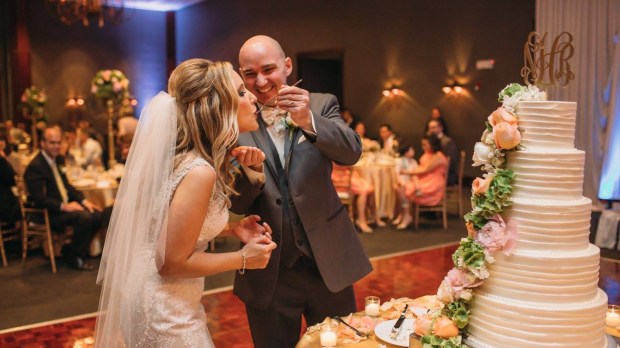
Imagine doing a trust fall. You need to count on your person to ALWAYS be there to catch you when they least expect it. Bobby3You need to believe that when the going gets tough you won’t be deserted; you won’t be made to feel as a burden. You need to trust that your partner sees you as much more than your disease.

Love and IBD isn’t always sunshine and rainbows, but that’s the case with every love story. It’s navigating unknown waters and knowing that just because you go under for a little while, doesn’t mean you won’t be floating in the calm soon. It’s being vulnerable with the fact that your body will continually let you down, but it’s also capable of surprising you, too. It’s knowing when to ask for help and not being scared to communicate your needs. It’s making sure your partner knows how much you appreciate all that they do, even if they don’t feel like they’re going above and beyond. It’s the comfort of knowing that any minute of the day, you can tell your partner you’re unwell and everything else going on becomes background noise.

If you’re reading this and you haven’t found your person or if you’re unsure about whether your significant other is meant to be, think about the type of person you want alongside you as your #1 confidante for everything in life, including your disease.

clwbp-9

If you feel like a burden, if you’re made to feel like your disease is a joke, if you feel like you’re ghosted anytime your health goes awry, take all those feelings as red flags. Sure, the way some of my ex’s treated me when it came to my Crohn’s was extremely disheartening, but at the same time those flare ups were the truth serum I needed to see people’s true colors. Use this to your advantage.

When you find the person who genuinely chooses to stay, to be your rock, to be your sounding board, that’s when you know you’re where you’re meant to be. IBD causes us to be vulnerable, but it also opens our eyes to the true character of others and helps guide our way for finding love that’s meant to last.

Drowning out the noise of social media as a mom with Crohn’s

Comparison. Feelings of inadequacy. Fear of missing out. Guilt. Jealousy. Chances are, you’ve experienced all these emotions and then some when it comes to your involvement on social media. While being able to connect with friends, family, strangers, and celebrities right at our fingertips can be fun and entertaining, it can also be detrimental to our overall well-being, especially as people who live with chronic illness. So how can we drown out the noise and focus on accounts and people who evoke joy, fulfillment, and empowerment? Oftentimes it’s easier said than done, but here are some helpful reminders.

Think about how you narrate and select what to post, others do the same. That selfie you posted with your husband, if only your followers knew you guys were having words hours before. That perfect photo of your child laughing, let’s not forget about the 50 takes and the tantrum that occurred before and after it. Remember that the photos you see capture a moment. They are often edited with filters, captions, you name it. Even though we know everyone crafts their content the same, we’re all so quick to envision how much better or how “perfect” the lives of those in our “inner” circle are. All comparison does is rob of us joy. camilo-jimenez-qZenO_gQ7QA-unsplash

If a certain person or a page is making you feel negatively, stop following, stop engaging. One of the best tools on Facebook and Instagram is the ability to unfollow (but stay friends with people) and “mute” people on Instagram. Pretty sure we all have accounts that make us feel a certain way, it’s not healthy to continue an online presence with someone who makes you feel unhappy or less than.

Stop chasing the “likes” and the followers. It’s so easy to get caught up in the numbers. How many people liked this post, how many followers does he have, how did she get so many followers? sara-kurfess-6lcT2kRPvnI-unsplashIn a world where we all want immediate gratification, think about how it feels when you share something and there are crickets on the other end. Use your social media channels as a platform to share what you care about and what matters most to you, rather than trying to think about what others want to see.

Be conscious of the content your put out in the world. Everybody is facing their own struggles, regardless of how wonderful their life looks on social media. Be cognizant of the fact that your words and posts could cause someone else to hurt. Think about how your friends with fertility or child loss feel each time they see a pregnancy announcement or baby photo. Think about how your friends in the chronic illness community feel when you’re talking about your remission or even your setbacks. It’s not to say that we shouldn’t celebrate huge milestones or challenges, but there’s a way to be tactful, a way to be considerate. Be empathetic to others.

For me, my Crohn’s has been in remission since August 2015. I’m going on almost five years of feeling well, most of my days, which is great…but often as people and as patients we feel a sense of guilt for doing well when our peers are in a flare or constantly in the hospital. There’s a survivor’s guilt that plays into chronic illness. While you may want to celebrate how well you feel, also remember when you were the person in the hospital bed.

IMG_1620

Hospitalized with a bowel obstruction the year of my surgery.

Remember how you felt the day you were diagnosed. Remember how you felt getting rolled into surgery. Remember how you felt waking up from your colonoscopy scared to hear the results. Just remember.

While social media has done wonders for the IBD community and other health spaces, there are still people who bring others down. There are many people professing cures and providing false hopes to those desperate for answers. Be weary of who you let in. Recognize that there are keyboard warriors out there who don’t care about you and will say something for shock value or to bring you down. Be skeptical when you see messages from strangers telling you to try this diet or join a group. I know when you’re feeling isolated in your illness you jump on the opportunity to connect with someone you think “gets it” but be mindful of these connections and guard your heart.

One of my favorite things to do after putting my kids to bed is to charge my phone in the kitchen and turn it on silent. This forces me to be present with my husband and relax. Relax from the pressure of commenting and engaging and just shut out the outside world. While being accessible and helping others is one of my favorite parts of patient advocacy and something I do with all my heart, it’s important to know when to take a break and when to focus on who is right in front of you, rather than a stranger who you’ve never met.

Coming of age with IBD: The 20s and the 30s and how they differ

The new year and new decade have almost everyone reflecting on the last 10 years of their life, looking back at then and now, and anxiously excited to see what the next 10 years will bring. Framing life into decades is interesting, especially when it comes to chronic illness. I wasn’t diagnosed with Crohn’s until age 21, so I can’t speak to what it’s like to live with IBD as a child or a teen. What I can speak to is what it’s like to live with a chronic illness in your 20s and in your 30s and how your lifestyle, your expectations for yourself and for others, shifts as you age. natalie20s2

In my opinion, each decade with IBD presents its own unique set of challenges. Of course, each and everyone of us has a different looking “timeline” as our lives play out, but for the most part, certain aspects of “coming to age” happen at one time or another, depending on what’s important to you. Here’s what my 20s and 30s has looked like:

The 20s:

Said goodbye to being a child and truly became an adult.

Fulfilled education goals, navigated professional life, followed career aspirations.

Dated and found love.

Enjoyed a fun social life with friends.

Moved out at age 22 and lived on my own in Minnesota, Wisconsin, and Illinois.

Adopted my dog, Hamilton.

The 30s:

Got into a groove professionally, felt more confident in my skills and what I’m meant to do.

Moved to Missouri to follow love and got married. engagement

Got pregnant and had two babies.

Fewer social hang outs and more family time.

This may just look like a list, but when you live with IBD these life changing milestones and moments have different meaning and carry different weight. When I was diagnosed at age 21, it was before I landed my first TV job. I had just graduated college and spent years interning for free, worked four nights a week on the college TV station…for free, only to be blindsided with a disease that made me wonder if all my hard work was for nothing. At 21 I wasn’t sure if I would ever find a man willing to stick by my side through the ups and downs of chronic illness or if I was worthy of a long-term relationship. At 21, I moved eight hours away from all friends and family, three months after being diagnosed, while on 22 pills a day, to follow my dream of being a journalist. There was great responsibility in living on my own, taking my medications and being a compliant patient, while the rest of my peers’ greatest worry was what going out shirt they were going to wear to the bar that night. natalie20s

During my 20s I put more emphasis on what others thought of me and just wanted to fit in. I didn’t want my disease to hold me back in any way.

Now that I’m 36, and can look back on what it was like to live with Crohn’s throughout my 20’s and now well into my 30s, I must say…while life with this disease is never “easy”, it becomes a lot easier to live with as you get older. Here’s why.

I followed my dreams of being a journalist and worked successfully full-time for more than a decade in TV stations and PR agencies, despite my diagnosis.

I found a man who loves me for me and didn’t think twice of being my partner even though I had Crohn’s. I met Bobby one month before turning 30. Dating him, marrying him, and building a family with him has brought a great sense of comfort and stability into my life. When I flare or I’m having a rough day, I rely heavily on him to be my rock and lift my spirits.

blog2Fatigue from motherhood when you have a chronic illness can be mind-numbing and debilitating, but seeing your body create a life and then bring a baby into this world makes you feel a renewed sense of love for a body that you’ve been at odds with for years. IBD and motherhood has it’s worries and challenges, but at the end of the day, your children will be the greatest light in your life, and the most magical motivators of strength. There’s almost too much going on to worry about your own well-being, which is both a blessing and a curse!

natalieblog2Gone are the days of going out at 11 pm, now I rarely go out and when I do, I’m usually home before 10. There’s no pressure to stay out until bar close or take a shot. My friends are all grown women, many of them are moms, our priorities have shifted. Adult conversation over brunch or a glass of wine and some sushi or tapas is refreshing and rejuvenating. I openly communicate about my disease when asked and don’t shy away from the conversation like I once did.

blogarticleIf you’re reading this and you’re newly diagnosed, a teenager, a 20-something, trust me when I say that balancing life—all your obligations, your network of support, your job and what you’re meant to do with your life will find it’s way. Don’t beat yourself up by creating a timeline or a vision board that sets you up for failure. Don’t try and keep up with the Jones’. Don’t compare where you are in life to your peers. Because there is no comparison. When you have IBD you are being unfair to yourself if you try and be just like everyone else, because you’re not. And that’s ok. Use your experience as a patient to give you patience within yourself. Everyone faces struggles, everyone faces setbacks, but someday I promise you’ll look back and those very same struggles will be the reason you are strong, focused, driven, empathetic, and living the life you were meant to live.

Why Crohn’s is the gift that keeps on giving

When you think about your IBD, chances are many thoughts race through your mind. This holiday season, I started thinking about how Crohn’s is the immaterial gift that keeps on giving. I know, it sounds crazy. But hear me out.

The unpredictability and uncertainty of IBD has forced me to live in the moment and stop worrying about tomorrow and the future. IMG_0597

The pain, setbacks, and flare ups have provided me with perspective and empathy for others that’s only possible when you live with chronic illness.

The fatigue reminds me of the importance of slowing down, not pushing myself too hard, and practicing self-care.

The ups and downs and in between have given me an innate truth serum about other people’s intentions and character and allowed me to know who I can truly count on.

The side effects of steroids and the scars left behind from my bowel resection and c-sections have humbled me.

The dark moments that tried to break me have instead showed me that God truly does give his toughest lessons to his greatest teachers.

The hatred I felt for my body through the years (especially my abdomen) disappeared the moment I became pregnant and watched my body transform to bring two healthy babies into this world. santa with the kids

The hospitalizations that have tried to break me have forced me to bounce back and be stronger physically and mentally than I was before.

The initial years of isolation when I kept my patient journey under wraps led me to go out on a limb, share my story, and feel the support both near and far from a community that’s like family.

It’s taken me nearly 15 years to think this way about my disease, about my reality. I’m not trying to sugar coat or diminish the seriousness of IBD, but instead share my mindset and how I choose to take on Crohn’s disease. Yes, some days are terrible. IMG_6855Yes, there have been times when everything felt heavy and bleak. Yes, there are still times I feel sorry for myself. But those days are far outnumbered by the joy-filled, happy days I choose to focus on.

My hope for you this holiday season is that you’re able to pause and embrace the hand of cards you’ve been dealt and think about all you’re capable of, all you’ve accomplished, and all that lies ahead. Give yourself credit for all you do today and tomorrow, all you’ve endured in the past, and all you’ll overcome in the future.


Diet and Nutrition: The role they play in IBD

Nutrition and IBD. Just saying those two words together makes me feel like I’m running through a rabbit hole, unsure where to turn….and I’ve lived with Crohn’s disease for more than 14 years. Everywhere you look, you see people claiming to “heal their gut” through diet alone, while sharing diet hacks that “cure” IBD, when in fact there is no cure.

Unfortunately, my first experience with a dietitian, days after my diagnosis, was not a positive one. She came into my hospital room and was very doomsday and black and white about what my future held. The conversation led me to believe I would never eat raw fruit or veggies, salads were out, and fried foods were always a no-no. I was told I could have white bread, white pasta, cooked veggies, and plain chicken from that day forward. Hearing this made grappling with the diagnosis much more difficult.

My experience is hopefully not a typical one for those in the IBD community. Dietitians can be and are key players in our overall care teams. They help guide our nutrition and lead us on a path to better health. Chances are if you or someone you love has IBD you’ve come across the laundry list of IBD-friendly diets (SCD, anti-inflammatory, paleo, etc.). If you’ve found a diet that works for you, that’s great—but it can be extremely dangerous and damaging to use your own personal experience to sway others, especially if you preach to go off all medication and focus on diet alone.

Just as IBD manifests uniquely in every person, trigger foods vary, too. UPMC_HEADSHOT_HIGHRES_ALCHOUFETE_THEREZIA_DIETITIAN_20191113This week—I interview Therezia AlChoufete, a Registered Dietitian Nutritionist (RDN) who specializes in Gastrointestinal Diseases, to set the record straight about this area of disease management. Therezia completed her Bachelor of Science in Neuroscience and her Master of Science in Nutrition and Dietetics from the University of Pittsburgh.

NH: What role does diet/nutrition play in treating IBD?

TA: “A huge role – symptom management is very helpful to improve quality of life for patients with IBD, and many patients have difficulty understanding what they should or should not eat. A Registered Dietitian Nutritionist can help to identify trigger foods and other factors that may be affecting digestion & GI symptoms, nutrition for ostomy management, modifications to diet before and after surgery, recipe modifications to improve GI tolerance, and much more depending on each patient’s medical history.”

NH: When you’re given a patient with IBD, what type of information do you share in those appointments?

TA: “I see my patients in an outpatient setting – this allows me to review the patient’s goals, assess their nutrition status, and determine an individualized plan with every patient. Information can vary depending on each patient’s unique history, goals, and food tolerance.”

NH: Each person’s body responds differently to specific foods, everyone has different triggers, how do you create a plan that is tailored to everyone, rather than saying “all people with IBD need to stay away from XX”?

TA: “There is definitely no one-diet-fits-all approach for IBD. I typically review the patient’s food history, their unique food tolerances, and provide a plan according to each person’s goals and disease status. I try my best to avoid food restriction and liberalize the diet as tolerated by each patient.” brooke-lark-08bOYnH_r_E-unsplash

NH: What are the most common questions and concerns you hear from patients?

TA: “A very common question is what food/supplements can I eat to fix my symptoms – unfortunately, there is not a simple answer. But this leaves us some room to discuss food triggers in more detail and review ways to achieve a well-balanced diet.”

NH: Why is working with a nutritionist so critical for those with IBD?

TA: “Registered Dietitian Nutritionists are food and nutrition experts. We use science-based evidence to provide recommendations that are specific to each person’s medical history. This may include review of micronutrient deficiencies, hydration status, fluid build-up (sometimes following use of steroids), medication side effects, risks of malnutrition (which can occur in all body sizes), supplement questions, and so much more. An RDN can provide individualized medical nutrition therapy to minimize GI symptoms and optimize gut health in conjunction with medical plans provided by gastroenterologists.”

NH: What type of difference do you hope to make in a person’s patient journey? 

TA: “My hope is to help patients liberalize their diet and improve their quality of life. It is very important to me to help patients realize that they have a team of professionals that can help them manage their IBD. I enjoy working with a team of clinicians to target medical, behavioral, and nutritional health concerns to optimize care for each individual.”brandless-18lr202tDKY-unsplash

NH: What advice do you have for patients who are in the middle of a flare up?

TA: “Communication with your Gastroenterologist is very important if you feel like you are having flare-like symptoms in order to receive proper treatment. Sometimes, foods that are typically tolerated during times of remission are not tolerated during a flare, and an RDN can help you determine a softer diet that is easier to digest based on your individual needs.”

NH: The term “healing the gut with food” is commonly heard within the IBD community. What’s your belief on that vs. using diet as a combination therapy with medication?

TA: “Unfortunately, diet cannot cure IBD. It can improve some symptoms, but it is so important to work with your doctor to receive proper medical treatment for the disease, follow up with a dietitian to optimize your diet, and address any behavioral health management with your therapist or psychiatrist.”

Connect with Therezia here:

Twitter: @AppetiteOfMind

Instagram: @appetite_of_mind

Additional Resources:

Crohn’s and Colitis Foundation: https://www.crohnscolitisfoundation.org/diet-and-nutrition

International Foundation for Gastrointestinal Disorders: https://www.iffgd.org/other-disorders/inflammatory-bowel-disease.html

United Ostomy Associations of America: https://www.iffgd.org/other-disorders/inflammatory-bowel-disease.html


How art helps Kate take on her Crohn’s: Tips for unleashing your inner IBD artist

When 32-year-old Kate Schwarting of New York was diagnosed with Crohn’s disease in June 2009 she was less than surprised. The symptoms that had insidiously weaved their way into her life had finally reached a point where their impact on her daily life was undeniable. A colonoscopy confirmed it. headshot_schwartingAt the time she was diagnosed, Kate was immersed in her undergraduate studies that were divided between Geoscience and Studio Art and took on the role of caregiver for her mother. This week Kate shares how art has benefited her patient journey and offers up helpful ways you can incorporate art into your life, even if all you can draw are stick figures (like me!):
While in college, I was focused on understanding my passion for science and art. I was passionate about discovering the possibility for art to express the unseen, and build an emotional bridge for relating to complex scientific problems. But all of this was set against a backdrop of Crohn’s flares, fistulas, strictures, hospitalizations (for both myself and my mother), and doctor appointments.

These constant disruptions often left me feeling like I was struggling to move towards my goals, preserving my identity when it’s so easy for illness to be all consuming, and caused me to frequently reflect and reevaluate my relationship with the art and science that I studied.

How Crohn’s brought me closer to understanding the benefits of art

As a student involved with the arts, it was common for me to have a few spare art materials. Over the course of 10 years of dealing with Crohn’s, I had several flares that resulted in extended hospitalizations, periods where I was at home recovering, or as a caregiver for a parent that made me aware of how important it was to have spare materials with me.

Being sick and in the hospital, or even stuck at home away from your daily routine, is stressful and isolating at best. Having these tools allowed me to cope, escape, and create meaning. It gave me a sense of accomplishing something positive and tangible in a setting where a significant amount of time is spent anxiously waiting for results, procedures and to feel better. IMG_5852

Not only have I noticed how much it helps me to have this diversion, I have also noticed the impact it has on those around me. In situations that are emotionally heavy with the burden of illness, a brief conversation with another patient, nurse or doctor about art seems to uplift everyone’s mood and passing along this joy had an exponentially good effect on my own outlook.

How a flare inspired meaningful artwork 

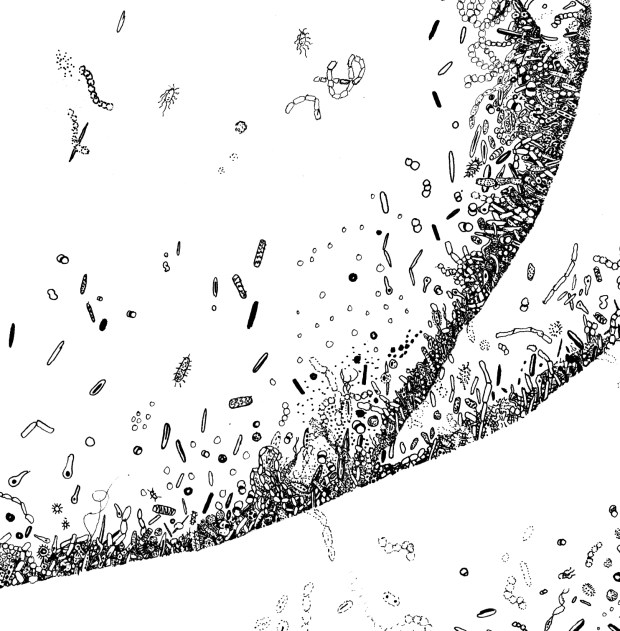
During a flare in 2016 I began to investigate how to create meaningful artwork relating to both the microbiology and to my experiences with my own body. I was drawn to the microbiome. Trillions of bacteria exist in everyone through a symbiotic relationship in the digestive system. detail1 - Kate SchwartingThe microbiome is a hot spring of unanswered questions in relation to its role in IBD, as well as many other conditions. Applying the methods I have used in other projects, I researched the different types of bacteria and their shapes and used them to create a series of abstract drawings that relate to the digestive system and allow people to develop a sense of the complexity of the human body.

5 tips for incorporating art into your life

Create a pack of art supplies. Get a small sketch book, a pouch including a woodless pencil, travel sized watercolor palette and brush, assorted pens, and a ruler. Add to this whatever materials you prefer. 

Start simple. Use mindfulness to find inspiration around you, whether it’s a color, a pattern, or texture

Be mindful of self criticism! As put best by Bob Ross, Let happy accidents happen!

Experiment! Art at its core relies on the very basic act of creating and requires no prior artistic training to get started. It is a place to abandon judgement and focus on an exclusively human experience.

Share! I found it helped hold me to my goal of setting aside time to relax and create art by making an art related post once a day or every other day depending on how I felt to Instagram and also helped me find a supportive community during times where I was feeling the most isolated. I’d love to see what you create! Feel free to use the hashtag #chronicallycreative when sharing your work!

You can follow Kate on Instagram and Twitter at: @microbioscapes.


IBD on the College Campus: The Challenge of Academics

You’re sitting in class. The abdominal pain starts drowning out the words your professor is saying. You have the urge to go to the bathroom, but you’re embarrassed because you literally just got back to your seat from excusing yourself minutes before. You’re struggling. E85DEFFBEA08446AAED0650FA09CCB0DYour disease is making the simple task of sitting in class alongside your peers an ordeal. While you may feel alone in this moment, thousands of college students around the world living with IBD can relate to this overwhelming stress and strain.
When I put a call out on Twitter and asked the IBD community what worries and challenges impacted college students, here are some of the responses I received pertaining to academics:

“Trying to balance wanting to do well vs. taking care of myself. I would try to push past a flare to study or go to class and would end up in the hospital (15+ ER visits and 5-6 hospital stays). In the long run, pushing past it was not the best idea. IMG-0787Balance is key. Health comes first,” said Aaron Blocker, a Crohn’s patient and IBD advocate. “It sucks to have to pause college because of your health, but school will always be there, and your health is important for long-term success.”

Kristin Harris has ulcerative colitis, one of her biggest worries was offending teachers by leaving multiple times to go to the bathroom. “Knowing I may dash out of class gave me major anxiety. I always tried to secure a seat next to the door. I was terrified I’d have to run to the bathroom during a test and that made me so anxious—which only made my symptoms worse.”

The same can be said for Rasheed Clarke. He too lives with ulcerative colitis and is a vocal advocate in our community. “Biggest worry was making it through each class without having to scoot to the bathroom. Somehow, I managed to make my bathroom trips in between classes…most of the time. I also kept spare underwear with me in case of accidents, and let’s just say I’m glad I did.”

Breaking down your walls and being open with professors

Similar to personal relationships and friendships, those on campus can only offer support and help to you if they are aware you have IBD. By openly communicating with your school’s disability office and getting the proper accommodations in place, along with informing your professors, you set yourself up for greater success.

“The hardest part for me was sharing a letter written by my GI with my professors explaining my medical situation and requesting classroom accommodations. IMG-0789As a straight A student, now struggling to pass classes due to an awful flare, I was devastated that I needed to ask for help. I was appreciative of my professors’ extreme kindness and that I was granted accommodations (deadline extensions, attending a different lecture on bad days, rescheduling exams, etc). This was a profound moment that taught me it was okay to ask for help,” said ulcerative colitis patient and IBD advocate, Jenna Ziegler.

Alex Beaudoin was diagnosed with Crohn’s during her academic career. She learned the benefits of communicating with professors. “I was shocked at how understanding everyone was. IMG-0788Ask for extra time, ask for a note taker. Get in touch with your school’s office for those with disabilities. Access the support you need to be on equal ground.”
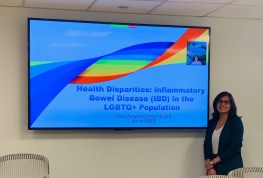
Key accommodations to discuss with your school’s disability office

As people living with IBD, most of us strive to overcome our personal limitations. At the same time, it’s important to understand your achievements and accomplishments are not diminished when you ask for help and assistance. If anything, accommodations will help you reach your goals and get to where you want to be.

According to Section 504 of the Rehabilitation Act of 1973 (as well as the Americans with Disabilities Act), public, government-funded institutions such as state and regional colleges and vocational programs, are required to make reasonable modifications and adaptations for students with disabilities that significantly impact their education, learning, or physical ability to participate in programs. Click here to learn more about disability services and your rights as an IBD patient. This pertains to all school-age children and adults, click here to check out the Crohn’s and Colitis Foundations Guide to Educational Equality.

I asked for disability accommodations which at my school, last one year and then you’re re-evaluated by their social worker for whatever your needs might be. For me, in writing-intensive classes, I was allowed extra time to submit papers. For classes with exams, I received extra time to complete the exam. IMG-7331I also can use the bathroom frequently without question, eat in class without any questions and I’m allowed more than the usual 2 absences allowed in most classes,” said Tina Aswani Omprakash, Crohn’s patient and IBD advocate. “If there are group projects and I can’t partake; I ask the professor if I can do something on my own.”

The Crohn’s and Colitis Foundation’s Mid-America Chapter is gearing up to a host a webinar tomorrow (Thursday, September 26, 2019) from 7-8 pm CT to address managing IBD while furthering your education along with finding the appropriate accommodations. Click here to register and stay tuned for Part Three of my series “IBD on the College Campus” next week.