Why Crohn’s is the gift that keeps on giving

When you think about your IBD, chances are many thoughts race through your mind. This holiday season, I started thinking about how Crohn’s is the immaterial gift that keeps on giving. I know, it sounds crazy. But hear me out.

The unpredictability and uncertainty of IBD has forced me to live in the moment and stop worrying about tomorrow and the future. IMG_0597

The pain, setbacks, and flare ups have provided me with perspective and empathy for others that’s only possible when you live with chronic illness.

The fatigue reminds me of the importance of slowing down, not pushing myself too hard, and practicing self-care.

The ups and downs and in between have given me an innate truth serum about other people’s intentions and character and allowed me to know who I can truly count on.

The side effects of steroids and the scars left behind from my bowel resection and c-sections have humbled me.

The dark moments that tried to break me have instead showed me that God truly does give his toughest lessons to his greatest teachers.

The hatred I felt for my body through the years (especially my abdomen) disappeared the moment I became pregnant and watched my body transform to bring two healthy babies into this world. santa with the kids

The hospitalizations that have tried to break me have forced me to bounce back and be stronger physically and mentally than I was before.

The initial years of isolation when I kept my patient journey under wraps led me to go out on a limb, share my story, and feel the support both near and far from a community that’s like family.

It’s taken me nearly 15 years to think this way about my disease, about my reality. I’m not trying to sugar coat or diminish the seriousness of IBD, but instead share my mindset and how I choose to take on Crohn’s disease. Yes, some days are terrible. IMG_6855Yes, there have been times when everything felt heavy and bleak. Yes, there are still times I feel sorry for myself. But those days are far outnumbered by the joy-filled, happy days I choose to focus on.

My hope for you this holiday season is that you’re able to pause and embrace the hand of cards you’ve been dealt and think about all you’re capable of, all you’ve accomplished, and all that lies ahead. Give yourself credit for all you do today and tomorrow, all you’ve endured in the past, and all you’ll overcome in the future.


Diet and Nutrition: The role they play in IBD

Nutrition and IBD. Just saying those two words together makes me feel like I’m running through a rabbit hole, unsure where to turn….and I’ve lived with Crohn’s disease for more than 14 years. Everywhere you look, you see people claiming to “heal their gut” through diet alone, while sharing diet hacks that “cure” IBD, when in fact there is no cure.

Unfortunately, my first experience with a dietitian, days after my diagnosis, was not a positive one. She came into my hospital room and was very doomsday and black and white about what my future held. The conversation led me to believe I would never eat raw fruit or veggies, salads were out, and fried foods were always a no-no. I was told I could have white bread, white pasta, cooked veggies, and plain chicken from that day forward. Hearing this made grappling with the diagnosis much more difficult.

My experience is hopefully not a typical one for those in the IBD community. Dietitians can be and are key players in our overall care teams. They help guide our nutrition and lead us on a path to better health. Chances are if you or someone you love has IBD you’ve come across the laundry list of IBD-friendly diets (SCD, anti-inflammatory, paleo, etc.). If you’ve found a diet that works for you, that’s great—but it can be extremely dangerous and damaging to use your own personal experience to sway others, especially if you preach to go off all medication and focus on diet alone.

Just as IBD manifests uniquely in every person, trigger foods vary, too. UPMC_HEADSHOT_HIGHRES_ALCHOUFETE_THEREZIA_DIETITIAN_20191113This week—I interview Therezia AlChoufete, a Registered Dietitian Nutritionist (RDN) who specializes in Gastrointestinal Diseases, to set the record straight about this area of disease management. Therezia completed her Bachelor of Science in Neuroscience and her Master of Science in Nutrition and Dietetics from the University of Pittsburgh.

NH: What role does diet/nutrition play in treating IBD?

TA: “A huge role – symptom management is very helpful to improve quality of life for patients with IBD, and many patients have difficulty understanding what they should or should not eat. A Registered Dietitian Nutritionist can help to identify trigger foods and other factors that may be affecting digestion & GI symptoms, nutrition for ostomy management, modifications to diet before and after surgery, recipe modifications to improve GI tolerance, and much more depending on each patient’s medical history.”

NH: When you’re given a patient with IBD, what type of information do you share in those appointments?

TA: “I see my patients in an outpatient setting – this allows me to review the patient’s goals, assess their nutrition status, and determine an individualized plan with every patient. Information can vary depending on each patient’s unique history, goals, and food tolerance.”

NH: Each person’s body responds differently to specific foods, everyone has different triggers, how do you create a plan that is tailored to everyone, rather than saying “all people with IBD need to stay away from XX”?

TA: “There is definitely no one-diet-fits-all approach for IBD. I typically review the patient’s food history, their unique food tolerances, and provide a plan according to each person’s goals and disease status. I try my best to avoid food restriction and liberalize the diet as tolerated by each patient.” brooke-lark-08bOYnH_r_E-unsplash

NH: What are the most common questions and concerns you hear from patients?

TA: “A very common question is what food/supplements can I eat to fix my symptoms – unfortunately, there is not a simple answer. But this leaves us some room to discuss food triggers in more detail and review ways to achieve a well-balanced diet.”

NH: Why is working with a nutritionist so critical for those with IBD?

TA: “Registered Dietitian Nutritionists are food and nutrition experts. We use science-based evidence to provide recommendations that are specific to each person’s medical history. This may include review of micronutrient deficiencies, hydration status, fluid build-up (sometimes following use of steroids), medication side effects, risks of malnutrition (which can occur in all body sizes), supplement questions, and so much more. An RDN can provide individualized medical nutrition therapy to minimize GI symptoms and optimize gut health in conjunction with medical plans provided by gastroenterologists.”

NH: What type of difference do you hope to make in a person’s patient journey? 

TA: “My hope is to help patients liberalize their diet and improve their quality of life. It is very important to me to help patients realize that they have a team of professionals that can help them manage their IBD. I enjoy working with a team of clinicians to target medical, behavioral, and nutritional health concerns to optimize care for each individual.”brandless-18lr202tDKY-unsplash
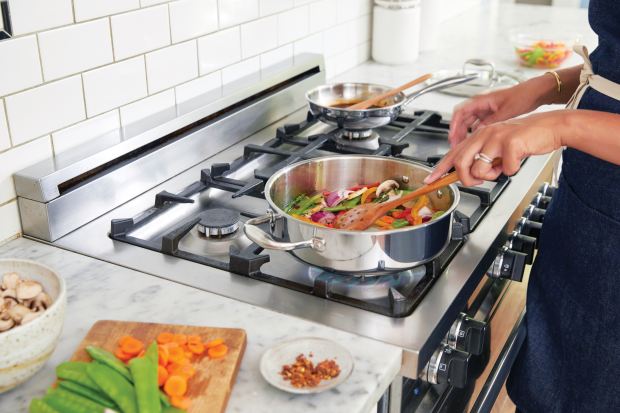
NH: What advice do you have for patients who are in the middle of a flare up?

TA: “Communication with your Gastroenterologist is very important if you feel like you are having flare-like symptoms in order to receive proper treatment. Sometimes, foods that are typically tolerated during times of remission are not tolerated during a flare, and an RDN can help you determine a softer diet that is easier to digest based on your individual needs.”

NH: The term “healing the gut with food” is commonly heard within the IBD community. What’s your belief on that vs. using diet as a combination therapy with medication?

TA: “Unfortunately, diet cannot cure IBD. It can improve some symptoms, but it is so important to work with your doctor to receive proper medical treatment for the disease, follow up with a dietitian to optimize your diet, and address any behavioral health management with your therapist or psychiatrist.”

Connect with Therezia here:

Twitter: @AppetiteOfMind

Instagram: @appetite_of_mind

Additional Resources:

Crohn’s and Colitis Foundation: https://www.crohnscolitisfoundation.org/diet-and-nutrition

International Foundation for Gastrointestinal Disorders: https://www.iffgd.org/other-disorders/inflammatory-bowel-disease.html

United Ostomy Associations of America: https://www.iffgd.org/other-disorders/inflammatory-bowel-disease.html


How art helps Kate take on her Crohn’s: Tips for unleashing your inner IBD artist

When 32-year-old Kate Schwarting of New York was diagnosed with Crohn’s disease in June 2009 she was less than surprised. The symptoms that had insidiously weaved their way into her life had finally reached a point where their impact on her daily life was undeniable. A colonoscopy confirmed it. headshot_schwartingAt the time she was diagnosed, Kate was immersed in her undergraduate studies that were divided between Geoscience and Studio Art and took on the role of caregiver for her mother. This week Kate shares how art has benefited her patient journey and offers up helpful ways you can incorporate art into your life, even if all you can draw are stick figures (like me!):
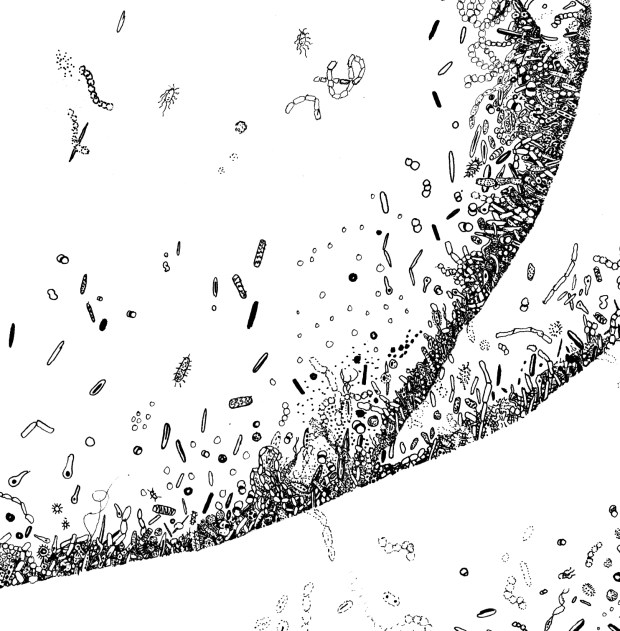
While in college, I was focused on understanding my passion for science and art. I was passionate about discovering the possibility for art to express the unseen, and build an emotional bridge for relating to complex scientific problems. But all of this was set against a backdrop of Crohn’s flares, fistulas, strictures, hospitalizations (for both myself and my mother), and doctor appointments.

These constant disruptions often left me feeling like I was struggling to move towards my goals, preserving my identity when it’s so easy for illness to be all consuming, and caused me to frequently reflect and reevaluate my relationship with the art and science that I studied.

How Crohn’s brought me closer to understanding the benefits of art

As a student involved with the arts, it was common for me to have a few spare art materials. Over the course of 10 years of dealing with Crohn’s, I had several flares that resulted in extended hospitalizations, periods where I was at home recovering, or as a caregiver for a parent that made me aware of how important it was to have spare materials with me.

Being sick and in the hospital, or even stuck at home away from your daily routine, is stressful and isolating at best. Having these tools allowed me to cope, escape, and create meaning. It gave me a sense of accomplishing something positive and tangible in a setting where a significant amount of time is spent anxiously waiting for results, procedures and to feel better. IMG_5852

Not only have I noticed how much it helps me to have this diversion, I have also noticed the impact it has on those around me. In situations that are emotionally heavy with the burden of illness, a brief conversation with another patient, nurse or doctor about art seems to uplift everyone’s mood and passing along this joy had an exponentially good effect on my own outlook.

How a flare inspired meaningful artwork 

During a flare in 2016 I began to investigate how to create meaningful artwork relating to both the microbiology and to my experiences with my own body. I was drawn to the microbiome. Trillions of bacteria exist in everyone through a symbiotic relationship in the digestive system. detail1 - Kate SchwartingThe microbiome is a hot spring of unanswered questions in relation to its role in IBD, as well as many other conditions. Applying the methods I have used in other projects, I researched the different types of bacteria and their shapes and used them to create a series of abstract drawings that relate to the digestive system and allow people to develop a sense of the complexity of the human body.

5 tips for incorporating art into your life

Create a pack of art supplies. Get a small sketch book, a pouch including a woodless pencil, travel sized watercolor palette and brush, assorted pens, and a ruler. Add to this whatever materials you prefer. 

Start simple. Use mindfulness to find inspiration around you, whether it’s a color, a pattern, or texture

Be mindful of self criticism! As put best by Bob Ross, Let happy accidents happen!

Experiment! Art at its core relies on the very basic act of creating and requires no prior artistic training to get started. It is a place to abandon judgement and focus on an exclusively human experience.

Share! I found it helped hold me to my goal of setting aside time to relax and create art by making an art related post once a day or every other day depending on how I felt to Instagram and also helped me find a supportive community during times where I was feeling the most isolated. I’d love to see what you create! Feel free to use the hashtag #chronicallycreative when sharing your work!

You can follow Kate on Instagram and Twitter at: @microbioscapes.


IBD on the College Campus: The Challenge of Academics

You’re sitting in class. The abdominal pain starts drowning out the words your professor is saying. You have the urge to go to the bathroom, but you’re embarrassed because you literally just got back to your seat from excusing yourself minutes before. You’re struggling. E85DEFFBEA08446AAED0650FA09CCB0DYour disease is making the simple task of sitting in class alongside your peers an ordeal. While you may feel alone in this moment, thousands of college students around the world living with IBD can relate to this overwhelming stress and strain.
When I put a call out on Twitter and asked the IBD community what worries and challenges impacted college students, here are some of the responses I received pertaining to academics:

“Trying to balance wanting to do well vs. taking care of myself. I would try to push past a flare to study or go to class and would end up in the hospital (15+ ER visits and 5-6 hospital stays). In the long run, pushing past it was not the best idea. IMG-0787Balance is key. Health comes first,” said Aaron Blocker, a Crohn’s patient and IBD advocate. “It sucks to have to pause college because of your health, but school will always be there, and your health is important for long-term success.”

Kristin Harris has ulcerative colitis, one of her biggest worries was offending teachers by leaving multiple times to go to the bathroom. “Knowing I may dash out of class gave me major anxiety. I always tried to secure a seat next to the door. I was terrified I’d have to run to the bathroom during a test and that made me so anxious—which only made my symptoms worse.”

The same can be said for Rasheed Clarke. He too lives with ulcerative colitis and is a vocal advocate in our community. “Biggest worry was making it through each class without having to scoot to the bathroom. Somehow, I managed to make my bathroom trips in between classes…most of the time. I also kept spare underwear with me in case of accidents, and let’s just say I’m glad I did.”

Breaking down your walls and being open with professors

Similar to personal relationships and friendships, those on campus can only offer support and help to you if they are aware you have IBD. By openly communicating with your school’s disability office and getting the proper accommodations in place, along with informing your professors, you set yourself up for greater success.

“The hardest part for me was sharing a letter written by my GI with my professors explaining my medical situation and requesting classroom accommodations. IMG-0789As a straight A student, now struggling to pass classes due to an awful flare, I was devastated that I needed to ask for help. I was appreciative of my professors’ extreme kindness and that I was granted accommodations (deadline extensions, attending a different lecture on bad days, rescheduling exams, etc). This was a profound moment that taught me it was okay to ask for help,” said ulcerative colitis patient and IBD advocate, Jenna Ziegler.

Alex Beaudoin was diagnosed with Crohn’s during her academic career. She learned the benefits of communicating with professors. “I was shocked at how understanding everyone was. IMG-0788Ask for extra time, ask for a note taker. Get in touch with your school’s office for those with disabilities. Access the support you need to be on equal ground.”
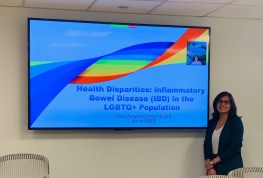
Key accommodations to discuss with your school’s disability office

As people living with IBD, most of us strive to overcome our personal limitations. At the same time, it’s important to understand your achievements and accomplishments are not diminished when you ask for help and assistance. If anything, accommodations will help you reach your goals and get to where you want to be.

According to Section 504 of the Rehabilitation Act of 1973 (as well as the Americans with Disabilities Act), public, government-funded institutions such as state and regional colleges and vocational programs, are required to make reasonable modifications and adaptations for students with disabilities that significantly impact their education, learning, or physical ability to participate in programs. Click here to learn more about disability services and your rights as an IBD patient. This pertains to all school-age children and adults, click here to check out the Crohn’s and Colitis Foundations Guide to Educational Equality.

I asked for disability accommodations which at my school, last one year and then you’re re-evaluated by their social worker for whatever your needs might be. For me, in writing-intensive classes, I was allowed extra time to submit papers. For classes with exams, I received extra time to complete the exam. IMG-7331I also can use the bathroom frequently without question, eat in class without any questions and I’m allowed more than the usual 2 absences allowed in most classes,” said Tina Aswani Omprakash, Crohn’s patient and IBD advocate. “If there are group projects and I can’t partake; I ask the professor if I can do something on my own.”

The Crohn’s and Colitis Foundation’s Mid-America Chapter is gearing up to a host a webinar tomorrow (Thursday, September 26, 2019) from 7-8 pm CT to address managing IBD while furthering your education along with finding the appropriate accommodations. Click here to register and stay tuned for Part Three of my series “IBD on the College Campus” next week.

When pain medication adds to your IBD troubles

It was one of those moments when you’ve exhausted all options for comfort and feel the need to turn to pain medication. As an IBD mom, taking pain medication is now my last resort, because it makes me feel less present and capable of taking care of my children. Luckily, this time around my Crohn’s symptoms decided to peak on Labor Day weekend while my husband was home.

I casually took a Tylenol with Codeine, expecting for the pill to take the edge off the gnawing pain in my abdomen that had been bothering me all day. Thirty minutes went by, then an hour, then a few hours, no relief. My mind started racing as to why I was feeling this way. Was it the fact I went out the night before and had a drink with friends? Was it because I had Starbucks hours before? Was it the rice cakes I ate that sometimes cause my stomach to hurt?

84910E13-824E-4856-BF44-D3BBBD5BCC1FAs the pain persisted and my little guy snuggled me on the couch, I was losing patience with the pain that was drowning out everything around me. I wanted relief and I wanted it quickly.
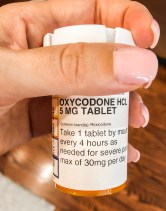
So, I went in my medicine cabinet and saw I had Oxycodone left over from my c-section six months ago. I grabbed a glass of water before bed and popped the pill without thinking twice. I assumed that little white pill would help me sleep and help the pain subside.

What happened was the opposite. What happened is something that still sticks with me now. I crawled into bed next to my husband and could tell something was off. I traded in my abdominal pain for much worse. It was a nightmare of a night filled with anxiety, nausea, and dizziness. I laid awake in bed for nearly six hours. I had to keep my hand on top of my chest because I was so anxious about not being able to breathe. I felt like I was suffocating. My mouth felt so dry, yet when I would try and drink water I would almost throw up. My thoughts raced. I felt so scared. So alone. Despite Bobby being right next to me. He held my hand, he tickled my back, he did everything he could to help calm me down.

IMG_9691Sure, I couldn’t feel the abdominal pain, I couldn’t really feel much below my neck, which added to my anxiety. My body felt like Jell-O. I felt like I was living an out of body experience. I was whimpering and whining at 3 in the morning that I just wanted it to be the next day.

These are the behind-the-scenes IBD moments that people often don’t hear about. These are the difficult experiences as patients and as parents that we often keep behind closed doors. Both my kids were under the weather, I felt so guilty that if they woke up, I wouldn’t be capable to take care of them, let alone hold them. Poor Bobby had to be all three of our caretakers that night.

The morning came and I woke up at almost 9 a.m. I had been dead to the world for about five hours. Never heard my baby on the monitor. Never heard my toddler across the hall. Never heard my husband get up to take care of them. When I walked into the family room, I felt the aftereffects of my stomach pain from the day before. I felt like I was still in a cloud. My head pounded. The headache persisted until dinner time.

pharmacy-3087596_1920This is not to say pain medication is always a no-go. I’m of the mindset that those of us in the IBD community should have access to opioids. At the same time, this is more of warning for patients to be mindful that the medication you take to calm your pain, may bring about side effects that are even worse than what you are dealing with in the first place. Personally, I’ll never take oxycodone again. You live and you learn. Sometimes with IBD unfortunately it has to be the hard way.

IBD Travel Tips You Won’t Want to Leave Home Without

It’s a scary feeling when you’re traveling or away from home and your IBD symptoms flare. As we all know, chronic illness never takes a vacation. Oftentimes the change of scenery and schedule is the perfect storm for disease activity to peak. 

mT3tVteyRCOz2s4mbzraGAThis week–Megan Murray from Balanced Life and Travel shares her top tips for staying in your comfort zone so you can make the most out of your time away. Megan is 37-years-old and was diagnosed with Crohn’s disease in 2013. She’s originally from Oklahoma City, but now she lives in Spain with her husband. She’s passionate about travel and not allowing her disease to hold her back from exploring the world.

Drink water all day, every day

I used to experience painful gas and constipation when I traveled. I don’t like taking laxatives or stool softeners if I can avoid it, so I’ve learned that drinking plenty of water is the best way to avoid/fix constipation on the road. I always carry my stainless-steel water bottle. Single-use plastic bottles of water are convenient, but their cost adds up financially and environmentally. 

Know how to find a restroom quickly

This can be pretty easy when you are traveling in America, because you can usually duck into any store, restaurant, supermarket, museum, hotel, etc. and use the bathroom that is available. Always make sure you have your I Can’t Wait card from the Crohn’s and Colitis Foundation. I’ve only had to use mine once, but boy did it save me from an awful situation.

Outside of North America, it can get trickier depending on where you are and how high the language barrier is. If you don’t speak the language and English isn’t widely spoken in your destination, make “May I use your restroom?” the first thing you learn. Research if there is a Crohn’s and Colitis Foundation in that country and see if they have an I Can’t Wait card in the language of the country. fullsizeoutput_1690

Traveling through Asia and Europe, I’ve never had trouble stopping in at hotels. If it’s a big hotel, especially if it’s an international brand, I just confidently waltz in like I’m staying there and use the lobby bathrooms. If it’s a smaller place, front desk staff will most likely speak English, so you can politely ask to use the bathroom. I’ve never been denied.

Museum lobbies are also a good choice. The one drawback being the security line you have to go through to get to some lobbies. Also look for banks and other businesses that have lobbies. Check out my post on spending a weekend in London with a chronic illness to read about how some very friendly bank employees saved the day for me.

Research food options before you go

My favorite tool on Google Maps is marking restaurants “Want to go” before I visit a city. This helps me avoid finding myself in the middle of fast food restaurants with nowhere to get a meal that won’t trigger my symptoms. IMG_1226

I eat a vegan diet, so I find all of the places that are vegan, vegetarian, and have vegan options before I go and tag them all. In places where I don’t find as many options (usually more rural locations), I pack food that works for me. I love Oh She Glow’s Glo Bars, so I always make a batch or two, wrap them up and throw one in my bag each day. Then I know I always have a snack that will keep the hangry away and won’t make my Crohn’s hurt! Glo bars won’t work for everyone (hello, low-fiber diet I was on for two years), so brainstorm a hearty snack that is portable to take with you. 

Pace yourself

When planning your itinerary, it’s tempting to cram every last activity into your days. Resist this urge! SPq9iyQkSv2CpXItQzKRWgMake a list of everything you’re interested in and then prioritize, cutting out what you don’t have your heart set on. Trying to do it all sets you up for exhaustion, frustration, and disappointment. 

  • Consider how much energy each activity/sight will take and then begin to plan your days
    • Museums are sneakily draining because you are on your feet the whole time.
    • Balance a demanding activity with a laid-back activity on a given day
  • Think about transportation
    • There’s nothing like a 20-minute uphill walk to zap your energy. Budget for taxis. You save time and conserve energy, so they’re worth the cost.
  • Hop-on, Hop-off buses
    • They are super touristy, but they allow you to see and get around a city without the stress of navigating and/or walking to them all.
  • Take breaks
    • I always need a midday break. I either go back to my hotel to decompress and rest or, at the very least, find a cute cafe and have a cup of tea as I read. I love the Kindle app on my phone. Afterward, I’m refreshed and ready to see or do more. fullsizeoutput_f9

I firmly believe that while a diagnosis of Crohn’s or ulcerative colitis is life changing, it’s not a life sentence. I have always loved traveling, so I haven’t stopped. My travels just looks a little differently than they did before. 

“My mom has Crohn’s and I do, too”: Why Sam doesn’t allow IBD to take over her life

Motherhood provides perspective. Motherhood shapes us in a way we didn’t know possible. When you’re a mom with IBD, your past and current struggles make you look onward to the future in a different way. Meet Sam Zachrich. _ADP6012She’s a 30-year-old mom and wife from Utah, who works full-time outside the home. She’s battled Crohn’s disease since December 2011.  

Even though she was officially diagnosed a week before her wedding (imagine that!), Crohn’s is something that was a part of her life long before that. Her mom, also has the disease. This week–Sam shares her experience taking on motherhood and marriage, while juggling everything that comes along with a life of chronic illness.

Like someone with a bad knee before a rainstorm. I knew I was not feeling well and the results of my colonoscopy would reflect that. More medication and more doctors is all I heard from my GI. My husband Nate will tell you a different story. He is always my biggest supporter and remembers way more than I do after waking up from a scope. He heard “Sam things look better… your colon is healing… but there are some issues.” All I heard was “issues”. As a Crohnie, it’s easy to focus on the negative of our disease. It’s easy to forget to celebrate how far we’ve come and the milestones we’ve accomplished throughout our journey.

Growing up with a parent who has IBD

I knew my mom had Crohn’s from an early age, but I didn’t fully understand how much pain and hardship it caused her, until I was in college. I had a wonderful childhood, filled with amazing memories. I don’t remember my mom being sick very often. There were hospital visits here and there, I just always had faith that she would get better.

48397243_10213280363469781_8737081387036704768_oMy mom did an amazing job making sure our lives did not revolve around her disease. She did her best to stay healthy and support us. I want my daughter to have the same experience as I had growing up. I don’t want her to ever feel the burden of my disease. I want her to know that no matter how difficult life gets, there is always hope. My mom is the one person I can call who fully understands my struggles. To have another family member that has and is dealing with the same chronic health issues is a huge support. I am very grateful for her.

A mother’s love

My mom was with me for every scope and doctors appointment leading up to my diagnosis of Crohn’s. She was a shoulder to cry on and a listening ear because she completely understood. Feeling guilty is not something we do easily in our family. We try to stay the course and figure out next steps. I think to some degree she had guilt, but she wanted me to stay strong and knew I would be alright. She has always told me to focus on what I can change in the moment.

To this day, she reminds me: Crohn’s will always be apart of your life, it’s what you do with it that matters. 405889_2533476622399_548286302_n

I try not to focus on passing this disease to a third generation. I know that one day I might be in the doctor’s office with my daughter listening to the same talk I received December 2011. Hopefully we will never have to go there, but if we do, I know that the support and perspective that I’ll be able to provide my daughter can make or break a diagnosis.

In sickness and in health, literally

My husband, Nate, was there from the start of my Crohn’s journey. samI remember explaining to him at one point that this disease would be something I will deal with my whole life and it was okay for him to leave me. It’s really hard to put my relationship with my husband into words. When it comes to Crohn’s, the thought of all he does to support me, makes me tear up. He knew that after our wedding day he would take my mom’s place at all my appointments and be my sole caregiver. Nate never shied away from the challenge and it makes me love him more and more everyday. He is my number one and having support from him means the world to me.


Despite receiving the IBD diagnosis a week before getting married, our wedding day was amazing! I look back and don’t remember being sick (thanks to the steroids!). Throughout our lives there will be days we get to be “normal” and we try to embrace those times as a couple and as a family. Don’t allow for this disease to control all aspects of your life. Have that amazing wedding and find a spouse who loves you regardless of your illness. You deserve that and so much more!

Finding peace through support and letting go

Fast forward to this month. Following my scope, I had surgery to remove an abscess. My husband and I had planned a date night for that evening and already had a sitter. We traded our dinner and play tickets in for a night out at the hospital. This was my second surgery to remove an abscess. It doesn’t get any easier, but I have a different mindset now that I am a mom.  _ADP6466

It’s always hard to leave our daughter Kamryn. We are very blessed to have an amazing support system that we can rely on. It’s so helpful to know that when you are going through a medical procedure, the person taking care of your child loves them as much as you do.  We do not have any biological family in Utah. However, we have an amazing church family that really loves and takes care of us just as well.

My advice to fellow IBD parents is to find peace in knowing that your child will understand one day how much sacrifice you have made to fight this disease. There will come a day when they will ask you questions and you can share your experiences with them.  

I am healing well and my doctors are monitoring things to make sure my Crohn’s stays under control. I have had routine blood work since the surgery and it looks like I will be going in for an MRI this week to check on my liver. While these unexpected twists and turns in my patient journey don’t get easier, I’ve learned not to focus on what I can’t control.

The bright spot of my journey

I was blessed to be able to have a baby girl in January. After so many years of hating my body and being sick, my body finally showed me what it’s capable of. I know that my journey with Crohn’s has made me the best mom possible for my sweet Kamryn. Even though my body may be riddled with illness, it was still able to create a perfect miracle. sAM

I have learned to deal with life in a completely unorthodox way, because of my disease. I am a better mom, wife, daughter, sister, coworker, employee, and friend. Don’t get me wrong, there are days I wonder ‘God, why me, why this disease?’ But I know deep down I am stronger for it and He will see me through the tough times and setbacks. As someone who grew up with an IBD mom, it’s my hope Kamryn will someday look at me the same way I look at my mom.


Dealing with Depression While Taking on IBD: Louise’s Story

No one feels their best when they are unwell, and this is no different for those with chronic illness. There is an ebb and flow to anything chronic – meaning there are good and bad days – but what happens when your bad days outweigh your good days?

In a Twitter poll I conducted this week asking fellow patients how IBD has impacted their mental health, 40% said they’ve experienced depression and it’s a struggle, while 60% said they’ve dealt with mental health issues from time to time. I found it telling that no one who responded to the poll said their mental health wasn’t impacted at all.

IMG_1807This week a guest post from 31-year-old Louise Helen Hunt from the United Kingdom. She was diagnosed with Crohn’s in 2011 and has undergone four surgeries in the last three years. Louise opens up about her struggles with mental health, while living with IBD and offers incredible perspective and words of wisdom that everyone in our community should be mindful of. I’ll let her take it away…

I hit rock bottom six months into my IBD diagnosis. I struggled to find a treatment plan that worked. This involved months of being in and out of hospital. I tried very hard to be positive, but I was sinking. I refused help, I didn’t want to talk about it and I certainly didn’t want any more medication.

Fast forward to 2018, six years since those first depressive episodes and I was still feeling depressed. I’d gone through two major surgeries very close together, came out with a stoma, struggled with my body image and was starting a new job. It was a stressful time and I was not coping. I needed help.

There are lots of emotions experienced by those who live with IBD, both positive and negative. Depression and anxiety come up often on patient surveys from various sources, rates of depression are higher among IBD patients as compared to the general population.Helen Blog

The balancing act of IBD and Depression

Depression is a serious mood disorder that causes feelings of sadness and loss of interest. Depression can make you feel exhausted, worthless, helpless, and hopeless. It can also make dealing with daily tasks difficult. Tasks associated with managing a chronic illness may even feel insurmountable.

Depression often gets worse if it is not treated. IBD specialists are encouraged to assess not just the physical symptoms, but also the emotional symptoms. These can be:

  • Persistent sad, anxious, or “empty” mood
  • Feelings of hopelessness, negativity
  • Feelings of guilt, worthlessness, helplessness
  • Loss of interest or pleasure in hobbies and activities that were once enjoyed, including sex
  • Decreased energy, fatigue, being “slowed down”
  • Difficulty concentrating, remembering or making decisions
  • Insomnia, early-morning awakening, or oversleeping
  • Loss of appetite, weight loss, or overeating and weight gain
  • Restlessness and irritability

Depression is treatable. It is important to seek out a counsellor who has experience in treating people who live with chronic illness. And while it can take some time for the symptoms of depression to go away, seeking treatment can help improve your mood, your quality of life, and your ability to cope with IBD.

This can be in the form of Cognitive behavioural therapy (CBT) – an evidence-based treatment for depression and anxiety, it works to identify and change negative thought patterns and behaviours which can contribute to depression – or medication management which can be used in addition to therapy.

How to handle depression when you’re chronically ill

  • Talk to like-minded people – this could be online, at a support group or your friends.
  • Keep a journal – getting your thoughts out of your head can be very taxing but ultimately therapeutic.
  • Take your prescribed medication regularly.
  • Remember there is no shame in needing or taking medication to cope with your symptoms.
  • Be active – whether this is running or going to the gym, even something as simple as a regular walk can help: being outside and feeling grounded – literally – can lessen some of the symptoms of depression.
  • If you are having a crisis, please seek medical attention. Be proactive and pick up the phone.
  • Don’t expect to “snap out of it.” Instead, expect to feel a little better each day.
  • Ask for and accept help from your family and friends.
  • Know that positive thinking will eventually replace negative thinking as your depression responds to treatment.

fullsizeoutput_1edfRemember that feeling better takes time, and that your mood will likely improve gradually, not immediately.

Connect with Louise on social media:

Facebook: Louise Helen Hunt

Instagram: @louisehelenhunt

Twitter: @louisehelenhunt


The steps one IBD mom and teacher takes to stay healthy, while being immune suppressed

Biologic drugs have the ability to give many of us in the IBD community a chance to live a much fuller, and well-rounded life. But there are trade-offs, especially when it comes to our immunity and the ability to fight off infections. As a mom of a 2-year-old and 6-month-old whose been on Humira for more than 11 years, I’m extremely cognizant of protecting my kids from sickness to not only protect them, but myself. I often feel as though people may think I’m over the top with worrying about illness in my household, but quite honestly, unless you or someone you love is immune compromised, it can be a difficult concept to grasp.

This week–a special feature from a Maryland elementary school teacher with indeterminate colitis. Meet Lisa Lacritz. lisaShe’s a 38-year-old wife and mom who juggles two autoimmune diseases. She also has Hashimoto’s disease. Since she started on Remicade in 2018 following her IBD diagnosis, she’s experienced the difficulty of  warding off illness while being an elementary school teacher and a mom to a young child.

“Shoes off, hands washed!”  My son knows the routine by heart. Every time we come into the house, shoes come off and hands get washed. I like to think that all of my years spent worrying about germs when I didn’t need to be, were fantastic training for when I actually needed to be concerned.

When I was diagnosed with IBD, I was hesitant to get on a biologic because of my fear of being immunosuppressed. I’m an elementary school teacher and when I started on Remicade infusions, my son was only six. I basically spend my day in a Petri dish. fullsizeoutput_269aDealing with the symptoms of IBD was more than enough–how on Earth would I be able to handle that plus avoid picking up viruses at school and in public?

Taking steps to be proactive 

After I got sick on the second day of school last fall, I decided that washing my hands frequently wasn’t going to cut it. I have always been a frequent hand washer, especially at school, but I needed more protection. At first, I was nervous about how others would perceive me. There were a lot of confused looks by coworkers and students when I would politely decline to use someone else’s pen. I started carrying a pen with me everywhere to ensure I wouldn’t have to use a communal pen. Now people know that I always have “my” pen with me and that I don’t share it with others.

Another thing I’m very careful about is touching door handles and knobs, especially the door to the main office. The main office is where you can find the school’s health room, where every sick kid passes through. I either wait for someone else to come and open the door, or I use a barrier such as a paper towel to open it and then wash my hands right away.

I never touch my face and I keep my phone in a plastic bag (quart size bags work great!) so that I keep school germs at school. Kids are definitely puzzled by that last one, but I explain that I need to keep germs away as much as possible, and if I need to touch my phone then my phone gets the germs on it so I protect it with a plastic bag.

Worrying less what others thought and making my needs a priority

fullsizeoutput_3800I really needed to stop caring about what others think and prioritize my health. One of the most surprising things to me was that people really don’t understand what immunosuppression means. Some people think I’m just a paranoid germaphobe even after I’ve explained that I’m immunosuppressed. They don’t understand that a simple cold for them, can mean days of sick leave for me due to a secondary infection. Or a fun day swimming in the bay can mean a bacterial infection for me that lasts for weeks and causes symptoms similar to a bad flare.

Yes, it is mentally exhausting to worry about immunosuppression on top of all the other things chronic illness brings. Plus being a teacher. Plus being a mom.

As much as I hate getting sick, the worst part for me is missing out on doing fun things with my son. IMG_0580Somehow my body knows when we have something fun planned and chooses those times to conk out on me. When I’m lying on the couch at home feeling sorry for myself while my husband and son are at a friend’s New Year’s Eve party or Memorial Day BBQ (both events I missed this year), I try to remind myself that Remicade is what allows me to lead a relatively normal life and be able to do things like go sledding with my son on a snow day and take him Trick or Treating. I couldn’t do those things when I was in a bad flare before treatment and definitely can appreciate them more now. I just make sure shoes come off and hands are washed right when we get home.
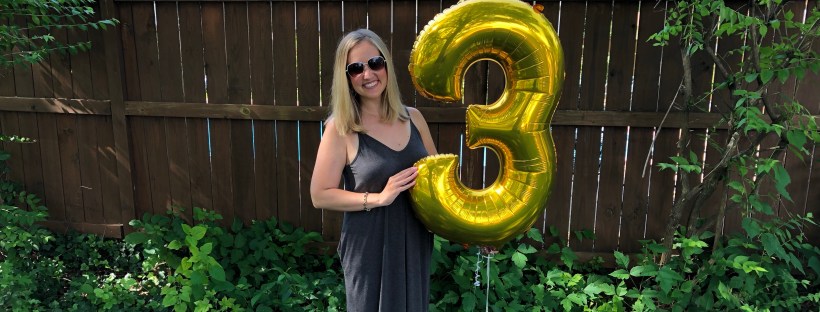

 

Three years of Lights, Camera, Crohn’s: 10 Tips for Becoming an IBD Blogger

Tomorrow (July 23, 2019) marks three years since Lights, Camera, Crohn’s became a reality. Three years since I closed my eyes and took a major plunge, wondering if my words and effort would make a difference. Three years since I decided it was time to stop living my IBD life in the shadows, and instead bring my personal struggles and triumphs to the forefront. A31AD785-CDF7-43D5-BA1D-BFDDC69B493EI chose to blog and become a patient advocate for several reasons. I was tired of feeling isolated. I wanted to be a voice for the newly diagnosed, as well as the veteran patient. And, as a journalist, I’ve always had a love for the written word. For me—expressing myself through writing comes a lot easier than saying the words out loud.

July 23rd is a big day on the calendar each year for me—it’s the anniversary of my Crohn’s diagnosis (14 this year!), my dog Hamilton’s birthday (He’s turning 11) and it’s the day I met my husband online (6 years ago!). If that’s not a sign that things happen in threes, I don’t know what is! Knowing this, I had to launch my blog on this day. Rather than focus on how many years I’ve been riddled with a chronic illness, it’s a way to celebrate how far I’ve come on my patient journey.

I’m going to do a little humble brag right now. Since launching my blog in 2016, I have never missed a week of posting fresh content. Through two pregnancies and being a stay at home, IBD mama with a now 2-year-old and six-month-old, I found a way to stay true to my own personal deadlines, because this blog, and this community and IBD family are so important to me. 41113C90-2C99-4252-B69B-212DB2295A33In that time, I’ve shared 171 new articles (because some weeks I post on Mondays AND Wednesdays). Over the last three years, more than 105,000 people from around the world have checked out Lights, Camera, Crohn’s. Could the articles be organized better? Yes. Could the design be snazzier? Yes. But, my focus as an IBD blogger and advocate is to give you the nitty gritty. I’d rather spend my time and energy on content vs. design.

One of the most common questions I receive is, “How do you become a patient advocate?” or “How do you become a blogger?” It obviously takes time, passion, and commitment.

Here are my top 10 pieces of advice for you, that I wish I would have known before blogging.

  1. Write for the reader and for yourself. As patient advocates and bloggers, it’s generally our own personal experiences that shape the content we share. That experience and viewpoint is invaluable, but remember—the reader isn’t here to check out your diary. They are here to learn ways to improve their patient journey, to educate themselves. When you write, write to the people reading. Don’t bore them with every.single.detail. of your doctor appointment. Use that experience as the foundation and springboard into a larger discussion that is easy for others to relate to. Think “news people can use”…otherwise, why read your stuff?
  1. Be bold. Be vulnerable. It can be very stressful and overwhelming to put your whole health story out there to the public. If you’re like me, I kept my disease to myself and close family and friends for a decade. Going from that—to sharing my story with thousands, is polar opposite. But, I can tell you, once you open up, you won’t regret it. The moment you break down your own barriers and show your true stripes, you open yourself up to endless support and quickly come to realize how many others understand your reality.
  1. It’s not a competition of the sick. Just because you haven’t started a biologic, just because you haven’t had surgery, just because you don’t have a bag, doesn’t mean your patient journey is any less significant or important. IBD impacts each and every one of us differently, but there are so many parallels along the way. Trust that what you are going through physically, mentally, and emotionally is something many people can relate to. I haven’t been hospitalized for my Crohn’s since August 2015 (before my blog went live!), but in my 14 years living with the disease I’ve experienced so many highs and so many lows, so many flare ups and so many feel good days. It all matters. And it’s all a part of it. People don’t just want to see you in the hospital or struggling, they want to see other aspects of your life, too.
  1. Be patient with yourself through the process. Writing about life with IBD can be emotional. It can be draining to bring up old memories that were the most difficult days of your life. It can also be cathartic. Write stream of consciousness-style. Rather than thinking about each word and constantly hitting the delete button, just let it flow. Edit yourself later, not in the moment.
  1. Have a thick skin. Being a patient advocate and a blogger isn’t always sunshine and rainbows. You are going to receive both public and private messages from naysayers. People may question why you aren’t “healing yourself with food” or “why you need a biologic”. The only person you need to answer to is the person looking back in the mirror, along with your physicians. No matter how much you share online, no one has the FULL story of your own personal experience. Let the judgers, judge…and keep on trucking. Keyboard warriors have a way with words, don’t allow others to bring you down or stress you out. That’s the last thing we need living with IBD. I’ve come across a few instances on Twitter, where banter got pretty heated. When my heart started racing and my stomach started hurting, I knew it was time to block them and move on. Don’t be afraid to block when needed.
  1. Remember you are a patient, not a medical professional (unless you are both!) It gets dangerous when patient advocates spout off medical advice to those desperately looking for answers. When people come to you for support or with questions about how to handle their care—always advise them to talk with their care team, and remind them you are not a doctor, but this is what has worked for you. Yada Yada Yada.
  1. Lean on others in the IBD family for guest posts/sharing your content on social media. Advocacy is not a competition. There is room at the IBD family dinner table for ALL of us. Interact with other people’s blog articles and social posts. Show them the love, chances are, that love will be reciprocated. Oftentimes, it can feel like everything you are doing is falling on deaf ears (thanks so much, Facebook algorithm)…that being said, don’t focus on the “likes” and the “comments”…if your article or your words help one person or one family, you’ve made a huge difference.
  1. Always be on the lookout for content. The former TV news anchor and reporter in me always has my eyes and ears open for the next story. Look at social media and see what’s trending in the IBD community. Ask your followers what topics they’d like to see more on. Set up Google Alerts in your email to see the latest about IBD research and news. Pay attention to people’s stories. When someone reaches out to me with a question, I often dig a little deeper and see if this is something that would make for a good article. Every single person has a story to share, it’s just a matter of discovering what that story is.
  1. Be authentic and true to who you are. Oftentimes businesses and companies will reach out to patient advocates looking for promotion or support. Don’t be a “yes-(wo)man”. Only promote causes and products that you genuinely believe in. Don’t sacrifice your hard-earned credibility for a few bucks, because your credibility is priceless.
  1. Stop selling yourself short. Your IBD life and story is valuable. Gone are the days when big pharma and businesses can tap into us as resources for free. We’ve all gotten smarter about this. Your painful journey hasn’t been easy. But, with that journey, you’ve gained a perspective that businesses are thirsty for. They NEED our insight. They NEED our input and perspective. Unless you live with IBD personally, you can’t fully grasp what it’s like. Sure, volunteer work for the Crohn’s and Colitis Foundation is one thing, but as soon as someone wants you to be an “influencer” or speak at an event, etc. know your worth and don’t ever be afraid to ask what the compensation is.

D6DF8E56-4DAE-4531-A7A6-77BBAAA1E545

I’m hopeful that three years from now on July 23, 2022, I’ll still be blogging and will still be a vocal voice for the IBD community. Thank you for sharing in my journey and for pushing me to be better. Thank you for reading and for caring. Thank you for being a listening ear and a watchful eye. Thank you for walking alongside me through pregnancies and motherhood as a woman with IBD. I promise to deliver more content that helps guide you through your journey and show you just how capable you are of being everything you ever hoped for. God bless.

XO,

Natalie