
This article was written earlier this month, while getting my hair done.
I hear her cry. I glance at the clock that reads 4:55 a.m. I clutch my abdomen. The pain I went to bed with hours earlier is amplified.  It feels like a fiery pain inside my rib cage that travels all the way down my stomach. The gnawing makes me feel raw internally and externally. I put my glasses on and as I’m standing up and rocking my daughter in her nursery, I try to think of her warm little body as a heating pad.
I wrestle with my thoughts about how to handle my pain. Last time I took pain medication I couldn’t breastfeed my daughter for 20 hours. I decide to take one 600 mg ibuprofen left over from my C-section recovery, with the understanding that as someone with IBD I shouldn’t be taking that. But I’m desperate. Desperate to get a reprieve from the pain and the inner monologue racing in my head as I lay back down. While at the same time, trying to keep my painful moans quiet so I don’t wake my husband.
I wake up and the pain is still there, but I have no choice but to take on the day. Thanks to my mom being in town, I’m able to head to the hair salon for a much needed hair cut and color. The stylist asks me questions and my Crohn’s comes up fairly quickly in the conversation. Her response—“one of my best friends has Crohn’s and she’s completely self-healed herself by eating very strictly”. She goes on to say her godmother has Crohn’s, too—and constantly posts pics on social media eating and drinking, so it’s no wonder she struggles, acting almost disgusted by her godmother’s lifestyle and patient journey.
I bite my tongue. The pain from the night before and the worries weighing heavily on my mind and heart are still fresh. Self-healing and Crohn’s, if only it were that easy, that simplistic. But I don’t have the energy to get into that discussion. 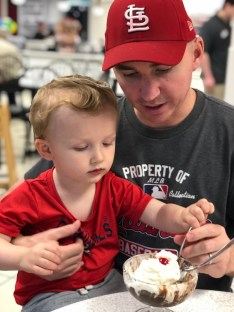 The fact that so many people without IBD are under the assumption that our pain and symptoms are self- imposed upsets me. We already beat ourselves up mentally as it is. My husband and I took our son for ice cream last night, so immediately I wonder if all of my pain is a result of the choice to have ice cream with my 2-year-old.
As a mom who’s battled Crohn’s for nearly 14 years, the background noise and ignorant comments about IBD tend to bounce off me. I have thick skin, now. But, it’s worrisome at the same time. What if the girl getting her hair done wasn’t me? What if she was newly diagnosed and struggling? What if she chose to go off all medications and “self-heal” because someone cutting her hair told her it was possible? This is what we’re up against as patients. Everyone tries to relate and thinks they are offering “words of wisdom” or assurance, when really they’re just contributing to the hurt and feelings of being less than. 
Luckily, I’m not that girl. But—if you’re reading this, know that your patient journey is unique to you. What works for one person, will not necessarily work for you. Needing medication to manage symptoms and keep your disease from progressing is not a sign of laziness or weakness. You need to take the steps necessary to improve your quality of life and overall health. Living with IBD is not black and white. There is so much gray area. Trust in your physician. Trust in the support available both online and in your community from fellow patients. Be patient in discovering what works for you, be flexible, and do what you need to do to self-heal.


 To the person nervous to open up in a relationship and disclose they have this disease…
 To the person worried about passing this dreadful disease onto their children…

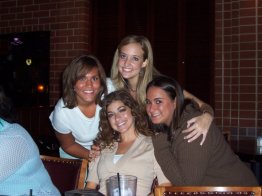
 Now, nearly 14 years later—her and I have come a LONG way. She’s on Remicade. I’m on Humira. We are both mothers. We are both wives. Alisa didn’t allow her disease to stop her from following her personal or professional dreams. In 2013, she left corporate America and founded
  I multi-task everything, stay on top of my biologic infusions, rest when possible and, plan my diet loosely around a mix of SCD and low gluten eating. Getting help is difficult, but I feel lucky to have a supportive husband and local family network. My travel schedule wears me down– but thankfully most of my disease symptoms are well controlled.
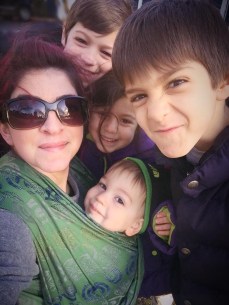
 Babywearing helps me effectively multi-task and meet my all children’s needs at the same time. It also helps address postpartum depression, by syncing mother and baby, and raising oxytocin levels. I believe babywearing is a necessity that should be taught to every single expecting parent and caregiver!
 As a bonus, a variety of baby carriers can be adjusted to accommodate an ostomy or j-pouch.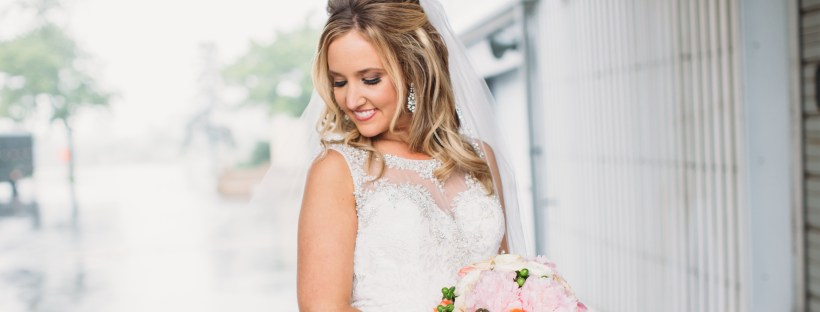
 It’s not easy to be in constant battle with your body. It’s a challenge to feel pain often. It’s exhausting to always have a worry and a wonder in the back of your mind about how you’re going to navigate and overcome the next hurdle or setback thrown your way. This is why self-love is so important.
 Since being diagnosed, this body of mine has still served me well. I managed to work full-time and live out my dream of working in television for the first ten years I had Crohn’s. I trained for and ran in 5ks, 10ks, 15ks and a half-marathon. I felt completely healthy and on top of the world on my wedding day (didn’t have one bathroom break!). My body was a safe haven for my children throughout pregnancy and allowed me to bring a healthy son and daughter into this world.
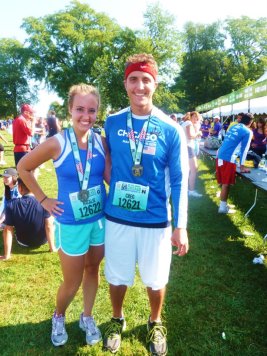 It’s when I felt invincible if only for a moment, whether it was crossing the finish line or holding my babies on my chest for the first time. It’s the victories along the way that help me push through on the difficult days and through the flares. Because while those times push me to the brink of breaking, I tell myself there’s only one option—and that’s to bounce back.
 Pat yourself on the back for all the steps you’ve taken to rise up. Smile through the tears with the confidence in knowing you will get through this—one day, sometimes one hour at a time.
 It was a brisk January morning. Tears filled my eyes as I was overcome with emotion. Our rainbow baby is here, safe and sound. Another pregnancy behind me, a pregnancy that silenced my Crohn’s disease and provided sweet reprieve from my chronic illness. It was time to take Sophia home and start our life as a family of four.
 Each time I have a procedure or deal with painful symptoms, I see their faces, I say their names in my head, and it brings me a sense of calm. My goal when Reid was born, was to stay out of the hospital until he could walk, luckily that’s been the case. He’ll be two in March. Now, I have that same goal following the arrival of my daughter.
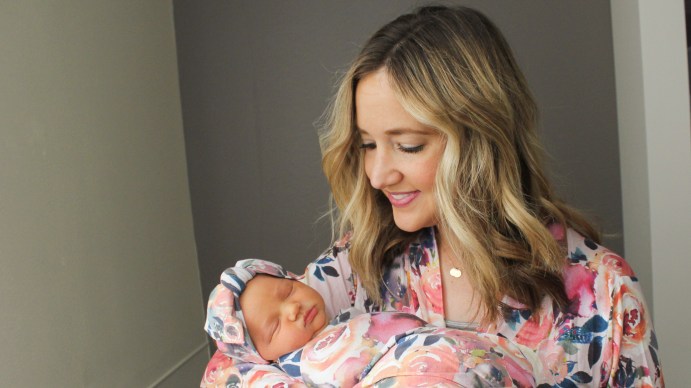 Motherhood and IBD can be a difficult and challenging balance. Some days the fatigue and symptoms are so debilitating you feel like you’re falling short. At the same time, the days where you’re feeling well, remind you that you are so much more than your disease. Just because you have a chronic illness, doesn’t mean you are robbed of experiencing the beauty of life and what it feels like to have your very own family.
 It all starts with recognizing where you are in your patient journey and then determining when your symptoms and body are in the best shape to get pregnant. While everyone’s disease experience is different—the worries, concerns and fears associated with parenting and chronic illness are often the same. Always know you are never alone. Communicating these feelings with those around you, makes all the difference. Lean on our patient community and all those who’ve lived your reality.
 When Sophia Shea entered the world January 14, 2019, our family received a wonderful gift. Between our son Reid and our baby girl, we could not be more blessed. My chronic illness has given me such an appreciation for health and for life in general. With the pregnancies behind me, I often reflect on where I started back at age 21 in 2005. At that time, in my eyes, I was Natalie and I had Crohn’s disease. There was no telling what my future would hold. Now, nearly 14 years later, at age 35, I’m so much more. I’m a mom to two under two. I’m a wife. I’m a daughter. I’m a sister. I’m an aunt. I’m a friend. And I also have Crohn’s.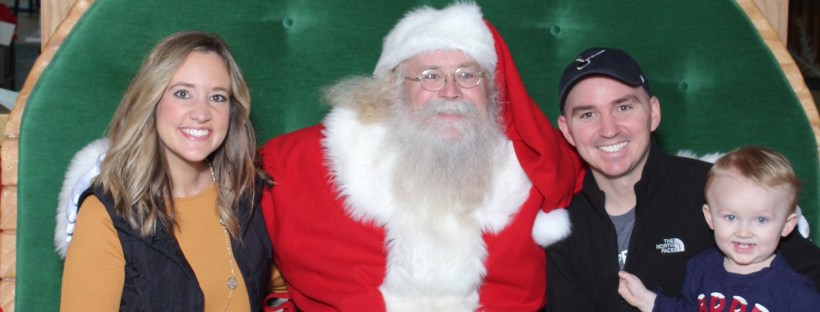
 I hope you take this week to enjoy time with loved ones, relax and find time to care for yourself!
 Try having a flare during the worst natural disaster in the history of your country. It happened to me. I survived.
 One morning I decided to stop in my GI’s office. He had lost the A/C unit and the office was flooded during the storm. He ordered some labs, an emergency colonoscopy and a few days of rest. I was anxious, exhausted, scared. After the colonoscopy, I was prescribed prednisone for a month and then started Humira.
 I hope my experience sheds light on what it’s like for those in the chronic illness community as they endure the repercussions of natural disasters. It’s a critical conversation that needs to happen—preparedness for the IBD community in the face of weather disasters. How can employers, government and society step up to the plate?
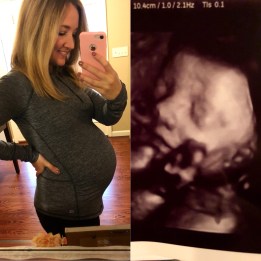
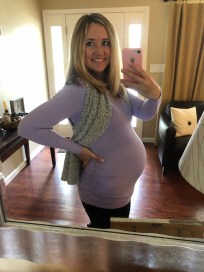 This Friday, I’ll be 27 weeks complete with my baby girl. My January due date is quickly approaching. Time is going both fast and slow. For the most part, my Crohn’s has behaved itself. But, there have been multiple times where I can’t seem to decipher if what I’m feeling is related to pregnancy aches and pains or my IBD. The burning and gnawing feeling in my abdomen often feels so reminiscent of the beginning of a bowel obstruction that I can’t help but fear the worst.
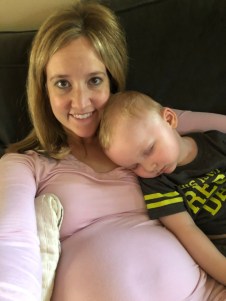 It’s difficult because every single pregnancy is different and so is every single person’s IBD. My OB tells me that with a contraction the pain will come and go, and I’ll be able to see a pattern and time it, whereas Crohn’s pain will be constant.
 My advice to myself and to all of you who may be dealing with these same fears and thoughts is to listen to your body. Be mindful of when you hurt, why you may be in pain and how often it’s taking place. Don’t turn a blind eye to your aches and don’t feel like a bother to your GI or OB. Reach out to your healthcare team and alert them when you have a concern, so they are aware of what’s going on. This is not a time to internalize your pain. This is a time to be vocal, be your own best advocate and start being the strong IBD mama that you are for your unborn child.
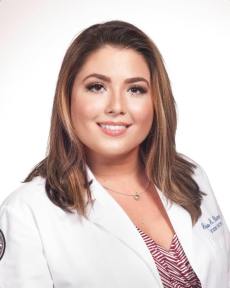
 The profession entails a great deal of stress, both physically and mentally. Not only are the hours long, but you are exposed to a ton of people who are sick, while you are immunocompromised.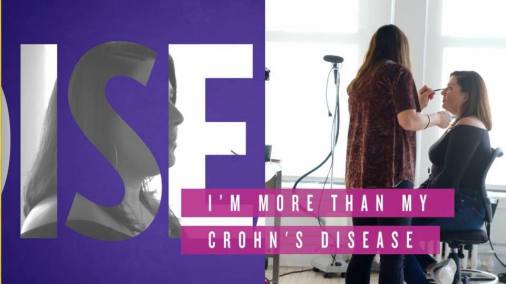

 lights camera crohn's