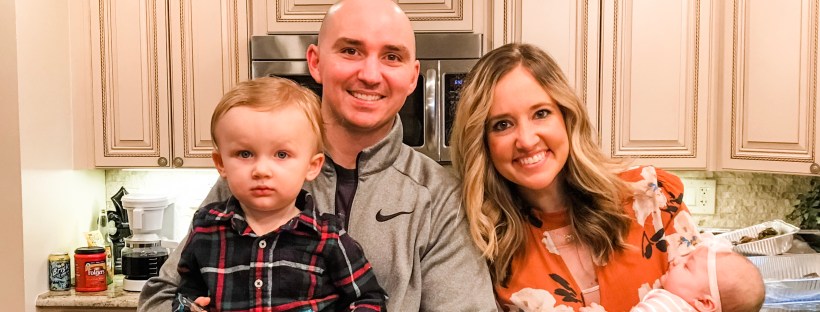
I still remember the moment I told my husband I had Crohn’s disease. It was a beautiful August afternoon. We sat overlooking water at a boathouse in St. Louis on our third date. As we enjoyed casual conversation and a mutual interest in one another, I knew I had to tell him about my chronic illness.

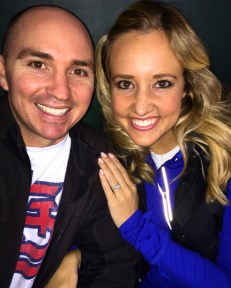
Photo from our third date, the day I told Bobby I had Crohn’s disease.
Nervous to rock the boat. Scared to be judged. Worried it would tarnish the image of who I was so far. I just wanted to rip off the band aid and get this conversation over with.
It was never easy to navigate dating and relationships with my disease. I was diagnosed with Crohn’s at age 21 in 2005. I met Bobby in August 2013 at age 29. Rather than seem put off by my disease, he inquired and showed empathy from that point forward. Never once did he make me feel less than or unworthy of love. In that moment, I knew I had found someone special and I felt a huge sense of relief.
Fast forward to this past month and all the conversation surrounding Dr. Phil’s heartless and ignorant comments about caregiving and relationships. I didn’t see the episode live, but have seen the countless posts on social media being shared to prove him wrong. I watched the interview clip after the segment aired and couldn’t believe my eyes or my ears. Dr. Phil told an interabled couple that “100 out of 100 relationships that involve caregiving fail.”

Helping me walk down stairs during our engagement photos–21 days post op from my bowel resection surgery. Photo cred: J. Elizabeth Photography
It pains me to even write the idiotic words that man said. Not only is it upsetting, but it breaks my heart to think of all the young, newly diagnosed chronic illness patients out there who were already wondering if they were worthy of love because of living with a disease.
 I’m here to tell you that you are. I truly believe my vulnerability with my Crohn’s and how I deal with flare ups is a big part of why my husband fell in love with me. Chronic illness isn’t pretty. It forces you to see the world without rose-colored glasses. It makes you realize the importance of your health and how quickly it can be taken away from you.
There’s a reason why you say “in sickness and in health” in wedding vows. My husband chose to spend his life with me, because he loves all of me—even the part of me that is riddled with illness. People are cut out to be caregivers or they’re not. You’ll come across this in your life and know which family members and friends have a special way about them. Those who don’t have this trait and ability aren’t meant to marry people like you and me. And that’s fine.
But to say that 100 out of 100 couples will fail because caregiving is involved couldn’t be further from the truth. It’s through Bobby’s caregiving that I continue to fall more and more in love with him. It’s those moments when I need help to get through a pain-filled day that I’m reminded just how strong and unbreakable our love is.
 Caregiving looks and means different things to everyone. It’s not just about being a caregiver in the hospital or at a nursing home. It’s taking care of the one(s) you love on a typical day at home. It can be something as simple as rubbing your back or taking care of the kids while you’re stuck in the bathroom. It can be dishing you out ice cream after you give yourself an injection. Or holding your hand on a walk outside following a hospitalization. It’s those caregiving moments in particular that remind me constantly of the everlasting love I’ve found and make me 100 percent positive we will make it through, for the rest of my life.
My words of advice for you—if you’re a caregiver, know how appreciated you are—for all the little things and the big things.  If you’re someone dealing with a disability/disease—don’t allow Dr. Phil’s ridiculously inaccurate comments make you think you aren’t worthy of love, because you are and always will be.
 I’ve had my fair share of surprises and obstacles with Crohn’s disease. My patient journey includes numerous surgeries, multiple doctor appointments a week, sitting in hospitals getting Remicade infusions, switching up medications to tame a flare and my all-time favorite, hospitalizations for days at a time. Please note the sarcasm in that last sentence.
 When the pain presented, I tried everything I could to avoid the trip. I just wanted to stay home and live my life with a newborn, enjoy the snuggles and oddly enough the 3 am feedings. Then, the time came when I couldn’t even get through a feeding without needing to set him down so I could run to the bathroom. I knew it was time.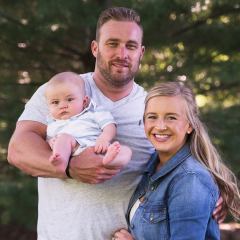


 One of the most helpful pieces of the toolkit is the


 My daughter is 4 weeks old today and has been exclusively breastfed. I’m by no means writing this as an expert or to point any fingers. I am completely of the mindset that ‘fed is best’. No judgement here, ladies.
 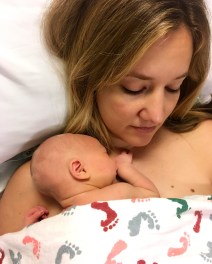 I was worried about the lack of long-term studies on my biologic drug (Humira) and I was concerned about the risk of having a postpartum flare that would land me in the hospital and interrupt my ability to feed him. Being a new mom, I was worried the stress that comes along with breastfeeding could cause me to flare. I ended up breastfeeding him the first three days in the hospital, so that he could receive the colostrum. After that—he was given formula until he turned one. It’s a decision I was confident in, but that tugs at my heartstrings at times, especially now as I breastfeed his sister.
 According to
 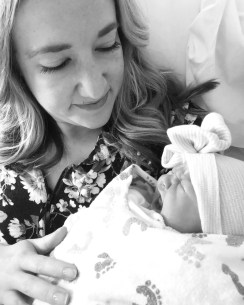 That way—the baby did not receive a burst of the immune-suppressant drug through the placenta, the day she was entering the world and I would be at lower risk of developing an infection as well. Timing your biologic medication is key and a conversation you’ll want to have with your care team so it can be tailored to your pregnancy and your personal journey.


 When it comes to breastfeeding as IBD moms, whether a child is going to latch or if our milk supply is going to be sufficient, tends to be the least of our worries. Our chronic health condition, plus the medications so many of us are dependent on to treat them—adds another layer of stress. In the end, you need to do what you feel comfortable with, what works for your body and for your family. Always know you are not alone in your struggles. Celebrate the parenting wins and accomplishments along the way—no matter how big or small. Lean on your support system—especially fellow breastfeeding mamas who can answer your questions and calm your fears. I can’t tell you how long I’ll continue my breastfeeding journey. For now—all I can do is take it one day at a time. What I can tell you—is how rewarding it is to see what my body is capable of, despite my disease and how amazing it feels to know I’m nourishing my little girl and providing her with a healthy start.


 Chronic illness, while physically, mentally and emotionally taxing, also has the ability to show us the beauty of the world around us and all that we’re capable of. Instead of thinking how my Crohn’s holds me back—I think about how I’ve lived despite its restraints.
 My disease has helped me take on motherhood. It’s made me soak in the feel-good moments, take mental snapshots of the happy days and celebrate the beauty of life. My disease has forced me to press pause when I’m doing too much, it’s reminded me of the importance of self-care and taking time for me. It’s shown me which people are meant to be in my life and which are meant to be in the backstory.
 Sickness and health truly take on a whole different meaning when you live with a chronic illness. Katy witnessed her husband Vince’s compassion and character while they were dating.
 “Operation: Good Health.” She made it a priority to get a minimum of eight hours of sleep a night, as lack of rest tends to be a trigger for her. She was on a mission to hydrate, hydrate and hydrate some more. To set herself up for success and limit any surprise flares, she planned out her meals the entire wedding weekend. For example, she does well with bland foods, like noodles, rice, chicken and (big one) avoiding alcohol. And finally, she delegated responsibilities (aka stress) to friends and family. Katy admits she’s pretty Type A and would much rather do things herself than hand them off. However, she wanted to enjoy her wedding and because of her proactive planning, she was able to do just that!
 Reagan, Grayson and Carter may not understand why their mommy is in bed or why she needs to pull over on the side of the road when she gets sick, but Katy’s Crohn’s has taught her children a great deal of empathy at a young age. A few weeks ago, she was in debilitating pain and her nine-year-old offered to make dinner for her brothers. She poured them each a bowl of cereal and that was everything.

 While I feel incredibly blessed to be in this position, it comes with its own unique set of worries.
 They will live within a home that talks about chronic illness and experiences it each day. Your little ones will learn compassion and perspective before they are even able to truly communicate. If you have a child and chronic illness, you know what I mean.
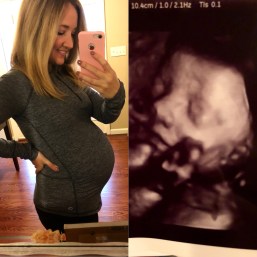 Whether it’s with motherhood or with living life with Crohn’s, it’s important to remind yourself that everything goes through stages. There are highs and lows, but each moment is fleeting.
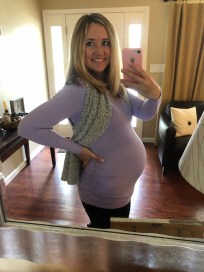 This Friday, I’ll be 27 weeks complete with my baby girl. My January due date is quickly approaching. Time is going both fast and slow. For the most part, my Crohn’s has behaved itself. But, there have been multiple times where I can’t seem to decipher if what I’m feeling is related to pregnancy aches and pains or my IBD. The burning and gnawing feeling in my abdomen often feels so reminiscent of the beginning of a bowel obstruction that I can’t help but fear the worst.
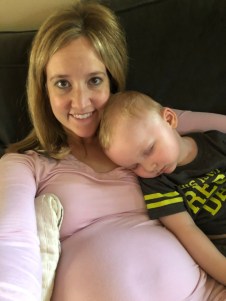 It’s difficult because every single pregnancy is different and so is every single person’s IBD. My OB tells me that with a contraction the pain will come and go, and I’ll be able to see a pattern and time it, whereas Crohn’s pain will be constant.
 My advice to myself and to all of you who may be dealing with these same fears and thoughts is to listen to your body. Be mindful of when you hurt, why you may be in pain and how often it’s taking place. Don’t turn a blind eye to your aches and don’t feel like a bother to your GI or OB. Reach out to your healthcare team and alert them when you have a concern, so they are aware of what’s going on. This is not a time to internalize your pain. This is a time to be vocal, be your own best advocate and start being the strong IBD mama that you are for your unborn child.
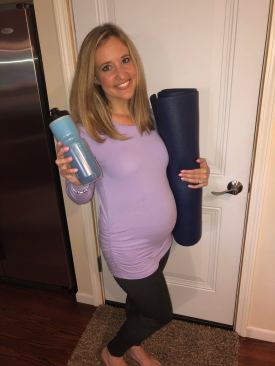 While yoga and DripDrop are different, I think of them much in the same way. They go hand in hand. While I’m driving to yoga class and sitting on my mat before we start, DripDrop was formulated so water and salt can be absorbed quickly, making recovery as effective as an IV. I can hydrate my body in a matter of minutes.
 Chasing around a toddler all day, while nearly 30 weeks pregnant, while battling Crohn’s disease is taxing. By taking time for myself and slowing down for a couple of hours of week, I’m setting myself up for success and optimal health.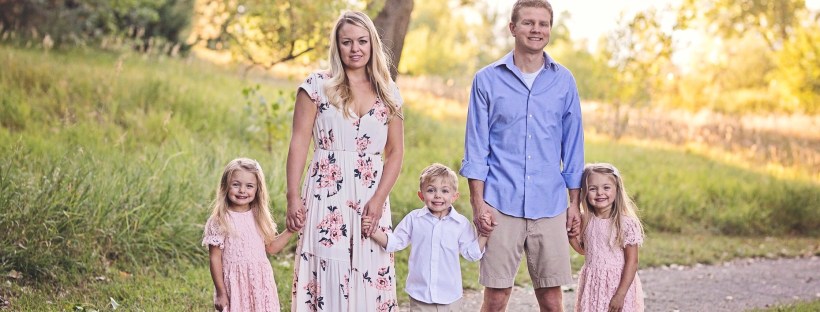
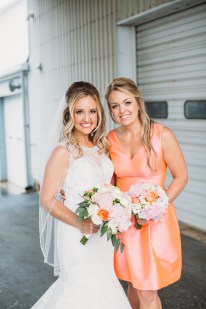 We ended up living together throughout our entire college experience, stood up in each other’s weddings and have managed to stay very close, despite thousands of miles between us since graduation.
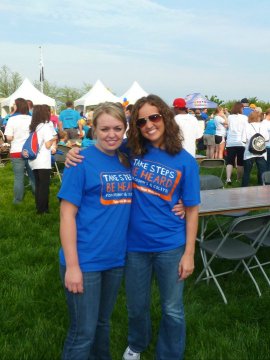 I teared up. I was so fearful of the unknown, as far as what this is going to mean for me for the rest of my life. There is such a variation in the way patients with IBD can experience the disease… my mind immediately went to worst case scenario for myself.”
 She used to ride out the symptoms much longer before admitting there was a change that needed to be addressed, mostly because she was fearful of having to go back on steroids. I can attest to being the same way. Prior to becoming a mom, I waited until going to the emergency room was the only option. Now, I am more mindful of listening to my body and nipping flares in the bud, because my family needs me.
 it makes you feel just a little bit stronger and gives you the confidence that you can handle the curveballs life is bound to throw at you over and over!”
 lights camera crohn's