
UPDATE: Since this story was shared on March 30th, Jadyn’s COVID-19 test came back. After two weeks of waiting, the test came back positive.
Imagine your 14-month-old baby being diagnosed with Crohn’s disease. That was the reality for Anna and Jon Richt of Georgia. Fast forward a few years and their daughter, Jadyn, is now five years old and thriving with IBD. This past week though, the Richt family had quite a scare. 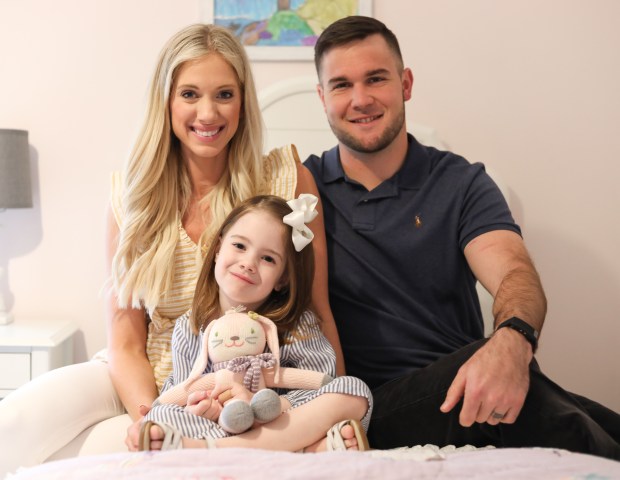 Jadyn woke up with a fever and a slight cough. Given the craziness of the times we live in right now, they immediately called the COVID-19 hotline. Once the person on the other line heard about Jadyn’s health history and the fact she is immunocompromised, they agreed, Jadyn needed to be seen. In urgent care, Jadyn was tested for the flu, strep throat, and COVID-19. The Richt’s were told they would have a test result in five days, it’s been more than a week now, and still no result.
Prior to all the discussion on social distancing and sheltering in place, Anna and Joe had traveled domestically. Family members who had been staying in their home had recently traveled internationally. Anna says, “The strep test came back positive, which gave us a sense of relief. But it didn’t cancel the possibility of COVID-19. We have been watching her closely, ready to sound the alarm at any sign of health deterioration. Thankfully, she is feeling much better and I believe she is bouncing back to her normal self.”
What’s it like to raise a daughter with IBD from such a young age? Jadyn has a G-tube, and Anna is passionate about spreading awareness about feeding tubes to educate others.  I’ll allow Anna to take you back to the beginning, so you can have a better grasp of their ongoing journey and how it’s brought them to where they are today.
Seeing blood when my baby was six months old
I started seeing blood in Jadyn’s stool when she was around six weeks old and immediately called her pediatrician. He chalked it up to a couple of things, mostly related to breastfeeding issues and didn’t seem too concerned. When she was eight months old, my husband’s job moved us far away from family and her symptoms worsened. Her new pediatrician was concerned about her weight loss and sent us to the hospital for further testing.
A colonoscopy showed lesions all throughout her GI tract. Crohn’s disease was mentioned but the gastroenterologist was hesitant to diagnose it because of Jadyn’s young age. I did exactly what they say not to do and Googled Crohn’s Disease. The symptoms were spot on: “Bloody stools, persistent diarrhea, vomiting, loss of appetite, weight loss.” I’m not sure I’ve ever told anyone this, but deep down, I knew.
Dealing with the diagnosis
The diagnosis eventually came when Jadyn was 14 months old.  The first couple years were nothing short of a dog fight. I remember sitting in my sister’s living room after an appointment when all of the sudden the doctor’s number popped up on my phone. She was calling to say that Jadyn’s lab results didn’t look good and we needed to head to the hospital right away.
My sister and I sat there in disbelief and cried. I remember her saying through her tears, “I feel like you are under attack.” We were. But we fought back. There have been countless doctors’ appointments, feeding tubes, eating therapies, procedures, you name it. She has been a trooper through it all and I am so happy to report that her current medication is working. Thankfully, she is a normal 5-year-old for the most part, which I don’t take for granted.
What has the journey been like for me as her mother?
It’s by far the hardest thing I’ve ever faced in my life. At the beginning I assumed it was something we could easily get under control and move on. I now know it is a marathon race, not a sprint. Watching my child suffer, and not being able to fix the problem despite my best effort made me feel like I was failing her. 
It’s been lonely at times. Don’t get me wrong, we have the most amazing family and friends. They have supported us unconditionally every step of the way. But because she was diagnosed so young, we’ve never met another child her age with Crohn’s. I couldn’t call one of my mom friends and ask, “What anti-TNF drug worked for your child?” or “How are you potty training your two-year-old who is flaring?” Instead, we’ve pioneered this head-on, and I’ve completely relied on my faith to get me through. People often say how strong I am, but honestly, I believe it’s God’s strength in me that they see. When I look back on these past five years, I know without a doubt He has carried us. I can honestly say I am proud of the mother I have become due to this disease. I am brave and empathetic. I’ve developed grit and survive on grace.

What I want to say to parents of children with IBD
Take care of yourself. I always think of the airplane safety guide. Secure your oxygen mask before helping others. You cannot fully care for your child if you don’t take care of yourself first. Some days that may mean a 30-minute workout and drinking plenty of water. Other days it’s meeting with a counselor to address the emotional toll the disease has taken.
Let others help. They really want to. Use that time to step away and catch your breath.
See your child for who they are. Your child is more than their disease. They are uniquely designed for a specific purpose.
You can do this. I firmly believe that you were handpicked by God to be your child’s mother. Continue to advocate and cheer them on. Take it one day at a time.

Jadyn and her little sister
“And I am certain that God, who began the good work within you, will continue his work until it is finally finished on the day when Christ Jesus returns.” Philippians 1:6
You can follow Anna by checking out her blog: Grit to Grace
Anna’s Instagram: @grit.to.grace


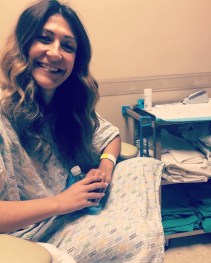
 I developed a new manifestation of the disease I never had before: Perianal Crohn’s. Not a pleasant situation and one that is very difficult to treat/manage while pregnant. Things got so bad at one point, I had to have surgery to drain an abscess and place a seton to help a fistula heal. No one wants to have surgery pregnant. It was one of the scariest moments of my life. The first trimester was spent hoping and praying the baby would make it with all the turmoil going on in my abdomen. The second trimester was spent hoping and praying we could keep her in there long enough to be viable outside of the womb. The third trimester was spent in an unbearable amount of pain fighting the urge to take the prescribed pain pills and being so scared about how the increased biologics, steroids and other new drugs being introduced into my system might affect her.”
 With the newly manifested, aggressive, perianal disease, a vaginal birth was out of the question. I held on until 36 weeks and on New Year’s Eve of 2018 we welcomed our baby girl. We were so incredibly relieved she was ok, and the focus quickly shifted to how not ok mom was.”
 After talking to many medical professionals, we decided it was not safe for me to carry another child. We still don’t know if it was the IVF drugs/hormones that caused the flare going into pregnancy, or if hormones in general and my Crohn’s disease just don’t mix, but we’re not willing to put myself, or another baby at risk like that again.”
 I feel like we blinked and her first year passed by. That being said, having a baby and a two-year-old, while being a stay-at-home mom and freelancer, who happens to have Crohn’s disease, has its challenges.
 Through motherhood I’ve learned to soak everything in, because you blink, and another year or milestone goes by.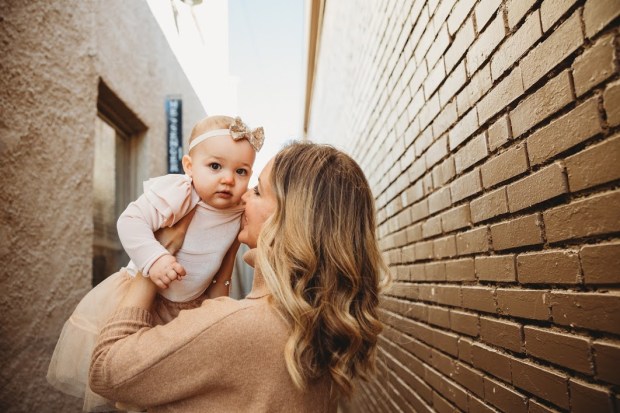

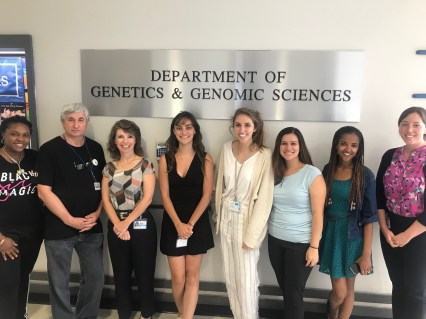
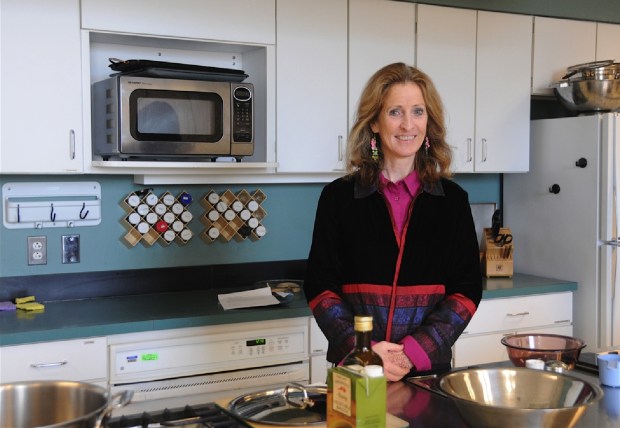 She is involved in research and clinical care, and she created the IBD Anti-Inflammatory Diet which is being investigated through the MELODY Trial. Barbara explains how through the MELODY Trial, the team is aiming to intervene in the transmission of a pro-inflammatory microbiome from women with Crohn’s to their babies.


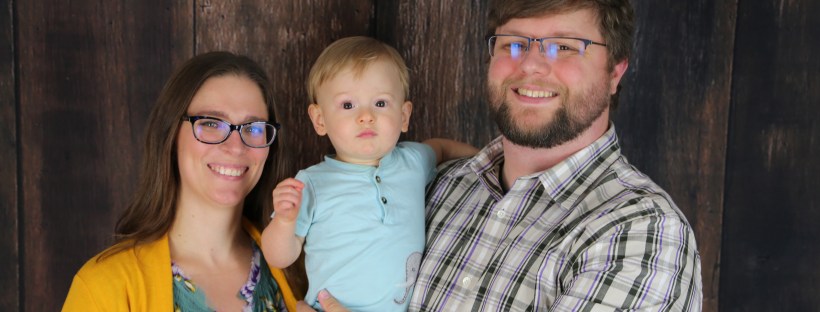
 Addy’s son, William, is now 13 months old. This week—she shares a guest post about her journey to bring him into this world and the challenges and victories she’s experienced as a new mom with IBD. I’ll let her take it away.
 After my second-high blood pressure reading that week, a nurse advised me to come into labor and delivery. When I arrived, I was diagnosed with gestational hypertension and started the induction process the next morning at 37 weeks.
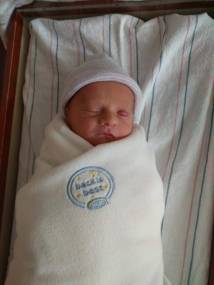 When William was born, I was thrilled, and so fortunate, to have a successful early breastfeeding relationship with him. When I started flaring again, breastfeeding became a significant challenge. I’d be with William during a late-night feeding, get a few minutes in, then have to wake my husband to keep William safe while I quickly ran to the bathroom. Obviously, this made William more than a little upset to start eating only to be pulled away. I also became increasingly worried that he wasn’t getting the nutrition he needed from me because I wasn’t absorbing nutrients the way I needed to. I upped my supplements and kept close tabs on his weight but continued breastfeeding. At this point, I knew I needed to do something different with my medications. What I was doing clearly wasn’t working.

 She’s a 30-year-old mom and wife from Utah, who works full-time outside the home. She’s battled Crohn’s disease since December 2011.
  My mom did an amazing job making sure our lives did not revolve around her disease. She did her best to stay healthy and support us. I want my daughter to have the same experience as I had growing up. I don’t want her to ever feel the burden of my disease. I want her to know that no matter how difficult life gets, there is always hope. My mom is the one person I can call who fully understands my struggles. To have another family member that has and is dealing with the same chronic health issues is a huge support. I am very grateful for her.
 I remember explaining to him at one point that this disease would be something I will deal with my whole life and it was okay for him to leave me. It’s really hard to put my relationship with my husband into words. When it comes to Crohn’s, the thought of all he does to support me, makes me tear up. He knew that after our wedding day he would take my mom’s place at all my appointments and be my sole caregiver. Nate never shied away from the challenge and it makes me love him more and more everyday. He is my number one and having support from him means the world to me.


 Prior to the challenges and the hurt that coincide with having a disease that you expect to have until your dying day. It’s heavy and can be overwhelming. There’s no cure for IBD and once you are told you have it, your world and your life is forever altered.



 Crohn’s has shown me that just because I get knocked down with a flare, doesn’t mean I can’t bounce back and be better. With Crohn’s, life often feels like you’re in the passenger seat and your fate is out of your hands. Rather than sit back passively, I choose to grab the wheel. Cheers to 36!
 Whether you’re a chronic illness mom or not, one of the first questions you often get asked is “are you breastfeeding?” It’s such a personal choice and decision, that really isn’t anybody’s business. Yet, men and women alike act as though it’s just casual conversation.
 Before I ever became pregnant with him and up until the moment he was born, I was adamant on feeding him formula. I personally felt there were too many gray areas with the medication I am on and didn’t want to find out down the road that I put him at risk for dangerous long-term side effects. I ended up nursing the first three days in the hospital so that he could get the colostrum. Even though I was confident in my decision at that time, I sobbed when he got his first formula bottle in the hospital, because once again my Crohn’s prevented me from feeling like a “normal” person. Each time someone questioned my decision to formula feed or assumed I was breastfeeding, it pulled at my heartstrings and made me feel a bit embarrassed and less than.
 I learned about how breast milk would benefit her microbiome, lower her chance of one day developing IBD, improve her immune system, and that Humira was considered safe for nursing, among other remarkable benefits. Many friends and family members offered invaluable advice and support to prepare me for what was to come once she entered the world. No matter how much I thought I was ready, it was still overwhelming and emotional.
 I wanted to do all I could to protect her and felt guilt for not doing the same for my son. I remember lying in bed with her on my chest that first night, my husband sleeping, and texting a bunch of fellow breastfeeding moms for advice in the middle of the night. They all responded in minutes and comforted me. Initially, I had been told not to use my breast pump the first few weeks. I ended up using my pump the first week and it was the best decision I made. If I hadn’t done that, chances are I would have never made it through that initial week without changing my mind and formula feeding. If nursing is painful or difficult, don’t hesitate to break out the pump and relieve your engorged chest. Whether a baby is nursing or receiving breast milk in a bottle, it’s all the same at the end of the day.
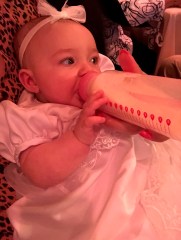 We gave Sophia a bottle the first week home, since I needed to pump. For the past seven months she’s gone back and forth from breast to bottle beautifully. It eased up the pressure on me and helped make it easier on both of us! We still got to bond and be close, but others are able to feed her as well.

 As a mom, it’s easy to beat ourselves up about how we choose to feed our babies. There is SO much background noise. Everyone has an opinion. As a mom who has formula fed and breastfed, I’ve had the opportunity to witness both sides. I’ve witnessed a shift within myself. Saying I breastfed felt and still feels like a bit of a badge of honor. Now that I’ve done it, I’m proud, because it was such a labor of love for me. Breastfeeding was blood, sweat and tears and so much effort. While traveling to San Diego I had no choice but to pump in a public bathroom at the airport, right at the sink, while a line of women stood staring at me. I had no choice. I think back to how drained and emotional I was on Sophia’s first night home and can’t believe we made it this far on our journey.
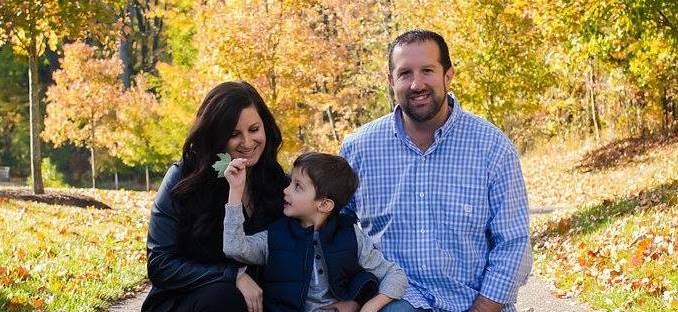
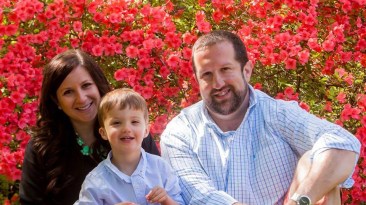 She’s a 38-year-old wife and mom who juggles two autoimmune diseases. She also has Hashimoto’s disease. Since she started on Remicade in 2018 following her IBD diagnosis, she’s experienced the difficulty of warding off illness while being an elementary school teacher and a mom to a young child.
 Dealing with the symptoms of IBD was more than enough–how on Earth would I be able to handle that plus avoid picking up viruses at school and in public?
 I really needed to stop caring about what others think and prioritize my health. One of the most surprising things to me was that people really don’t understand what immunosuppression means. Some people think I’m just a paranoid germaphobe even after I’ve explained that I’m immunosuppressed. They don’t understand that a simple cold for them, can mean days of sick leave for me due to a secondary infection. Or a fun day swimming in the bay can mean a bacterial infection for me that lasts for weeks and causes symptoms similar to a bad flare.
 Somehow my body knows when we have something fun planned and chooses those times to conk out on me. When I’m lying on the couch at home feeling sorry for myself while my husband and son are at a friend’s New Year’s Eve party or Memorial Day BBQ (both events I missed this year), I try to remind myself that Remicade is what allows me to lead a relatively normal life and be able to do things like go sledding with my son on a snow day and take him Trick or Treating. I couldn’t do those things when I was in a bad flare before treatment and definitely can appreciate them more now. I just make sure shoes come off and hands are washed right when we get home.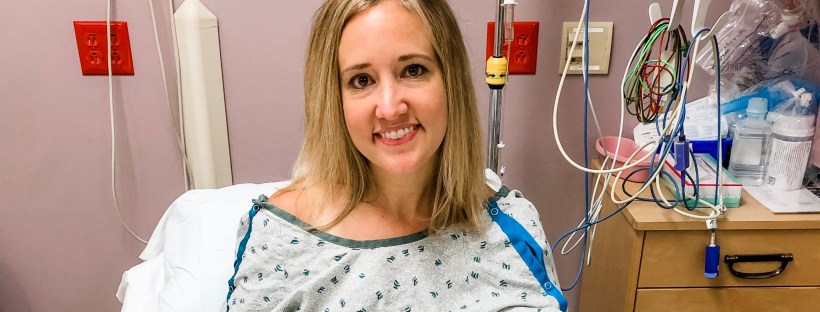
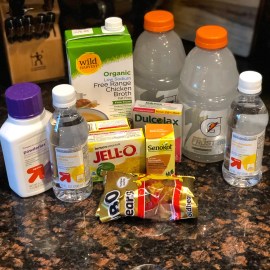
 Boys and girls, this is a game changer. Gummy bears are considered a clear liquid because they liquify upon digestion, much like Jello. In the days leading up, you can eat all the colors, but 24 hours before your scope stay away from any red, orange or purple as those colors are not allowed during prep. I used gummy bears to chase the magnesium citrate, two bears for every sip! It was also a nice treat and it felt good to actually chew something after only having liquids for days.
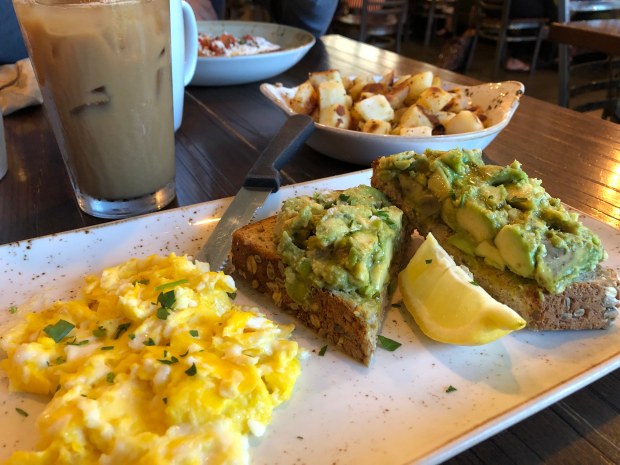 Look up menus and decide where you want to treat yo’self. Along with that first meal, I try and plan something fun to do. This time around my husband and I went shopping after breakfast and then we went out to dinner and to a light show at the Botanical Gardens (where we got engaged!). Knowing I had that to look forward to, helped me a great deal!
 My compassionate little 2-year-old even held my glass of prep with me and didn’t want to leave my side when I went to the bathroom. (lucky him!)
 In the days leading up, my GI recommended I drink whole milk or chocolate milk to get some protein for the baby. (I chose not to do this because my stomach can be sensitive to dairy.) I made sure Sophia got a couple bottles of formula each day, since my breastmilk was probably lacking it’s normal nutrients.
 It’s in these moments where I pause and reflect with positive internal self-talk. I think about family members and friends who inspire me. I pray to God for a smooth procedure and good results. I try and breathe and relax the best I can.
 Rather than rely so heavily on achieving remission, focus more on how you feel each day. Are you having more “feel good” days than symptomatic days? Are you able to function and complete tasks personally and professionally without your health getting in the way?
