
Deciding to undergo ostomy surgery is one thing. Learning how to live with an ostomy and navigating the recovery process is another.
For patients with Inflammatory Bowel Disease who are preparing for a colectomy, much of the focus understandably centers on the surgery itself. But what happens when you get home? How long does it take to feel comfortable changing your ostomy bag? What does recovery look like? And when can you finally start feeling like yourself again?
Fellow patient advocate Jenna Ziegler knows firsthand that the road to recovery can be filled with unexpected challenges, small victories, and plenty of trial and error.

After years of difficult-to-control Crohn’s disease, Jenna underwent a subtotal colectomy with a permanent ostomy on November 7, 2025. While she felt mentally prepared going into surgery, the months that followed taught her things she couldn’t have fully anticipated.
From intense back pain and sleeping upright for months to mastering appliance changes and eventually traveling by plane, Jenna is sharing the practical lessons she wishes someone had told her before surgery.
In Part 2 of our Lights, Camera, Crohn’s series, Jenna offers an honest look at recovery and the reminders she hopes will help other patients feel more prepared.
The recovery surprises nobody quite prepared her for
Even with extensive research and preparation, Jenna says several aspects of recovery caught her off guard.
One of the strangest experiences happened the day after surgery, when her bowels began functioning again.
“It felt like a second heartbeat was pumping from just below my sternum, like my stomach itself was pulsating,” she recalls.
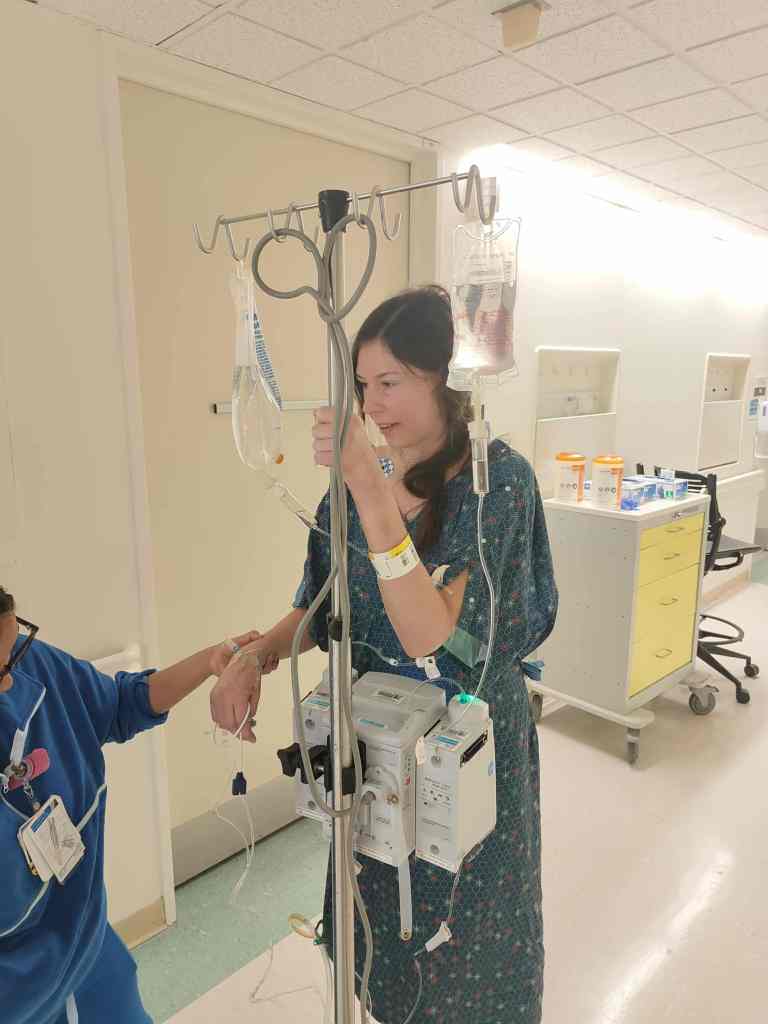
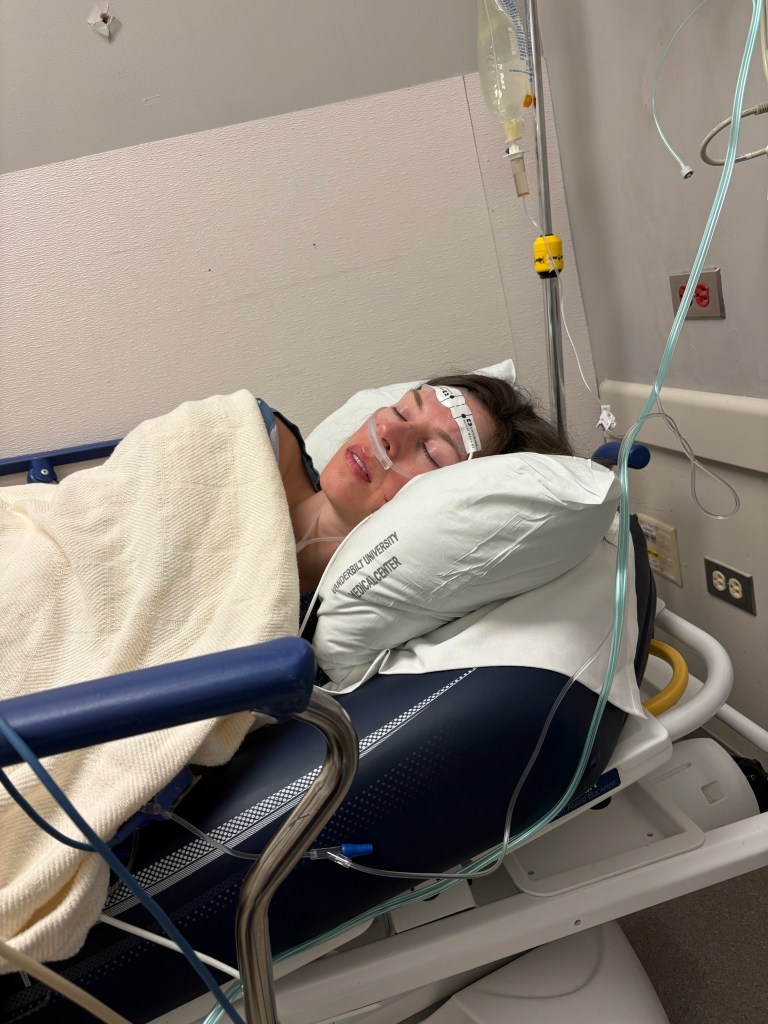
The sensation was so pronounced that her nurse contacted cardiology to make sure everything was okay. Thankfully, her heart was fine, and the sensation eventually subsided.
Another unexpected challenge was the amount of pain she experienced from trapped gas following surgery.
During the procedure, gas is used to create space inside the abdomen. For Jenna, the resulting discomfort in her back and shoulders was surprisingly intense.
“My back pain post-surgery was worse than the actual surgery recovery,” she says.
She struggled to lie on her back and needed six hospital pillows arranged in just the right way to get comfortable. The discomfort affected how she walked, slept, and even stood.
It also took weeks to resolve!
Jenna says walking as tolerated and using the medications recommended by her medical team, including Gas-X, helped her manage the discomfort. The biggest surprise was how long it took before she could comfortably lie down again.
Even after the gas pain subsided, Jenna’s abdominal muscles weren’t ready to support her body in a lying position. For approximately two months, she slept sitting upright or on an incline using a wedge pillow.
“Honestly, it sucked,” she admits.
Jenna’s experience is a reminder that recovery timelines vary significantly. Even when surgery goes smoothly, healing can take longer than patients anticipate.
Learning to change an ostomy bag: Trial, error, and a new routine
Before surgery, Jenna had watched countless ostomy bag changes on Instagram. Seeing other people navigate the process helped her understand what to expect. Two days after surgery, an ostomy nurse walked her through her first appliance change.
“I went into the session with background knowledge, which helped me apply the tips and tricks even quicker,” she says.
Her nurse was impressed by how confidently she handled the process. But knowing the steps and doing them independently at home were two different things. There are multiple steps involved in changing an appliance, and during the first few months, Jenna’s stoma was unpredictable.
She experienced what she describes as “volcano eruptions,” making some changes much more challenging than others. Over time, though, she developed a routine.
“What used to take me an hour now takes me less than ten minutes.”
Finding the right appliance also requires patience.

Jenna recommends asking your ostomy nurse for samples of different brands and styles before leaving the hospital. Once home, patients can contact manufacturers directly to request additional sample packs.
She tried products from Coloplast, Hollister, and Convatec before settling on Coloplast.
Some of the factors she considered included:
- The fabric and feel of the bag.
- The size and shape of the appliance.
- Available colors and how discreet it felt under clothing.
- How the bag sat against her abdomen.
- Where it hit her leg when sitting or moving.
- How the drainage closure worked.
Her biggest takeaway? Don’t assume the first appliance you try will be the right one. Finding a comfortable setup often involves experimentation.
The recovery timeline: When did she finally feel like herself?
One of the most common questions patients have before surgery is how long recovery will take.
For Jenna, the first two weeks were the hardest. Moving, bending, sleeping, and showering all required significant effort.
But gradually, she began noticing meaningful improvements.

Here’s how Jenna describes her recovery milestones:
One month: She felt ready for her first low-key outing, which happened to be a CT scan. It was also her first time driving after surgery.
Two months: She felt comfortable leaving the house independently and began physical therapy to safely rebuild her abdominal muscles.
Three months: She felt confident that the hardest part was behind her. She could finally sleep lying down, put on her own socks, and shower without feeling completely exhausted.
Four months: She noticed a major turning point. Physical therapy began feeling more like a workout than rehabilitation.
Five months: She was feeling amazing, although she hadn’t regained her full strength. Being able to pick up her cat felt like a major milestone.
Six months: Jenna says she was finally feeling like herself again. She was meeting friends for coffee, attending poetry events, and enjoying renaissance festivals and cosplay events.
Seven months: Jenna took her first airplane trip since surgery, traveling from Tennessee to California. Her ostomy didn’t interfere with the flight or vacation.
Eight months: She discovered she was pregnant!
As she celebrates her one-year colectomy anniversary, Jenna is 19 weeks pregnant, with her baby due in March 2027. She is participating in the PIANO study as a woman on Tremfya in pregnancy.
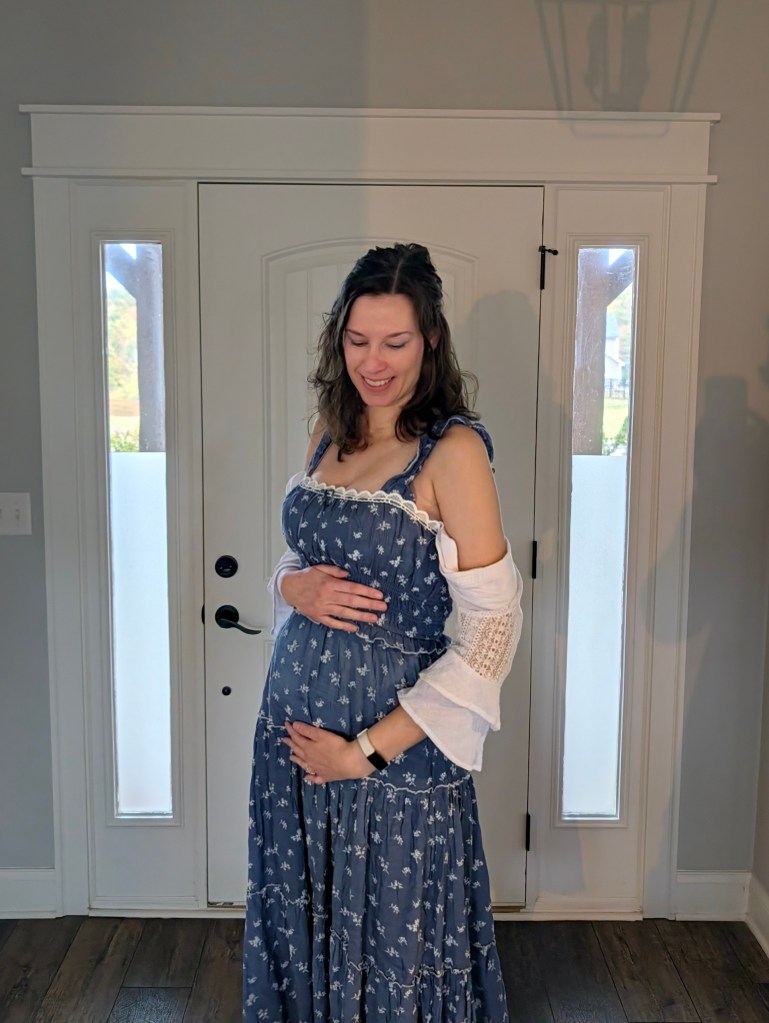
Jenna’s journey is a powerful reminder that life after ostomy surgery can include milestones and experiences that may feel impossible to envision when you’re preparing for the procedure. It’s truly remarkable to see all she has endured and how much her life has changed in one year!
The physical and emotional exhaustion of recovery
Jenna says her surgeon did a great job preparing her for the energy drain that would follow surgery. He warned her that afternoon exhaustion and the need for naps would be common during the first several weeks.
He was right.
Although Jenna works from home part-time, she took six full weeks off. Even returning to work after that period was difficult. She also experienced emotional ups and downs that she hadn’t entirely anticipated.
Sometimes she felt frustrated with her body for taking so long to heal. Other times, she couldn’t understand why something as simple as a 10-minute shower left her heart pounding with exhaustion. And sometimes, she was simply sad.
“Sometimes I was frustrated at my body for taking so long to heal. Other times I was confused about why my heart was pounding with exhaustion after a 10-minute shower. And in other moments, I just felt sad.”
She emphasizes that healing isn’t linear. Progress can feel slow, and a difficult day following a good one doesn’t mean you’ve lost ground.

Her advice? Give yourself grace and take recovery one day at a time.
Pain management: Don’t feel like you have to tough it out
One thing Jenna wishes she had approached differently was pain management. She’s someone who avoids medication unless necessary. While she took prescribed pain medication on schedule in the hospital, Jenna tried to minimize its use once she returned home.
Looking back, she wishes she hadn’t felt the need to tough it out.
“They were prescribed for a reason and there’s no shame in taking them!” she says.
She learned that staying ahead of pain, rather than waiting until it became unbearable, made a difference in her recovery.
She also suggests asking your medical team whether lidocaine patches may be appropriate for areas of discomfort, particularly when dealing with back or shoulder pain.
Another important lesson: Pain levels can fluctuate.
You might have a relatively comfortable day followed by a much more difficult one. Jenna says those setbacks were emotionally discouraging, but she eventually learned not to interpret every painful day as a sign that something was wrong with her recovery.
Preparing your home for life after surgery
Having support at home made a significant difference for Jenna. Her in-laws live just 15 minutes away and helped with cooking and deep cleaning. Jenna recommends arranging help ahead of time whenever possible, particularly for the first few weeks after surgery.
Some of her practical suggestions include:
- Deep clean your home before surgery.
- Prepare freezer meals or plan easy meals that require minimal effort.
- Arrange for family or friends to help with cooking, cleaning, and lifting.
- Move everyday essentials to countertops or shelves that are easy to reach.
- Keep ostomy supplies accessible.
- Have comfortable, loose-fitting clothing available.
- Invest in slip-on shoes so you don’t have to bend to put them on.
Jenna also recommends having a grabber tool nearby. For about two months, she struggled to bend down to pick up even lightweight objects.
And don’t underestimate the value of having someone help with seemingly simple tasks.
“For a few weeks, I needed my husband to put on my socks for me!” she shares.
Five products that made recovery easier
Jenna credits several inexpensive and practical products with making her recovery more manageable.
1. An abdominal binder: Her ostomy nurse provided a basic Velcro abdominal binder in the hospital. Jenna found the external support helpful when moving around and getting in and out of bed. She eventually purchased two additional binders.
2. A wedge pillow: Because she couldn’t comfortably lie flat for approximately two months, a wedge pillow helped her sleep at an incline.
3. A grabber tool: This became essential when bending was difficult. She used it to retrieve clothing and other lightweight objects from the floor.
4. A female urinal: Getting up and down from the toilet was particularly painful during the early days of recovery. Having an alternative made things easier.
5. Slip-on shoes: Being unable to bend down to put on socks or shoes made slip-on footwear especially helpful, particularly when she was home alone.
These are products Jenna found helpful during her own recovery. Individual needs and restrictions vary, please check with your surgical team about what is appropriate for you.
Don’t forget to talk about stoma placement before surgery
One piece of advice Jenna feels strongly about is advocating for yourself during the preoperative appointment with an ostomy nurse.
Before surgery, the nurse will examine your abdomen and help determine the ideal location for your stoma, taking into consideration your waistline and natural abdominal folds.
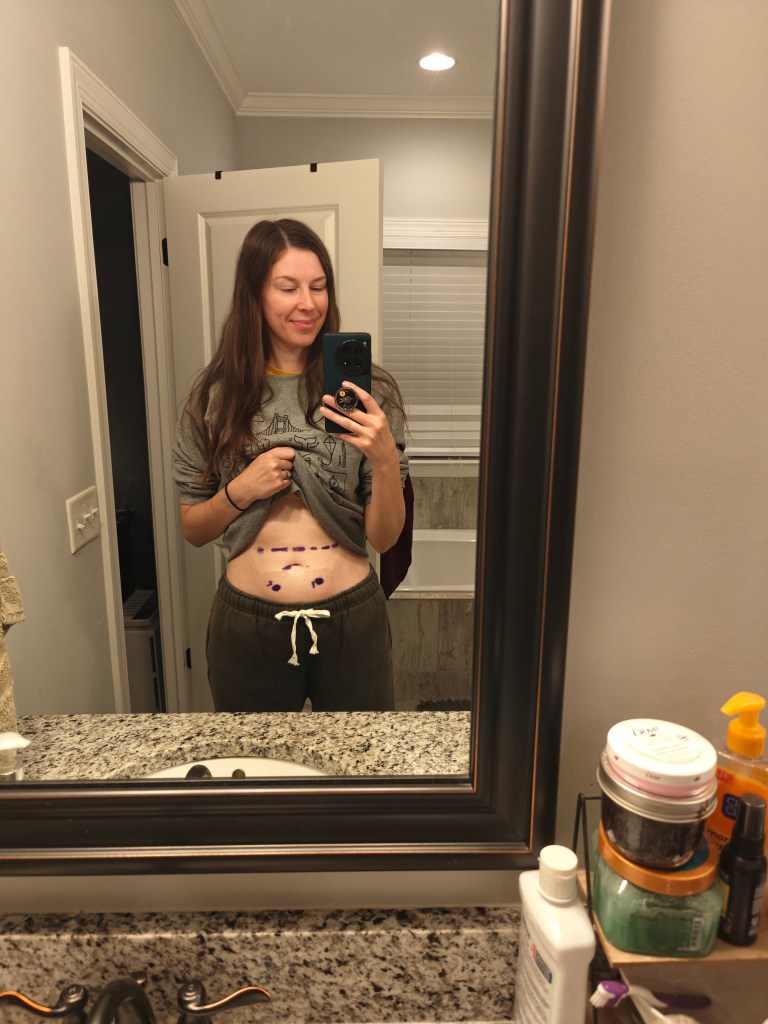
Jenna recommends bringing extra pairs of pants to that appointment.
Why?
Her nurse found what she considered the ideal stoma location, but it happened to fall directly along her usual beltline. Knowing this ahead of time helped Jenna mentally prepare for some wardrobe changes, including purchasing more high-waisted pants.
She says she’d rather adjust her clothing than compromise on what she and her medical team considered the best stoma placement. Jenna also recommends asking your hospital team about an abdominal binder if one isn’t provided.
Advice that could save you tears during the first month
When I asked what practical advice she would give someone preparing for ostomy surgery, Jenna shared three reminders.
First, acknowledge that recovery can be difficult.
“Yes, this is going to hurt physically. Recovery may even be brutal. That’s normal. You will get through it, even though in the moment it may not feel like it.”
She believes there’s value in acknowledging when something is painful or frustrating rather than feeling pressure to remain positive every minute.
Second, prioritize movement as directed by your medical team.
Walking was encouraged during her hospital stay, and Jenna found it helpful as she recovered. She recommends following your care team’s guidance and gradually increasing activity as tolerated.
Third, give yourself time to feel comfortable in your body again.
Immediately after surgery, she was bloated, swollen, weak, and adjusting to her new stoma. Oversized sweatshirts and loose sweatpants became her go-to wardrobe. Jenna worried she might never fit into her regular clothes again.
But eventually, the swelling subsided, her posture improved, and her abdominal strength returned.
“You will either make your pre-surgery wardrobe work, or you’ll create a new one. Either way, I promise, you will fit into jeans again.”
A new chapter, not the end of the story
When Jenna reflects on her ostomy journey, she doesn’t sugarcoat the challenges. Recovery was painful, exhausting, and often unpredictable.
But she also recognizes what surgery gave her back.
Six months after her colectomy, she was enjoying coffee dates, social events, and activities she had missed. Seven months after surgery, she traveled across the country. Eight months after surgery, she found out she was pregnant.

For someone who had spent years navigating debilitating Crohn’s symptoms and the disappointment of failed medications, those milestones meant everything.
Her message to other patients considering ostomy surgery is simple: Give yourself permission to heal, ask for help, and remember that your life doesn’t stop when you receive an ostomy.
Connect with Jenna
Blog: The Comical Colon | Resources for IBD and PSC warriors
Purchase Jenna’s Chronic Illness Poetry Book, “The Bones Settling”