PART 2: Life After Ostomy Surgery: The Recovery Realities, Lessons, and Surprises One Patient Wishes She Knew

Deciding to undergo ostomy surgery is one thing. Learning how to live with an ostomy and navigating the recovery process is another.

For patients with Inflammatory Bowel Disease who are preparing for a colectomy, much of the focus understandably centers on the surgery itself. But what happens when you get home? How long does it take to feel comfortable changing your ostomy bag? What does recovery look like? And when can you finally start feeling like yourself again?

Fellow patient advocate Jenna Ziegler knows firsthand that the road to recovery can be filled with unexpected challenges, small victories, and plenty of trial and error.

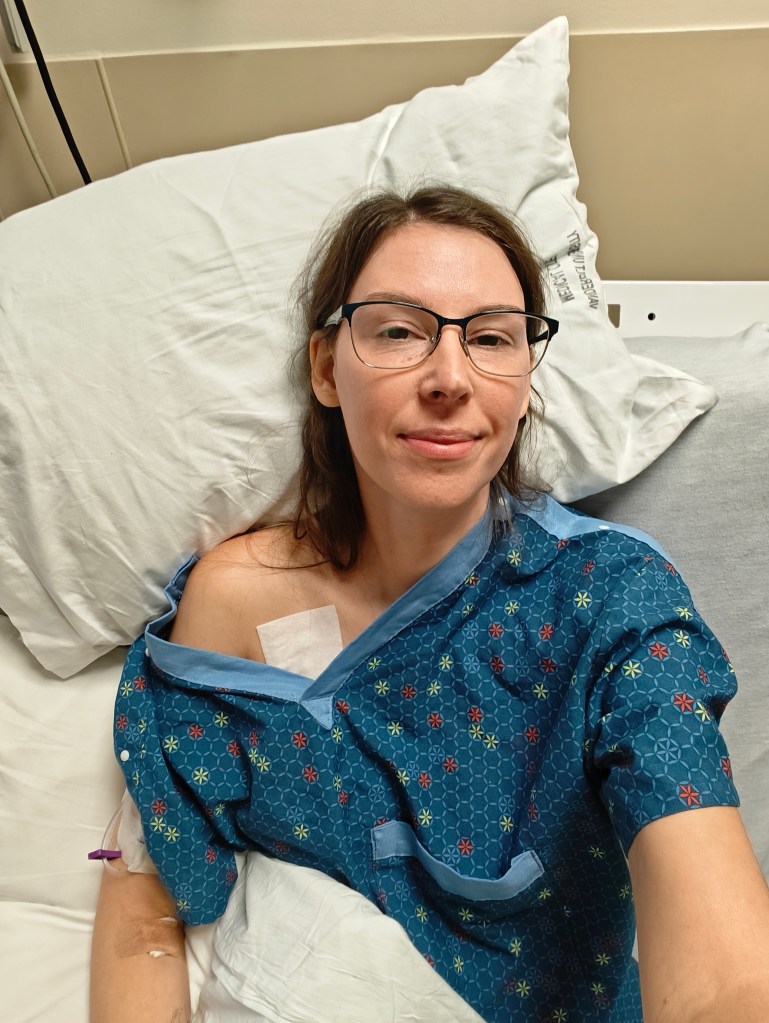
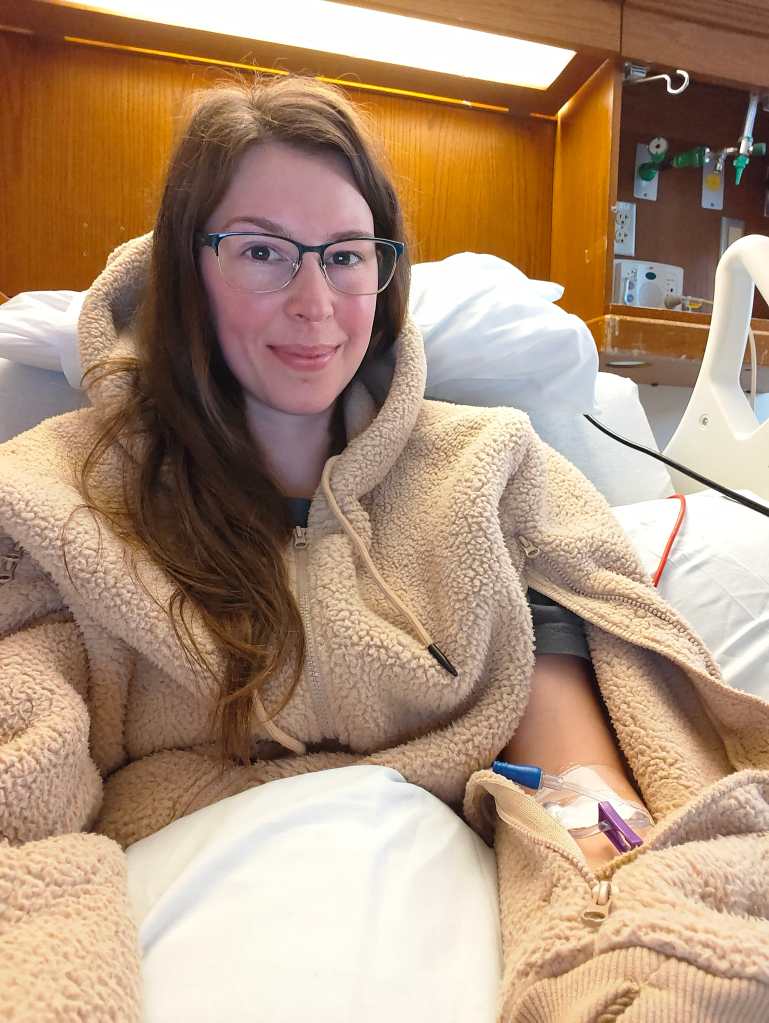
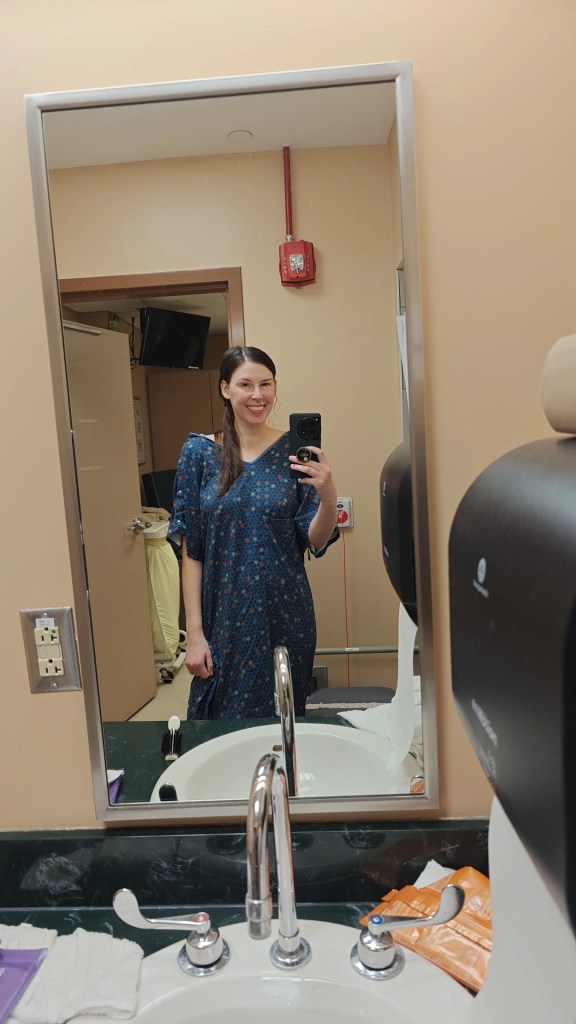
After years of difficult-to-control Crohn’s disease, Jenna underwent a subtotal colectomy with a permanent ostomy on November 7, 2025. While she felt mentally prepared going into surgery, the months that followed taught her things she couldn’t have fully anticipated.

From intense back pain and sleeping upright for months to mastering appliance changes and eventually traveling by plane, Jenna is sharing the practical lessons she wishes someone had told her before surgery.

In Part 2 of our Lights, Camera, Crohn’s series, Jenna offers an honest look at recovery and the reminders she hopes will help other patients feel more prepared.

The recovery surprises nobody quite prepared her for

Even with extensive research and preparation, Jenna says several aspects of recovery caught her off guard.

One of the strangest experiences happened the day after surgery, when her bowels began functioning again.

“It felt like a second heartbeat was pumping from just below my sternum, like my stomach itself was pulsating,” she recalls.
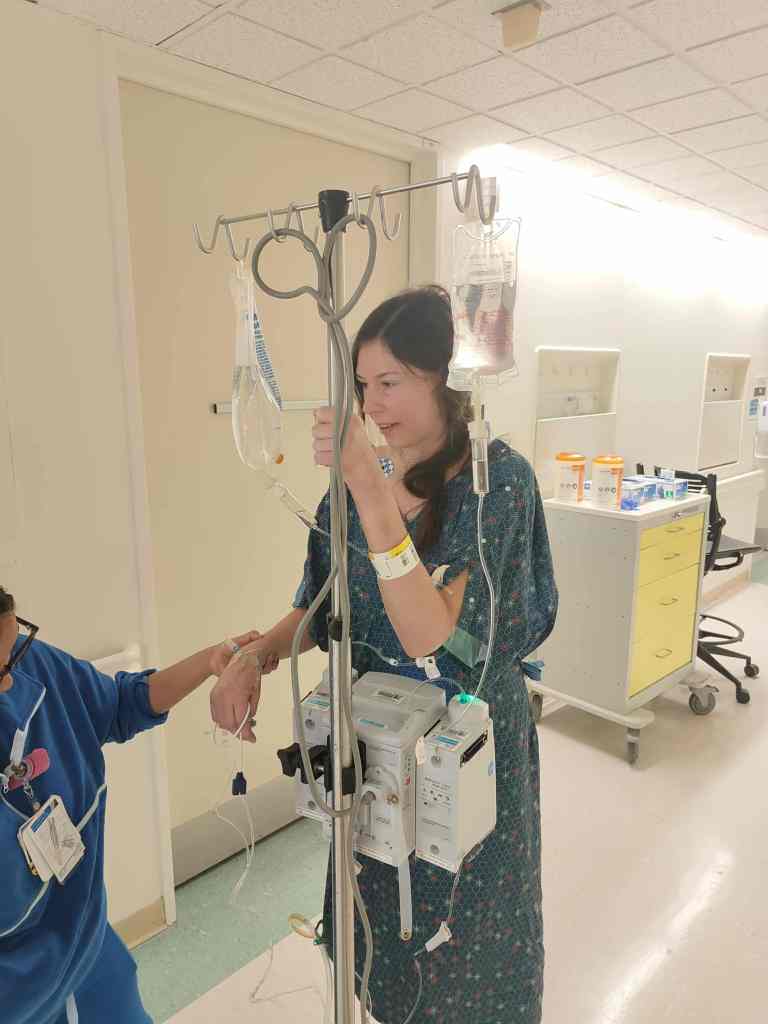
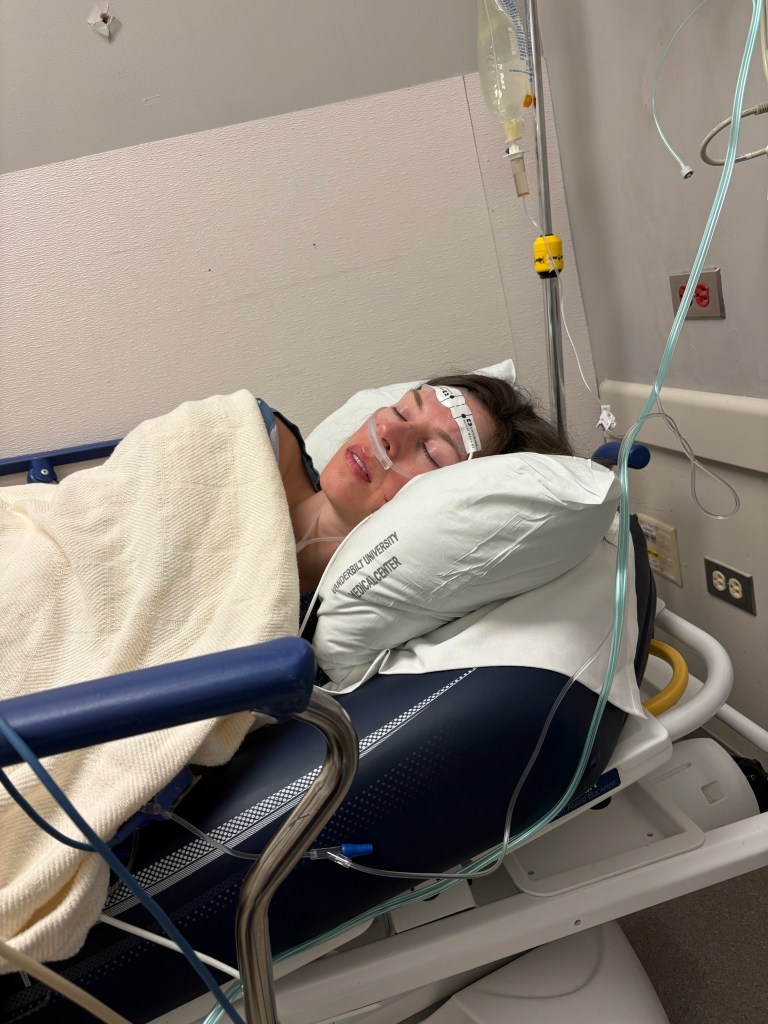
The sensation was so pronounced that her nurse contacted cardiology to make sure everything was okay. Thankfully, her heart was fine, and the sensation eventually subsided.

Another unexpected challenge was the amount of pain she experienced from trapped gas following surgery.

During the procedure, gas is used to create space inside the abdomen. For Jenna, the resulting discomfort in her back and shoulders was surprisingly intense.

“My back pain post-surgery was worse than the actual surgery recovery,” she says.

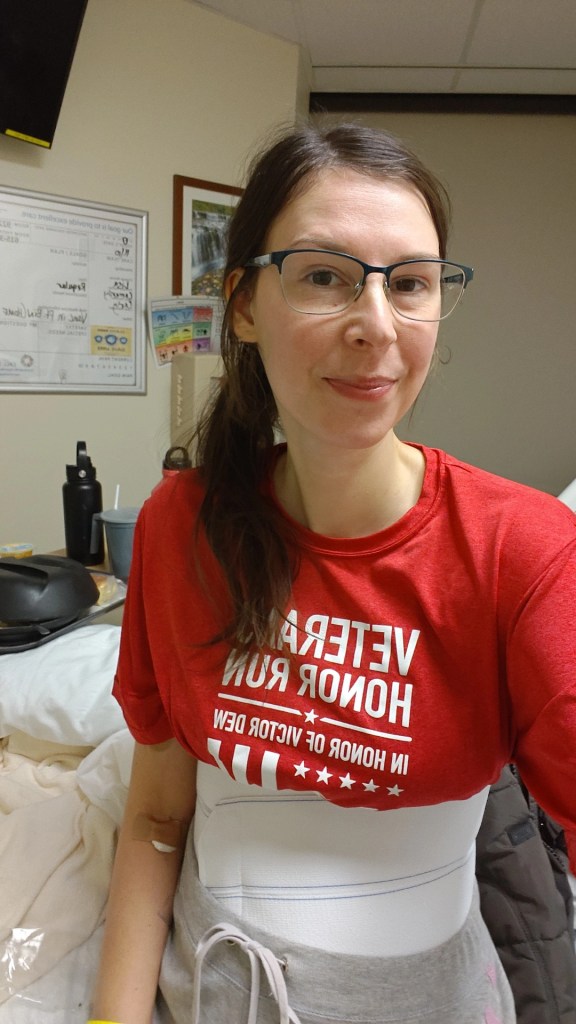
She struggled to lie on her back and needed six hospital pillows arranged in just the right way to get comfortable. The discomfort affected how she walked, slept, and even stood.

It also took weeks to resolve!

Jenna says walking as tolerated and using the medications recommended by her medical team, including Gas-X, helped her manage the discomfort. The biggest surprise was how long it took before she could comfortably lie down again.

Even after the gas pain subsided, Jenna’s abdominal muscles weren’t ready to support her body in a lying position. For approximately two months, she slept sitting upright or on an incline using a wedge pillow.

“Honestly, it sucked,” she admits.

Jenna’s experience is a reminder that recovery timelines vary significantly. Even when surgery goes smoothly, healing can take longer than patients anticipate.

Learning to change an ostomy bag: Trial, error, and a new routine

Before surgery, Jenna had watched countless ostomy bag changes on Instagram. Seeing other people navigate the process helped her understand what to expect. Two days after surgery, an ostomy nurse walked her through her first appliance change.

“I went into the session with background knowledge, which helped me apply the tips and tricks even quicker,” she says.

Her nurse was impressed by how confidently she handled the process. But knowing the steps and doing them independently at home were two different things. There are multiple steps involved in changing an appliance, and during the first few months, Jenna’s stoma was unpredictable.

She experienced what she describes as “volcano eruptions,” making some changes much more challenging than others. Over time, though, she developed a routine.

“What used to take me an hour now takes me less than ten minutes.”

Finding the right appliance also requires patience.

Jenna recommends asking your ostomy nurse for samples of different brands and styles before leaving the hospital. Once home, patients can contact manufacturers directly to request additional sample packs.

She tried products from Coloplast, Hollister, and Convatec before settling on Coloplast.

Some of the factors she considered included:

  • The fabric and feel of the bag.
  • The size and shape of the appliance.
  • Available colors and how discreet it felt under clothing.
  • How the bag sat against her abdomen.
  • Where it hit her leg when sitting or moving.
  • How the drainage closure worked.

Her biggest takeaway? Don’t assume the first appliance you try will be the right one. Finding a comfortable setup often involves experimentation.

The recovery timeline: When did she finally feel like herself?

One of the most common questions patients have before surgery is how long recovery will take.

For Jenna, the first two weeks were the hardest. Moving, bending, sleeping, and showering all required significant effort.

But gradually, she began noticing meaningful improvements.
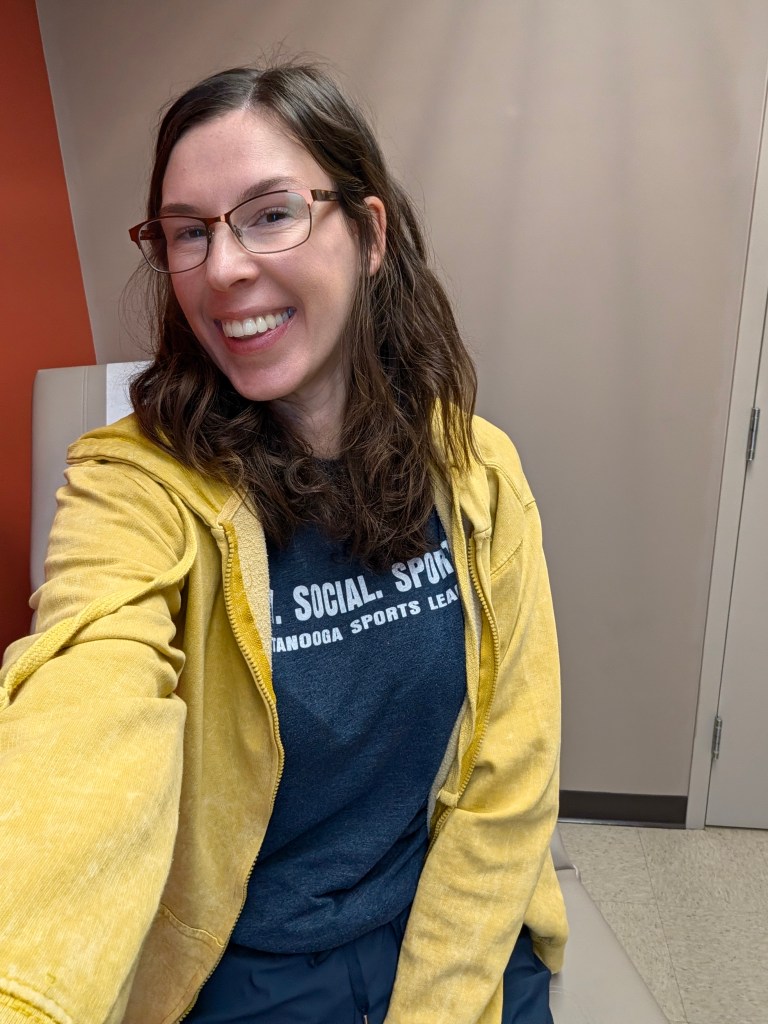
Here’s how Jenna describes her recovery milestones:

One month: She felt ready for her first low-key outing, which happened to be a CT scan. It was also her first time driving after surgery.

Two months: She felt comfortable leaving the house independently and began physical therapy to safely rebuild her abdominal muscles.

Three months: She felt confident that the hardest part was behind her. She could finally sleep lying down, put on her own socks, and shower without feeling completely exhausted.

Four months: She noticed a major turning point. Physical therapy began feeling more like a workout than rehabilitation.

Five months: She was feeling amazing, although she hadn’t regained her full strength. Being able to pick up her cat felt like a major milestone.

Six months: Jenna says she was finally feeling like herself again. She was meeting friends for coffee, attending poetry events, and enjoying renaissance festivals and cosplay events.

Seven months: Jenna took her first airplane trip since surgery, traveling from Tennessee to California. Her ostomy didn’t interfere with the flight or vacation.

Eight months: She discovered she was pregnant!

As she celebrates her one-year colectomy anniversary, Jenna is 19 weeks pregnant, with her baby due in March 2027. She is participating in the PIANO study as a woman on Tremfya in pregnancy.
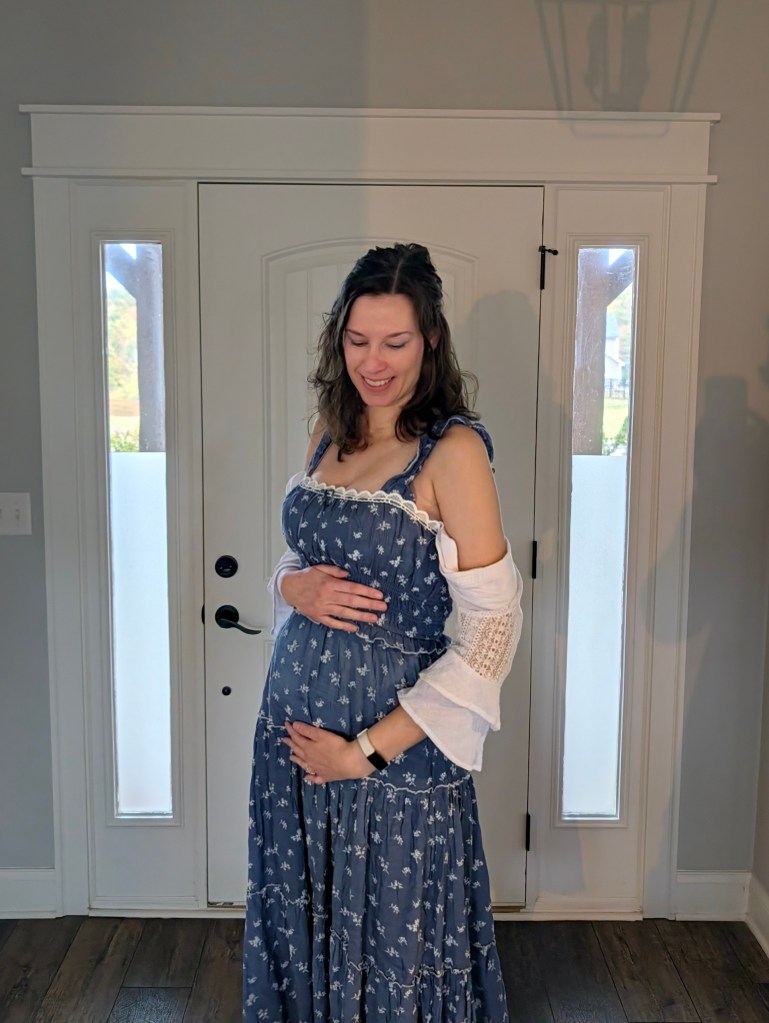
Jenna’s journey is a powerful reminder that life after ostomy surgery can include milestones and experiences that may feel impossible to envision when you’re preparing for the procedure. It’s truly remarkable to see all she has endured and how much her life has changed in one year!

The physical and emotional exhaustion of recovery

Jenna says her surgeon did a great job preparing her for the energy drain that would follow surgery. He warned her that afternoon exhaustion and the need for naps would be common during the first several weeks.

He was right.

Although Jenna works from home part-time, she took six full weeks off. Even returning to work after that period was difficult. She also experienced emotional ups and downs that she hadn’t entirely anticipated.

Sometimes she felt frustrated with her body for taking so long to heal. Other times, she couldn’t understand why something as simple as a 10-minute shower left her heart pounding with exhaustion. And sometimes, she was simply sad.

“Sometimes I was frustrated at my body for taking so long to heal. Other times I was confused about why my heart was pounding with exhaustion after a 10-minute shower. And in other moments, I just felt sad.”

She emphasizes that healing isn’t linear. Progress can feel slow, and a difficult day following a good one doesn’t mean you’ve lost ground.

Her advice? Give yourself grace and take recovery one day at a time.

Pain management: Don’t feel like you have to tough it out

One thing Jenna wishes she had approached differently was pain management. She’s someone who avoids medication unless necessary. While she took prescribed pain medication on schedule in the hospital, Jenna tried to minimize its use once she returned home.

Looking back, she wishes she hadn’t felt the need to tough it out.

“They were prescribed for a reason and there’s no shame in taking them!” she says.

She learned that staying ahead of pain, rather than waiting until it became unbearable, made a difference in her recovery.

She also suggests asking your medical team whether lidocaine patches may be appropriate for areas of discomfort, particularly when dealing with back or shoulder pain.

Another important lesson: Pain levels can fluctuate.

You might have a relatively comfortable day followed by a much more difficult one. Jenna says those setbacks were emotionally discouraging, but she eventually learned not to interpret every painful day as a sign that something was wrong with her recovery.

Preparing your home for life after surgery

Having support at home made a significant difference for Jenna. Her in-laws live just 15 minutes away and helped with cooking and deep cleaning. Jenna recommends arranging help ahead of time whenever possible, particularly for the first few weeks after surgery.

Some of her practical suggestions include:

  • Deep clean your home before surgery.
  • Prepare freezer meals or plan easy meals that require minimal effort.
  • Arrange for family or friends to help with cooking, cleaning, and lifting.
  • Move everyday essentials to countertops or shelves that are easy to reach.
  • Keep ostomy supplies accessible.
  • Have comfortable, loose-fitting clothing available.
  • Invest in slip-on shoes so you don’t have to bend to put them on.

Jenna also recommends having a grabber tool nearby. For about two months, she struggled to bend down to pick up even lightweight objects.

And don’t underestimate the value of having someone help with seemingly simple tasks.

“For a few weeks, I needed my husband to put on my socks for me!” she shares.

Five products that made recovery easier

Jenna credits several inexpensive and practical products with making her recovery more manageable.

1. An abdominal binder: Her ostomy nurse provided a basic Velcro abdominal binder in the hospital. Jenna found the external support helpful when moving around and getting in and out of bed. She eventually purchased two additional binders.

2. A wedge pillow: Because she couldn’t comfortably lie flat for approximately two months, a wedge pillow helped her sleep at an incline.

3. A grabber tool: This became essential when bending was difficult. She used it to retrieve clothing and other lightweight objects from the floor.

4. A female urinal: Getting up and down from the toilet was particularly painful during the early days of recovery. Having an alternative made things easier.

5. Slip-on shoes: Being unable to bend down to put on socks or shoes made slip-on footwear especially helpful, particularly when she was home alone.

These are products Jenna found helpful during her own recovery. Individual needs and restrictions vary, please check with your surgical team about what is appropriate for you.

Don’t forget to talk about stoma placement before surgery

One piece of advice Jenna feels strongly about is advocating for yourself during the preoperative appointment with an ostomy nurse.

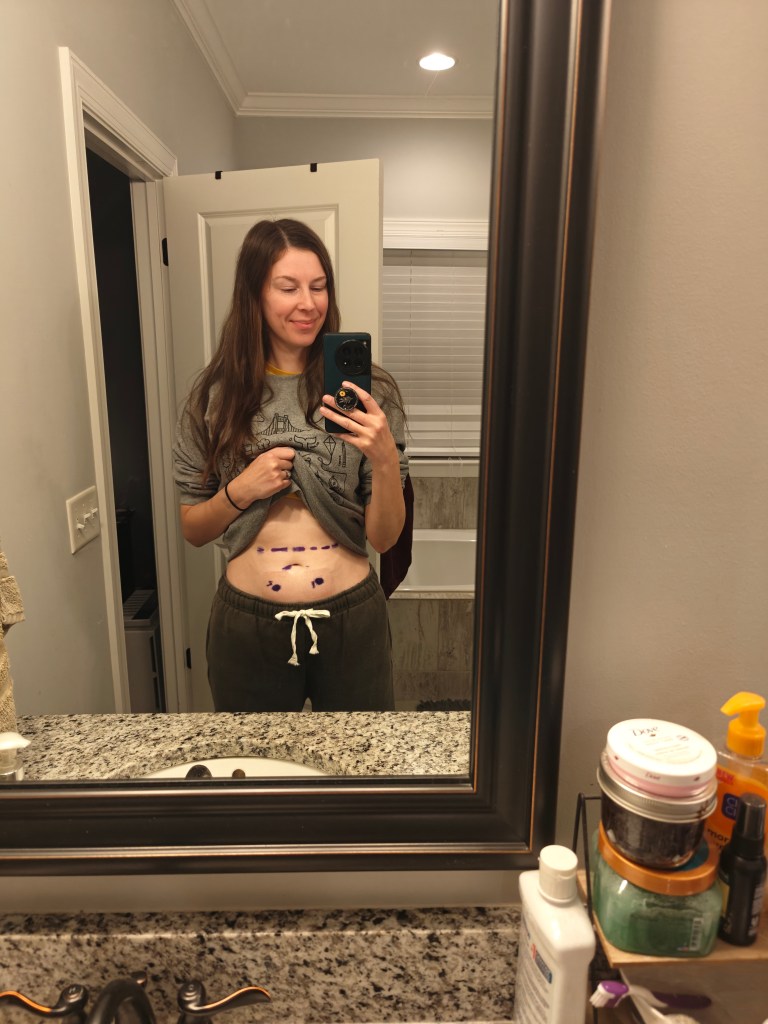
Before surgery, the nurse will examine your abdomen and help determine the ideal location for your stoma, taking into consideration your waistline and natural abdominal folds.
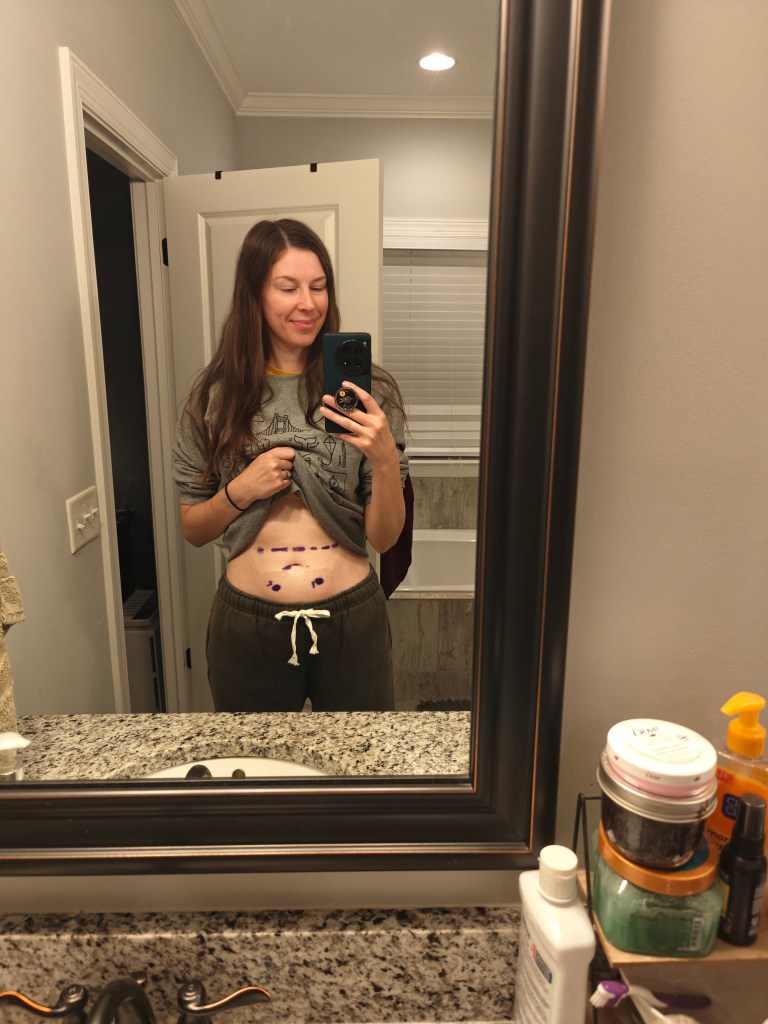
Jenna recommends bringing extra pairs of pants to that appointment.

Why?

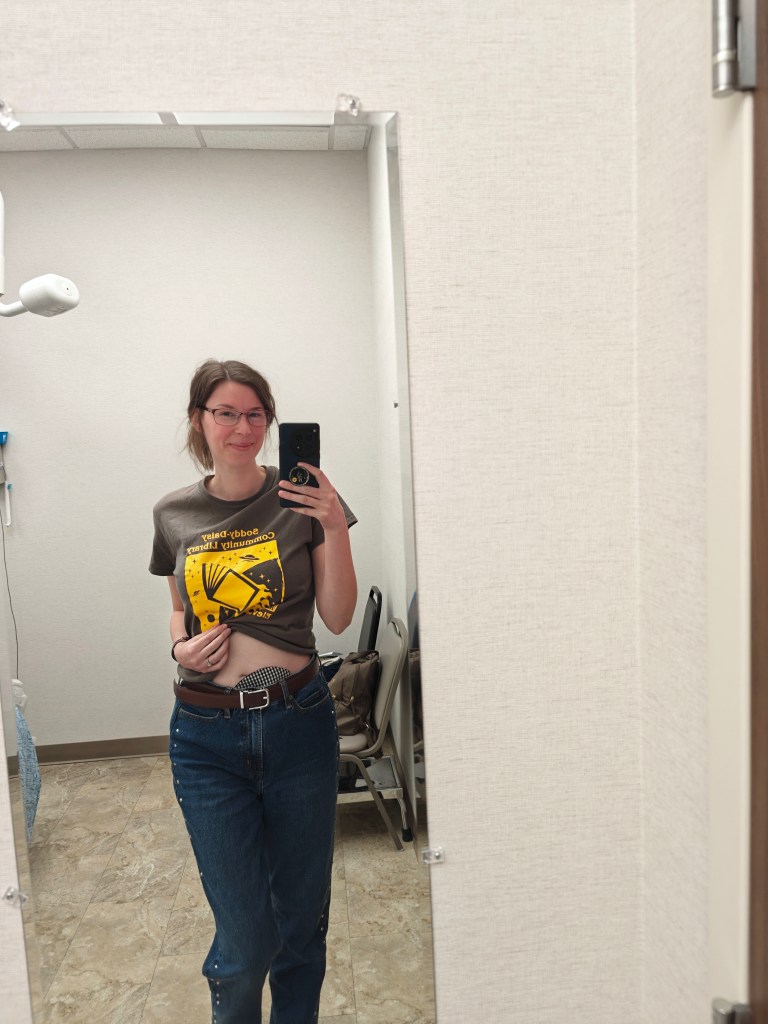
Her nurse found what she considered the ideal stoma location, but it happened to fall directly along her usual beltline. Knowing this ahead of time helped Jenna mentally prepare for some wardrobe changes, including purchasing more high-waisted pants.

She says she’d rather adjust her clothing than compromise on what she and her medical team considered the best stoma placement. Jenna also recommends asking your hospital team about an abdominal binder if one isn’t provided.

Advice that could save you tears during the first month

When I asked what practical advice she would give someone preparing for ostomy surgery, Jenna shared three reminders.

First, acknowledge that recovery can be difficult.

“Yes, this is going to hurt physically. Recovery may even be brutal. That’s normal. You will get through it, even though in the moment it may not feel like it.”

She believes there’s value in acknowledging when something is painful or frustrating rather than feeling pressure to remain positive every minute.

Second, prioritize movement as directed by your medical team.

Walking was encouraged during her hospital stay, and Jenna found it helpful as she recovered. She recommends following your care team’s guidance and gradually increasing activity as tolerated.

Third, give yourself time to feel comfortable in your body again.

Immediately after surgery, she was bloated, swollen, weak, and adjusting to her new stoma. Oversized sweatshirts and loose sweatpants became her go-to wardrobe. Jenna worried she might never fit into her regular clothes again.

But eventually, the swelling subsided, her posture improved, and her abdominal strength returned.

“You will either make your pre-surgery wardrobe work, or you’ll create a new one. Either way, I promise, you will fit into jeans again.”

A new chapter, not the end of the story

When Jenna reflects on her ostomy journey, she doesn’t sugarcoat the challenges. Recovery was painful, exhausting, and often unpredictable.

But she also recognizes what surgery gave her back.

Six months after her colectomy, she was enjoying coffee dates, social events, and activities she had missed. Seven months after surgery, she traveled across the country. Eight months after surgery, she found out she was pregnant.

For someone who had spent years navigating debilitating Crohn’s symptoms and the disappointment of failed medications, those milestones meant everything.

Her message to other patients considering ostomy surgery is simple: Give yourself permission to heal, ask for help, and remember that your life doesn’t stop when you receive an ostomy.

Connect with Jenna

Instagram

Blog: The Comical Colon | Resources for IBD and PSC warriors

Facebook

X

Purchase Jenna’s Chronic Illness Poetry Book, “The Bones Settling”

What I Wish I Knew Before Ostomy Surgery: One Patient Advocate’s Journey to Choosing a Colectomy

For many people living with Inflammatory Bowel Disease, the possibility of ostomy surgery can bring a complicated mix of emotions. Fear, uncertainty, grief, and even relief can coexist when medications stop working and surgery becomes a path toward reclaiming quality of life.

But what happens when you’re the one who has to make that decision?

For fellow patient advocate Jenna Ziegler, the road to ostomy surgery was paved with years of medication trials, hospitalizations, difficult conversations, and the emotional exhaustion of wondering what would come next. After years of trying to get her Crohn’s disease under control, Jenna reached a point where she knew something had to change.

On November 7, 2025, she underwent a subtotal colectomy and received a permanent ostomy, keeping her rectum for the time being.

Looking back, Jenna says she wishes she had undergone surgery years earlier.

In this first installment of our two-part Lights, Camera, Crohn’s series, Jenna opens up about how she reached that decision, the importance of finding a medical team that listens, preparing mentally for surgery, and what she wants other patients to understand before considering an ostomy.

When medications stop working, surgery becomes part of the conversation

Jenna’s journey to surgery followed years of trying different treatments and navigating the uncertainty that comes with refractory Crohn’s disease.

After experiencing a rare side effect of autoimmune pancreatitis while taking Entyvio, the medication that had previously kept her Crohn’s in deep remission for five years, she had to discontinue treatment. What followed was a prolonged flare that proved difficult to control.

She tried additional biologics, including Stelara and Skyrizi, but continued experiencing debilitating symptoms and hospitalizations.

By September 2025, it was clear that Skyrizi was no longer working. Her symptoms returned in full force, including abdominal cramping, blood and mucus, nausea, weight loss, and accidents.

Jenna had reached her breaking point.

“I was done with trying biologics due to the long waiting game and the mental exhaustion of the uncertainty and getting my hopes up only for them to come crashing down,” she shares.

Jenna began seriously considering a colectomy, but getting there wasn’t as straightforward as she had hoped.

The power of a second opinion

When Jenna initially brought up surgery with her gastroenterologist, she felt dismissed.

“He would shut it down, saying I was ‘too young for that,'” she recalls.

Rather than accepting that answer, Jenna pursued a second opinion at Vanderbilt’s Inflammatory Bowel Disease Center. There, she met with both a gastroenterology team and a colorectal surgeon who took the time to review her medical history, symptoms, and personal goals.

Their response was validating: If Skyrizi failed, she would be an excellent candidate for surgery.

“Getting established with a medical team that I trusted was one of the things that empowered me to make this decision,” Jenna says.

The Vanderbilt team also understood something important about her future: Jenna hoped to have a family.

Her previous gastroenterologist had suggested Rinvoq, despite knowing her family-planning goals. Jenna wanted a treatment plan that considered more than just her disease activity.

“After reading my extensive medical history and hearing about my debilitating symptoms, the team at Vanderbilt confirmed I’d be an excellent candidate for surgery if Skyrizi failed. It was incredibly encouraging that a team I trusted understood my life goals and confirmed that surgery was a very reasonable option for me.”

For anyone contemplating surgery but feeling unheard, Jenna encourages seeking another medical opinion.

“If you’re considering a colectomy (even just as a backup option) but your current GI isn’t open to it, I suggest getting a second opinion. I can’t express how emotionally and mentally empowering it is to find a GI who is willing to come alongside you and support you in your health journey.”

A decision that considered future family plans

Jenna’s surgery wasn’t simply about removing her colon. It also involved carefully considering her reproductive goals.

She underwent a subtotal colectomy, meaning her colon was removed while her rectum remained.

Importantly, keeping her rectum was not because she hoped to have a reversal or pursue a J-pouch. Given the severity of her disease, her medical team anticipated that reconnecting her small intestine to her rectum could cause inflammation. Jenna had also researched her options and personally decided that a J-pouch wasn’t something she wanted.

Instead, retaining her rectum was part of a discussion about fertility.

Because the rectum is located near reproductive organs, her surgeon explained that removing it could create scar tissue that might affect her fallopian tubes. Since having a family was one of Jenna’s life goals, they decided to leave her rectum in place for the time being. She plans to have it surgically removed after completing her family.

It’s an important reminder that ostomy surgery isn’t one-size-fits-all. Decisions about removing the colon, retaining the rectum, pursuing a reversal, or having additional surgery should be individualized and discussed with an experienced surgical team.

For Jenna, understanding her options and making decisions that aligned with her future mattered just as much as addressing her immediate symptoms.

Preparing mentally for surgery: Making a list of what Crohn’s had taken

Jenna says she spent considerably more time preparing mentally than physically for surgery.

Since she had known for some time that a colectomy might eventually be necessary, she researched the procedure, learned about different surgical options, and followed other ostomates on social media.

But one exercise made a particularly meaningful difference.

She started keeping a running list of everything Crohn’s disease had taken from her.

The list included missing family weddings, canceling vacations, putting her writing and author goals on hold, wearing adult diapers everywhere, and losing touch with friends because of canceled plans.

Whenever she questioned whether surgery was the right decision, she returned to that list.

The night before her colectomy, when nerves and emotions began to surface, she read it again.

“It gave me confidence and hope when I was wheeled into surgery the next morning,” she says.

It’s a powerful perspective for anyone facing a major medical decision. Sometimes, remembering what you’ve already endured can help bring clarity to what comes next.

The power of seeing yourself in someone else’s story

Another major source of reassurance for Jenna was the online ostomy community.

Through Instagram, she had followed people with ostomies who were exercising, working, traveling, raising families, and living full lives.

Seeing those experiences helped her envision a future that didn’t revolve around Crohn’s symptoms.

“Over the years, I’ve followed friends online and saw ostomates exercising, working, traveling, and raising families. They were truly living,” she explains.

Those stories helped normalize ostomy life and made her feel more confident about what was ahead.

Jenna also felt surrounded by support from her husband, family, medical team, and online community in the days leading up to surgery.

“I felt like I had the whole ostomy and IBD community by my side.”

For patients who may feel isolated or frightened by the prospect of an ostomy, connecting with people who have firsthand experience can offer a different kind of reassurance. An “easy” way to connect with ostomates online is to look up the hashtags: #ostomate #colectomy #ileostomy.

What Jenna wishes more patients understood about surgery

One of Jenna’s biggest takeaways is that ostomy surgery should not automatically be viewed as a failure.

“I really don’t like how surgery is often positioned as something that should be avoided at all costs,” she says.

She acknowledges that ostomy life comes with its own challenges, including the risk of hernias and obstructions, appliance changes, and managing output. But she also believes patients deserve to have honest conversations about surgery before reaching a point of complete physical and emotional exhaustion.

For Jenna, the decision came after trying multiple medication classes and recognizing that she no longer wanted to continue the cycle of waiting to see whether another treatment would work.

She emphasizes that every patient’s circumstances are different. There may be additional medications, combination therapies, or clinical trials worth exploring. But patients should also feel empowered to discuss surgery when it aligns with their symptoms, medical history, and personal goals.

“Ultimately, you know your body best. You know your life goals and dreams. You know your medical history, your symptoms, your mental capacity for the roller coaster of trying (and potentially failing) more medications.”

When asked what she would tell her pre-surgery self, Jenna doesn’t hesitate:

“This is going to be hard, but it’s going to be so worth it. In fact, knowing what I know now, I wish I had gotten the surgery years ago.”

Her experience is a reminder that there is no single right path when navigating IBD. For some, the next medication is the answer. For others, surgery may offer an opportunity to reclaim parts of life that chronic illness has taken away.

And neither decision should come with shame.

Stay tuned for Part 2 on Lights, Camera, Crohn’s TOMORROW, where Jenna shares the realities of ostomy recovery, from unexpected pain and learning to change her appliance to finding her way back to everyday activities and eventually feeling like herself again. She has incredible advice you don’t want to miss!

How to be your own best advocate during infusions

You’re told by your gastroenterologist you need a biologic to treat your IBD and that medication is received through infusion. Thoughts race through your mind–what’s it going to be like hooked up to an IV receiving your medicine? It’s completely normal to feel anxious, nervous, and uncertain. I’ve done self-injections since 2008, and never have needed to receive my medication through infusion, but I know that’s not the case for many.

This week on Lights, Camera, Crohn’s we hear from patient advocate Jenna Ziegler. Jenna was diagnosed with ulcerative colitis in 2014 and has recently added enteropathic arthritis and a rare autoimmune non-alcohol-related liver disease called primary sclerosing cholangitis (PSC) to the list.

Over the years, Jenna has learned how to prepare for infusions so that she can walk into the outpatient center with confidence. Check out her empowering tips for doing so—whether your infusions are at a medical center or at home!

Do Your Prep Work

  • Know if you’ll be given Benadryl. Some biologics require pre-medications that help prevent adverse reactions. These meds may include Tylenol, prednisone, or Benadryl. Find out ahead of time if you’ll be given Benadryl. Knowing you’ll be sleepy at and after your infusion can help you decide if you’ll need a driver and if you need to make arrangements for the rest of your day.
  • Plan out the rest of your day. You may be tired after your infusion—especially if you’re given Benadryl! Weeks before your infusion, make proper post-infusion arrangements .Maybe you’ll want to take the day off work or arrange for childcare so you can take a long nap or reschedule that evening’s outing to another day. Jenna encourages you to schedule time in your calendar to recuperate after the infusion.
  • Know your dosing and required blood work. By knowing your dose and what labs that will be drawn, you’ll feel more in control of your day. Ask your doctor for your dose and what (if any) labs the nurse will draw at your infusion. Then, when you arrive, you can double check that these things are correct.

The Day Before Your Infusion

The day before your infusion is critical: make sure you’re drinking enough water! 

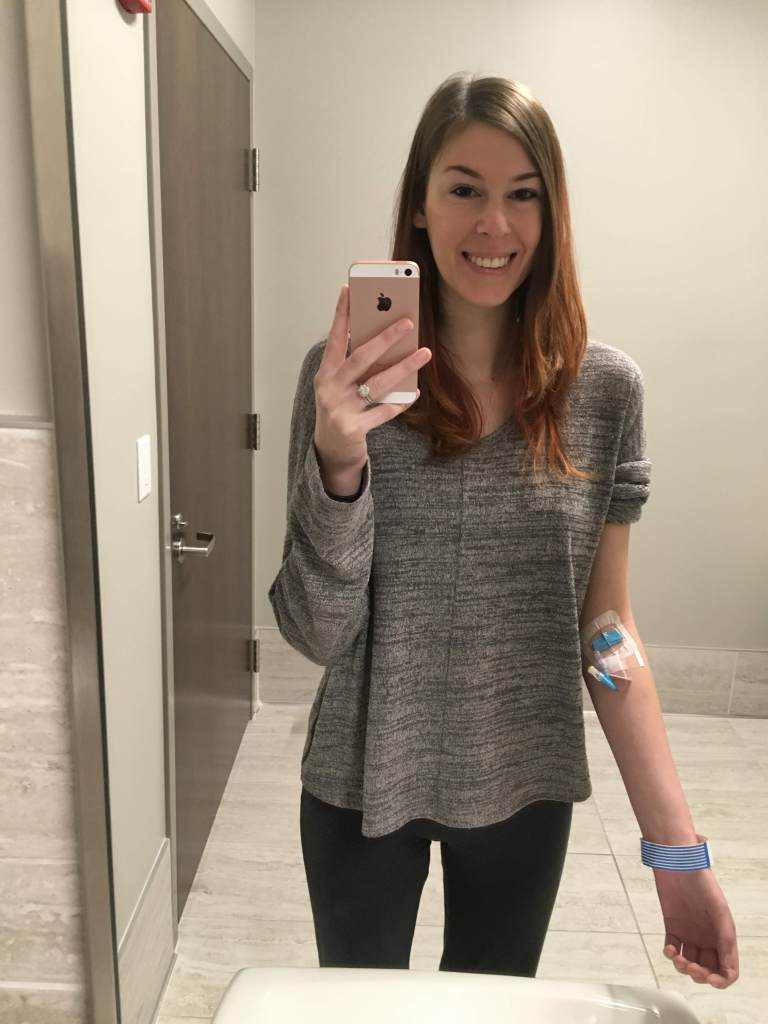
“Infusions require IVs, so it may ease your nerves to do everything in your power to make your veins as plump and visible as possible. I drink one gallon of water the day before my infusion. I chug 32 ounces every three hours and set reminders to keep me accountable. When I do this, my infusion nurse almost always gets my IV in with one poke! Also, a nurse told me that sodium retains water, so eating salty snacks the day before will also help keep water in your veins. Of course, run this by your doctor first!”

The Day Of your Infusion

Today’s the day! Here are three tips to help remove some of those infusion-day nerves.

1. Eat a proper meal. The day of your infusion, you want to fuel your body with healthy foods. This means a balanced meal with both protein and carbs. This is especially important if you’ll receive Benadryl or get blood drawn! 

2. Dress in layers. One of the best things you can do for yourself is make sure you’re comfortable for your infusion. 

“I find infusion centers very cold, so I suggest you dress in layers—just make sure you choose something where your veins are easily accessible. I tend to wear warm shoes, comfy pants, a long-sleeved shirt over a tank top, and a sweatshirt. Cozy and practical!”

3. Bring entertainment. Different biologic infusions vary in length, so if you’ll be there for a while, bring something to keep you entertained! Some of Jenna’s personal favorites are: books, journal, laptop, headphones, and snacks. If you receive home infusions, be sure to gather your supplies by your couch or the location in your house where you plan to receive the medication.

At Your Infusion

When you arrive at your infusion center, you’ll check in, probably sign some forms, and your nurse will show you to your chair. It’s okay if you’re feeling nervous. But remember, as the patient, you are empowered. Here are Jenna’s top tips to ease your nerves.

  • Ask for a warm blanket and pillow. Not only will this help you get comfortable, but placing a warm blanket over your arm will help prepare your vein for the IV.
  • Tell the nurse which arm/vein you prefer. Don’t be afraid to tell your nurse which vein you want them to poke. They’ll probably ask, but if they don’t, don’t be afraid to voice your preference.
  • Take your Benadryl slowly. If Benadryl is one of your pre-meds, they’ll probably either give you a pill or push it through your IV. If it’s via IV, ask the nurse to go slowly. Pushing the syringe too fast may make you feel lightheaded or nauseous. Again, don’t be afraid to speak up.
  • Confirm the info on your medication bag is correct. When the nurse is hooking your medication bag to your IV, it may make you feel better to see the label for yourself. Ask the nurse to show it to you, and you can personally ensure it has the correct patient name, medication, and dose. 

After Your Infusion

You did it! Your infusion is over. Best of all, you’ve already planned out the rest of your day, so now you don’t have to stress about your to-do list. 

“I encourage you to listen to your body—you might want to take a nap, take a hot bath, or have a relaxing night in with your family and pizza delivery. You’ve had a long day and you deserve to destress and relax.”

Remember, You Are Empowered

Over time, getting your infusions will become easier. Normal. Routine. And, one day, maybe even relaxing.

“I would have never thought that I’d find peace in my infusion days—these days that once made me nervous and stressed. But I now see my infusion days as relaxing, self-care days. This will come with time, and it starts with one thing: remembering that you are strong, empowered, and your own best advocate.”

Connect with Jenna:

Website

Instagram

Facebook

Twitter