Prenatal Yoga and DripDrop: Why both nourish this IBD mom

Feeling comfortable and well during pregnancy is paramount, but not always easy to come by. This time around, I’ve made two changes that have benefited me greatly. One is prenatal yoga. The other—hydrating with DripDrop. Whether pregnant or not, self-care is of the upmost importance when living with a chronic illness like inflammatory bowel disease and creating a life.

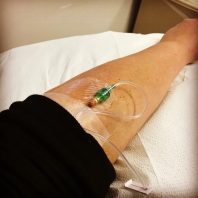
natalie yogaWhile yoga and DripDrop are different, I think of them much in the same way. They go hand in hand. While I’m driving to yoga class and sitting on my mat before we start, DripDrop was formulated so water and salt can be absorbed quickly, making recovery as effective as an IV. I can hydrate my body in a matter of minutes.

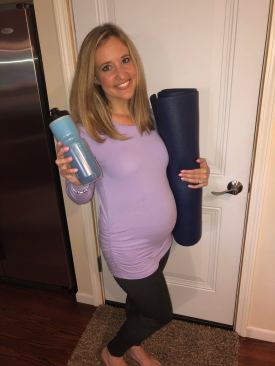
Both nourish my body. For as long as I can remember, I always shied away from doing yoga because I felt self-conscious and like I would make a fool out of myself as a beginner. I’ve always been the type to enjoy team sports, whether it’s playing soccer or basketball or going for a run. Up until this past summer, I never gave yoga much thought. After my first prenatal yoga class, I was hooked. I felt so much stress lift. As I cleared my mind of the day’s stress, I felt closer to my baby girl, connected on a different level. With each pose and each breathe, I’ve become better aware of what’s going on within my body. When you’re pregnant and doing yoga, it’s important to stay hydrated. It takes me a matter of seconds before I head out the door to class to mix my DripDrop ORS in my water bottle, so I have the peace of mind that I’m getting plenty of fluids for my body during and after class.

Both leave me feeling rejuvenated. Like many moms, I depend on a cup of coffee in the morning to jump start my day. Prenatal yoga and DripDrop make me feel energized in the best way, even with class late into the evening. The exercise and hydration boost my spirits and make me feel refreshed. yoga-mats-1620086Chasing around a toddler all day, while nearly 30 weeks pregnant, while battling Crohn’s disease is taxing. By taking time for myself and slowing down for a couple of hours of week, I’m setting myself up for success and optimal health.

Both make me feel like I am doing what’s best for me and for my baby. Living with chronic illness often comes with guilt for parents and spouses. Even when we’re feeling well and not flaring, we still can feel less than because our health is not up to par. We want to be everything to everyone. It can feel like a constant uphill climb with a ticking time-bomb on your back. Prenatal yoga and DripDrop help me to take a step back and focus on what’s important. It’s a time each week when I can focus solely on the miracle growing inside me. The class brings me comradery among other woman going through similar experiences and allows me to decompress and share my journey with pregnancy and Crohn’s. You quickly come to find out—each woman—no matter what their background has similar fears, concerns and thoughts.

Interested in learning more about DripDrop? Click here. Namaste, friends.

When I looked in her eyes, I saw myself

I recently met a 15-year-old girl who was diagnosed with Crohn’s disease. Like many parents of teens newly diagnosed with inflammatory bowel disease, her mom reached out to me for words of advice and comfort. It’s not too often that upon learning this news and connecting with families that I get to meet both the parent and teen in the same room, at the same time.

Maybe this can be chalked up to pregnancy hormones. Maybe it was because my heart hurt for her. It was probably both. But, I kept getting emotional looking at her and talking to her. My eyes welled up with tears because without her saying a word, I felt and could see her pain. In that moment, I felt like I had time traveled back to the first few months of my diagnosis.

I felt the loneliness and isolation she was feeling, even though she was in a roomful of people. I watched as we ate dinner and she quietly sauntered in the hallway, behind the kitchen table to make her way to the bathroom…more than six times in less than an hour. I listened as people questioned why she wasn’t eating…and told her to get ready for dessert. Her mom telling us as she was in the bathroom that she’d dropped four pounds in the last week and only had an Ensure to drink that day. I told everyone to stop talking about food and allow her to come into the kitchen when she felt ready. I remember all too well how it feels when people are watching you like a hawk, questioning every morsel you put down your throat. Food and the relationship we have with it while taking on IBD and navigating familial relationships and friendships can feel like psychological warfare.

She pulled her mom to the side after she overheard her telling me about her medical issues and told her not to tell anyone. I touched her arm and with tears in my eyes, I quietly told her I’ve had Crohn’s for more than 13 years…and that I understood how she felt. I pointed to my 18-month-old running around and to my baby bump and told her that if she wanted a family in her future, it was still possible, despite her disease.

Oftentimes, it can be difficult to connect with teenagers, because they seem guarded and are private about their disease. For many, it’s still a top-secret part of who they are. I get it. I took me nearly a decade to share that I had Crohn’s disease with the world. There’s no sense in rushing anybody. We all find the time that is right. We all know when we feel strong enough physically, mentally and emotionally to open ourselves up to questions, opinions and thoughts from those around us. It’s completely normal to want to keep others (especially strangers) at arm’s length, because during those impressionable young years, you don’t want to be seen as different. You know the moment you say, “I have IBD.”… it’s truly your reality. Your identity, how people view you…it’s all forever changed.

A message for parents

Parents—I know it must be SO difficult to feel like you’re on the outside looking in at your child in debilitating pain as they deal with the burden of a lifelong disease for which there is no cure. If this is a “new” disease to you and your family, you probably feel overwhelmed by all the information on the internet, what you’re hearing from specialists and what is best for your child. Lean on people like me, who live your child’s reality. Ask us the questions. Talk to us about how it feels. Equip yourself with knowledge and understanding so you can get acclimated to life with chronic disease in your family, just as your child needs to. It’s a learning process for every person in the family. Have patience. I know it sucks. I know there are times you just feel like screaming from the tallest mountain… “WHY IS THIS HAPPENING!!!???” I know you are reminiscing back to when life seemed so simple. When health was never in question. There’s no use in romanticizing the past.

You must embrace your new normal and be a pillar of strength for your child. If they see you waver, if they see you upset and frantic, that will directly impact how they feel. Communicate with your child and see if they’d like to talk with someone else who is living with Crohn’s disease or ulcerative colitis. If not now, maybe later. The IBD family is strong, resilient and welcoming…and we’re not going anywhere.


Celebrating a major patient victory: Citrate-free Humira

I still remember the first time I felt the pain. Sitting in my GI’s office with the nurse and my mom. Fresh out of the hospital after having an abscess the size of a tennis ball in my small intestine. Knowing I had to inject myself with a painful biologic drug, four times in a row, for the loading dose. The feeling when the medication entered my body was like nothing I had ever felt before. It was an unthinkable amount of pain. It was overwhelming knowing that for the rest of my life, I would endure this same pain, multiple times a month…with no end in sight.

Fast forward more than ten years later. A total of 122 months, hundreds of injections. My reality as a Crohn’s patient just changed. IMG_2966It changed in a way that I never knew was possible. I have so many flashbacks of my journey with Humira. The tears as I felt sickly in my 20s sitting alone in my apartment and wondering why me. The dread, anxiety and anticipation every other Monday and the strength I had to muster up within myself to once again receive my medication. Holding the injection in my hand, getting in the zone and focusing my thoughts on brave family members and friends as I held down the plum colored button and felt the burn. The sad look on my son’s face as he looked in my eyes and witnessed his mama hurting.

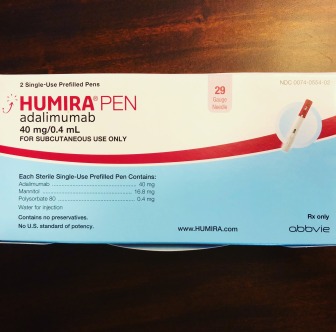
Now, all this is a distant memory. Thanks to the Citrate-free formula developed by AbbVie and approved for adults and pediatric patients in the United States, this reality is over. A matter of days ago, I experienced my first pain free Humira injection. I had heard all the hype and excitement around it, but it was so difficult to fathom such a change in my patient experience. Here’s a video of me experiencing my first Citrate-free injection:

I’m here to tell you it’s completely painless. Less pain than a blood draw. Less than a flu shot. You feel nothing. The process, effectiveness and outcome are the same, but you don’t feel anything. It’s emotional and overwhelming in the best way. I cried for a good half hour after my first one, happy tears. Tears of joy from a woman who now knows her children will never see their mom struggle in pain. Tears of joy from someone whose eternally grateful for a medication that keeps a painful and debilitating chronic illness at bay. Tears of joy knowing that I will never have to feel that awful pain again. A pain that’s too much to put into words, that was part of my life for so long.

The sun is shining a bit brighter today. I feel a load has been lifted off my shoulders that I didn’t even realize had been there for more than 10 years. When I heard about the Citrate-free formula being approved and available in the States, I was excited—but, didn’t realize the true extent of what a difference it would make in my life. joy-2483926_1920

If you’re on Humira and living in the States, make sure you talk with your GI and specialty pharmacy to ensure your script is changed to “Citrate-free”. The extra leg work will be so worth it. It brings me so much happiness to know that young children on Humira will never have to feel the pain. It gives me peace of mind as a chronic illness patient to know that developments like this in treatment are possible and happening right now.

My call of action to doctors, specialists, healthcare teams and specialty pharmacies—please communicate this with patients. I’ve heard from countless people around the United States who heard about this for the first time from me. That’s not the way it should be. My GI gave me a heads up three months ago.

Fellow patient advocates, please feel empowered to share what this means to you and reach out to your individual communities and support networks, so people can get the ball rolling and experience this for themselves. Our voices are strong, and word of mouth is powerful.

Humira was approved for Crohn’s in 2006. I started taking the injections in 2008. Now, it’s 2018 and patients in the United States have access to the Citrate-free (pain free) formula. What’s next? Now, we can truly continue to dream.

6 ways to get involved in the IBD community: Advice from a fellow Crohn’s advocate

Social media often gets a bad rap. But, oftentimes in the advocacy and chronic illness space, it’s an incredible connector. A few years back over Facebook, I came to know Linde Parcelslinde Linde graduated from my high school and later moved to St. Louis. She currently resides in Atlanta, where she works for the CDC and does Policy work for the division of lab sciences.

We’re 11 years apart by age, but share many of the same experiences as women who battle Crohn’s disease. We’re both passionate about using our voice to show others they are not alone in their IBD journey. This week—Linde talks about the importance of standing tall, owning your illness and getting involved in your community to make a difference.

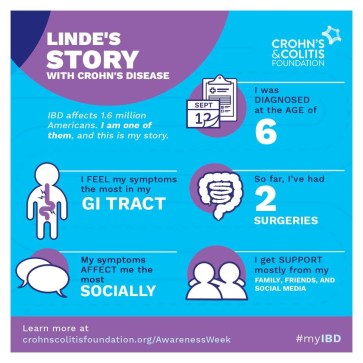
I was diagnosed with Crohn’s Disease at the age of six. Eighteen years ago, diagnosis was difficult for pediatric patients. After more than a year of tests and declining health, my family was given an answer and a lifelong commitment to caring for my Crohn’s Disease.

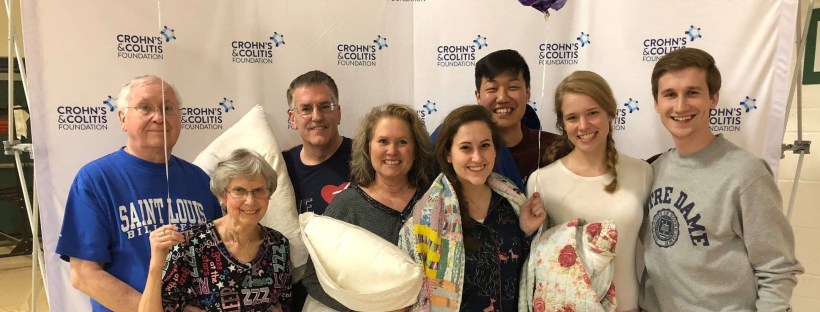
I’m 24 now. I just moved to a new city for my first full-time job. One of the first things I did when I moved was plug into the regional chapter of The Crohn’s and Colitis Foundation and see how I could get involved. Linde's story

I wasn’t always an advocate for Crohn’s and Colitis though. In fact, I never attended Camp Oasis because I wanted to go to “normal” camp where I wouldn’t be surrounded by reminders of my disease. I regret not experiencing Camp Oasis and making friends who “got me” when I was that age.

It took years to realize that sharing my story and spending time with people with inflammatory bowel disease (and their caregivers) could bring me so much peace, confidence, and ownership of every part of who I am, including how I was made.

Some people receive their diagnosis and jump into headfirst. They advocate fiercely for a cure any way they can. I’ve seen others resolve to live “normally” and spend many years outside of the IBD community, attempting to absorb the struggle and live their life without leaving a trace of disease.

With over 1.6 million people in the United States with IBD, and as one of the estimated 1 in 200 who have IBD, I would argue that with this diagnosis comes with a responsibility to advocate. For everyone with IBD, and selfishly for myself, I want better research. Better treatments. Better services. Better health.

And it’s not a lost cause.

Here are 6 things I’ve done to get involved that you can do too!

  1. Take Steps

These uplifting Crohn’s and Colitis Foundation charity walks happen throughout the year, all over the country. It’s a great way to rally your friends and family to take steps by your side to raise awareness and drive research.

2. Volunteer for fundraiser events through your regional Crohn’s and Colitis Foundation

I helped gather raffle baskets, advertise, and organize volunteers for the themed Trivia Night in St. Louis three years in a row with a great planning committee. I attended with my family and friends for the past three years!

3. Follow influencers on social media and leverage your own profiles to raise awareness!

Here are some of my favorite Instagram accounts to follow:

@CrohnsColitisFoundation (stay in the know)

@rockswithsass (crystals/mental wellness and proceeds go to The Foundation!)

@Natalieannhayden (of course!)–Thanks, Linde! 😉

@CrohnsCooking (recipes for IBD)

@ileostomy_crohn_princess (model and mom with an ileostomy)

4. You can be a listening ear or a venting pal –make your availability known if you’re comfortable with someone sharing your name with others who might want to talk. 

Some parents have referred me to their high school aged children with IBD or a friend of a friend. You can sit with someone during their Remicade treatment or Humira injection. A lot of college students and young professionals may not have family in town and it’s more tolerable with company. Try to be vulnerable. I openly talk about the realities of office life, dating, and farting, (yes, I just said all three of those things in one sentence).

5. Team Challenge! 

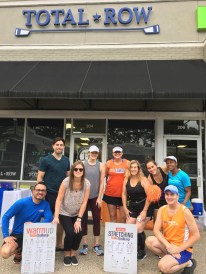
linde runI’m training for a half marathon and taking on the biggest fitness and fundraising goal of my life! I run every Saturday with Team Challenge ATL, they are the best!

You don’t have to raise thousands of dollars for research or share your most traumatic digestive adventure on social media…but for the sake of this community and for yourself, please own it. Own your patient journey in a way that furthers science and connects people. Because as much as I want to be your Crohn’s friend, I’d rather just be your friend 10 years from now.

You can connect with Linde on Instagram here: @thelindecity.

Linde is running the 2018 Savannah Rock N’ Roll Half Marathon November 3, for the Crohn’s and Colitis Foundation. She’s looking to raise $2,800. Click here to help her reach her goal!

Navigating IBD from age 12 to 22: How Emily landed her dream job at Disney

Navigating inflammatory bowel disease as a pediatric patient brings on additional stresses, concerns and worries. For 22-year-old Emily Gavol, this was the case. At 12 years old, she was diagnosed with Crohn’s disease. EMILY2This week, a look into her life and how she took on the disease as a preteen, went to college out of state and landed her dream job in California with Walt Disney, after growing up in Wisconsin. My hope is that Emily’s story of perseverance, brings comfort to parents and fellow children and teens experiencing IBD as their life story unfolds.

What was it like to be diagnosed with Crohn’s disease when you were in seventh grade?

Initially it was a relief to know that there was finally an answer as to why I had been so sick for months. But it was also difficult to hear that I was diagnosed with a chronic illness that I had never heard of before. Being so young I didn’t really full grasp the severity of being diagnosed with a chronic illness.

How do you think the disease impacted your childhood and your perspective on life?

Getting diagnosed so young forced me to grow up very quickly. I had to learn to manage my symptoms while still attending school, doing homework and other normal activities. My perspective on life also changed, it became clear to me that health is something to never take for granted and appreciate it while you have it. Along with realizing quickly that the little things in life are not important. While most of my friends were worried about what to wear to school, I was just hoping I would feel well enough to make it to school. Additionally, this disease has taught me that there are many things that are out of our control and you just have roll with it sometimes.

How did your family and friends handle your diagnosis and how have they been there for you throughout your patient journey?

My family and friends were always there for me to lean on during my diagnosis and have been ever since. EMILY3While I know that my parents were scared, confused and upset that I was going through this, they never let that show to me. They were and always have been the ones that lift me up when I am down, and never fail to stay by my side through all I have endured.

How did it feel to “fail” so many biologics?

Over my nearly 10 years with Crohn’s disease, I have struggled to find a medication that works for a continued period of time. When I first failed Remicade, it was frustrating because I had been getting better, then backtracked to experiencing more symptoms again. That frustration has continued and morphed into annoyance, as I have continued to fail more biologics. It is frustrating to feel like all these medications are being thrown at me to knock down this disease and nothing seems to work.

What inspired you to leave home and attend college in Minnesota, despite your illness?

Since I was nine years old, I knew that I wanted to become an Imagineer with the Walt Disney Company and work as an Interior Designer. As I got older, I knew I needed to attend a good school that would set me up for success. I researched the best programs in my area, and the University of Minnesota was the best fit for me.  Their program and campus seemed to be everything I was looking for, so I wasn’t going to let my Crohn’s disease stop me from trying to achieve my dream.

What’s it like to attend college away from home, while battling a chronic disease? What roadblocks/hard times did you face?

Attending a school so far from home without a doubt was a big challenge. EMILY4And there were times when I wished I would have decided to go to school closer to home, because that would have been easier. The biggest roadblock was the physical distance, because it meant a lot of back and forth travel. Especially, during flare ups. I found myself needing to make the 4-hour drive home more often than I wanted to, which resulted in the need to miss more classes.  Additionally, learning to manage my symptoms completely on my own and having to adequately communicate with my medical team from so far away, was challenging at first.

How do you overcome the setbacks that come your way and not allow them to de-rail your goals and plans?

I have always been a very determined and strong headed individual. I will always do my best to achieve my goals and not let anything stand in my way. Despite, all the setbacks my disease has thrown my way, I have just rolled with the punches and kept pushing forward. I do my best and my best is all I can do.

Talk about what it was like going through the ileostomy and knowing you are getting a permanent ileostomy? How do you feel about it–why kind of emotions does it bring?

Going through my transition of getting an ileostomy was the most difficult thing I have gone through as a result of my Crohn’s disease. 20171123_182143002_1534121126326My health took a drastic turn and it became clear that I would need an ostomy sooner rather than later. I initially was very scared and upset that this was happening. I didn’t know what an ostomy was or anyone that had one, so I had little idea of what to expect going into it. By the time I was a couple weeks away from surgery, I was honestly ready to have it done.  I had been experiencing more symptoms and was ready to have the surgery behind me and be feeling better. I was doing my best to go into things with a positive outlook and think about it as a fresh start, but this was no easy task for me. It was an overwhelming and emotional couple of weeks following the surgery getting used to having and caring for an ostomy. I am not afraid to admit that I was scared to look at it and care for it myself after my surgery. But then I realized, this isn’t going to go away anytime soon, so I had to start doing things myself. The more familiar I became with everything, the more comfortable I was and began to realize that I was actually feeling better than before the surgery. This was hard for me to admit to myself, because I didn’t want to be put in the situation of having an ostomy or needing one for the rest of my life.  While I am now on the road to needing a permanent ostomy, it still has not sunk in that it will actually happen yet. And I don’t think it is going to fully sink in until that surgery happens.

You landed your dream job post college. Speak to what it’s like to live across the country, away from family and friends–while living out your dream job…with Crohn’s.

I am literally living out my biggest dream. EMILY5This is something that I never thought I would get to experience, and I think having Crohn’s has made me appreciate this opportunity more than I could ever imagine. The last year has been a wild roller coaster ride. I am just thankful to be here, because there were many times where I didn’t think I would even be able to graduate last year. My family and friends have been very supportive because they know how much this opportunity means for me personally and professionally. It is hard to be this far away from my main support system, but they are always just a text or phone call away. Additionally, my providers were very encouraging to me, pushing me to continue to live my life to the fullest and not let my disease slow me down. Hearing them say that to me, was really the last push that I needed to make this a reality. Knowing that my medical team wanted what was best for me, and was willing to work with me to get me where I am today, helped give me the confidence that I could do this.

Do your coworkers/did your college roommates know about your Crohn’s? How are people towards you when they hear?

In college I deliberately chose to live on my own with no roommates in order to give myself the best environment to thrive in.  Over the past few years of having different jobs, I have told my coworkers about my Crohn’s disease. I don’t usually share it right away, because I want people to get to know me for me and not just my disease.  When the time feels right, I do tell people about my Crohn’s disease. After I tell people about my Crohn’s, I always feel like a weight is lifted off me. Once people know my story, they have been as sympathetic as they can be.  There always seems to be the range of people who know a friend that has it, to the people that have never heard of it before. For those who have never heard of it before, it is a good opportunity to teach them about it.

What are your hopes for the future?

My biggest hope for the future is an easy one, a cure for this disease.  Aside from that, I hope I can continue to live my life and do my best to not let my disease stand in the way.

Advice for newly diagnosed patients?

My advice for newly diagnosed patients would be to find a good provider that you trust.  20130923_135906001_1534122952628It is important to trust their advice and recommendations, as scary as they can be sometimes. Additionally, try your best to not dwell on the negative things that are currently happening and think about what your future can hold. Always do your best to roll with the punches and keep moving forward, your best is all you can do.

What would you tell yourself at 12 years old…looking back at what you know now?

I would go back and tell myself that this is only the beginning.  Life will be a never-ending roller coaster of ups and downs. Some of the downs will really take it out of you and knock you so far down you won’t think you will be able to find a way back up.  And the some of the ups will be achievements you never thought were obtainable. But things will get better and there is always something better to look forward to right around the corner.

 

When life hands you lemons: Brittany’s story of resilience while battling Crohn’s

Imagine being hospitalized with a Crohn’s disease flare. Now, close your eyes and picture yourself in Germany, surrounded by doctors and nurses who don’t speak English. Brittany7You have your husband and children, but other than that…all your family and friends are thousands of miles overseas. That was the case for my college friend, Brittany Cable. Brittany was diagnosed with Crohn’s in 2007, about a year after she had her oldest son.

It’s one thing to take on IBD and be surrounded by family and friends who you can lean on for support, it’s an entirely different situation when you have to take on your disease in a foreign place, with nowhere to turn. Luckily, Brittany is now back in the States, with a strong support system nearby.

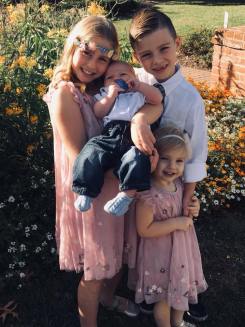
As an IBD mom, Brittany flared after all three of her pregnancies. While she was pregnant, her disease was well-controlled. She was able to bring three, beautiful, healthy babies into this world—despite her own health issues. brittany

Throughout her patient journey these past 11 years, Brittany has been on Asacol, Lialda, Uceris, Humira and Entyvio. The prednisone bursts and tapers have been difficult—to say the least. At one point, she was on 80 mg a day! To anyone who has been on prednisone, you know that’s a monster amount. After my initial diagnosis, I was on 60 mg for three months, so I can attest firsthand about how much of a struggle that presents due to all the side effects.

Brittany is a super-mom in every sense of the word. She’s now a single mom, raising three children, as she takes on Crohn’s. She works full time and has full custody of her children. She does this all alone. I’ve known Brittany for 16 years. She’s always been a super strong person with a great sense of humor. Brittany3Despite the hardships and heartbreak through her life, she’s never allowed the difficult moments to dull her spirit. She tells it like it is and isn’t ever shy when it comes to sharing her story. I’ve always admired that about her.
As Brittany says, the constant fatigue, body and joint aches are what she struggles with the most now. Every day after work, she is tired and wants to crawl in bed, but she knows her kids depend on her and need her. She knows dinner needs to be made and soccer, swimming and other activities have to be attended. It’s one thing to be a single mom and have your health—I can’t imagine living her reality and doing it all on her own. But she does. And her kids have thrived because of her herculean efforts to be there and be present, every single hour, of every single day.

So how does she do it? Brittany says, “When I think about my journey so far, I figure if I made it through having three kids, living in a foreign country and my husband leaving… all while managing Crohn’s disease, there isn’t any thing I can’t do. Every time I get a stomachache, I still fear that something horrible is about to happen, but I think that’s normal for all of us on this journey. So I take everything that comes my way one day at a time. My children will not suffer if I don’t make a home cooked meal every night. Sandwiches or pizza are okay!”brittany2

When Brittany’s husband left her and their children, she was sure the stress and drama of it all was going to throw her disease in a tailspin. But it didn’t! Instead, the hardship has empowered her to trust in her faith and seek counseling. She chooses to tell herself everyday that she is stronger than her disease and even if it attacks again, she knows she will get through it. And I know she will, too. Because that’s Brittany.

To the person who doesn’t want to see me smile as I battle Crohn’s

Today marks my 13th anniversary with Crohn’s disease. Lights, Camera, Crohn’s: An Unobstructed View, is two years old today! It’s a big day. Lots of reflection and bittersweet emotions. It’s always difficult to know how to handle an anniversary of a chronic illness diagnosis—is it a celebration? Is it a remembrance of what was? Is it all the above? For me, I like to think about how far I’ve come since July 23, 2005. How my perception of life, people and my own personal strength has grown, changed and evolved, thanks to my disease.

Since I started sharing my story in 2014 as a patient advocate, I’ve really put myself out there. I’ve been vulnerable, honest and haven’t minced my words. I’ve been fortunate to have speaking opportunities, videos, conferences and feature stories. While that is all wonderful—it also puts you in a space and a place where complete strangers—who have no idea what you’ve endured, can pass judgement and make claims about how you choose to take on your illness.

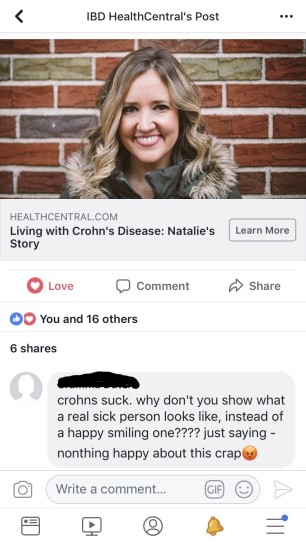
This past week—I was surprised by a comment on Facebook, written on an article by Health Central that highlighted my patient story. Like many people on social media, rather than read the article—they reply to the title or the pulled quote in the caption. Reader CommentThe featured image from the story is one of me smiling outside my home. The comment on the article: “Crohn’s sucks. Why don’t you show what a real sick person looks like, instead of a happy smiling one???? Just saying—nothing happy about this crap.”
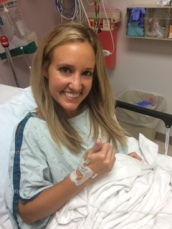
This really took me aback. This felt like a slap in the face. This comment hurt me. Obviously, she didn’t read the article or she would have known about all my hospitalizations, surgery, and rollercoaster of a journey. But to flat-out judge a fellow patient who lives with this debilitating disease and demean me for having a positive attitude…and smiling (God forbid!). If it weren’t for my attitude and the way I approach my Crohn’s disease, I never would have accomplished my dreams of being a television news anchor. I never would have trusted a man with my heart and gotten married. I never would have become a mother and gotten pregnant again.

If there’s anything I’ve wanted you to take away from my blog and my journey, it’s about finding the power of positivity in your experiences and seeking the good that still exists in your life, despite your disease. If you want to think woe is me and suffer all day long on the couch…that will be your life. image1 (13)If you choose to smile and show Crohn’s who’s boss, than no matter what obstacles and setbacks come your way you’ll tackle them and fight through flares with a knowingness that better days are ahead.
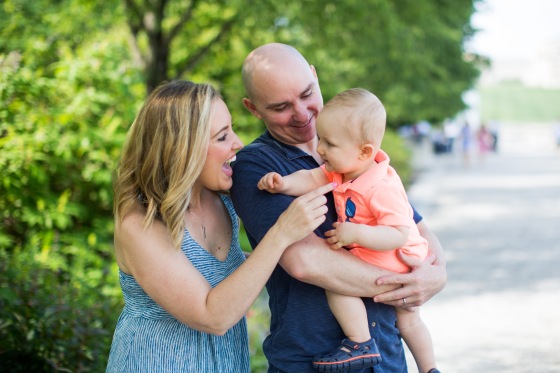
As a patient advocate—I know I can’t please everyone. I know not everything I say will resonate with you. And that’s completely fine. All I ask is that you have an open mind and understand that each person chooses to take on this terrible disease how they want to and shouldn’t be called out for it. My life is not all about hospitals, IVs, pain and suffering. Yes, this past week my injection hurt so badly I was sobbing hysterically and yes my stomach was killing me while out to dinner. But you know what, those moments passed. Rather than allow my pain to rob me of a wonderful conversation with a friend—I stayed at the restaurant. Instead of wallowing in the pain of my injection and the bruise that remains days later, I had a bowl of ice cream and gave my 16-month-old a few extra high fives. _F6B3268

So, to whoever decided to try and belittle me on the article about my patient journey and look down on me for smiling, please know I am a real person…and I am sick. But sick doesn’t come first when I think of who I am. It’s a part of me. It’s not all of me. That’s how it will always be, no matter what. And one thing I can promise you—now and in the future, it will never stop me from smiling.


Why July, my Crohn’s and I don’t mesh

Oh, July. We meet again. Each and every year I dread you. For some reason, you like to throw me curve balls—time and time again. From my diagnosis of Crohn’s, to that tennis ball size abscess, to starting Humira, and to the bowel obstruction that resulted in 18 inches of my intestine being removed. The month of July and I just haven’t meshed well since 2005.

Do you ever feel like certain times of the year, months or seasons tend to trigger your symptoms? natalieandreidI don’t know what it is about July, but that’s always been my danger zone. I always breathe a sigh of relief when August begins. Call me superstitious, but prior to getting married, I knew I could never have my wedding this month nor would I want to welcome a baby into the world. I have July’s number.

Keeping those difficult moments in the past and not allowing them to seep into my daily thoughts can be a struggle this time of year. I’ve always been one to reminisce and think about memories and experiences. I have a reputation for having a mind like a steel trap. Ask me what I was wearing, where we first met, when your birthday is…I could probably tell you the information without having to do much thinking. Sometimes that’s a nice trait to have, but it can also be detrimental. The difficult July moments in my past still feels so fresh, despite the years that have ticked by.

So how do we get passed the past? It can be easier said than done. But, here’s what I do to cope:

Get out of your head

Sure, my Crohn’s has wreaked havoc on multiple occasions during the month of July—but, out of the last 13 years I’ve also had nine good Julys. It’s easy to fall back and focus on the negative, try and think about the times your body has surprised you in a good way. If you stress and worry about the unknown that will only increase your likelihood for experiencing painful symptoms.

Be proactive

If you are noticing your disease is spiraling out of control, remedy-nsmith-stlouis-1284nip it in the bud. Don’t try and be a superhero and take on a flare yourself or fail to communicate to those around you. You and I both know exactly how it feels when a trip to the hospital is a must. Delaying the inevitable will only add insult to injury. Stay on top of maintenance medication, vitamins, exercise and sleep.

Try to place more emphasis on self-care

If there’s a pesky month or time of year be selfish and do what you need to take care of you. Does walking outside in nature help you clear your mind? Do you enjoy taking an Epsom salt bath? Reading a book by the pool? Do whatever brings you a sense of calm. Your body and mind will thank you for it.

Taking on IBD one step at a time: Getting empowered through Team Challenge

One of the many benefits of getting involved with the Crohn’s and Colitis Foundation is finding people locally who understand and live your reality. I became friends with a woman named Angie last year. facebook_1529431731870She’s a resilient person with a positive attitude. Her energy is contagious. This week, a guest post about her involvement with Team Challenge and how it’s enabled her to find community not just in St. Louis, but throughout the United States. I’ll allow Angie to take it away…
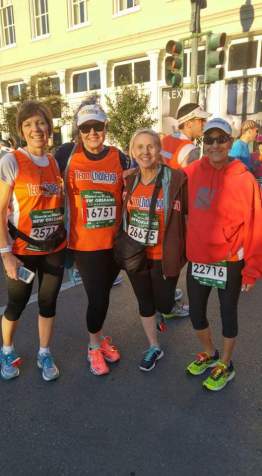
My journey began with inflammatory bowel disease began in April 2011. For me, symptoms went from non-existent to emergency surgery within a month of first waking up with cramps and diarrhea. I had been a healthy active person up to that point and I was a month shy of my 46th birthday.

I was first diagnosed with ulcerative colitis, but that diagnosis was later changed to Crohn’s disease. Due to reoccurring abscesses, my GI doctor ordered some additional tests that showed I have Crohn’s. When I was first diagnosed with IBD, I had never heard of Crohn’s disease. There was so much to learn and absorb, but I was so sick, it was hard to take it all in. My emergency surgery resulted in a total colectomy. I had a perforated bowel in 4 places. Once the surgeon opened me up, he discovered things were much worse than he expected and I had sepsis. Those early days in the hospital were hard, but I was committed to staying positive and hopeful.

One of my favorite ways to stay active had always been power walking. If I could walk somewhere vs getting in my car and driving there, that was my path of least resistance. So, getting to a point where I felt well enough to get back to exercising was a goal of mine. Ironically when I first asked my doctor when he thought I’d be well enough to power walk again, he recommend I not walk too far because he knew I’d probably need to use the restroom. In those first couple years living with Crohn’s, I was taking 20+ pills a day and probably using the restroom 30+ times a day. I was fragile and got short winded quickly, even walking to the corner in my neighborhood was a challenge.  I stayed hopeful that brighter days were ahead. I was very fortunate to have a very supportive group of friends and family around me.

Fast forward to the fall of 2015. I was feeling much stronger since being on Humira for about a year. facebook_1529431766690I saw a post on Facebook about Team Challenge and an upcoming Rock and Roll Marathon and Half Marathon that was taking place in February 2016 in New Orleans. I didn’t hesitate to sign up and commit to doing a Half Marathon and fundraising to find a cure for Crohn’s & Colitis. Almost immediately, one of my childhood girlfriends decided she was going to do the Half with me and she too joined Team Challenge. I’m not sure we knew what we were getting into, but we were 100 percent committed. Two ladies, soon to be 50, and neither had even done a 10K, let alone a Half Marathon! In full disclosure, we always knew we were going to walk, not run the Half. We might be crazy, but as they say, we were only “Half Crazy”!

Team Challenge has been one of the best decisions of my life. It has been a truly life changing experience. I am about to start training for my third Team Challenge race taking place in November in Savannah, GA. Team Challenge is a few hundred people who share one common goal, which is to find a cure for IBD. Once you sign up, you commit to a fundraising goal, but Team Challenge provides the coaching and training to not only complete the race, but to reach your goal and have fun along the way.

Race weekend is amazing! There are opportunities throughout the weekend to meet with your individual team, as well as the entire Team Challenge family. The night before the race there is an inspirational pasta dinner.

The evening is filled with tears of joy and we celebrate our combined mission of finding a cure. Some are parents running or walking for a child, some are friends and family running in memory of a loved one lost, and some are like me – a Crohn’s patient determined to not let Crohn’s hijack her life!

My advice to anyone looking to feel empowered against IBD would be to get involved with Team Challenge. I have made so many new friends and I’ve gained so much confidence through my involvement. I guarantee you’ll leave race weekend with a feeling of accomplishment and you’ll feel the love from the Team Challenge tribe that is now an extended family and support system of your own.

Click here to learn more about how you can get involved with Team Challenge.

An ode to Dads: A letter from a father of four with IBD

I’d like to give a shout out to all the dads out there who have inflammatory bowel disease, yet persistently persevere to make life happen. christian3  

I have been dealing with UC/Crohn’s for 18 years now, and in that time, I have had seven surgeries, countless procedures, two near death experiences, my colon removed, a j-pouch, my ego scared, and my relationship with God strengthened.  I’ve tried every prescription drug, had every side effect, and continue to fight the good fight on a daily basis. christianI’ve also been blessed with a beautiful wife and life partner, as well as four amazing children (10, 7, 3, and 9 months). This takes an already difficult situation, and adds more “life” responsibility as well.  

You see, as a father, you place the needs of your family and children above your own.  A father doesn’t really get a day off. And when you’re dealing with health issues that can cause daily battles, it’s easy to find yourself in a place of self-pity, weakness, or doubt.  That’s why I’m absolutely amazed to see the strength of all the dads out there that can deal with this struggle, but continue to be a dad first, push through, and ensure that “life” still happens. You see, Crohn’s doesn’t mean you can miss baseball practice, the soccer game, the anniversary dinner, or just “life” in general. Life will go on with or without you, so all those with chronic illness are heroes in my mind.   In fact, being a father of four has been the most motivating and rewarding things we could have done as a family. christian2

I can remember when I was recovering from one of my more recent surgeries, my family came in to visit me in the hospital.  Like most fathers, I felt the need to provide for my family, get back to work, I just had to get going. I just didn’t have time for this!  There are MORE than enough reasons for everyone impacted by IBD to feel defeated, want to give up, or take an easy route. My family is a CONSTANT motivation for me to keep going and keep fighting the fight. I cannot and will not let them down. I think most fathers feel that way. We are here to help shape our children, and ultimately provide the ability to learn, have fun, be kids, and eventually mold them into productive members of society.  It’s a tall order for us all, but I think men with IBD have learned to be persistent with their health battles, and that also helps us to persevere through the trials and tribulations of fatherhood.

So today and every day, I commend all of those fathers who refuse to let their disease dictate their life.christian4 Take the time to get to know a father with IBD, and you will meet one of the most courageous strong willed people in the community. As a man, we can sometimes let ourselves down because as an individual, it just impacts me. But as a father, that is not an option.  We must persist, have faith, and fight the fights every single day, so that we can continue to mold and shape our children, and provide support and guidance for our families that mean absolutely everything to us.  

We are motivated, we are strong, and we have IBD.  Above everything else though, we are blessed to be a father, and if lucky enough, a dad.