
When Chicago Bear standout rookie wide receiver, Anthony Miller laces up his cleats to take on the Los Angeles Rams this Sunday, his cleats will tell a story. A story many may not be aware of. Anthony’s longtime girlfriend, Alexandra Pounders, has battled Crohn’s disease for nearly 10 years. She was diagnosed at age 14. 
This Sunday (Dec. 9), Anthony will participate in the NFL’s My Cause My Cleats campaign, as a way to spread awareness for inflammatory bowel disease (IBD) and show support to his girlfriend. Anthony’s cleats will feature the Crohn’s and Colitis Foundation.
“Being able to bring awareness about IBD through football means a lot to me. When I wear these cleats against the Rams, I’m not only going to be representing my girlfriend Alexandra, but also the millions of people across the globe who suffer from this disease,” said Anthony.
This is the third year for the My Cause for Cleats effort. It’s a way for NFL players to take steps to visually show their support for causes near and dear to their hearts. Anthony and Alexandra have been together almost five years. Alexandra says Anthony has been there for her every step of the way, whether it’s attending doctor visits or motivating her to stay strong during setbacks.
“It feels amazing to know there is someone by my side who cares so much for me that they want to spread awareness about this illness.  Anthony has seen me fight for so long. It makes me feel like I’m not going through this alone,” said Alexandra.
“We are thrilled to see several NFL players, including Anthony Miller, raise awareness of Crohn’s and colitis through this year’s My Cause My Cleats campaign,” said Michael Osso, President & CEO of the Crohn’s & Colitis Foundation. “More than 3 million Americans live with these diseases, and, like Anthony, even more are touched by them as loved ones of patients. Using their platform as professional athletes to speak out about Crohn’s and colitis not only helps educate the public about the seriousness of these diseases but also underscores how wide-reaching these diseases are and how important it is to have the support of loved ones.”
Alexandra’s advice to the IBD community is to put your personal needs first and try to keep stress to a minimum, while accepting support from others.
“Surround yourself amongst people who may not completely know what it feels like to be in your shoes, but people who are willing to be patient with you and love you on the days that aren’t so great. Focus on being the best possible you that you can be in every aspect…mentally, physically, emotionally and surround yourself amongst people who truly care about you, it’ll be so much easier to overcome the obstacles you face with this disease. Stay positive. Hold on tightly to your faith. And don’t let this disease define you,” said Alexandra.
Chicago is my hometown and where the majority of my family lives. As a Bears fan and as a Crohn’s disease patient advocate who was diagnosed in July 2005, seeing professional football players put causes like the Crohn’s and Colitis Foundation in the spotlight means a great deal. Check out the #mycausemycleats hashtag on social media to learn more about the cause.


 Chronic illness, while physically, mentally and emotionally taxing, also has the ability to show us the beauty of the world around us and all that we’re capable of. Instead of thinking how my Crohn’s holds me back—I think about how I’ve lived despite its restraints.
 My disease has helped me take on motherhood. It’s made me soak in the feel-good moments, take mental snapshots of the happy days and celebrate the beauty of life. My disease has forced me to press pause when I’m doing too much, it’s reminded me of the importance of self-care and taking time for me. It’s shown me which people are meant to be in my life and which are meant to be in the backstory.
 Try having a flare during the worst natural disaster in the history of your country. It happened to me. I survived.
 One morning I decided to stop in my GI’s office. He had lost the A/C unit and the office was flooded during the storm. He ordered some labs, an emergency colonoscopy and a few days of rest. I was anxious, exhausted, scared. After the colonoscopy, I was prescribed prednisone for a month and then started Humira.
 I hope my experience sheds light on what it’s like for those in the chronic illness community as they endure the repercussions of natural disasters. It’s a critical conversation that needs to happen—preparedness for the IBD community in the face of weather disasters. How can employers, government and society step up to the plate?
 Sickness and health truly take on a whole different meaning when you live with a chronic illness. Katy witnessed her husband Vince’s compassion and character while they were dating.
 “Operation: Good Health.” She made it a priority to get a minimum of eight hours of sleep a night, as lack of rest tends to be a trigger for her. She was on a mission to hydrate, hydrate and hydrate some more. To set herself up for success and limit any surprise flares, she planned out her meals the entire wedding weekend. For example, she does well with bland foods, like noodles, rice, chicken and (big one) avoiding alcohol. And finally, she delegated responsibilities (aka stress) to friends and family. Katy admits she’s pretty Type A and would much rather do things herself than hand them off. However, she wanted to enjoy her wedding and because of her proactive planning, she was able to do just that!
 Reagan, Grayson and Carter may not understand why their mommy is in bed or why she needs to pull over on the side of the road when she gets sick, but Katy’s Crohn’s has taught her children a great deal of empathy at a young age. A few weeks ago, she was in debilitating pain and her nine-year-old offered to make dinner for her brothers. She poured them each a bowl of cereal and that was everything.

 Currently, many patients and caregivers struggle to inject medications correctly, which means patients don’t always receive their full dose of medication. This can lead to symptoms worsening and a greater threat of a flare up.
 There’s also an online study—available to anyone in the United States—going on right now for those living with an immune system or digestive system condition. You can earn $15 for a 15-minute, online survey.
 While I feel incredibly blessed to be in this position, it comes with its own unique set of worries.
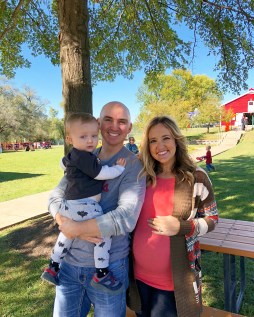 They will live within a home that talks about chronic illness and experiences it each day. Your little ones will learn compassion and perspective before they are even able to truly communicate. If you have a child and chronic illness, you know what I mean.
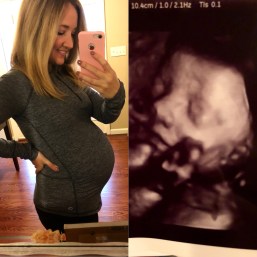 Whether it’s with motherhood or with living life with Crohn’s, it’s important to remind yourself that everything goes through stages. There are highs and lows, but each moment is fleeting.
 She’s a ball of energy and a sweet little chatter box, wise beyond her years. Seven-year-old Brooke, of Missouri, was diagnosed seven months ago with Crohn’s disease. She spiked a fever on New Year’s Eve 2017 that lasted for eight days, and from that point forward, life was never the same.
 Brooke and her family were told she had Crohn’s disease on March 2, 2018. In a matter of months, she went from being an outgoing, energetic kid to a hospital patient on a laundry list of medications. She developed her first fistula while on methotrexate and was on prednisone for more than three months.
 d we do something to cause this? Were we making the right decisions for her treatment and care? Brooke has a HUGE personality. When she was first sick, and before her diagnosis, she just stopped talking. She would lie on the couch for hours and hours every day. This was not my Brooke. She normally can’t sit still for more than a few minutes! I was SO scared because I knew something wasn’t right. Watching her in pain and miserable for two months while we waited on this diagnosis was miserable. You just feel helpless…all we could do was love her and pray,” said Tara.
 When you’re going through this, you are spread so thin and it’s difficult to ask for help. We have another daughter, Haley, who is 10. Of course, when Brooke was in the hospital, either Josh or I were with her every minute. We live over an hour from Children’s Hospital in St. Louis, so it wasn’t possible to pop up for a quick visit. It was also hard for us to ask for support. We needed help mentally, financially, and logistically with many things. We have an AMAZING support system of family and friends who have helped us throughout this process.”
 Although I know she doesn’t know yet, what it really means to have Crohn’s, I am always so amazed by her strength. She talks about it very ‘matter-of-factly’. It doesn’t define her. I hope and pray constantly that anything that I encounter, I can deal with, the way she has dealt with this. It’s made our family stronger by seeing that we can face this together.”
 has worked in the life insurance special risk marketplace for more than 30 years. He specializes in helping those with pre-existing conditions, such as Crohn’s disease and ulcerative colitis. While he’s not able to represent everyone, he works closely with companies who underwrite conditions such as IBD the most favorably.
 Insurance can be confusing—no matter what type you’re dealing with. Some of the most common misconceptions with life insurance protection are that it’s too expensive, too complicated and that conditions such as IBD are not insurable. This is simply not the case.
 This Friday, I’ll be 27 weeks complete with my baby girl. My January due date is quickly approaching. Time is going both fast and slow. For the most part, my Crohn’s has behaved itself. But, there have been multiple times where I can’t seem to decipher if what I’m feeling is related to pregnancy aches and pains or my IBD. The burning and gnawing feeling in my abdomen often feels so reminiscent of the beginning of a bowel obstruction that I can’t help but fear the worst.
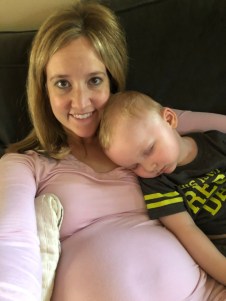 It’s difficult because every single pregnancy is different and so is every single person’s IBD. My OB tells me that with a contraction the pain will come and go, and I’ll be able to see a pattern and time it, whereas Crohn’s pain will be constant.
 My advice to myself and to all of you who may be dealing with these same fears and thoughts is to listen to your body. Be mindful of when you hurt, why you may be in pain and how often it’s taking place. Don’t turn a blind eye to your aches and don’t feel like a bother to your GI or OB. Reach out to your healthcare team and alert them when you have a concern, so they are aware of what’s going on. This is not a time to internalize your pain. This is a time to be vocal, be your own best advocate and start being the strong IBD mama that you are for your unborn child.
 lights camera crohn's