Self-love. Self-care. These phrases tend to be thrown around quite often these days. At times they just sound like trendy buzzwords. But, they are important topics nonetheless.
Do you ever pause during your day-to-day routine and think about how you’re really doing—physically, psychologically and emotionally? When you live with a chronic illness like Crohn’s disease, taking time to honor all that you do to merely function and keep up with the general population is worth recognizing.
 It’s not easy to be in constant battle with your body. It’s a challenge to feel pain often. It’s exhausting to always have a worry and a wonder in the back of your mind about how you’re going to navigate and overcome the next hurdle or setback thrown your way. This is why self-love is so important.
So, here’s my call of action to you. Rather than focus on all we’re unable to do or all that we struggle to do, it’s time we celebrate and recognize everything we CAN do. We are so much more than patients. We are people. It’s easy to wish about a life of perfect health, but despite how my disease has ravaged my small intestine and led to pain elsewhere in my body—whether it’s in my joints or from the osteoporosis in my back—I still manage to get up each day and live a very full life, with a perspective I never would have gained without this journey.
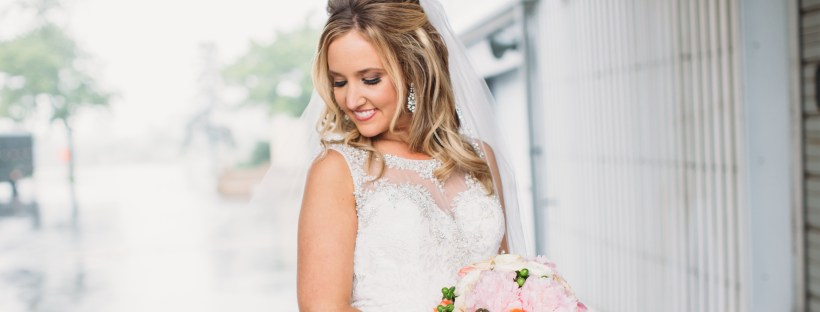
 Since being diagnosed, this body of mine has still served me well. I managed to work full-time and live out my dream of working in television for the first ten years I had Crohn’s. I trained for and ran in 5ks, 10ks, 15ks and a half-marathon. I felt completely healthy and on top of the world on my wedding day (didn’t have one bathroom break!). My body was a safe haven for my children throughout pregnancy and allowed me to bring a healthy son and daughter into this world.
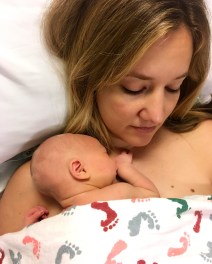
It’s those “accomplishments”, those big “wins” I choose to focus on. It’s the moments when I felt like my peers. It’s the times Crohn’s wasn’t top of mind and I felt like everyone else. 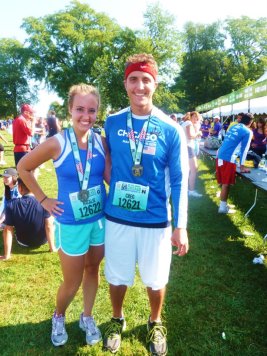 It’s when I felt invincible if only for a moment, whether it was crossing the finish line or holding my babies on my chest for the first time. It’s the victories along the way that help me push through on the difficult days and through the flares. Because while those times push me to the brink of breaking, I tell myself there’s only one option—and that’s to bounce back.
I’ve been that girl staring in the mirror wondering ‘why me’. I’ve been that girl with tears falling onto my thighs as I sat on the toilet hating that I had this dreadful disease. I’ve stood in the shower and watched the water hit my resection wounds and felt ashamed that my body was no longer scar-free. I’ve been all those things—but as the years go on and as my diagnosis days get further and further in the rearview mirror, that girl who wondered ‘why me’ is becoming a distant memory. That girl is now a woman, a mother, a wife and so much more. Crohn’s is a part of who I am, but it’s far from my identity.
By altering your outlook and your perspective and loving the person you are and the body you have—despite the physical and emotional scars left behind from past battles—you open yourself up to self-love.  Pat yourself on the back for all the steps you’ve taken to rise up. Smile through the tears with the confidence in knowing you will get through this—one day, sometimes one hour at a time.
It’s ok to have bad days. It’s ok to struggle. That’s all part of it. Just make sure you give some extra care, love and attention to the person you see looking back in the mirror. You’ve been through a lot. And you’re still here. Fighting. Living. Breathing. Now all you have to do is believe in your strength and love yourself for your resilience.

 Family planning is exciting, nerve-wracking, and daunting. Couple those emotions with battling inflammatory bowel disease (IBD) and the experience can be downright overwhelming. The tide is changing though when it comes to pregnancy and IBD, thanks to the
 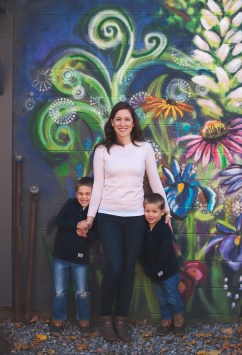 With two sons, ages six and three, she felt even more in the dark during her preconception discussions and pregnancies.
 “The IBD Parenthood Project is a huge win for the IBD community. This resource is paving the way for how we work together with our clinical team. This is a proud moment for the IBD family. We’re showing the health community how to work collaboratively with patients,” explained Jessica. “I never want women to feel alone in the process. This initiative empowers IBD women and their support systems, and makes the experience of bringing a life into this world a whole lot more enjoyable and a lot less worrisome.”
 Upon delivering both of my babies, I felt symptoms start to creep back into my life less than a week after they were born. I too would include an MFM specialist in the future, if I were to have another child.
 My daughter is 4 weeks old today and has been exclusively breastfed. I’m by no means writing this as an expert or to point any fingers. I am completely of the mindset that ‘fed is best’. No judgement here, ladies.
  I was worried about the lack of long-term studies on my biologic drug (Humira) and I was concerned about the risk of having a postpartum flare that would land me in the hospital and interrupt my ability to feed him. Being a new mom, I was worried the stress that comes along with breastfeeding could cause me to flare. I ended up breastfeeding him the first three days in the hospital, so that he could receive the colostrum. After that—he was given formula until he turned one. It’s a decision I was confident in, but that tugs at my heartstrings at times, especially now as I breastfeed his sister.
 According to
 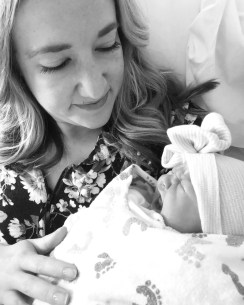 That way—the baby did not receive a burst of the immune-suppressant drug through the placenta, the day she was entering the world and I would be at lower risk of developing an infection as well. Timing your biologic medication is key and a conversation you’ll want to have with your care team so it can be tailored to your pregnancy and your personal journey.


 When it comes to breastfeeding as IBD moms, whether a child is going to latch or if our milk supply is going to be sufficient, tends to be the least of our worries. Our chronic health condition, plus the medications so many of us are dependent on to treat them—adds another layer of stress. In the end, you need to do what you feel comfortable with, what works for your body and for your family. Always know you are not alone in your struggles. Celebrate the parenting wins and accomplishments along the way—no matter how big or small. Lean on your support system—especially fellow breastfeeding mamas who can answer your questions and calm your fears. I can’t tell you how long I’ll continue my breastfeeding journey. For now—all I can do is take it one day at a time. What I can tell you—is how rewarding it is to see what my body is capable of, despite my disease and how amazing it feels to know I’m nourishing my little girl and providing her with a healthy start.


 It was a brisk January morning. Tears filled my eyes as I was overcome with emotion. Our rainbow baby is here, safe and sound. Another pregnancy behind me, a pregnancy that silenced my Crohn’s disease and provided sweet reprieve from my chronic illness. It was time to take Sophia home and start our life as a family of four.
 Each time I have a procedure or deal with painful symptoms, I see their faces, I say their names in my head, and it brings me a sense of calm. My goal when Reid was born, was to stay out of the hospital until he could walk, luckily that’s been the case. He’ll be two in March. Now, I have that same goal following the arrival of my daughter.
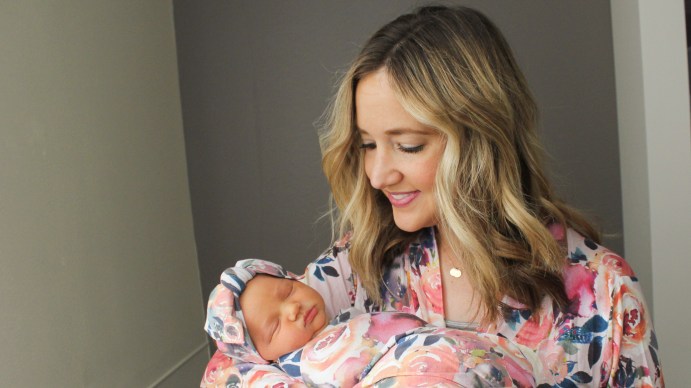 Motherhood and IBD can be a difficult and challenging balance. Some days the fatigue and symptoms are so debilitating you feel like you’re falling short. At the same time, the days where you’re feeling well, remind you that you are so much more than your disease. Just because you have a chronic illness, doesn’t mean you are robbed of experiencing the beauty of life and what it feels like to have your very own family.
 It all starts with recognizing where you are in your patient journey and then determining when your symptoms and body are in the best shape to get pregnant. While everyone’s disease experience is different—the worries, concerns and fears associated with parenting and chronic illness are often the same. Always know you are never alone. Communicating these feelings with those around you, makes all the difference. Lean on our patient community and all those who’ve lived your reality.
 When Sophia Shea entered the world January 14, 2019, our family received a wonderful gift. Between our son Reid and our baby girl, we could not be more blessed. My chronic illness has given me such an appreciation for health and for life in general. With the pregnancies behind me, I often reflect on where I started back at age 21 in 2005. At that time, in my eyes, I was Natalie and I had Crohn’s disease. There was no telling what my future would hold. Now, nearly 14 years later, at age 35, I’m so much more. I’m a mom to two under two. I’m a wife. I’m a daughter. I’m a sister. I’m an aunt. I’m a friend. And I also have Crohn’s.
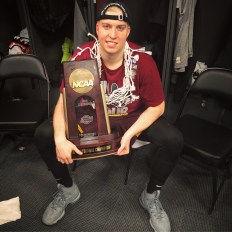 At the time, Nick DiNardi was a senior walk on and served as a scout to prepare players for each game. Aside from his skills on the hardwood, Nick has battled Crohn’s colitis since he was 11.
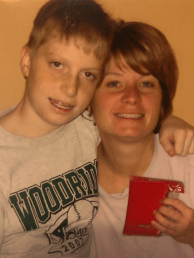 My grade school friends had no idea why I was crying in class, oftentimes teasing me while I was in pain,” said Nick. “My parents and siblings were always there to do everything they could to make me feel better, but I just never felt like anyone related to the pain I was in.”

 For me—the past nine months I’ve been incredibly grateful to have another healthy pregnancy, that silenced my Crohn’s symptoms. I’m also celebrating 3.5 years of no IBD-related hospitalizations or ER visits! The cherry on top was the release of Citrate-free (pain-free) Humira this year! After more than a decade of giving myself the painful injection, the new formula has greatly improved my patient experience.
 Celebrate the feel-good days and soak up the moments where your IBD isn’t top of mind. You have an innate sense of when your body is giving you warning signs that rough waters are ahead. Be mindful of the inner conversation going on in your head and listen to your gut. Although it tends to be our nemesis, it has a way of alerting us when things are about to get out of our control.
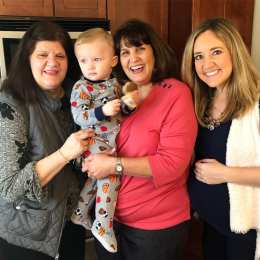 Trust that those close to you love you and appreciate you for everything that makes you, you—including your disease. Show appreciation for your caretakers—those who live with you and are in the trenches by your side, day in and day out. Find comfort in those who allow you to be vulnerable when you need to be. Stop putting effort into relationships and friendships that don’t add joy to your life—eliminate the negativity, cut the fat, there’s no need for people who bring you down or belittle what it’s like to live with Crohn’s or ulcerative colitis.
 I hope you take this week to enjoy time with loved ones, relax and find time to care for yourself!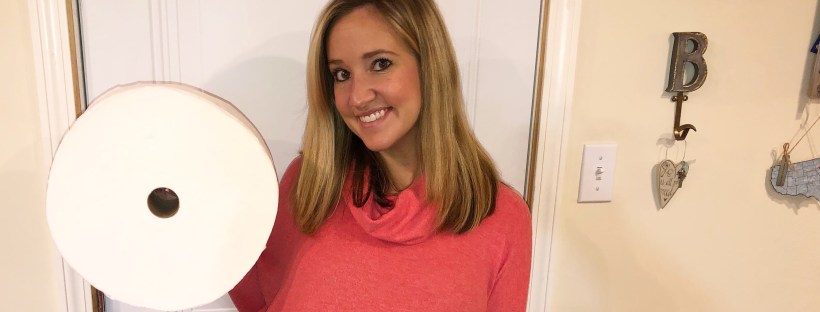

 and industrial to have in your personal bathroom. But reviews far and wide have been overwhelmingly positive!

 You’ve reminded me of what is possible and what I’m capable of. You’re already an inspiration to me and you don’t even know it.
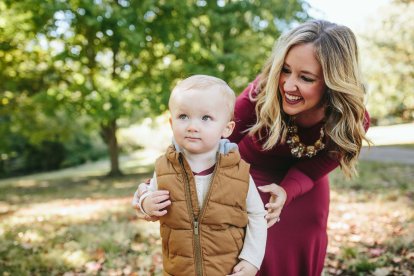 You and your brother serve as my greatest motivation to push through the pain and be strong. You’ll see how your dad loves and nurtures unconditionally and rises to every challenge that comes my way.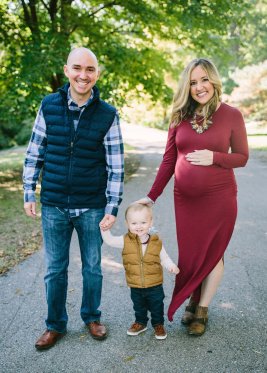

 She is a news reporter for a community television station in the Minneapolis/St.Paul area. Sonya is also a Crohn’s patient, diagnosed with the digestive disease in 1985 while she was in college. I’ll let her take it from here:
 However, it took me a minute to adapt a positive inner attitude. You see, in public I put on a good, cheerful attitude. There were times when I wanted to crawl up into a big ball and shut out the world. The first few weeks of constantly wearing a backpack full of IV fluids were very hard. I did not like what I saw in the mirror. I was angry at my situation. It wasn’t until I visited a pediatric Crohn’s and Colitis Foundation support group that I changed my way of thinking. Seeing young people living with the digestive diseases, and going about their lives despite their circumstances, motivated me to do better.


 lights camera crohn's