Colonoscopy Prep Hacks You’ll Actually Want to Try: Tips from the IBD Community

Whether you’ve experienced one colonoscopy or 20, you know the process is far from enjoyable. This past week while scrolling through Instagram I came across a story an IBD caregiver posted as her young daughter prepped for her scope. During the video she explained how her husband rolls dice, and whatever number it lands on is how many sips their daughter has to take of prep. I was amazed at this brilliant trick to ease the struggle of getting the prep down, and it inspired me to dig a little deeper and ask the IBD community what their “tips and tricks” are.

This week on Lights, Camera, Crohn’s read firsthand advice from caregivers and patients of all ages. My hope is that you find comfort and maybe even a new idea or two to make your next prep a little less stressful.

Firsthand advice for pediatric IBD caregivers

Mara’s daughter has IBD and has already been through eight colonoscopies in just five years. She says the dice game was a huge success for their family the first time around:

“She was at the perfect age for a little competition as motivation with a reward at the end for the winner…of course she always won. It was honestly so easy to prep her I was shocked.”

However, being NPO (derived from the Latin saying ‘nil per os’ or nothing by mouth/no food or drink) after midnight was NOT easy.

“There were lots of tears and anger directed at us. We bought her a special blanket and stuffed animal, which helped diffuse some of that anger.”

As many caregivers know, every prep is different. Mara recalls their second scope being much more difficult, requiring hospitalization and an NG tube after her daughter couldn’t keep the prep down. Now, they focus on giving their daughter as much autonomy as possible, letting her choose flavors, snacks, and activities.

“On prep days or days, she must be NPO, dad and I also follow that diet. It gives her a sense of belonging and that we are struggling right alongside her. We’ve done it for all eight scopes, and we will continue to do it if she needs us to.”

Over time, Mara says they let their daughter lead as much as they can. They give her a “yes” day.

“Whatever she wants (within reason) to eat or drink. Gummy bears, sure. Popsicles, sure. Want to try to mix three different Gatorades? Why not? She wants to watch TV while she preps or play hockey, absolutely.”

Emily’s Family
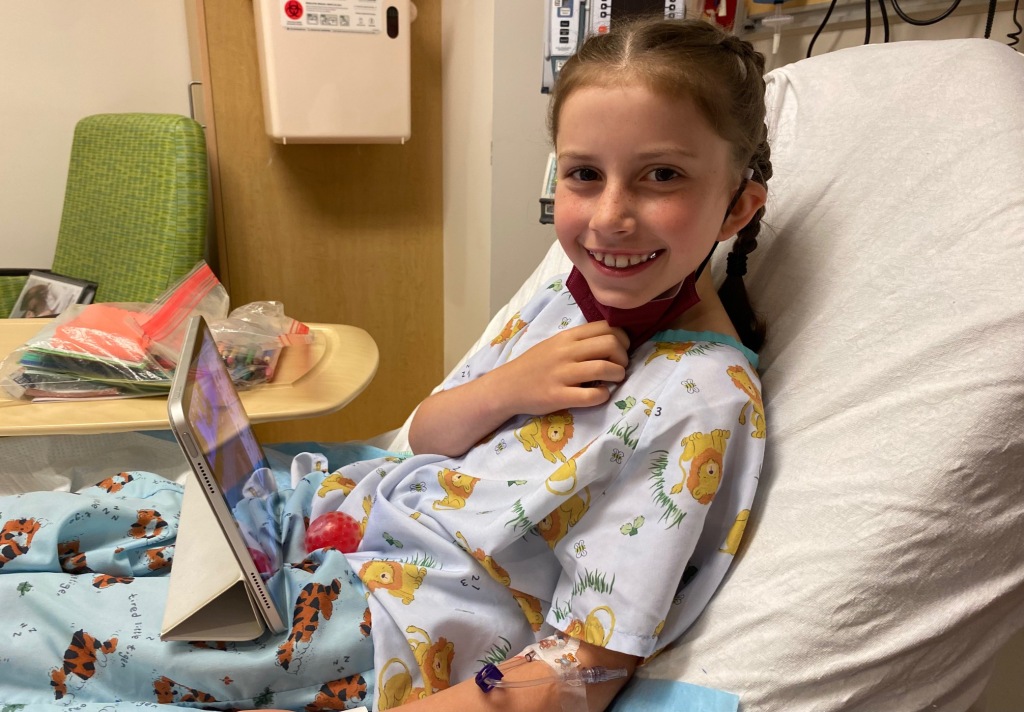
Emily has three daughters with IBD (now ages 9, 12, and 15) who’ve been doing preps for over a decade. Their youngest had to prep for a scope when she was only 21 months old. Their top tips include:
  • Only prepare 8oz of the drinking mixture at a time. With MiraLAX prep, we let them pick a new flavor to mix each 8oz.
  • Think outside the box with the liquids for MiraLAX! One preferred water once! (With other electrolyte drinks that day.) One daughter does her whole prep with tea and chicken broth. (Add MiraLAX after the liquid is warmed.)
  • Use distraction!! This is our biggest piece of advice. We surprise the girls with a new activity the day of prep. They know there will be something fun to do – just not what it is. We have gotten Lego sets, multi-step craft projects, etc. We pick something that we can partition up and give them one part at a time in celebration for ounces drunk!
  • Keep them active. We have found that the girls tolerate the large amounts of liquids better if they get up and get moving! In the warmer months, they go walk laps around the driveway between cups of the prep.
  • Pick the “fun” liquids together ahead of prep day. Since they normally cannot have juice or soda, they pick out a few drinks that they are excited to have. This helps them to drink more, once the MiraLAX prep is complete.
  •  I set timers for myself for the day of prep for every 10 mins or so. Just to check in on their drinking. It’s easy to lose track of time and accidentally go 30 mins (or more!) without drinking.
  • Pack a bag of supplies for the scope day. We always take extra clothes and baby wipes for any accidents. Games/books/crafts are great to keep the girls distracted during the wait before their procedure time. We take some water/light snacks for afterwards. (Check with your providers to see what/when your child can eat afterwards.) Chapstick is always requested by mine now too.
  • Remember that you can speak up and (nicely!) ask for what your child needs to make them comfortable. For example, at our hospital, the kids usually get their IV’s after they are sedated with some gases through their breathing mask. This is great to avoid needle anxiety for many kids. However, mine have taken a dislike to the masks and the smell of the gas. Since they get regular med infusions, they prefer to get their IV’s back in the holding area and then use the IV for their sedation to sleep. While not the normal procedure, the anesthesiologists and nurses have kindly worked with us to do it the way my kids prefer.

Cindy’s Perspective
Cindy, mom to a teenage daughter with Crohn’s disease, says scheduling scopes early in the day is key. Even if you have a teen who likes to sleep in, sleeping in is worth nothing if you already feel like crud due to the prep. She emphasizes advocating during IV placement and following your gut as a caregiver:

“A parent’s intuition of how much is too much comes into play, and you’ve got to listen to that voice. Tell the nurse you (parent and child) did your best to complete as much of the prep as possible. If you can’t finish it to a T, they can still make it work. They know they are working with a child. If they are having trouble placing an IV, advocate for your kid. Give them two tries and then request another person to try. We’re still traumatized from watching them work for 10 minutes to get an IV into my dehydrated and scared 9-year-old, and I think that trauma will live with us both forever.”

She also believes in being honest with your child without over-preparing. Start the conversations when it’s time, but don’t talk about it for days or even hours beforehand.

“This is not going to be fun, and it won’t feel good. But I know you can do it and we are going to do it together because I will be beside you every step of the way. Here are the steps we will take and outline them in age-appropriate detail. Let’s think about how amazing this is going to be once it’s done! This is our focus for the next 24 hours… that moment when it’s done… that will be the best! As soon as you are done at XYZ time tomorrow, we can celebrate and go back to normal life, and you can eat whatever you want.”
Additional feedback for pediatric patients

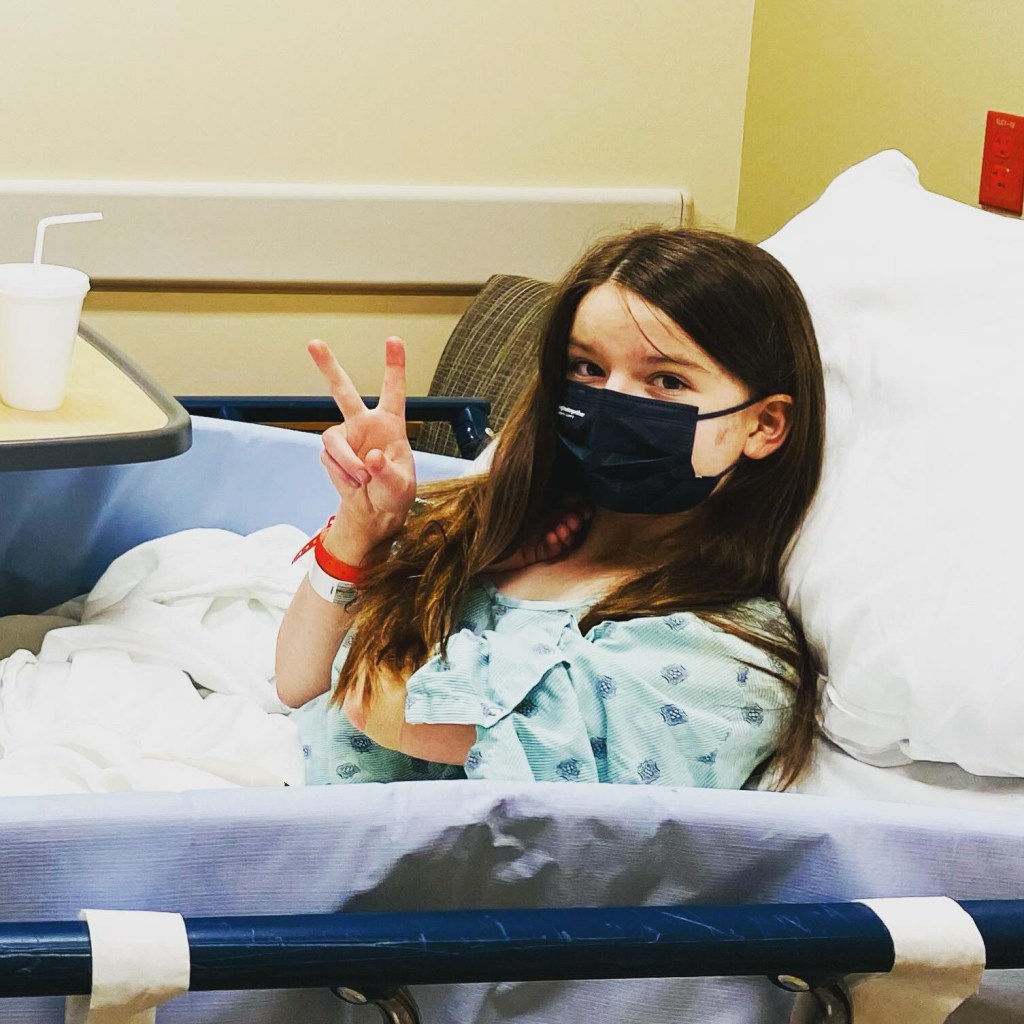
“For pediatric prep, popsicles are necessary. Blue popsicles allow kids to “poop blue,” which many like. The Gatorade with the MiraLAX is the easiest for them to get down. We tried magnesium citrate once and it was a disaster. Gatorade is where it’s at. Also, we make it a party. Popsicle party. Jokes and TV while pooping. Anything to keep the mood light.”

“Turn the ordeal into a scavenger hunt by completing parts of the prep with small stickers to earn up to something whether it be completing a picture or something to distract when prep is working.”

“My daughter’s first prep at home didn’t go well, but prep while in-patient thru NG tube really worked.”

“If the hospital or your GI team has a Child Life specialist, they can send prep books to families ahead of time so they can help prepare kids for what to expect the day of the procedure.”

“Bribes! Lots of bribes! New toys or games. Legos keep little ones busy. Family doesn’t eat in front of them. Lots of snuggles. Clear your schedule to spend time with them. For young kids, put all food out of reach or lock the pantry so a hungry little one doesn’t get into something they can’t have and make you have to cancel the procedure, which is always my fear!”

“I have a prep approved Starbucks order—Mango Dragonfruit refresher, Venti, no ice, no Dragonfruit fruit inclusions, peach juice blend, in my personal cup … I like to line up cups so I can visually see how much is left and removing one feels like an accomplishment. A seasonal suggestion is using an advent calendar and dividing prep by 24 and opening one door after each one…just make sure the prizes are not food!”

“Arts and craft activities and projects can be a good distraction. Recently gave a sensory art bin to a VEO-IBD patient through their first scope as a kid it helped me to have new things to do.”

“My mom fasted with me when I was doing the prep as a kid! My tips now as a mom myself are to make Jello without Red 40. Ramen seasoning dissolved in water tasted way better than broth to me as a kid…I know that’s not good for you. I would make it a fun and relaxing day, so your kiddo is distracted. I would recommend not watching TV or YouTube because there are so many advertisements for food everywhere and it didn’t help distract me much. I advise having a movie marathon instead!”
“We didn’t eat out much when I was a kid, so eating out with my parents only was a big treat for me to look forward to after starving the day before! Back in the day, GIs used to do a combination of drinkable prep and suppositories for pediatric patients, and I’m glad my mom did the suppositories for me because it was not something else you had to drink. Ask pediatric GIs about low consumption prep so your child doesn’t throw up.”

“When I was a pediatric patient, my mom took me to the store to pick out different drinks for the mix, Jello flavors, etc.… which would make it fun picking it out myself and this also gave me a sense of control in a very out my control situation. My mom always fasted with me, which I appreciated not feeling alone in it. I was also able to pick the restaurant to go to after for something to look forward to!”

“Have your child drink their prep in a fun container., a Disney theme with a silly straw. For adults, use a wine glass or fun mug. Cheers!”

“My 12-year-old just had their first colonoscopy. As a Crohn’s patient myself, I have done one every other year for 25 years and it was hard to watch him go through it. He was tougher than me. The hardest part was him not eating! He had to do a full two days of clears only—per our doctor’s recommendation. That’s my hack as an adult, too. I start taking a Dulcolax dose and not eating a day or two earlier than recommended. You only have to drink the drink until it’s clear in the toilet. The milder/longer prep is easier on me and saves me drinking half the magnesium citrate drink.”

“My daughter couldn’t get any of the prep down at age 16 and by this summer, at age 19, she felt ready. This time we tried over the counter prep of MiraLAX and Dulcolax. The doctor said if she did it this way, she would need to fast for 48 hours instead of 24. She was fine with that. She started taking a couple of Dulcolax tablets at 5 pm the night before. Then, we put half a bottle of MiraLAX into Sprite. She drank a cup every 10 minutes until it was gone. We did the same thing a few hours later. She was clear before going to bed at night. It was easy and stress-free for her.”

“My parents would set me up with my iPad for movies, a desk chair, and a blanket in the bathroom so I could go back and forth from the toilet easier.”

“Make MiraLAX with white grape juice instead of Gatorade! Drink with a fun straw so you can put it on the back of your tongue and taste less. Put on headphones with loud music to distract your sense from the taste so you can drink the prep faster.”

“I confirmed with my child’s GI that colorless cotton candy is a clear liquid! Obviously in moderation, but this could be super helpful for kids and adults who need a different texture than liquid or gelatin.”

Prep Hacks for Adult Patients

Our IBD family had plenty of creative hacks for adults, too:

“The MiraLAX + Dulcolax prep hands down!! I’ve tried them all, and it’s tasteless and easiest.”

“Lemonheads or lemon jolly ranchers RIGHT after you get done drinking a dose!”

“Gummy bears and lifesavers! I love having stuff to chew. I also had pickle juice shooters, which gave me some salty/sour taste to balance all the sweet stuff. I also keep my schedule open for the remainder of the day and allow myself to relax.”

“I put my Suprep in the fridge (even though it says not to) and it makes it SUBSTANTIALLY easier to drink (and doesn’t seem to make it less effective in any way). I also buy myself a new book to read or save a special TV show episode, so I have something to look forward to when I’m drinking prep at 2 in the morning. Colonoscopies are miserable and until they figure out how to make them a nicer experience, it’s great to team together to gather the best tips.”

“Clear Gummy Bears!! This keeps it fun for all ages! Here’s a recipe!

“Drinking chicken broth throughout the day. This gives energy and takes away the bad taste of the prep drink. As a kid, my sister used to make a colonoscopy prep kit. Every 8 oz. I drank; there would be a little gift or activity to do. For example, after the first 8 oz., I got a nice bottle to drink the rest from. The next thing was a Lego kit or a paint by number.”

“I begin my prep four hours ahead of their suggested time, so I can sleep through the entire night. Getting up in the middle of the night, especially for children to complete round two of the prep is just borderline inhumane. What a nightmare. The catch is waking up and hydrating with enough water before the anesthesia cut-off which requires not to drink anything 2 hours before the procedure.”

“Wet wipes and diaper cream are super helpful!”

“A lot more MiraLAX than the prescription prep. And gummy bears (except red ones) are a gamechanger. They let you feel like you’re eating, but they liquify in your gut.”

“Rotate flavors and get some protein through broths. Have broth, then 2 hours later do Jello or change the texture and taste, then 2 hours later do broth and rotate.”

“Strain chicken noodle soup to just have the clear broth, it has more sodium.”

“Avoid eating vegetables/fruits/seeds three days before. Taking preps that you can take with a glass of water and then drink two liters of tea or water.”

“My son, Andrew, has autism and Crohn’s disease. When he has to do colonoscopy prep, he likes to listen to Disney music and use a timer. Andrew is almost 30 years old and has been having to do colonoscopies since he was 17. This past year, for the first time, he did the pill prep and loved it. He used a timer to tell him when to take the next pill. Andrew told me he will never go back to liquid prep. Pill prep was so much easier for him, especially with his sensory issues.”

“Take notes on all preps you’ve been assigned and take notes and photos of what it felt like. I found one that was less painful for me, and I always request it. I also alternate sips out of a straw with apple juice. I drink the prep in my kitchen, near a bathroom, and watch TikTok’s while drinking to distract myself.”

“I only eat soft foods 2-3 days before, make sure to hydrate, and follow the instructions they give about not eating things like seeds or nuts a week before.”

“Have a bidet and diaper cream ready.”

“Desitin, Gatorade that is the Frost Glacier Cherry flavor (not red) frozen or really cold to help me stay hydrated.”

“Make freezer pops out of the Gatorade prep mix.”

“For me—finding fun drinks, whether a tea at Starbucks or stocking up at the grocery store, really makes it feel less horrible. I started this as a teenager. I make a list of movies or shows I want to binge. If you’re comfortable with it, have a friend there to distract you—at 15 years old, my boyfriend stayed with me all day for my surgery prep which was the same as a colonoscopy and we watched movies and he distracted me/made me laugh and at times I forgot what was going on!.”

“Savory liquids to balance out the sweet!”

“Mix the prep with Crystal Light Lemonade—instead of the lemon mix the pharmacy provides. Drink the prep through a straw and suck on hard candy (e.g., Werther’s Originals) in between doses to get rid of the taste and have something to look forward to.”

“Take SUTAB (pill prep) and Zofran and then fall asleep. Your bowels will wake you up and you’ll avoid the nausea but start the pooping process. I do the same for the morning dose! If you vomit, at this point it’s fine, just hopefully after the nap and pills are digested!”

“Gummy bears/worms!”

“Pill prep has been a gamechanger for me!”

“Extending the clear liquid diet an extra half day or full day helps a ton with prep.”

“You have to have a movie downloaded on a device that you can have in the bathroom and a pillow for the toilet seat for your back. I’m a fan of disposable diapers because after the first several poopy poops, you get to the drizzle stage and then it’s annoying to have to get up every two seconds towards the end. They also come in handy when you’re sleeping and when you’re traveling to the procedure.

“Before I have a colonoscopy I write down positive affirmations and thoughts and there is like a Table of Contents that’s like “When you’re sad” or “When you need a good laugh” and it really helps me though the ups and downs, although it may sound silly. I choose what to drink and I always have my good luck drink which is blue Gatorade.”

“Use nuun electrolyte drink instead of Gatorade!”

“My personal hacks are to follow what you know works for you. I followed the timings of when to take what from the last instructions and it wasn’t the cleanest prep. I should have listened to my gut and started doing that earlier. I resort to drinking Ensure Plus instead of just relying on broth and soft foods to keep me feeling full. It’s helped me SO much. I know not everyone can tolerate it or like it, but when I was on a liquid diet about a year ago for two months, I only had Ensure Plus. I got used to it. It’s now a lifesaver, especially if I’m traveling or on the road and not sure what food I will have access to. It helps to start the diet a bit earlier, so mash and fish instead of just toast and pasta.”

“I mix apple juice with my Suprep! I also always buy bone broth or stock because the protein per cup is higher. I like the Zoup brand because there’s 3 or 4 gram of protein per cup. I also get the College Inn brand bone broth which has up to 10 grams of protein per cup.”

“Gummy bears!! Just not the red or purple ones. Just being able to chew something helps! Progresso Chicken Soup. Use a metal strainer to strain out all the solids and then sip the broth. It’s thicker and has more flavor than regular stock and it’s just more satisfying.”

“Remind yourself “this is only temporary.” Having loved ones supporting also helps to distract a little, which makes it easier to get through. Focusing solely on drinking cup after cup can seem very overwhelming.”

“Start a low residue diet a few days early even before your doc says to. Mix prep with Sprite. Have hard candies or gum to chew on while doing prep. Use a measuring cup or something to lines to indicate how much to drink.”

“I really love the Trader Joes less sugar lemonade mix with water for my prep. I chugged and it was so delicious! Also, ice pops like the good pop brand were yummy.”

“Gummy bears! Making ice cubes out of juice and chewing on the ice.”

“Make sure it’s cold! Drink with a straw, chew Juicy Fruit gym in between drinks, this helps cut the saltiness. Do two-step prep if your practitioner allows it (half the night before and the other half in the morning). Ask if you can use one of the lower volume prep or the MiraLAX and Gatorade prep.”

“For the MiraLAX prep I use two different flavors so I can alternate when I get sick of one.”

“Mix the prep early and put it in the fridge. Have music and TV on to help distract yourself.”

“While most people say to drink it cold, I prefer my prep at room temperature so I can chug it faster.”

“Always lots of ice and drinking thru a straw. Big gulps. Have a station in the bathroom with a laptop streaming Netflix. I also got a Bidet before my last one!”

“Gummy bears! I buy the Haribo ones and don’t eat the red ones. My favorite prep hack thus far. It’s great getting to chew something when everything else is liquid.”

“Lots of mint tea when the cold chills kick in a few hours before you have to go in for the procedure.”

“Use a Pedialyte jug and ensure it is very cold and drink the prep with a straw. The slower you drink, the worse it is. I always chug it super-fast through a straw and it gives me 10-15 minutes between each cup. Have lots of other drinks that you don’t normally consume to make it fun and have lots of juice, Jello, soda, and popsicles on hand!”

“I’ve turned prep days into self-care days. I binge shows, nap, relax, and try to take care of myself.”

“I like to alternate between sweet/cold beverages and salty/warm soups when I am trying to stay hydrated before starting prep. Sprite/popsicles/lemon ice and then chicken broth.”

“I chase my prep by sucking on approved colored Lifesavers. They truly are a lifesaver for me. I could never do it without them.”

“I recommend the pill prep instead of liquid prep if you’re neurodivergent or have issues with taste and textures. Maybe keep a backup on MiraLAX and Gatorade or juice in case you can’t tolerate the liquid prep. If you know you get nauseated, take prescription anti-nausea medication like Zofran before you begin the prep. I like Squatty Potty and having wipes to dab and pat my skin. A Peri Bottle can be useful. If you’re prone to hemorrhoids or know you have vascular issues like pelvic congestion syndrome, apply hemorrhoid cream in advance. Keep Zinc Oxide handy if it starts to burn or feel raw. Get into comfortable clothes that’s easy to get in and out of in the bathroom. I personally use a heating pad and Bentyl for intestine cramping. I usually make sure I’m scheduled first thing in the morning, and I ask for extra IV fluids.”

The Takeaway

Colonoscopy prep is a universal challenge in the IBD community, whether you’re a child facing your first scope or an adult whose been through dozens. But as the stories above reveal, there are countless ways to make it less daunting through creativity, distraction, teamwork, and sometimes sheer humor.

I personally start a full liquid diet 4-5 days before my scope to ease the actual prep. I make sure I have Zofran on hand to manage my nausea (I always vomit, regardless), and I prefer the SUTAB pill prep. I’ve done multiple preps since being diagnosed with Crohn’s disease in 2005, and my last three preps, SUTAB pills have been the “most tolerable.” While MiraLAX/Dulcolax is popular, I never enjoyed having to drink such a large volume of liquid. Having gummy bears on hand is also a necessity for me! My husband always takes the day off work, and we go out to breakfast and spend the day together afterwards as a reward for all I went through.

If you’re gearing up for a prep, remember you’re not alone. Thousands of IBD patients and caregivers are walking this same path and learning tricks along the way. Find what works for you (or your child), advocate for needs, and give yourself grace. And once it’s done? Celebrate that victory meal and the relief of getting through another milestone in your IBD journey.


From Pediatric Patient to College Student: Taylor’s Journey with Crohn’s

When most kids were running around their middle schools full of energy and excitement, Taylor Gautney was quietly fighting an invisible battle. In sixth grade, while his classmates joined extracurriculars and laughed through lunch breaks, Taylor was barely making it through the day. Many afternoons were spent passed out on the couch after going the entire day without eating. One day, after skipping lunch again, he collapsed on his way back to class. That moment changed everything.

At first, doctors suspected celiac disease. He was placed on a gluten-free diet after an initial endoscopy, but nothing improved. For years, the mystery lingered—until a more thorough examination revealed the real culprit: Crohn’s disease. A new diagnosis, a new treatment—Humira—and a new outlook on life began to take shape.

Now in remission and attending Arizona State University (ASU), Taylor has transformed his story from one of struggles to one of strength. But it wasn’t always easy. This week on Lights, Camera, Crohn’s a firsthand look at what it was like to be diagnosed with IBD at such a young age and how his first year of college went living across the country from his family.

“Just Keep Fighting”

Looking back, Taylor wishes he could tell his younger self one thing: “Just keep fighting and enjoying the positives in life.” Being diagnosed with a chronic illness at age 11 felt like a devastating detour. He admits that it changed the way he viewed the world and himself. “I started to think of every aspect of life as negative,” he recalls. But over time, Taylor learned to embrace small joys, and most importantly, to appreciate the unwavering support of his family.

Taylor’s mom, Anna, says, “It’s crucial to advocate for your child and speak up for them if medications are not working. It is also important to showcase to your child that you are in this with them, help them find a community, such as the Crohn’s and Colitis Foundation. This way, they can meet people who have what they have and formulate a sense of belonging.”

Holding On Through the Hard Days

Taylor wants young people diagnosed with IBD to know that while the patient experience is incredibly challenging—often filled with procedures and surgery, flare days, and quiet battles with your own body, it doesn’t define who you are. “People can’t see the diagnosis from the outside, they see your personality and exterior self,” he says. “Just be yourself, let people come to you and support you, especially during a rough time like an IBD diagnosis.”

The Power of Family

Taylor credits his parents for being the steady foundation beneath his feet throughout the rollercoaster of diagnoses and treatments. “My mom has been my rock,” he says. She’s been by his side at almost every appointment and has researched tirelessly to understand Crohn’s. Taylor’s dad always makes time to show Taylor the world with family trips and unshakable support. “They have given everything to me and made my life so much easier after the diagnosis.”

Life at ASU with IBD

Taylor’s transition to college life came with its own set of hurdles, including logistical nightmares like getting his medication delivered to campus. But he’s found his rhythm. “It’s definitely not as hard as I thought it would be,” he says. One surprising blessing? His roommate. “He also had a medical condition that required shots, pills, and daily maintenance,” Taylor says. Their shared experiences helped them form an instant bond, even leading to grocery trips for IBD-friendly dorm snacks.

Taylor’s professors and friends have also shown deep compassion. He remembers an English professor who read about his condition in a personal essay and went out of her way to learn more about Crohn’s. “She made me feel really special and seen,” he says. His friends check in on him, make sure he’s got his injections, and understand when he needs to sit out from social events. “I thank my friends at ASU for their understanding and empathy.”

A Voice for the Voiceless

Studying sports journalism, Taylor dreams of becoming a play-by-play broadcaster for Major League Baseball—ideally for the Atlanta Braves. But his passion extends beyond sports. He wants to use his voice to make an impact and tell meaningful stories. One of the most pivotal moments in his life came when he was asked to be the Pediatric Honored Hero for the Crohn’s & Colitis Foundation’s Birmingham walk. “That one event gave me confidence to speak in public and really sparked my love for communication,” he says.

Now connected with the Arizona-New Mexico chapter of the Foundation, Taylor is committed to giving back. His mission? To reach kids and teens who are newly diagnosed and remind them they are not alone.

Final thoughts

Taylor and I connected after he was doing research for a college project and reached out to interview me about my patient experience and advocacy work. During our initial Zoom interview, I was so blown away by his positive attitude and how he takes on life with IBD. I asked him during the call if I could have the honor of sharing his story. While there are male patient advocates—we need more who are willing to share their story.

Taylor is wise beyond his years, so articulate, genuine, and kind. The sky is truly the limit when it comes to his future. If anything, living with Crohn’s disease since age 11 has helped show him all he’s capable of despite his disease.

You can connect with Taylor by following him on Instagram: @t.gautney or by emailing him: tgautney@asu.edu.

How to get involved with the IBD Kids Club: A Safe Haven for Families Battling IBD

Nothing prepares you to hear that your child has Inflammatory Bowel Disease. For many, it’s the first time ever learning about what the weight of those words even means. Not only is a chronic illness at a young age an incredibly heavy burden to bear, it can feel isolating to not only the patient but the caregiver. This inspired The University of Chicago to launch the IBD Kids Club in February 2024. This week on Lights, Camera, Crohn’s learn more about how you can connect with others living your reality and find community, regardless of where you live.

Recognizing the need

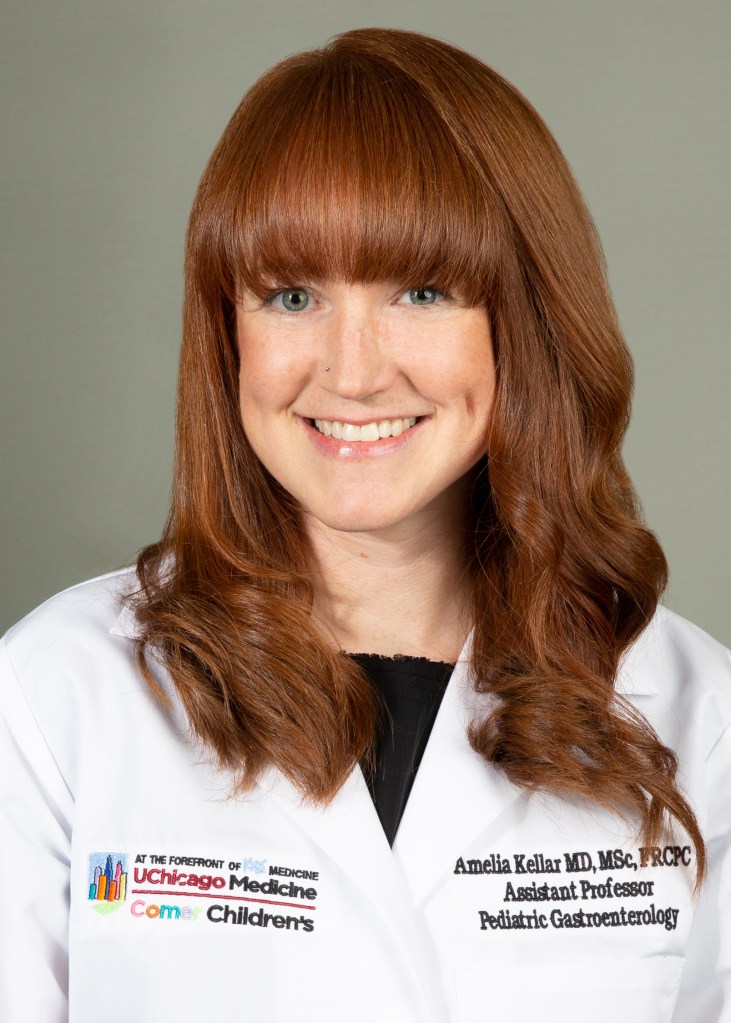
Dr. Amelia Kellar, MD, MSc, FRCPC, Assistant Professor of Pediatrics, Director, Pediatric Intestinal Ultrasound University of Chicago Medicine/Comer Children’s Hospital says one of the most common concerns she hears from patients and their families is that they don’t know anyone else with IBD or where to go for support.

“I always refer my patients to Crohn’s and Colitis Foundation, but this also inspired me to create a community for these kiddos more locally…a place where they could authentically meet one another both virtually and in person, and know they are not alone.”

Dr. Kellar wants her patients to see kids who are older than them doing all the things they aspire to do and have examples of adults who are living and thriving with IBD. So far, the feedback has been extremely positive—families are grateful to meet one another where there’s no need to explain and there’s comfort in shared experiences.

Get connected to the IBD Kids Club

The group meets virtually every 2nd Tuesday of the month on Zoom at 6 pm CT. Dr. Kellar says it is tough to find a time that works for everyone, but she’s found the dinner hour allows for kids and parents to join together and chat. The next meeting is Tuesday, December 10th.

 “I feel very fortunate as I have a great team of GI docs, nurses, dieticians and psychologists that join for different sessions and I co-lead with one of our adult IBD nurses who is also a counselor at Camp Oasis and openly talks to the group about her diagnosis of UC and journey through J-pouch surgery,” says Dr. Kellar.

When she started the group, Dr. Kellar polled participants for what they would like the group to be, whether they wanted to simply chat with one another and offer support, whether they wanted some guest speakers on topics or in person events… and they indicated they wanted a mix, so they have had some support/chat sessions, some guest speakers, and a live cooking class with their IBD dietician. There has not been an in-person event yet. I let Dr. Kellar know in the months ahead I would love to join one of the calls, meet the families, and share experiences.

Everyone is welcome

Dr. Kellar is looking to get the word out—and wants all pediatric IBD warriors and their caregivers to know they are welcome to join.

“I want this group to be open to everyone—regardless of where you live or where you receive care. I want the IBD community to know they are not alone. We talk a lot about how every single person in the world has something that is challenging and that they may or may not choose to share with others and you would never know when you see someone at school, work, on the street, what challenges they might be facing. At the same time, finding people who have faced or are facing similar challenges can offer a unique support system. Our hope is that this group unites children and families with IBD and fosters connections, friendships, and support so no one ever feels alone with their challenges,” says Dr. Kellar.

Interested in learning more? Contact ibdkidsclub@bsd.uchicago.edu.

Tips for easing self-injections for pediatric patients

Managing a chronic health condition often means receiving medication through an infusion or a self-injection. If the thought of getting or even giving a shot brings on tears and fears, you are not alone. It’s no surprise, two-thirds of children and one-fourth of adults have apprehension and anxiety around needles. So, what do you do when your child needs to take self-injections to manage their IBD? It’s a complicated and emotional process for everyone involved.

This week on Lights, Camera, Crohn’s we hear from a certified Child Life Specialist, a former pediatric patient who experienced self-injections, and two mothers whose children were diagnosed with IBD at a young age.

Phylicia Petit is a Certified Child Life Specialist at a Children’s Hospital in Minneapolis, Minnesota. She says being truthful with your child about the self-injection helps to build trust.

“Prepare your child for what they may experience in an age-appropriate manner. Use soft language. For instance, instead of saying “don’t move,” say “hold still.” Avoid phrases like “you’re almost done” and “it’ll just take 3 seconds”. Instead, praise your child for what was done well. Say, “you did a great job holding your arm still” or “thank you for telling me how you felt during that.”

Phylicia also says if you are calm and relaxed, your child will be calmer and more relaxed.

Children often feed off their parent’s emotions. Use gentle and helpful words such as, “do the best work that you can do,” “you did it!” and “your job was to hold still like a statue, and you did that so well.”

Setting a routine

By giving the injections at the same time of day and in the same place, children cope best when they know what to expect. Children’s bedrooms are a place of comfort, so use a different space.

Phylicia says that by offering choices, it gives your child a sense of control. You can achieve this by saying “do you want the injection in your right leg or left leg?” and “do you want me to count to three?”

Reduce the pain

No matter your age, most people don’t enjoy needles. You can help reduce the pain for your child by using numbing cream. Contact your local pharmacist or GI to discuss topical anesthetics.

Buzzy uses vibration and ice to distract the brain from feeling pain.

Shot Blocker uses several blunt contact points to saturate the sensory signals around an injectionsite to distract from pain signals

“Don’t forget, you are a comfort to your child. Comfort positioning can be used by parents and caregivers during injections to reduce stress and anxiety in your child and help safely immobilize an arm or leg,” said Phylicia.

Comfort and distraction items:

  • Pacifier
  • Blanket/stuffed animal
  • Favorite TV show
  • Blowing bubbles
  • Squeezing a squish ball

Have your child sit up. Children are often more scared when they are lying flat. If you need help holding your child still, try holding them in your lap in a firm, but comforting position.

Practice deep breathing. Take a big breath through your nose, then blow out through your mouth. Have your child do this 3 to 5 times. To make this more visual for a little one, you can use a paper flower, pinwheel, or bubbles, and practice this before, during, and after the shot.

“As a former pediatric patient there were a couple of things that helped. Finding ways to numb the spot prior, whether it was ice or a numbing cream. Using a room, I could distract myself in (typically with a TV). If I was able to do it myself, I would set up the space, so I was comfortable. If my mom helped this still applied, but we talked through the entire injection to occupy my mind. It came down to comfort and finding ways to manage my anxiety around the shot. Over the years, it got easier, especially when we switched from the auto-injector to the manual shot,” said Natasha.

Stacy Dylan’s son was diagnosed with Crohn’s when he was only 2 years old. She co-founded the nonprofit Connecting to Cure Crohn’s and Colitis to help families cope and conquer IBD.

Here are Stacy’s tips for caregivers when it comes to injections:

  • Acknowledge that as a mama this is going to be hard. “You are going to feel sad and wonder why you and your child have to go through this. It’s going to be hard to watch them have anxiety about the shot and to feel pain. Get support for yourself for this.” 
  • Try not to let your child see your pain. “Even though you are feeling this way, you know that giving them their meds is going to (hopefully, although it might take a few different meds to find the one that works) make them feel better and happy and more like themselves so approach your child with compassion and assurance about the potential of the meds to make them feel better.”
  • Try to have a calendar that shows when the shot is due but don’t talk about it too much if they are not bringing it up. “Remind them the day before or the morning of the shot and set a time to do it.”
  • There are practical things that may work to ease the pain of the shot. “Ice before and after. Rubbing the site after it goes in. Emla cream is a great numbing cream. My son is 22 and has been getting infusions, injections, and blood tests since he was 2 and numbing cream is our friend. We also used the Buzzy. It’s held on the skin before and after the shot and it stimulates the skin to reduce pain.”
  • Offer a reward. “At times I offered something post shot that motivated him when he was younger. Perhaps being able to watch a little more TV that day. Or a small new toy. Or a food treat that they can have, and it could be special for the shot day.”
  • Look into having a home nurse, if needed. “My son has been on so many of these meds since he was 7. When he was on Humira from age 9-10, it was before the citrate free (pain free) version and the Humira shot was very painful. It became too hard for me to do it and was too difficult for our relationship. It is rare that you can get insurance to cover a home nurse to do this, or to bring the child to get the GI office nurse to do it. We were able to pay a nurse to do his Humira shot for a brief period of time until he adjusted to it. It helped a lot.”

Cindy’s 12-year-old daughter was diagnosed with Crohn’s disease four years ago. She helps her daughter with weekly Humira injections and also offers helpful advice from a caregiver’s perspective about what it’s like to give your child an injection and cope with the difficult experience.

  • Don’t let your nerves show. “When I became responsible for giving the injections at home, I was nervous about doing it and it was important to me that I not transfer my own personal anxiety to my daughter. To this end, I really wanted to practice giving shots on anything other than her, so that when I had to inject her, I felt comfortable with what I was doing. Unfortunately, I only came upon the advice later, so it didn’t help me at the time…but I heard to use an already used syringe on a naval orange for practice.”
  • Do the injection in a neutral space. “A psychiatrist advised us to do injections in a neutral place. I had been giving my daughter her injections in bed because to me, this was the place where she was most comfortable. Unfortunately, she developed sleep problems, and our psychiatrist helped me understand that a negative association with the injection is not something that you want to combine with a happy place. In the summer, we inject it on our back porch and in the colder months we usually do it in our guest bedroom.”
  • Syringe instead of auto-injector. “We also find the syringe to be so much better than the pen. The pen made us feel tense and the lock was Pavlovian. The syringe allows for more control. No sounds. Go fast or go slow. My daughter takes a lot of comfort in her Buzzy.”
  • It gets easier. “Not better…but easier. For the first couple months, we had to physically restrain my daughter when injection day rolled around. It was soul shattering. However, we all did become used to what needed to happen and now (while not fun at all, it is a non-event). We do the injection now and move on with our day. We are thankful for the ease and convenience of injecting at home, and always thankful this medication is preserving my kid’s quality of life.”

Intestinal Ultrasound: How IBD Patients Can Help Fuel Its Adoption in the US

Innovation and changes in healthcare are propelled by patients and caregivers speaking up about improvements that can change the way IBD is treated and managed. This week on Lights, Camera, Crohn’s we hear from pediatric gastroenterologists Dr. Michael Dolinger, MD, MBA, Advanced Pediatric Inflammatory Bowel Disease Fellow, Ichan School of Medicine at Mount Sinai and Dr. Mallory Chavannes, MD, MHSc, FRCPC, Pediatric Gastroenterology, Hepatology and Nutrition, Children’s Hospital Los Angeles about the benefits of Intestinal Ultrasound (IUS) becoming a part of routine care, regardless of age.

The goal of IUS is to utilize a non-invasive method to monitor disease activity over time and it’s considered to be more precise than endoscopy in identifying both disease location and characterizing the severity of IBD. The IBD community—both patients and caregivers—can help fuel the adoption of IUS and gain access to receiving more information about their disease activity than ever before.

What is Intestinal Ultrasound (IUS)?

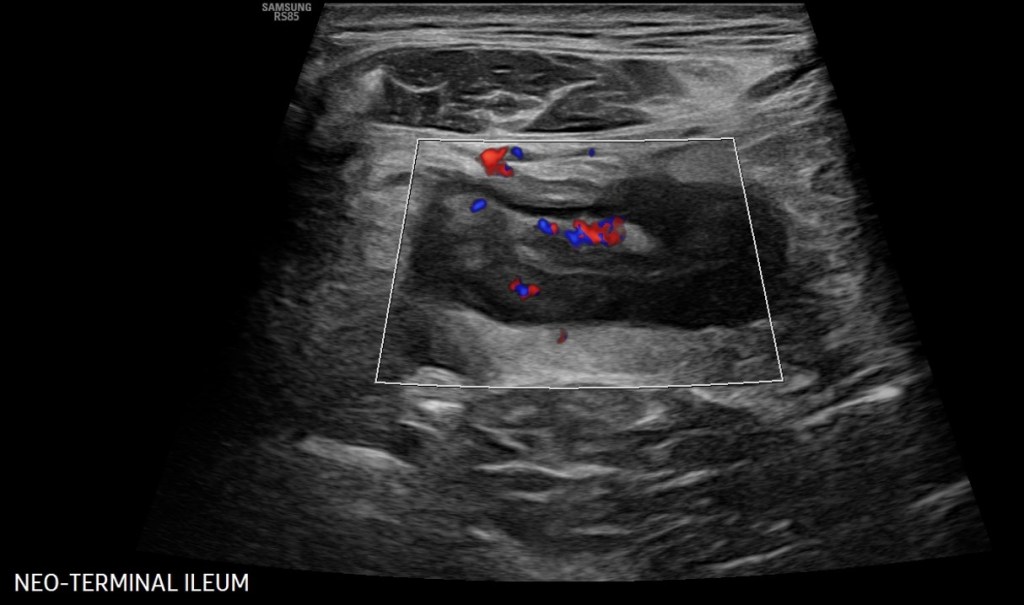
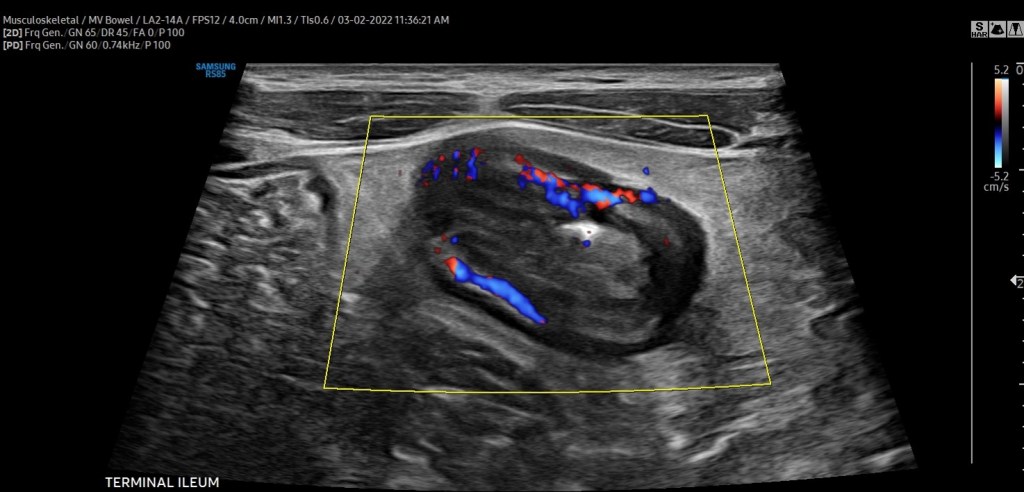
Intestinal Ultrasound (IUS) is an abdominal ultrasound performed during a routine clinic visit without preparation, fasting, or contrast to assess both the colon and the small intestine (terminal ileum most frequently) for the presence of disease activity. Probes are placed over the abdomen and the provider looks at images of the small and large bowel.

The beauty is that, unlike procedures and other image modalities available to assess disease activity of inflammatory bowel disease, IUS can be performed without any preparation or fasting,” said Dr. Chavannes. “In the setting of active disease, patients can have a thickened appearance of the wall of the bowel (termed increased bowel wall thickness) in both the small intestine and the colon, which can be detected via ultrasound.”

In addition, by using color Doppler, a feature that assesses the velocity of blood flow within and around the bowel wall, gastroenterologists can demonstrate inflammatory activity in the bowel wall. IUS can also detect IBD complications, such as fistulas, abscesses, or strictures (narrowing) of the bowel.

“Our expectation is that, with effective therapies, the aforementioned features of disease activity should improve or even disappear over subsequent clinic visits. If they do not, we now have an objective tool available in the clinic that can assist clinical decisions, such as ordering further investigations or even optimizing or changing therapy. Improvement of bowel wall thickening or decrease in color Doppler signaling is a reassuring sign that treatment is working. Lack of improvement signifies that optimization or changes in therapy should be considered,” explained Dr. Chavannes.

“Intestinal ultrasound is precise, we monitor bowel wall thickness down to the 0.1 mm. We are now able to make informed decisions with patients together, assessing their disease objectively in real-time so we can be aligned with our treatment goals. This reduces misunderstanding and may lead to better treatment adherence and improved outcomes,” said Dr. Dolinger.

Why the delay in the United States?

While IUS isn’t the standard of care across the world, it is used in several Canadian IBD centers and in Europe (Germany, Italy, Norway, the Netherlands, and Australia to name a few). However, there are still many areas of Canada and countries in Europe where this is not used as part of routine IBD care.

“There have been several barriers to adoption in the USA, the biggest of which are reimbursement and the lack of training/expertise. However, that is changing, as there is a tremendous amount of interest from most major academic centers,” said Dr. Dolinger. “Through the International Bowel Ultrasound Group (IBUS) there is now a formal training, while intensive, that can be completed by anyone willing in the USA, which did not exist 5 years ago.”

IUS fits perfectly in the treat-to-target algorithm by adopting a monitoring strategy that helps to prevent flares and bowel damage.

“There is no other test for patients to see their disease dynamically with a gastroenterologist in real-time, which enhances shared understanding and informs decision making like never before. All of this will help break the barrier in the USA and around the rest of the world,” said. Dr. Dolinger.

A study conducted in 2016 explored why IUS is not standard of care in the United States. The

authors surveyed nearly 350 physicians, of which 40% were pediatric gastroenterologists. Although a minority of gastroenterologists were using ultrasound to assess and monitor IBD (either bedside or within the radiology department), over three-quarters expressed interest in using it more.

“The main limitation identified or perceived by gastroenterologists who responded to this survey was a concern for inter-observer variability, a lack of familiarity with ultrasound indications and techniques, and a lack of interest and access to pursuing additional specialized training. In addition, the survey identified a common message that I have received previously from some radiologists; that other modalities are more precise or effective in assessing IBD. All these reasons can hinder interest and implementation,” said Dr. Chavannes.

However, considering the multi-center effort in disseminating training, knowledge, and engagement that has been ongoing in the USA in recent years, Dr. Chavannes is hopeful that IUS will rapidly become the standard of care nationwide.

How Children’s Hospital in LA and Mount Sinai in New York Use the Technology

The Henry and Elaine Kaufman Intestinal Ultrasound Program at Mount Sinai is one of the first in the country to employ the training of gastroenterologists and regular use of intestinal ultrasound for both children and adults routinely in the IBD center for non-invasive disease activity monitoring.

“This would not be possible without the leadership of Dr. Marla Dubinsky, who has worked painstakingly hard to bring this to patients at Mount Sinai, overcoming every barrier to lead the way in the USA. We would like patients everywhere in the USA to be able to have tight control non-invasive monitoring with intestinal ultrasound and in turn, are working with International Bowel Ultrasound Group (IBUS) to host the first hands-on training in the USA at Mount Sinai in the fall. We have faculty from around the country signed up to learn and this will hopefully begin to fuel further adoption,” said Dr. Dolinger.

Intestinal Ultrasound was introduced at Children’s Hospital in LA in the summer of 2020. This was incredibly helpful during the pandemic when access to endoscopy time was difficult, considering cancellations due to active COVID infection and decreased daily procedures to allow for intensive cleaning protocols.

We integrated using IUS for all patients coming to the pediatric IBD clinic. We have seen an immediate benefit in how we approach patient care and how timely clinical decisions can be made right at the time of the clinical encounter. One example is for patients presenting for a second opinion; these patients usually present with ongoing symptoms of varying degrees, yet incomplete or dated documentation of endoscopy, fecal calprotectin (a stool test helpful in indicating inflammation), and blood work,” said Dr. Chavannes.

During the visit, IUS gives an opportunity to understand the source of the symptoms experienced by patients and the degree of ongoing inflammation. Then, clinical decisions can be made that day, eliminating the need for additional testing. Dr. Chavannes says IUS even helps ease the discussions she has with parents and families.

“Many parents are stunned by the images they see and the changes over time. At the same time, they also notice when there is little difference from one appointment to the next, understanding the reason we are making the changes to the management plan that follows,” said Dr. Chavannes. “IUS has been invaluable for children under 6 years of age. This vulnerable population needs frequent objective reassessments, which is not possible otherwise. Using MR-Enterography would require general anesthesia, and access can be difficult. Similarly, for endoscopy, the prep can be poorly tolerated, and it also requires general anesthesia. IUS is non-invasive, painless, very well tolerated in young children, and available in real-time. Therefore, both parents and children are quite satisfied with their experience with IUS.”

Targeting treatment through IUS

Monitoring symptoms alone is not effective in reaching deep healing of disease in IBD, as many patients feel well despite having ongoing intestinal inflammation. IUS evaluates the inflammation that occurs within the thickness of the bowel wall (transmural inflammation).

“We often find that ultrasound is the only tool that shows continued inflammation when patients are in remission and labs have normalized. Optimizing therapies based on persistent inflammation seen on ultrasound may prevent us from falling into the trap of thinking our medications are working when our patients feel better and thus lead to better outcomes by not missing persistent inflammation that we have continued to miss with traditional monitoring strategies,” said Dr. Dolinger.

Although there are no fully established algorithms for the frequency of monitoring IBD using IUS, the best approach appears to have a baseline IUS at the time of IBD diagnosis or in the context of active symptoms or elevated inflammation markers on blood work (a flare).

“Then, the clinician can understand the features to follow over time. A repeat IUS can be performed at the end of induction treatment to assess how effective the management is. It would represent 6-8 weeks after the treatment was started. Provided that there is a marked improvement, the subsequent evaluations with IUS can be done every 3-6 months unless there are new concerns, with the closer timeline early in the disease course,” explained Dr. Chavannes.

In pediatric patients, this routine ends up matching most routine clinic visits. Therefore, as IUS becomes standard practice, and depending on how a patient is doing, their symptoms, and last assessed disease activity, patients can expect IUS as often as with each clinic visit. This modality would complement blood work and calprotectin stool tests in informing about disease activity and for complications of disease or flares.

What the future holds

Since a few IBD centers in the United States have already implemented regular IUS in their practice and have been disseminating knowledge about this technique, there is growing interest from pediatric providers to join the movement as well.

“Considering the challenges pediatric providers face in access to complementary imaging, operating room time, anesthesia exposure to endoscopy, and even the tolerance drinking contrast for radiology studies, IUS offers a fantastic way to assess disease activity in the pediatric IBD population. I am excited about the number of pediatric centers that have reached out about getting expertise in this field. The key is to promote buy-in from leaders in each institution to get the time and resources required for training and implementation,” said Dr. Chavannes.

Advice for patients and caregivers

It doesn’t hurt to bring up IUS at your next clinic appointment to gauge where your care team stands and if anything is in the works.

“If your provider is unaware of IUS and its benefit, it would be great to talk to them about the International Bowel Ultrasound Group. The curriculum for getting training involves three modules: an introductory module, a 4-week hands-on training at an expert center, and a concluding module and examination part of the European Crohn’s Colitis Congress,” said Dr. Chavannes.

She went on to say that hearing this request from patients may motivate administrators to provide the necessary time clinicians who are interested in getting expertise to implement the tool at their center would need.

Dr. Dolinger believes most major academic IBD centers in the United States will rely on IUS in the next 3-5 years.

“I would like to remind patients to be patient with their providers. Ensuring correct training and standardization is essential for adoption in the USA and this takes time and rigor to be done right and change the monitoring algorithm which has not been done in many years,” said Dr. Dolinger. “I began training in 2019 and it wasn’t until the second half of 2021 that we began using it very routinely for decision making, taking 2 years to become an expert. So, this will happen, but it will take some time.”

Patients and parents are big fans

The safety and efficacy of IUS can’t be matched. It’s also a big-time saver for everyone involved. A bedside ultrasound can be performed in a range of 20 minutes for the first thorough assessment, while an even more focused exam in a known patient can take less than 10 minutes.

“Both parents and children have been quite satisfied after their experience, as children can go back to school after the clinic despite undergoing this examination. Furthermore, the time saved in skipping additional appointments with the radiology department or procedures can be invaluable,” said Dr. Chavannes.

For parents, the imaging provides reassurance when there are improvements or when there are non-specific symptoms, yet the IUS is normal. IUS also bring validation when there are abnormal findings and helps to provide an explanation for why children are feeling a certain way.

“Children appreciate that it does not hurt and takes little time in addition to their clinic visits. In addition, they may not require additional appointments in radiology or endoscopy. Parents who had an opportunity of experiencing an ultrasound often request it afterward as part of their clinic visits. These families are more engaged and participate in shared decision-making. I am pleased and impressed at the engagement that actually “seeing” the disease together brings from families,” said Dr. Chavannes.

While the push is for IUS to be available to all IBD patients, both children and adults, it’s specifically beneficial for the management of pediatrics as it provides the unique opportunity to prevent bowel damage for a person’s entire life and reduce the need for invasive procedures, anesthesia, and sedation. IUS has the potential to alter scoping schedules in the future. While it will not replace the need for colon cancer screening or the assessment of mucosal and histologic healing, IUS can reduce the need for further follow-up scopes once those targets are achieved in between the need for cancer screening.

Additional Resources on Intestinal Ultrasound

Intestinal Ultrasound Ushers in New Era of IBD Treatment

Effect of tight control management on Crohn’s Disease (CALM): a multicentre, randomized, controlled phase 3 trial

Intestinal ultrasound for monitoring therapeutic response in patients with ulcerative colitis: results from the TRUST & UC study

Ultrasonography Tight Control and Monitoring in Crohn’s Disease During Different Biological Therapies: A Multicenter Study

Defining Transabdominal Intestinal Ultrasound Treatment Response and Remission in Inflammatory Bowel Disease: Systemic Review and Expert Consensus Statement

Point-of-care Intestinal Ultrasound in IBD Patients: Disease Management and Diagnostic Yield in a Real-world Cohort and Proposal of a Point-of-care Algorithm

Intestinal ultrasound and management of small bowel Crohn’s disease

Point-of-Care Testing and Home Testing: Pragmatic Considerations for Widespread Incorporation of Stool Tests, Serum Tests, and Intestinal Ultrasound

Propel A Cure Zoom Interview: Intestinal Ultrasound Discussion with Dr. Michael Dolinger

The Patient Experience: Making the Leap from Pediatric-to-Adult IBD care

Moving away for school. A future career. Relationships. Discovering your identity. Switching from a pediatric IBD care team to adult providers. All while living with a chronic illness. This is the stark reality for young adults living with Crohn’s disease and ulcerative colitis. Juggling all these major life milestones and having to get acclimated to new physicians while taking the lead on disease management is often met with anxiety and worry from young patients, their parents, and caregivers. IBD is a family disease. Even if only one person in the household personally lives with the issue, the disease impacts each person.

This week on Lights, Camera, Crohn’s we hear from patients and caregivers who have lived through the experience and from pediatric GI’s about how best families can be supported through the changes to make them as seamless as possible for everyone involved.

Input from those who have made the switch

Aging out of pediatric doctors can be a stressful time for everyone involved. Let’s start with input from those with IBD who have made the switch along with what some parents and caregivers had to say.

  • Start researching doctors early. Do your homework and see what insurance providers accept and what hospitals they are affiliated with.
  • Ask your current pediatric doctors for recommendations/referrals.
  • Before the first visit make sure the adult GI has received copies of medical records.
  • Have healthcare proxy and power of attorney papers on file.
    • “I just turned 20, but I’m still in pediatrics and plan on staying until I graduate from college, as that is the norm at my hospital. However, as an adult in peds, I found it important to have healthcare proxy and power of attorney papers on file so my mom can still help me and if something were to happen like while I’m away at school she is able to get information. I broke my arm this past fall and my body went into such shock that I couldn’t give the hospital any information. My friends were with me and contacted my mom, but because I was 19, the hospital couldn’t even confirm to her that I was in the building. This was a wake-up call. We started thinking about, “what if this was my IBD?” and decided it was necessary to have the papers on file just in case. I still ask my mom to be involved in my care, but we both have the understanding that I have the final say.”- Anna

Navigating the switch through college

Heidi was diagnosed with Crohn’s when she was 9. She’s now 41. When she reflects on the transition from a pediatric doctor to one who treats adults, she recalls the process being fairly simple and a change she welcomed with open arms.

“The best thing was being talked to directly and my opinions mattered more in my later teenage years with the new doctor. Of course, my parents had my best interests at heart, but appointments were so frustrating as a young girl. Another reason for the seamless transition was that my new doctors were amazing. I switched at 18 and then again at 22 when I graduated college and moved away from home. My care team listened to me and saved my life. I know I’m lucky to have found such a wonderful team of doctors.”

Katie wishes there had been a support group (even online) for teenagers back when she was phased into an adult GI. She says when she was diagnosed with IBD at age 15, she often felt uncomfortable discussing her symptoms and didn’t feel her pediatric GI was that great with kids.

“I felt detached from my GI until I was in my 20s and had the confidence to advocate for myself. I was so lost and refused to tell classmates what was wrong with me for fear of being made fun of. I ended up missing so much school I decided to drop out, get my GED, and go straight to college. It was a terrible time to be honest.”

The difference in pediatric vs. adult care

“The transition happened quite fast as I was being referred to an adult surgeon for my complications that the pediatric team were not experienced or educated enough to treat for Crohn’s. I was thrown in the water with no guidance when I started seeing physicians who treated adults with Crohn’s. The pediatric GI team would dumb some things down for me and make my problems not seem “as bad.” As soon as complications started arising, they threw the towel in and basically told me they couldn’t help me anymore and would be better off seeing a care team with more experience with my symptoms and complications.”-Chrissy

Natasha experienced the transition about 13 years ago. Her pediatric team helped her choose an adult GI. And the guidance didn’t stop there.

“My pediatric GI told me who she wanted for me and then went with me to interview the doctors in the adult team. Once I chose, my pediatric GI attended every appointment with me until we all agreed I was ready to move into the next step of my care, which luckily was quickly. And the two doctors stayed in communication. My advice—be open with your doctor.”

Natasha recommends asking yourself the following questions to help streamline the process and make it less nerve-wracking.

  • What are you looking for in your next step of care?
  • What are you looking for during the transition process?
  • What is important to you in a physician?

Do your own research

“I had an AMAZING pediatric GI when I switched, and I just went with who she recommended. Looking back, I wish I did my research because he is not who I would have chosen for myself. I would recommend doing your own research and make sure whoever you find is willing to work with you and thoroughly go through your medical history and all your results. Too many doctors seem to just think they know everything, but we know our bodies best and need to have a medical team who lets us advocate for ourselves.”-Danielle

Jennie has lived with IBD for nearly 20 years. She has a PhD, works in IBD care, and recognizes she has the privilege of a strong support network and insurance. As an IBD psychologist she recognizes how difficult the system and transition can be for everyone involved.

“I was diagnosed with IBD at 12 and transitioned to adult care around age 18. I was extremely sick at the time and ended up having a proctocolectomy within months of transitioning. I think the biggest things for me were the notable shift in culture between the peds and adult world, and the insurance pieces. It’s so much for kids and families. Lastly. I’ve noticed the transition is nuanced for my parents who were so good at being my advocates, they will still offer to call the doctor if I tell them I am not feeling well, and they have a tough time not having the same significant role they did when I was younger.”

Allie was diagnosed with Crohn’s disease when she was 12. Her mom attended all her appointments until she turned 18, and only stopped going then because she was out of state for college and seeing a pediatric GI there until she turned 22. Allie’s mom kept a medical binder of all her procedures, lab results, and details about her patient journey. She says when she phased out of pediatrics and started taking matters into her own hands, she found the binder her mom made to be beneficial—Allie found herself referring to it when she couldn’t remember everything.

“What helped the transition the most was going to appointments on my own when I turned 18. I felt more prepared to speak for myself when I switched to an adult GI.”

Allie’s mom also inspired her to ask the tough questions. After witnessing how her mom spoke up to doctors it empowered her to speak up and stop minimizing her struggles. By watching how her mom handled appointments, it inspired Allie to write down all her questions and concerns before doctor appointments, so she doesn’t forget anything.

“My mom asked me what fights I wanted her to fight for me and what I wanted to do myself. She guided me on what I might need to ask about when I had no clue—even as an adult she still offers to help call insurance companies to fight authorization battles. She gave me space to live my life when I turned 18. She worried, but she never hounded me for updates (are you taking your medication?, how are you feeling? Are you eating ok?”…but she always conveyed support (both my parents did) when I needed it most she showed up.”

Sari recommends young adults with IBD to ease into taking control of their care as early as possible.

“Things like refilling your own meds, scheduling your own appointments, and driving yourself to appointments goes a long way when it comes to learning how to stay organized and advocate for yourself. You don’t want to be doing all those things for the first time when you go to college or a start a new job—too many scary or unknown things at once!”

Check out what pediatric GI’s have to say about bridging the gap and ensure continuation of care.

Dr. Sandra Kim, MD, Associate Professor of Pediatrics, Director, Inflammatory Bowel Disease Center, UPMC Children’s Hospital of Pittsburgh, says, “Transition is the preparation process while the young adult/teens are still under the care of the pediatric team. Transfer of care is the actual “handoff” when the young adult moves from the pediatric GI team to the adult GI providers. Teens want independence but struggle with disease knowledge and self-management skills. Therefore, the pediatric GI team needs to help the teen (and the family, too!) by being active listeners, communicators, and educators. The healthcare team also should utilize things like transition tools.”

Dr. Kim went on to say that GI doctors need to assess how teens are doing on the road to greater independence and that shared decision-making helps build partnerships between adult and pediatric GI providers.

For the adult GI team:

  • Collaborate with the peds team in the initial stages of care transfer.
  • Anticipate existing gaps of knowledge and self – management skills
  • Prepare for more time during appointments for questions, additional education, and working with the family. Parents need help during this time of care transfer, too!
Woman patient signing medical documents discussing medication treatment with african american practitioner in hospital office during clinical consultation. Doctor physician explaining disease symptoms

Dr. Jonathan D. Moses, Assistant Professor of Pediatrics, Director, Pediatric Inflammatory Bowel Disease Program, UH Rainbow Babies and Children’s Hospital, explained how his hospital has a multidisciplinary pediatric IBD team that engages patients in a Health Maintenance Education Clinic as early as 11 years old.

“This allows them to build up the self-management skills needed for a successful transition to adult GI, when they are ready. In lieu of this resource, parents can engage their health care providers about ways to get their child more involved in their care and provide them with the autonomy, and support, to take over aspects of their care over a period of time.”

Dr. Hilary Michel, MD, Assistant Professor of Clinical Pediatrics, Nationwide Children’s Hospital, says a successful transition from pediatric to adult care requires that young folks have developed the knowledge and skills needed to understand and manage their disease independently.

“This knowledge and skill is not gained overnight, and ideally should be obtained gradually. Transfer to adult care should be planned in advance, when a patient is feeling well and has a good grasp on their disease management, so there are no gaps between peds and adult care. Parents and families can help the process by allowing teens to speak with their healthcare providers alone, gradually share care responsibilities, encourage them to learn about their disease, and highlight their successes.”

How this works in real time:

  • Patients can listen and participate in their visits.
  • Set goals with your healthcare team and work toward them, ask questions and share your opinions.
  • Healthcare teams can help by providing a non-judgmental space, listening attentively, encouraging young people’s success, engaging patients in decisions, checking for understanding, getting to know patients as people (talk about school, friends, activities), and connecting patients with resources

Dr. Whitney Marie Sunseri, MD, Pediatric Gastroenterologist, Assistant Professor of Pediatrics, UPMC Children’s Hospital of Pittsburgh, says “I always encourage a step-wise approach to transitioning to the adult world. I encourage patients to know their diagnosis, what medications they take and when, to recall their last scopes, and to be able to report all of their symptoms without the assistance of their parents. Then as they get older, and closer to the time of transition, I encourage them to look into different adult doctors. I give recommendations as well.”

Dr. Sunseri advises caregivers and patients to be proactive and look at reviews of doctors and who is in their insurance network. She says the most important visit is the one where patients follow up with her after their first adult visit to make sure it was a good fit and that they are in good hands.

“It’s bittersweet watching these children grow in so many ways and head off into the hands of another provider. Your heart swells with pride and breaks at the same time.”

Resources and Communities of Support

Sneha was diagnosed with Crohn’s at age six. She’s now 23 and still figuring out what her future will look like with IBD. As she grew up, she couldn’t find a community of young adults. This inspired her to create Generation Patient and the Crohn’s and Colitis Young Adults Network.

“Peer support during this transition is critical, so we host seven virtual community meetings. We have hosted over 250 of these peer support meetings over the last two years. I think peer support should be seen as essential during this transition period and it has been the best thing to come out of living with IBD.”

Generation Patient: Instagram–@generationpatient

CCYN: Instagram–@ccyanetwork

Join the American College of Gastroenterology Thursday, May 4, 2022 at Noon and 8 pm ET for a discussion about “Empowering Patients Through the Transition of Care in IBD”. Click here to register.

ImproveCareNow (Instagram: @ImproveCareNow)

The Circle of Care Guidebook for Caregivers of Children and Adolescents Managing Crohn’s Disease

Crohn’s and Colitis Foundation Youth + Parent Resources

National Council of College Leaders

Transitioning GI Patients from Pediatric to Adult Care

Transitioning from Pediatric to Adult IBD (This includes a helpful breakdown of ages and a checklists for independence, health, and daily activities)

IBD Support Foundation

Transitioning a Patient With IBD from Pediatric to Adult Care

45 years with Ulcerative Colitis: What a former pediatric patient wants you to know

Being diagnosed with IBD as a pediatric patient looked different in the 1970’s. For 54-year-old Brett L., the start of his patient journey began when he was only nine. The year was 1976. He started experiencing fevers, bloody diarrhea, vomiting, and abdominal pain. As he puts it—the symptoms started a year-long quest to find an answer. A quest that involved frustratingly long waits at doctor offices, endless tests, and medical trials. He was ultimately diagnosed with acute ulcerative colitis at the age of 10. Now, in 2021, Brett has unique insight and perspective to share with our community.

Patient “Number 1”

As you can imagine, Brett spent many years on high dose steroid and sulfur pills. The side effects of the steroids (moon face, weight gain, bloating, mood swings, and ravenous hunger, etc.) added insult to injury. From 7th through 9th grade, Brett missed nearly 60 days of school each year due to severe flare ups and hospitalizations. By the time he was 13, Brett’s parents were desperate for a cure as his condition worsened. With no relief from traditional medicine, they sought out additional care from holistic doctors, nutritionists, even an angel healer at one point! Nothing helped to manage Brett’s IBD.

“In 1981, I was 14. I’d been battling debilitating and severe flare ups that made me so weak I had to crawl to the bathroom or walk doubled over in pain. Each hospitalization was taking its toll. Over the years, though I was growing, I had lost 30 pounds. It was at this point that my doctor proposed something that had never been performed on a pediatric IBD patient—a total colectomy and “pull through” operation that would leave me fully reconnected and waiting for the ileostomy closure…allowing me to eventually go the bathroom normally again after a recovery period of a year or so.  It was risky surgery back then. But not having it was a risk too.  I agreed, and we went ahead with the surgery.” said Brett.

Brett was deemed “patient number 1” for this pediatric procedure and his case study was published in medical journals. To this day he remembers waking up from surgery in the pediatric ICU at Westchester County Medical Center in Valhalla, NY. He recalls counting 18 tubes and lines connected to his body and thinking that he couldn’t believe he chose to do this to himself. The surgery lasted 14.5 hours and the incision ran from his pubic bone to his sternum—the entire length of his abdomen.

Living with an ileostomy as a teen

“I learned to manage the ileostomy with some upsetting and messy mishaps at the very beginning. And in class sometimes the stoma would make embarrassing sounds. I learned to feel it coming and cover it with my hand to quiet it. But without a colon, I was now a healthy 14-year-old. The doctors said that upon examining what was left of my colon, they estimated I had about two weeks left before a fatal perforation,” said Brett.

A year later his ileostomy was reversed, and he was able to go to the bathroom “normally”, again. While he’s grateful for this—it hasn’t been all sunshine and rainbows. Brett says he initially had an abscess at the closure of the stoma. Ever since, he has gone to the bathroom more than normal people. In recent years Brett developed a challenging case of chronic pouchitis that at its worst caused pain and had him going 20-30 times a night.

The good news is that “after about 4 years of this, I finally seem to have treated and solved it myself, with psyllium husk powder at breakfast and lunch times, and 3 Lomotil pills with dinner. I’ve also reduced fluid intake during meals and become more careful about not overeating. I learned some of this in my online research about immediate post-op colectomy patients. The doctors had a hard time helping me with this, but I seem to have resolved it myself.” 

From past to present

Today, Brett is a healthy 54-year-old man and his pouchitis has never been more under control. Through all the ups and downs with IBD, he’s lived a fulfilling life as a professional singer, and as an executive of multiple companies. 

“In my career I’ve been an investigator, a head of marketing and sales, I’ve grown startup companies, and have traveled the world for business and pleasure. I’ve earned an advanced degree from an ivy league school, and I have an amazing 16-year-old daughter who is a gifted, performing singer-songwriter in her own right.”

Brett believes his ulcerative colitis has made him more appreciative of life and the little things.

“I have always been that person who lingers over sunsets, gazes at the moon, and stops and notices the teeny flowers poking through the cracks in the sidewalk, or street art, and the coincidental things one comes across as noteworthy or remarkable. I notice and really drink in the happy, good moments because I know what it’s like to not be able to be out and experience these things. I know I am fortunate to be here to tell my story.” 

Here are some helpful nuggets of knowledge Brett would like both those with IBD and their caregivers to know:

  • Don’t let fear of IBD stop you from living your life and having fun, or asking that person out, or going out with friends, when you are feeling well. As soon as I was feeling well enough to get back out there after a flare up, I lived life to the fullest and played like every other kid. You deserve to be there just as much as every other kid, teen, or adult does. When you are feeling well, try to make the most of that wellness, and not let the fear of what might happen stop you from living.
  • You are not “less than”, because you have an illness. In fact, you may even have an added level of maturity because of your illness that others do not, because of your need to contend with it, and interact more with adults and medical professionals and present your situation to them in a coherent and meaningful way. Look for the silver linings in everything. Notice the small pleasures, they help you get through the down times.
  • To parents—your child is a survivor. It takes a lot to keep them down. They will have ups and downs with their IBD. But 2021 is the best time ever to have to live with this diagnosis. Current treatments and even surgeries have changed the game and the patient experience, for the better and the future is even more promising. IBD can be traumatic. Children and adults can benefit from seeing a therapist to help cope with the lifelong nature and complications of the disease.

The mental health burden of IBD and coping through community and therapy

When you live with chronic illness, you experience a wide range of emotions and personal experiences that shape you. Life can feel like an uncertain rollercoaster ride, you never know when the next twist or turn is going to happen. This week on Lights, Camera, Crohn’s, 21-year-old Parsa Iranmahboub, candidly shares the mental health burden that IBD brings upon a patient. Diagnosed with Crohn’s when he was only eight years old, Parsa shares the perspective of what it’s like to be a pediatric patient who has grown into adulthood. He’s currently a student at UCLA and the Education Chair for the Crohn’s and Colitis Foundation’s National Council of College Students.

Parsa explains the psychosocial component of life with Crohn’s disease and ulcerative colitis by breaking it down to anxiety, embarrassment, guilt, and loneliness. He recently spoke about this at the Crohn’s and Colitis Congress as well as on IBD Patient Insider and his powerful words resonated with me and I know they will with you, too. Here’s Parsa’s breakdown of the IBD patient experience:

Anxiety: Being a bathroom disease, there is often the anxiety of whether a patient has easy accessibility to a restroom when they are out. But there can also be anxiety related to a patient’s diet. When I was younger, I was placed on a low sodium diet due to one of my medications. If I wanted to eat out with family or friends, there would be this anxiety of whether I could even eat anything from the restaurant. There’s also the anxiety that stems from extra-intestinal manifestations. I have a history of developing fistulas. And during my sophomore year of college, my labs were not looking too good, I was flaring a little bit, and I began to worry if this meant I would develop another fistula. I began to wonder how I would deal with a fistula as a college student. How would another flare up affect my grades and my ability to get my work done? I lived in a communal style dorm, so how would a sitz bath even work? Essentially, with anxiety there can be this fear of the disease taking over my life and how can I constantly accommodate it.

Embarrassment: Embarrassment can arise in numerous forms. For one, there’s the poo taboo. But there can also be embarrassment from when you are flaring. From when you are losing weight, when you no longer look healthy, when you now look “sick.” There are the side effects from medications. From when you begin to gain weight, develop acne, and now have that dreaded moon face. Let’s not forget the impact of extra-intestinal manifestations. In 6th grade, I had surgery for a perianal fistula. After the surgery, I had to wear tighty whities with a maxi pad to help absorb the pus. It would be an understatement to describe how much I began to despise physical education. Not because I had to exercise and run around. No, I was always too active of a kid to hate PE. But because we had to change into our uniforms during the beginning of class. And I was embarrassed to be in the locker room. I was embarrassed that everyone else would look cool with their boxers, but here I was with my tighty whities and a maxi pad. And it might sound ridiculous, almost like a scene taken from the “Diary of the Wimpy Kid”, but to my sixth-grade self, looking cool and being like everyone else mattered.

Guilt: There is often the guilt of feeling like a burden for others. That others have to not only be flexible with you but that they need to make accommodations because of you. “Oh, you all want to go hiking, well I can’t because there’s no accessible bathroom.” “Oh, you all want to eat at this place, actually can we go somewhere else where I can better tolerate the food?” There can even be instances where you feel guilt for believing that you no longer are a good friend. That since you have to refuse to hang out with friends because of fatigue or pain, your friends probably think you simply don’t enjoy hanging out with them. But there can also be guilt from a non-compliant label. When I was younger, I would receive weekly injections. Soon, I began to throw up after every injection. My doctor switched me to the pill version, but it would still make me feel incredibly nauseous. So much so, that I would refuse to touch the pills. Instead, I would take the pill container, open the lid, slowly pour the pills into the lid, pour too many, attempt to pour the extra pills from the lid back to the container, and once again pour too many pills back. It was a whole process. But I simply refused to touch the pills.

Well, it shouldn’t be a surprise that eventually I became non-compliant. Consequently, I switched medications and soon developed acute pancreatitis. At the onset of my symptoms, I was out of the house and had to call my dad to pick me up because I was continuing to throw up blood. And in the car, I told him “Dad, I think I’m going to die.” Thankfully, it was an over exaggeration. But at that moment, it wasn’t.

Parsa with his parents.

Now that I reflect on the moment, not only do I feel guilty for putting myself through that situation, but for also putting my family through that. I can’t imagine being a father and hearing your son tell you those words. And all of this happened because I couldn’t get myself to take those stupid pills. So, not only was I labeled as a non-compliant patient, a patient who was too immature to take his medications, but I was now also a patient who had “hurt” his family.

Loneliness: IBD is an invisible disease. You might look at a person and not realize they are living with a chronic illness. The invisibility is both the disease’s blessing and curse. There have been so many instances where I’ve been happy to have the ability to put on a mask and pretend that everything is okay. That my friends and peers do not have to associate me with a “disease,” a connotation that I despise so much that I often introduce my chronic illness as Crohn’s and not Crohn’s disease. However, because of the invisibility, the disease can feel extremely isolating. You might not know anyone else who can relate to your experiences/feelings. In fact, despite being diagnosed at a young age, for almost a decade I refused to share my story with friends and those close to me. It wasn’t until I met an IBD patient for the first time who was my age that I began to realize the importance of a shared community.

Dr. Tiffany Taft , PsyD, MIS, a Research Assistant Professor at Northwestern University Feinberg School of Medicine, spoke alongside Parsa during that Crohn’s and Colitis panel about Mental Health as it relates to IBD. As a Crohn’s patient of 19 years herself, she offers a unique perspective for her patients. I asked her when an IBD patient expresses these feelings of anxiety, embarrassment, guilt, and loneliness how she helps people deal with the struggles.

“The first thing I do is simply listen and reflect to the person my understanding without advice or judgement. It’s important to let someone tell their story before interjecting with any sort of interpretation or the like. Then, I start with some education about how our thoughts affect how we feel and how we behave. And that these thoughts are often on autopilot or may feel like they’re on an infinite loop and impossible to turn off,” explained Dr. Taft. “My goal is to help the patient understand their thinking and learn to slow it down and take a step back from their thoughts to be able to evaluate them, and maybe either change them or not let them have as much power.”

She went on to say that from there her and her patients tie their thoughts into other symptoms like anxiety, shame, or guilt, to see patterns and opportunities for change.

“It’s not an easy process, but most people can succeed. Loneliness has been harder during the pandemic. Social distancing has created a lot of isolation without an easy solution. I encourage staying connected via video chat, texting, and social media (so long as it’s not stressful!) People say that online interactions aren’t as fulfilling, and that’s probably true. But if I shift my thoughts from this negative lens to a more positive perspective, then it can help offset some of that loneliness until we can all be together again.”

The Decision to Open Up

It takes time and patience for many of us to come to terms with our diagnosis and decide how we want to present our experience to the world. For both Parsa and me, it took us a decade to take off our proverbial masks and share our reality with those around us. Parsa says he decided to share his patient journey at the end of freshman year of college after he joined a research lab at the UCLA Center for Inflammatory Bowel Diseases. He met someone for the first time who was his age and had IBD.

“When I was talking with her, this sort of light bulb just sparked. I realized I could connect with this person in a way I couldn’t have connected with anyone else before. She truly understood the challenges I was facing or had faced. Not from a scientific or “oh, I see” perspective, but from a “oh, I know cause you’re not alone” perspective. This connection was essentially my first exposure to the IBD community, and slowly, I began to become more involved in the community.”

The Power of Connecting with the IBD Community

Parsa went from forming his first spin4 team to joining the National Council of College Leaders to becoming more involved with his local chapter in California. He then started a local support network for college students on the UCLA campus. His advice for patients and caregivers—find a support network within the IBD community.

Foundation of National Council of College Leaders (NCCL)—this group of college students from across the United States volunteers with the Foundation to provide a distinct voice for young adults with IBD. Members also connect on how IBD affects them as students, athletes, and partners in a relationship, the intersectionality that stems from a patient’s identity, and tips for having an ostomy bag, reducing stress through coping mechanisms, and applying for accommodations at school.

Parsa also co-founded IBDetermined at UCLA, a student organization geared towards providing a support network and advocacy-centered space for UCLA students with IBD.

“Even though there are some amazing national and local support groups, we noticed that there was a gap for local resources that focused specifically on the intersection between being a college student and an IBD patient. Hence, we wanted to create that more local space, where individuals could address their specific questions/concerns/thoughts relating to being an IBD college student at UCLA. It’s a space where our members can learn about accommodations that are available through our university’s Center for Accessible Education, can exchange tips and advice for navigating schoolwork and college life with IBD, can express their frustrations about the disease or the lack of university resources, and can share where the best and cleanest bathrooms are located on campus.”

Parsa says growing up with Crohn’s made him responsible at a young age. He learned about resilience. He learned to embrace the obstacles he has hurdled and to keep on pushing through even when he couldn’t immediately see the light at the end of the tunnel. Parsa says he learned to appreciate the time he felt healthy enough to live life not controlled by a chronic illness. Through the years he’s realized you can still be fortunate through a misfortune. This belief has given him a strong appreciation to make the most of the opportunities that come his way and refuse to take the easy way out.

Halloween Happenings and IBD: Advice from GI’s and parents of pediatrics

Halloween is extra scary this year for all the wrong reasons. It’s especially challenging for children with IBD who are immunocompromised. This week on Lights, Camera, Crohn’s I share input and advice from several gastroenterologists about everything from trick-or-treating to flu season, along with the game plan four IBD families have in place for the holiday. Much like anything with this pandemic, we’re trying to do the best we can to live, while also staying safe.

As an IBD mom myself, I’m still conflicted about how best to celebrate Halloween with my kids this year. We have their costumes, and the house is decorated festively, but I’m extremely hesitant to allow my 3.5-year-old son to get candy from strangers in the middle of a pandemic. Our game plan is to hang out with my sister-in-law’s family as we do every year. I’ve been inspired by how fellow IBD families are creatively adapting and making adjustments to celebrate. I think you will be, too.

Nicole’s daughter Addy is 15 and has Crohn’s disease. She’s on Humira. Nicole said her family already had a little “pow wow” to discuss Halloween and how it was going to be this year. They’ve decided to celebrate over the span of two days by doing the following:

  • Making Halloween Gingerbread houses
  • Decorating Halloween Cookies
  • Having a glow in the dark scavenger hunt (The lights in the house will be out, the kids will have glow sticks/flashlights and they will have to use clues to find their bags of Halloween décor. With the bags of décor, each child will create a mini haunted house in their bedroom and go “trick or treating” to the different bedrooms and experience their siblings’ haunted house.
  • On Halloween night Nicole is going to make a Halloween-themed dinner
  • The family will watch Blair Witch Project

Nicole says being immunocompromised through COVID has been incredibly challenging for her daughter. She says they are trying to balance everything so that Addy doesn’t fully resent her disease.

“She sees that her friends are hanging out together, not social distancing, and not getting sick. We have had many moments filled with tears and frustration and we are doing the best we can to try and offer social interactions in the safest ways. But, she is a teen…and the efforts are hardly enough. Halloween this year is something my kids are all excited about, but it’s the day-to-day stuff that is most challenging through the pandemic.”

Ebony’s 14-year-old son, Jamar, is on Remicade infusions to manage his Crohn’s disease. Jamar was diagnosed with IBD when he was nine. He’s now a freshman in high school and attending school daily in-person for half a day with the hopes of making the basketball team.

“Even though Jamar is attending school, we decided as a family that we are not going to do anything for Halloween this year. We also plan to celebrate the holidays at home, to keep on the safe side. Since he was diagnosed with IBD and expressed sadness that he didn’t understand why he had to have this illness, I’ve explained to him that we’ll get through this together and that I’ll always support him—and that hasn’t changed through this pandemic,” said Ebony.

Paulina’s nine-year-old son, Grayson, also has Crohn’s. He’s on Pentasa, Entocort, and Omeprazole to manage it. She says her family plans to dress up in costumes as usual. Grayson is going to be Bowser from Super Mario Brothers. They have tickets for a drive through Halloween event at the community center by their home in California. Paulina says even though they have to stay in the car this year, Grayson and his sister are still excited to see all the decorations and participate in the scavenger hunt.

“We also plan on faux trick or treating, where we still go out and walk around our neighborhood and enjoy spotting cool decorations, BUT I will bring a bag of goodies and little prizes. For every few houses we walk by, they’ll get a surprise goodie put into their bag. Grayson will be able to go through his “loot” once we’re back home. I’m sure we’ll watch Nightmare Before Christmas (it’s a family favorite). Halloween falls on a Saturday and on a full moon…how could we possibly miss the nightly walk?”

Paulina says Grayson often feels frustrated when the topic of “being immunocompromised” comes up, but that he understands they are being overly cautious for his own health and that of others.

Cindy’s 10-year-old daughter, Jean, has Crohn’s disease and is on weekly Humira injections. She says Jean is in that interesting phase of childhood where she still kind of wants to go trick-or-treating, but also feels like she’s outgrowing it or too cool for that. This year, Jean is going to attend a small outdoor get-together on Halloween night with four classmates. It’s important to note—Jean has been attending 5th grade—in-person, five days a week since August.

“The kids will make s’mores and pizza and watch a spooky kid movie on an outdoor screen. Because she and her friends are in the same classroom “pod” and she spends more waking hours with these classmates than she does in our own home, we are accepting of her celebrating with them.”

Cindy says Jean’s friends and their families have been extremely accommodating to her immunocompromised status throughout the pandemic.

“When she has visited their homes or on limited occasions shared a carpool, these families have been careful to pursue a combination of exclusive outdoor time, mask-wearing, windows down on car rides, pre-packaged or restaurant carry-out snacks and meals, and having freshly cleaned bathrooms dedicated for guests’ use. Other parents proactively talk through risk mitigation and I couldn’t appreciate them more for their thoughtfulness. Immunocompromised or not, we all share similar concerns during COVID.”

Cindy went on to say she thinks Jean will trick-or-treat with her five-year-old brother at a few of their next door neighbors’ houses. They live in Indianapolis and trick-or-treating is “not recommended” by the county health department there, but she expects many of her neighbors will still be handing out candy.

“I also intend to hand out candy from our driveway, so long as trick or treaters or their parents are wearing face masks. This follows our family’s general approach on life during COVID: we are more concerned about “shared air” than we are about surfaces. We believe (and science indicates) surface infection can be largely addressed through handwashing. Because trick or treating can occur in outdoor spaces, we feel somewhat comfortable with that – balanced with the fact that while we are extremely concerned about COVID and have taken all precautions since March – we strive for an ounce of normalcy. There are enough parts of Jean’s life that are not typical due to living with Crohn’s Disease – whenever we can control any part of her life feeling “normal” we make every effort to do so. This was the case before COVID and will remain so afterward.”

Cindy says she reminds her daughter they are doing everything they can to protect her health, while also doing their best to ensure Jean can pursue all the parts of her life that bring her joy. It’s not an easy tightrope to walk, and as an adult with IBD, my hat truly goes off to parents trying to navigate these unforeseen times for their children.

What Gastroenterologists are recommending for Halloween and beyond

Dr Miguel Regueiro, M.D., Chair, Department of Gastroenterology, Hepatology, and Nutrition, at the Cleveland Clinic says he thinks it’s important for people to “live” and be with family and friends. He has a few tips and tricks (or treats!). (His joke, I can’t take credit!)

“For outside events or walking the neighborhood, this is probably the safest as we are learning that open air events are the least likely for transmission of COVID. At the same time, I would still practice wearing masks, social distancing, and practicing good handwashing. Avoid personal contact, shaking hands, hugging, etc.”

For those distributing candy, Dr. Regueiro says it would be prudent to wear gloves (nitrile gloves or similar) to avoid directly touching the candy. Out of abundance of caution, he said it would be reasonable to also wear gloves to unwrap the candy.

“Regarding trick or treating in malls or confined spaces, this would be less optimal than open air. Masks, social distancing, and hand hygiene is a must. Parties or gatherings in houses should follow the guidance of local health advice. Some parts of the country may have a much lower rate of COVID. Overall, though, I would avoid close gatherings in enclosed spaces, which means avoiding these parties, especially if immunocompromised.”

Dr. Regueiro wants to mention that the IBD Secure Registry is finding that IBD patients on immunosuppressive agents/biologics are NOT at increased risk of contracting COVID. He says while this news can be comforting, it may also be that those with IBD on these types of medications have been extra cautious.

“Everyone should get the flu shot. Getting influenza may mimic symptoms of COVID, and influenza is also a very serious virus. We think getting influenza and COVID could be even more dangerous. Getting plenty of sleep, staying well hydrated, eating healthy, and exercising are also important for the immune system and health. Don’t let yourself get run down.”

Dr. Anil Balani, M.D., Director, Inflammatory Bowel Disease Program for Capital Health Center for Digestive Health in New Jersey does not recommend indoor Halloween parties either, even if kids and parents are wearing masks (whether it’s part of the costume or a regular mask).

“With indoor settings it is hard to control the ventilation settings which could potentially increase the risk of airborne transmission, and furthermore many kids may find it difficult to breath indoors with a mask on.”

Dr. Balani says trick or treating, if it’s limited to outside, is probably ok. Although kids should wear masks when doing so.

“Children can trick or treat with their parents or siblings instead of a group of large friends, unless they are with a small group of friends that are in their “pods,” or groups of friends whose parents have been very careful with all COVID related precautions the entire time. Parents of immune compromised kids can also pick up the treats for the kids.”

Along with maintaining proper handwashing and social distancing precautions, Dr. Balani advises everyone to get the flu shot, unless there are medical contradictions. He recommends taking a healthy dose of vitamins including Vitamin C and zinc and continue to stay on top of all your IBD medical care to keep your disease managed and under control the best you can.

“The SECURE-IBD registry has shown us that people who are in the midst of an IBD flare are at high risk for complications from COVID should they contract the virus. On the other hand, if one is in remission, they are likely to have a better outcome from the virus, regardless of which IBD medical therapy they are on.”

When it comes to celebrating Halloween with his own family Dr. Balani and his wife have a few tricks up their sleeves. Instead of typical door to door trick or treating, they plan to set up an outdoor movie night with Halloween-themed movies, have an outdoor candy/treat hung similar to an Easter egg hunt with family and/or a close knit group of friends, host an outdoor pumpkin carving party, and have a backyard costume/glow dance party.

And don’t feel like you need to throw out your kids’ Halloween candy! Studies suggest that the SARS-COV2 virus may not be infectious on surfaces for too long. If there are doubts or concerns, Dr. Balani recommends leaving the candy out for a few days to allow any virus particles to die. Parents can also open the wrappers for their kids.

Dr. Maria Oliva-Hemker, M.D., Director, Division of Pediatric Gastroenterology, Hepatology, and Nutrition at Johns Hopkins suggests for families to look for other creative ways of celebrating Halloween this year, regardless of whether a child has IBD or not.

She recommends:

  • Virtual costume parties
  • Halloween movie or craft night
  • Making special Halloween-themed treats at home
  • Outdoor costume parades where physical distancing is possible
  • Checking to see if the local zoo or other outdoor venues in the area are sponsoring a safe, community event, following social distance guidelines.

“Those who hand out treats on Halloween will hopefully wear face coverings and model safe behaviors. If you are trick or treating, consider going to a smaller number of homes compared to past years,” said Dr. Oliva-Hemker.

Prior to making Halloween plans, Dr. Oliva-Hemker says families should be aware of the levels of COVID cases in their communities, as well as where their family members are coming from.

“For example, if they are coming in, or coming from a hot zone, they may want to consider holding a virtual event or be absolutely sure that they follow known guidelines for safety (masks, handwashing, physical distancing).”

She also says she can’t stress enough that this virus can be controlled in our society—other countries have been able to get a handle on things by people following public health guidelines.

“The virus does not know your political, religious or other affiliation—as a physician my hope is that our country pays more attention to what reputable scientists and public health experts are telling us. Taking care of this virus will also get the country back on track economically.”

Handling Halloween When You’re an Immunocompromised Parent

Mom (and dad!) guilt throughout this pandemic has reared its ugly head a few times especially if you live with a chronic illness and are immunocompromised. The last thing I want is for my kids to miss out on fun and experiences because of my health condition.

Dr. Harry Thomas, M.D., Austin Gastroenterology, says, “For parents with IBD, taking children trick-or-treating outdoors – while maintaining social distance, wearing face coverings, using hand sanitizer, and avoiding large gatherings – is, in my opinion, a reasonable option, provided they are not on steroids. However, I would recommend avoiding indoor gatherings, especially without masks, given the rising case numbers in many areas now.”

Along with receiving the flu shot, Dr. Thomas recommends IBD parents to talk with their IBD provider about the two pneumococcal (pneumonia) vaccines, Pneumovax and Prevnar 13.

Navigating the upcoming holiday season in November and December

Halloween is just the tip of the iceberg when it comes to the holiday season. There’s no doubt this will be an extremely hard time for us all.

“This is normally a time to celebrate with friends and family. But with the COVID pandemic, unfortunately things cannot be the same. This will be especially difficult for those of us living in the cooler climates where the tendency is to go indoors. For any potential indoor gatherings, it would be ideal to limit the number of people to allow safe social distancing. I would encourage families that are planning on staying together multiple days to consider getting tested for COVID before getting together,” said Dr. Balani. 

My five year old has Crohn’s and was tested for COVID-19: A Mother’s story

UPDATE: Since this story was shared on March 30th, Jadyn’s COVID-19 test came back. After two weeks of waiting, the test came back positive.

Imagine your 14-month-old baby being diagnosed with Crohn’s disease. That was the reality for Anna and Jon Richt of Georgia. Fast forward a few years and their daughter, Jadyn, is now five years old and thriving with IBD. This past week though, the Richt family had quite a scare. E06A1215Jadyn woke up with a fever and a slight cough. Given the craziness of the times we live in right now, they immediately called the COVID-19 hotline. Once the person on the other line heard about Jadyn’s health history and the fact she is immunocompromised, they agreed, Jadyn needed to be seen. In urgent care, Jadyn was tested for the flu, strep throat, and COVID-19. The Richt’s were told they would have a test result in five days, it’s been more than a week now, and still no result.

Prior to all the discussion on social distancing and sheltering in place, Anna and Joe had traveled domestically. Family members who had been staying in their home had recently traveled internationally. Anna says, “The strep test came back positive, which gave us a sense of relief. But it didn’t cancel the possibility of COVID-19. We have been watching her closely, ready to sound the alarm at any sign of health deterioration. Thankfully, she is feeling much better and I believe she is bouncing back to her normal self.”

What’s it like to raise a daughter with IBD from such a young age? Jadyn has a G-tube, and Anna is passionate about spreading awareness about feeding tubes to educate others. E06A1193I’ll allow Anna to take you back to the beginning, so you can have a better grasp of their ongoing journey and how it’s brought them to where they are today.
Seeing blood when my baby was six months old

I started seeing blood in Jadyn’s stool when she was around six weeks old and immediately called her pediatrician. He chalked it up to a couple of things, mostly related to breastfeeding issues and didn’t seem too concerned. When she was eight months old, my husband’s job moved us far away from family and her symptoms worsened. Her new pediatrician was concerned about her weight loss and sent us to the hospital for further testing.

A colonoscopy showed lesions all throughout her GI tract. Crohn’s disease was mentioned but the gastroenterologist was hesitant to diagnose it because of Jadyn’s young age. I did exactly what they say not to do and Googled Crohn’s Disease. The symptoms were spot on: “Bloody stools, persistent diarrhea, vomiting, loss of appetite, weight loss.” I’m not sure I’ve ever told anyone this, but deep down, I knew.

Dealing with the diagnosis

The diagnosis eventually came when Jadyn was 14 months old. fullsizeoutput_38f9The first couple years were nothing short of a dog fight. I remember sitting in my sister’s living room after an appointment when all of the sudden the doctor’s number popped up on my phone. She was calling to say that Jadyn’s lab results didn’t look good and we needed to head to the hospital right away.

My sister and I sat there in disbelief and cried. I remember her saying through her tears, “I feel like you are under attack.” We were. But we fought back. There have been countless doctors’ appointments, feeding tubes, eating therapies, procedures, you name it. She has been a trooper through it all and I am so happy to report that her current medication is working. Thankfully, she is a normal 5-year-old for the most part, which I don’t take for granted.

What has the journey been like for me as her mother?

It’s by far the hardest thing I’ve ever faced in my life. At the beginning I assumed it was something we could easily get under control and move on. I now know it is a marathon race, not a sprint. Watching my child suffer, and not being able to fix the problem despite my best effort made me feel like I was failing her. IMG_6044

It’s been lonely at times. Don’t get me wrong, we have the most amazing family and friends. They have supported us unconditionally every step of the way. But because she was diagnosed so young, we’ve never met another child her age with Crohn’s. I couldn’t call one of my mom friends and ask, “What anti-TNF drug worked for your child?” or “How are you potty training your two-year-old who is flaring?” Instead, we’ve pioneered this head-on, and I’ve completely relied on my faith to get me through. People often say how strong I am, but honestly, I believe it’s God’s strength in me that they see. When I look back on these past five years, I know without a doubt He has carried us. I can honestly say I am proud of the mother I have become due to this disease. I am brave and empathetic. I’ve developed grit and survive on grace.

What I want to say to parents of children with IBD

Take care of yourself. I always think of the airplane safety guide. Secure your oxygen mask before helping others. You cannot fully care for your child if you don’t take care of yourself first. Some days that may mean a 30-minute workout and drinking plenty of water. Other days it’s meeting with a counselor to address the emotional toll the disease has taken.

Let others help. They really want to. Use that time to step away and catch your breath.

See your child for who they are. Your child is more than their disease. They are uniquely designed for a specific purpose.

You can do this. I firmly believe that you were handpicked by God to be your child’s mother.  Continue to advocate and cheer them on. Take it one day at a time.

E06A0940

Jadyn and her little sister

“And I am certain that God, who began the good work within you, will continue his work until it is finally finished on the day when Christ Jesus returns.” Philippians 1:6

You can follow Anna by checking out her blog: Grit to Grace

Anna’s Instagram: @grit.to.grace