
Moving away from home and embarking on a college career is bittersweet. You’re excited. You’re anxious. You’re curious. So many emotions. The world is your oyster and you quickly discover what a small fish you are in this big world. For those entering college with an IBD diagnosis, life comes with many more challenges and fears. Medical concerns are a biggie. You are often forced to find an entirely new GI and care team that is local, in case you flare. You may have always counted on your parents to do your injections, now you may have to do them on your own. If you get infusions, you’ll need to find a new place to receive your medication, that may be out of your comfort zone and be complicated due to your course schedule.
That lack of comfort and consistency in care with a GI you know and have built trust with can be a scary chapter in your patient journey.  Jennifer Badura’s son was diagnosed with Crohn’s while in high school. As a parent, she found her son’s transition to college challenging.
“It’s difficult to find a new place for getting lab work completed and a new place for infusions. Getting insurance, prior approvals, etc. along with the unknowns and anxiety about going to a new place for treatments and trying to get everything scheduled is tough.”

Nancy Fu, BSc.(Pharm). MD. MHSc. FRCP(c), University of British Columbia
is a GI based in Vancouver, with research interests in IBD, infection and adolescent transition. She recommends making sure your primary GI connects you with a GI close to where you are attending school in case a flare requires urgent assessment.
“As a GI who sees adolescents, I make sure I am at least electronically available for my patients via texts or emails. Studies have shown young adults prefer to communicate via email as opposed to over the phone.”
Other recommendations that may be of help to you:
Get acclimated. Set up an appointment with a GI local to campus over the summer months or at the beginning of the school year, so you can build a solid relationship with a new physician. Keep your “hometown” GI’s number in your phone in case you’re flaring, hospitalized, or if your current GI has a question.  Use the patient portal to your advantage. Never hesitate to reach out if you have a question or medical issue going on. Listen to your body’s signals and don’t wait until it’s too late.
Make sure you remain compliant and manage your disease. Have enough medication on hand and have a game plan in place for how you’ll receive refills—whether it’s your parents bringing your prescriptions to you, mailing them to you, or you physically picking your medication up from a nearby pharmacy.  Set reminders in your phone or utilize apps that track your symptoms and whether you’ve taken your medication.
Keep your prescriptions in a safe, undisclosed place. Let’s keep it real. Chances are there will be someone on your floor or even a roommate who may want to get their hands on your prescriptions, specifically your pain medications. Don’t flaunt them. Keep them hidden. Count your pills each day if you need to.
Discover local support and build a new support community. Being away from home and away from your personal support network is daunting. Check out the local Crohn’s and Colitis Foundation chapter near your campus and connect with local people who understand your reality. See if new friends from campus want to join you for a local IBD charity event. Not only will this be uplifting for you, but it will open their eyes and give them a bit of perspective about what life with IBD entails.
Click here to check out IBD on the College Campus: The Challenge of Academics.

 Your disease is making the simple task of sitting in class alongside your peers an ordeal. While you may feel alone in this moment, thousands of college students around the world living with IBD can relate to this overwhelming stress and strain.
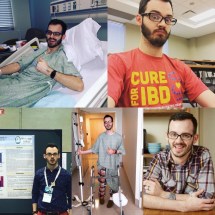 Balance is key. Health comes first,” said Aaron Blocker, a Crohn’s patient and IBD advocate. “It sucks to have to pause college because of your health, but school will always be there, and your health is important for long-term success.”
 As a straight A student, now struggling to pass classes due to an awful flare, I was devastated that I needed to ask for help. I was appreciative of my professors’ extreme kindness and that I was granted accommodations (deadline extensions, attending a different lecture on bad days, rescheduling exams, etc). This was a profound moment that taught me it was okay to ask for help,” said ulcerative colitis patient and IBD advocate, Jenna Ziegler.
 Ask for extra time, ask for a note taker. Get in touch with your school’s office for those with disabilities. Access the support you need to be on equal ground.”
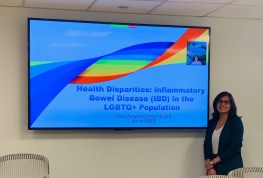 I also can use the bathroom frequently without question, eat in class without any questions and I’m allowed more than the usual 2 absences allowed in most classes,” said Tina Aswani Omprakash, Crohn’s patient and IBD advocate. “If there are group projects and I can’t partake; I ask the professor if I can do something on my own.”
 Constantly stressing about academics, friendships, relationships, and managing a chronic illness for which there is no cure. This is life with IBD on the college campus.
 Dr. Yezaz Ghouri, MD from the University of Missouri School of Medicine, along with IBD Patient, Ryleigh Murray, will be hosting the discussion. Ryleigh is currently a graduate student studying public affairs at the University of Missouri.
 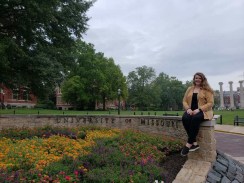 Registering with the Disability Center on your campus and receiving accommodations allows yourself to increase your success rate within higher education. Early registration, extended test time and closer parking to your classes are just a couple simple requests that can impact your education for the better,” said Ryleigh.

 As the pain persisted and my little guy snuggled me on the couch, I was losing patience with the pain that was drowning out everything around me. I wanted relief and I wanted it quickly.
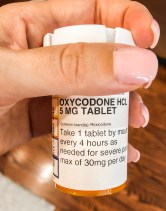 Sure, I couldn’t feel the abdominal pain, I couldn’t really feel much below my neck, which added to my anxiety. My body felt like Jell-O. I felt like I was living an out of body experience. I was whimpering and whining at 3 in the morning that I just wanted it to be the next day.
 This is not to say pain medication is always a no-go. I’m of the mindset that those of us in the IBD community should have access to opioids. At the same time, this is more of warning for patients to be mindful that the medication you take to calm your pain, may bring about side effects that are even worse than what you are dealing with in the first place. Personally, I’ll never take oxycodone again. You live and you learn. Sometimes with IBD unfortunately it has to be the hard way.


 It took time and some trial and error, but as I navigate my somewhat new diagnosis, my wife and I have learned how to best monitor my symptoms to try and avoid future flares and take Crohn’s on as a family. In addition to my medical care, this includes some key strategies to how we approach parenting.
 My wife is amazing and understands the physical impacts of a flare, but it’s my job to share with her if I’m feeling Crohn’s-y. Similarly, I have started a dialogue with my boss, so if I flare, I don’t have to pour every ounce of limited energy I have into work and come home completely empty.


 This week–

 Make a list of everything you’re interested in and then prioritize, cutting out what you don’t have your heart set on. Trying to do it all sets you up for exhaustion, frustration, and disappointment.
 lights camera crohn's