
Living with roommates. Having to use public bathrooms. Feeling fatigued and unable to keep up with the energy levels of your peers to study and socialize. While living with IBD while being a college student is difficult in the classroom, many may argue the struggles are even worse outside of academics. Socially, college is a time to explore, learn, and spread your wings. But, when you’re taking on an unpredictable and painful chronic illness, making plans to attend a house party on a Friday night becomes a bit more complicated.
Annie Tremain was diagnosed with Crohn’s disease her senior year of high school, so navigating the disease while starting college was a stressful whirlwind.  She was nervous about the potential of being matched up with a roommate who wasn’t a good match.
“I felt so alone. I requested a single dorm room, felt like I was hiding because I didn’t want to use the shared bathrooms when others were around. I was adamantly opposed to a roommate because I didn’t want to have to talk to a stranger about what I was going through.”
Using a public bathroom can be adjustment for any college student, let alone someone battling IBD. Elizabeth Haney  was diagnosed with ulcerative colitis less than one week before leaving to study abroad for three months. She says the fact the trip still happened and was so successful was a highlight of her college career. While back on campus in the States, she recalls how stressful it was prepping for colonoscopies.
“Prepping for a colonoscopy while you live in a house with three people but only have one bathroom was horrible. My mom would get me a hotel room for prep night when she could swing it financially.”
Rachel Wigell was only fourteen when she became sick with IBD, so she barely had time to form a body image that didn’t include this disease. She says she was never somebody who was confident in her appearance, but having IBD didn’t help. From the prednisone “moon face” to issues with gas and continence, there have been lots of times where she felt too gross to be taken seriously.
“One trouble I had was plain old insecurity. Living in a dorm and sharing a bathroom with 20 other women isn’t fun when you’re having diarrhea multiple times a day. I was desperate to hide how “gross” I was from other women, which meant I didn’t have a support system.”
For Sydney Mouton, being immune compromised  caused her to get sick all the time and the community bathrooms weren’t of much help.
“I was in the middle of my worst flare in college, so I had a lot of issues from medication side effects that were more difficult to deal with while in school and trying to have a social life.”
Couple the stress of the living situation with the fatigue that’s brought on from the disease and it can be incredibly challenging. So many students living with IBD have shared with me the difficulty of wanting to be “normal” and like everybody else but then having to deal with the extreme health consequences that generally result from a “fun” night out.
Sarah Kate struggled with handling the unknown of the disease, while trying to help her friends understand her situation.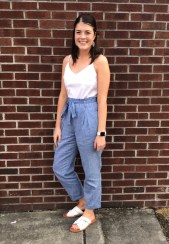
“Not knowing when I am going to feel well and having to explain to friends and them not really understanding why I felt well yesterday and why I’m not well today.”
Tips for students to calm the social stress
Be candid with your friends and open about your situation. The more you communicate, the better educated those around you will be. If people show lack of compassion or disinterest, that tells you right off the bat that their friendship is not worth your time and effort. Seek out friends who have your back, genuinely. Rather than downplaying your struggles and pain, paint a clear picture to those around you so they can support you and understand the nature of your experiences.
Give yourself plenty of time to get to and from class and social outings. Scout out the best places to have a safe, quiet rest. Pad your course schedule and extracurriculars so you don’t burn yourself out. Try to schedule your classes no earlier than 9 a.m. so you’re able to get plenty of rest each night.
Check out dorms on campus with private bathrooms. During my college experience, I lived in a quad my freshman year and lived with two roommates my sophomore year. I always had a private bathroom. Seek our dorms with these options available. The privacy and comfort will be invaluable.
Weigh the pros and the cons of a night out. If alcohol doesn’t agree with you, don’t push yourself just to try and fit in. You can still go out and have a great time and limit the amount of alcohol you ingest. It’s more fun to be hanging out with others and being sober than it is to be back at the dorm or in the hospital because you put your health in jeopardy.
If you’re struggling, don’t hesitate to reach out to the college counseling center on campus. As isolated and alone as you may feel in the moment, always know there is support available for you both near and far.
Click here for IBD on the College Campus: Getting the Medical Logistics in Check
Click here for IBD on the College Campus: The Challenge of Academics

 Jennifer Badura’s son was diagnosed with Crohn’s while in high school. As a parent, she found her son’s transition to college challenging.
 Use the patient portal to your advantage. Never hesitate to reach out if you have a question or medical issue going on. Listen to your body’s signals and don’t wait until it’s too late.
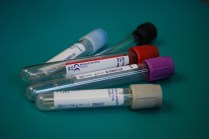 Set reminders in your phone or utilize apps that track your symptoms and whether you’ve taken your medication.
 Your disease is making the simple task of sitting in class alongside your peers an ordeal. While you may feel alone in this moment, thousands of college students around the world living with IBD can relate to this overwhelming stress and strain.
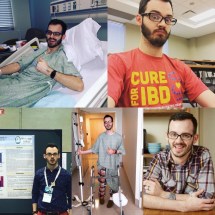 Balance is key. Health comes first,” said Aaron Blocker, a Crohn’s patient and IBD advocate. “It sucks to have to pause college because of your health, but school will always be there, and your health is important for long-term success.”
 As a straight A student, now struggling to pass classes due to an awful flare, I was devastated that I needed to ask for help. I was appreciative of my professors’ extreme kindness and that I was granted accommodations (deadline extensions, attending a different lecture on bad days, rescheduling exams, etc). This was a profound moment that taught me it was okay to ask for help,” said ulcerative colitis patient and IBD advocate, Jenna Ziegler.
 Ask for extra time, ask for a note taker. Get in touch with your school’s office for those with disabilities. Access the support you need to be on equal ground.”
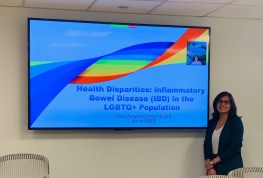 I also can use the bathroom frequently without question, eat in class without any questions and I’m allowed more than the usual 2 absences allowed in most classes,” said Tina Aswani Omprakash, Crohn’s patient and IBD advocate. “If there are group projects and I can’t partake; I ask the professor if I can do something on my own.”
 Constantly stressing about academics, friendships, relationships, and managing a chronic illness for which there is no cure. This is life with IBD on the college campus.
 Dr. Yezaz Ghouri, MD from the University of Missouri School of Medicine, along with IBD Patient, Ryleigh Murray, will be hosting the discussion. Ryleigh is currently a graduate student studying public affairs at the University of Missouri.
 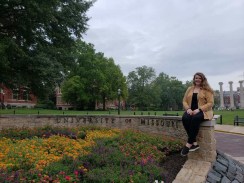 Registering with the Disability Center on your campus and receiving accommodations allows yourself to increase your success rate within higher education. Early registration, extended test time and closer parking to your classes are just a couple simple requests that can impact your education for the better,” said Ryleigh.

 As the pain persisted and my little guy snuggled me on the couch, I was losing patience with the pain that was drowning out everything around me. I wanted relief and I wanted it quickly.
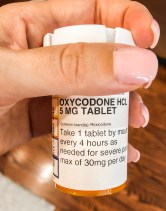 Sure, I couldn’t feel the abdominal pain, I couldn’t really feel much below my neck, which added to my anxiety. My body felt like Jell-O. I felt like I was living an out of body experience. I was whimpering and whining at 3 in the morning that I just wanted it to be the next day.
 This is not to say pain medication is always a no-go. I’m of the mindset that those of us in the IBD community should have access to opioids. At the same time, this is more of warning for patients to be mindful that the medication you take to calm your pain, may bring about side effects that are even worse than what you are dealing with in the first place. Personally, I’ll never take oxycodone again. You live and you learn. Sometimes with IBD unfortunately it has to be the hard way.


 It took time and some trial and error, but as I navigate my somewhat new diagnosis, my wife and I have learned how to best monitor my symptoms to try and avoid future flares and take Crohn’s on as a family. In addition to my medical care, this includes some key strategies to how we approach parenting.
 My wife is amazing and understands the physical impacts of a flare, but it’s my job to share with her if I’m feeling Crohn’s-y. Similarly, I have started a dialogue with my boss, so if I flare, I don’t have to pour every ounce of limited energy I have into work and come home completely empty.


 This week–

 Make a list of everything you’re interested in and then prioritize, cutting out what you don’t have your heart set on. Trying to do it all sets you up for exhaustion, frustration, and disappointment.

 She’s a 30-year-old mom and wife from Utah, who works full-time outside the home. She’s battled Crohn’s disease since December 2011.
  My mom did an amazing job making sure our lives did not revolve around her disease. She did her best to stay healthy and support us. I want my daughter to have the same experience as I had growing up. I don’t want her to ever feel the burden of my disease. I want her to know that no matter how difficult life gets, there is always hope. My mom is the one person I can call who fully understands my struggles. To have another family member that has and is dealing with the same chronic health issues is a huge support. I am very grateful for her.
 I remember explaining to him at one point that this disease would be something I will deal with my whole life and it was okay for him to leave me. It’s really hard to put my relationship with my husband into words. When it comes to Crohn’s, the thought of all he does to support me, makes me tear up. He knew that after our wedding day he would take my mom’s place at all my appointments and be my sole caregiver. Nate never shied away from the challenge and it makes me love him more and more everyday. He is my number one and having support from him means the world to me.


 Prior to the challenges and the hurt that coincide with having a disease that you expect to have until your dying day. It’s heavy and can be overwhelming. There’s no cure for IBD and once you are told you have it, your world and your life is forever altered.



 Crohn’s has shown me that just because I get knocked down with a flare, doesn’t mean I can’t bounce back and be better. With Crohn’s, life often feels like you’re in the passenger seat and your fate is out of your hands. Rather than sit back passively, I choose to grab the wheel. Cheers to 36!
 Whether you’re a chronic illness mom or not, one of the first questions you often get asked is “are you breastfeeding?” It’s such a personal choice and decision, that really isn’t anybody’s business. Yet, men and women alike act as though it’s just casual conversation.
 Before I ever became pregnant with him and up until the moment he was born, I was adamant on feeding him formula. I personally felt there were too many gray areas with the medication I am on and didn’t want to find out down the road that I put him at risk for dangerous long-term side effects. I ended up nursing the first three days in the hospital so that he could get the colostrum. Even though I was confident in my decision at that time, I sobbed when he got his first formula bottle in the hospital, because once again my Crohn’s prevented me from feeling like a “normal” person. Each time someone questioned my decision to formula feed or assumed I was breastfeeding, it pulled at my heartstrings and made me feel a bit embarrassed and less than.
 I learned about how breast milk would benefit her microbiome, lower her chance of one day developing IBD, improve her immune system, and that Humira was considered safe for nursing, among other remarkable benefits. Many friends and family members offered invaluable advice and support to prepare me for what was to come once she entered the world. No matter how much I thought I was ready, it was still overwhelming and emotional.
 I wanted to do all I could to protect her and felt guilt for not doing the same for my son. I remember lying in bed with her on my chest that first night, my husband sleeping, and texting a bunch of fellow breastfeeding moms for advice in the middle of the night. They all responded in minutes and comforted me. Initially, I had been told not to use my breast pump the first few weeks. I ended up using my pump the first week and it was the best decision I made. If I hadn’t done that, chances are I would have never made it through that initial week without changing my mind and formula feeding. If nursing is painful or difficult, don’t hesitate to break out the pump and relieve your engorged chest. Whether a baby is nursing or receiving breast milk in a bottle, it’s all the same at the end of the day.
 We gave Sophia a bottle the first week home, since I needed to pump. For the past seven months she’s gone back and forth from breast to bottle beautifully. It eased up the pressure on me and helped make it easier on both of us! We still got to bond and be close, but others are able to feed her as well.

 As a mom, it’s easy to beat ourselves up about how we choose to feed our babies. There is SO much background noise. Everyone has an opinion. As a mom who has formula fed and breastfed, I’ve had the opportunity to witness both sides. I’ve witnessed a shift within myself. Saying I breastfed felt and still feels like a bit of a badge of honor. Now that I’ve done it, I’m proud, because it was such a labor of love for me. Breastfeeding was blood, sweat and tears and so much effort. While traveling to San Diego I had no choice but to pump in a public bathroom at the airport, right at the sink, while a line of women stood staring at me. I had no choice. I think back to how drained and emotional I was on Sophia’s first night home and can’t believe we made it this far on our journey.
 lights camera crohn's