
Making plans. It’s almost an oxymoron when you battle Crohn’s disease or ulcerative colitis. For the past month or so, I’ve been corresponding with a girl named Amanda. We were brought together through a patient advocacy group known as “The Breakthrough Crew.” One of the organizers told us we should connect. I’m so glad we have. 
You know that feeling when you talk to a complete stranger and feel like they’ve been a part of your life and your patient journey since the start? That’s how it is with Amanda. We went from emailing, to texting, to talking on the phone. Our phone conversation felt so comfortable and effortless. She lives in Chicago, I’m from there. We grew up 20 minutes from one another, little did we know our paths would cross in our 30s. This past week, my virtual IBD bestie and I made plans to meet up for lunch halfway in the suburbs.
Unfortunately, days before our lunch plans, Amanda was hospitalized with a flare up. We texted and decided it would be best to change our plans and for me to take a train into the city so she wouldn’t need to drive. We were both so excited.  Three days later, at 10 pm the night before we were going to hang out, Amanda was admitted back into the hospital.
This is life with IBD. Making plans and then your disease intervening and saying “not so fast.” This is life when you don’t know what the next hour or day will bring. IBD can rob us of so much of what so many people take for granted. In these moments, this is when friendships within the IBD community mean so much.
While Amanda sits in her hospital bed, we’re able to correspond and be there for one another. I don’t think twice about having my plans change in a matter of moments, it’s almost an expectation. When I heard she was hospitalized, we shifted our plans and rather than lunch and girl talk, I was going to take the train and an Uber to the hospital to meet this girl who I’ve never met, but feel so close to. Unfortunately, her and I both knew rest was what she needed more than anything. And hospital visits, while uplifting, can be exhausting.
When she voices frustrations I too can feel her pain and offer meaningful words of encouragement.
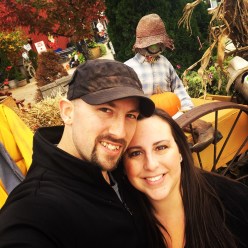
Amanda and her amazing husband, Rick
When she talks about her incredible husband Rick and how the poor guy wasn’t even given a chair to sit in as she struggled in pain for hours in the ER, it immediately brings me back to moments where my husband had to lay in my hospital bed with me because he too wasn’t given a place to rest.
Since I started sharing my story in 2014…nearly a decade after my diagnosis, I’ve realized how empowering it is to be open, to find comfort in friends—both virtually and in real life—and to know there are so many people out there who can be your lifeline in health and in flare ups. Find your Amanda. Find your friend who gets it. Even if you have yet to meet in person, they can bring you comfort you never realized you needed until it was available.
Amanda and I made plans. They didn’t happen. But, hey…that’s the nature of the beast we call IBD. If it weren’t for IBD, our paths never would have crossed. We’ll try again next month, and the month after, and one of these times the stars and our health journeys will align.

 Despite making life-long friendships and memories, she felt the challenges of her dietary restrictions, and couldn’t take in all the monumental experiences like her peers.
 “A Birthright Israel trip includes airfare from major cities, hotels, meals, transportation within Israel, and costs associated with touring the country,” said Deb, who as a Crohn’s patient herself, is helping with the coordination of this program for Israel Outdoors.


 Everyone knows the prep is far from desirable and it doesn’t help when you’re famished. For some reason, this go around was especially difficult on me. I was incredibly nauseated and weak. I vomited multiple times. I could barely get it down.
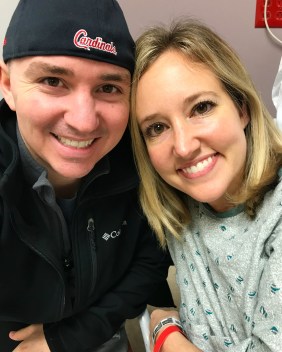 As I sat alone in my hospital gown, waiting for the IV and the procedure I had a few moments to think, pray and reflect about my patient journey. My husband Bobby came back to see me, held my hand, kissed me a few times and I was whisked away. I woke up to the best news! There were no signs of inflammation or active disease and my streak of “remission” continues. I put that word in quotes because I am always hesitant, as my symptoms always come out of left field and blindside me. For now, I am going to bask in this celebratory moment, enjoy every feel good day and take in the relief of knowing I’ve gone through another colonoscopy and passed with flying colors!
 I had just gotten off the stage after speaking at the Crohn’s and Colitis Foundation Patient Symposium Event in October. Her and her mom, Michelle, approached me outside of the auditorium. Tears in their eyes. Smiles on their faces. I immediately felt a connection and knew this little girl was something special.
 She’s had a total of three colonoscopies, an endoscopy and an MRE. She’s been hospitalized due to flare ups three times. She has three siblings at home, so as she’s in the hospital or going to the doctor, her parents have to care for them as well. There’s a reason for the saying—’it takes a village’… because it really does.
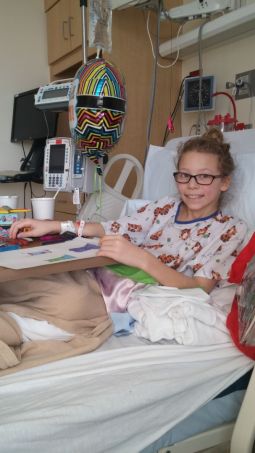 Also, as a parent of a child with a chronic illness, we are their best advocate. No one knows your child better than you do. If you think that something isn’t quite right, trust your momma instincts!”
 Right before the shot, she relaxes her leg, takes a deep breath and pretends she’s anywhere but the living room couch.

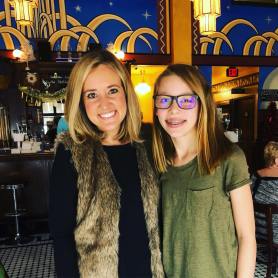

 I was immediately at a loss for words. But in a good way. I’ve been those people in that commercial. I’ve witnessed family members look at me sympathetically as I excuse myself from the room. I’ve held my stomach and grimaced in pain, doing all I can not to miss a moment of a social gathering. I was recently at the movie theater with my husband, gazing with jealousy at people who could eat popcorn…willing myself not to buy any.
 I’ve been on Humira almost 10 years. I don’t need to be sold on the drug. But this campaign means the world to me. It represents what my parents, husband and son endure by my side. This disease impacts more than just the patient. It’s a family affair. When my son is old enough I want him to be empowered by my strength, but able to empathize with my struggles. Thank you, AbbVie for recognizing this and giving the world an inside look at the IBD patient and family experience. The commercial ends with “To be continued”… I can’t wait to see what’s next.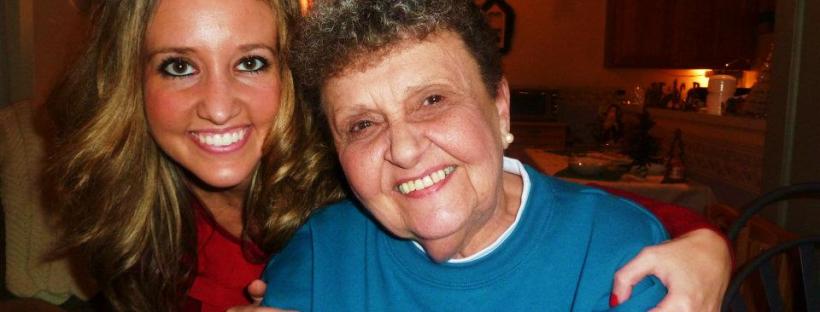
 When those close to me are in harms way, I have a difficult time compartmentalizing my stress and worry and not allowing it to impact my Crohn’s disease.
 I have never been able to handle the thought of life without her. It’s overwhelming not to have my grandma here to talk with all the time, visit, share the holidays with and I’m heartbroken that she’ll never get to see Reid grow up. I’m also scared about dealing with this major loss and having it throw me into a tailspin. The last thing she would ever want, is for me to be sick. Each hospitalization, each flare, each setback, always hurt her heart. She hated to hear of any complications or issues. So, I know I need to be strong and reign this in…in her honor.
 What can we do when we know we have to go on and be healthy for our families, but struggle to manage our IBD—even with a combination of strong medications?




 When I visited my GI for a routine appointment last week, she told me those with IBD who have surgery oftentimes have an “issue” called
  This medication is typically a cholesterol medication, but can be used by Crohn’s patients as a bile acid sequestrant. By taking one pill prior to eating each meal, it helps bind bile acids in the intestines and can prevent the need to go make a mad dash for the bathroom immediately after eating.
 I wasn’t thrilled to add another pill to my patient repertoire and daily regimen (it’s a horse pill!), but this has the ability to be a game-changer.

 We tried new medications, but after eight months of no change in my small bowel, my gastroenterologist thought it was time to say goodbye to the diseased portion of my intestines. I remember the phone call from her just saying “I’m going to give this to you bluntly, you need to get them out.” At first, I was shocked, then angry that my body was failing me. I brought my husband to my surgery consultation, and I’ll never forget the look on his face as the surgeon was asking me very detailed symptom questions and I was answering them honestly. It was a look as if I had by lying to him for years. Even my husband, the person I spend every waking hour with, have been with for almost six years and since I was diagnosed, didn’t fully understand how bad my disease had gotten in the last three years.
 As a mom and a wife, I questioned how my family would make do without me… But as surgery drew closer and I was in so much pain that I could only eat liquids and was basically confined to the fetal position, I knew it was time.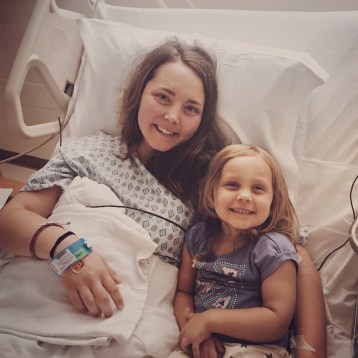
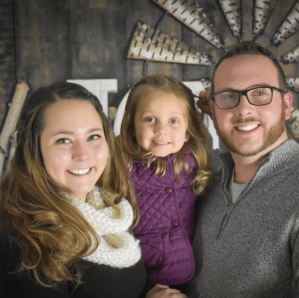 Getting surgery has changed my life in just 12 weeks. I can’t even imagine how much it’s going to change my life in the next year or two. I know the statistics aren’t in my favor, but until then I will totally be living my best life with a foot less of intestine and a bigger smile on my face!
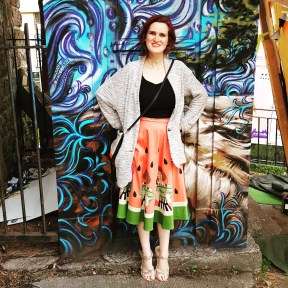 She’s not your typical patient advocate. She’s an author who uses her sense of humor to not only inspire, but also make you laugh. She says things many of us think, but won’t say. Her most recent piece of work, “
 That gives you an idea of what an incredible resource this book is for women in the chronic illness community. Kathleen’s ability to share her experiences and speak to others to make a difference, inspires me to be strong in my patient journey. Though we’ve never met in person, we’ve been “friends” on Twitter, Facebook and Instagram for years. I had the chance to interview her about her latest book. Here’s what she had to say:
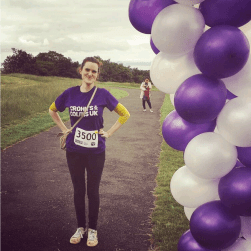 People seem to enjoy the humour spattered throughout and find it to be informative and inclusive which is what I’d hoped for! This time round has been nerve wracking again so i try to only dip in and out of reading reviews for the sake of my own sanity/ego!”
 Kathleen is dedicated to helping others feel less alone and afraid in their fight with chronic illness. As someone who’s battled Crohn’s more than 12 years, I can tell you firsthand her words empower me to be strong. I constantly find myself nodding along while I’m reading and even laughing out loud. You can follow Kathleen on Twitter and Instagram @kathfantastic.
 lights camera crohn's