The gift of good health: A delicate balance

As author Augusten Burroughs so well put it, “When you have your health, you have everything. When you do not have your health, nothing else matters at all.”

For those of us who live with a chronic illness, whatever it may be, those words ring true. If you weren’t born with your condition, take a moment to reflect on what your life was like and the perspective you had prior to your diagnosis. Did you take your health for granted because you never knew anything else? Did you ever wonder what it would be like to battle an illness or fight for your life? Likely, the answer is no. It takes the experience and living with the disease or condition to truly grasp that feeling, that worry, and the strength that comes along with it.

I was lucky to have nearly 22 years of “perfect health” prior to my diagnosis of Crohn’s disease. I remember being baffled when my health took a turn for the worse—with no family history and my mom saying to doctors, “she’s never even had an ear infection?!” The nature of one’s health is something that can change in the blink of an eye. One day you wake up feeling invincible, not even thinking about your own personal health for a second …and the next day you could wake up with a disease you have turn to Google to for an understanding… and even how to pronounce it.

While this is the season of giving and objects are great—my call of action to you, is to celebrate your feel good days and not take them for granted, whether you have a medical condition or not. If you’re an overall healthy person, be grateful of that blessing and show compassion to those who may not be as fortunate as you. By showing gratitude for your own personal healtimg_5495h and understanding just how lucky you are—it will make you empathetic to those who may have a tough road ahead. As a person with Crohn’s, while yes, I have a chronic disease, I still try my best to consider myself “healthy.” I recognize that while many have it better, so many have it worse. I celebrate the fact that I haven’t been hospitalized for 16 months and that I’m 25 weeks pregnant with my first baby.

I thought it would be empowering for all of us to hear words of wisdom from those who have faced some of life’s toughest days with sheer strength. I turned to family members and friends—each with a different, inspiring story. Here’s what they have to say about the gift of health.

Bill Coon, two-time heart and one-time kidney recipient: “After everything I have been through, I have learned that one’s health is paramount. Like all people who have survived a traumatic experience, as life returns to normalcy, I find myself easily becoming distracted by the daily stresses of life. Occasionally, when I begin to fixate on something miniscule in the scheme of life, such as a delayed flight, I have a moment where I flash back to a time when I was too ill to stand up straight and my priorities seem to check themselves. I just pause, realize that as long as I have my health, I am fine and I carry on. Do your best to stay positive. Focus on the many beautiful things or people in your life, whom would not be in your life had you not been diagnosed. You may think there are none, but there are.”

Erin Gianaras, rheumatoid arthritis fighter and stroke survivor: “Ultimately, your health is the only thing that matters and becomes all you care about. Work, your social life, finances, relationships, etc., seems so unimportant. My advice is to surround yourself with a good support system, ask for help when you need it, allow yourself to feel your feelings (good and bad!), let yourself cry and pamper and reward yourself during difficult times. You don’t always need to feel “strong” or be “brave”…because in reality, you can’t be…but never stop searching for the positive.”

Katelyn Yosimoto, who after she tested positive for the BRCA gene, took steps to be proactive with her health, including undergoing a prophylactic double mastectomy in her 30’s to reduce her risk for breast cancer:The past four years have taught me that I’m truly the best advocate for my own health. Trusting your gut, asking lots of questions, finding the right team to support you and feeling empowered to make smart decisions for yourself is so important. We all get busy – but that’s no excuse not to make annual visits to your doctor (even when you feel great), schedule mammograms and other tests, and raise a red flag when something doesn’t feel quite right.”

Sean Jaeger, diagnosed with Crohn’s in 2007 and has undergone four major surgeries: “My advice is, we have to manage our stress to the best of our abilities, I believe there’s a direct link between our mental state of mind and the physical condition of our body. Therefore it is crucial to maintain a positive outlook, while also taking care of your everyday needs: eating habits, sleep schedule, exercise schedule, time for something you enjoy personally, etc. All of these things make an impact on the way we feel.

Julia Nesselhauf, psoriasis battler and mother to 10 month old Jade Nesselhalf, who was born with a congenital heart defect: Finding out at 20 weeks that my pregnancy was high risk and Jade had a congenital heart defect turned our world upside down. My daughter has lived almost 10 months with a very complicated congenital heart defect called Tetrology of Fallot. She was born weighing 2lbs 9oz. and has fought in the hospital every single day to be here with us. Jade experienced something in August that forever changed our lives. She had a cardiac arrest and received compressions for over an hour. She suffered severe brain damage and we nearly lost her. When I think of health now, I do not think of just the physical illnesses I think about the mental side of it. Through this process my mental health has been put through the test of time. I truly believe in order to be physically healthy you also have to be mentally healthy as well. I look at my daughter every day and know the reason why I wake up in the morning. We all have our battles in life and it’s how you choose to fight those battles that makes the difference. If I had one piece of advice to give to those who suffer from chronic illness, it would be to live for every moment! Surround yourself with people who care about you and start caring about yourself. YOU are the one that controls your happiness! Take control of your life! Don’t let chronic illnesses be a crutch, make what feels like a setback… the motivator to be better!”

Gina Carr, Type 1 diabetic: Health doesn’t happen by accident. Someone can do all that they should and still be impacted by chronic conditions. It’s an obstacle that is given to the strong. To have a good day is weeks and months of work- checking my blood sugar, staying active, and watching what I eat. It’s shots, needles, frustration, and trial and error. To have a “good day” is the best feeling I’ve ever felt because it’s an accomplishment and team effort with my physicians, friends and family support and not achieved easily. I’m grateful for those good days. 

Alisa DeMarco, Crohn’s fighter since 2005 and mother of four, Good health is considered the “default” state of being…and you never think about it until it’s gone. Having health struggles makes you reevaluate the invisibility of it. It’s like having x-Ray vision. Try to live in the healthy moments, and look towards the next good cycle. Having a bad day or week? Know that this is only temporary, and the next good day is just around the corner. Chronic health struggles have ups and downs– enthusiastically ride the wave of feeling good!”

Holiday gift ideas for loved ones battling chronic illness

Time is ticking, less than two weeks until Christmas is here. If you’re scrambling trying to figure out what to get your loved one who battles a chronic condition (such as Crohn’s)—here are 10 gift ideas:

  1. Pajamas or comfy clothes with a loose waist band for when flare ups or bad stomachaches strike. If you know a surgery or hospital stay is on the horizon and you’re buying for a female—nightgowns are best.
  2. Detox tea that includes turmeric, cloves, cinnamon, nutmeg or cayenne. Green tea is also great! Tea isn’t just a soothing hot drink in the winter months; it’s low in caffeine and can also reduce inflammation associated with Crohn’s.
  3. An inspiring read. I suggest the following books:
  1. Spa gift certificate to say so long to stress. While massage therapy cannot directly address the cause of the problem, it can help reduce stress, which in turn may help with symptoms.
  2. Netflix/Amazon Prime subscription so you can binge watch a variety of shows when you’re sidelined on the couch in pain.
  3. A journal to keep a food diary, vent about the tough days and celebrate the “feel good” moments.
  4. Mineral bath soaks, muscle relief lotion, face masks, candles to help decompress and relax. My friend Erika makes great handmade products crafted from earthmade ingredients. I just ordered a bunch of candles! Click here to take a look at her Etsy store.
  5. A 2017 calendar with daily inspirational quotes since we all know some days are easier than others. Words are powerful and can motivate you to get out of bed in the morning and take on the day with your best possible self.
  6. A FitBit or piece of jewelry that has meaning. For example, the month I had my bowel resection surgery my fiancé (now husband) gave me earrings and a necklace with a black stone that symbolizes strength. Every time I put them on, I think about the story behind it.
  7. Donation to the Crohn’s and Colitis Foundation to give hope for a cure, understanding, awareness and a normal day. Find out if your Crohnie has a local chapter that you can donate to by going to the CCFA website All donations between NOW and 12/31 are being matched, up to $500,000!

Happy giving! Know that the best gift you can give to someone who battles a chronic illness on a daily basis is constant support, patience, compassion and love through the ups and downs. THAT, my friends, is priceless. image1-15

Soundtrack of strength: How music helps with healing

Music has a way of evoking emotions and making us feel. It’s tied to memories and moments in our lives. It speaks to us in ways daily conversations often aren’t able to. When you battle a chronic illness, music serves as a coping tool, an uplifting way to feel empowered and anatalie-runningt peace.

I’ve been a big fan of music my whole life—and throughout my battle with Crohn’s disease these last 11-plus years there have been moments when it’s helped motivate me to be brave in the face of the unknown.

When I think back to my initial diagnosis and hospital stay in July 2005 I can vividly remember clutching my iPod and rocking back and forth on the toilet as I endured colonoscopy prep while experiencing a terrible flare up. For people who complain about going through the prep as a “healthy” person—imagine going through that experience while your intestines are inflamed and your body is already fighting against you while tethered to an IV pole with multiple medications running through you. I remember my frail, weak body draped in a hospital gown… shaking like a leaf on the toilet in pain and disbelief of my new reality. Music helped distract me and get me through in that moment. Days later when my potassium levels plummeted and I needed potassium in my IV, the pain was unbearable. I felt like fire was going through my veins. As I gripped my arms and tears were streaming down my face with family members looking on, I again had to put my headphones on to try and escape.

Music therapy—whether you just listen to songs that calm you or give you strength or seek professional help, is known to have a dramatic effect at optimizing all major systems of the body, because it counteracts our stress responses so well. I’ve read that music therapy helps cancer patients deal with nausea and vomiting. It’s that powerful. When in pain, music even has the ability to ease the intensity of what you are feeling. While no one knows all the ways music can benefit the body, studies have shown that music can affect brain waves, brain circulation, and stress hormones. Some songs may help you calm down when you’re feeling anxious, others may be for celebratory moments, while others help put everything in perspective and ground you.

Here are some of my fav’s…

Comeback Kid—The Band Perry

Scars to your beautiful—Alessia Cara

Fight Song—Rachel Platten

This Is Why I Need You—Jesse Ruben

Keep Breathing—Ingrid Michaelson

 I Lived—One Republic

Resolution—Jack’s Mannequin

Around the World—Kings of Leon

Collide—Howie Day

Stacks—Bon Iver

Dog Days are Over—Florence + The Machine

Falling Faster-Andrew Ripp

Believe—Mumford & Sons

Sweetest Devotion—Adele

H.O.L.Y—Florida Georgia Line (my song for my baby boy, due April 1!)

I’d love to hear what songs speak to you as you deal with the unknown events life throws your way. It’s always nice to have an arsenal of songs ready to go. My all-time favorite go-to when I’m in the hospital is the song “Swim” by Jack’s Mannequin. No matter how many years go by, when I’m enduring a flare and hear this song I can never fight back the tears. The words not only make me feel like I can take on anything, but also remind me of my cousin Bill’s courageous wait for a heart and kidney transplant in 2009. I remind myself if he did it, I certainly can. Bill’s nurses would write on his dry erase board “keep swimming” as he waited for the gift of life. The song has been a source of strength for our family ever since. Whenever anyone is going through a difficult time—I always share those two words, because all we all can do is “keep swimming.”

Crohn’s & Colitis Awareness Week Dec. 1-7: How you can make a difference

What does it mean to be an advocate? To me it’s doing everything in your power to speak up, step up and help raise awareness for a cause that’s near and dear to your heart. It’s about having a voice for those who may shy away from the spotlight. It’s standing up for what you believe in and offering hope to others who can’t fathom what it’s like to walk a day in your shoes.

Crohn’s and Colitis Awareness Week was created in 2011 by U.S. Senate Resolution 199, which expresses appreciation to family members, caregivers, health care professionals, researchers, and Crohn’s and ulcerative colitis patients. Each year the Crohn’s and Colitis Foundation of America (CCFA) dedicates this time to truly focus on spreading awareness and highlighting what it’s like for the millions of people who may look healthy on the outside, but are suffering and experiencing pain on the inside. This year’s theme is #IBDvisible.

As CCFA puts it, “The toll IBD takes on the entire patient lies hidden underneath, significantly reducing public understanding of what IBD is and how it affects quality of life. Patients and caretakers can change this by getting involved and sharing stories…giving a face to these diseases.”

Since my diagnosis in July 2005, I’ve encountered countless people who have no idea what Crohn’s is…I find myself repeatedly giving my elevator pitch that I feel like I can recite in my sleep. It doesn’t bother me, but it makes you stop and think for a second that the majority of people really don’t understand what it is, how it makes people feel, and the severity of it. It’s not just random stomachaches and constant bathroom breaks. It’s so much more. Even when you’re in a remission state not a day (or sometimes even an hour passes) that it doesn’t cross your mind, despite being out of the hospital you are constantly on medications with systemic side effects. The thoughts and worries lurk within you frofullsizerenderm the day you are diagnosed. The internal dialogue can be maddening at times… “When I eat this how will it make me feel? What if I get sick today? Is this stomachache a sign of something that’s brewing? When will my next flare up be…will it interrupt big plans I have coming up?”… the list goes on.

For those who are not patients—I oftentimes get the feeling that many think we’re just being worry warts or that we’re acting like it’s a bigger deal than it is and that we’re healthy and have nothing to worry about. Having Crohn’s and talking about it is not a way to get attention, it’s our way of verbally trying to explain to you what we’re going through so we don’t feel so isolated and alone in our fight. As I sit here writing this article… my stomach is hurting. I don’t know if it’s because I just ate lunch or if something is going on with my pregnancy.

While there are many health conditions that are of course more serious or life threatening, Crohn’s and ulcerative colitis are not a walk in the park. The issues in our intestines and colons translate to issues with nutrition, bone strength, joint pain, etc. The mental anguish the disease can cause leads many to a depressive state.

Through the years I’ve found it empowering to get to know members and employees of CCFA who all have the same goal and mission in mind. One of those people is Tovah Domenick.

“Crohn’s disease and ulcerative colitis affects so many people, including several of my loved ones, and CCFA is working hard to not only provide support for patients but also to find better treatments and ultimately a cure. As an employee of CCFA it’s hearing individual patients’ stories and how they have overcome their challenges that makes me passionate about the cause. CCFA’s website is our greatest resource and is full of information for patients, supporters, and caretakers.  We offer online support group, an IBD Help Center, links to find local support and programming, tools & trackers to help manage your IBD, information on current research projects, and much, much more,” said Tovah Domenick, Take Steps National Manager, CCFA.

If I could ask one thing of you—it would be to educate yourself and show compassion. Don’t question a loved one, friend or coworker or try and compare Crohn’s or ulcerative colitis to anything. Instead, listen. Listen with an open heart and the understanding that this person in your life is up against a battle that they will likely face for the rest of their days. Researchers are working towards a cure, but in my heart of hearts I truly don’t know if that cure is going to happen in my lifetime. I try not to focus on a cure, but rather have hope…and be thankful there are awareness weeks like this that give these diseases the attention they so deserve.

I am celebrating this year because I’ve gone 15 months without a mehospitalization and I’ve been blessed with a smooth pregnancy thus far.

I am celebrating this year because this blog allows me to speak out for others who may be ashamed or feel alone.

Most of all, I am celebrating Crohn’s and Colitis Awareness Week with the hopes of reaching those who have never heard of Crohn’s or ulcerative colitis before, and give them the tools and understanding of how to be an IBD advocate themselves. Even if you don’t have either disease, you can be a part of this effort.

Start the conversation with friends and family. Talk to your state legislators. Raise money to help fund research and find a cure. Wear purple to support a friend or family member the week of Dec. 1-7. Share a post on social.

To learn more about how you can make a difference check out: http://www.ccfa.org/AwarenessWeek/.

A time to be grateful and show gratitude

For as long as I can remember my family has participated in a Thanksgiving tradition that’s become something special. Each year—we all take a moment to write down what we’re thankful for. Some people write bullet points (Dad!)…others (like myself) are known for our essays (big surprise). We read them out loud after the Thanksgiving meal. Then, my Auntie Gail compiles them into a journal. It’s a time to show gratitude for all we’ve been blessed with the past year, a time to look back at loved ones entries who are no longer with us, and a time to see how life’s experiences and challenges have shaped us into the people we are today.

It’s a tradition that’s near and dear to my heart and something I look forward to continuing with my children in the future. I highly recommend it if you’re looking to start a tradition with your family! Normally, we wait to share our ‘Thankful List’ until the actual holiday—but I’ll give you guys a sneak peek.

When I think of 2016, I’m thankful for some of the most magical moments of my life and for several family members and friends who’ve shown me what it means to be strong. This past year, I celebrated an amazing engagement and had a dream-come-true wedding—getting to spend the rest of my days with Bobby is the best journey I’ve ever been a part of. Planning the wedding and working with my parents to create the dream day are memories I’ll always hold close to my heart. Getting pregnant and finding out we’re having a little boy has been nothing shoimg_4936rt of incredible. I am so thankful for this blessing and can’t wait til he joins our family.

I’m thankful that for the first time in five years I didn’t have to visit the emergency room or be hospitalized due to a Crohn’s disease flare. Until your health is taken from you—it’s easy to take those feel good days for granted. I’m so grateful the resection surgery I underwent in August 2015 helped alleviate so much of my daily pain and gave me the quality of life I’ve wanted for so long. If it wasn’t for the surgery, I doubt I would have reached remission and been able to get pregnant when I did.

I’m thankful for the special bond I share with Grandma—and that she’s going to soon be a Great-Grandma. I’m thrilled she was able to witness her beloved Cubbies finally wiimg_4830n a World Series. Getting to call her and hear the excitement in her voice the night they won and surprising her with the baby news are moments I will cherish for the rest of my life.

Living away from home—I’m thankful for my wonderful in-laws. The Hayden family has taken me in as one of their own and it’s been so fun to make so many memories through the years.

When my good friends, Joe and Julia, welcomed their baby girl Jade into the world February 25—they were faced with many unknowns as she was born with a heart defect. I’m thankful Jade is now in a rehabilitation facility, rather than the hospital and hope and pray she continues to make jade1strides so she can come home for the first time this winter or spring.

My Aunt Judy who passed away from ALS in January and my cousin Erin who endured a massive stroke in June and continues to fight each day—taking 50-60 pills, undergoing rehab and facing the unknown. Both of these special ladies have become heroes to many. Their battles provide perspective on what it means to be strong. I’m thankful for our special bonds and that Erin continues to amaze us all with her grace and strength.

I’m thankful my cousin Bill continues to live out his dream of being a motivational speaker, inspiring people across the country and world with his experiences as a two-time heart, and first- time kidney recipient and that I had the opportunity to hear him speak this year. 

My Godson Graham turned five this week. He is truly a light in my life and I adore him more each and every time I get to see him.  I was blessed with the best “Nouna” (Greek for Godmimg_5266other) and love knowing that I am continuing that tradition of closeness with my little guy.
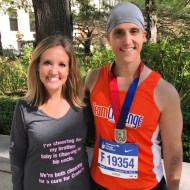
One of the highlights of the year was watching my brother Greg  and cousin Carissa train and complete the Chicago Marathon to spread awareness for Crohn’s Disease and ALS. Their dedication, focus, and determination were incredible to witness and something I will always
remeimg_4912mber.

I feel so blessed to have such wonderful friends—from people who I met growing up through childhood and college to different TV markets and St. Louis. No matter the distance and the time that passes it’s comforting to know we can all pick up right where we left off. Several of my close friends experienced health complications with their babies and children this year. Whether it was staying in the NICU for weeks or needing open heart surgery, each of my friends and their little ones showed such resilience through the unexpected. I’m grateful Andrew, Graham and Cody are all home and healthy now. 

I have to give a Shout Out to my little guy Hamilton James. I can’t believe January is seven years since I brought him home from the shelter. He’s brought me more joy than Iimg_5177 ever thought imaginable from a pup. He’s already resting his head on my belly and anxiously awaiting the arrival of his baby brother. I have a feeling he’s going to be very protective of him! I’m thankful for his health and daily cuddles.

I’m always thankful for family and especially appreciative of the importance of it as we prepare to welcome another “Sparacio/Hayden” into the bunch. At the end of the day, all we truly have is our health and our family. I love knowing our little guy is going to be surrounded by so much love. 

Lastly, I’m thankful for this blog and all its readers. It took me 11 years to muster up the courage to start it—and the experience has been cathartic for me and hopefully for you, too! Your feedback, words of encouragement and outreach since I started sharing weekly articles in July really does my heart good. Receiving messages from fellow IBD’ers across the world has been humbling and shown me the power of the written word.

I hope during this week of “thankfulness” that you all take a moment to reflect on the good, the bad, and the miracles that brought you to where you are today. I promise that pausing to think about what you’re thankful for will leave you with a grateful heart.

Pregnancy & Crohn’s: 20 weeks down, 20 to go

As a soon-to-be, first-time mom with a high risk pregnancy due to my Crohn’s disease, this journey has been extremely exciting and the greatest blessing I’ve ever experienced. But, despite how smooth it all has gone so far (knock on wood), the experience for any new parent comes with its fair shares of questions and concerns.

As my belly gets more and more like a basketball it mentally gets more and image1-14more difficult to administer a biologic injection into my thigh. When one of my many pregnancy apps recently let me know that “baby’s intestines are forming today”…I couldn’t help but wonder if they will be healthy throughout his life, pained with the worry that I could pass along my chronic illness to him. Anytime I feel a cramp or a pain in my abdomen I stop and try and decide whether it’s pregnancy related or my Crohn’s acting up. Let me tell you, round ligament pain feels eerily similar to an average day of Crohn’s pain! My GI has assured me that it’s my body acclimating to the baby and making room for him.

On Friday (Nov. 11), my husband and I got to see our little man for the 20 week anatomy scan. It’s truly such a miracle to see how he’s developed since the start and to not only see him move but also feel the flutters of his little body for the first time this past week. We were relieved to hear he is growing as he should and looking healthy as can be.

As the weeks go by I keep praying that I won’t have any complications with my disease process when I hit 25-30 weeks. My high risk OB warned me that’s a pivotal time when for some reason things can take a turn for the worse. I also hope that if and when my next flare strikes that Baby Hayden is here—and not still needing to grow and thrive inside of me. While there’s a lot of talk about postpartum flares around the 2-3 month mark, as much as that’s not ideal…it doesn’t scare me. I can break out the big guns and take all the IV drugs I need to heal if that’s the case. I just don’t want to have to do anything that could possibly harm or img_5210stress the baby.

My husband always reminds me that there’s no reason to worry—until you actually have a reason to worry. I wish I could be that calm all the time…but he’s right. There’s no sense in getting all stressed over something that could maybe happen, hasn’t happened yet, or is completely out of your control. Whether you have a chronic illness or whether you’re completely healthy, we’re all on the same playing field when it comes to not knowing what tomorrow will bring. All we can do is celebrate the daily joys we experience and have confidence that there’s a bigger plan in play for us all.

The recipe for strength: Courage + Resilience = Triumph

We all have moments in our lives that are impactful, memorable, and challenge us to our core. I recently had one of those moments while attending a Tedx Women’s event in St. Louis. The speakers were all phenomenal, but one in particular really struck a chord with me. Her name is Anne Grady. Anne’s teenage son has severe mental health issues and she’s a cancer survivor. To say she’s encountered her fair share of difficult days and trying times is an understatement.

I asked Anne this week what advice sheanne-grady-headshot would give to those battling chronic health conditions. She said, “Every day is another chance to practice. If you don’t get it right one day, give yourself permission to be human and try again the next.”

A few “mantras” that have helped her: “it is what it is…but it will become what you make it, all I can do is all I can do, and you got this!”

Anne’s presentation centered around an equation: Courage + Resilience = Triumph. As she puts it—Courage is the ability to do something that you know is difficult or dangerous. It’s the mental or moral strength to persevere and withstand danger, fear or difficulty. She went on to explain that Resilience is the ability to recover from or adjust easily to misfortune or change. It’s our ability to get back up after we get knocked down.

Whether you live with a chronic illness like Crohn’s disease or not—we all experience some form of pain or discomfort through our lives. It’s the painful memories and trying times that really shape us into the person we are. Courage is not about the absence of fear or difficulty—it’s using the tough times as a catalyst to help us grow strong enough.

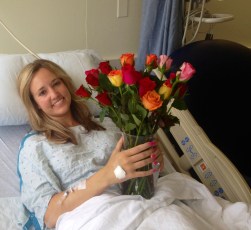
The black and white photo above signifies one of the happiest moments of my disease journey thus far. I was out to lunch with my Mom and now husband celebrating post-colonoscopy. For the first time in more than nine years I was told I was in “remission.” Sadly, ten days later I was hospitalized with a bowel obstruction. Even knowing the turn of events that occurred not long after the picture was taken, it’s still a moment of pure joy that I will always remember.

Anne also shared a great quote from motivational speaker Mary Ann Radmacher, “Courage doesn’t always roar—sometimes courage is the quiet voice at the end of the day saying I’ll try it again tomorrow.”

I love this quote because it speaks to so many of us who day after day battle chronic pain and the unknown. It’s overwhelming when you have the stress of a chronic, lifelong illness. That quote serves as a reminder that some days are going to be harder than others—and sometimes our spirit may break—but we always have the ability to bounce back and strive for feel good days.

Speaking of bouncing back—Anne brought out one of her favorite childhood toys on stage—a bop bag and explained how she’s come to appreciate that we’re all a little like a bop bag, in that when life knocks us down, we get back up.

Anne stood next to the bop bag and punched it after each sentence…

You spill a cup of coffee on your brand new shirt… your boss is furious at you for missing a deadline… your partner says they cheated on you… hitting the bop bag harder doesn’t change the outcome—it just takes a little longer to bounce back.

Living with Crohn’s can be exhausting, disconcerting, scary, and heartbreaking—but it’s important to try and find strength through your struggles. When we make it through a difficult time it’s called “post traumatic growth”—while we can’t see it at the time, we’re able to look back with perspective and learn from it.

When I was hospitalized and told I would need 18 inches of my intestine out in July 2015—and the doctors sent me home for 10 days to build up my strength—I have never been more scared in my life.  My fears of surgery, the countdown to returning back to the hospital, and the unknown of whether the surgery would bring me the comfort I yearned for was overwhelming. But looking back—I wouldn’t change a thing. What was one of the hardest periods of my life ended up shaping me into a much stronger and healthier person.

It may seem easy to talk about courage and resilience during a calm time in your life—it may feel like it’s a whole different beast when you’re in the thick of the storm. The key is having gratitude for not only yourself, but others.

As Anne said, “Oftentimes when I’m sad, frustrated or disappointed…it’s because my expectations and my reality are out of alignment. Most people are doing the best they can. People don’t wake up and think—how many people can I disappoint and frustrate today? If you lifted the rooftops off all our homes—you would see we’re all dealing with something.”

When the going gets tough—try your best to recognize what is good in your life and give those around you the benefit of the doubt. It’s a powerful way to build resilience. The next time you’re faced with adversity—don’t run from it or let your emotions get out of control—instead think of it as an opportunity to practice resilience and courage to help you triumph.

You can learn more about Anne Grady by checking out her website: http://www.annegradygroup.com/.

IBS vs. IBD: Setting the record straight about the medical acronyms

Time and time again you hear it—are Irritable Bowel Syndrome (IBS) and Inflammatory Bowel Disease (IBD) the same? Or people say—I know someone who has IBS, that’s the same as Crohn’s, right?! I’m here to help set the record straight. Although the two disorders share similar names, they have distinct differences.

When you hear of IBS it’s classified as a functional gastrointestinal syndrome, which means there is some type of disturbance in bowel function. BUT—it’s not a disease. Syndromes are defined as a group of symptoms, in this case abdominal cramping, bouts of diarrhea, and constipation. IBS does not cause inflammation; patients’ digestive tracts show no sign of disease or abnormalities.

IBD (Crohn’s and Ulcerative Colitis) cause destructive inflammation and permanent harm to the intestines and bowel.  Crohn’s and UC are characterized as autoimmune diseases. For instance, IBD can affect not only the intestines, but can also cause arthritis, anemia, blood clots, malabsorption, weight loss, eye conditions…and the list goes on. Crohn’s can affect anywhere alhospitalong the gastrointestinal  tract (from the mouth to the anus), and can result in strictures (narrowing parts of the intestine), fistulas (abnormal connections between different organs or sections of bowel), and abscesses (collections of pus) inside the abdomen or around the anus.


Since my diagnosis of Crohn’s in 2005—aside from the chronic inflammation in my small intestine associated with flare ups, I’ve dealt with anemia, malabsorption, osteoporosis, and malnourishment. In 2008 I had an abscess the size of a tennis ball in my small intestine, luckily it was alleviated by IV medication.

While IBS causes discomfort (and I’m not trying to discredit the pain people feel)… IBS rarely results in hospitalizations and treatment does not involve surgery or powerful medications, such as steroids and biologics.

According to the International Foundation for Functional Gastrointestinal Disorders, IBS affects at least 10-20 percent of adults in the U.S.—mostly women—and is second only to the common cold as a cause of people missing work! Surprisingly, it’s one of the top ten most frequently diagnosed conditions among physicians in the U.S.

Just like with IBD, the cause of IBS is still unclear. Some believe stress aggravates the condition. While some consider it a psychological condition, it is not. People with IBS also tend to have irregular patterns of colon motility (meaning that the nerve endings lining the bowel are unusually sensitive, and in turn make the gut more active).

Most people with IBS will never develop IBD. But, a person who has been diagnosed with IBD may display IBS-like symptoms. Both are considered chronic conditions, meaning the symptoms are ongoing.

All in all, it’s all about quality of life—and neither IBS nor IBD are a walk in the park. Both have their share of social stigmas. Before you associate the two as the same, be mindful of your words and how they impact your friend or family member who lives with either on a daily basis.

For further information, call the Crohn’s and Colitis Foundation’s IBD Help Center: 888.MY.GUT.PAIN (888.694.8872).

Q&A: Answering your questions about Crohn’s

This week we are going to change things up a bit with a new, monthly Q&A feature. I am partnering up with an Instagram account known as “our_life_with_crohns”—the social media account is a great resource and allows you to interact in real time with those who are searching for a diagnosis and those who live with Crohn’s and Ulcerative Colitis.

Thank you to “our_life_with_crohns” for allowing me to respond to questions posed on the site. Before we get started—I want to remind my readers, I am not a medical professional, I don’t pretend to be. My responses are all from my personal experiences, advice and recommendations from doctors I have seen and the research I’ve discovered since my Crohn’s diagnosis in 2005.

Q. Hi! I am currently in the midst of struggling to get a confirmed diagnosis for Crohn’s from my doctor and I’ve been on prednisone for eight weeks and have felt amazing relief and would consider myself in remission, as I experience essentially zero symptoms. He wants to do a capsule endoscopy to confirm the Crohn’s now, but I’m worried it will show up negative if the prednisone has taken care of the inflammation and put me in remission. Will the endoscopy show Crohn’s or will it come back negative?

Natalie: Getting a diagnosis is a difficult part of the journey and so is being on prednisone for eight weeks. While that steroid is excellent at combating inflammation in the body—it’s not a long term solution for healing or for controlling your health issue. Long term steroid use is incredibly detrimental to the body. Unfortunately, many Crohn’s and UC patients are repeatedly put on them—but over time they take a toll. To give you an idea—I was diagnosed with Osteoporosis this year—the longest I have ever consistently been on steroids is three months. I would be hesitant to throw around the word “remission”—you may have a false sense of hope from the steroid, and the relief could be temporary. As far as the capsule endoscopy—I would also be hesitant to undergo that test. While you may be feeling better and your inflammation seems to be down, there is always a chance the capsule could get caught along the way and need to be surgically removed—especially since your diagnosis and health is a bit of mystery right now. In my opinion, your best bet is an abdominal CT scan and a colonoscopy. The doctor can biopsy cells during the colonoscopy and then you both will have a better idea of what you’re going up against.

Q. Yesterday I went to my GI and he set me up for my fourth colonoscopy and endoscopy next month. He is doing it to determine if I’m having some of my intestine taken out—and moving Remicade up to six weeks instead of seven. My question is—what should I expect from the colonoscopy? I have been lucky for five years to have nothing removed, but he said I’m really severe.

Natalie: In hearing this I’m curious about when your previous colonoscopy was? In order to determine if I needed surgery last summer, I underwent an MRA (Magnetic Resonance Angiogram) while I was admitted—rather than a colonoscopy. A CT Scan showed a bowel obstruction and then they performed the MRA to see if surgery was necessary a few days after IV steroids and antibiotics. The MRA was able to show how much inflammation and narrowing I was dealing with throughout my small intestine. I went a decade without surgery. The thought of it petrified me. While it’s daunting and not easy to endure—it will give you a fresh start and it’s the best thing that ever happened to me in regards to treating my disease. The 18 inches of diseased intestine would have repeatedly caused me pain and bowel obstructions, it’s great to know that while it’s not a cure, you get the damaged part of your digestive tract out of you (at least for the time being!) I always thought I was lucky prior to surgery—I felt the luckiest, after.

Q. I just started Humira and completed my second dosage on October 7th. After the first initial dosage, I had extreme diarrhea after eating. I called my GI because it wasn’t normal for me. He told me it was too early for my body to react to the Humira. After the second round of shots, I’ve thrown up four times, still have diarrhea and a low grade fever. Fever has come down, but still super bad. Not sure it it’s just a really bad flare or a bad reaction. I have other symptoms as well. However, my GI isn’t much of a help.

Natalie: That’s too bad your GI isn’t being more helpful. I have been on Humira since 2008. My reaction to the initial loading dose was terrible. I didn’t have enough energy to go up the 13 stairs in my apartment, I was going to the bathroom non-stop and it looked like a weird black-tar substance. My Mom and I were really concerned and we weren’t sure if my body was responding how it should. Whenever you experience a side effect that alarms you—you can contact a registered nurse on staff at 1-800-4HUMIRA (1-800-448-6472). They like to keep track of all side effects so they’re on record and can provide you great peace of mind. Luckily, after about two months—I didn’t experience any of those symptoms. In the past 8 years, when I’m ready for an injection or after I give myself one—I experience no side effects whatsoever. Think of the loading dose as giving yourself 4x the normal dosage of medication—that’s a lot for your body to take on and get acclimated to. Every person responds differently the first time they take a biologic. If you continue to notice the fever, diarrhea, and vomiting I would continue to alert your doctor and also get a second opinion if he/she is not responding to your needs. The loading dose is the most difficult part of Humira to go through. Click here to read a previous blog post with tips to ease the pain.

Q. I have a new boyfriend and he knows I have Crohn’s but he doesn’t really know what it is. I have to admit I’m a bit nervous about explaining it to him, but I also don’t want him to look it up. Does anyone have any advice?

Natalie: I understand the apprehension, but this should be an early conversation with your significant other. You’ll quickly come to find out whether he has what it takes to be a compassionate, patient, and thoughtful partner as you battle your chronic illness. When you share the news it will shed light on his character and provide great perspective. If anything—think of this as an advantage. You can weed out the guys who don’t genuinely care about your health and well-being easily. While you may assume every friend and significant other will handle the news a certain way, each person deals differently. It can be disheartening when you come to realize that the person you really care about is absent and nowhere to be seen when you’re in a hospital bed fighting a flare, facing surgery or dealing with a new diagnosis. One of my ex-boyfriends never visited me once when I was initially hospitalized and diagnosed and broke up with me while I was being wheeled out to my parent’s car to go home. Another ex told me gas prices were too high and he preferred to fish, instead of coming to visit me when I was facing surgery with an abscess. In the moment—it hurt, but looking back I feel so grateful I was able to see that about their personalities THEN and dodge the bullet(s). When I met my husband and he embraced all my hardships and hasn’t left my side for one day or night during any of my hospital stays—I was blown away…and still am. You need to find someone who understands your health struggles, someone who is willing to be there through tough days, but also reminds you that better “feel good” days are ahead. If he wants to look up more information online—that is normal, and I wouldn’t shy him away from doing that—it’s good that he wants to educate himself. But, share how your personal disease process is—in comparison to what he may read. Every person’s disease is different. You got this! Good luck!  You’ll be so much more at ease when that conversation is behind you. While it’s not your identity you and I both know it’s a big part of who we are!

Q. Can someone tell me what a blockage or bowel obstruction feels like? Any time I put something in my stomach that’s not liquid I get what feels like bad trapped gas pains that’s between my middle rib area to my belly button. The only way I am able to get it to pass is taking 2-3 GasX tablets. I can go number two but it’s really hard to get out even after using stool softeners and laxatives because I can’t go. I have stomach pain, I’m nauseated but I’m not actually throwing up.

Natalie: Hate to hear you are going through so much pain—I know how miserable it is when you can’t eat without being in pain. That being said—a bowel obstruction is not something to be taken lightly and it’s such an unbearable pain that you almost have no choice but to go to the ER when you have one. By the sounds of what you’re describing it sounds like you’re in a flare up state and that your intestine is inflamed has stricturing that is making it difficult for food to pass through for proper digestion. I’ve had several bowel obstructions and they all present similarly. Anytime I eat I get a wave of nausea and it starts as a dull gnawing pain throughout my abdomen. The pain does not subside and carries over from day-to-day. When I notice this going on I put myself on a liquid diet at home to rest my bowels. At the peak of it all—I usually get to be in so much pain that I’m practically blacking out. The pain goes from gnawing to stabbing pains—pain level of a 10. The last two obstructions I had, I lost all feeling in my arms and legs and don’t even have memory of some things. I almost go in a state of shock from the pain and I’m unable to stand up straight. They can’t get the IV in me fast enough when we arrive to the ER, I’m always rushed back immediately—even when the ER is completely full. I always vomit and sometimes I have a fever. I’ve never been instructed to take any type of GasX tablets or laxatives—if anything I’ve always heard to abstain from using them. I would make sure your doctor is aware of what you’re going through. Also make sure you get medication that properly manages your disease process so you can have an improved quality of life.

Have a question about Crohn’s that you’d like some advice about? Email me at lightscameracrohns@gmail.com.

rkp_0249_web

Living each day with a “Jade state of mind”

Inspiration is all around us—it’s not hard to find if you’re open to looking for it. While Crohn’s disease and chronic illness can be incredibly isolating and debilitating, sometimes the best medicine is to open our eyes to the world around us and recognize that many people (more like the majority) are fighting their own battles—whether visible or not.

This past week was a monumental milestone for my close friends, Joe and Julia. Their baby girl, Jade, finally left the hospital after 229 emotional days and headed to a rehabilitation bridge hospital to seek further treatment. Since Jade entered the world February 25, 2016 she’s shown not only myself, but family, friends, and strangers around the world, what it means to beat the odds and be strong.

Doctors diagnosed Jade with an incredibly rare congenital heart defect known as Pulmonary Atresia with Ventricular Septum Defect, while in utero. The condition is listed under Tetrology of Fallot. Babies born with this oftentimes have a bluish skin color, because their blood doesn’t carry enough oxygen, they have trouble breathing and eating, are extremely sleepy, and their heart requires surgical repair.

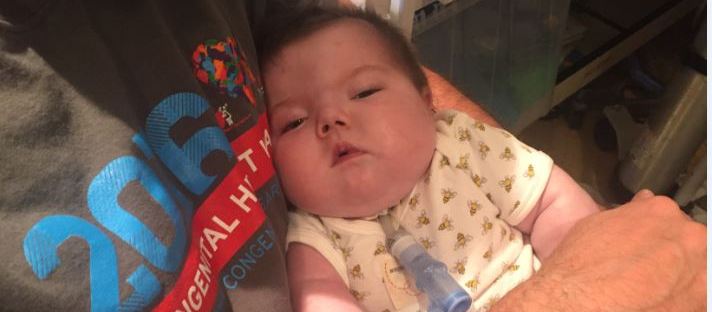
When you look at Jade, who tips the scales at only 12.5 pounds, and she’s able to muster up the strength to fight after enduring three open heart surgeries, a g-tube, a trach, countless tests, and prods and pokes…it shows there’s more to life than just your personal pain and struggles. Watching her brave through the unthinkable and overcome each obstacle is proof that miracles do happen. She’s shown us that just because one day is difficult, doesn’t mean there’s not promise in the next.

Seeing our dear friends experience the highs and lows of round-the-clock medical care for their child and how they manage to stay positive, hopeful, and keep their faith close to their hearts has been awe-inspiring to the say the least.  Nobody knows what cards they will be dealt when it comes to the health of their child or themselves. Often this can be taken for granted until your daily battles become your new normal and you have no choice but to tread on and discover how to wade through the unknown waters before you.

Jade has spent every moment of her existence under observation in a hospital setting. Unlike healthy babies who head home a couple days after birth and celebrate milestones in their nurseries and at home—she hasn’t had the chance to breathe fresh air and wake up in her beautiful sunshine filled nursery yet. Jade’s life has a unique path, but time and time again she’s shown just how resilient she is.

Even as she works on her rehabilitation—there’s no telling what her future holds. In a few months she will need to undergo a full heart repair. While no person or family should have to endure such hardship, this is their reality. As my Godmother always says, “God gives his toughest lessons to his greatest teachers.”

Jade, Joe, and Julia are a reminder to us all of how precious life is—that you never know what tomorrow brings and that we all have two choices—to think woe is me and wallow in our pain and struggles or face them head on with everything we’ve got.

You can support Jade by donating to her Go Fund Me page:

https://www.gofundme.com/prayersforbabyjade

Sending a card or letter to her and her family:

Prayers for Baby Jade
PO Box 1475
Fenton, MO 63026

Following Jades’ story on Facebook:

Prayers for baby Jade

…and by living each day with a “Jade state of mind.” This bad ass baby girl refuses to give up. She knows she has a lot to fight for and in turn she’s proven that grown adults and kids alike can look up to someone who hasn’t even taken their first steps yet. I love you, Jade—you are the toughest baby girl I know.