Meet Kathleen Nicholls. She’s a 34-year-old from Scotland who’s battled arthritis since 2009 and Crohn’s disease since 2010. 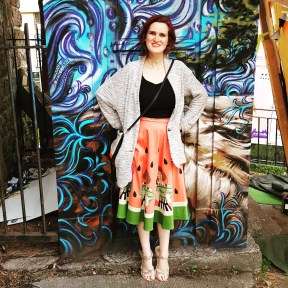 She’s not your typical patient advocate. She’s an author who uses her sense of humor to not only inspire, but also make you laugh. She says things many of us think, but won’t say. Her most recent piece of work, “My Flare Lady”, is a great compilation of advice ranging from dating with chronic illness to finding self-worth despite the hardships we face on a daily basis. Rather than having a “woe is me” attitude, she’s the complete opposite. She’s incredibly candid and her honesty is what makes her writing so intriguing.
Here are some of my favorite excerpts from the book:
“When you are told you will be ill for the remainder of your life that feeling hits you tenfold. You suddenly find you are singled out against your will. You’re the sick partner, the sick daughter, the sick Chandler of your friend group.”
“Spend time with people who buoy you. Those friends and family who make you feel good about yourself, and are generally able to maintain an optimistic outlook. Those people in your life, if you have them, who radiate positivity and don’t flood you with negative thoughts, are really a priceless balm for a stinging soul.”
“When you are sick and in love your relationship may have a chocolate box full of additional worries to factor in, but it doesn’t have to stop you and your beloved from having a joyful life together filled with hearts, flowers, and painkillers strong enough to flatten an Ox.”
“So when I take medication and I start to play-act all the symptoms it says in the booklet I’ll have against my will; it’s disappointing to say the least. I read the little pamphlet that comes with my medication mostly for a giggle. I like reading aloud the various symptoms I may well encounter; mentally crossing them off and inevitably getting round to “death” in the small print. It’s funny (albeit in a fairly dark way I grant you). But a dark sense of humor tends to fit well with a chronic illness.”
“No sign of active ‘disease’ or current symptoms may encourage a medical professional to gleefully cry ‘remission’ but many patients still experience many ongoing differing symptoms regardless, meaning they certainly don’t feel the benefit of said remission.”
“The idea that even genuine moments of joy can be tainted by the anxiety of what’s to come is disheartening to stay the least. It’s something most people don’t have to consider.”
“It’s hard being a sick girl in a modern world. Therefore, it’s of incredible importance that as women we value one another, educate each other and help one another up instead of knocking each other down. Unlike Chumbawumba we can’t always get back up again so easily.”
“When I get nervous in the hospital I remind myself I’ve been through worse, that I survived it, all of it, an that I am here for good reason. It doesn’t always make me feel joy upon joy when I’m being prodded and probed by relative strangers, but it reminds me to get my priorities in order.”
 That gives you an idea of what an incredible resource this book is for women in the chronic illness community. Kathleen’s ability to share her experiences and speak to others to make a difference, inspires me to be strong in my patient journey. Though we’ve never met in person, we’ve been “friends” on Twitter, Facebook and Instagram for years. I had the chance to interview her about her latest book. Here’s what she had to say:
What inspired you to write “My Flare Lady”?
“Suffering from chronic illness can be incredibly isolating and it can be easy to get caught up in your own anxious brain, I always aim to write in a tone which feels inclusive and open, I want fellow sufferers to feel they are not alone and our shared experiences can be overcome and maybe even laughed at. I love and cherish women and in living with poor health for most of my life, I’ve always felt a kinship with women in the same rickety boat as my own. I want to inhabit a world where we pull one another up and where women (and men) can feel comfortable in being open and vulnerable with one another on their fears and experiences. It’s so important to know we are understood. “
What do you hope people take away from your book?
I hope readers can take a feeling of camaraderie, a feeling that we are in this together and that there is absolutely no shame in talking openly and honestly.
What type of response have you received from the chronic illness community?
“So far so good! The opinion of the chronic illness is so important to me, so I take away as much positive and negative feedback as I can on board.  People seem to enjoy the humour spattered throughout and find it to be informative and inclusive which is what I’d hoped for! This time round has been nerve wracking again so i try to only dip in and out of reading reviews for the sake of my own sanity/ego!”
Plans for future books in the works?
Yes, always! I’ve been working on a project based around the parallels between mental health and chronic illness and I hope to find more time to devote to that in 2018. I’ve also been playing around with ideas for short stories and longer-form fiction, but inevitably whatever I write always comes back to my diseased body!”
You can purchase “My Flare Lady” on Amazon. Click here to buy it, makes for a great Christmas gift—or a present for yourself.  Kathleen is dedicated to helping others feel less alone and afraid in their fight with chronic illness. As someone who’s battled Crohn’s more than 12 years, I can tell you firsthand her words empower me to be strong. I constantly find myself nodding along while I’m reading and even laughing out loud. You can follow Kathleen on Twitter and Instagram @kathfantastic.

 A cozy, lightweight hoodie from @thegreatbm that reads “IBD Can’t Stop Me” on the front and “Ask me about my resilience and determination—where I find my strength—what motivates me to keep going and reminds me I can handle this pain—why I refuse to quit and what I’m doing to overcome my IBD” on the back. I own this hoodie, it’s comfy and so empowering.
 The store owner battles Crohn’s disease herself and donates a portion of all proceeds to the Crohn’s and Colitis Foundation!
 has donated 100 uniquely designed quotes geared towards helping you find and live your purpose everyday.
 The giveaway ends Saturday, April 21st at 11:59 PM MST. Winner will be announced on Instagram Sunday, April 22.
 Since the moment we met in 2013, and through all the ups and downs my Crohn’s disease has caused in our lives, he’s been my safe place and my protector. During my speech, I talked about how everybody needs “a Bobby.” A person who sees you for more than your disease. A person who doesn’t shudder at the thought of seeing you at your lowest for days on end in a hospital bed. A person who gets the day to day management and emotional toll chronic illness takes on not only the patient, but the couple and the family.
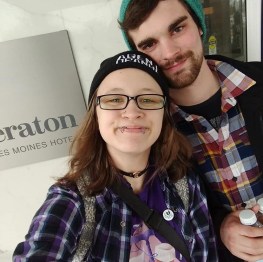 Then I turned to her boyfriend and said, “and you are her rock and her caretaker.” They laughed and told me I guessed right. Isn’t it amazing how easy it is to spot this type of support? I was a complete stranger, once in her shoes. Young. Dating. Wondering about my future. Their names are Emily and Kellen.
 Only 22 years old, so much of her life ahead of her. And she’s found the person who looks at her, despite her illness, and loves her for it. The Bobbys and the Kellens of the world are the real deal. If you haven’t found yours yet, trust me…they exist and they are out there.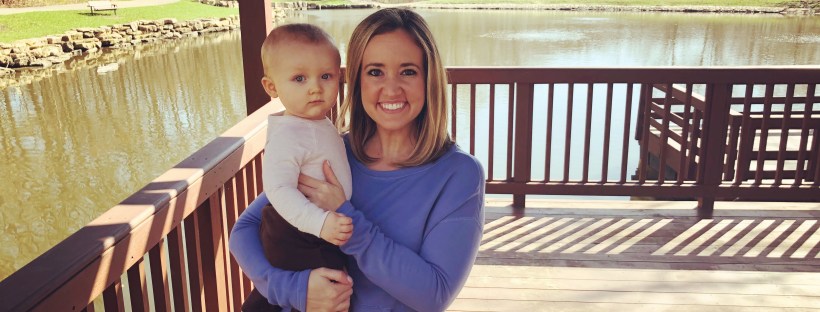
 Throw in an unpredictable, often debilitating condition and tackling the role is even more challenging.
 Becoming a mom has made every poke and prod, injection and procedure less of a pain, because now I have so much more to fight for.
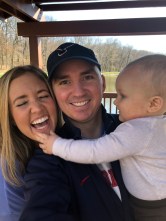 As people we grow. Each chapter of our lives matters and is part of our story. Embrace the good and even the bad—because it brought you to where you are today. Pain and flares are fleeting and as we all know, so is youth. Our babies grow up so fast, we must hold the feel good moments close and not dwell on past hurt or what could happen tomorrow.
 hope is he’ll realize what an integral role and life-changing impact he’s had on me since the moment I held him in my arms for the first time.
 een blindsided each and every time. I’ve worked a full day, trained for a half marathon, taken a road trip…you name it…and BAM…hello, bowel obstruction or abscess.
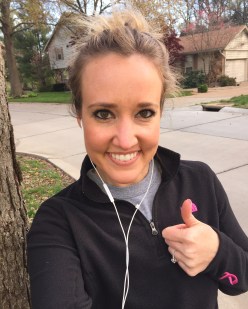 It’s these fleeting moments of invincibility that provide us with a chance to live like the rest of society. It may seem simple, but recognize these moments, verbalize them with loved ones. Celebrate the small joys, that are a big deal.
 Think about the risk vs. the reward. It’s emotionally draining when nothing seems to be working or helping to ease your pain, but, staying positive and open helps us all physically, emotionally and mentally. Keep an open mind with your healthcare providers and have two-way communication. Educate yourself, learn about the clinical trials and treatment options out there—be your own best advocate. Connect with others who are living your same reality. Trust in other peoples’ journeys, but recognize your journey is unique and so is everyone else. Each person’s IBD presents differently.
 By telling someone you are struggling, hurting or worried, you are not showing weakness. You are not complaining. If you are going through a dark time and wonder how you’re ever going to overcome a current setback, lean on your support system without hesitation. Internalizing your pain will only make matters worse. You’re still brave and resilient, no matter what.



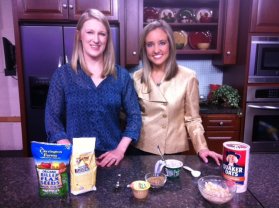 When I was a news anchor in Springfield, Illinois, I used to interview and participate in cooking segments with a registered dietitian named Amanda Figge. She is extremely passionate and well-versed about nutrition and health and practices what she preaches in her daily life.


 Despite making life-long friendships and memories, she felt the challenges of her dietary restrictions, and couldn’t take in all the monumental experiences like her peers.
 “A Birthright Israel trip includes airfare from major cities, hotels, meals, transportation within Israel, and costs associated with touring the country,” said Deb, who as a Crohn’s patient herself, is helping with the coordination of this program for Israel Outdoors.


 I had just gotten off the stage after speaking at the Crohn’s and Colitis Foundation Patient Symposium Event in October. Her and her mom, Michelle, approached me outside of the auditorium. Tears in their eyes. Smiles on their faces. I immediately felt a connection and knew this little girl was something special.
 She’s had a total of three colonoscopies, an endoscopy and an MRE. She’s been hospitalized due to flare ups three times. She has three siblings at home, so as she’s in the hospital or going to the doctor, her parents have to care for them as well. There’s a reason for the saying—’it takes a village’… because it really does.
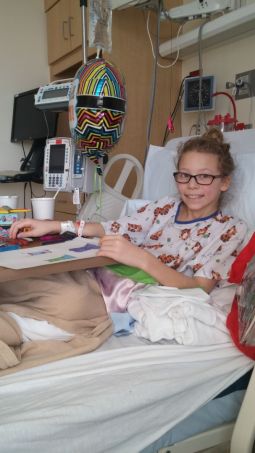 Also, as a parent of a child with a chronic illness, we are their best advocate. No one knows your child better than you do. If you think that something isn’t quite right, trust your momma instincts!”
 Right before the shot, she relaxes her leg, takes a deep breath and pretends she’s anywhere but the living room couch.

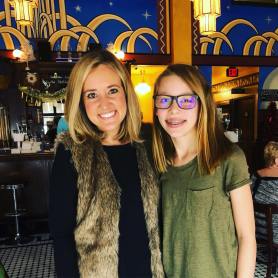


 We tried new medications, but after eight months of no change in my small bowel, my gastroenterologist thought it was time to say goodbye to the diseased portion of my intestines. I remember the phone call from her just saying “I’m going to give this to you bluntly, you need to get them out.” At first, I was shocked, then angry that my body was failing me. I brought my husband to my surgery consultation, and I’ll never forget the look on his face as the surgeon was asking me very detailed symptom questions and I was answering them honestly. It was a look as if I had by lying to him for years. Even my husband, the person I spend every waking hour with, have been with for almost six years and since I was diagnosed, didn’t fully understand how bad my disease had gotten in the last three years.
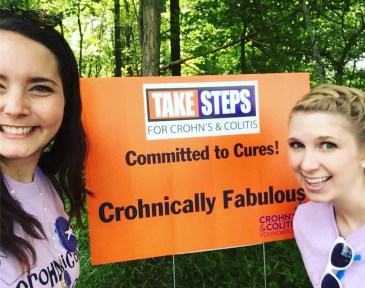 As a mom and a wife, I questioned how my family would make do without me… But as surgery drew closer and I was in so much pain that I could only eat liquids and was basically confined to the fetal position, I knew it was time.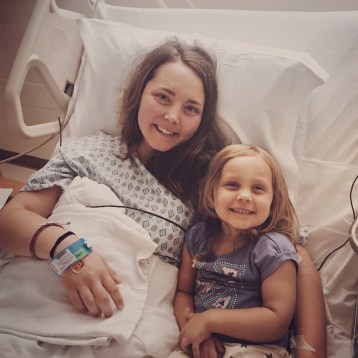
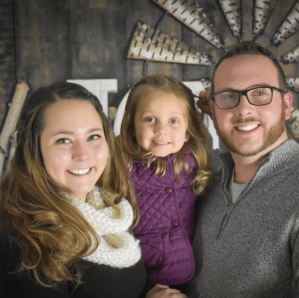 Getting surgery has changed my life in just 12 weeks. I can’t even imagine how much it’s going to change my life in the next year or two. I know the statistics aren’t in my favor, but until then I will totally be living my best life with a foot less of intestine and a bigger smile on my face!
 lights camera crohn's