Young IBD patient aspires to become Pediatric GI

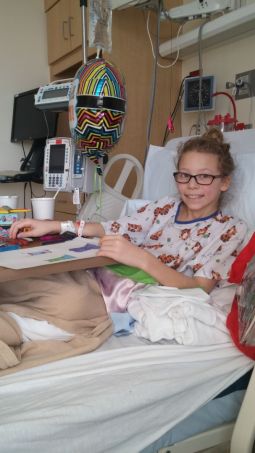
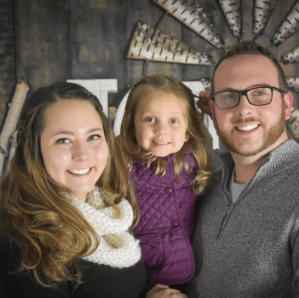
Madison Harbison. I’ll always remember the first time our paths crossed. IMG_4983I had just gotten off the stage after speaking at the Crohn’s and Colitis Foundation Patient Symposium Event in October. Her and her mom, Michelle, approached me outside of the auditorium. Tears in their eyes. Smiles on their faces. I immediately felt a connection and knew this little girl was something special.

Madison was only three years old when she started experiencing symptoms. Bloody diarrhea was the first indicator. After E.coli and C-diff were ruled out by doctors, this little girl underwent a colonoscopy. Imagine that. Three years old. Drinking the prep. Dealing with everything in the bathroom. And not being able to understand why this was happening or knowing what was wrong with you. Being a little girl, naïve to what it means to have a chronic disease that would be a part of her, for her entire life.

Imagine how overwhelming it felt for her parents. Michelle said it felt like they were torturing their daughter. Madison is now 12 years old. IMG_4985She’s had a total of three colonoscopies, an endoscopy and an MRE. She’s been hospitalized due to flare ups three times. She has three siblings at home, so as she’s in the hospital or going to the doctor, her parents have to care for them as well. There’s a reason for the saying—’it takes a village’… because it really does.

Madison has indeterminate colitis. Her inflammation is centered around her colon. She also battles arthritis that is secondary to her IBD. Just like me, Madison is on Humira injections. Her parents give her the shot—and each time she gets anxious and upset before and after. As a 34-year-old grown woman, I still react the same way at times. So, I can only begin to think what it would feel like for her. Aside from Humira, Madison takes Sulfasalazine, Imuran, Vitamin D, Iron and a multivitamin.

When it comes to advice for fellow parents, Michelle says, “Try to connect with other parents who are going through the same thing. There are “support groups” on Facebook that have helped me so much. Do not give up hope. I have every reason in the world to believe that Madison is going to accomplish everything that she sets out to. This disease is only one part of the amazing person that she is. It does not define her. IMG_4986Also, as a parent of a child with a chronic illness, we are their best advocate. No one knows your child better than you do. If you think that something isn’t quite right, trust your momma instincts!”

When you talk to Madison she radiates strength and resilience. You can see it in her eyes. She’s very mature and well spoken. She says IBD has made her a stronger person. “It’s made me more responsible in the sense of taking my medication, thinking about what foods affect me and always telling my mom if anything is wrong.”

As far as her Humira injection routine (let’s be honest, we all have one!)…her parents take the pen out of the fridge and let it warm up for a few hours, to lessen the sting. Madison likes to use Pinterest on her phone as a distraction. She wipes her leg with the alcohol swab and nods at either her mom or dad so they know to start. IMG_4988Right before the shot, she relaxes her leg, takes a deep breath and pretends she’s anywhere but the living room couch.

Each summer, Madison attends Camp Oasis. It’s a unique experience where kids with IBD have the chance to be on their own, to make decisions and to take responsibility, while being in a safe and compassionate environment. All the campers have IBD. “Camp has really showed me that I am not alone battling this disease. It is the coolest thing to be surrounded by other kids who know and understand what I have experienced.”

Madison doesn’t let her disease hold her down. She’s an avid soccer, basketball and volleyball player. She’s gearing up to take the stage in “Annie” and she excels at dance. This girl does it all.

Guess what she wants to be when she grows up? A Pediatric Gastroenterologist. Madison wants to help kids who are going through what she’s gone through.

madi

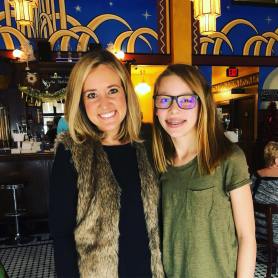
Out to lunch with Madi, taking on IBD together one day at a time.

I can without a doubt say, I know she’ll achieve this goal and follow her dream. She’s a true example of an IBD hero. Someone who hasn’t allowed her disease to rule her life. Someone who looks adversity in the face and says ‘not so fast.’ Someone who I admire and look up to, even though she’s more than 20 years younger than me. If you ever need inspiration—think about Madison during that next Humira shot, think about her when you’re taking that dreadful colonoscopy prep, think of her when you’re getting rolled down to that next CT scan. I know I will.


How surgery helped this Crohnie live her best life

Connecting with those who battle inflammatory bowel disease over social media is cathartic and creates friendships–whether you’ve met the person or not. It’s amazing to me how quickly you can share a bond and relate to a complete stranger’s life experiences because they mirror your own. I recently connected with Samantha Rynearson of West Virginia.

Processed with VSCO with g3 preset

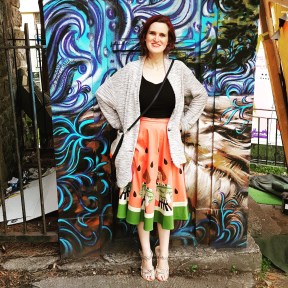
She’s a 25-year-old wife and mom who was diagnosed with Crohn’s disease at the age of 21. She recently had a bowel resection and currently takes Stelara and Imuran to keep her disease in check. This week, Samantha shares an inspiring guest post about why surgery completely changed the course of her life for the better. 

The best way I can try to describe Crohn’s disease is that it’s like an elevated version of Russian Roulette, but with food. In Russian roulette, only one of the guns holds a bullet. Prior to my surgery, for every 10 foods I ingested, eight of them caused me pain or were “triggers.” It was a game that I lived with and played daily for the past three years as I battled living with a stricture in my small intestine the size of a straw.

Let’s rewind to January 2017 – I made a News Years Resolution that I was going to lose the dreaded Prednisone weight. So, I wrote a meal plan, went shopping for healthy foods and was cutting out processed foods as much as possible. Unfortunately, four days into the New Year, I was admitted to the hospital with a small bowel obstruction. Apparently junk food from New Year’s Eve, mixed with a drastic change in diet, mixed with not being on steroids anymore – my intestines were not having it. So, nine LONG days of steroids, CT scans, bowel series, lots of morphine, and a new medicine, I was released to go home. I was told I couldn’t eat any raw fruits or veggies, nothing high in fiber and basically nothing healthy at all. No more New Year’s Resolution.

IMG_9327We tried new medications, but after eight months of no change in my small bowel, my gastroenterologist thought it was time to say goodbye to the diseased portion of my intestines. I remember the phone call from her just saying “I’m going to give this to you bluntly, you need to get them out.” At first, I was shocked, then angry that my body was failing me. I brought my husband to my surgery consultation, and I’ll never forget the look on his face as the surgeon was asking me very detailed symptom questions and I was answering them honestly. It was a look as if I had by lying to him for years. Even my husband, the person I spend every waking hour with, have been with for almost six years and since I was diagnosed, didn’t fully understand how bad my disease had gotten in the last three years.

As the time got closer to my surgery, I got more and more nervous. I know the statistics… 75 percent of Crohn’s disease patients that have surgery will need surgery again… 20 percent will have a reoccurrence of symptoms after two years, 30 percent after three years… I was second guessing myself and remember thinking “it’s fine, I can live like this…” image1 (4)As a mom and a wife, I questioned how my family would make do without me… But as surgery drew closer and I was in so much pain that I could only eat liquids and was basically confined to the fetal position, I knew it was time.

When I woke up from surgery I was in the worst pain of my entire life (YES, worse than childbirth!) It took more than two hours to get my pain to a tolerable level and I remember thinking I made the wrong decision and that I was an idiot for doing this to my body and I should have just sucked it up and dealt with the flares and the pain. But man was I wrong. Once I could tolerate food and pass it, I was released after just FOUR days in the hospital!

Processed with VSCO with m5 preset

Every day of my recovery, my daughter would ask to see my “boo boo.” She was super careful around me, and gave me so many kisses and hugs that I realized children really do understand more than we think. My husband was overprotective because he was so afraid something would go wrong during or after surgery and I would get so frustrated because I was only thinking of how it affected me, but in reality, it was a terrifying experience for him too.

Prior to surgery, I would eat and then pain would come. Now I eat, and I sit there waiting for the pain to start, but it doesn’t. It’s a hard concept for me to grasp. I can eat food, and not be in pain afterwards. It’s bizarre to me after three years of food = pain that it just changed by having my intestines cut out.

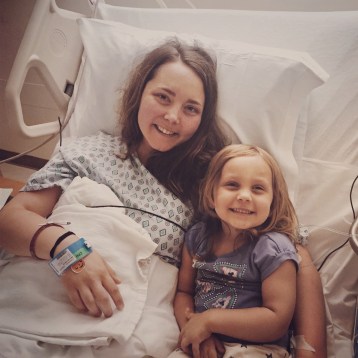
Now, I am almost 12 weeks post-op. I went back to work full-time after six weeks and was literally doing everything I was doing prior to my surgery and then some!!  I have so much more energy to play with my daughter. I’m able to eat food when we go out to eat and not regret it later. I feel like surgery has had a positive impact on my marriage and that I have a better relationship with my husband. I feel like my daughter is getting to know a new “fun” mommy that isn’t always laying on the couch with a heating pad. I feel like my friends don’t even know what to do when I respond to their text messages or say yes to hanging out!

Image-1Getting surgery has changed my life in just 12 weeks. I can’t even imagine how much it’s going to change my life in the next year or two. I know the statistics aren’t in my favor, but until then I will totally be living my best life with a foot less of intestine and a bigger smile on my face!

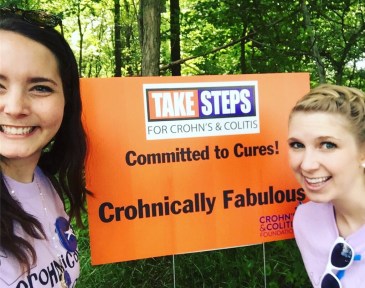
You can connect with Samantha on Instagram: @crohnicallyfabulous.

Click here to follow her blog.

“It’s hard being a sick girl in a modern world:” A review of “My Flare Lady”

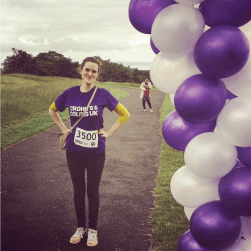
Meet Kathleen Nicholls. She’s a 34-year-old from Scotland who’s battled arthritis since 2009 and Crohn’s disease since 2010. IMG_20170823_223410_970She’s not your typical patient advocate. She’s an author who uses her sense of humor to not only inspire, but also make you laugh. She says things many of us think, but won’t say. Her most recent piece of work, “My Flare Lady”, is a great compilation of advice ranging from dating with chronic illness to finding self-worth despite the hardships we face on a daily basis. Rather than having a “woe is me” attitude, she’s the complete opposite. She’s incredibly candid and her honesty is what makes her writing so intriguing.

Here are some of my favorite excerpts from the book:

“When you are told you will be ill for the remainder of your life that feeling hits you tenfold. You suddenly find you are singled out against your will. You’re the sick partner, the sick daughter, the sick Chandler of your friend group.”

“Spend time with people who buoy you. Those friends and family who make you feel good about yourself, and are generally able to maintain an optimistic outlook. Those people in your life, if you have them, who radiate positivity and don’t flood you with negative thoughts, are really a priceless balm for a stinging soul.”

“When you are sick and in love your relationship may have a chocolate box full of additional worries to factor in, but it doesn’t have to stop you and your beloved from having a joyful life together filled with hearts, flowers, and painkillers strong enough to flatten an Ox.”

“So when I take medication and I start to play-act all the symptoms it says in the booklet I’ll have against my will; it’s disappointing to say the least. I read the little pamphlet that comes with my medication mostly for a giggle. I like reading aloud the various symptoms I may well encounter; mentally crossing them off and inevitably getting round to “death” in the small print. It’s funny (albeit in a fairly dark way I grant you). But a dark sense of humor tends to fit well with a chronic illness.”

“No sign of active ‘disease’ or current symptoms may encourage a medical professional to gleefully cry ‘remission’ but many patients still experience many ongoing differing symptoms regardless, meaning they certainly don’t feel the benefit of said remission.”

“The idea that even genuine moments of joy can be tainted by the anxiety of what’s to come is disheartening to stay the least. It’s something most people don’t have to consider.”

“It’s hard being a sick girl in a modern world. Therefore, it’s of incredible importance that as women we value one another, educate each other and help one another up instead of knocking each other down. Unlike Chumbawumba we can’t always get back up again so easily.”

“When I get nervous in the hospital I remind myself I’ve been through worse, that I survived it, all of it, an that I am here for good reason. It doesn’t always make me feel joy upon joy when I’m being prodded and probed by relative strangers, but it reminds me to get my priorities in order.”

IMG_20171024_173739_449That gives you an idea of what an incredible resource this book is for women in the chronic illness community. Kathleen’s ability to share her experiences and speak to others to make a difference, inspires me to be strong in my patient journey. Though we’ve never met in person, we’ve been “friends” on Twitter, Facebook and Instagram for years. I had the chance to interview her about her latest book. Here’s what she had to say:

What inspired you to write “My Flare Lady”?

“Suffering from chronic illness can be incredibly isolating and it can be easy to get caught up in your own anxious brain, I always aim to write in a tone which feels inclusive and open, I want fellow sufferers to feel they are not alone and our shared experiences can be overcome and maybe even laughed at. I love and cherish women and in living with poor health for most of my life, I’ve always felt a kinship with women in the same rickety boat as my own. I want to inhabit a world where we pull one another up and where women (and men) can feel comfortable in being open and vulnerable with one another on their fears and experiences. It’s so important to know we are understood. “

What do you hope people take away from your book?

I hope readers can take a feeling of camaraderie, a feeling that we are in this together and that there is absolutely no shame in talking openly and honestly.

What type of response have you received from the chronic illness community?

“So far so good! The opinion of the chronic illness is so important to me, so I take away as much positive and negative feedback as I can on board. 20171129_201703People seem to enjoy the humour spattered throughout and find it to be informative and inclusive which is what I’d hoped for! This time round has been nerve wracking again so i try to only dip in and out of reading reviews for the sake of my own sanity/ego!”

Plans for future books in the works?

Yes, always! I’ve been working on a project based around the parallels between mental health and chronic illness and I hope to find more time to devote to that in 2018. I’ve also been playing around with ideas for short stories and longer-form fiction, but inevitably whatever I write always comes back to my diseased body!”

You can purchase “My Flare Lady” on Amazon. Click here to buy it, makes for a great Christmas gift—or a present for yourself. IMG_1002Kathleen is dedicated to helping others feel less alone and afraid in their fight with chronic illness. As someone who’s battled Crohn’s more than 12 years, I can tell you firsthand her words empower me to be strong. I constantly find myself nodding along while I’m reading and even laughing out loud. You can follow Kathleen on Twitter and Instagram @kathfantastic.


10 Tips for those who DON’T have IBD

As Crohn’s and Colitis Awareness week approaches (December 1-7), I thought it would be helpful to share my top 10 tips for those who do not have inflammatory bowel disease (IBD). It’s my hope that after reading this article, you’ll feel more comfortable approaching family members and friends with these diseases and be able to have  compassionate and thoughtful conversations.

  1. Do not compare IBD to IBS.

This, above all else is aggravating and makes those of us who battle Crohn’s and Colitis cringe and roll our eyes, whether we are doing it in front of you or not. We understand that you are trying to relate to our situation because you think our disease is all about going to the bathroom, but please refrain from making this comparison.

Apple between oranges

IBD refers to a chronic, autoimmune disease, that wreaks havoc and causes inflammation of the GI tract—which can span from your mouth to your anus. Aside from abdominal pain and trips to the bathroom, we deal with a laundry list of other symptoms ranging from chronic fatigue to uveitis (inflammation to the middle of the eye). I’m not saying IBS is a walk in the park, but it’s on a different playing field.

  1. Hold your horses, Beverage and Food Police

hands-2112758_1920Yes, we know that Pumpkin Spice lattes or those peanut M&M’s may not be the best decisions—but every now and then we want to live a little and take a risk. Just because coffee, nuts or popcorn caused pain one time—doesn’t mean that’s always going to be the case. In the end, if what we eat and drink causes us pain, we’ll be the one paying the price, not you. Please refrain from staring at us and questioning every time we put food in our mouths. We get it. No need to question or reprimand us. There’s already an ongoing inner dialogue 24/7 about every little decision we make and how it’s going to make us feel, trust me.

  1. IBD doesn’t need to be the white elephant in the room, talk about it.

If you are hesitant to bring up Crohn’s and Colitis with a loved one or friend, don’t be. It makes us feel like what we are going through matters. By communicating and articulating that you recognize we are battling a difficult disease it doesn’t make our situation feel so isolating. Especially for those of us who blog or share our struggles on social media, it always surprises me that despite all I share and my openness, so many people in my life like to pretend that I don’t have Crohn’s and never, ever, bring it up. If anything that is disheartening to me. I am passionate about being a patient advocate and sharing my journey, obviously I want to talk about it.

  1. Don’t make us feel guilty if we need to cancel plans.

There have been countless times I make plans with friends or when I used to go on dates prior to getting married, where I needed to cancel because I was blindsided by symptoms. IMG_0901Understand that when you make plans with someone who battles IBD, the way we feel can change up to the minute we’re supposed to meet. While I know that can be aggravating, you must be patient and think about what you would do if you had stabbing pains in your abdomen and couldn’t stand straight up as you rush to the bathroom. More often than not, rather then canceling we put a smile on and pretend to feel well. So, the times we cancel—I can guarantee you, it’s a legit excuse and doesn’t make us happy either. I’ve had moments where I was all excited to go out with my husband and meet friends and he would see me walking around putting my make up on with my pants unbuttoned, because I was in so much pain and he had to tell me—we’re not going.
  1. No need to remind us “it could be worse.”

Yes, we are well aware that a lot of people have it worse than us and are battling terminal illnesses. At the same time, many people have it better than us. We understand the severity of our disease and that it can’t be compared to someone battling stage IV cancer. But, before you wake up in our shoes and know what it’s like to live with a chronic, invisible illness that takes management with multiple medications a day, procedures, poking and prodding and facing the unknown of what the next day brings regarding flare ups—please don’t try and pretend you can fathom the struggle.

  1. Surgery is not a cure for Crohn’s

According to the Crohn’s and Colitis Foundation, unlike ulcerative colitis, Crohn’s disease cannot be cured with surgery, except in some instances where only the colon, rectum, and anus are affected. If the diseased portion of the intestine is removed, the inflammation can reappear adjacent to the site of the surgery, even if that part of the intestine was normal prior to the surgery. IMG_8476The primary goals of surgery for Crohn’s disease are to conserve as much bowel as possible, alleviate complications, and to help the patient achieve the best possible quality of life. Sure, you may go into surgical remission or be given a “fresh start,” but that disease will always be a part of you. When I had my bowel resection surgery in August 2015, they removed 18 inches of my small intestine—a decade of disease was taken from body. Of course, as I healed, I felt better and still feel a lot better nowadays, then I did prior to the surgery. Regardless, I live with Crohn’s every day and those symptoms are still present quite often. About 23-45 percent of people with ulcerative colitis and up to 75 percent of people with Crohn’s disease will require surgery. As I type this, I have stabbing pains in my stomach. I felt completely fine when I started writing this.

  1. Questioning medication decisions

So often people seem to think they have MD after their name, even if they haven’t taken one medical course in their life. Yes, we are aware, there are a ton of commercials on TV that list all the possible side effects for Humira, Stelara, Entyvio… you name it. IMG_0234Normally when we hear those commercials, if they don’t pertain to us, we may kind of laugh and wonder who in their right mind would take a medication with all those risks. For those of us with IBD, we oftentimes don’t have a choice. It’s a high risk with a high reward. Quality of life has to come first. I know before I got pregnant with my son, there were multiple occasions where friends would question my decision to be on Humira. Once you are on a biologic and your disease is this severe, you don’t have a whole lot of options. Don’t you think the risk of new and worsening heart failure and being immune suppressed is already a worry we deal with as it is?

  1. Fading to the background and disappearing when we need you most.

One of the “perks” of having IBD is that you quickly get to see who your true friends are and who has a compassionate heart. fullsizerenderSadly, the people who you think you are closest to often seem to disappear when you’re in the hospital. Rather than focusing on getting better, your mind may race and you may feel hurt that so and so hasn’t even called, texted or visited—even though you know they saw your post on social media about your most recent hospital stay. If you’re questioning whether you are going to bother the person or if you think it’s not your place to reach out—please change your mindset. It’s the people who reach out when you’re at your lowest point that you realize are worth your time and energy. IBD is isolating enough as it is, please be a good friend and show us some love when we’re going through a flare. If you were hospitalized, would you want radio silence from every person who matters to you?

  1. Don’t be afraid to find humor in the struggle.

Timing is everything when it comes to humor, but don’t feel like you need to be all doom and gloom with us. We are the same person we’ve always been, and more often than not we may make light of the situation as a defense mechanism. I was recently on a call with fellow Crohn’s and Colitis Foundation volunteers and casually introduced myself and said, “I’ve had one surgery, just 18 inches of intestine removed”… I said it as a joke, and the people on the other end laughed and said “just?”…because they get it. There’s no need to always think of IBD as a negative, in time, we come to realize it helps define the people we become.

  1. Please don’t push the “diet that heals”, homeopathic remedies on us

If there was one diet that worked wonders for those of us with IBD, we’d all be on board. There would be no need for medications and tests and hospitalizations. So many people inquire and ask, “have you tried the FodMap diet? What about SCD? What about Paleo?”…the list is endless. I tried going Paleo a couple years ago and almost ended up in the hospital. If you find a diet that works for you or someone you know, that’s fabulous. Unfortunately, every single case of IBD is different and there isn’t one way to help “heal” us all. If anything, this can be very confusing for newly diagnosed patients and their caretakers. It can put people in harms way if they follow your recommendation and decide they no longer need medication. Please be mindful of your words.

If you read my articles, you know I always focus on the positive and like to lift people up. My husband saw me writing this and felt it was a bit of a Debbie downer. Photo by J Elizabeth Photography www.jelizabethphotos.comI apologize if you feel that way, but I hope it has the opposite impact. I hope it brings you clarity and that it made a light bulb go off so that you know how to navigate your friendships and relationships with those who battle IBD. This week is a time to bring awareness about Crohn’s and ulcerative colitis, it’s a time for these diseases to be in the spotlight. This week, and all that follows, please be gentle with your words and be the type of support you’d want in return.

For more information about this year’s Crohn’s and Colitis Awareness Week, click here. It’s time we all speak up. Stand up. And stand together.

Organ Donation and IBD: Setting the record straight

Are you an organ donor? For some, this may seem like a simple question, for others it’s complicated. I’ve been reading posts on social media that claim if you have inflammatory bowel disease, you are not “eligible” or able to be an organ donor.

bill

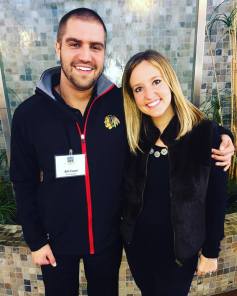
Hanging out with my cousin Bill at an organ donation event.

This caused me to pause and question whether that is truly the case. The decision to be an organ donor was a no-brainer for me. My entire life, I’ve been inspired by my cousin, Bill, who’s a two-time heart and one-time kidney recipient. To say I’m passionate about organ donation is an understatement.

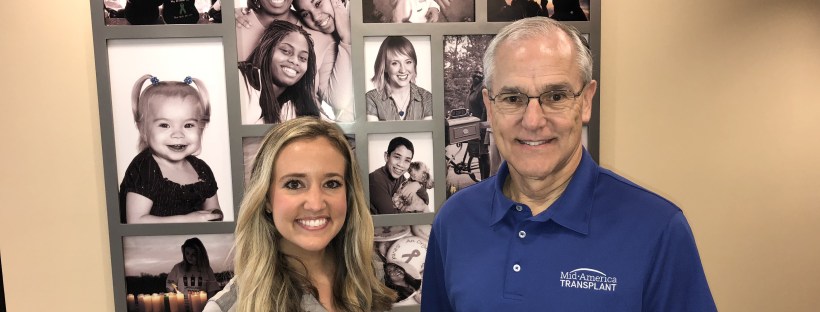
So, I ventured out to interview Dr. Gary Marklin, Chief Medical Officer, for Mid-America Transplant in St. Louis, to learn more about IBD and organ and tissue donation. As an organ procurement organization, Mid-America Transplant covers eastern Missouri, southern Illinois and northern Arkansas.

At this moment, more than 115,000 people are waiting for a life-saving phone call. Last year, a historical number of transplants ever were conducted in the U.S., at almost 34,000…but there are a lot of people who don’t receive the gift of life in time. IMG_0613Each day, about 22 people die waiting for the phone to ring. That’s about one person an hour.

When it comes to those of us with Crohn’s disease or ulcerative colitis the quality of our organs is studied at the time of donation. But, it’s key to note—this is the case for ALL donors, regardless of your medical history.

“Crohn’s and ulcerative colitis can effect organs other than the intestines, and if they are not working well, then you’re probably not able to donate that particular organ. But, in general, Crohn’s and ulcerative colitis do not exclude you from organ donation,” said Dr. Marklin.

The same goes for tissue donation. Tissue is skin, bone and corneas. Depending on where IBD is located and how it’s impacted the body, certain tissues may be excluded.

image1 (2)“What we do with any donor—no matter what—is assess the function of every single organ. So, for instance if the kidney, lung or liver function isn’t up to par due to long-term disease process or from long-term side effects from medications, the organ will not be transplanted. The last thing we want to do is transplant an organ and have the recipient develop a disease from a transplanted organ,” said Dr. Marklin.

This led to wonder if long-term use of biologic drugs, such as Humira, makes a difference.

“The only risk biologic drugs pose for transplantation is increased risk for infections. If you’re on Humira, which caused you to contract tuberculosis, then you’re not going to be a donor. Just being on the medication itself, does not limit you from being a donor though,” Dr. Marklin explained.

So, if you battle IBD—don’t let that hold you back from signing up to be an organ donor. The only organ you definitely would not be able to donate are your intestines, and let’s be honest… that’s not a big surprise! The odds are in your favor that you’ll get to provide others with a chance at life. Every time a family or person says “no” to organ donation, on average three people do not receive the lifesaving organ transplant they need. You have the power to save up to eight lives and help heal 75 more through tissue donation.

natandbillAs someone who’s battled Crohn’s disease for more than 12 years, and as someone who’s witnessed firsthand the incredible ripple effect created by organ donation within my own family—I can’t reiterate enough, how imperative it is to be a donor.

If you’re hesitant—imagine your parents, siblings or best friend on their death bed, anxiously awaiting word an organ is available. Would you want their life to be cut short because someone chose not to be a donor? As people who battle IBD we know how important quality of life is, and how quickly it can be taken away. Sign up. Be a donor. Know in your heart that if there’s an accident, that your life will continue through someone else—and not just them, but all their family members and friends. Click here to enroll to be an organ donor. Click here for additional organ and tissue donation information.