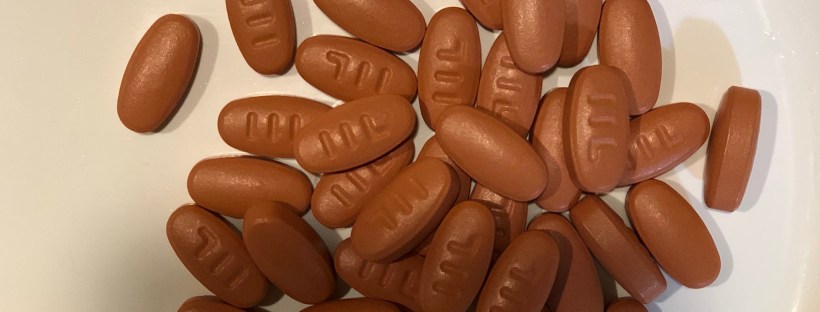
When I was initially diagnosed with Crohn’s disease in 2005, I went home from the hospital on 22 pills a day. As the weeks passed and the steroid was tapered, that pill count dwindled to six. Six Asacol. For those who don’t know what Asacol is, it’s considered a 5-ASA medication. 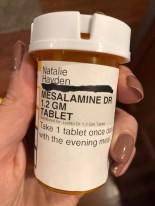 Chances are, if you have IBD, you’ve either been on or are currently taking this as part of your daily treatment regimen. Out of the approximately 1.6 million Americans who have IBD, more than 250,000 are currently on this type of medication. That may seem all fine and dandy, but did you know 5-ASA’s are not FDA approved for Crohn’s patients?
Yes, you read that correctly. As a Crohn’s patient myself, I spent three years on Asacol and from 2014 until just recently I was on Lialda (mesalamine). After seeing a discussion on Twitter led by Dr. Peter Higgins, M.D., Ph.D., M.Sc., questioning the use of this class of drug for Crohn’s, the topic piqued my interest. Here’s what Dr. Higgins has to say about the subject.
 NH: Given that there’s no evidence that 5-ASA medications are beneficial to Crohn’s patients (and not FDA approved), why are they being prescribed to more than 250,000 patients?
Dr. Higgins: “As best I can tell, this is because of failure of medical education, too many doctors getting their drug information from drug reps, and doctors fearing the risks of getting sued for using effective drugs. It’s uncommon for doctors to get sued for under-treatment of Crohn’s disease, which may need to change for doctors to change their behavior. Some doctors could be using 5-ASA’s as a placebo, and surprisingly, some doctors might not really understand the difference between Crohn’s disease and ulcerative colitis in terms of 5-ASA response.”
NH: Is there any additional benefit if a patient takes a 5-ASA med along with their biologic?
Dr. Higgins: “For small bowel Crohn’s, definitely not. Also, a recent study for ulcerative colitis showed no additional benefit for patients on biologics to continue 5-ASAs.”
NH: As someone with Crohn’s disease in my small bowel, I’ve been told in the past by a GI that 5-ASA’s lower my risk of colon cancer, thoughts?
Dr Higgins: “Anything that reduces colon inflammation will reduce the risk of colon cancer in IBD. Generally, patients with milder ulcerative colitis end up on 5-ASA, and therefore have lower risk of colorectal cancer (because of less disease activity, not necessarily the drug). There’s a correlation, but probably not causation. Studies show the most important predictor is control of inflammation, rather than what drug you are on, for preventing colorectal cancer in ulcerative colitis (or Crohn’s colitis).”
NH: As far as the cost for the patient, insurance companies, healthcare system in general—is this more about business/making money than treating the disease?
Dr. Higgins: “For the manufacturers of 5-ASAs, this is about making money in Crohn’s patients (an extra, bonus market with little effort on their part). If pharmaceutical companies wanted to do the right thing, they would be out talking to docs about stopping 5-ASA in Crohn’s and using it appropriately in ulcerative colitis. But the drug companies don’t have an incentive to spend the money to do a campaign to reduce drug use. Technically, it is illegal to market 5-ASA’s for Crohn’s, so drug reps choose to avoid the subject entirely. I find the health insurance company complicity puzzling. Maybe it’s cheaper than biologics, because many insurance companies go out of their way to block the use of therapies that are not FDA approved.”
NH: If Crohn’s patients are on this medication, what’s your advice for them?
Dr. Higgins: “Talk to your doctor. Ask why you are on a medication that is not approved for Crohn’s disease. Ask about the FDA-approved options that *are* effective for Crohn’s. Ask your doctor how well-controlled your intestinal inflammation is. You can measure disease inflammation the following ways:
- By CRP (C-reactive protein) or ESR (SED rate) or FCP (fecal calprotectin)
- By CTE (for patients over 35 years old) or MRE
- By endoscopy if reachable with a colonoscope
- By capsule endoscopy if not reachable with a standard scope
If your inflammation is not well controlled, you should be on a more effective medicine to reduce your risk of strictures, obstruction, fistulas, abscesses, perforations, cancer, flares, steroids, hospitalizations, and surgeries.”

 On Thursday, October 10, I had an amazing opportunity to sit alongside my husband and do a Facebook Live for



 She was nervous about the potential of being matched up with a roommate who wasn’t a good match.
 was diagnosed with ulcerative colitis less than one week before leaving to study abroad for three months. She says the fact the trip still happened and was so successful was a highlight of her college career. While back on campus in the States, she recalls how stressful it was prepping for colonoscopies.
 when she became sick with IBD, so she barely had time to form a body image that didn’t include this disease. She says she was never somebody who was confident in her appearance, but having IBD didn’t help. From the prednisone “moon face” to issues with gas and continence, there have been lots of times where she felt too gross to be taken seriously.
 caused her to get sick all the time and the community bathrooms weren’t of much help.

 Jennifer Badura’s son was diagnosed with Crohn’s while in high school. As a parent, she found her son’s transition to college challenging.
 Use the patient portal to your advantage. Never hesitate to reach out if you have a question or medical issue going on. Listen to your body’s signals and don’t wait until it’s too late.
 Set reminders in your phone or utilize apps that track your symptoms and whether you’ve taken your medication.
 Your disease is making the simple task of sitting in class alongside your peers an ordeal. While you may feel alone in this moment, thousands of college students around the world living with IBD can relate to this overwhelming stress and strain.
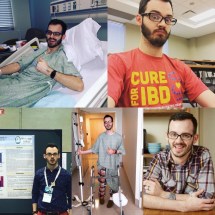 Balance is key. Health comes first,” said Aaron Blocker, a Crohn’s patient and IBD advocate. “It sucks to have to pause college because of your health, but school will always be there, and your health is important for long-term success.”
 As a straight A student, now struggling to pass classes due to an awful flare, I was devastated that I needed to ask for help. I was appreciative of my professors’ extreme kindness and that I was granted accommodations (deadline extensions, attending a different lecture on bad days, rescheduling exams, etc). This was a profound moment that taught me it was okay to ask for help,” said ulcerative colitis patient and IBD advocate, Jenna Ziegler.
 Ask for extra time, ask for a note taker. Get in touch with your school’s office for those with disabilities. Access the support you need to be on equal ground.”
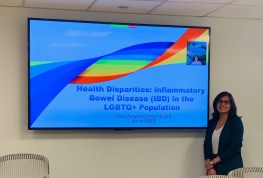 I also can use the bathroom frequently without question, eat in class without any questions and I’m allowed more than the usual 2 absences allowed in most classes,” said Tina Aswani Omprakash, Crohn’s patient and IBD advocate. “If there are group projects and I can’t partake; I ask the professor if I can do something on my own.”
 Constantly stressing about academics, friendships, relationships, and managing a chronic illness for which there is no cure. This is life with IBD on the college campus.
 Dr. Yezaz Ghouri, MD from the University of Missouri School of Medicine, along with IBD Patient, Ryleigh Murray, will be hosting the discussion. Ryleigh is currently a graduate student studying public affairs at the University of Missouri.
  Registering with the Disability Center on your campus and receiving accommodations allows yourself to increase your success rate within higher education. Early registration, extended test time and closer parking to your classes are just a couple simple requests that can impact your education for the better,” said Ryleigh.

 As the pain persisted and my little guy snuggled me on the couch, I was losing patience with the pain that was drowning out everything around me. I wanted relief and I wanted it quickly.
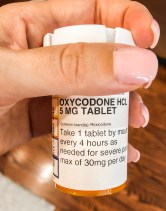 Sure, I couldn’t feel the abdominal pain, I couldn’t really feel much below my neck, which added to my anxiety. My body felt like Jell-O. I felt like I was living an out of body experience. I was whimpering and whining at 3 in the morning that I just wanted it to be the next day.
 This is not to say pain medication is always a no-go. I’m of the mindset that those of us in the IBD community should have access to opioids. At the same time, this is more of warning for patients to be mindful that the medication you take to calm your pain, may bring about side effects that are even worse than what you are dealing with in the first place. Personally, I’ll never take oxycodone again. You live and you learn. Sometimes with IBD unfortunately it has to be the hard way.


 It took time and some trial and error, but as I navigate my somewhat new diagnosis, my wife and I have learned how to best monitor my symptoms to try and avoid future flares and take Crohn’s on as a family. In addition to my medical care, this includes some key strategies to how we approach parenting.
 My wife is amazing and understands the physical impacts of a flare, but it’s my job to share with her if I’m feeling Crohn’s-y. Similarly, I have started a dialogue with my boss, so if I flare, I don’t have to pour every ounce of limited energy I have into work and come home completely empty.


 This week–

 Make a list of everything you’re interested in and then prioritize, cutting out what you don’t have your heart set on. Trying to do it all sets you up for exhaustion, frustration, and disappointment.

 She’s a 30-year-old mom and wife from Utah, who works full-time outside the home. She’s battled Crohn’s disease since December 2011.
  My mom did an amazing job making sure our lives did not revolve around her disease. She did her best to stay healthy and support us. I want my daughter to have the same experience as I had growing up. I don’t want her to ever feel the burden of my disease. I want her to know that no matter how difficult life gets, there is always hope. My mom is the one person I can call who fully understands my struggles. To have another family member that has and is dealing with the same chronic health issues is a huge support. I am very grateful for her.
 I remember explaining to him at one point that this disease would be something I will deal with my whole life and it was okay for him to leave me. It’s really hard to put my relationship with my husband into words. When it comes to Crohn’s, the thought of all he does to support me, makes me tear up. He knew that after our wedding day he would take my mom’s place at all my appointments and be my sole caregiver. Nate never shied away from the challenge and it makes me love him more and more everyday. He is my number one and having support from him means the world to me.

 lights camera crohn's