
I’ll never forget what it felt like to faint on the teacher’s desk in front of the entire class in fourth grade. As you can imagine, it was quite the spectacle. From a young age, I dealt with dizzy fainting spells. If I was outside at a carnival or festival and it was too hot, I would black out. To this day, if my showers are too hot and I haven’t eaten, my vision can go blurry and a loud “shhhh” sound blasts in my ears. I always have to be extra careful not to stand up abruptly. I was the girl in high school who carried glucose tabs when I got too weak.
Little did the doctors and I know in fourth grade that down the road when I turned 21 I would be diagnosed with Crohn’s disease. To this day I wonder if my anemia from a young age was a sign of what was to come. Upon my diagnosis, my hemoglobin plummeted to seven. To give you an idea, most people can’t function and are in dire need of a blood transfusion at that point. The general rule of thumb when it comes to hemoglobin is 13 and above for men and 12 and above for women. IBD patients fall into the same expectation as “normal” people when it comes to these ranges. For as long as I can remember, I’ve celebrated being in the double digits—a 10 is often hard for me to come by.
For those who don’t know what anemia is, it’s marked by a deficiency of red blood cells which means you have less blood to carry oxygen to the rest of your body. When you have a low hemoglobin you often feel extreme fatigue, weakness, experience chest pain or shortness of breath, have a fast heartbeat, headache, dizziness and lightheadedness.  For many of us in the IBD community, we deal with what is called Iron Deficient Anemia or IDA. With Crohn’s and ulcerative colitis, long-term irritation and inflammation in our intestines can interfere with our body’s ability to use and absorb iron properly. IDA is considered an extraintestinal manifestation of IBD.
I’ve teetered back and forth with IDA for as long as I can remember. And the same can be said for much of our community. According to the Crohn’s and Colitis Foundation, 1 in 3 people with Crohn’s disease or ulcerative colitis has anemia.
Causes for IDA:
- Low iron
- Inflammation in your intestines can interfere with your body’s ability to use or absorb iron.
- Blood loss from intestinal bleeding—oftentimes you can be bleeding in your stool, and not be able to see it.
- Poor absorption of vitamins and minerals, like vitamin B12 or folic acid.
- Medication
Treatments for boosting your hemoglobin and Iron Levels:
- Iron supplements—I’ve taken oral iron for years. I currently take a prescription prenatal vitamin with iron, calcium, folic acid and vitamin D, daily.
- IV iron for those with active IBD, or for those who cannot tolerate oral iron.
- Get your IBD under control with the right medication
- Blood transfusions in severe cases.
It’s important you communicate how you are feeling with your gastroenterologist, so they know if you are struggling. All it takes is a simple blood test ordered by your doctor. The test would need to include a typical CBC along with an iron panel.
I recently traveled to Houston and participated in a videotaped round-table discussion on this topic with two physicians and a nurse practitioner.  I provided the patient perspective. It was a great opportunity, but also taught me a lot about the prevalence of IDA with the IBD community, and the importance about being proactive and getting yourself the boost you need so you can feel your best each day. As a mom of two little ones, my anemia along with my Crohn’s can be a heavy burden to bear. That’s why I do my best to stay on top of managing my illness and taking all the supplements necessary to try and combat my malabsorption problems. I hope this article inspires you to do the same and realize you are never alone in your struggles.
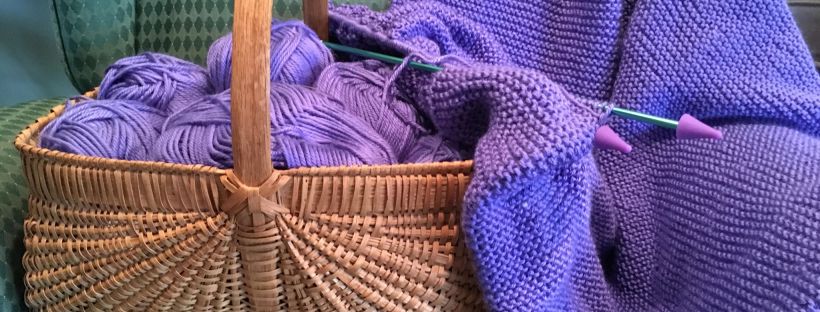
 When seven-year-old Penny was diagnosed with Crohn’s in January 2017, her grandmother, Mary, started knitting her a purple blanket. She chose the color purple because it’s not only Penny’s favorite color, but also the color that represents Inflammatory Bowel Disease (IBD).


 At the same time, Mary says she’s impressed by Penny and how she is taking all the baggage that comes with Crohn’s in stride at such a young age: the daily medications, the infusions, the lifestyle changes.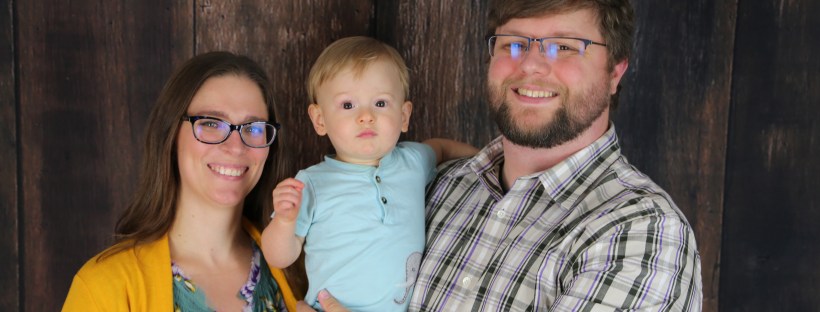
 Addy’s son, William, is now 13 months old. This week—she shares a guest post about her journey to bring him into this world and the challenges and victories she’s experienced as a new mom with IBD. I’ll let her take it away.
 After my second-high blood pressure reading that week, a nurse advised me to come into labor and delivery. When I arrived, I was diagnosed with gestational hypertension and started the induction process the next morning at 37 weeks.
 When William was born, I was thrilled, and so fortunate, to have a successful early breastfeeding relationship with him. When I started flaring again, breastfeeding became a significant challenge. I’d be with William during a late-night feeding, get a few minutes in, then have to wake my husband to keep William safe while I quickly ran to the bathroom. Obviously, this made William more than a little upset to start eating only to be pulled away. I also became increasingly worried that he wasn’t getting the nutrition he needed from me because I wasn’t absorbing nutrients the way I needed to. I upped my supplements and kept close tabs on his weight but continued breastfeeding. At this point, I knew I needed to do something different with my medications. What I was doing clearly wasn’t working.

 She was nervous about the potential of being matched up with a roommate who wasn’t a good match.
 was diagnosed with ulcerative colitis less than one week before leaving to study abroad for three months. She says the fact the trip still happened and was so successful was a highlight of her college career. While back on campus in the States, she recalls how stressful it was prepping for colonoscopies.
 when she became sick with IBD, so she barely had time to form a body image that didn’t include this disease. She says she was never somebody who was confident in her appearance, but having IBD didn’t help. From the prednisone “moon face” to issues with gas and continence, there have been lots of times where she felt too gross to be taken seriously.
 caused her to get sick all the time and the community bathrooms weren’t of much help.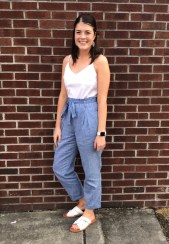


 It took time and some trial and error, but as I navigate my somewhat new diagnosis, my wife and I have learned how to best monitor my symptoms to try and avoid future flares and take Crohn’s on as a family. In addition to my medical care, this includes some key strategies to how we approach parenting.
 My wife is amazing and understands the physical impacts of a flare, but it’s my job to share with her if I’m feeling Crohn’s-y. Similarly, I have started a dialogue with my boss, so if I flare, I don’t have to pour every ounce of limited energy I have into work and come home completely empty.


 This week–

 Make a list of everything you’re interested in and then prioritize, cutting out what you don’t have your heart set on. Trying to do it all sets you up for exhaustion, frustration, and disappointment.

 She’s a 30-year-old mom and wife from Utah, who works full-time outside the home. She’s battled Crohn’s disease since December 2011.
  My mom did an amazing job making sure our lives did not revolve around her disease. She did her best to stay healthy and support us. I want my daughter to have the same experience as I had growing up. I don’t want her to ever feel the burden of my disease. I want her to know that no matter how difficult life gets, there is always hope. My mom is the one person I can call who fully understands my struggles. To have another family member that has and is dealing with the same chronic health issues is a huge support. I am very grateful for her.
 I remember explaining to him at one point that this disease would be something I will deal with my whole life and it was okay for him to leave me. It’s really hard to put my relationship with my husband into words. When it comes to Crohn’s, the thought of all he does to support me, makes me tear up. He knew that after our wedding day he would take my mom’s place at all my appointments and be my sole caregiver. Nate never shied away from the challenge and it makes me love him more and more everyday. He is my number one and having support from him means the world to me.


 Prior to the challenges and the hurt that coincide with having a disease that you expect to have until your dying day. It’s heavy and can be overwhelming. There’s no cure for IBD and once you are told you have it, your world and your life is forever altered.



 Crohn’s has shown me that just because I get knocked down with a flare, doesn’t mean I can’t bounce back and be better. With Crohn’s, life often feels like you’re in the passenger seat and your fate is out of your hands. Rather than sit back passively, I choose to grab the wheel. Cheers to 36!
 She’s a 38-year-old wife and mom who juggles two autoimmune diseases. She also has Hashimoto’s disease. Since she started on Remicade in 2018 following her IBD diagnosis, she’s experienced the difficulty of warding off illness while being an elementary school teacher and a mom to a young child.
 Dealing with the symptoms of IBD was more than enough–how on Earth would I be able to handle that plus avoid picking up viruses at school and in public?
 I really needed to stop caring about what others think and prioritize my health. One of the most surprising things to me was that people really don’t understand what immunosuppression means. Some people think I’m just a paranoid germaphobe even after I’ve explained that I’m immunosuppressed. They don’t understand that a simple cold for them, can mean days of sick leave for me due to a secondary infection. Or a fun day swimming in the bay can mean a bacterial infection for me that lasts for weeks and causes symptoms similar to a bad flare.
 Somehow my body knows when we have something fun planned and chooses those times to conk out on me. When I’m lying on the couch at home feeling sorry for myself while my husband and son are at a friend’s New Year’s Eve party or Memorial Day BBQ (both events I missed this year), I try to remind myself that Remicade is what allows me to lead a relatively normal life and be able to do things like go sledding with my son on a snow day and take him Trick or Treating. I couldn’t do those things when I was in a bad flare before treatment and definitely can appreciate them more now. I just make sure shoes come off and hands are washed right when we get home.
 I chose to blog and become a patient advocate for several reasons. I was tired of feeling isolated. I wanted to be a voice for the newly diagnosed, as well as the veteran patient. And, as a journalist, I’ve always had a love for the written word. For me—expressing myself through writing comes a lot easier than saying the words out loud.
 In that time, I’ve shared 171 new articles (because some weeks I post on Mondays AND Wednesdays). Over the last three years, more than 105,000 people from around the world have checked out Lights, Camera, Crohn’s. Could the articles be organized better? Yes. Could the design be snazzier? Yes. But, my focus as an IBD blogger and advocate is to give you the nitty gritty. I’d rather spend my time and energy on content vs. design.
 lights camera crohn's