
IBD and surrogacy. Those are loaded words. Both evoke emotions and opinions for unique reasons. For Jessie Magaro, 34 of Atlanta, the decision came after the unfathomable struggles she had with her Crohn’s during pregnancy and after. To provide you with the backstory, Jessie was diagnosed with Crohn’s and endometriosis when she was 15. She underwent an elective surgery her senior year of high school for her Crohn’s that put her into surgical remission for 15 years. 
Jessie got married in 2016. While she was loving every second of newlywed life, she started feeling endometriosis pains. Less than a year after tying the knot, her doctor discovered her fallopian tubes were blocked. It was unclear if the blockage was due solely to endometriosis, or if it was a result of scar tissue from her bowel resection. Either way, IVF seemed to be the only option to get pregnant, and her fallopian tubes would need to be removed for that to be successful. In November 2017, Jessie underwent the surgery. When she woke up, she thought she would be stripped of the ability to conceive a baby naturally. But, her surgeon told her they were able to save and repair one of her tubes.
Jessie ended up getting pregnant right away, but unfortunately had an ectopic pregnancy that ended up severely rupturing her fallopian tube. During emergency surgery to remove the remaining tube, it was determined her endometriosis was severe and IVF needed to happen sooner than later. I had the chance to interview Jessie about her harrowing experience to bring a baby into this world, while living with IBD and endometriosis. 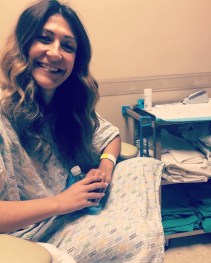
NH: How did IVF impact your IBD?
JM: “The moment we started IVF, I felt a shift in my body. A storm was brewing, and I could feel it. My completely dormant Crohn’s appeared to be waking up, but I didn’t want to believe it. I battled through the IVF process while experiencing my first flare in a decade in a half. The Reproductive Endocrinologist and GI were miffed. No one could say if this was an isolated reaction to the hormones, or if I was truly experiencing an active flare. After a lot of back and forth, and hard conversations with medical professionals and our families, we decided to proceed with implanting an embryo. The thought process was that most women tend to do better in pregnancy with Crohn’s, if they had been in remission prior. The hope was that this “flare” was an isolated incident from the IVF drugs/hormones, and that everything would calm down once I was pregnant. It was a risk, but one we decided we were willing to take. After a short round of prednisone, the flare subsided, and we proceeded with the transfer.”
NH: You now have a beautiful, healthy 13-month-old daughter to show for it. What was your pregnancy like?
JM: “My pregnancy was a terrifying whirlwind of trying to manage an awful flare while keeping the baby safe.  I developed a new manifestation of the disease I never had before: Perianal Crohn’s. Not a pleasant situation and one that is very difficult to treat/manage while pregnant. Things got so bad at one point, I had to have surgery to drain an abscess and place a seton to help a fistula heal. No one wants to have surgery pregnant. It was one of the scariest moments of my life. The first trimester was spent hoping and praying the baby would make it with all the turmoil going on in my abdomen. The second trimester was spent hoping and praying we could keep her in there long enough to be viable outside of the womb. The third trimester was spent in an unbearable amount of pain fighting the urge to take the prescribed pain pills and being so scared about how the increased biologics, steroids and other new drugs being introduced into my system might affect her.”
NH: You must have been going through so many emotional struggles at this time, on top of all the physical.
JM: “The level of anguish and guilt I felt was unimaginable. I already felt like I was failing at my motherly duty to protect her and keep her safe. By 32 weeks it was clear I was rapidly deteriorating, and we had exhausted all treatment possibilities deemed “safe” while pregnant. I desperately needed more aggressive treatment, and that couldn’t happen until she was out.  With the newly manifested, aggressive, perianal disease, a vaginal birth was out of the question. I held on until 36 weeks and on New Year’s Eve of 2018 we welcomed our baby girl. We were so incredibly relieved she was ok, and the focus quickly shifted to how not ok mom was.”
NH: As a fellow IBD mom, we all know how challenging the postpartum time is, along with chronic illness. How did you navigate that?
JM: “The first five months of her life were spent in and out of the hospital non-stop. At one point we were traveling down to the Mayo Clinic in Jacksonville for weeks at a time (without her) for testing and treatment. Leaving her the first few months was by far the hardest, most gut-wrenching thing I’ve ever experienced. I would sit in the hotel bathtub staring at the IV in my arm sobbing. The physical and emotional pain was unbearable. I remember agonizing over the decision to start the new meds, or continue breastfeeding her, and the doctor saying to me “you NEED these meds, Jessie. You HAVE to get better. She needs you to get better more than she needs you to breastfeed her right now …” cue the waterfall of tears again.”
NH: You started to turn the corner when your daughter was six months old. Tell us about that.
JM: “The pain had begun to subside enough for me to take care of her without help, I could finally leave the house and I was starting to feel a little more like myself again. I was, and still am a year later, in an active flare, but we’re making progress.  After talking to many medical professionals, we decided it was not safe for me to carry another child. We still don’t know if it was the IVF drugs/hormones that caused the flare going into pregnancy, or if hormones in general and my Crohn’s disease just don’t mix, but we’re not willing to put myself, or another baby at risk like that again.”
NH: I can only imagine what a difficult and complicated decision this has been for you and your husband.
JM: “This was not a decision that was made easily or lightly. As we go through the motions of finding a surrogate to carry baby number two, my days are filled with a roller coaster of emotions. We know we want another child, but at what price? I can’t take care of my family if I am unwell. If carrying another child myself leads me to be unwell again … is it worth it? Or, do I trust someone else, a safer vessel, to carry a precious sibling for our daughter. We’ve chosen to pursue a safer vessel. I am so unbelievably grateful that surrogacy is an option for us and will allow us to continue growing our family while keeping me safe.”
This story is not meant to scare anyone with IBD who is looking to start a family. Make sure you are in complete, clinical remission before you conceive, and know it is completely possible to have a happy, healthy pregnancy with IBD.

 This week—I interview Therezia AlChoufete, a Registered Dietitian Nutritionist (RDN) who specializes in Gastrointestinal Diseases, to set the record straight about this area of disease management. Therezia completed her Bachelor of Science in Neuroscience and her Master of Science in Nutrition and Dietetics from the University of Pittsburgh.
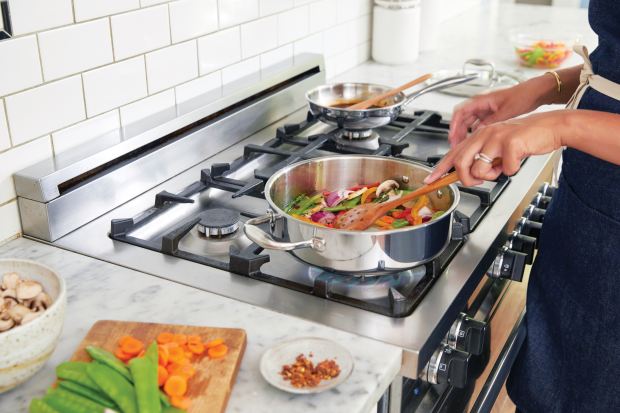


 We know our bodies, we know our triggers, and we are the ones who are ultimately going to have to pay if symptoms arise. Comments like “Oh, I didn’t think you could eat that?” or “Isn’t that going to land you in the bathroom?” are completely unnecessary. Focus on passing that side dish of mashed potatoes rather than giving us the side eye at the dinner table.
 Bringing “safe” foods or eating ahead of time at home provides comfort and allows us to enjoy more of the party. Please don’t take offense if we eat very little, or nothing at all.
 Please trust we know the side effects of the medications we are on; we know the risks of the surgery we may have to get; we know it all. Please don’t tell us to start taking a supplement you found online. Yes, we’ve heard of: CBD oil, turmeric, probiotics, the list goes on. Please don’t question the safety of our biologic. Our disease is our reality. Unless you live it, it’s not yours.
 Just as with food, everyone with IBD responds differently to alcohol. We understand a glass of wine here or a beer there at a celebration may not seem like a big deal, but one drink can be enough to cause us extreme abdominal pain. Feel free to ask us, but if we decline the offer please don’t pester us, ask us if we’re pregnant, or try and make us succumb to peer pressure. We’d much rather be sober and present at the party without pain.

 For many of us in the IBD community, we deal with what is called Iron Deficient Anemia or IDA. With Crohn’s and ulcerative colitis, long-term irritation and inflammation in our intestines can interfere with our body’s ability to use and absorb iron properly. IDA is considered an extraintestinal manifestation of IBD.
 I provided the patient perspective. It was a great opportunity, but also taught me a lot about the prevalence of IDA with the IBD community, and the importance about being proactive and getting yourself the boost you need so you can feel your best each day. As a mom of two little ones, my anemia along with my Crohn’s can be a heavy burden to bear. That’s why I do my best to stay on top of managing my illness and taking all the supplements necessary to try and combat my malabsorption problems. I hope this article inspires you to do the same and realize you are never alone in your struggles.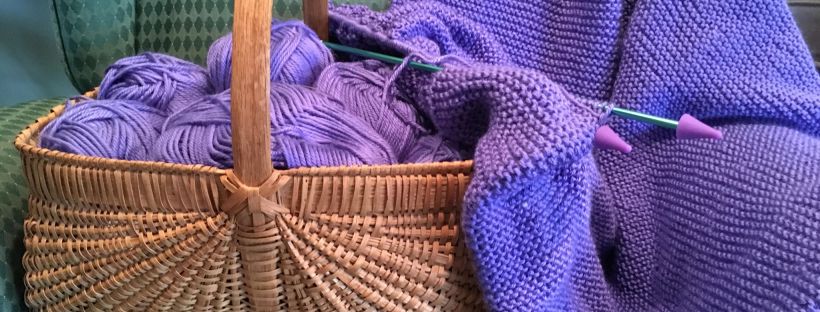
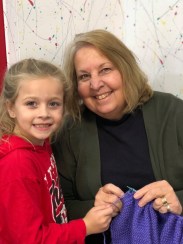 When seven-year-old Penny was diagnosed with Crohn’s in January 2017, her grandmother, Mary, started knitting her a purple blanket. She chose the color purple because it’s not only Penny’s favorite color, but also the color that represents Inflammatory Bowel Disease (IBD).


 At the same time, Mary says she’s impressed by Penny and how she is taking all the baggage that comes with Crohn’s in stride at such a young age: the daily medications, the infusions, the lifestyle changes.
 Addy’s son, William, is now 13 months old. This week—she shares a guest post about her journey to bring him into this world and the challenges and victories she’s experienced as a new mom with IBD. I’ll let her take it away.
 After my second-high blood pressure reading that week, a nurse advised me to come into labor and delivery. When I arrived, I was diagnosed with gestational hypertension and started the induction process the next morning at 37 weeks.
 When William was born, I was thrilled, and so fortunate, to have a successful early breastfeeding relationship with him. When I started flaring again, breastfeeding became a significant challenge. I’d be with William during a late-night feeding, get a few minutes in, then have to wake my husband to keep William safe while I quickly ran to the bathroom. Obviously, this made William more than a little upset to start eating only to be pulled away. I also became increasingly worried that he wasn’t getting the nutrition he needed from me because I wasn’t absorbing nutrients the way I needed to. I upped my supplements and kept close tabs on his weight but continued breastfeeding. At this point, I knew I needed to do something different with my medications. What I was doing clearly wasn’t working.

 She was nervous about the potential of being matched up with a roommate who wasn’t a good match.
 was diagnosed with ulcerative colitis less than one week before leaving to study abroad for three months. She says the fact the trip still happened and was so successful was a highlight of her college career. While back on campus in the States, she recalls how stressful it was prepping for colonoscopies.
 when she became sick with IBD, so she barely had time to form a body image that didn’t include this disease. She says she was never somebody who was confident in her appearance, but having IBD didn’t help. From the prednisone “moon face” to issues with gas and continence, there have been lots of times where she felt too gross to be taken seriously.
 caused her to get sick all the time and the community bathrooms weren’t of much help.


 It took time and some trial and error, but as I navigate my somewhat new diagnosis, my wife and I have learned how to best monitor my symptoms to try and avoid future flares and take Crohn’s on as a family. In addition to my medical care, this includes some key strategies to how we approach parenting.
 My wife is amazing and understands the physical impacts of a flare, but it’s my job to share with her if I’m feeling Crohn’s-y. Similarly, I have started a dialogue with my boss, so if I flare, I don’t have to pour every ounce of limited energy I have into work and come home completely empty.


 This week–

 Make a list of everything you’re interested in and then prioritize, cutting out what you don’t have your heart set on. Trying to do it all sets you up for exhaustion, frustration, and disappointment.

 She’s a 30-year-old mom and wife from Utah, who works full-time outside the home. She’s battled Crohn’s disease since December 2011.
  My mom did an amazing job making sure our lives did not revolve around her disease. She did her best to stay healthy and support us. I want my daughter to have the same experience as I had growing up. I don’t want her to ever feel the burden of my disease. I want her to know that no matter how difficult life gets, there is always hope. My mom is the one person I can call who fully understands my struggles. To have another family member that has and is dealing with the same chronic health issues is a huge support. I am very grateful for her.
 I remember explaining to him at one point that this disease would be something I will deal with my whole life and it was okay for him to leave me. It’s really hard to put my relationship with my husband into words. When it comes to Crohn’s, the thought of all he does to support me, makes me tear up. He knew that after our wedding day he would take my mom’s place at all my appointments and be my sole caregiver. Nate never shied away from the challenge and it makes me love him more and more everyday. He is my number one and having support from him means the world to me.

 lights camera crohn's