As Crohn’s and Colitis Awareness week approaches (December 1-7), I thought it would be helpful to share my top 10 tips for those who do not have inflammatory bowel disease (IBD). It’s my hope that after reading this article, you’ll feel more comfortable approaching family members and friends with these diseases and be able to have compassionate and thoughtful conversations.
- Do not compare IBD to IBS.
This, above all else is aggravating and makes those of us who battle Crohn’s and Colitis cringe and roll our eyes, whether we are doing it in front of you or not. We understand that you are trying to relate to our situation because you think our disease is all about going to the bathroom, but please refrain from making this comparison.

IBD refers to a chronic, autoimmune disease, that wreaks havoc and causes inflammation of the GI tract—which can span from your mouth to your anus. Aside from abdominal pain and trips to the bathroom, we deal with a laundry list of other symptoms ranging from chronic fatigue to uveitis (inflammation to the middle of the eye). I’m not saying IBS is a walk in the park, but it’s on a different playing field.
- Hold your horses, Beverage and Food Police
 Yes, we know that Pumpkin Spice lattes or those peanut M&M’s may not be the best decisions—but every now and then we want to live a little and take a risk. Just because coffee, nuts or popcorn caused pain one time—doesn’t mean that’s always going to be the case. In the end, if what we eat and drink causes us pain, we’ll be the one paying the price, not you. Please refrain from staring at us and questioning every time we put food in our mouths. We get it. No need to question or reprimand us. There’s already an ongoing inner dialogue 24/7 about every little decision we make and how it’s going to make us feel, trust me.
- IBD doesn’t need to be the white elephant in the room, talk about it.
If you are hesitant to bring up Crohn’s and Colitis with a loved one or friend, don’t be. It makes us feel like what we are going through matters. By communicating and articulating that you recognize we are battling a difficult disease it doesn’t make our situation feel so isolating. Especially for those of us who blog or share our struggles on social media, it always surprises me that despite all I share and my openness, so many people in my life like to pretend that I don’t have Crohn’s and never, ever, bring it up. If anything that is disheartening to me. I am passionate about being a patient advocate and sharing my journey, obviously I want to talk about it.
- Don’t make us feel guilty if we need to cancel plans.
There have been countless times I make plans with friends or when I used to go on dates prior to getting married, where I needed to cancel because I was blindsided by symptoms.  Understand that when you make plans with someone who battles IBD, the way we feel can change up to the minute we’re supposed to meet. While I know that can be aggravating, you must be patient and think about what you would do if you had stabbing pains in your abdomen and couldn’t stand straight up as you rush to the bathroom. More often than not, rather then canceling we put a smile on and pretend to feel well. So, the times we cancel—I can guarantee you, it’s a legit excuse and doesn’t make us happy either. I’ve had moments where I was all excited to go out with my husband and meet friends and he would see me walking around putting my make up on with my pants unbuttoned, because I was in so much pain and he had to tell me—we’re not going.
- No need to remind us “it could be worse.”
Yes, we are well aware that a lot of people have it worse than us and are battling terminal illnesses. At the same time, many people have it better than us. We understand the severity of our disease and that it can’t be compared to someone battling stage IV cancer. But, before you wake up in our shoes and know what it’s like to live with a chronic, invisible illness that takes management with multiple medications a day, procedures, poking and prodding and facing the unknown of what the next day brings regarding flare ups—please don’t try and pretend you can fathom the struggle.
- Surgery is not a cure for Crohn’s
According to the Crohn’s and Colitis Foundation, unlike ulcerative colitis, Crohn’s disease cannot be cured with surgery, except in some instances where only the colon, rectum, and anus are affected. If the diseased portion of the intestine is removed, the inflammation can reappear adjacent to the site of the surgery, even if that part of the intestine was normal prior to the surgery.  The primary goals of surgery for Crohn’s disease are to conserve as much bowel as possible, alleviate complications, and to help the patient achieve the best possible quality of life. Sure, you may go into surgical remission or be given a “fresh start,” but that disease will always be a part of you. When I had my bowel resection surgery in August 2015, they removed 18 inches of my small intestine—a decade of disease was taken from body. Of course, as I healed, I felt better and still feel a lot better nowadays, then I did prior to the surgery. Regardless, I live with Crohn’s every day and those symptoms are still present quite often. About 23-45 percent of people with ulcerative colitis and up to 75 percent of people with Crohn’s disease will require surgery. As I type this, I have stabbing pains in my stomach. I felt completely fine when I started writing this.
- Questioning medication decisions
So often people seem to think they have MD after their name, even if they haven’t taken one medical course in their life. Yes, we are aware, there are a ton of commercials on TV that list all the possible side effects for Humira, Stelara, Entyvio… you name it.  Normally when we hear those commercials, if they don’t pertain to us, we may kind of laugh and wonder who in their right mind would take a medication with all those risks. For those of us with IBD, we oftentimes don’t have a choice. It’s a high risk with a high reward. Quality of life has to come first. I know before I got pregnant with my son, there were multiple occasions where friends would question my decision to be on Humira. Once you are on a biologic and your disease is this severe, you don’t have a whole lot of options. Don’t you think the risk of new and worsening heart failure and being immune suppressed is already a worry we deal with as it is?
- Fading to the background and disappearing when we need you most.
One of the “perks” of having IBD is that you quickly get to see who your true friends are and who has a compassionate heart.  Sadly, the people who you think you are closest to often seem to disappear when you’re in the hospital. Rather than focusing on getting better, your mind may race and you may feel hurt that so and so hasn’t even called, texted or visited—even though you know they saw your post on social media about your most recent hospital stay. If you’re questioning whether you are going to bother the person or if you think it’s not your place to reach out—please change your mindset. It’s the people who reach out when you’re at your lowest point that you realize are worth your time and energy. IBD is isolating enough as it is, please be a good friend and show us some love when we’re going through a flare. If you were hospitalized, would you want radio silence from every person who matters to you?
- Don’t be afraid to find humor in the struggle.
Timing is everything when it comes to humor, but don’t feel like you need to be all doom and gloom with us. We are the same person we’ve always been, and more often than not we may make light of the situation as a defense mechanism. I was recently on a call with fellow Crohn’s and Colitis Foundation volunteers and casually introduced myself and said, “I’ve had one surgery, just 18 inches of intestine removed”… I said it as a joke, and the people on the other end laughed and said “just?”…because they get it. There’s no need to always think of IBD as a negative, in time, we come to realize it helps define the people we become.
- Please don’t push the “diet that heals”, homeopathic remedies on us
If there was one diet that worked wonders for those of us with IBD, we’d all be on board. There would be no need for medications and tests and hospitalizations. So many people inquire and ask, “have you tried the FodMap diet? What about SCD? What about Paleo?”…the list is endless. I tried going Paleo a couple years ago and almost ended up in the hospital. If you find a diet that works for you or someone you know, that’s fabulous. Unfortunately, every single case of IBD is different and there isn’t one way to help “heal” us all. If anything, this can be very confusing for newly diagnosed patients and their caretakers. It can put people in harms way if they follow your recommendation and decide they no longer need medication. Please be mindful of your words.
If you read my articles, you know I always focus on the positive and like to lift people up. My husband saw me writing this and felt it was a bit of a Debbie downer.  I apologize if you feel that way, but I hope it has the opposite impact. I hope it brings you clarity and that it made a light bulb go off so that you know how to navigate your friendships and relationships with those who battle IBD. This week is a time to bring awareness about Crohn’s and ulcerative colitis, it’s a time for these diseases to be in the spotlight. This week, and all that follows, please be gentle with your words and be the type of support you’d want in return.
For more information about this year’s Crohn’s and Colitis Awareness Week, click here. It’s time we all speak up. Stand up. And stand together.


 Three days later, at 10 pm the night before we were going to hang out, Amanda was admitted back into the hospital.

 Despite making life-long friendships and memories, she felt the challenges of her dietary restrictions, and couldn’t take in all the monumental experiences like her peers.
 “A Birthright Israel trip includes airfare from major cities, hotels, meals, transportation within Israel, and costs associated with touring the country,” said Deb, who as a Crohn’s patient herself, is helping with the coordination of this program for Israel Outdoors.


 Everyone knows the prep is far from desirable and it doesn’t help when you’re famished. For some reason, this go around was especially difficult on me. I was incredibly nauseated and weak. I vomited multiple times. I could barely get it down.
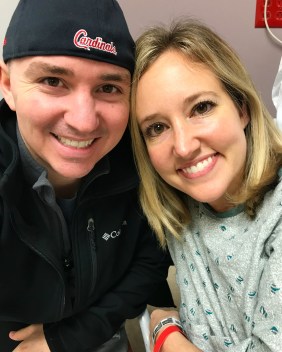 As I sat alone in my hospital gown, waiting for the IV and the procedure I had a few moments to think, pray and reflect about my patient journey. My husband Bobby came back to see me, held my hand, kissed me a few times and I was whisked away. I woke up to the best news! There were no signs of inflammation or active disease and my streak of “remission” continues. I put that word in quotes because I am always hesitant, as my symptoms always come out of left field and blindside me. For now, I am going to bask in this celebratory moment, enjoy every feel good day and take in the relief of knowing I’ve gone through another colonoscopy and passed with flying colors!
 I had just gotten off the stage after speaking at the Crohn’s and Colitis Foundation Patient Symposium Event in October. Her and her mom, Michelle, approached me outside of the auditorium. Tears in their eyes. Smiles on their faces. I immediately felt a connection and knew this little girl was something special.
 She’s had a total of three colonoscopies, an endoscopy and an MRE. She’s been hospitalized due to flare ups three times. She has three siblings at home, so as she’s in the hospital or going to the doctor, her parents have to care for them as well. There’s a reason for the saying—’it takes a village’… because it really does.
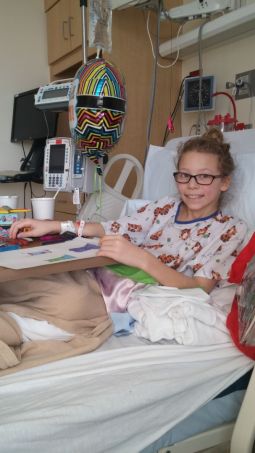 Also, as a parent of a child with a chronic illness, we are their best advocate. No one knows your child better than you do. If you think that something isn’t quite right, trust your momma instincts!”
 Right before the shot, she relaxes her leg, takes a deep breath and pretends she’s anywhere but the living room couch.





 When I visited my GI for a routine appointment last week, she told me those with IBD who have surgery oftentimes have an “issue” called
  This medication is typically a cholesterol medication, but can be used by Crohn’s patients as a bile acid sequestrant. By taking one pill prior to eating each meal, it helps bind bile acids in the intestines and can prevent the need to go make a mad dash for the bathroom immediately after eating.
 I wasn’t thrilled to add another pill to my patient repertoire and daily regimen (it’s a horse pill!), but this has the ability to be a game-changer.

 We tried new medications, but after eight months of no change in my small bowel, my gastroenterologist thought it was time to say goodbye to the diseased portion of my intestines. I remember the phone call from her just saying “I’m going to give this to you bluntly, you need to get them out.” At first, I was shocked, then angry that my body was failing me. I brought my husband to my surgery consultation, and I’ll never forget the look on his face as the surgeon was asking me very detailed symptom questions and I was answering them honestly. It was a look as if I had by lying to him for years. Even my husband, the person I spend every waking hour with, have been with for almost six years and since I was diagnosed, didn’t fully understand how bad my disease had gotten in the last three years.
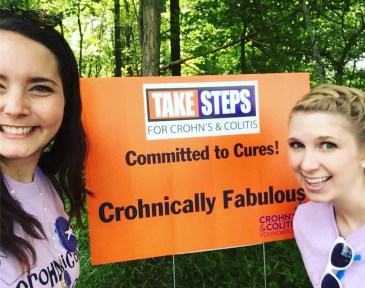 As a mom and a wife, I questioned how my family would make do without me… But as surgery drew closer and I was in so much pain that I could only eat liquids and was basically confined to the fetal position, I knew it was time.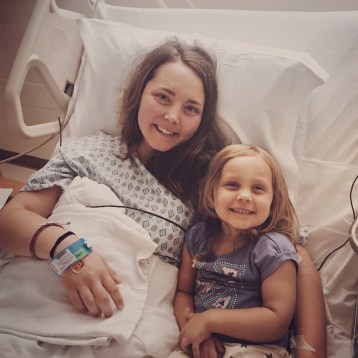
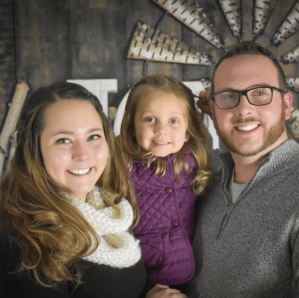 Getting surgery has changed my life in just 12 weeks. I can’t even imagine how much it’s going to change my life in the next year or two. I know the statistics aren’t in my favor, but until then I will totally be living my best life with a foot less of intestine and a bigger smile on my face!

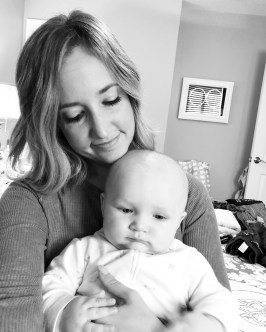 The relentless and all too familiar pain will take my breath away. I’ll call my husband, frantic, scared and emotional. My mind will race. This can’t happen. I can’t leave my baby. I can’t walk out this door doubled over in pain and not know when I’m going to be back home. This flare up will be worse than any I’ve encountered in the past. This time it’s not just about me anymore. It’s about him.
 When you’re hospitalized, wearing a gown, attached to an IV pole and looking less than stellar…how do you pretend? How do you protect your little ones from the unknown? This isn’t the mommy they know and love. Kids are more intuitive than we give them credit for.
 As much as we want to protect our loved ones from knowing how deep our pain lies, sharing and allowing them to be a part of our patient journey is important. It’s a big part of who we are and God forbid someday they too inherit the disease, we have to set an example that it’s nothing to be ashamed of and that it doesn’t have to rob you of living a beautiful life.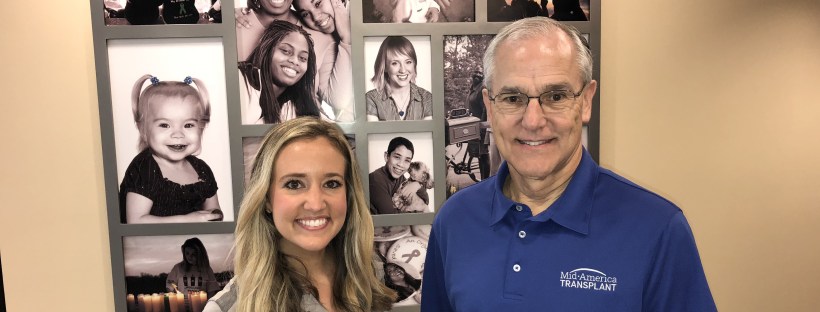

 Each day, about 22 people die waiting for the phone to ring. That’s about one person an hour.
 “What we do with any donor—no matter what—is assess the function of every single organ. So, for instance if the kidney, lung or liver function isn’t up to par due to long-term disease process or from long-term side effects from medications, the organ will not be transplanted. The last thing we want to do is transplant an organ and have the recipient develop a disease from a transplanted organ,” said Dr. Marklin.
 As someone who’s battled Crohn’s disease for more than 12 years, and as someone who’s witnessed firsthand the incredible ripple effect created by organ donation within my own family—I can’t reiterate enough, how imperative it is to be a donor.
 lights camera crohn's