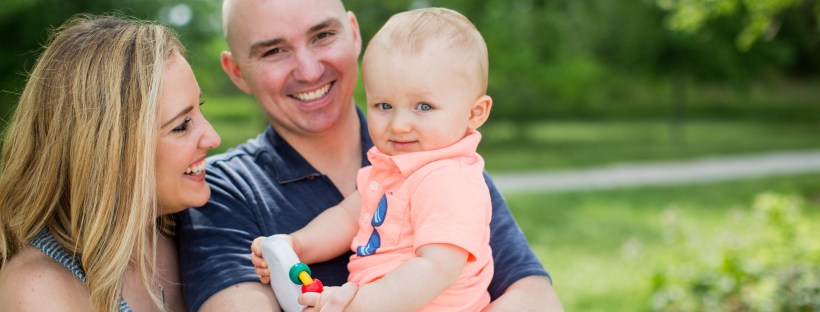
To the person who doesn’t want to see me smile as I battle Crohn’s

Today marks my 13th anniversary with Crohn’s disease. Lights, Camera, Crohn’s: An Unobstructed View, is two years old today! It’s a big day. Lots of reflection and bittersweet emotions. It’s always difficult to know how to handle an anniversary of a chronic illness diagnosis—is it a celebration? Is it a remembrance of what was? Is it all the above? For me, I like to think about how far I’ve come since July 23, 2005. How my perception of life, people and my own personal strength has grown, changed and evolved, thanks to my disease.

Since I started sharing my story in 2014 as a patient advocate, I’ve really put myself out there. I’ve been vulnerable, honest and haven’t minced my words. I’ve been fortunate to have speaking opportunities, videos, conferences and feature stories. While that is all wonderful—it also puts you in a space and a place where complete strangers—who have no idea what you’ve endured, can pass judgement and make claims about how you choose to take on your illness.

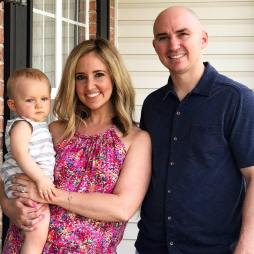
This past week—I was surprised by a comment on Facebook, written on an article by Health Central that highlighted my patient story. Like many people on social media, rather than read the article—they reply to the title or the pulled quote in the caption. Reader CommentThe featured image from the story is one of me smiling outside my home. The comment on the article: “Crohn’s sucks. Why don’t you show what a real sick person looks like, instead of a happy smiling one???? Just saying—nothing happy about this crap.”
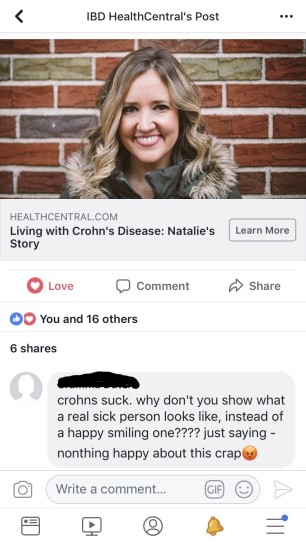
This really took me aback. This felt like a slap in the face. This comment hurt me. Obviously, she didn’t read the article or she would have known about all my hospitalizations, surgery, and rollercoaster of a journey. But to flat-out judge a fellow patient who lives with this debilitating disease and demean me for having a positive attitude…and smiling (God forbid!). If it weren’t for my attitude and the way I approach my Crohn’s disease, I never would have accomplished my dreams of being a television news anchor. I never would have trusted a man with my heart and gotten married. I never would have become a mother and gotten pregnant again.

If there’s anything I’ve wanted you to take away from my blog and my journey, it’s about finding the power of positivity in your experiences and seeking the good that still exists in your life, despite your disease. If you want to think woe is me and suffer all day long on the couch…that will be your life. image1 (13)If you choose to smile and show Crohn’s who’s boss, than no matter what obstacles and setbacks come your way you’ll tackle them and fight through flares with a knowingness that better days are ahead.
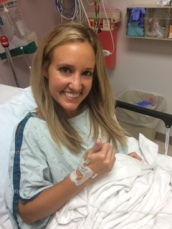
As a patient advocate—I know I can’t please everyone. I know not everything I say will resonate with you. And that’s completely fine. All I ask is that you have an open mind and understand that each person chooses to take on this terrible disease how they want to and shouldn’t be called out for it. My life is not all about hospitals, IVs, pain and suffering. Yes, this past week my injection hurt so badly I was sobbing hysterically and yes my stomach was killing me while out to dinner. But you know what, those moments passed. Rather than allow my pain to rob me of a wonderful conversation with a friend—I stayed at the restaurant. Instead of wallowing in the pain of my injection and the bruise that remains days later, I had a bowl of ice cream and gave my 16-month-old a few extra high fives. _F6B3268
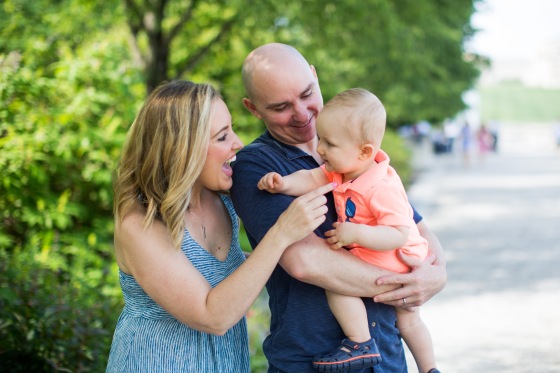
So, to whoever decided to try and belittle me on the article about my patient journey and look down on me for smiling, please know I am a real person…and I am sick. But sick doesn’t come first when I think of who I am. It’s a part of me. It’s not all of me. That’s how it will always be, no matter what. And one thing I can promise you—now and in the future, it will never stop me from smiling.
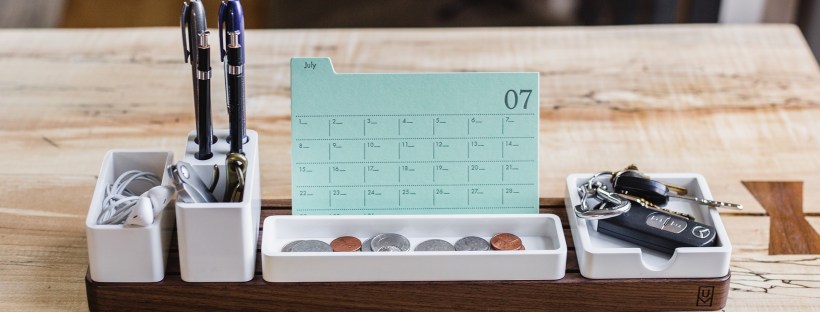
 

Why July, my Crohn’s and I don’t mesh

Oh, July. We meet again. Each and every year I dread you. For some reason, you like to throw me curve balls—time and time again. From my diagnosis of Crohn’s, to that tennis ball size abscess, to starting Humira, and to the bowel obstruction that resulted in 18 inches of my intestine being removed. The month of July and I just haven’t meshed well since 2005.

Do you ever feel like certain times of the year, months or seasons tend to trigger your symptoms? natalieandreidI don’t know what it is about July, but that’s always been my danger zone. I always breathe a sigh of relief when August begins. Call me superstitious, but prior to getting married, I knew I could never have my wedding this month nor would I want to welcome a baby into the world. I have July’s number.

Keeping those difficult moments in the past and not allowing them to seep into my daily thoughts can be a struggle this time of year. I’ve always been one to reminisce and think about memories and experiences. I have a reputation for having a mind like a steel trap. Ask me what I was wearing, where we first met, when your birthday is…I could probably tell you the information without having to do much thinking. Sometimes that’s a nice trait to have, but it can also be detrimental. The difficult July moments in my past still feels so fresh, despite the years that have ticked by.

So how do we get passed the past? It can be easier said than done. But, here’s what I do to cope:

Get out of your head

Sure, my Crohn’s has wreaked havoc on multiple occasions during the month of July—but, out of the last 13 years I’ve also had nine good Julys. It’s easy to fall back and focus on the negative, try and think about the times your body has surprised you in a good way. If you stress and worry about the unknown that will only increase your likelihood for experiencing painful symptoms.

Be proactive

If you are noticing your disease is spiraling out of control, remedy-nsmith-stlouis-1284nip it in the bud. Don’t try and be a superhero and take on a flare yourself or fail to communicate to those around you. You and I both know exactly how it feels when a trip to the hospital is a must. Delaying the inevitable will only add insult to injury. Stay on top of maintenance medication, vitamins, exercise and sleep.

Try to place more emphasis on self-care

If there’s a pesky month or time of year be selfish and do what you need to take care of you. Does walking outside in nature help you clear your mind? Do you enjoy taking an Epsom salt bath? Reading a book by the pool? Do whatever brings you a sense of calm. Your body and mind will thank you for it.

Taking on IBD one step at a time: Getting empowered through Team Challenge

One of the many benefits of getting involved with the Crohn’s and Colitis Foundation is finding people locally who understand and live your reality. I became friends with a woman named Angie last year. facebook_1529431731870She’s a resilient person with a positive attitude. Her energy is contagious. This week, a guest post about her involvement with Team Challenge and how it’s enabled her to find community not just in St. Louis, but throughout the United States. I’ll allow Angie to take it away…
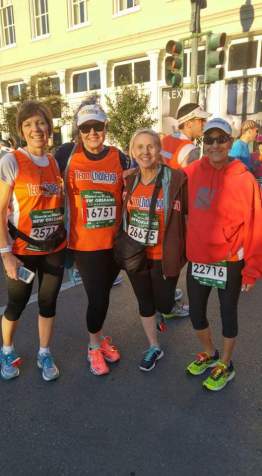
My journey began with inflammatory bowel disease began in April 2011. For me, symptoms went from non-existent to emergency surgery within a month of first waking up with cramps and diarrhea. I had been a healthy active person up to that point and I was a month shy of my 46th birthday.

I was first diagnosed with ulcerative colitis, but that diagnosis was later changed to Crohn’s disease. Due to reoccurring abscesses, my GI doctor ordered some additional tests that showed I have Crohn’s. When I was first diagnosed with IBD, I had never heard of Crohn’s disease. There was so much to learn and absorb, but I was so sick, it was hard to take it all in. My emergency surgery resulted in a total colectomy. I had a perforated bowel in 4 places. Once the surgeon opened me up, he discovered things were much worse than he expected and I had sepsis. Those early days in the hospital were hard, but I was committed to staying positive and hopeful.

One of my favorite ways to stay active had always been power walking. If I could walk somewhere vs getting in my car and driving there, that was my path of least resistance. So, getting to a point where I felt well enough to get back to exercising was a goal of mine. Ironically when I first asked my doctor when he thought I’d be well enough to power walk again, he recommend I not walk too far because he knew I’d probably need to use the restroom. In those first couple years living with Crohn’s, I was taking 20+ pills a day and probably using the restroom 30+ times a day. I was fragile and got short winded quickly, even walking to the corner in my neighborhood was a challenge.  I stayed hopeful that brighter days were ahead. I was very fortunate to have a very supportive group of friends and family around me.

Fast forward to the fall of 2015. I was feeling much stronger since being on Humira for about a year. facebook_1529431766690I saw a post on Facebook about Team Challenge and an upcoming Rock and Roll Marathon and Half Marathon that was taking place in February 2016 in New Orleans. I didn’t hesitate to sign up and commit to doing a Half Marathon and fundraising to find a cure for Crohn’s & Colitis. Almost immediately, one of my childhood girlfriends decided she was going to do the Half with me and she too joined Team Challenge. I’m not sure we knew what we were getting into, but we were 100 percent committed. Two ladies, soon to be 50, and neither had even done a 10K, let alone a Half Marathon! In full disclosure, we always knew we were going to walk, not run the Half. We might be crazy, but as they say, we were only “Half Crazy”!

Team Challenge has been one of the best decisions of my life. It has been a truly life changing experience. I am about to start training for my third Team Challenge race taking place in November in Savannah, GA. Team Challenge is a few hundred people who share one common goal, which is to find a cure for IBD. Once you sign up, you commit to a fundraising goal, but Team Challenge provides the coaching and training to not only complete the race, but to reach your goal and have fun along the way.

Race weekend is amazing! There are opportunities throughout the weekend to meet with your individual team, as well as the entire Team Challenge family. The night before the race there is an inspirational pasta dinner.

The evening is filled with tears of joy and we celebrate our combined mission of finding a cure. Some are parents running or walking for a child, some are friends and family running in memory of a loved one lost, and some are like me – a Crohn’s patient determined to not let Crohn’s hijack her life!

My advice to anyone looking to feel empowered against IBD would be to get involved with Team Challenge. I have made so many new friends and I’ve gained so much confidence through my involvement. I guarantee you’ll leave race weekend with a feeling of accomplishment and you’ll feel the love from the Team Challenge tribe that is now an extended family and support system of your own.

Click here to learn more about how you can get involved with Team Challenge.

Reflecting on two years of marriage with IBD

Two years ago today, I married the love of my life. The man who has been by my side through multiple hospitalizations, flare-ups, surgery and day-to-day management of my Crohn’s disease. Prior to walking down the aisle, we shared vows during our “first look.” Here are a few lines from my vows:

photo by J Elizabeth Photography www.jelizabethphotos.com“You’re an incredible partner—you’re my rock when I’m sick and you know how to lift my spirits when I’m down. You have a way of easing my worries and bringing me clarity when I’m uncertain. Each day spent with you—is an extraordinary blessing. I feel so incredibly lucky that God brought us together and chose you to be the one person among millions who lights up my soul.”

When you battle inflammatory bowel disease, it’s a big part of your relationships. As a family, Bobby and I focus on one another, our son and managing my disease. It’s a team effort. It’s comforting to know that when I’m not feeling well or going through a difficult part of my disease journey, that I can lean on my husband for strength and support. Just this week, I was struggling with symptoms. Countless bathroom breaks. Relentless gnawing cramps that bothered me for hours. My husband always checks in on me—lightly knocking on the bathroom door to make sure I’m ok. Texting me while I’m stuck in there, bringing a smile to my face with funny emoji’s and sweet talk.

It’s the little things. The day-to-day management that many do not see and that can be easy to take for granted. Our caretakers, our main sources of support and comfort do so much—effortlessly. IMG_0324_1At times, living with a chronic illness and being the one who doesn’t feel well, can bring about guilt. It also brings out the best in us. When I’m vulnerable and need a boost, I see my husband rise up to the challenge, time and time again. I’m constantly reminded I chose to live my life alongside someone who has more compassion in their heart than I knew imaginable.

Tonight, I’ll give myself a Humira injection. Tonight, my husband will stand in front of me like he always does, cheering me on and holding onto our son, so I have a focal point of inspiration. Each injection, as I stare intently at my guys, I tell myself I need to be strong for them. I tell myself I need to do all I can to stay healthy and out of the hospital. I tell myself anything is possible with them by my side.

So, as we celebrate two years of marriage and nearly five years together, I reflect on how far we’ve come as a couple, as a family and how our love has grown as a result of my illness.

Oftentimes it’s life’s hurdles that provide the greatest perspective, the strongest insight, and the clarity that you’re exactly where you need to be in this life and that your disease is a part of you, but you are so much more. IBD does not need to rob you of love. It does not need to prevent you from getting married. And it certainly does not need to stop you from finding your fairy tale ending.

Help manage your IBD in the palm of your hand: Oshi Health launches first all-in-one mobile app

Managing inflammatory bowel disease is no small feat. Whether it’s determining which foods and drinks are your triggers, tracking your fatigue, staying on top of medications, keeping all your doctor’s appointments in order…the list goes on, and it’s a lot. Oftentimes as patients, we have so much to juggle in our everyday life that we can lose sight of when our bodies give us signals that a flare up is on the horizon. It’s can be easy to hide behind a smile and ignore symptoms. Your normal is different than the average persons. Your pain tolerance, perspective and the way you experience life are unique. Most people don’t have to put so much thought into meal time and think of bathroom breaks as a stress.

This is where Oshi Health’s new mobile app comes in. Logo with DARK letters OSHI HEALTHThe app features tracking, curated learning, and expert Q&A. Click here to watch a short YouTube video about all the app has to offer.

As a blogger and patient advocate, I’m thrilled to be one of the contributing writers featured on the app.  You’ll find new articles from me pertaining to dealing with the diagnosis, friendships, relationships and motherhood with IBD. The exclusive content features real-life s  buccess stories, easy-to-understand information on emerging treatments, and delicious IBD-friendly recipes.

Keeping track of daily factors—such as sleep, diet and exercise, along with symptoms can help us better understand the causes of our flare-ups and how to best achieve remission.

The all-in-one app’s features include:

  • Fresh Content: Daily doses of inspiration and information
  • Tracking: Short-term and long-term trends including well-being and symptom scores
  • Integration: Compatibility with leading fitness devices, sensors, and wearables
  • Reminders: Helpful notifications to stay on track with IBD wellness
  • Surveys: Bi-weekly progress checkpoints
  • Expert Q&A: Professional feedback from gastroenterologists and medical professionals
  • Security: Best-In-Class data privacy with state-of-the-art encryption

“Oshi is a free mobile app that empowers individual control and understanding of IBD wellness. DanWeinsteinOshiHealthOshi has the potential to significantly improve lives with smart tools to manage and control Crohn’s disease and ulcerative colitis,” said Daniel Weinstein, CEO, Oshi Health, Inc. “Oshi’s easy-to-use, best-in-class tracking and insights tool will allow patients to work with their physicians to uncover hidden patterns to figure out what triggers flares for their unique bodies.”

The app’s “Ask the Experts” feature further supports your digital experience as a patient or a caregiver. A team of gastroenterologists and health professionals will provide moderated feedback on key questions. You can find answers to your questions right at your finger tips from sources you can trust.

As someone who has battled Crohn’s disease for 13 years, I’m excited an app like this is on the market. I wish I had a tool like Oshi when I was initially diagnosed. A tool that recognizes my needs and concerns. A tool that empowers me to be my own best advocate and stay on top of symptoms. This app is great to have in your back pocket as you attend doctor appointments. You can look at all your information you’ve tracked and be able to communicate clearly what your needs are and where your concerns are. We now have the power to advance our own health care and give our gastroenterologists a clear look at the back story of our day-to-day lives. It’s easy to use, intuitive design, makes managing IBD feel like much less of a chore.

OSHI is now available for download on the Apple App Store or Android Google Play.

Apple iOS: https://bit.ly/Oshi_iOS

Android: https://bit.ly/Oshi_Android

Click here for more information about Oshi Health.


Addressing compassion fatigue as a patient advocate

Every hour of every day we live with inflammatory bowel disease. Once you hear the diagnosis, it’s a part of you… every. single. moment. of. your. life. That alone—feels isolating and scary. When you decide to share your personal patient story publicly, you open yourself up to a world of support. Natalie-7As a patient advocate, you also become somewhat of a confidante and voice of reason for your peers in the community.

While it’s incredible to be able to connect with those who live your reality, there are times it can feel overwhelming. Personally, as a patient advocate, who’s battled Crohn’s disease for nearly 13 years, I consider myself well-versed on the topic—but, all I know, are my own experiences. IBD presents differently in every person. Part of being a patient advocate is showing support for others living your same reality. The girl in the UK who was recently diagnosed and nervous about heading off to college. The young man in Nebraska going through a bowel resection surgery. The kindergartner receiving her Remicade treatment.

Since my bowel resection surgery in August 2015, I’ve been able to manage my disease with daily medication and a biologic injection. Luckily, I’ve felt well most of the time since then, and haven’t been hospitalized since my surgery. That being said—when friends (many who I’ve never met) and strangers reach out—through email, Instagram, Twitter, Facebook, texting…you name it…round the clock…desperately asking for advice and support…my heart sometimes starts to ache with stress.

I want to be sensitive with how I word this article, because the LAST thing I want is for people to stop reaching out when they need advice or support. Photo by J Elizabeth Photography www.jelizabethphotos.comWhat I do want—is for people to recognize what compassion fatigue is…and how as chronic illness advocates and caretakers we need to be mindful of how we’re feeling and internalizing the struggles of those around us.
The overwhelming nature of compassion fatigue

When people ask me about my diagnosis, my bowel obstructions, my surgery… it draws a great deal of emotional energy, and at times, can open up proverbial wounds. I’m happy to share my patient journey with transparency and honesty. But, day after day, year after year, these conversations can be a burden. A burden because I truly worry and care about each person I talk with. Even if I’m feeling well and in remission—the disease stays top of mind and I start to question my own well-being and health.

Like everything in life, finding balance and making time for self-care is paramount. The IBD family is a fantastic community of support. I am just one piece of the advocacy puzzle. It’s all about maintaining that balance in a healthy way, recognizing when the fatigue is taking over—and knowing when to take a breath and step away. I’m much better able to connect with people when I’m recharged and energized. If I’m at the end of the rope all the time, I simply don’t have anything to give, and everyone loses.

blog photoI offer support from the bottom of my heart, but as a mom and a wife, I do need to recognize when it’s time to unplug and take time for myself. When my baby naps each morning—I spend that “break” on my computer writing articles about IBD, participating in Twitter Chats, and talking on the phone with those who want to hear about my patient experience.

Recently, my husband said we should start a new rule in our household, no phones after 8 p.m. I was thrilled with the idea. So often when we put our son to bed we resort to hanging out on the couch, with the TV on and phones in our hands. Much of that “free” time I used to spend responding to messages from those seeking IBD support. Sometimes you just need to put down the phone and recognize how important those right in front of you are. The people who are by your side every single day. Your family. Your caretakers. Show them the love and the attention they deserve. Nurture the relationships that matter most to you. Be present in the moment.

Compassion fatigue ebbs and flows. Like anyone who battles fatigue from IBD, some days I feel like I can take on the world and spend all my free moments on the phone or responding to emails. Other days it takes A LOT of effort for me to email back someone who I’ve never met and discuss why I chose Humira, how my pregnancy was with Crohn’s, etc. Time is precious. I absolutely hate not responding almost immediately to everyone who reaches out, but please be patient with me.

IMG_0535As part of my self-care and disease management I need to de-stress, so I don’t put my own health at risk. This article is painful for me to write—I can’t stand admitting that I am struggling to do it all. But, compassion fatigue has been something I’ve been feeling for a few months. I want to be the best advocate for others and do all I can to make a difference and show there’s so much life to be lived outside of your disease. I want you to see how much you can thrive with this disease and all that you can accomplish. I want to be the person I needed the day my world turned upside down when I was diagnosed. I want to be all the things. But it’s not possible. It’s not fair to me, it’s not fair to you.

My call of action to you

When you reach out, if it takes a few days for me to respond—don’t think it’s because I don’t care or won’t reply. I will. If you have questions about why your prednisone is making you feel a certain way or how to do a colonoscopy prep—check with your GI first. Oftentimes many questions and concerns are covered extensively on blogs and in articles—a simple Google search may give you all the information you need. Lastly, know my concern and wish to help is genuine, but there’s only so much of me to go around.

I’ve been in the hospital bed. I’ve been too weak to walk up a few stairs. I’ve been on 22 pills a day. I’ve sat on a news desk and anchored countless shows while dealing with my disease in silence. I’ve woke up on my wedding day unsure of what my disease would do. I’ve been pregnant and dealt with the fear of flaring while creating a life. I’ve done a lot as a patient and a person. So, when I’m feeling well and trying to enjoy the feel-good days that I have…that can be taken away in the blink of an eye, please understand that I’m here for you, but need to also take time for me.

I’m going to leave you with this quote from Daniel Garza, an AIDS, Cancer and Ostomy advocate. Daniel shared this eloquent description of patient advocacy during the HealtheVoices conference I recently attended in Chicago.

“We all have this fire. We’ve been in quick sand and high tides and made it to the end. Despite the doubts, after everything, we don’t want other people to go through it. We’re the coat we put on the puddle, so people don’t get their feet wet. We don’t care if we get dirty again.”

In closing, allow me to continue to be that coat on the puddle for you, but please have a little patience with me.

APPLY NOW: Lyfebulb & UnitedHealth Group launch first-ever Innovation Challenge in IBD

As patients, we have power. We have the ability to use our experiences to shed light on the constant uphill battles we face in all facets of life as we take on inflammatory bowel disease. LyfebulbXUnitedHG Summit&Award YellowWe have the opportunity to serve as patient advocates and leaders in our respective health communities and be a voice for those who suffer in silence. As advocates, we can share the challenges and the triumphs. We can articulate where the roadblocks are, where we struggle and come up with lifechanging solutions—not only for ourselves, but countless others.

This is where Lyfebulb and United Health Group come in. They recently launched the first-ever Innovation Challenge for Inflammatory Bowel Disease. The Challenge will recognize and award top patient entrepreneurs developing innovative ideas for better management of IBD using healthcare information technology, medical devices, consumer products or services. Get this—the top three winners receive $25,000, $15,000 and $10,000 respectively!

I had a chance to chat with Lyfebulb’s, CEO and Founder, Karin Hehenberger, M.D., Ph.D. about the Innovation Challenge for IBD. Karin says, her main mission is, “to reduce the burden of IBD, by accelerating the pace and adoption of innovation in the disease state, while raising awareness for the conditions.” Karin Standing -2

Karin is a chronic illness patient and advocate herself. Quite simply—she gets it. She lived with Type 1 Diabetes for nearly 20 years before she decided to share her story. Complications of her diabetes led her to need a kidney and pancreas transplant. Through these challenging life experiences, she found her passion for making a difference.

“My intense personal experiences enabled me to realize key insights. I started thinking about how many daily issues I had lived with as a person with T1D and came to the realization about how my own patient journey and professional expertise, could help drive research and innovation.”

In years past, Lyfebulb has held these types of challenges for diabetes and cancer. Past winners invented everything from a clever solution to ensure injected insulin was still potent and had not gone bad due to storage issues to creating a natural and better bone replacement device for those battling cancer who have experienced bone deterioration.

Much like those diseases, IBD impacts all areas of life. Karin believes there is still much we can do in the IBD space when it comes to awareness and education. It’s her hope this Innovation Challenge for IBD will help raise the level of attention on the complexities and challenges facing those of us in the patient community.

How to apply

You are eligible if:

  • You work on innovative ideas and concepts for better care and management of IBD using healthcare information technology, medical devices, consumer products or services; and
  • You, or a family member of loved one, live with IBD; and
  • Your idea is something other than a pharmaceutical or diagnostic innovation.

Click here to apply. The deadline to apply is Thursday, June 7 at 11:59 P.M. ET.

Judging criteria

Lyfebulb and UnitedHealth Group will gather all submissions and will review them for eligibility.

The judging panel will look for evidence in the following categories:

  • Patient Entrepreneur story
  • Degree of innovation
  • Impact on patient needs
  • Feasibility of development and implementation

Lyfebulb_April_2018_rb_0172lyfebulb_april_2018_rb_0172From the submissions, 10 finalists are selected to present at the Innovation Challenge in late July. All finalists are flown to the summit in Minnetonka, Minnesota and treated to two days of interactions with other finalists, the jury and with Lyfebulb and UnitedHealth Group employees during one on one meetings, group meetings, presentations and meal gatherings.

If you are chosen to attend the Innovation Challenge summit, you will pitch your idea in front of the jury and audience composed of Lyfebulb, UnitedHealth Group members and invited guests. Best of luck to all the applicants. As a Crohn’s patient of nearly 13 years—thank you for going above and beyond to make a difference in the lives of others!


Different strokes for different folks: Art Therapy and IBD

Coloring books aren’t just for kids, they can be a helpful calming tool for those who battle chronic illness. The simple act of coloring intricate shapes and patterns allows us to enter a meditative mental space. IMG_1060Once you enter this state of calm amongst the stress surrounding your life, you can take in the positive messages of a coloring book.
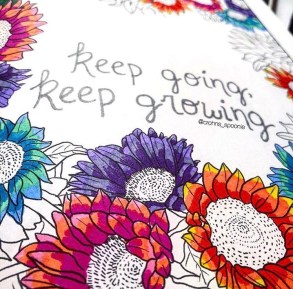

I recently connected with an artist named Alia who created a coloring book specifically geared toward those who battle inflammatory bowel disease. It’s called “Crohn’s and Colitis: Color to Cope.” After watching her sister battle Crohn’s disease for more than 20 years, she was inspired to use her talents to make a difference.

Alia says, “Seeing how much my sister suffered, physically and emotionally with Crohn’s inspired me to create a coloring book. The psychological aspect of coming to terms with IBD is very underestimated, especially for young women. I wanted to create something to make her feel better. I noticed there was a limited number of informational books available. Adult coloring is a proven stress reliever and engages the limbic (emotional) brain. It helps you enter a ‘flow’ like state. I thought pairing inspiring/supportive quotes with images would help anyone suffering with IBD process what they are feeling.”IMG_1058

See the support in the palm of your hands

The coloring book is a visual representation of support that many of us in the IBD community yearn for. It validates and honors our experiences—no matter what age you are. Flipping through the pages, you’ll see quotes and images for times of stress, sadness and laughter. The coloring book provides an accessible way to release stress and get motivated to take on the day.

Since the coloring book launched, Alia has received amazing feedback from the IBD community. Here’s an example shared on Instagram:

“Thank you for creating this coloring book. I was diagnosed with Crohn’s at age 17 and am now 33. After four surgeries and two ostomies, as well as a lifetime of stories that no one would truly understand unless you were in my shoes, I think this book is very therapeutic and I appreciate your empathy and support.  Thinking of you & your sister.  Much love.”

The inspiration behind the art

IMG_9039As someone with a creative mind whose passion lies in art, Alia did research within the IBD community to see what types of images might resonate, along with key messages and emotions. Safe to say, the girl did her homework!

Alia went on to explain that coloring calms the amygdala, which is the part of the brain that controls the fight or flight response. This part of the brain is often on high alert during periods of stress or illness. When we’re fatigued, and our energy is low, coloring isn’t taxing, it can take us back to our childhood. A time of life that was most likely more carefree. Whether you’re at home or in a hospital bed, the coloring book can serve as a helpful tool in your day-to-day management of your illness.

How to get your hands on a copy

The coloring book is available on Amazon in the United States, the UK and Europe. Click here to purchase “Crohn’s and Colitis: Color to Cope.” The coloring book is published under Alia’s author name: “MeMoments Creative”.

Follow Alia on Instagram: @crohns.colitis.color2cope

Along with IBD, Alia has also created coloring books geared towards infertility. Her most recent book targets mental health—depression and anxiety. She plans to create more coloring books in the future that can serve as a support tool for other patient communities as well.


“Byrd’s” of a feather fly together: Advice from a fellow IBD advocate

Feelings of isolation, fear and embarrassment. Chances are, if you battle inflammatory bowel disease you’ve experienced all of these feelings upon your diagnosis. That was the case for Byrd Vihlen, a 31-year-old from Georgia, who was diagnosed with ulcerative colitis at the age of 26. IMG_8145Fast forward three years and her diagnosis changed to Crohn’s Colitis.

Byrd recently won the first-ever Lights, Camera, Crohn’s Instagram giveaway. The connections we make along our patient journey empower us to be stronger and face our illness head on. Check out this interview that sheds light onto Byrd’s brave battle against IBD.

NH: What symptoms did you have that led you to know something was wrong?

BV: “For about a year, I was having digestive problems (seeing occasional blood in my stool, chronic constipation, and bloating). I thought it might have been a milk/diet sensitivity, so I scheduled an appointment with a GI, and he immediately advised me to get a colonoscopy. I was really scared and didn’t have enough information, so I cancelled a few days before the scheduled procedure. It wasn’t until almost a year later (after a few weeks of antibiotics for sinus problems) that I realized something was horribly wrong. I started to bleed a lot, was in severe pain unlike anything I had experienced before, and had extreme urgency.”

NH: How has your disease changed your perspective on life?                                       

BV: “Before I got diagnosed, I would easily get caught up in the plans for what I thought my future would and should look like. Being chronically ill makes you slow down, loosen the control of your life that you thought you had in the first place, and focus more on what’s going on today–because most of the time, you’re fighting just to get through the day. It makes you aware of the little things that you may have been too busy to see before, like people trying to hide their suffering and struggles. byrdI’m thankful IBD has opened my eyes and given me the gift of true empathy. That empathy has led me to crave a deeper understanding and genuine connection with friends and loved ones. It has also shown me the true strength in others, and I am constantly humbled by the selflessness of my sweet husband and forever soulmate.”

NH: What advice do you have for those who are newly diagnosed with IBD?

BV: “Finding the right team of doctors, get referrals and read online reviews. When you do find a doctor you trust, you still need to be your own biggest advocate and use your voice. Don’t be scared of asking questions and calling them too much–only you know when something isn’t right with your body. Connect with more seasoned patients and ask for advice, there’s a lot of overwhelming information on the internet, so it’s nice to receive firsthand experience from people you know. IMG_5428Your new “normal” is going to look a little or a lot different; it will take some time to adjust to that. Try not to compare your new energy level to your old, your body is fighting a hard battle and you’re doing the best you can. If your energy/activity level is more limited, plan accordingly. Choose wisely who you want to spend your time with and what you want to do – soak in and cherish these times.”
NH: What inspired you to share your patient journey with IBD on social media?

BV: “After diagnosis I was feeling isolated, scared, and embarrassed–like I was alone in the pain. I wanted to tell others about this huge life-changing battle I was beginning to fight, but realized that most people are uncomfortable talking about chronic illness in person. I had a desire to be seen, understood, and wanted to connect with others going through a similar journey. I then discovered the incredible Instagram community waiting for me and loved that as an artist I could creatively tell my story in a visual way.”

NH: How does support from others in the IBD community on social media help you push through the difficult days?

BV: “Connecting to others who are fighting gives me strength in knowing that I’m not alone. People sharing their vulnerability is beautiful and it warms my heart. IMG_5326Whenever I am having a really difficult day and see a fellow warrior saying they can relate, offering words of kindness, or that they are having a hard day as well, you can feel that genuine connection and know that they truly mean it.”

You can connect with Byrd on Instagram and follow her patient journey by following her here: @byrdvihlen. Stay tuned to my Instagram page (@natalieannhayden) for future Light’s, Camera, Crohn’s giveaways!


Taking care of yourself and your sick child, while battling IBD

It’s never easy to see your baby under the weather. It’s a hopeless feeling when the only way they can communicate is by crying or acting differently. It’s difficult to manage your own chronic illness and keep yourself from spiraling out of control, as you worry about the well-being of your little one. IMG_9473It’s been a rough few days in the Hayden household—our almost 13-month-old son has been battling days of hives and an allergic reaction that we can’t seem to pinpoint.
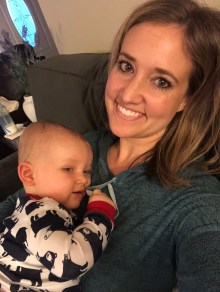
The perplexing nature of his health and the unknown of what the next hour will bring, is reminiscent of life with Crohn’s disease. Trying to manage symptoms to bring comfort, the mystery of what’s sparked the problem and the emotional rollercoaster that goes along with it.

As an IBD mom, my focus is solely on getting my son to feel better. But, it’s difficult to take this on as you battle your own disease that preys on stress and worry. A disease that tends to surface when you’re going through difficult times. A disease that tries to distract you from the task at hand. It’s been exhausting to carry my son back and forth with me to bathroom as he crawls around and pulls on the toilet paper. IMG_9522As I feel burning sensations in my abdomen at the end of the day, the internal conversation of what could be happening within my own body consumes my thoughts. I can’t help but worry that I can’t go down. I can’t allow my disease to flare when my family needs me most.

I’m going to pause now and say something to all the moms and dads who have children with a complex medical condition. A condition that requires daily care, attention and worry. I simply can not imagine all you endure. Reid has hives. We’ll get to the bottom of it. We’ve talked to the pediatrician, gone to urgent care and have plans to see an allergist. But this reality is NOTHING compared to what so many families face every day. IMG_9472So, the last thing I want to do is sound like I think I have it so bad—because trust me, I keep everything in perspective and know I’ve been blessed with a healthy baby. My goal is to provide insight into motherhood with IBD and the challenges it can present at times.

As we endure life’s unexpected ups and downs—it’s imperative we listen to our bodies, get as much rest as possible and stay on top of disease management. As most mothers do, we tend to put our needs to the wayside. But, in doing so, you set yourself up as an easier target for your disease. It’s a difficult balance, but managing your own illness still needs to be a priority. When you have a spouse and children, your IBD is not just about you, but your entire family. Ask for help when you need it. Take your daily medication and stay away from trigger foods that can ignite additional symptoms. Run an errand by yourself. Take a long shower. Give yourself time to process the stress you are going through and remember to breathe.

As an IBD mom, by taking care of myself, I know it’s part of how I take care of my son. He is completely dependent on my husband and me. If you lose sight of the importance of caring for yourself and doing all your can to control your disease, it will come back to bite you in the ass. Literally and figuratively.

I’m only 13 months into motherhood. IMG_9419Each day is a learning experience. Much like my initial diagnosis of Crohn’s disease nearly 13 years ago, I know I’ll continue to grow and find comfort in my new role. Navigating unknown waters and experiencing illness within your child is all part of it. No matter how many years go by, as parents, we’ll never be experts, but we’ll continue to evolve and discover what works for us personally and as a family.

Find the balance. Use your voice. Your journey as a patient has prepared you for motherhood in ways you never thought possible. Trust your mom gut. As women with IBD, there will be difficult days when the brain fog, fatigue and pain overwhelms you and you have to push through to care for your child. But, there will be many more days where you feel strong and happy—and your child will look up at you with love in their eyes and a smile on their face and remind you that you’re the best thing in their life. Hold on to the feel good days, the magical moments—and know that while the tough times in parenting and as a patient are draining, they are fleeting.