Why Crohn’s is the gift that keeps on giving

When you think about your IBD, chances are many thoughts race through your mind. This holiday season, I started thinking about how Crohn’s is the immaterial gift that keeps on giving. I know, it sounds crazy. But hear me out.

The unpredictability and uncertainty of IBD has forced me to live in the moment and stop worrying about tomorrow and the future. IMG_0597

The pain, setbacks, and flare ups have provided me with perspective and empathy for others that’s only possible when you live with chronic illness.

The fatigue reminds me of the importance of slowing down, not pushing myself too hard, and practicing self-care.

The ups and downs and in between have given me an innate truth serum about other people’s intentions and character and allowed me to know who I can truly count on.

The side effects of steroids and the scars left behind from my bowel resection and c-sections have humbled me.

The dark moments that tried to break me have instead showed me that God truly does give his toughest lessons to his greatest teachers.

The hatred I felt for my body through the years (especially my abdomen) disappeared the moment I became pregnant and watched my body transform to bring two healthy babies into this world. santa with the kids

The hospitalizations that have tried to break me have forced me to bounce back and be stronger physically and mentally than I was before.

The initial years of isolation when I kept my patient journey under wraps led me to go out on a limb, share my story, and feel the support both near and far from a community that’s like family.

It’s taken me nearly 15 years to think this way about my disease, about my reality. I’m not trying to sugar coat or diminish the seriousness of IBD, but instead share my mindset and how I choose to take on Crohn’s disease. Yes, some days are terrible. IMG_6855Yes, there have been times when everything felt heavy and bleak. Yes, there are still times I feel sorry for myself. But those days are far outnumbered by the joy-filled, happy days I choose to focus on.

My hope for you this holiday season is that you’re able to pause and embrace the hand of cards you’ve been dealt and think about all you’re capable of, all you’ve accomplished, and all that lies ahead. Give yourself credit for all you do today and tomorrow, all you’ve endured in the past, and all you’ll overcome in the future.


Diet and Nutrition: The role they play in IBD

Nutrition and IBD. Just saying those two words together makes me feel like I’m running through a rabbit hole, unsure where to turn….and I’ve lived with Crohn’s disease for more than 14 years. Everywhere you look, you see people claiming to “heal their gut” through diet alone, while sharing diet hacks that “cure” IBD, when in fact there is no cure.

Unfortunately, my first experience with a dietitian, days after my diagnosis, was not a positive one. She came into my hospital room and was very doomsday and black and white about what my future held. The conversation led me to believe I would never eat raw fruit or veggies, salads were out, and fried foods were always a no-no. I was told I could have white bread, white pasta, cooked veggies, and plain chicken from that day forward. Hearing this made grappling with the diagnosis much more difficult.

My experience is hopefully not a typical one for those in the IBD community. Dietitians can be and are key players in our overall care teams. They help guide our nutrition and lead us on a path to better health. Chances are if you or someone you love has IBD you’ve come across the laundry list of IBD-friendly diets (SCD, anti-inflammatory, paleo, etc.). If you’ve found a diet that works for you, that’s great—but it can be extremely dangerous and damaging to use your own personal experience to sway others, especially if you preach to go off all medication and focus on diet alone.

Just as IBD manifests uniquely in every person, trigger foods vary, too. UPMC_HEADSHOT_HIGHRES_ALCHOUFETE_THEREZIA_DIETITIAN_20191113This week—I interview Therezia AlChoufete, a Registered Dietitian Nutritionist (RDN) who specializes in Gastrointestinal Diseases, to set the record straight about this area of disease management. Therezia completed her Bachelor of Science in Neuroscience and her Master of Science in Nutrition and Dietetics from the University of Pittsburgh.

NH: What role does diet/nutrition play in treating IBD?

TA: “A huge role – symptom management is very helpful to improve quality of life for patients with IBD, and many patients have difficulty understanding what they should or should not eat. A Registered Dietitian Nutritionist can help to identify trigger foods and other factors that may be affecting digestion & GI symptoms, nutrition for ostomy management, modifications to diet before and after surgery, recipe modifications to improve GI tolerance, and much more depending on each patient’s medical history.”

NH: When you’re given a patient with IBD, what type of information do you share in those appointments?

TA: “I see my patients in an outpatient setting – this allows me to review the patient’s goals, assess their nutrition status, and determine an individualized plan with every patient. Information can vary depending on each patient’s unique history, goals, and food tolerance.”

NH: Each person’s body responds differently to specific foods, everyone has different triggers, how do you create a plan that is tailored to everyone, rather than saying “all people with IBD need to stay away from XX”?

TA: “There is definitely no one-diet-fits-all approach for IBD. I typically review the patient’s food history, their unique food tolerances, and provide a plan according to each person’s goals and disease status. I try my best to avoid food restriction and liberalize the diet as tolerated by each patient.” brooke-lark-08bOYnH_r_E-unsplash

NH: What are the most common questions and concerns you hear from patients?

TA: “A very common question is what food/supplements can I eat to fix my symptoms – unfortunately, there is not a simple answer. But this leaves us some room to discuss food triggers in more detail and review ways to achieve a well-balanced diet.”

NH: Why is working with a nutritionist so critical for those with IBD?

TA: “Registered Dietitian Nutritionists are food and nutrition experts. We use science-based evidence to provide recommendations that are specific to each person’s medical history. This may include review of micronutrient deficiencies, hydration status, fluid build-up (sometimes following use of steroids), medication side effects, risks of malnutrition (which can occur in all body sizes), supplement questions, and so much more. An RDN can provide individualized medical nutrition therapy to minimize GI symptoms and optimize gut health in conjunction with medical plans provided by gastroenterologists.”

NH: What type of difference do you hope to make in a person’s patient journey? 

TA: “My hope is to help patients liberalize their diet and improve their quality of life. It is very important to me to help patients realize that they have a team of professionals that can help them manage their IBD. I enjoy working with a team of clinicians to target medical, behavioral, and nutritional health concerns to optimize care for each individual.”brandless-18lr202tDKY-unsplash
NH: What advice do you have for patients who are in the middle of a flare up?

TA: “Communication with your Gastroenterologist is very important if you feel like you are having flare-like symptoms in order to receive proper treatment. Sometimes, foods that are typically tolerated during times of remission are not tolerated during a flare, and an RDN can help you determine a softer diet that is easier to digest based on your individual needs.”

NH: The term “healing the gut with food” is commonly heard within the IBD community. What’s your belief on that vs. using diet as a combination therapy with medication?

TA: “Unfortunately, diet cannot cure IBD. It can improve some symptoms, but it is so important to work with your doctor to receive proper medical treatment for the disease, follow up with a dietitian to optimize your diet, and address any behavioral health management with your therapist or psychiatrist.”

Connect with Therezia here:

Twitter: @AppetiteOfMind

Instagram: @appetite_of_mind

Additional Resources:

Crohn’s and Colitis Foundation: https://www.crohnscolitisfoundation.org/diet-and-nutrition

International Foundation for Gastrointestinal Disorders: https://www.iffgd.org/other-disorders/inflammatory-bowel-disease.html

United Ostomy Associations of America: https://www.iffgd.org/other-disorders/inflammatory-bowel-disease.html


How art helps Kate take on her Crohn’s: Tips for unleashing your inner IBD artist

When 32-year-old Kate Schwarting of New York was diagnosed with Crohn’s disease in June 2009 she was less than surprised. The symptoms that had insidiously weaved their way into her life had finally reached a point where their impact on her daily life was undeniable. A colonoscopy confirmed it. headshot_schwartingAt the time she was diagnosed, Kate was immersed in her undergraduate studies that were divided between Geoscience and Studio Art and took on the role of caregiver for her mother. This week Kate shares how art has benefited her patient journey and offers up helpful ways you can incorporate art into your life, even if all you can draw are stick figures (like me!):
While in college, I was focused on understanding my passion for science and art. I was passionate about discovering the possibility for art to express the unseen, and build an emotional bridge for relating to complex scientific problems. But all of this was set against a backdrop of Crohn’s flares, fistulas, strictures, hospitalizations (for both myself and my mother), and doctor appointments.

These constant disruptions often left me feeling like I was struggling to move towards my goals, preserving my identity when it’s so easy for illness to be all consuming, and caused me to frequently reflect and reevaluate my relationship with the art and science that I studied.

How Crohn’s brought me closer to understanding the benefits of art

As a student involved with the arts, it was common for me to have a few spare art materials. Over the course of 10 years of dealing with Crohn’s, I had several flares that resulted in extended hospitalizations, periods where I was at home recovering, or as a caregiver for a parent that made me aware of how important it was to have spare materials with me.

Being sick and in the hospital, or even stuck at home away from your daily routine, is stressful and isolating at best. Having these tools allowed me to cope, escape, and create meaning. It gave me a sense of accomplishing something positive and tangible in a setting where a significant amount of time is spent anxiously waiting for results, procedures and to feel better. IMG_5852

Not only have I noticed how much it helps me to have this diversion, I have also noticed the impact it has on those around me. In situations that are emotionally heavy with the burden of illness, a brief conversation with another patient, nurse or doctor about art seems to uplift everyone’s mood and passing along this joy had an exponentially good effect on my own outlook.

How a flare inspired meaningful artwork 

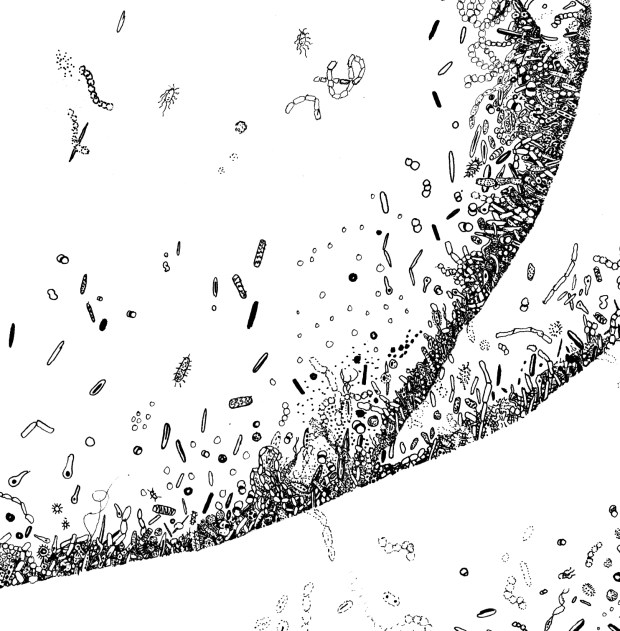
During a flare in 2016 I began to investigate how to create meaningful artwork relating to both the microbiology and to my experiences with my own body. I was drawn to the microbiome. Trillions of bacteria exist in everyone through a symbiotic relationship in the digestive system. detail1 - Kate SchwartingThe microbiome is a hot spring of unanswered questions in relation to its role in IBD, as well as many other conditions. Applying the methods I have used in other projects, I researched the different types of bacteria and their shapes and used them to create a series of abstract drawings that relate to the digestive system and allow people to develop a sense of the complexity of the human body.

5 tips for incorporating art into your life

Create a pack of art supplies. Get a small sketch book, a pouch including a woodless pencil, travel sized watercolor palette and brush, assorted pens, and a ruler. Add to this whatever materials you prefer. 

Start simple. Use mindfulness to find inspiration around you, whether it’s a color, a pattern, or texture

Be mindful of self criticism! As put best by Bob Ross, Let happy accidents happen!

Experiment! Art at its core relies on the very basic act of creating and requires no prior artistic training to get started. It is a place to abandon judgement and focus on an exclusively human experience.

Share! I found it helped hold me to my goal of setting aside time to relax and create art by making an art related post once a day or every other day depending on how I felt to Instagram and also helped me find a supportive community during times where I was feeling the most isolated. I’d love to see what you create! Feel free to use the hashtag #chronicallycreative when sharing your work!

You can follow Kate on Instagram and Twitter at: @microbioscapes.


Loved one or friend have IBD? Read this before the holidays

The holiday season is upon us and with that comes family gatherings, social outings, and more food than anyone can handle. As someone who was diagnosed with Crohn’s disease more than 14 years ago, the holidays can still be complicated and stressful at times.

famparty2

Christmas 2013 with my family

If you’re reading this—and you have a family member or a friend with IBD, you’re in the right place. Chances are you may struggle with how to be supportive, knowing what to say, and how to navigate IBD. I’m here to help so that this truly can be the best time of the year, for everyone involved.

Here are my top 10 tips for making that possible:

  1. Start the conversation. Stop making IBD the elephant in the room. It can be more hurtful if you only see family or friends a couple times a year and if no one asks how you are feeling. Three words—is all it takes— “How’s your Crohn’s?” Ask questions and genuinely listen to our answers. Your empathy means more than you know. This puts the onus on the person with IBD, and allows us to disclose what we’re comfortable sharing, while knowing that you care. When people don’t ask, it seems as if they don’t care. I find this to be especially true as a patient advocate and blogger. So much of my presence and identity is talking about my life with Crohn’s, that when people don’t ask, it hurts more now than it used to. With the growing online social media discussion, I’m sure many people in our community can relate to this.
  1. Leave the neighborhood watch party for criminals in the streets. Chances are Aunt Joan came across a diet “cure” for Crohn’s while perusing through Facebook last month. Insert eye roll. Don’t question the food we put on our plates or ask if that’s going to “hurt our stomachs”. element5-digital-XQ5QWR8eZ5I-unsplashWe know our bodies, we know our triggers, and we are the ones who are ultimately going to have to pay if symptoms arise. Comments like “Oh, I didn’t think you could eat that?” or “Isn’t that going to land you in the bathroom?” are completely unnecessary. Focus on passing that side dish of mashed potatoes rather than giving us the side eye at the dinner table.
  1. Be flexible. The unpredictability of IBD—whether it’s feeling too fatigued to shower, lying in pain on the couch or holed up in a bathroom when you’re supposed to be getting ready or making a side dish, can cause us to be late for social gatherings. If a family member is tardy to the party or needs to leave earlier than expected, please don’t give them grief. Chances are they had to muster up a great deal of strength to get out of bed, get dressed, and put on their happy face, even if they are struggling on the inside. Practice grace and patience and remember how easy it is for us to mask pain with a smile.
  1. Don’t be offended if we bring our own food or don’t eat much. Oftentimes if we’re symptomatic or in the middle of a flare we are nauseous and eating feels too risky. It’s nothing against the way you make the family favorites. Trust we would eat everything if we could. kelsey-chance-ZrhtQyGFG6s-unsplashBringing “safe” foods or eating ahead of time at home provides comfort and allows us to enjoy more of the party. Please don’t take offense if we eat very little, or nothing at all.

  1. Please don’t make us feel like a spectacle. Chances are while at a social gathering, we’re going to need to break away to use the bathroom. If we need to go upstairs to use your bathroom, please don’t be offended or draw attention to us when we leave the table or return. We’re not trying to be rude; we’re already embarrassed and don’t want to deal with the anxiety of hogging the bathroom or smelling up the house as people socialize.
  1. We have doctors. Thanks to social media and Google, many seem to think they have the background of a MD. Please don’t try and teach us about a way we can “heal with food” that worked for your neighbor. Please don’t downplay or compare IBD to a stomach bug your toddler had. mona-masoumi-6dgpbvuAEpA-unsplashPlease trust we know the side effects of the medications we are on; we know the risks of the surgery we may have to get; we know it all. Please don’t tell us to start taking a supplement you found online. Yes, we’ve heard of: CBD oil, turmeric, probiotics, the list goes on. Please don’t question the safety of our biologic. Our disease is our reality. Unless you live it, it’s not yours.

  1. While IBD is invisible, oftentimes it’s not. If a loved one is on steroids, trust me they are incredibly self-conscious about their appearance. The temporary chipmunk cheeks (are not cute), the acne that makes you feel like a teenager (is nothing to kid about), the sudden influx in weight (is nothing to comment on). The same goes for someone who looks like they’ve dropped a lot of weight. When you have IBD, weight fluctuations happen all the time. It’s not a good thing. It’s because we’re malabsorbing nutrients or in the thick of a flare. If you notice these outward differences in us, please keep the thoughts to yourself unless you know we are purposefully trying to lose or gain weight. Don’t pressure us to be in photos if we seem hesitant. Know that we are aware of the changes and struggle with them daily.
  1. Don’t push the booze. brooke-lark-HjWzkqW1dgI-unsplashJust as with food, everyone with IBD responds differently to alcohol. We understand a glass of wine here or a beer there at a celebration may not seem like a big deal, but one drink can be enough to cause us extreme abdominal pain. Feel free to ask us, but if we decline the offer please don’t pester us, ask us if we’re pregnant, or try and make us succumb to peer pressure. We’d much rather be sober and present at the party without pain.

  1. Use us as a resource. Have a family member, friend, or co-worker of yours recently diagnosed with IBD? Let us know! Use us as a sounding board. I always love having the opportunity to use my patient journey and experience to bring hope and inspiration to others. Connect us with people in your life who we can support and help. The IBD family is incredibly welcoming and uplifting. By sharing this mutual connection, you can possibly change someone’s patient journey for the better.
  1. You play an integral role in our overall well-being. You bring us normalcy. You have the ability to distract us from our isolating illness.
    famparty3

    With my (now) husband, New Years Day 2014. I was very sick at this family party. You would never know it by looking at this photo.

    If someone close to you has IBD and they aren’t opening up or wanting to talk about it, don’t push them. We all handle the disease differently, and chances are in time, when the moments right, they will take down their walls. In the meantime, make it known you are present and there to offer support and encouragement every step of the way—and leave it at that. The simple act of knowing who we can count on and trust makes all the difference. Thank you for walking alongside us on this unpredictable and challenging journey and for seeing us as so much more than our disease. For that we are eternally thankful.

An Evening of Hope: What charity events mean as an IBD patient

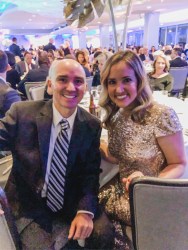
There’s something special about sitting in a room with hundreds of people, all with the same goal and mission in mind—to fundraise and advance research for IBD. Over the weekend, my husband and I had the opportunity to attend the Mid-America chapter of the Crohn’s and Colitis Foundation’s “Evening of Hope” Gala in St. Louis.

IMG-3717

Christian and I both battle Crohn’s disease. 

As a patient, it’s difficult to articulate how it feels to attend charity events that revolve around IBD. It’s emotional. It’s uplifting. It’s bittersweet. It’s empowering.

In my 14-plus years living with Crohn’s, I spent so much of that time dealing with my disease in private—never wanting to be judged, never wanting sympathy or pity. When I started sharing my story publicly five years ago, and connecting with others who live my reality, a whole new world opened up. I realized how much support is available and how close knit the IBD community…or should I say family, really is.

The Gala was sold out. Last year the event raised $300,000—this year the hope was to meet or exceed that! That’s from one event in St. Louis—last year the Crohn’s and Colitis Foundation raised more than $80 million through memberships, fundraising events, sponsorships, and other programs.

My favorite moment of the night was listening to a fellow IBD mom and pediatrician speak about her journey with ulcerative colitis and how she’s managed to rise above and experience so much beauty in life, despite her diagnosis. As she spoke, a slideshow of photos of her three sons, traveling the world with her brought happy tears to my eyes. Her remarkable story and experience is one of many that serves as a reminder that just because you have IBD doesn’t mean it needs to hold you back from your dreams. She was diagnosed sophomore year of college, and still managed to become a doctor and have a family. B555E291-A329-4FF8-B7B3-AD7648C43500

Connecting with fellow friends, event organizers, and patients in person is a joyful occasion. I especially enjoyed the opportunity to connect with parents of children, teens, and college students who are taking on the disease. It’s my hope that events like this show them all the exciting research and hope that’s on the horizon for the future of care and treatment for IBD. Events like this are a reminder that it’s not a matter of “if” there will be a cure for Crohn’s and ulcerative colitis, but when.

IMG-3726If you’ve never attended a Crohn’s and Colitis Foundation event for your local chapter—whether it’s a patient symposium, an education event, a walk, or a Gala, I highly recommend you check them out. While it’s great to connect on social media or over the phone, nothing compares to physically being in the same room with people who are passionate about the same cause, who understand your reality, and are driven towards the same mission as you.


Iron Deficient Anemia: What IBD patients need to look out for

I’ll never forget what it felt like to faint on the teacher’s desk in front of the entire class in fourth grade. As you can imagine, it was quite the spectacle. From a young age, I dealt with dizzy fainting spells. If I was outside at a carnival or festival and it was too hot, I would black out. To this day, if my showers are too hot and I haven’t eaten, my vision can go blurry and a loud “shhhh” sound blasts in my ears. I always have to be extra careful not to stand up abruptly. I was the girl in high school who carried glucose tabs when I got too weak.

Little did the doctors and I know in fourth grade that down the road when I turned 21 I would be diagnosed with Crohn’s disease. To this day I wonder if my anemia from a young age was a sign of what was to come. Upon my diagnosis, my hemoglobin plummeted to seven. To give you an idea, most people can’t function and are in dire need of a blood transfusion at that point. The general rule of thumb when it comes to hemoglobin is 13 and above for men and 12 and above for women. IBD patients fall into the same expectation as “normal” people when it comes to these ranges. For as long as I can remember, I’ve celebrated being in the double digits—a 10 is often hard for me to come by.

For those who don’t know what anemia is, it’s marked by a deficiency of red blood cells which means you have less blood to carry oxygen to the rest of your body. When you have a low hemoglobin you often feel extreme fatigue, weakness, experience chest pain or shortness of breath, have a fast heartbeat, headache, dizziness and lightheadedness. FullSizeRenderFor many of us in the IBD community, we deal with what is called Iron Deficient Anemia or IDA. With Crohn’s and ulcerative colitis, long-term irritation and inflammation in our intestines can interfere with our body’s ability to use and absorb iron properly. IDA is considered an extraintestinal manifestation of IBD.

I’ve teetered back and forth with IDA for as long as I can remember. And the same can be said for much of our community. According to the Crohn’s and Colitis Foundation, 1 in 3 people with Crohn’s disease or ulcerative colitis has anemia.

Causes for IDA:

  • Low iron
    • Inflammation in your intestines can interfere with your body’s ability to use or absorb iron.
    • Blood loss from intestinal bleeding—oftentimes you can be bleeding in your stool, and not be able to see it.
    • Poor absorption of vitamins and minerals, like vitamin B12 or folic acid.
    • Medication

Treatments for boosting your hemoglobin and Iron Levels:

  • Iron supplements—I’ve taken oral iron for years. I currently take a prescription prenatal vitamin with iron, calcium, folic acid and vitamin D, daily.
  • IV iron for those with active IBD, or for those who cannot tolerate oral iron.
  • Get your IBD under control with the right medication
  • Blood transfusions in severe cases.

It’s important you communicate how you are feeling with your gastroenterologist, so they know if you are struggling. All it takes is a simple blood test ordered by your doctor. The test would need to include a typical CBC along with an iron panel.

I recently traveled to Houston and participated in a videotaped round-table discussion on this topic with two physicians and a nurse practitioner. 281628.04.pngI provided the patient perspective. It was a great opportunity, but also taught me a lot about the prevalence of IDA with the IBD community, and the importance about being proactive and getting yourself the boost you need so you can feel your best each day. As a mom of two little ones, my anemia along with my Crohn’s can be a heavy burden to bear. That’s why I do my best to stay on top of managing my illness and taking all the supplements necessary to try and combat my malabsorption problems. I hope this article inspires you to do the same and realize you are never alone in your struggles.
A close-knit family: The story behind this Crohn’s blanket

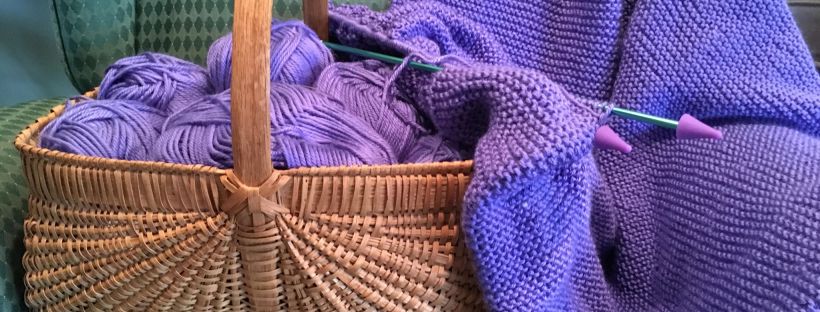
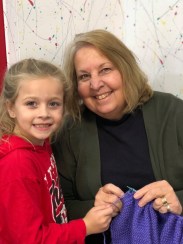
There’s nothing quite like a grandmother’s love. They have a way of bringing comfort, peace, support, faith, and love to family, among many other incredible traits. IMG-2601When seven-year-old Penny was diagnosed with Crohn’s in January 2017, her grandmother, Mary, started knitting her a purple blanket. She chose the color purple because it’s not only Penny’s favorite color, but also the color that represents Inflammatory Bowel Disease (IBD).

“Penny has always had a special little gauze blanket, but I wanted to make something for her that would hopefully comfort her on days when she does not feel well,” said Mary Otto. “It’s the same idea as prayer shawl people make for those who are ill. As I knit, I pray for Penny.”

Other times, Mary says she prays for her family, for others battling Crohn’s, for those with other illnesses and diseases, and for people in general. As of now, the blanket is 44” wide and 42” long. Mary jokes she isn’t a consistent knitter and that she has a long way to go before the blanket is “adult size”. Penny currently stands 3’9”. IMG-2600

The passion project has been a special hobby between Penny and Mary. It’s Mary’s hope that in the future Penny will look back fondly on the memories and that each time she is snuggled up under the blanket she feels not only its warmth, but the warmth of her love now and always.

“I hope when Penny isn’t feeling well or in the hospital that she will find physical comfort in it (due to its weight), but also emotional and spiritual comfort because of the love and prayers that were part of its creation,” said Mary.

Every time Penny sees the blanket, her face lights up and she asks when it will be done. It’s a labor of love for Mary, every stitch made with purpose. As a grandparent, she says it’s heartbreaking to see a grandchild take on a disease like Crohn’s.

“No one wants to see their loved one suffer. I don’t like the helpless feeling when there is nothing I can do to make the situation better. I worry about Penny. I’m also concerned about her parents and brothers, because an illness like this affects the whole family.”

IMG-2918At the same time, Mary says she’s impressed by Penny and how she is taking all the baggage that comes with Crohn’s in stride at such a young age: the daily medications, the infusions, the lifestyle changes.

“Penny demonstrates so much strength, she is my little hero!” A hero who will one day hold on tightly to that blanket and not only feel the love it exudes but be reminded that she’s never alone in her struggle.

While Penny was dealt a difficult hand of cards when it comes to her health, there’s no denying she hit the jackpot when it comes to her family.

IBD on the College Campus: Getting the Medical Logistics in Check

Moving away from home and embarking on a college career is bittersweet. You’re excited. You’re anxious. You’re curious. So many emotions. The world is your oyster and you quickly discover what a small fish you are in this big world. For those entering college with an IBD diagnosis, life comes with many more challenges and fears. Medical concerns are a biggie. You are often forced to find an entirely new GI and care team that is local, in case you flare. You may have always counted on your parents to do your injections, now you may have to do them on your own. If you get infusions, you’ll need to find a new place to receive your medication, that may be out of your comfort zone and be complicated due to your course schedule.

That lack of comfort and consistency in care with a GI you know and have built trust with can be a scary chapter in your patient journey. IMG-0902Jennifer Badura’s son was diagnosed with Crohn’s while in high school. As a parent, she found her son’s transition to college challenging.

“It’s difficult to find a new place for getting lab work completed and a new place for infusions. Getting insurance, prior approvals, etc. along with the unknowns and anxiety about going to a new place for treatments and trying to get everything scheduled is tough.”

Dr Fu

Nancy Fu, BSc.(Pharm). MD. MHSc. FRCP(c), University of British Columbia

is a GI based in Vancouver, with research interests in IBD, infection and adolescent transition. She recommends making sure your primary GI connects you with a GI close to where you are attending school in case a flare requires urgent assessment.

“As a GI who sees adolescents, I make sure I am at least electronically available for my patients via texts or emails. Studies have shown young adults prefer to communicate via email as opposed to over the phone.”

Other recommendations that may be of help to you:

Get acclimated. Set up an appointment with a GI local to campus over the summer months or at the beginning of the school year, so you can build a solid relationship with a new physician. Keep your “hometown” GI’s number in your phone in case you’re flaring, hospitalized, or if your current GI has a question. hospital-840135_1920Use the patient portal to your advantage. Never hesitate to reach out if you have a question or medical issue going on. Listen to your body’s signals and don’t wait until it’s too late.
Make sure you remain compliant and manage your disease. Have enough medication on hand and have a game plan in place for how you’ll receive refills—whether it’s your parents bringing your prescriptions to you, mailing them to you, or you physically picking your medication up from a nearby pharmacy. laboratory-313864_1920Set reminders in your phone or utilize apps that track your symptoms and whether you’ve taken your medication.

Keep your prescriptions in a safe, undisclosed place. Let’s keep it real. Chances are there will be someone on your floor or even a roommate who may want to get their hands on your prescriptions, specifically your pain medications. Don’t flaunt them. Keep them hidden. Count your pills each day if you need to.

Discover local support and build a new support community. Being away from home and away from your personal support network is daunting. Check out the local Crohn’s and Colitis Foundation chapter near your campus and connect with local people who understand your reality. See if new friends from campus want to join you for a local IBD charity event. Not only will this be uplifting for you, but it will open their eyes and give them a bit of perspective about what life with IBD entails.

Click here to check out IBD on the College Campus: The Challenge of Academics.

IBD on the College Campus: Upcoming Webinar about Disease Management and Accommodations

Studying for finals. Living away from home. Having to use public bathrooms at the dorms. Eating cafeteria food that triggers symptoms. Dealing with professors who aren’t empathetic. Trying to keep up with your social life and your peers. Being away from the care team you know and trust for your medical needs. EA778869379446A38695A402A3CA2CDCConstantly stressing about academics, friendships, relationships, and managing a chronic illness for which there is no cure. This is life with IBD on the college campus.

“Lucky” for me, I didn’t start experiencing Crohn’s symptoms until second semester of my senior year of college at Marquette University. At the time, I just thought the late-night Taco Bell runs were catching up with me. I ended up being diagnosed with Crohn’s two months after receiving my journalism degree.

It’s a chapter of life that is a coming of age and a fresh start for many, but IBD can complicate the experience greatly. The disease has a way of shattering dreams, delaying goals, changing timelines, and ruling our lives. But our community is resilient and strong. Despite the pain and the worries, many of us choose to push through, find a way to make a detour, and do what’s best to bring us happiness.

The Crohn’s and Colitis Foundation’s Mid-America Chapter is gearing up to a host a webinar Thursday, September 26 from 7-8 pm CT to address managing the disease while furthering your education along with finding the appropriate accommodations so you have the help you need to make it through. 6921B871464A4F6E8FE7D218A1A3F575Dr. Yezaz Ghouri, MD from the University of Missouri School of Medicine, along with IBD Patient, Ryleigh Murray, will be hosting the discussion. Ryleigh is currently a graduate student studying public affairs at the University of Missouri. Click here to register for the webinar.
“When entering college, you never expect your IBD to impact your education, until it does. Establishing care with a GI doctor in your college town, managing your medications, diet and stress can make a big difference in how you feel and how much you learn. IMG_0717Registering with the Disability Center on your campus and receiving accommodations allows yourself to increase your success rate within higher education. Early registration, extended test time and closer parking to your classes are just a couple simple requests that can impact your education for the better,” said Ryleigh.

College years are some of the most exciting times for young people who are given the opportunity for the first time in their life to be independent and self-sufficient. But the transition doesn’t come without its challenges.

Dr. Ghouri says, “Patients who are of college age are forced to decide what type of diet works for them and what hurts them, learn to administer medications themselves including shots and sometimes finding a location where they can receive IV infusions. It is crucial to be compliant with the treatment plan and important to seek out help from a nearby GI specialist to monitor their disease, thereby preventing flares and complications from IBD.”

During the webinar you can expect to learn about coping with IBD on college campuses and about the assistance that is available to those living with Crohn’s and ulcerative colitis. university-105709_1920

In the weeks ahead, I will dig deeper into this issue on my blog (Lights, Camera, Crohn’s). Since tapping into the IBD family and patient community on social media, I’ve come to realize how much interest, how many questions, and how important the need for support and conversation is pertaining to what life is like for college students (and even professors!) living with IBD. Stay tuned!

When pain medication adds to your IBD troubles

It was one of those moments when you’ve exhausted all options for comfort and feel the need to turn to pain medication. As an IBD mom, taking pain medication is now my last resort, because it makes me feel less present and capable of taking care of my children. Luckily, this time around my Crohn’s symptoms decided to peak on Labor Day weekend while my husband was home.

I casually took a Tylenol with Codeine, expecting for the pill to take the edge off the gnawing pain in my abdomen that had been bothering me all day. Thirty minutes went by, then an hour, then a few hours, no relief. My mind started racing as to why I was feeling this way. Was it the fact I went out the night before and had a drink with friends? Was it because I had Starbucks hours before? Was it the rice cakes I ate that sometimes cause my stomach to hurt?

84910E13-824E-4856-BF44-D3BBBD5BCC1FAs the pain persisted and my little guy snuggled me on the couch, I was losing patience with the pain that was drowning out everything around me. I wanted relief and I wanted it quickly.
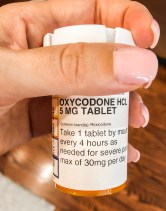
So, I went in my medicine cabinet and saw I had Oxycodone left over from my c-section six months ago. I grabbed a glass of water before bed and popped the pill without thinking twice. I assumed that little white pill would help me sleep and help the pain subside.

What happened was the opposite. What happened is something that still sticks with me now. I crawled into bed next to my husband and could tell something was off. I traded in my abdominal pain for much worse. It was a nightmare of a night filled with anxiety, nausea, and dizziness. I laid awake in bed for nearly six hours. I had to keep my hand on top of my chest because I was so anxious about not being able to breathe. I felt like I was suffocating. My mouth felt so dry, yet when I would try and drink water I would almost throw up. My thoughts raced. I felt so scared. So alone. Despite Bobby being right next to me. He held my hand, he tickled my back, he did everything he could to help calm me down.

IMG_9691Sure, I couldn’t feel the abdominal pain, I couldn’t really feel much below my neck, which added to my anxiety. My body felt like Jell-O. I felt like I was living an out of body experience. I was whimpering and whining at 3 in the morning that I just wanted it to be the next day.

These are the behind-the-scenes IBD moments that people often don’t hear about. These are the difficult experiences as patients and as parents that we often keep behind closed doors. Both my kids were under the weather, I felt so guilty that if they woke up, I wouldn’t be capable to take care of them, let alone hold them. Poor Bobby had to be all three of our caretakers that night.

The morning came and I woke up at almost 9 a.m. I had been dead to the world for about five hours. Never heard my baby on the monitor. Never heard my toddler across the hall. Never heard my husband get up to take care of them. When I walked into the family room, I felt the aftereffects of my stomach pain from the day before. I felt like I was still in a cloud. My head pounded. The headache persisted until dinner time.

pharmacy-3087596_1920This is not to say pain medication is always a no-go. I’m of the mindset that those of us in the IBD community should have access to opioids. At the same time, this is more of warning for patients to be mindful that the medication you take to calm your pain, may bring about side effects that are even worse than what you are dealing with in the first place. Personally, I’ll never take oxycodone again. You live and you learn. Sometimes with IBD unfortunately it has to be the hard way.