
The IBD community is flooded with countless female advocates. I’ve recently been vocal about the need for more men to stand up, share their stories, and be a voice for the community. If you attend a conference or an IBD patient advocate event, 90 percent of the room is female, the same can be said for social media.
This is surprising since according to the Crohn’s and Colitis Foundation, IBD affects men and women equally. That being said, in my experience speaking with men young and old with Crohn’s and ulcerative colitis—many tend to suffer in silence, downplay their pain, or prefer to keep to themselves about their struggles. While the disease may physically manifest itself and impact men in different ways, it’s the way many feel embarrassed to share their experience, that I wish could change. 
This week—a guest post from Colby Reade. Colby is a husband and a dad who also has Crohn’s disease. He shares insight about his struggles to find a balance between IBD and family life, while offering helpful advice for how to be a “Super Dad” despite your illness. I’ll let him take it away…
I grew up believing my dad was a superhero. There was nothing he didn’t know or couldn’t fix. He would spend hours with my brother and me teaching us how to hit a curve ball or box out a defender on the basketball court. He worked insanely hard to help provide us with a comfortable life. He showed us what it meant to be a partner in a marriage. In my eyes, he was “Super Dad.”
For as long as I can recall, I wanted to live up to that image and a little over four years ago, I got my opportunity when my wife gave birth to our daughter. Nothing is more important to me than being a solid dad and husband. Fatherhood is undoubtedly the most rewarding experience of my life, but also the hardest thing I’ve ever chosen to tackle largely because it is so important to me to be good at it. 
Unfortunately, life through us a curveball in 2017. What I thought was a case of nervous stomach from a stressful stretch at work turned out to be a Crohn’s flare that lasted 10 months. Not only was I terrified about all the symptoms (digestion issues, pain, fatigue, weight loss), but I felt myself struggling to take on the most important “job” I had.
I was too tired to play or engage when I came home from work…flopping on the ottoman in our living room, trying to pry my eyes open.
I was in pain all the time and struggled to find joy in daddy-daughter games.
I was terrified to be more than five feet from a bathroom so outings to the mall, the zoo or the beach were on hold.
 It took time and some trial and error, but as I navigate my somewhat new diagnosis, my wife and I have learned how to best monitor my symptoms to try and avoid future flares and take Crohn’s on as a family. In addition to my medical care, this includes some key strategies to how we approach parenting.
Here’s 5 ways we tackle parenting with Crohn’s:
- Explain to your kiddo what’s going on. This has to be done age-appropriately of course, but it’s important that you don’t hide from your children that you are sick. It is not a failure to admit that you have an illness. Communicate to them that you are under the weather and need their help to adjust your usual routine until you feel better. My kiddo LOVES playing nurse and taking care of her mom or me when we are sick so we can make it into a game.
- Create activities that don’t involve a lot of energy. While the digestive problems were hard, the fatigue was the worst for me. We started a list of low-energy activities I can do if I find myself mid-flare, such as board games, playing with my daughter’s doll house, and working on crafts.
- Communicate with your significant other and boss.
 My wife is amazing and understands the physical impacts of a flare, but it’s my job to share with her if I’m feeling Crohn’s-y. Similarly, I have started a dialogue with my boss, so if I flare, I don’t have to pour every ounce of limited energy I have into work and come home completely empty.
 - Find an online community. It can be tempting when you are sick to start Googling your symptoms. This can be a big mistake with IBD because everyone’s case is different and the treatment plan for one person will be greatly different from another’s. However, engaging with an online community either on Twitter, through a Facebook group or an online forum, can be a great resource to gather measured feedback and share your experience.
- Be kind to yourself. As modern, involved dads we put ourselves under tremendous pressure to be both provider and nurturer. When our bodies are compromised, it can feel like we are failing, weak, and less than. Whether you talk with a counselor, join a support group, or meditate… or all of the above, it’s important to find ways to remind yourself that just because your body is taking on IBD, you are still Super Dad.


You can connect with Colby on Twitter and Instagram (@colbyreade).

 This week–

 Make a list of everything you’re interested in and then prioritize, cutting out what you don’t have your heart set on. Trying to do it all sets you up for exhaustion, frustration, and disappointment.

 She’s a 30-year-old mom and wife from Utah, who works full-time outside the home. She’s battled Crohn’s disease since December 2011.
  My mom did an amazing job making sure our lives did not revolve around her disease. She did her best to stay healthy and support us. I want my daughter to have the same experience as I had growing up. I don’t want her to ever feel the burden of my disease. I want her to know that no matter how difficult life gets, there is always hope. My mom is the one person I can call who fully understands my struggles. To have another family member that has and is dealing with the same chronic health issues is a huge support. I am very grateful for her.
 I remember explaining to him at one point that this disease would be something I will deal with my whole life and it was okay for him to leave me. It’s really hard to put my relationship with my husband into words. When it comes to Crohn’s, the thought of all he does to support me, makes me tear up. He knew that after our wedding day he would take my mom’s place at all my appointments and be my sole caregiver. Nate never shied away from the challenge and it makes me love him more and more everyday. He is my number one and having support from him means the world to me.


 Whether you’re a chronic illness mom or not, one of the first questions you often get asked is “are you breastfeeding?” It’s such a personal choice and decision, that really isn’t anybody’s business. Yet, men and women alike act as though it’s just casual conversation.
 Before I ever became pregnant with him and up until the moment he was born, I was adamant on feeding him formula. I personally felt there were too many gray areas with the medication I am on and didn’t want to find out down the road that I put him at risk for dangerous long-term side effects. I ended up nursing the first three days in the hospital so that he could get the colostrum. Even though I was confident in my decision at that time, I sobbed when he got his first formula bottle in the hospital, because once again my Crohn’s prevented me from feeling like a “normal” person. Each time someone questioned my decision to formula feed or assumed I was breastfeeding, it pulled at my heartstrings and made me feel a bit embarrassed and less than.
 I learned about how breast milk would benefit her microbiome, lower her chance of one day developing IBD, improve her immune system, and that Humira was considered safe for nursing, among other remarkable benefits. Many friends and family members offered invaluable advice and support to prepare me for what was to come once she entered the world. No matter how much I thought I was ready, it was still overwhelming and emotional.
 I wanted to do all I could to protect her and felt guilt for not doing the same for my son. I remember lying in bed with her on my chest that first night, my husband sleeping, and texting a bunch of fellow breastfeeding moms for advice in the middle of the night. They all responded in minutes and comforted me. Initially, I had been told not to use my breast pump the first few weeks. I ended up using my pump the first week and it was the best decision I made. If I hadn’t done that, chances are I would have never made it through that initial week without changing my mind and formula feeding. If nursing is painful or difficult, don’t hesitate to break out the pump and relieve your engorged chest. Whether a baby is nursing or receiving breast milk in a bottle, it’s all the same at the end of the day.
 We gave Sophia a bottle the first week home, since I needed to pump. For the past seven months she’s gone back and forth from breast to bottle beautifully. It eased up the pressure on me and helped make it easier on both of us! We still got to bond and be close, but others are able to feed her as well.

 As a mom, it’s easy to beat ourselves up about how we choose to feed our babies. There is SO much background noise. Everyone has an opinion. As a mom who has formula fed and breastfed, I’ve had the opportunity to witness both sides. I’ve witnessed a shift within myself. Saying I breastfed felt and still feels like a bit of a badge of honor. Now that I’ve done it, I’m proud, because it was such a labor of love for me. Breastfeeding was blood, sweat and tears and so much effort. While traveling to San Diego I had no choice but to pump in a public bathroom at the airport, right at the sink, while a line of women stood staring at me. I had no choice. I think back to how drained and emotional I was on Sophia’s first night home and can’t believe we made it this far on our journey.

 This week a guest post from 31-year-old Louise Helen Hunt from the United Kingdom. She was diagnosed with Crohn’s in 2011 and has undergone four surgeries in the last three years. Louise opens up about her struggles with mental health, while living with IBD and offers incredible perspective and words of wisdom that everyone in our community should be mindful of. I’ll let her take it away…
 Remember that feeling better takes time, and that your mood will likely improve gradually, not immediately.
 She’s a 38-year-old wife and mom who juggles two autoimmune diseases. She also has Hashimoto’s disease. Since she started on Remicade in 2018 following her IBD diagnosis, she’s experienced the difficulty of warding off illness while being an elementary school teacher and a mom to a young child.
 Dealing with the symptoms of IBD was more than enough–how on Earth would I be able to handle that plus avoid picking up viruses at school and in public?
 I really needed to stop caring about what others think and prioritize my health. One of the most surprising things to me was that people really don’t understand what immunosuppression means. Some people think I’m just a paranoid germaphobe even after I’ve explained that I’m immunosuppressed. They don’t understand that a simple cold for them, can mean days of sick leave for me due to a secondary infection. Or a fun day swimming in the bay can mean a bacterial infection for me that lasts for weeks and causes symptoms similar to a bad flare.
 Somehow my body knows when we have something fun planned and chooses those times to conk out on me. When I’m lying on the couch at home feeling sorry for myself while my husband and son are at a friend’s New Year’s Eve party or Memorial Day BBQ (both events I missed this year), I try to remind myself that Remicade is what allows me to lead a relatively normal life and be able to do things like go sledding with my son on a snow day and take him Trick or Treating. I couldn’t do those things when I was in a bad flare before treatment and definitely can appreciate them more now. I just make sure shoes come off and hands are washed right when we get home.
 I chose to blog and become a patient advocate for several reasons. I was tired of feeling isolated. I wanted to be a voice for the newly diagnosed, as well as the veteran patient. And, as a journalist, I’ve always had a love for the written word. For me—expressing myself through writing comes a lot easier than saying the words out loud.
 In that time, I’ve shared 171 new articles (because some weeks I post on Mondays AND Wednesdays). Over the last three years, more than 105,000 people from around the world have checked out Lights, Camera, Crohn’s. Could the articles be organized better? Yes. Could the design be snazzier? Yes. But, my focus as an IBD blogger and advocate is to give you the nitty gritty. I’d rather spend my time and energy on content vs. design.
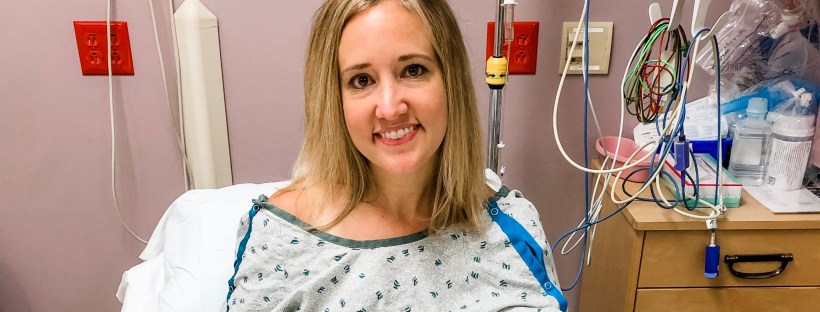
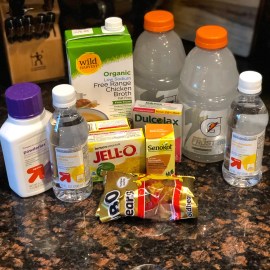
 Boys and girls, this is a game changer. Gummy bears are considered a clear liquid because they liquify upon digestion, much like Jello. In the days leading up, you can eat all the colors, but 24 hours before your scope stay away from any red, orange or purple as those colors are not allowed during prep. I used gummy bears to chase the magnesium citrate, two bears for every sip! It was also a nice treat and it felt good to actually chew something after only having liquids for days.
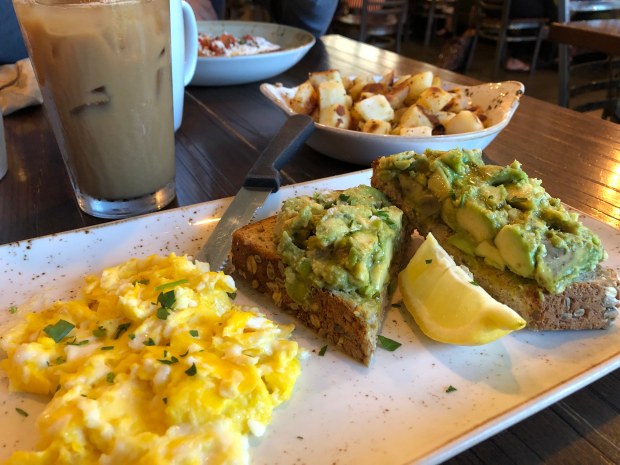 Look up menus and decide where you want to treat yo’self. Along with that first meal, I try and plan something fun to do. This time around my husband and I went shopping after breakfast and then we went out to dinner and to a light show at the Botanical Gardens (where we got engaged!). Knowing I had that to look forward to, helped me a great deal!
 My compassionate little 2-year-old even held my glass of prep with me and didn’t want to leave my side when I went to the bathroom. (lucky him!)
 In the days leading up, my GI recommended I drink whole milk or chocolate milk to get some protein for the baby. (I chose not to do this because my stomach can be sensitive to dairy.) I made sure Sophia got a couple bottles of formula each day, since my breastmilk was probably lacking it’s normal nutrients.
 It’s in these moments where I pause and reflect with positive internal self-talk. I think about family members and friends who inspire me. I pray to God for a smooth procedure and good results. I try and breathe and relax the best I can.
 Rather than rely so heavily on achieving remission, focus more on how you feel each day. Are you having more “feel good” days than symptomatic days? Are you able to function and complete tasks personally and professionally without your health getting in the way?

 I took him into the vet and a chest x-ray showed he has congestive heart failure. The vet gave him a day to a year to live. When I saw the size of his enlarged heart in his tiny body, my heart sank. My world stopped. The tears flowed. And immediately, I felt my Crohn’s symptoms return.
 As a mom of two and a wife, I know I need to reel it in and start coping so I don’t land myself in the hospital. But, the sadness, stress, and worry only feed my illness. What’s a girl to do? Whether you have a chronic illness or not—losing a four-legged family member is devastating and heart-wrenching.





 It feels like a fiery pain inside my rib cage that travels all the way down my stomach. The gnawing makes me feel raw internally and externally. I put my glasses on and as I’m standing up and rocking my daughter in her nursery, I try to think of her warm little body as a heating pad.
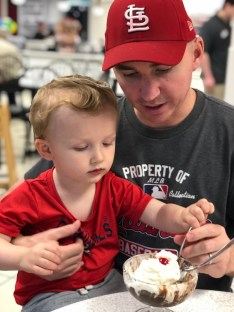 The fact that so many people without IBD are under the assumption that our pain and symptoms are self- imposed upsets me. We already beat ourselves up mentally as it is. My husband and I took our son for ice cream last night, so immediately I wonder if all of my pain is a result of the choice to have ice cream with my 2-year-old.
 lights camera crohn's