
Many of us struggle to manage our chronic conditions, between ongoing appointments, day to day life, and coping with the unpredictable symptoms of our conditions. This is where our mobile phones come in handy. Thanks to ever-evolving technology, we can feel empowered and a bit more in control of our overall well-being by tracking, managing, and learning about our ongoing health treatment.
Going with the adage of what gets measured gets improved. There are a few things we can do to make managing our chronic disease(s) easier. The first step is keeping your care team in the loop, the second is following through on your care plan consistently, and the last is to focus on monitoring and potentially improving your treatment plan as needed.
Having a Care Team Can Help
We all utilize the help of others to maintain our health one way or another. The case may also be that you could be taking care of others.
As an example, in the CareClinic health diary app, you can add caregivers phone numbers to quickly save all information in one place for times of need.  Additionally, users can enable the sharing of “Progress Reports” which include adherence information and all other modalities to optimize your health. Sometimes a caregiver may not be aware of what you need to take and when, this too can be shared via the “Share Care Plans” functionality.
Sticking to Your Care Plan Can Be Easy
A care plan from your doctor may encompass taking certain medications at a certain time. However, a comprehensive care plan is much more than that. A care plan is your “self care to-do list” which will enable rapid health improvements.
It may include eating healthier, eating at a certain time, tracking and managing your calories or sugar levels. Some other things that can be added to a care plan may include tracking activities, therapies and even setting reminders to check certain measurements and symptoms throughout the day.

A care plan is everything you need to do to maintain good health. Adding these values will reduce cognitive burden and help you remain on track. An app such as the CareClinic app can provide alerts, notifications and warnings based on your care plan, even better.
Monitoring Progress and Adjusting Your Health Accordingly
Patients often wonder if there is a point in maintaining a health diary. It may make sense to use a calendar or reminders to be notified when to take medications, but are there any inherent benefits to recording when medication was taken, or how we felt afterwards in a diary? 
The answer as you can imagine by now is an astounding “Yes, there is a point and a need.” By recording this pertinent information in a health diary, you no longer have to guess and see if a certain medication is causing adverse reactions or flare-ups. You’re taking the guesswork out the picture and providing yourself with more clarity.
Apps are now capable of leveraging AI to automatically help you figure out what’s working and what’s not. Even if the app is not able to make these correlations, your care team will appreciate the undertaking and potentially understand your health a bit better. When you provide data in a structured way to professionals, they can better learn and tweak their treatment for you, no matter what condition you are up against.
Tracking Health for a Better You
A health diary enables greater understanding about your own health and helps communicate the information in an objective way to healthcare professionals.
Web based and mobile diaries are a tool that can help you discover new information about yourself and provide for a more in dept history of how your treatment is progressing. In fact, it has been proven that maintaining a health diary can lead to a multitude of benefits (see this study). You can easily get into the habit by starting to track the essentials and then slowly adding more items to your care plan as you start to see patterns emerge.
This post is sponsored by CareClinic. Thoughts and opinions shared were my own.

 of Maryland, never knew how much her strong faith would help her through the ups and downs of chronic illness. As a wife, mom of three, and an educator, Kolby shares a heartfelt, eye-opening piece that beautifully captures how faith correlates to the daily battles we face as people with IBD.
 I was as sick as I’d ever been in my life, and couldn’t figure out why I wasn’t getting better. In December 2019, I received confirmation that I had Crohn’s Disease. I was afraid. But through the wind and the waves, I heard Him say “Take heart; it is I. Do not be afraid.”
 Soon, though, Peter took his eyes off of Jesus and focused instead on the wind and the waves and began to sink. He cried out “Lord, save me!” (Matthew 14:30) and Jesus instantly reached out His hand to catch Peter. When He pulled Peter from the water Jesus simply asked “Why did you doubt?” They returned to the boat and the wind and waves cease.
 I found myself focusing on all the tests and doctor’s appointments I had to go to, and the infusions I’ll have to take for the rest of my life to maintain any sense of health I used to know. I focused on the unpredictability that is Crohn’s, and not on the predictable, steadfast love that can only be found in our Savior.

 In a world where we all want immediate gratification, think about how it feels when you share something and there are crickets on the other end. Use your social media channels as a platform to share what you care about and what matters most to you, rather than trying to think about what others want to see.

 I feel like we blinked and her first year passed by. That being said, having a baby and a two-year-old, while being a stay-at-home mom and freelancer, who happens to have Crohn’s disease, has its challenges.
 Through motherhood I’ve learned to soak everything in, because you blink, and another year or milestone goes by.


 Fatigue from motherhood when you have a chronic illness can be mind-numbing and debilitating, but seeing your body create a life and then bring a baby into this world makes you feel a renewed sense of love for a body that you’ve been at odds with for years. IBD and motherhood has it’s worries and challenges, but at the end of the day, your children will be the greatest light in your life, and the most magical motivators of strength. There’s almost too much going on to worry about your own well-being, which is both a blessing and a curse!
 Gone are the days of going out at 11 pm, now I rarely go out and when I do, I’m usually home before 10. There’s no pressure to stay out until bar close or take a shot. My friends are all grown women, many of them are moms, our priorities have shifted. Adult conversation over brunch or a glass of wine and some sushi or tapas is refreshing and rejuvenating. I openly communicate about my disease when asked and don’t shy away from the conversation like I once did.
 If you’re reading this and you’re newly diagnosed, a teenager, a 20-something, trust me when I say that balancing life—all your obligations, your network of support, your job and what you’re meant to do with your life will find it’s way. Don’t beat yourself up by creating a timeline or a vision board that sets you up for failure. Don’t try and keep up with the Jones’. Don’t compare where you are in life to your peers. Because there is no comparison. When you have IBD you are being unfair to yourself if you try and be just like everyone else, because you’re not. And that’s ok. Use your experience as a patient to give you patience within yourself. Everyone faces struggles, everyone faces setbacks, but someday I promise you’ll look back and those very same struggles will be the reason you are strong, focused, driven, empathetic, and living the life you were meant to live.


 Yes, there have been times when everything felt heavy and bleak. Yes, there are still times I feel sorry for myself. But those days are far outnumbered by the joy-filled, happy days I choose to focus on.
 This week—I interview Therezia AlChoufete, a Registered Dietitian Nutritionist (RDN) who specializes in Gastrointestinal Diseases, to set the record straight about this area of disease management. Therezia completed her Bachelor of Science in Neuroscience and her Master of Science in Nutrition and Dietetics from the University of Pittsburgh.

 At the time she was diagnosed, Kate was immersed in her undergraduate studies that were divided between Geoscience and Studio Art and took on the role of caregiver for her mother. This week Kate shares how art has benefited her patient journey and offers up helpful ways you can incorporate art into your life, even if all you can draw are stick figures (like me!):
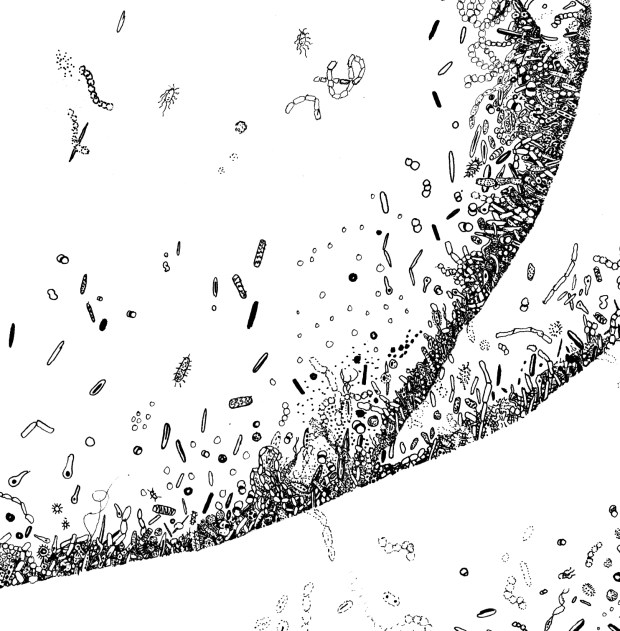 The microbiome is a hot spring of unanswered questions in relation to its role in IBD, as well as many other conditions. Applying the methods I have used in other projects, I researched the different types of bacteria and their shapes and used them to create a series of abstract drawings that relate to the digestive system and allow people to develop a sense of the complexity of the human body.

 We know our bodies, we know our triggers, and we are the ones who are ultimately going to have to pay if symptoms arise. Comments like “Oh, I didn’t think you could eat that?” or “Isn’t that going to land you in the bathroom?” are completely unnecessary. Focus on passing that side dish of mashed potatoes rather than giving us the side eye at the dinner table.
 Bringing “safe” foods or eating ahead of time at home provides comfort and allows us to enjoy more of the party. Please don’t take offense if we eat very little, or nothing at all.
 Please trust we know the side effects of the medications we are on; we know the risks of the surgery we may have to get; we know it all. Please don’t tell us to start taking a supplement you found online. Yes, we’ve heard of: CBD oil, turmeric, probiotics, the list goes on. Please don’t question the safety of our biologic. Our disease is our reality. Unless you live it, it’s not yours.
 Just as with food, everyone with IBD responds differently to alcohol. We understand a glass of wine here or a beer there at a celebration may not seem like a big deal, but one drink can be enough to cause us extreme abdominal pain. Feel free to ask us, but if we decline the offer please don’t pester us, ask us if we’re pregnant, or try and make us succumb to peer pressure. We’d much rather be sober and present at the party without pain.
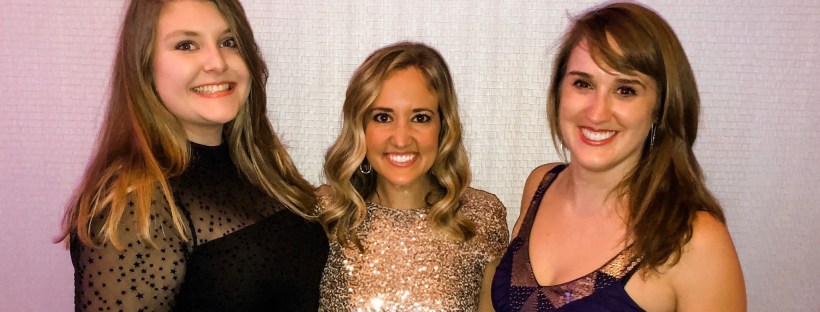


 If you’ve never attended a Crohn’s and Colitis Foundation event for your local chapter—whether it’s a patient symposium, an education event, a walk, or a Gala, I highly recommend you check them out. While it’s great to connect on social media or over the phone, nothing compares to physically being in the same room with people who are passionate about the same cause, who understand your reality, and are driven towards the same mission as you.
 lights camera crohn's