Hospital bag essentials: What to pack & where to find it

If you battle inflammatory bowel disease, chances are, along that journey you’ve been blindsided by a flare that sends you to the hospital. One of the hardest things to do is try and pack a bag for the hospital while you’re doubled over in pain and can’t think straight. This week, a guest post from my friend, and fellow IBD advocate, Amanda Osowski. IMG_2499Amanda shares the hospital bag “must haves,” so you can be prepared the next time around. Amanda, take it away…

As a Crohn’s patient, my often urgent, sometimes frequent trips to the hospital used to leave me wondering how I could better prepare for these moments, when they arrive.

For several years, I have been keeping a mostly packed hospital bag. Today, I operate off a combination of a mostly pre-packed duffle bag, along with a note on my phone of a few items to add to the bag before I head to the hospital. This has allowed me to feel slightly more in control of the times my body does not cooperate.

Steps for filling a pre-packed hospital bag:

  1. Start by finding a good duffle bag. I have found that ones with internal/external/side pockets are best for me to keep things organized. (This is mine!) Often bags used for working out/the gym are good candidates for this purpose based on size. Amazon has many options, and stores like Marshalls/T.J. Maxx often have name brand bags for inexpensive prices.
  2. Records:
    1. Keep a printed list of current medications, supplements, allergies, doctors and their contact information. This is much easier to reference in the ER or in-patient with multiple doctors rounding.
    2. Have a printed copy of any medical documentation from your providers – especially if you have a port, picc or central line, an ostomy, feeding tube, or other medical devices/necessities. I also store these on my cell phone, so I have a mobile copy.
    3. Share with your parents/spouse/friends where this bag is kept, in case you are unable to grab it before becoming admitted.

Essentials

  • 3-5 pairs of underwear IMG_2495
  • 4-6 pairs of socks with grippers on the bottom. I really like yoga socks like these or these or these!
  • Flip flops or slide shoes or slippers with grippers on the bottom (for leaving the room).
  • Glasses/Case or Contacts/Case, including cleaner wipes/solution
  • Hand Sanitizer / Wipes
  • Lysol Spray
  • Pen/pad of paper or notebook
  • Phone charger
    • I would recommend either purchasing an extra 6ft. or 10ft. cord on Amazon to keep in your bag, or purchasing an extension cord to help with outlets that are in inconvenient places
    • Also – wall plugs like this that have the ability to charge more than one item at a time are great.
  • Ear plugs (in case of roommates or beeping IVs!) – I like these or these
  • Eye masks (to sleep w/lights) – This one is my favorite.
  • Hard candies to suck on/throat lozenges for dry throat

Clothes:

Note: I don’t have a ton of clothes that I like/find comfy, and because I often want my favorite items when I’m in the hospital, I usually keep these on my “To Add” list (see below)

  • 2-3 Comfortable bottoms (PJ pants, shorts, leggings, sweatpants) – loose fitting is best
  • 1-2 Zip up sweater/sweatshirt/fleece in case it’s chilly
  • (Men) 3-5 tank tops or tee shirts with loose neck/arms
  • (Women) 3-5 Tank tops with built in bra or tee shirts and sports bra with no metal

 Toiletries

  • Toothbrush/Toothpaste
  • Mouth wash
  • Deodorant
  • Hairbrush/Comb
  • Hair ties/bobby pins/elastic headbands
  • Dry Shampoo (My favorite listed here, and Target often sells travel size bottles for $5.99)
  • Shower items: shampoo/conditioner/body wash/razor
  • Lotion
  • Chapstick
  • Face wipes – these are my favorites
  • Wet wipes
  • Calmoseptine!
  • Nail file/nail clippers
  • If you’re female, tampons/pads just in case!
  • Body spray like this!

 Comfort

  • Toilet Paper (As a Crohnie – my bottom often cannot handle the hospital 1 ply)
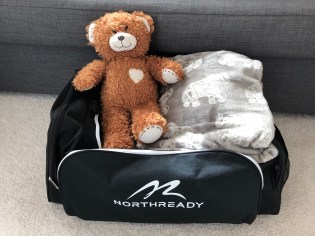
  • Stuffed animal
  • Soft blanket (I’ve found my favorites at Marshalls or Home Goods)
  • Pillow (or your own pillow case)
  • Hair dryer (if that’s important to you after hospital showers)
  • Bathrobe (if that’s your thing – I don’t keep one in my bag)
  • Laundry bag/bag to keep dirty clothes separate from clean ones (I just keep a few plastic target bags in my duffle)
  • Kleenex/Tissues if you prefer soft ones
  • Heating pad
  • Durable/tall refillable water bottle
  • 1-2 sealed bottles of water (yourself + caregiver)
  • Photos – friends, spouses, pets. While most of us have these digitally, sometimes it’s nice to put a small frame on your hospital windowsill or nightstand

Entertainment

  • Magazines / Books – physical or downloaded to your phone/tablet IMG_2496
  • Deck of cards or small game
  • Headphones
  • Coloring book/colored pencils or crayons or markers

I use small makeup size pouches or bags to organize things together (ie: electronic related items, toiletries, etc.), and keep this all in my duffle bag, which lives in our guest room closet. This is important for me to remember, in case my husband is out of town and a friend offers to swing by our place and pick it up from me!

I mentioned my “To Add” list that I keep on my phone. Here’s what’s on it!

 To Add:

  • iPad + charger
  • Laptop + charger
  • Clothes (See above!)
  • Snacks: Including this obviously depends on your current intake abilities, or your caregivers, as well as your regular hospital’s offerings.

amandaThat’s it! If there are things on here that aren’t your jam, just leave them out or substitute with something more your style!

Connect with Amanda on social media! While she shares posts about her health adventures and patient advocacy efforts, she also share lots of other great content too!


Instagram

Twitter


The difference between sympathy and empathy with chronic illness

Sympathy and empathy. Two different words with very different meanings. Especially to those of us in the chronic illness community. The first nine years I battled Crohn’s disease, I kept my diagnosis as private as possible. Only close friends, family and co-workers knew what I was going through behind closed doors. I did this because I didn’t want sympathy.

TVblog

Back on the news desk following a bowel obstruction hospitalization, would you ever guess this was my first show back?

I didn’t want people to look at me differently. I didn’t want to be judged or looked down upon. I didn’t want to be viewed as “less than” by my peers. When you choose to suffer in silence you close yourself off to support, you close yourself off to empathy.

Since sharing my patient journey in November 2014 with the public, I’ve realized the power of empathy. How it feels when those close to you and complete strangers reach out to offer support, words of advice and choose to show compassion. By definition, empathy means, “the ability to understand and share the feelings of another.” The definition of sympathy is “feelings of pity and sorrow for someone’s misfortune.”

When we choose to share our story, we open ourselves up to not only support, but criticism. People who believe we are advocates as a way of seeking attention. People who try and dumb down our personal experiences because they feel we share to get pity. People who believe we want others to feel sorry for us. This could not be further from the truth.

I share my experiences with Crohn’s disease as a way to inspire and educate.

crohnswalk

I’ll always remember how my cousins and brother rallied around me at the Take Steps Walk in Chicago.

The last thing I want is for someone else to feel sorry for me. There is no reason to act like I have it worse than you or that you feel bad I’m not “healthy.” I am healthy, I just have a chronic disease that makes my life a little more challenging than yours. The challenges Crohn’s has brought into my life have been difficult, emotional and trying—but with each setback, comes a much stronger comeback. I am stronger and better for the trials I have been faced with.

I don’t want your sympathy. I want your empathy. I want you to reach out and see how I’m doing, because you genuinely care. I want you to show interest when I bring up my disease, rather than change the subject…or walk away. The lack of empathy and disinterest hurts more than anything. It shows you who’s a surface friend…and who is a real one.

IMG_7435

I was hospitalized six months into my relationship with my husband. His support was amazing from the start.

Think about how you’d like to be treated and talked to, if you dealt with an invisible, chronic illness that wreaked havoc on your body without warning. A disease that you do all you can to control with lifestyle and medication. A disease of constant unknowns.

When you conversate with those in the chronic illness community—think before you speak and please choose to be empathetic, rather than sympathetic. Your efforts may seem minimal to you, but they mean more than you know.

Liquid diets: How to thrive and what to avoid

When you battle inflammatory bowel disease, chances are there will be several times throughout your journey where you are limited to only drinking liquids—whether it’s preparing for an upcoming procedure or needing to rest your bowel during a flare-up. It can be extremely dreadful to function in a workplace or in a social situation, when you’re limited to drinking liquids or sipping on some broth.

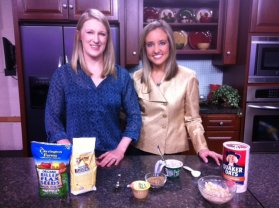
meandamandaWhen I was a news anchor in Springfield, Illinois, I used to interview and participate in cooking segments with a registered dietitian named Amanda Figge. She is extremely passionate and well-versed about nutrition and health and practices what she preaches in her daily life.

“Nutrition holds the key to the difference between going on or off certain medications, improving your performance and strength at the gym, raising energy levels, and reducing pain and inflammation, to name a few. There is no one-size-fits-all approach to healthy eating,” Amanda explains.

One of Amanda’s recent posts on social media really peaked my interest. She included a photo of Ensure. If you have IBD, chances are you’ve relied on these at some point. I know I have. In her post, Amanda wrote:ensure

“Ensure is one of the worst “nutritional” beverages to supplement in the diet. Yes, I fully understand the body just needs to receive nutrients in any way, shape or form it can. But when longevity and health are a prime concern, QUALITY should be a priority. As you can see, Ensure provides an assortment of vitamins and minerals, but in order to get those nutrients, you have to consume a bottle chalk-full of chemicals and high-inflammatory agents.”

She went on to say:

“Sugar is the third ingredient. Corn maltodextrin is a highly processed refined carbohydrate. Soy protein should be avoided. Artificial flavors/sweeteners are no way to treat the body nicely. You’re basically consuming a multi-vitamin that was covered in sugar, lit with a cigarette and left in the middle of a freeway during rush hour traffic.”

Whew. Intense. If you’re like me—and have depended on these meal supplement drinks when you’re in the hospital, fighting a flare at home or struggling to eat—those words probably struck a chord with you, too. Amanda’s focus is to heal the body with whole foods and eliminating potential sources of inflammation. Inflammation is the immune system’s first response to an acute or chronic condition. Chronic inflammation can be caused by cancer and its treatments, autoimmune disorders such as fibromyalgia and Crohn’s, metabolic complications such as diabetes and even neurological conditions like depression.

“While I believe it’s important for all people to practice low inflammatory eating habits (focusing on a whole foods diet and limiting processed foods, chemicals and added sugars), it is especially important for individuals experiencing chronic inflammation to adopt these protocols. Ensure is often provided to those undergoing chemotherapy or recovering from a bowel flare-up. While it may be appropriate for some, creating a homemade nutritional supplement can have far less chemicals and more immune-boosting benefits,” says Amanda.

If you’re put on a liquid diet to calm your bowel and to heal, avoid lactose, gluten, sugar-substitutes and soy. Making homemade shakes allows you to have complete control of the nutrients you are putting into your body. Here are two of Amanda’s favorite smoothie recipes:

 Creamy Chocolate Banana Smoothie

  • 1 scoop of chocolate whey protein isolate (lactose-free and naturally sweetened)
  • ½ frozen banana
  • ½ small avocado
  • 1 spoonful of peanut butter or almond butter
  • Handful of ice cubes
  • Unsweetened almond milk (1/2 cup- 1 cup)

Blend all ingredients in food processor or mixer. Using less almond milk will make the smoothie extra rich and thick.

Berry Bliss Smoothie

  • 1 scoop vanilla whey protein isolate (lactose-free and naturally sweetened)
  • ½ -1 cup frozen blueberries
  • ½ frozen banana
  • 1-2 handfuls of spinach
  • Unsweetened almond milk (1/2 cup- 1 cup)

Blend all ingredients in food processor or mixer. Using less almond milk will make the smoothie extra rich and thick. IMG_5890

Another option instead of whey protein isolate would be collagen peptides. These specific amino acids can additionally help support proper gut function and strengthen immunity. L-glutamine powder is an additional supplement Amanda recommends that promotes gut healing. This powder can easily be added to smoothies and beverages.

I don’t know about you, but the next time I’m on a liquid diet, I’m going to take Amanda’s advice to heart. While we may not have control of our well-being with Crohn’s and ulcerative colitis, this knowledge and background enables us to grab the reins and give our body the best shot to heal, in a healthy way.


A Valentine letter for Crohn’s

Yes, you read that title correctly. I used the word ‘Valentine’ and Crohn’s in the same sentence. I’d be lying if I said I would have been able to do that years ago. Hate would have been a more relatable feeling and word. IMG_8476 (1)As Valentine’s Day approaches and love is in the air, I’m choosing to look at my disease with my whole heart and to share my feelings with you.

If it weren’t for my Crohn’s I wouldn’t know my strength.

If it weren’t for my Crohn’s I wouldn’t have my perspective.

If it weren’t for my Crohn’s I wouldn’t know the meaning of a “feel good” day.

If it weren’t for my Crohn’s I wouldn’t be able to empathize with others on the same level.

If it weren’t for my Crohn’s I wouldn’t be able to see people’s true colors.

If it weren’t for my Crohn’s

photo by J Elizabeth Photography www.jelizabethphotos.comI may have ended up marrying a person who really wasn’t about being with someone in sickness and in health.

If it weren’t for my Crohn’s I’d feel invincible and take my health for granted.

If it weren’t for my Crohn’s I wouldn’t be me.

In life there are triumphs and there are challenges. There are stresses and there are successes. There are highs and there are lows. I find embracing the good, the bad and the ugly enables us to reach our potential. The painful, low points are difficult in the moment, but in hindsight they push us to our limits and show us all what we are capable of.

People often ask me if I wish I didn’t have Crohn’s disease. I find it to be a loaded question. I’ve gotten to the point in my patient journey where I wouldn’t change a thing. So much of taking on this chronic illness is your attitude. remedy-nsmith-stlouis-1212There’s no sense in wondering and wishing for something that is not possible. Once you take a deep breath and stop living in your healthy past you come to realize that you were given this hand of cards for a reason.

Your voice, your experience, your journey has the power to inspire. You have the ability to change lives. You have the opportunity to show that invisible illness and everything that comes along with it doesn’t need to destroy your dreams.

While I know some days, weeks and months are going to be treacherous in this journey, do yourself a favor and stop being so hard on yourself. Love yourself. Love all of you. Even the part of you that is broken on the inside. I’ve been through the flare ups and the scares. I’ve overcome pain that causes me to pass out. I’ve weathered the storm of being wheeled into surgery. I’ve done hundreds of injections and blood draws and pokes and prods. At the end of the day, you rise. IMG_6282You take those steps to heal. You focus on getting better. You do all you can to make it through. Crohn’s and any chronic illness for that matter gives you this opportunity over and over. So, while we all tend to have negative feelings about our health and worry about what the next hour will bring, try and pause and stop for a moment. Think about all the beauty and insight it’s provided—and love yourself and your disease for a second.


XOXO,

Natalie

Israel Outdoors offers once in a lifetime Birthright Israel trip for IBD and IBS warriors

Deb Weiner traveled to Israel on her Birthright Israel trip back in 2010, like many young Jewish adults. Except she had Crohn’s disease. The Birthright trip is an important milestone for many young Jewish adults, unfortunately her inflammatory bowel disease created many obstacles. Pic 1Despite making life-long friendships and memories, she felt the challenges of her dietary restrictions, and couldn’t take in all the monumental experiences like her peers.

This is where a trip for people with Inflammatory Bowel Disease (Crohn’s and Colitis), Irritable Bowel Syndrome and non-Celiac gluten sensitivity comes in. It’s a time for young adults to discover new meaning in their personal Jewish identity and connection to Jewish history and culture. IBD is most commonly present in people of Caucasian and Ashkenazic Jewish origin.

I’m so excited to announce that registration for this once in a lifetime trip opens TOMORROW (Jan. 30, 2018)!

Here are some key details:

o   Dates: August 6 – August 17, 2018 (10) day trip

o   Open to residents in the United States and Canada

o   Medical staff will be traveling with participants throughout the trip

o   Refrigeration is available for all injectable medications (including sharps containers)

o   Meals that cater appropriately for all participants

o   More scheduled bathroom breaks

o   Travel accommodations that take additional restrictions (chronic fatigue, joint pain) into consideration

Wonder if you’re eligible to attend? Here are the requirements:

o   Must have at least one parent of recognized Jewish decent

o   Age 18-26 (post-high school)

o   Have not traveled to Israel before on a peer education trip or study program after turning 18

o   Have not lived in Israel after age 12

Pic 2“A Birthright Israel trip includes airfare from major cities, hotels, meals, transportation within Israel, and costs associated with touring the country,” said Deb, who as a Crohn’s patient herself, is helping with the coordination of this program for Israel Outdoors.

Deb remembers wanting to climb to the top of Masada, an ancient fortress that overlooks the Dead Sea, but the climb took place after a very strenuous day, and she didn’t feel well enough for the climb.

“With this trip, no one has to miss out on anything. Accommodations are offered that I would have loved to have benefited from. For instance, for those who aren’t up for the hike, a cable car will take the group to the top of Masada. When it comes to sharing a room, there are less people per room than on a typical Birthright Israel trip, making it easier to maneuver, and taking bathroom turns and whatnot. Participants will be staying with peers who understand what they are going through,” said Deb.Pic 5

The Birthright Israel  trip is considered the most successful Jewish initiative in the world, with more than 600,000 young adults participating. Deb has truly seen her personal experience come full circle. She’s been the young 20-something on the trip, feeling isolated and concerned. Now, nearly eight years later, Deb has the foresight and the knowledge about what young adults just like her need, to make the experience one that is enjoyable and comfortable.

“We want to share an experience and create lasting memories and friendships. There shouldn’t be a reason not to go on this trip, so we are bridging the gap. We want those with IBD, IBS, and non-Celiac gluten sensitivity to have the same great experiences as those who go on Israel Outdoors’ classic Birthright Israel trip,” said Nate Edelstein, North American Director for Israel Outdoors. Pic 3

Click here to register. You are encouraged to apply within the first week of open registration to secure a spot. The maximum trip number is 40 people and applications are accepted via email on a rolling basis. Israel Outdoors hopes to offer this trip every summer and possibly twice a year (summer and winter) if there is enough interest and demand.


There for Them: Why AbbVie’s new campaign is far from shameful

I was cuddling my nine-month-old son on the couch when this commercial came across the TV. Before you continue reading, please click the link and watch.

Somber music played and as the one minute clip unfolded, I knew within seconds it was about inflammatory bowel disease…even though there were no words. The imagery, facial expressions and moments hit close to home. IMG_4947I was immediately at a loss for words. But in a good way. I’ve been those people in that commercial. I’ve witnessed family members look at me sympathetically as I excuse myself from the room. I’ve held my stomach and grimaced in pain, doing all I can not to miss a moment of a social gathering. I was recently at the movie theater with my husband, gazing with jealousy at people who could eat popcorn…willing myself not to buy any.

AbbVie is getting mixed reviews about their latest campaign. Some are blasting it on social media calling it “shameful”, “ridiculous”, “a guilt trip”, “disgusting”… the list goes on. To be quite honest, I’m shocked. As a mom who’s battled Crohn’s disease for almost 13 years, this is the first time I’ve seen a commercial about IBD and related to it 100 percent. This isn’t some ploy to try and make people feel guilty for their condition. It’s the reality of what life is like for IBD families. Unless you personally battle IBD or your family member does, you should be hesitant to spout off and share your opinion, as you can’t claim to know what goes on behind closed doors when the illness doesn’t need to be invisible anymore.

This commercial isn’t about making those with chronic illness feel poorly about themselves or guilty about their condition. Rather it’s bringing the truth to the forefront, for all to see. Every other big pharma ad out there shows some picturesque portrayal of someone running off a field, walking on a boardwalk or hiking up a mountain. Sure those with IBD can do those things, but that’s the power of IBD being an invisible illness. We can do those things, with a smile, even if and when we’re hurting inside.

IMG_4744I’ve been on Humira almost 10 years. I don’t need to be sold on the drug. But this campaign means the world to me. It represents what my parents, husband and son endure by my side. This disease impacts more than just the patient. It’s a family affair. When my son is old enough I want him to be empowered by my strength, but able to empathize with my struggles. Thank you, AbbVie for recognizing this and giving the world an inside look at the IBD patient and family experience. The commercial ends with “To be continued”… I can’t wait to see what’s next.