
Back in the fall, I had the privilege of sharing the stage with a fellow IBD advocate in the St. Louis area during a Crohn’s and Colitis event. Her name is Kelli Young. Kelli has battled Crohn’s disease for 28 years. She’s a veteran to the game, and has incredible perspective about how IBD not only shapes our lives, but dictates the kind of people we become. This week—a guest post from Kelli about why finding your tribe—an empathetic support system—makes a world of difference.
It took over a year and a half of being prodded and poked in every orifice of my body to receive the diagnosis of Crohn’s. I received the devastating news eight days before entering my sophomore year in college. 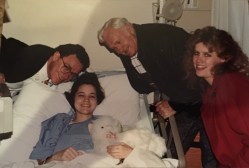 The excitement of knowing “I’m not a hypochondriac” was overshadowed by the fear of having a “poop disease”. You see, my first year of college, I became best friends with my Suite mate. Ironically, she too battles Crohn’s. I was 20 years old, diagnosed with a disease that had no cause and therefore no cure…how can that be? Why me? What am I going to do? I didn’t even know how to swallow a pill. I was never the sick kid! Now, I had to take 24 pills a day, which sometimes would take me an entire hour to swallow one dose, throw up, re-swallow again. Three times a day. It was as if I had entered “hell”.

Six month after diagnosis, I came home from college for winter break. Tipping the scale at a whopping 75 pounds, my body was too weak to undergo surgery. For 45 long days, I received all my nutrition through an IV. This was so my bowel could rest as I prepared for a colon resection. The surgery was my only hope for living a more productive life.
What I’ve learned after nearly 30 years with IBD
Fast forward nearly three decades—and through the years, I’ve been labeled as “the complicated” patient. I’ve undergone multiple surgeries which include: three colon resections, gall bladder removal, appendectomy, countless ERCP’s and fistula repair. Can’t forget the life-saving blood transfusion I needed after my colon ruptured, causing me to lose half my blood volume. I dealt with TPN (Total parenteral nutrition)/bowel rest for each of the three surgeries. 45 days was my longest duration on NPO(no food). 30 days was my longest hospital visit. For the last 28 years, my body has had medication dumped in it.
My generation was taught differently.  Which made my journey with the disease a little different than today. I was raised to think “only the weak complain!” “Someone always has it worse!” “Suck it up butter cup”. “If you want the job done right, do it yourself”. This made me look at the situation as this was “my” disease, “my” problem and I don’t want to make anyone worry about me or feel sorry for me! I became a master at hiding the disease and a master at hiding the byproducts of the disease.
It has taken me decades to evolve. Six years ago, I realized, I had to create a better “village” for myself. And my voice was starting to be heard. I just wanted my peeps to treat me as an equal, no matter how many bowel movements I’ve had that day. And most importantly, yearning for support and compassion, not to be mistaken for pity or despair! During my evolution process, big sacrifices had to be made. As a mother of two, I had more than just myself to think about.
The power of transparency
Today, transparency has set me free. Free from the misconception that I’m “lazy”. Free from the labels placed on me because of my thin statured frame. Free from the worry of how others view me. And free to live my life.
Today, I am able to share my journey with an audience that might share a similar experience or with an audience that has a loved one with Crohn’s Disease. I share my story, with the hope of inspiring others and showing anything is possible.
My disease has made me who I am today. It has taught me that I am strong, determined, confident and secure.  I’m a proud mother to two amazing children. I carried and gave birth to both of them with zero complications. I’m a business owner of a successful insurance agency, which I established 4 years after diagnosis. I didn’t allow my disease to derail my professional aspirations. I’m an active mother and manage to find time to be a room mother and Girl Scout cookie manager.
As a patient advocate, I serve on the board of the MidAmerica Chapter of the Crohn’s and Colitis Foundation, in addition to other professional boards. I value the good days! I reflect on my bad days and listen when my body tells me to slow down and get rest.
My advice to you
If you’re newly diagnosed or in the thick of the battle, it’s important that you realize… “this is your normal”. Embrace it! Accept it! Own it! Speak about it!! Get a “village” that gives you positive support, not to be mistaken for negative attention. If I can get thru this crazy game of life with Crohn’s disease, so can you! Don’t let the disease define you.


While I know my journey will include the daily struggles from the disease, it no longer is my hidden secret. My village knows and loves me for me. They understand the disease and ask questions to understand it better. This is not just my “problem” any more. As we all patiently wait for a cure, it is important we speak up, join together and help one another.

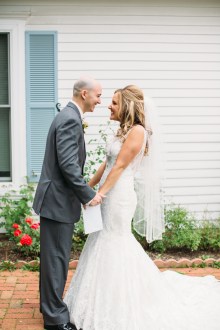 “You’re an incredible partner—you’re my rock when I’m sick and you know how to lift my spirits when I’m down. You have a way of easing my worries and bringing me clarity when I’m uncertain. Each day spent with you—is an extraordinary blessing. I feel so incredibly lucky that God brought us together and chose you to be the one person among millions who lights up my soul.”
 At times, living with a chronic illness and being the one who doesn’t feel well, can bring about guilt. It also brings out the best in us. When I’m vulnerable and need a boost, I see my husband rise up to the challenge, time and time again. I’m constantly reminded I chose to live my life alongside someone who has more compassion in their heart than I knew imaginable.


 As a patient advocate, you also become somewhat of a confidante and voice of reason for your peers in the community.
 What I do want—is for people to recognize what compassion fatigue is…and how as chronic illness advocates and caretakers we need to be mindful of how we’re feeling and internalizing the struggles of those around us.
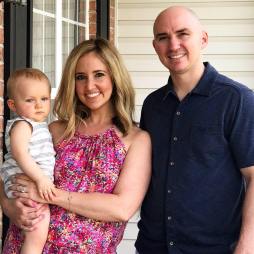 I offer support from the bottom of my heart, but as a mom and a wife, I do need to recognize when it’s time to unplug and take time for myself. When my baby naps each morning—I spend that “break” on my computer writing articles about IBD, participating in Twitter Chats, and talking on the phone with those who want to hear about my patient experience.
 As part of my self-care and disease management I need to de-stress, so I don’t put my own health at risk. This article is painful for me to write—I can’t stand admitting that I am struggling to do it all. But, compassion fatigue has been something I’ve been feeling for a few months. I want to be the best advocate for others and do all I can to make a difference and show there’s so much life to be lived outside of your disease. I want you to see how much you can thrive with this disease and all that you can accomplish. I want to be the person I needed the day my world turned upside down when I was diagnosed. I want to be all the things. But it’s not possible. It’s not fair to me, it’s not fair to you.

