For many people living with Inflammatory Bowel Disease, the possibility of ostomy surgery can bring a complicated mix of emotions. Fear, uncertainty, grief, and even relief can coexist when medications stop working and surgery becomes a path toward reclaiming quality of life.
But what happens when you’re the one who has to make that decision?
For fellow patient advocate Jenna Ziegler, the road to ostomy surgery was paved with years of medication trials, hospitalizations, difficult conversations, and the emotional exhaustion of wondering what would come next. After years of trying to get her Crohn’s disease under control, Jenna reached a point where she knew something had to change.
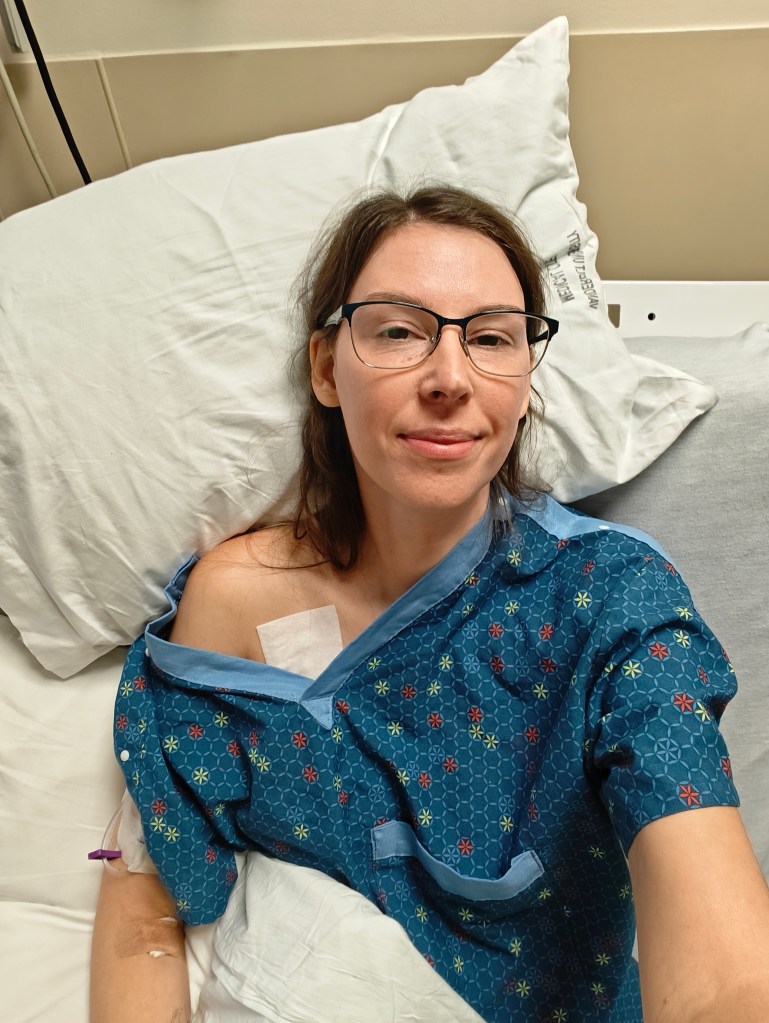
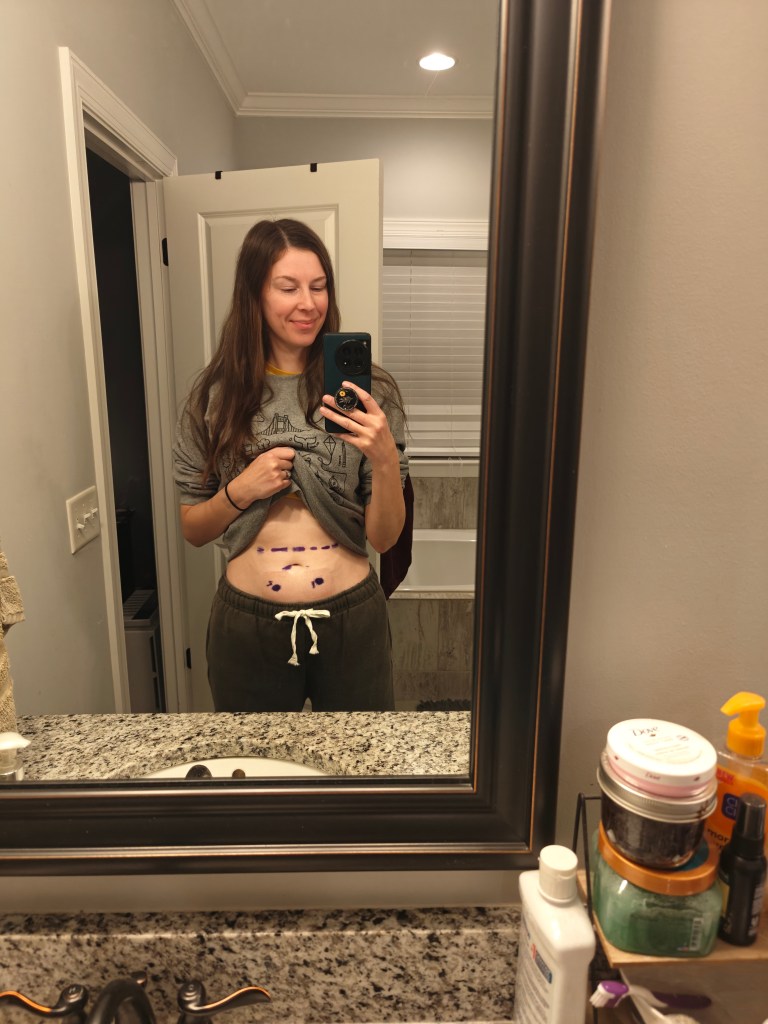
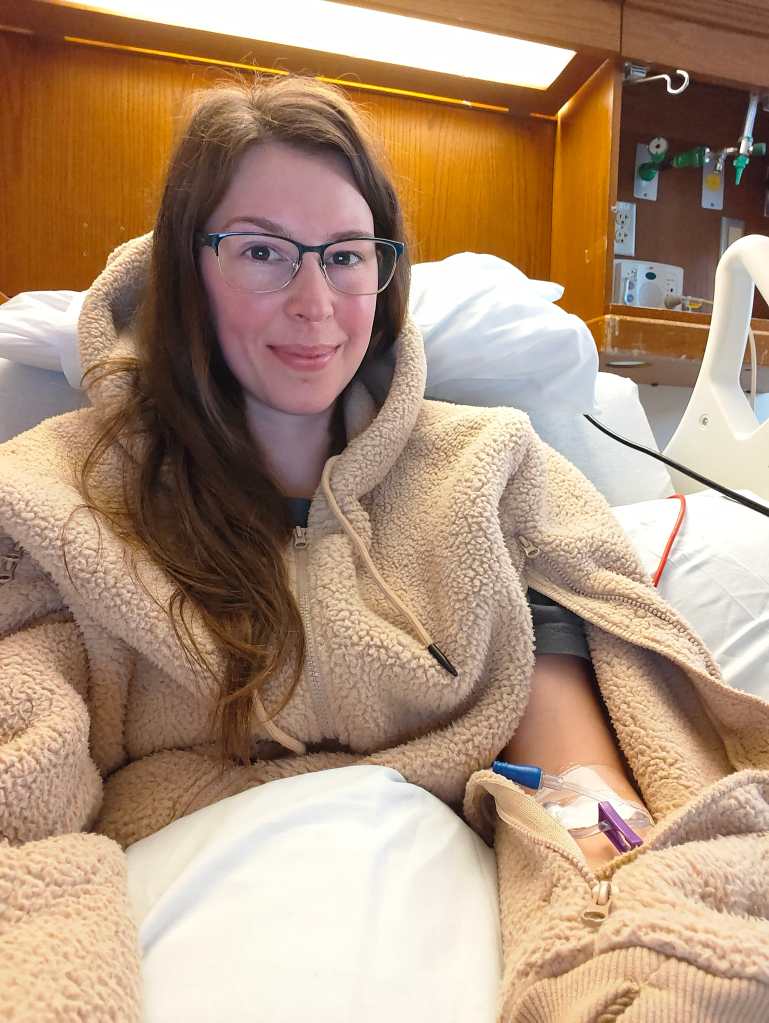
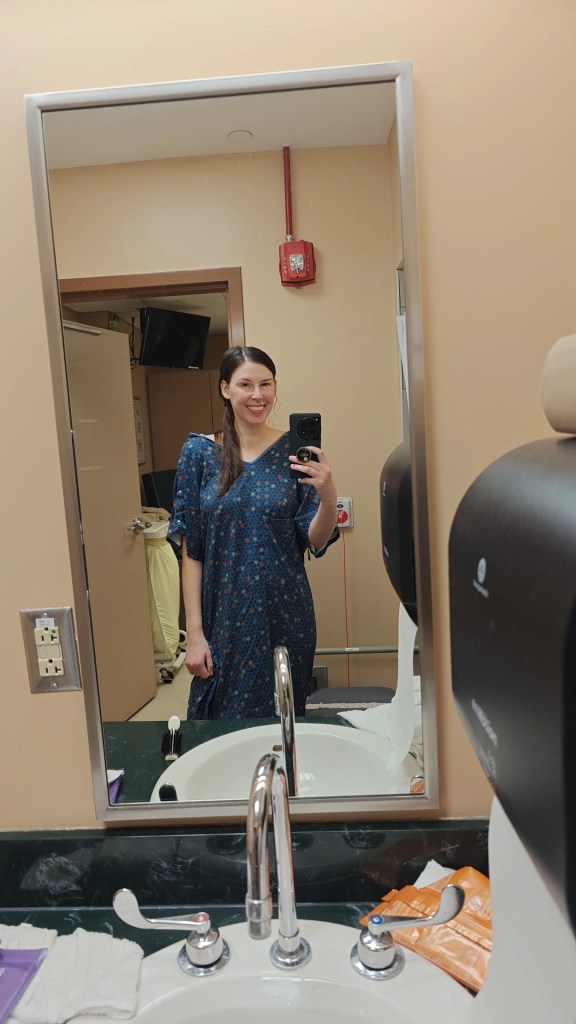
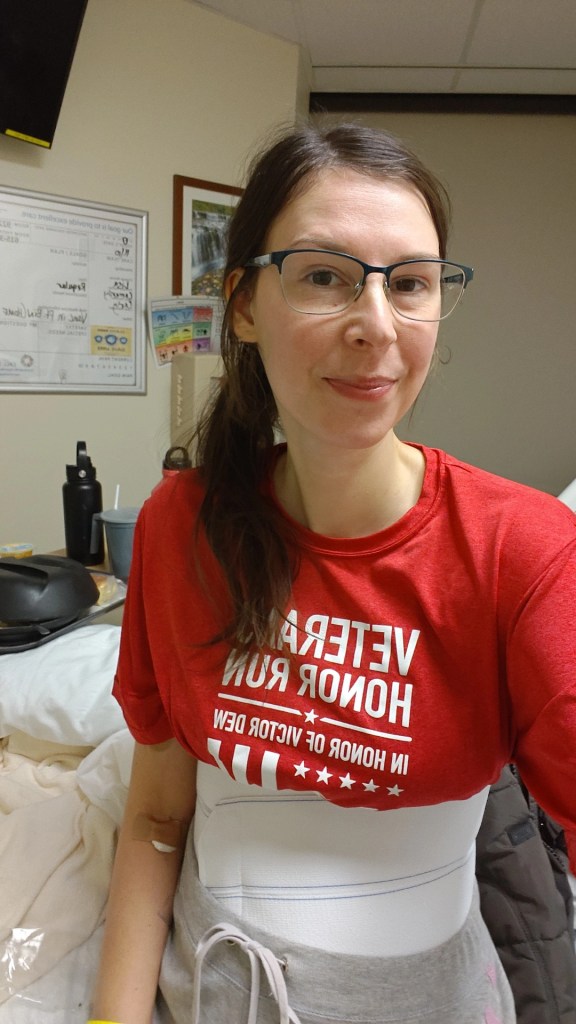
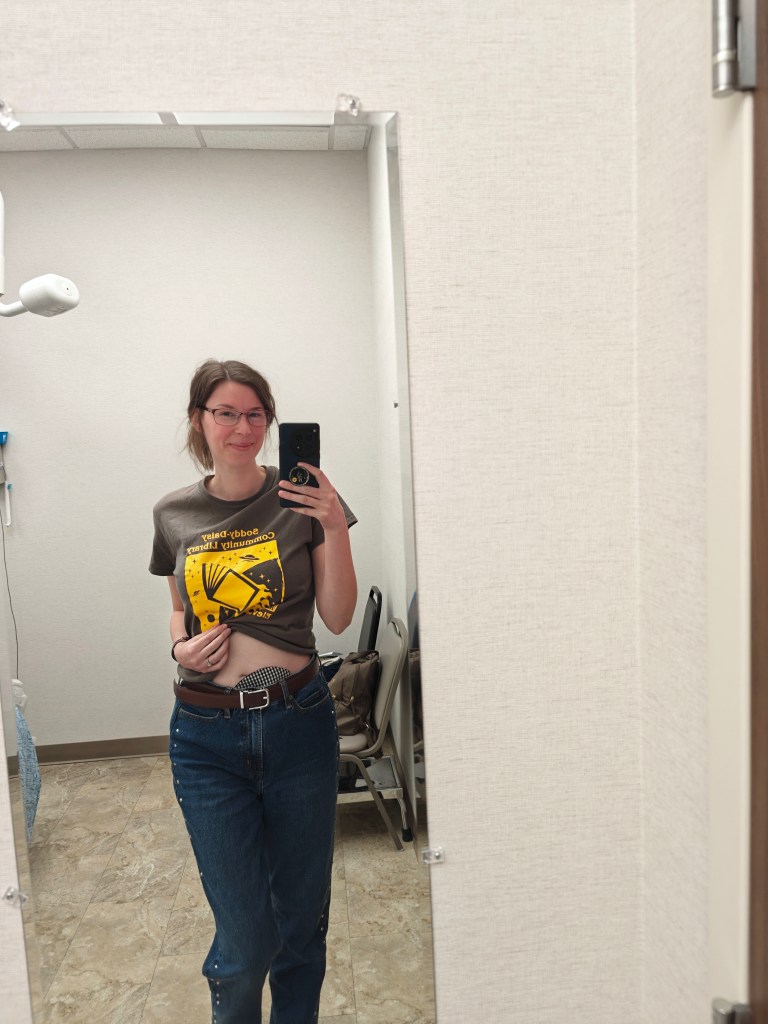
On November 7, 2025, she underwent a subtotal colectomy and received a permanent ostomy, keeping her rectum for the time being.
Looking back, Jenna says she wishes she had undergone surgery years earlier.
In this first installment of our two-part Lights, Camera, Crohn’s series, Jenna opens up about how she reached that decision, the importance of finding a medical team that listens, preparing mentally for surgery, and what she wants other patients to understand before considering an ostomy.
When medications stop working, surgery becomes part of the conversation
Jenna’s journey to surgery followed years of trying different treatments and navigating the uncertainty that comes with refractory Crohn’s disease.
After experiencing a rare side effect of autoimmune pancreatitis while taking Entyvio, the medication that had previously kept her Crohn’s in deep remission for five years, she had to discontinue treatment. What followed was a prolonged flare that proved difficult to control.
She tried additional biologics, including Stelara and Skyrizi, but continued experiencing debilitating symptoms and hospitalizations.
By September 2025, it was clear that Skyrizi was no longer working. Her symptoms returned in full force, including abdominal cramping, blood and mucus, nausea, weight loss, and accidents.
Jenna had reached her breaking point.
“I was done with trying biologics due to the long waiting game and the mental exhaustion of the uncertainty and getting my hopes up only for them to come crashing down,” she shares.
Jenna began seriously considering a colectomy, but getting there wasn’t as straightforward as she had hoped.
The power of a second opinion
When Jenna initially brought up surgery with her gastroenterologist, she felt dismissed.
“He would shut it down, saying I was ‘too young for that,'” she recalls.
Rather than accepting that answer, Jenna pursued a second opinion at Vanderbilt’s Inflammatory Bowel Disease Center. There, she met with both a gastroenterology team and a colorectal surgeon who took the time to review her medical history, symptoms, and personal goals.
Their response was validating: If Skyrizi failed, she would be an excellent candidate for surgery.
“Getting established with a medical team that I trusted was one of the things that empowered me to make this decision,” Jenna says.
The Vanderbilt team also understood something important about her future: Jenna hoped to have a family.
“After reading my extensive medical history and hearing about my debilitating symptoms, the team at Vanderbilt confirmed I’d be an excellent candidate for surgery if Skyrizi failed. It was incredibly encouraging that a team I trusted understood my life goals and confirmed that surgery was a very reasonable option for me.”
For anyone contemplating surgery but feeling unheard, Jenna encourages seeking another medical opinion.
“If you’re considering a colectomy (even just as a backup option) but your current GI isn’t open to it, I suggest getting a second opinion. I can’t express how emotionally and mentally empowering it is to find a GI who is willing to come alongside you and support you in your health journey.”
A decision that considered future family plans
Jenna’s surgery wasn’t simply about removing her colon. It also involved carefully considering her reproductive goals.
She underwent a subtotal colectomy, meaning her colon was removed while her rectum remained.
Importantly, keeping her rectum was not because she hoped to have a reversal or pursue a J-pouch. Given the severity of her disease, her medical team anticipated that reconnecting her small intestine to her rectum could cause inflammation. Jenna had also researched her options and personally decided that a J-pouch wasn’t something she wanted.
Instead, retaining her rectum was part of a discussion about fertility.
Because the rectum is located near reproductive organs, her surgeon explained that removing it could create scar tissue that might affect her fallopian tubes. Since having a family was one of Jenna’s life goals, they decided to leave her rectum in place for the time being. She plans to have it surgically removed after completing her family.
It’s an important reminder that ostomy surgery isn’t one-size-fits-all. Decisions about removing the colon, retaining the rectum, pursuing a reversal, or having additional surgery should be individualized and discussed with an experienced surgical team.
For Jenna, understanding her options and making decisions that aligned with her future mattered just as much as addressing her immediate symptoms.
Preparing mentally for surgery: Making a list of what Crohn’s had taken
Jenna says she spent considerably more time preparing mentally than physically for surgery.
Since she had known for some time that a colectomy might eventually be necessary, she researched the procedure, learned about different surgical options, and followed other ostomates on social media.
But one exercise made a particularly meaningful difference.
She started keeping a running list of everything Crohn’s disease had taken from her.
The list included missing family weddings, canceling vacations, putting her writing and author goals on hold, wearing adult diapers everywhere, and losing touch with friends because of canceled plans.
Whenever she questioned whether surgery was the right decision, she returned to that list.
The night before her colectomy, when nerves and emotions began to surface, she read it again.
“It gave me confidence and hope when I was wheeled into surgery the next morning,” she says.
It’s a powerful perspective for anyone facing a major medical decision. Sometimes, remembering what you’ve already endured can help bring clarity to what comes next.
The power of seeing yourself in someone else’s story
Another major source of reassurance for Jenna was the online ostomy community.
Through Instagram, she had followed people with ostomies who were exercising, working, traveling, raising families, and living full lives.
Seeing those experiences helped her envision a future that didn’t revolve around Crohn’s symptoms.
“Over the years, I’ve followed friends online and saw ostomates exercising, working, traveling, and raising families. They were truly living,” she explains.
Those stories helped normalize ostomy life and made her feel more confident about what was ahead.
Jenna also felt surrounded by support from her husband, family, medical team, and online community in the days leading up to surgery.
“I felt like I had the whole ostomy and IBD community by my side.”
For patients who may feel isolated or frightened by the prospect of an ostomy, connecting with people who have firsthand experience can offer a different kind of reassurance. An “easy” way to connect with ostomates online is to look up the hashtags: #ostomate #colectomy #ileostomy.
What Jenna wishes more patients understood about surgery
One of Jenna’s biggest takeaways is that ostomy surgery should not automatically be viewed as a failure.
“I really don’t like how surgery is often positioned as something that should be avoided at all costs,” she says.
She acknowledges that ostomy life comes with its own challenges, including the risk of hernias and obstructions, appliance changes, and managing output. But she also believes patients deserve to have honest conversations about surgery before reaching a point of complete physical and emotional exhaustion.
For Jenna, the decision came after trying multiple medication classes and recognizing that she no longer wanted to continue the cycle of waiting to see whether another treatment would work.
She emphasizes that every patient’s circumstances are different. There may be additional medications, combination therapies, or clinical trials worth exploring. But patients should also feel empowered to discuss surgery when it aligns with their symptoms, medical history, and personal goals.
“Ultimately, you know your body best. You know your life goals and dreams. You know your medical history, your symptoms, your mental capacity for the roller coaster of trying (and potentially failing) more medications.”
When asked what she would tell her pre-surgery self, Jenna doesn’t hesitate:
“This is going to be hard, but it’s going to be so worth it. In fact, knowing what I know now, I wish I had gotten the surgery years ago.”
Her experience is a reminder that there is no single right path when navigating IBD. For some, the next medication is the answer. For others, surgery may offer an opportunity to reclaim parts of life that chronic illness has taken away.
And neither decision should come with shame.
Stay tuned for Part 2 on Lights, Camera, Crohn’s TOMORROW, where Jenna shares the realities of ostomy recovery, from unexpected pain and learning to change her appliance to finding her way back to everyday activities and eventually feeling like herself again. She has incredible advice you don’t want to miss!
Take yourself back to your most vulnerable moments as an IBD patient. There’s a good chance you’ve experienced an upsetting situation that involves getting an IV or a blood draw on more than one occasion. What may seem simple, can be complicated and traumatic. Back in December 2020 I shared an article on Lights, Camera, Crohn’s entitled, “Sticking to your guns: How to Speak up During Blood Draws and IVs”. This past week, I received a reader comment that quite honestly, made me angry.
The comment read, “Phlebotomists are only allowed 2 sticks anyways. After 2 unsuccessful attempts they should be getting someone else. No need to tell them they only get 2 tries lol. “I’m a hard stick” ok cool lol like we’re not going to figure that out while looking for a vein. Don’t be this annoying patient that everyone arguing who’s turn it is to deal with every time they walk in lol. Try being nice! Healthcare workers have to deal with too many shitty people. We only wanted to be in healthcare to help people! Not to hurt them!”
This comment inspired me to connect with the IBD community to hear firsthand what it’s like from our side, the patient experience. Shocker—we’re not “annoying patients” or “shitty people” …many of us have dealt with unimaginable pain and suffering related to our diseases. We’re tougher than nails because what we’ve been forced to endure, but that doesn’t mean we should be proverbial pin cushions made to feel guilty for making someone’s job a bit more difficult. It’s not a matter of placing blame or pointing fingers, it comes down to basic human decency, showing empathy to the person who is sick, trying to manage a complicated, unpredictable disease, who needs help.
In an Instagram poll I asked, “Has it ever taken more than two tries for a blood draw/IV? In a 24-hour period, 530 patients responded. 85 percent voted YES, 15% voted no. I followed up by asking “Do you share ahead of time that you have tough veins?” 76% of people voted YES, 24% voted NO.
In my own 17-year journey with Crohn’s disease, I’m your textbook patient with “bad veins”. It’s always an ordeal to get an IV started, blood draws often take multiple tries. I’m no stranger to this patient struggle, but I’ve learned to speak up respectfully in the moment and offer guidance rather than suffer in silence.
During a hospitalization for an abscess the size of a tennis ball in my small intestine in 2008 it took EIGHT tries to get my IV started. That moment still rocks my world when I think about it. Two nurses, rapid response nurses, and finally an anesthesiologist got the job done. That hospitalization I was told I needed to start a biologic—the only options back in 2008 were Remicade (an infusion) and Humira (a self-injection). One of the main reasons I chose Humira was because of my newfound fear of IVs.
Prior to an MRE in 2015 to see if I needed bowel resection surgery, I was so sick and rather than attempting to re-start an IV mid-hospitalization, the nurses brought in the vein finder—it was a game changer during an already stressful time.
In the recovery room after my colonoscopy in 2021 I had a nightmare of an experience with a nurse that I later reported to the hospital. My GI had asked for them to do labs through my IV (which is always a nightmare and never works because I’m so dehydrated from the prep). They decided to wait until after the procedure to get the labs. I was out of it and woke up to a nurse poking me SIX times. I kept pleading with her to let me go to a lab and to stop. She didn’t even respond to me; it was like I was invisible. Instead, she was ripping my well-respected GI apart and complaining to other nurses loudly about being asked to draw labs on dehydrated scope patients. I asked for my husband, she rolled her eyes. When he came back and told him I needed time to “calm down” before we left. I was hysterically crying. When I reported her unprofessional and heartless behavior, by the response on the other line, pretty sure I had the last laugh. Moving forward this fall with my colonoscopy I won’t be allowing labs to be drawn prior to or after the procedure. I’m more than happy to go to a lab at a different time and save us both the headache.
Let’s hear what fellow patients have to say about it
I was overwhelmed by the response from our community regarding this issue. I’m not able to share all the input but appreciate everyone taking the time to share.
When healthcare professionals say the darndest things
“I have so many memories of nurses/lab techs ignoring me when I say I’m a hard stick and dismissing me when I point them to the tried-and-true vein. I’ve heard everything from “I never miss” to “I used to work in the NICU, if I can get an IV started on a newborn, I can get one started on you.” And still, my veins will blow, and they’ll take more than three times to get it. These experiences have made me regret choosing Inflectra infusions as my first Crohn’s medication, as it forces blood draws and an IV every 8 weeks.”
“Some healthcare workers have rolled their eyes at me and were like “Well, let me just see what I can find” and then act irritated with me in the end when they need to ask me where to stick me anyway.”
“Usually they tell me something like, “I like a challenge!” or most recently, “Do I look like the kind of nurse who would be afraid of veins?”
“Nurses will always tell me “They’re the best” …yet they’re usually the ones who can’t find the veins. Then it’s almost like a disappointment in the patient because they always get everyone’s veins but can’t get yours?! It creates so much hoopla over nothing.”
“One hospitalization a nurse asked me if I “don’t want to get better” and if I “just want to keep getting sick.” She said, “Let me do my job and grabbed my arm hard.” I tried to suppress the screams as it was extremely painful. She tried seven times. My GI was livid. He put in a warning to the hospital about her. It was extremely scary to have someone be so rough when I’m so vulnerable and to be at their mercy. In contrast, I just had an amazing experience during my iron infusion. Each nurse tapped my veins for ages and then said they were going to call someone better than they were. I ended up with the head doctor from the ICU!”
“In the early stages of diagnosis, anytime I would go to the ER in pain, I would give the nurses a heads up that my veins were hard to get a successful IV started in. I know they hear that comment a lot, but they should just smirk and brush it off. It took eight tries one time before the nurse decided to get a vein finding machine. As she walked in with it, she said, “You weren’t lying when you said your veins were a hard get.”
“I’m often made to feel guilty. I’ve been asked why I don’t have a port if I’m such a hard stick. One time I was sent home from a scheduled treatment because the infusion nurse was so flustered that she couldn’t get a vein and I had “messed up her patient schedule” for the day. I found myself apologizing on the way out and now realize how wrong that entire situation was. The blame is usually placed on me for not hydrating properly.”
“I always tell them there is typically the most success in my hands and on several occasions the nurses in the ER will say “Oh well, this vein looks better, and I’m more comfortable doing this location.” This usually results in getting poked three times and blowing my veins and then finally trying my hand and being successful. When I tell phlebotomists or any of my surgery prep team, they take me seriously and usually use an instant heating pack to help and get it first try. They take their time and make sure they only do one stick. It’s really only nurses in the ER or Urgent Care settings who give pushback which is WILD because every time I’m admitted I am severely dehydrated so it’s going to be even harder than normal, and that’s basic knowledge nurses should have.”
“When I had a colonoscopy, the anesthesiologist poked me three times after I told her where my good vein was and she said out loud to the doctor, “Doc, your patient is telling me how to do my job!” Luckily, the doctor ignored her after he saw two blown veins.”
To disclose about “tough veins” or not to
“I warn everyone who is going to try and stick me. They usually try everything to get my veins to pop, sometimes it takes one try, other times it takes five. I can’t remember any nurses or phlebotomists giving me attitude, they usually try and make me laugh so that they don’t feel much pressure.”
“I do give them a heads up that I have thin veins and require the thinnest needle. I have certain veins that are more successful. I’ve allowed them two chances, but if it requires a third try, I request the best person they have. This can be super painful. I think it’s extra important to bring it up for colonoscopies when you’re dehydrated.”
“I’ve never had any issues when telling nurses or phlebotomists that I have bad veins. They’re usually happy I have told them because it makes it easier on them. I have decent veins, but they can roll and if I don’t mention it, more often not, it won’t be done right.”
“I’m a hard stick and after a recent 17-day hospitalization, I came home with SO many bruises and scars from IV’s and blood draws. Every IV infiltrated. I’m always outspoken about my veins and while some nurses believe me, I’ve faced pushback. Despite me telling them I know my veins and which ones are easier. The best part is when I’m right, my veins roll, and they miss and then they’re amazed because I told them so. The most resistance I’ve encountered as a patient has been with anesthesiologists—ego is often an issue. For a surgery in 2020, one was trying to place an IV and it hurt me immediately once it was in. So much so that I was crying. I asked him to remove it and try elsewhere and he refused. I had to ask for an attending doctor to step in.”
“I went in for an MRI and told them I had terrible veins and I’m a hard stick. The gentleman was kind and when he started to look for a vein said, “Oh, you actually DO have bad veins.” He said they often have patients tell them they have hard veins when they don’t. They called in the IV team, and it took them two tries.”
“I usually start by saying that they usually have a hard time getting it and I need to use a butterfly needle. I have been told several times that they know what they are doing and refuse to use butterfly needles. One time a needle was causing me such discomfort that I vomited. The nurse never apologized even though I had been pleading with her to take it out and try elsewhere.”
“I tell everyone I have baby veins that move and have been traumatized. I get a lot of pushback because most people think they are the one with the magic touch. I have a 2-stick rule before they must get the next best person.”
IBD hospital visit and infusion center horror stories
“The most common pushback is that the first person that tries sees it as a challenge. But not in a good way, in a prideful way. I had one guy refuse to let someone else try after 3 or 4 failed sticks and then made the executive decision that I would just orally hydrate with Gatorade in the ER…for dehydration. I also have had a lot of trouble with people not believing me when I tell them the IV has infiltrated. I was crying in pain from an infiltrated potassium IV. They didn’t believe me because potassium is known to burn. They were running it at the same time as iron and after a little while there was a stain in my arm from the iron.”
“I straight up told a nurse once she couldn’t poke me anymore because she blew all my veins and instead of getting someone else or getting an ultrasound machine, she just wrote, “Refusing Treatment” in my chart and I went over 12 hours without antibiotics until the resident intervened. “
“I have tiny veins and I’m a tough stick. Sometimes they have to move to a different spot and multiple times I have had someone else come in to try. My worst experience was during a scan with contrast dye. I told the woman repeatedly the needle was not in, and she wouldn’t listen. They put me in the machine, and I had to yell to the radiologist because I had a golf ball size lump on the back of my hand. She then started slapping it until it went down, which was incredibly painful, and I now have a small scar from it.”
“One time I warned a nurse when getting an infusion and she made a snarky comment that she’d been a nurse for 20 years. She injected Benadryl into my arm making it swollen and blue for days. I was crying and she told the doctor who was on call that she’s a “good nurse” and I was overreacting.”
“I once had to get stuck the week before my wedding 32 times. It took four nurses, anesthesia, and peds! I was so bruised the make up artist had to cover my bruises for my wedding and the photographer had to edit them out.”
“I usually have okay veins, but one time was sent for TB bloods before starting a new biologic. The abuse I got from the phlebotomist when they had difficulty getting a vein left me in tears.”
“I went to the same infusion center for 2 years and it was always the same two nurses. Every time I had to tell them about my fear of needles and tell them not to tell me what they were doing. I don’t even know how many times I cried there.”
“I’ve dealt with enough nurses at my infusion center and in the ER that I have ridiculous PTSD and anxiety when it comes to getting poked. I’m 42 and cry like I’m 4 when I get someone who doesn’t take my guidance about my best vein. What makes it extra frustrating is that I used to be a phlebotomist. I know firsthand patients know their bodies better than me and for both our sakes a one and done poke is worth everything.”
“After years and years of infertility and countless blood draws, I’ve seen too many nurses, medical assistants, and phlebotomists being rude and pushy. Everyone seems to “love a challenge” and sometimes their cockiness and attitude to never miss a vein make me their punching bag and experiment.”
“One nurse wouldn’t listen to me and keep rooting around. I told her she was going to blow my only good arm vein. We got into an argument, and she stormed out with the needle dangling out of my arm and my vein blown.”
Bringing out the IBD mama bears
“There is a nurse known for being good at inserting IVs at our Children’s Hospital’s Radiology department (i.e., for MRE’s). I learned this after a challenging IV my daughter experienced at her first MRE, when she was called in and I was told she was “the best at doing it.” With this knowledge, I immediately asked for her the second visit. I was dismissed and someone else spent 15 minutes trying to start an IV on my daughter, at which point the “good nurse” was called in to handle it. The experience was traumatizing for my daughter, and we now have to put off a necessary MRE because of this trauma. If/when we go back for the next MRE, I will not let anyone, but the “good nurse” touch her. We will up and leave if we have to, that’s how strong I feel about it.”
“As the mom of a VEO-IBD (Very Early Onset) IBD patient, we always ask for the PICC team and an anesthesiologist to start our daughter’s IVs. We always have to explain ourselves and get so much pushback each time. Everyone always thinks they can be the one to do it and it’s beyond frustrating. I don’t let any nurses see my daughter anymore unless it’s an extenuating circumstance.”
“The infusion nurse missed twice trying to start an IV for my daughter’s Remicade infusion. I was watching closely and not even sure she was going for a vein. My daughter is usually an easy stick! Easy to see veins and we focus on hydration prior to an infusion. Before the third stick, she asked ME where she should try next. I said how about getting another nurse or the IV team with ultrasound, if necessary. She became so offended, but I had a very nervous kiddo. The next nurse got it quickly without a problem. The first infusion nurse continued to give us attitude the rest of the appointment. I let the nurse manager know I did not want her caring for my daughter at any future appointments.”
“At my son’s second scope (He was 3 years old), I told the anesthesiologist that he’s a tough stick and does best in the right hand or arm. She half laughed and said, “It will be ok, Mom. We will get it.” When she returned the IV was in his foot and he had FOUR other band aids on him from failed attempts, none on his right arm or hand. She said, “You were right, he is a tough stick.” And walked away. We since have left that doctor because that was the only hospital with which he was associated. Now we go to an amazing Children’s hospital and have no complaints.”
Tips for getting through from the IBD family
“They’re always cocky and think they’ll get it. But I honestly find that warning them makes them look harder and they’re usually more successful if I give them a heads up. If I fail to give them a warning, it usually takes a few tries. I have had a specialist use the vein finder ultrasound once. It was super cool! He took one look and said, “Yup! Those are the veins of a Crohn’s patient.”
“I’ve been on Remicade since 2003 so needless to say my veins are shot. My best ones left are in my hands and I always say, “Sorry, my veins are tiny and collapse easily, but don’t worry I’m an easy patient so it’s ok if it takes a few tries. My hands are your best bet, but sometimes they have luck with xyz veins.” I can’t tell you how many times they say that the hand hurts more. As both a nurse and a patient, I know how important it is to advocate for yourself as the patient and listen to what your patient has to say.”
“One thing I’ve learned from several hospital stays is that when you get into the ER and they do the initial IV, make sure it is in a place that will work for a long stay. Not in the crux of your arm, but maybe the hand even though it hurts. That way you can maneuver it better in bed and when walking around the hospital corridors. “
“I have a routine that helps. I’ve been poked 5-7 times to start an IV or get blood. I’ve realized the more often I would say something, the more often they would miss (for a blood draw). For an IV, I started to communicate which vein to hit. Sometimes nurses resist and it sucks because you want the infusion so badly and you’re already nervous or have taken time off, gotten a sitter, and you start wondering if you won’t get your medication and if you’ll need to come back another time to do it all again. I usually take anxiety medication prior to infusions.”
“I truly believe if you go in saying “Oh my veins are easy, no problems here” it gives the nurse confidence! The only times I’ve had trouble are when I tell them I have tough veins. It psyches them out.”
“I always say to the person starting my IV, “I’m not doubting your skills, but the best place to access my veins are this vein and this vein, even though they don’t look promising.”
Perspective from and IBD patient + Healthcare Professional
Michelle Ladonne, 34, was diagnosed with Crohn’s disease in 2010. She’s also an Operations Manager of a large GI practice in Boston, so she sees both sides of the issue not only as a patient, but from the healthcare perspective.
“I am a tough stick and have had some horrible experiences (10+ sticks to get an IV, then having it infiltrate because it wasn’t fully in—so painful). But working in healthcare and managing nurses, medical assistants and phlebotomists who do this work every day, I also see the other side of things.”
Michelle says patients often come in and make comments like “you get one try” and “I can only be stuck in this particular vein,” which can be challenging for the nurse and phlebotomist.
“They’re trying hard for a safe and comfortable draw. My staff tries to listen to the patients’ experience and respect that they know their body better than we ever could. But also, the staff member is responsible for patient safety and if they can’t feel a particular vein or aren’t comfortable with a certain stick, they need to share that perspective politely and respectfully with the patient.”
She says patients can advocate for themselves, while also helping nurses and phlebotomists use their own judgement. For example, Michelle advises saying, “The vein in my antecubital (inside my elbow) looks like a good one, but there is a lot of scarred tissue there, so people usually have a hard time getting the IV all the way in. I tend to have better luck with a wrist or hand IV, but you know best!”-Luckily in the GI practice Michelle manages, several staff members and physicians have IBD.
“Our medical director of the IBD Center has had Crohn’s since he was a teenager, and it gives so much perspective in being able to see both sides of the issues. If it’s an elective blood draw or an infusion, hydrate, hydrate, hydrate! I chug my iced coffee before my Entyvio infusions to get my veins nice and plump. Not always possible clearly for patients coming in through the ER who are dehydrated and have been vomiting, but for elective draws, it’s a huge thing.”
In closing, it’s often a difficult balance when you’re in dire circumstances and the last thing you’re worried about is being polite or feeling the need to forgo your needs to appease a healthcare worker’s feelings. Speak up. As someone with a chronic illness, you are a professional patient. I always state from the beginning that I’ve had Crohn’s for 17 years, IBD gives you street cred for having strength. Make it clear you aren’t doubting their skills, but that you know your body best. Hydrate if you’re able, ask for heat packs to get your veins to perk up, inquire about the vein finder ultrasound, and put limitations on the number of sticks you’re willing to allow before it’s time for someone else to tap into the ring. This isn’t about not hurting feelings or being the “bad guy,” it’s about putting your wellbeing first and doing what you need to do to limit the possibility of another traumatic experience in your patient journey. Your trepidation is valid and justified, don’t let anyone tell you otherwise.