
Love doesn’t always come easy. Especially when you have a chronic illness like Crohn’s disease. Dating, relationships and finding “the one” becomes a bit more complicated when your health isn’t on par with that of your peers. Before I met my husband Bobby, I had several eye-opening experiences that left me feeling unlovable and unworthy.
When I was diagnosed with Crohn’s in the emergency room two months after college graduation in 2005 and hospitalized for eight days, my boyfriend never visited and broke up with me over the phone the day I got home. Prior to my diagnosis we were head over heels in love and talked about the future.
When I was hospitalized with an abscess in my small intestine that was the size of a tennis ball over Fourth of July weekend and on the brink of surgery in 2008, my boyfriend of seven months never visited and told me gas prices were too much (for a 3 hour drive) and told me he preferred to go fishing.
When I was about to jump in the shower for a first date in 2009, I fell to my knees in my bathroom from excruciating pain and had to text the guy and tell him my Crohn’s was flaring and that I was headed to the hospital. He laughed at me and told me it was comical that I used that excuse and should just admit I didn’t want to see him. I was hospitalized with a bowel obstruction that night. Never heard from him again.
These were poignant moments in my 20’s that stick with me to this day. I look at those experiences now as a blessing of course, but hindsight is 20-20. When you’re in the thick of taking on IBD and trying to find someone to spend your life with, these struggles can feel overwhelming and extremely daunting. Not everyone is cut out to be a caretaker, and that’s ok—but if you live with a chronic illness like me, it’s imperative you find someone with a nurturing heart, a patient personality, and a comforting way about them.
 When you fall in love with IBD, there’s an extra layer of complexity, trust, dependency, and appreciation. There’s no telling what the next hour will bring. You need to be flexible. You need to be understanding that plans may not go as expected. You need to trust that when the next flare up strikes that you won’t be on your own and that your partner will be there every step of the way.
Imagine doing a trust fall. You need to count on your person to ALWAYS be there to catch you when they least expect it. 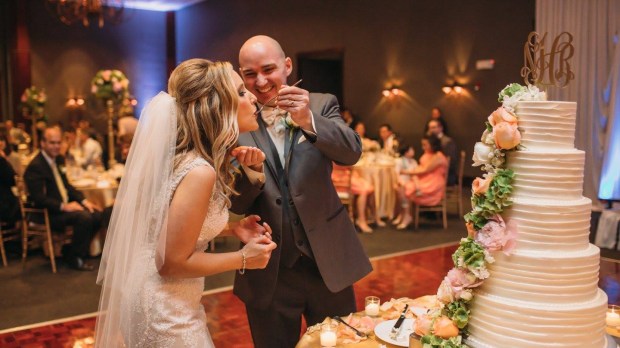 You need to believe that when the going gets tough you won’t be deserted; you won’t be made to feel as a burden. You need to trust that your partner sees you as much more than your disease.
Love and IBD isn’t always sunshine and rainbows, but that’s the case with every love story. It’s navigating unknown waters and knowing that just because you go under for a little while, doesn’t mean you won’t be floating in the calm soon. It’s being vulnerable with the fact that your body will continually let you down, but it’s also capable of surprising you, too. It’s knowing when to ask for help and not being scared to communicate your needs. It’s making sure your partner knows how much you appreciate all that they do, even if they don’t feel like they’re going above and beyond. It’s the comfort of knowing that any minute of the day, you can tell your partner you’re unwell and everything else going on becomes background noise.
If you’re reading this and you haven’t found your person or if you’re unsure about whether your significant other is meant to be, think about the type of person you want alongside you as your #1 confidante for everything in life, including your disease.

If you feel like a burden, if you’re made to feel like your disease is a joke, if you feel like you’re ghosted anytime your health goes awry, take all those feelings as red flags. Sure, the way some of my ex’s treated me when it came to my Crohn’s was extremely disheartening, but at the same time those flare ups were the truth serum I needed to see people’s true colors. Use this to your advantage.
When you find the person who genuinely chooses to stay, to be your rock, to be your sounding board, that’s when you know you’re where you’re meant to be. IBD causes us to be vulnerable, but it also opens our eyes to the true character of others and helps guide our way for finding love that’s meant to last.


 In a world where we all want immediate gratification, think about how it feels when you share something and there are crickets on the other end. Use your social media channels as a platform to share what you care about and what matters most to you, rather than trying to think about what others want to see.



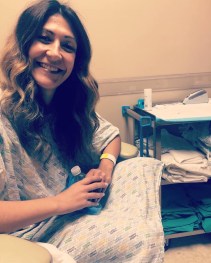
 I developed a new manifestation of the disease I never had before: Perianal Crohn’s. Not a pleasant situation and one that is very difficult to treat/manage while pregnant. Things got so bad at one point, I had to have surgery to drain an abscess and place a seton to help a fistula heal. No one wants to have surgery pregnant. It was one of the scariest moments of my life. The first trimester was spent hoping and praying the baby would make it with all the turmoil going on in my abdomen. The second trimester was spent hoping and praying we could keep her in there long enough to be viable outside of the womb. The third trimester was spent in an unbearable amount of pain fighting the urge to take the prescribed pain pills and being so scared about how the increased biologics, steroids and other new drugs being introduced into my system might affect her.”
 With the newly manifested, aggressive, perianal disease, a vaginal birth was out of the question. I held on until 36 weeks and on New Year’s Eve of 2018 we welcomed our baby girl. We were so incredibly relieved she was ok, and the focus quickly shifted to how not ok mom was.”
 After talking to many medical professionals, we decided it was not safe for me to carry another child. We still don’t know if it was the IVF drugs/hormones that caused the flare going into pregnancy, or if hormones in general and my Crohn’s disease just don’t mix, but we’re not willing to put myself, or another baby at risk like that again.”

 Her goal for you today is to walk away feeling better equipped when it comes to money saving know-how and a bit more empowered. I’ll let her take it away…
 There is no right or wrong. What is coming up for you? It doesn’t need to make perfect sense, it’s just to get your mind thinking about how you view money. Share these sentiments in a journal or planner.




 I feel like we blinked and her first year passed by. That being said, having a baby and a two-year-old, while being a stay-at-home mom and freelancer, who happens to have Crohn’s disease, has its challenges.

 Through motherhood I’ve learned to soak everything in, because you blink, and another year or milestone goes by.
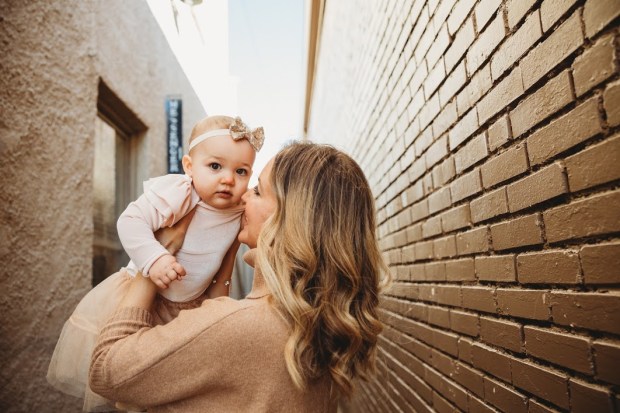


 Fatigue from motherhood when you have a chronic illness can be mind-numbing and debilitating, but seeing your body create a life and then bring a baby into this world makes you feel a renewed sense of love for a body that you’ve been at odds with for years. IBD and motherhood has it’s worries and challenges, but at the end of the day, your children will be the greatest light in your life, and the most magical motivators of strength. There’s almost too much going on to worry about your own well-being, which is both a blessing and a curse!
 Gone are the days of going out at 11 pm, now I rarely go out and when I do, I’m usually home before 10. There’s no pressure to stay out until bar close or take a shot. My friends are all grown women, many of them are moms, our priorities have shifted. Adult conversation over brunch or a glass of wine and some sushi or tapas is refreshing and rejuvenating. I openly communicate about my disease when asked and don’t shy away from the conversation like I once did.
 If you’re reading this and you’re newly diagnosed, a teenager, a 20-something, trust me when I say that balancing life—all your obligations, your network of support, your job and what you’re meant to do with your life will find it’s way. Don’t beat yourself up by creating a timeline or a vision board that sets you up for failure. Don’t try and keep up with the Jones’. Don’t compare where you are in life to your peers. Because there is no comparison. When you have IBD you are being unfair to yourself if you try and be just like everyone else, because you’re not. And that’s ok. Use your experience as a patient to give you patience within yourself. Everyone faces struggles, everyone faces setbacks, but someday I promise you’ll look back and those very same struggles will be the reason you are strong, focused, driven, empathetic, and living the life you were meant to live.
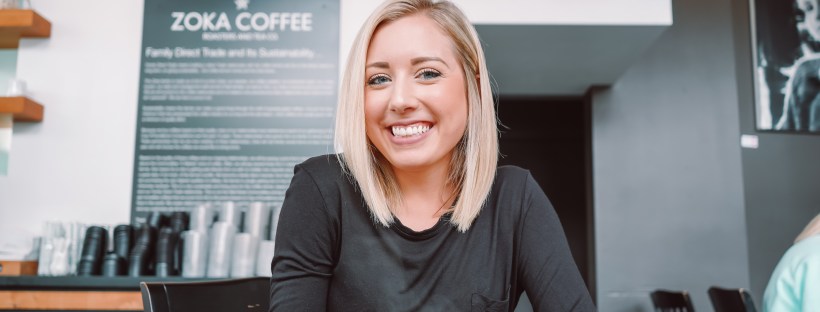
 She has ulcerative colitis and I have Crohn’s. She is 24 and I’m 36. But, our lookout on life and our interest in bringing comfort and serving as a positive voice for the community is the same.
 So not only does she have her own personal patient experience, but she’s been a part of a family unit who’s dealt with the ups and downs her whole life. It was emotional for me as an IBD mom, to hear firsthand from a 20-something about what it was like to not only grow up with a mom who has Crohn’s, but later be diagnosed with IBD herself.
 If you’re looking to follow someone who is sure to lift your spirits and make you feel empowered, she’s your girl. When I chatted with her on the phone, I told her how much I look up to her for her advocacy work, despite being 12 years older!


 Yes, there have been times when everything felt heavy and bleak. Yes, there are still times I feel sorry for myself. But those days are far outnumbered by the joy-filled, happy days I choose to focus on.

 This week—I interview Therezia AlChoufete, a Registered Dietitian Nutritionist (RDN) who specializes in Gastrointestinal Diseases, to set the record straight about this area of disease management. Therezia completed her Bachelor of Science in Neuroscience and her Master of Science in Nutrition and Dietetics from the University of Pittsburgh.


 At the time she was diagnosed, Kate was immersed in her undergraduate studies that were divided between Geoscience and Studio Art and took on the role of caregiver for her mother. This week Kate shares how art has benefited her patient journey and offers up helpful ways you can incorporate art into your life, even if all you can draw are stick figures (like me!):

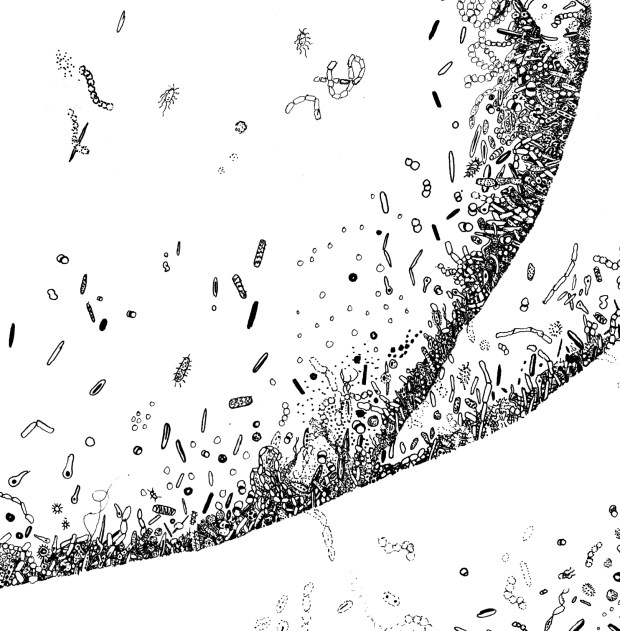 The microbiome is a hot spring of unanswered questions in relation to its role in IBD, as well as many other conditions. Applying the methods I have used in other projects, I researched the different types of bacteria and their shapes and used them to create a series of abstract drawings that relate to the digestive system and allow people to develop a sense of the complexity of the human body.

