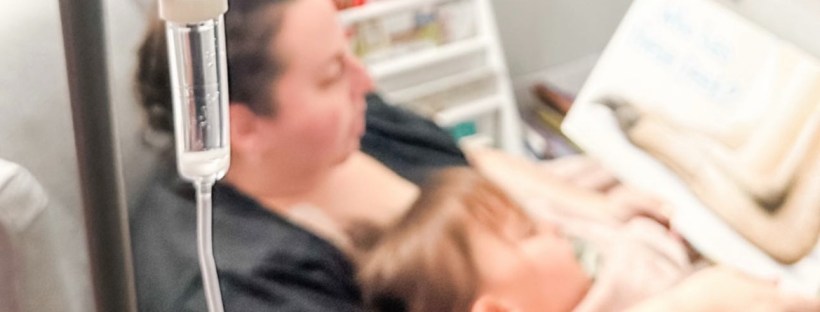
To receive biologic infusions at home or within a medical setting? That is the question. As an IBD mom of three who has done self-injections for 15-plus years, it’s intrigued me to see how many people in the IBD community now receive at-home infusions. This inspired me to dig deeper and hear firsthand what fellow patients have to say about their experience. When polled on Instagram—out of 260 votes, 55% of IBD patients prefer at home infusions compared to 45% who would like to receive their medication in a medical setting. This week on Lights, Camera, Crohn’s hear advice, guidance, the role insurance plays in all of this, and perspective on treating your IBD at home versus at an infusion clinic or hospital. I learned a lot and I think you will, too!
Discussing Home Infusions with your Care Team
If receiving your infusion at home interests you, here’s what you can do to get the ball rolling on making it happen.
- Talk with your GI about whether home infusions are an option in your area and if they feel comfortable with you doing so. Discuss the risks and benefits. Your GI will need to write a prescription.
- Call your insurance and make sure home infusions are covered in your health plan.
Amanda has been doing Remicade infusions at home since the pandemic started and she says it’s been much better for her. Being able to receive her medication at home and cuddle with her 4-year-old daughter and dog are big wins for her. Recently, she also receives daily IV fluids, and thanks to her Port and home health, she’s been able to do it herself.
Amanda: “Home infusions have changed the game for me. They make me feel safer as someone whose immune compromised. I almost always have the same nurse, and I don’t have to commute before or after. How grateful am I!”
She says how you coordinate setting up home infusions is dependent on your insurance. Personally, after talking with her insurance she found a list of home health agencies within 30 miles of her house and called and spoke with a few.

“Some did not administer my medication, some charged separately for nursing fee, and some were not taking new patients. Once I found a good option for my family, the home health company reaches out to your GI doctor, who then sends the script to the Specialty Pharmacy, rather than to an infusion center.”
When Bad Veins and IV issues Set You Back
One of the main reasons I chose to do a self-injection rather than an infusion was because of how horrible my veins are. When I was told I needed to start a biologic during a hospitalization in July 2008, it was the same hospitalization where it took three people and eight tries to start an IV on me. To this day, I’m still a bit fearful of getting IVs because of that traumatic situation. Several people wrote to me with the same concerns—this is something to consider if you typically need a Vein Finder for hospital visits and procedures.
Olivia: “I initially loved the idea of doing infusions at home. My first one went smoothly, the nurse had a bit of trouble finding a vein and drawing blood, but no problems after that. The ability to do my infusion in my bed or on my couch was so much more comfortable than the hospital! But then, the next two infusions, the nurse had trouble getting a vein and one had to be rescheduled because of hospital policy. That infusion took over an hour to find a vein. After that, we spent a month trying to convince insurance to let me go back to the hospital so I could use the ultrasound to get IVs placed. Ever since, I’ve been doing infusions at the hospital. The idea of doing infusions at home was nice, but it didn’t work for my situation.”
Meredith: “I get my Entyvio infusion at home. I don’t love it. It is more convenient than having to go to the hospital/office, but nurses often have trouble starting IVs on me and at home they are the only option. There is no backup and I’ve had a few bad experiences. Things have gotten better because I now have in my profile that I need pediatric needles, but they aren’t the standard, so those types of needles are not always supplied. The insurance decided for me that I would receive my infusions at home because it’s cheaper and since I’ve never had allergic reaction. The service by me is different, but there is no future scheduling. You know around the date that your next infusion is and then you’re contacted one day beforehand with a time. I’m too high strung to be comfortable with that, but it is what it is.”
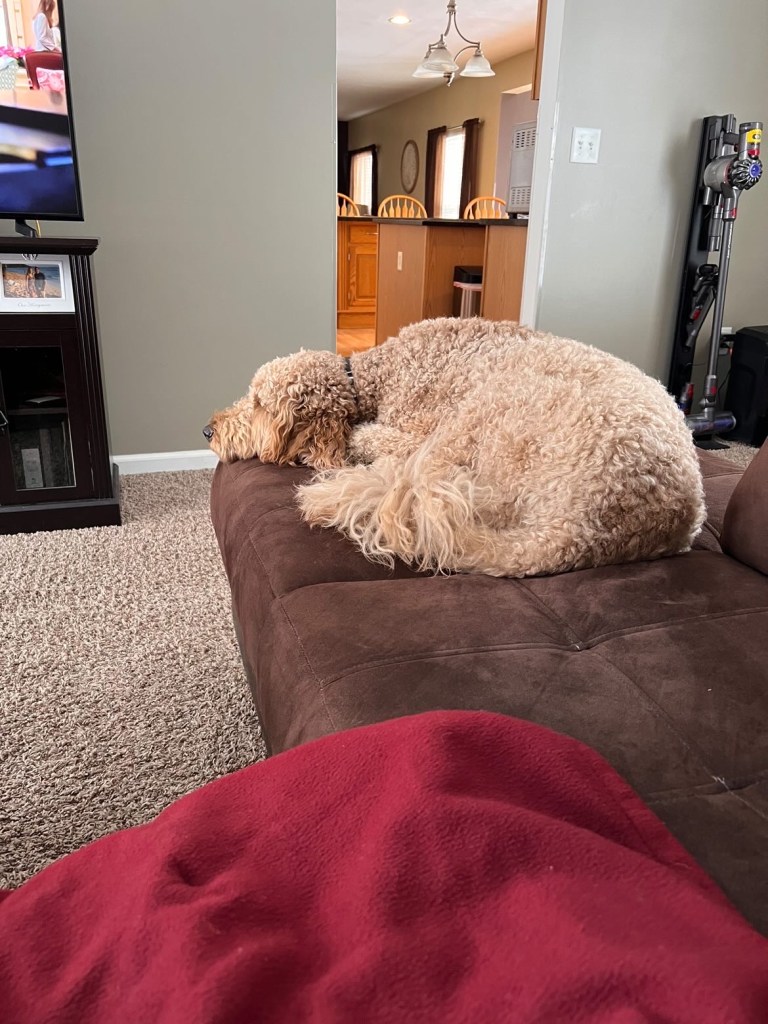
Much like Amanda, Meredith loves having her dog there for support. When she initially started getting home infusions her dog needed to stay outside the room because she was too interested in what was going on, but now she’s used to the process and equipment and can snuggle.
Heidi: “My insurance made me switch to home infusions. At first, I was nervous because I’m a hard stick and always require a vein finder. I also just felt safer in a hospital setting. But, I’ve been doing home infusions for three years and I love it. I have my “old faithful” vein and I like being in my own home with my own bathroom and other comforts. I also have wonderful nurses whom I look forward to seeing each time. Everything is so much more personal this way.”
Melissa: “Sadly my veins are awful, and I wouldn’t want to chance the one person who comes not being able to get an IV started.”
Concerns from the Community Regarding Home Infusions
Ashley: “With my ulcerative colitis, comes other chronic illnesses. Which is true for a lot of people in our community. I have POTS, so having my infusions done in a healthcare setting is more reassuring for me because there’s more safety nets in place.”
Emilie: “I don’t get my infusions at home anymore (I used to!) because I hated it. The nurse was always texting me to reschedule, I was always having to deal with CVS trying to get my medication delivered on time, and I had to store all the stuff. It also made me feel like a “patient” in my own home. Mentally it was incredibly stressful organizing and coordinating everything and feeling like I was constantly sick because the medical equipment was always around. I much prefer going to an infusion center, where I just show up and they have everything ready to go. Just another perspective—I know a lot of people love getting infusions at home and I’m in the minority, but there are cons to consider.”
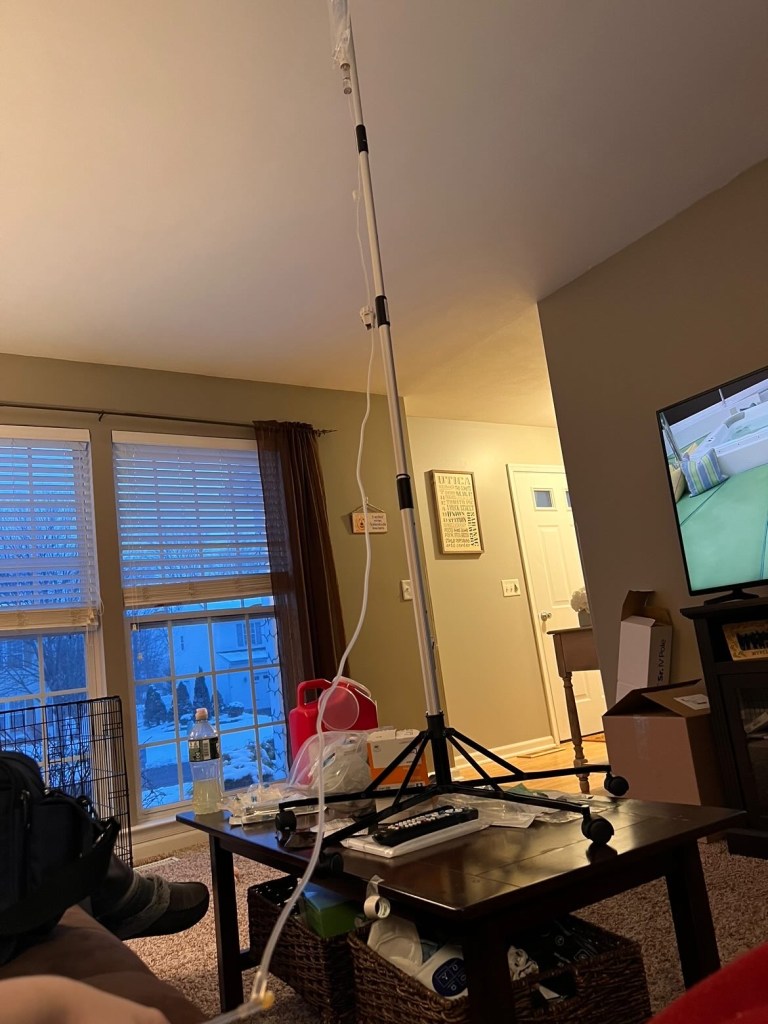
Mary: “I don’t currently do an infusion medication, but I have in the past with Remicade. My GI office set home infusions up for me after I did the first few in the office. It was more convenient for me due to the office being about 1.5 hours away from where I live. I was provided with an IV pole to keep at home among other supplies and a nurse came to my house to do the infusion. It was awkward at first, but after a few times it got better. Unfortunately, during one infusion, I had an allergic reaction unexpectedly, during which the nurse had to give me Benadryl and another medication. After that happened, I couldn’t do them at home anymore and had to go to the office. After two more infusions, my GI discovered I wasn’t responding to Remicade anymore and I had to switch to Stelara. The cons are the risk of something happening and not being in a medical setting. Luckily, I had a great nurse who knew what to do.”
Adam: “I prefer the clinic and the reason is, when I was on Humira and had to self-inject, I always worried I didn’t get it in the right spot or the full injection and miss some of my medication. For me, it’s a piece of mind that my infusion is done properly.”
IBD Moms Experience
Miranda was diagnosed with Crohn’s during the height of the pandemic. When she started Entyvio it was in an infusion center, and she felt like she was putting herself and her family at risk each time she went in. By receiving infusions at home, you can potentially be exposed to fewer hospital-acquired infections. This is especially important for individuals with compromised immune systems, as it helps minimize the risk of additional health complications.
“I saw a few ladies (connections on Instagram) who were receiving home infusions, so I asked my doctor about it. He said it would be no problem to connect me with a company in Dallas that handles nursing and medications for in-home infusions. My only obstacle was seeing if my insurance company would approve home nursing. After calling them to go over benefits, my insurance informed me I could receive in-home nursing. I did have to escalate the call to get it pushed through. At the end of the day home infusions were approved. The same company that ships my meds provides nursing. I do have to make a phone call every January to make sure coverage is good, but other than that it’s a flawless process. The nurse and I are close friends.”
Christina: “I specifically told my GI I don’t want to get infusions at home because I like my “me” time in the infusion clinic. Two hours to read my Kindle in peace! I also decline the accelerated rate…perspective changes when you have kids. My nurse jokes they’re my spa days!”
Krista: “I moved to home infusions once I had my daughter. It was more convenient because I didn’t have to find someone to watch my daughter (I had nobody to help or to ask) so that I could attend my infusions. I had a pleasant experience, and the nurse was fantastic. Being able to do infusions in the comfort of my home was fantastic, especially needing an infusion only 2 weeks postpartum, while recovering from a c-section.”
Getting adjusted to receiving medication without support from fellow patients in the room
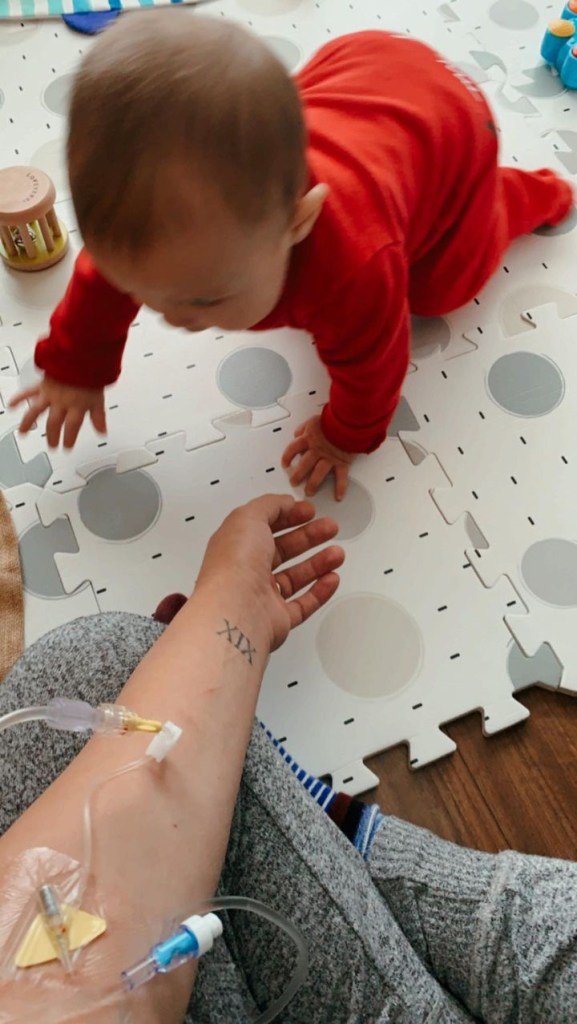
Kristi has been receiving Remicade at home monthly since January. Her GI office stopped doing infusions at their office due to staffing issues. After a time or two at the hospital-run infusion center, her insurance company called her to see if she’d be interested in home infusions. Since she had been driving an hour each way for years, she jumped at the chance!
“The idea of not having to worry about getting my infusion during a winter storm was enough for me. My doctor’s office was hesitant at first. I was always on board with the idea, and I was shocked to see the cost was similar to my doctor’s office but significantly less than an infusion center. Home infusions have allowed me more flexibility in scheduling. I also feel like my resting period post-infusion is much easier since I’m already home. While I love home infusions, there are some downsides. I don’t think I would have wanted this back years ago when I started infusions. There’s a lot to be said about the community and the support I received just by being in an infusion room with similar patients. It was also nice to be in my doctor’s office monthly, where I could easily report any symptoms, I was having health wise. I am the person that needs to have my house looking perfect before company comes over, so that adds an extra level of stress during an infusion week. It’s also a bit odd to have the nurse here for so many hours. However, I’ve had two nurses so far and they’ve always been very good and very respectful in my home and if I wanted quiet time. Overall, I don’t think I could go back to going somewhere.”
Kristi says now that she doesn’t have the infusion room support, she relies even more on the social media community and the IBD family online. She also loves getting to snuggle with her dog and use him as a heating blanket while she receives her infusion.
Final Thoughts
Balancing the risks vs. benefits. As you’ve read, home infusions are not a one-size-fits-all approach. What works for one person, doesn’t for another. While the benefit of being at home is a big one, having to worry about the sole nurse at your house finding a vein and not knowing if you’re going to have a bad reaction are just some of the cons that can make the experience worrisome for people.
The convenience of home. Home infusions offer the convenience of receiving treatment in the comfort of your own home. This eliminates the need to travel to a medical facility and allows you to maintain your daily routine more easily. For IBD parents and caregivers it alleviates the need of finding childcare. By fitting infusions into your daily life, it helps to reduce the disruption that may come with hospital or infusion center visits. So many of us deal with medical PTSD and having the comfort and familiarity of home can help to ease that burden a bit.
Kat: “I received home infusions for years for UC. My doctor’s office got them set up because I live in a rural area. The pros were the convenience and being in the comfort of my home. The cons were having a stranger in my home for over an hour. Dealing with the company’s billing department was also horrendous.”
A more personalized treatment experience. You can have a dedicated healthcare professional who gets to know you and your specific needs, creating a customized care plan to address your individual symptoms and concerns. Many IBD people I speak with have a close bond with the nurse who visits their home and feel supported during the process.
Jill started on Humira and was later switched to Remicade infusions. She started receiving infusions at the hospital and then her GI recommended she try home infusions to limit exposure to germs.
“My GI’s office took care of the paperwork and I had the choice between two home health companies. This has been a game changer for any guilt I felt around missing work, because the nurse comes to my home and I can continue working on my laptop, if needed. Or I schedule infusions to begin at the end of my work day. I have a great relationship with my home health nurse and she knows me and my veins so well now. I value the relationship and level of care as well as the flexibility I have found with this option. It’s a win for my mental health as well.
Matt received home infusions for seven years. If he could pass along any advice, he says to be even more proactive about your health.
“I had to always coordinate shipments, supplies, and the infusion schedule. The pros are the flexibility and comfort, but the cons are not being at an infusion center where you can unplug and be in your own thoughts.
It’s important to discuss the option of home infusions with your healthcare team to determine if it’s a suitable choice for you. Your care team can address any concerns or questions you may have, educate you on the process, and help you make an informed decision. Remember, you have options and support to manage your IBD effectively, even when it comes to receiving necessary infusions.
 lights camera crohn's
Thanks so much, Natalie! Loved reading the patients’ takes on home infusions. I do TPN and fluids at home and Feraheme, IVIG and a few other infusions at a hospital infusion center. I agree with what everyone said about the pros and cons of each, but it’s nice to hear it to know others are experiencing the same issues with both options. For me, it comes down to copays. My copay is shockingly less at the hospital for the infusions I do there. I don’t understand why since I do my home infusions on my own and no longer require a home health nurse?
LikeLike
I was thinking about moving to home infusions and no nothing about it. This blog helped me decide if that’s the best option for me. Thank you so much Natalie!
LikeLike
Love to hear that!! 🙂
LikeLike